



























This video teaches simple rules to assess whether compensation is adequate in acid-base problems: For respiratory acidosis, bicarbonate increases by 1 unit for every 10 unit rise in PCO2 (acute) or 3 units (chronic); for respiratory alkalosis, bicarbonate decreases by 2 units for every 10 unit drop in PCO2 (acute) or 4 units (chronic). For metabolic acidosis, PCO2 decreases by 1 unit for every 1 unit decrease in bicarbonate; for metabolic alkalosis, PCO2 increases by 1 unit for every 2 unit increase in bicarbonate. If compensation doesn't match these predictions, an additional acid-base problem is likely present.
Assessing Metabolic Compensation: Simple Rules for Acid-Base
Added:Understanding of the Henderson-Hasselbalch equation and how blood pH relates to the balance of bicarbonate (HCO3-) and partial pressure of carbon dioxide (pCO2).
Ability to define and identify the four primary acid-base disturbances: metabolic acidosis, metabolic alkalosis, respiratory acidosis, and respiratory alkalosis.
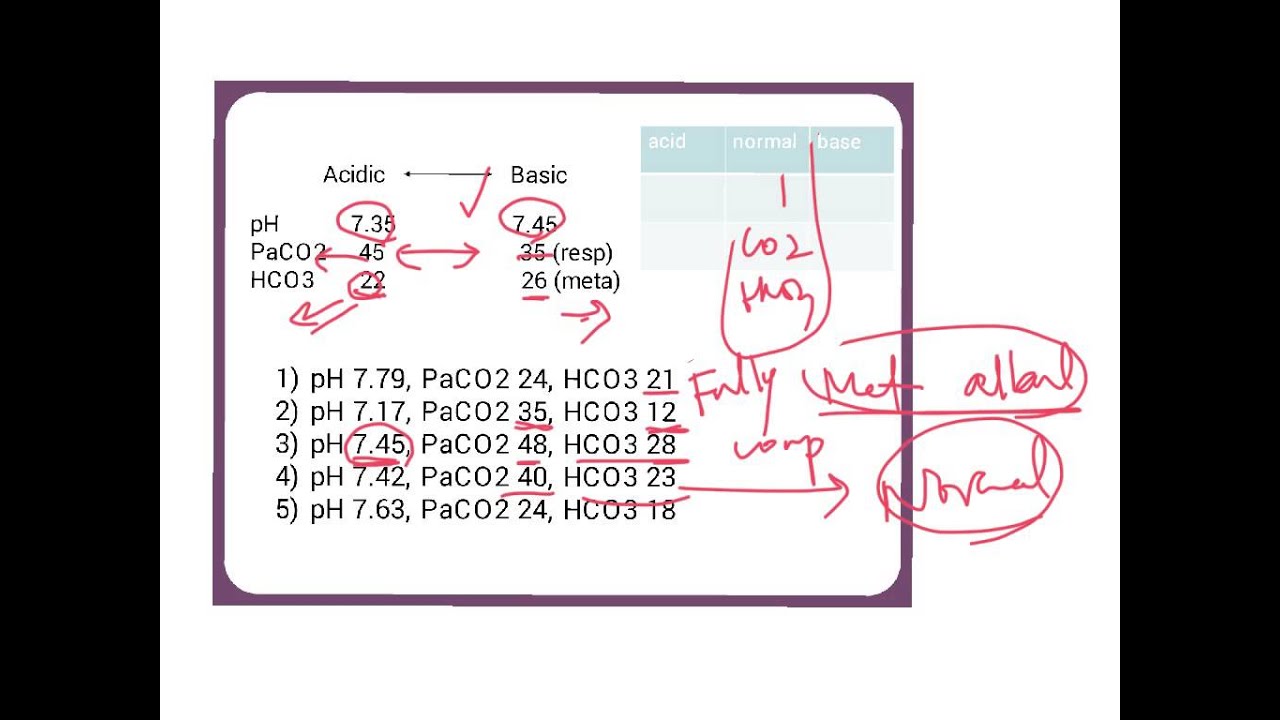
Familiarity with standard reference ranges for arterial blood gas (ABG) values, specifically pH (7.35-7.45), pCO2 (35-45 mmHg), and HCO3- (22-26 mEq/L).
Basic knowledge of the homeostatic functions of the lungs (regulating CO2 elimination) and the kidneys (regulating HCO3- reabsorption and hydrogen ion excretion).
Calculation and clinical interpretation of the serum anion gap and the delta-delta ratio to diagnose underlying causes of metabolic acidosis.
Application of specific compensation equations, such as Winters' formula, to analyze complex clinical scenarios and identify mixed acid-base disorders.
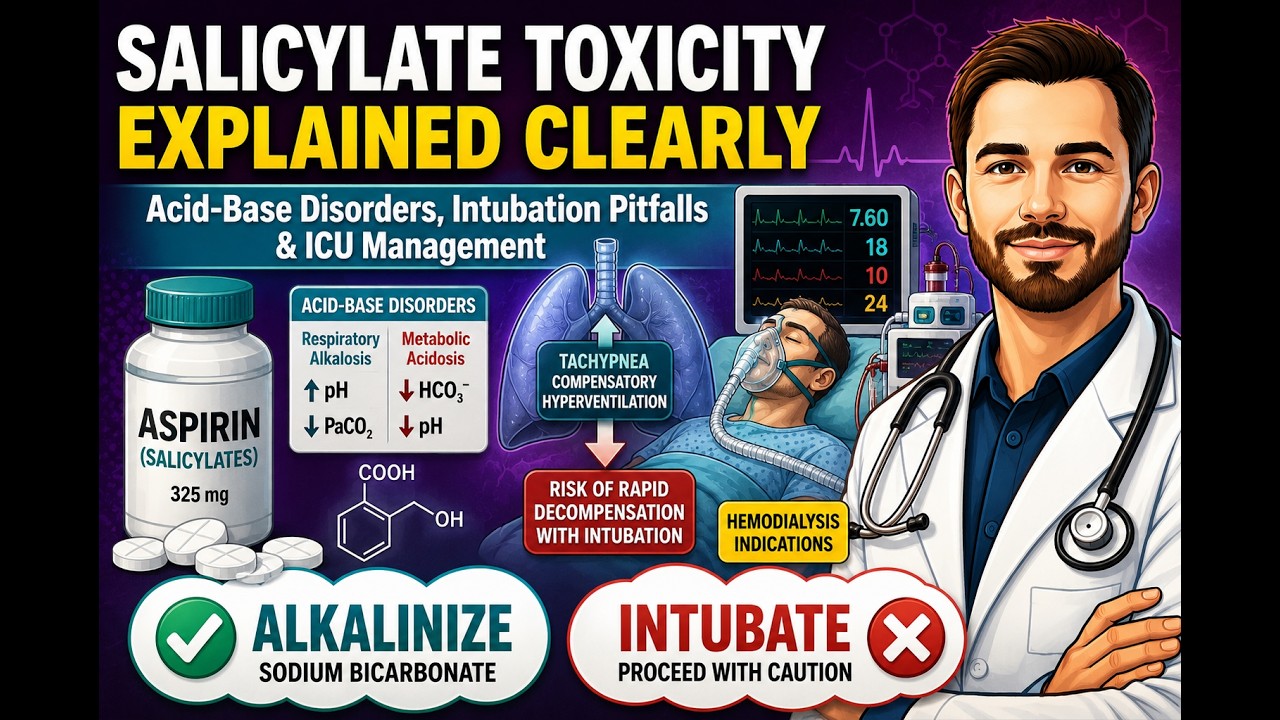
Exploration of the pathophysiology and emergency management of severe mixed disorders, such as concurrent metabolic acidosis and respiratory alkalosis in salicylate toxicity.
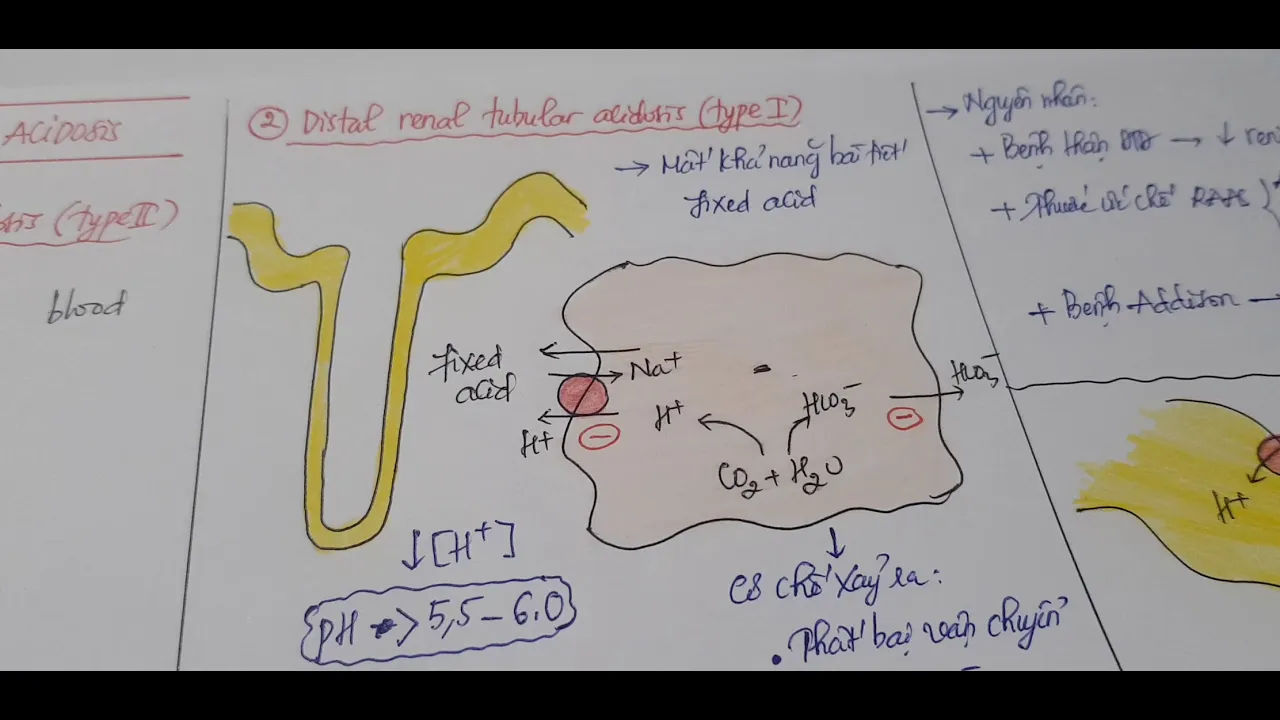
In-depth study of renal tubular acidoses (RTAs) and how these specific kidney defects affect systemic acid-base and electrolyte balance.
109.9K views1.6Klikes7:29Original Release: 2018-03-21
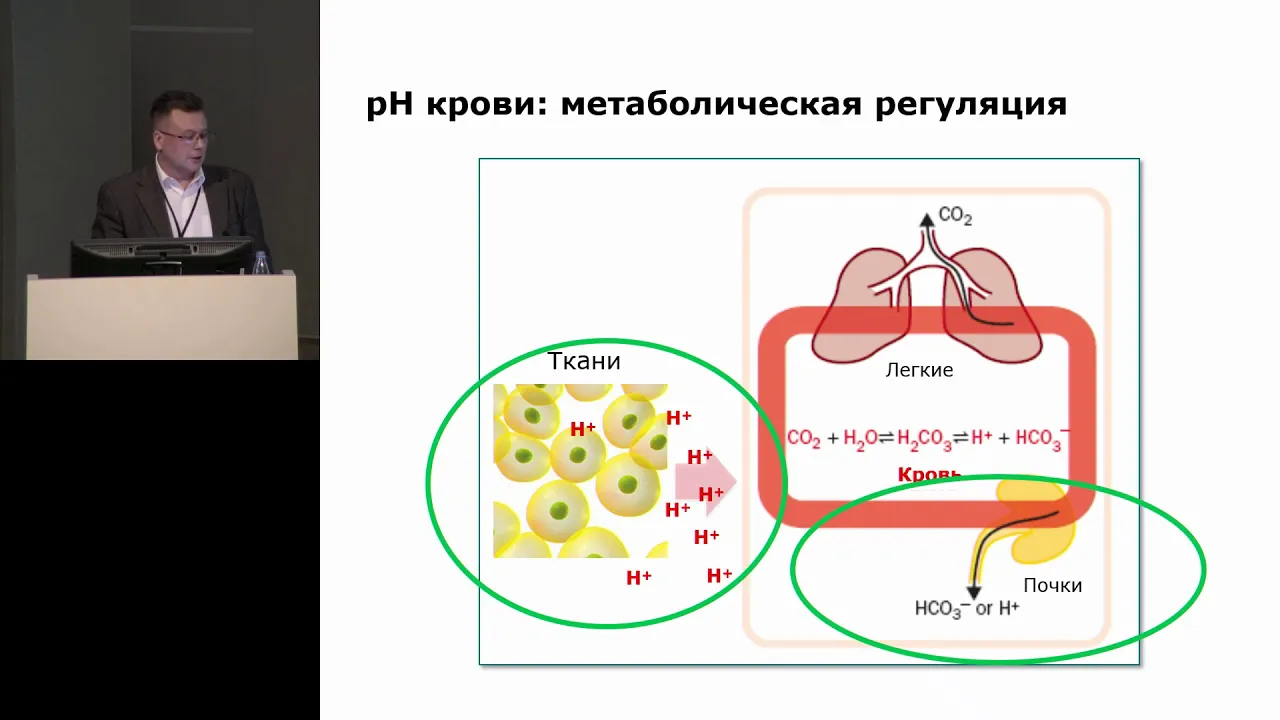
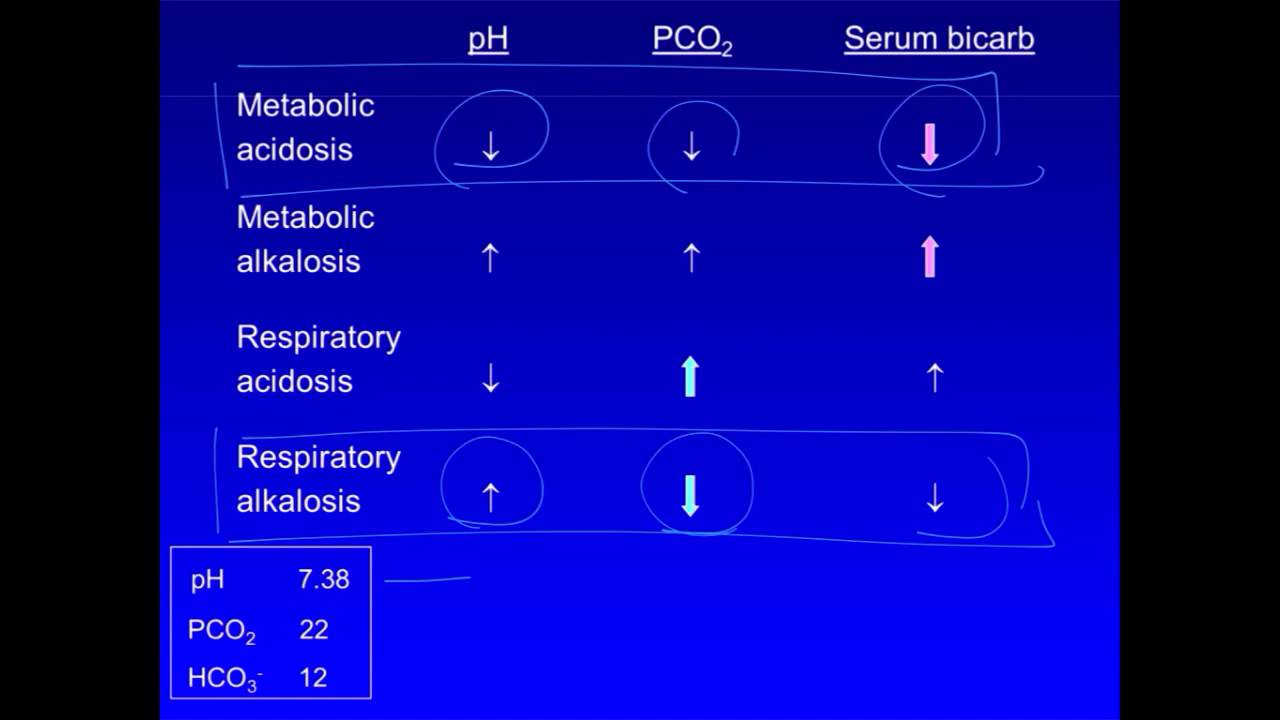
welcome back so in some of the previous videos we've learned how to tell if multiple metabolic problems were present at the same time remember that was what the Delta anion gap and the corrected by carp were all about in this lesson you will learn how to tell if an additional respiratory problem is present on top of metabolic problems or if an additional metabolic problem is present on top of a respiratory problem in this video we're going to learn about compensation compensation refers to the fact that the lungs will try to compensate for a metabolic problem by hyper and hypo ventilating and the kidneys will try to compensate for a respiratory problem by excreting or retaining bicarb so this is the kidney representing the metabolic system and these are the lungs representing the respiratory system when there's metabolic acidosis the lungs will hyperventilate and when there's metabolic alkalosis the lungs will hyperventilate when there's respiratory acidosis the kidneys will cause bicarb retention and when there's respiratory alkalosis the kidneys will cause by carp excretion that's what the whole concept of compensation is all about so let's have a look at what the kidneys do in the case of a respiratory acidosis first so we said that in respiratory acidosis the pco2 goes up which causes the pH to go down in response to that and the kidneys will try to compensate by increasing bicarb as well so when there's no additional metabolic problem then the kidneys will increase bicarb by a predicted amount since renal compensation takes hours to days bicarb will increase just a little bit in acute respiratory acidosis and more in chronic respiratory acidosis because the kidneys have more time let's see what happens in the acute phase so in this setting for each 10 unit increase in pco2 the bicarb will increase by one unit what about the chronic phase there we said that the kidneys have more time to adapt so here for every ten unit increase in the pco2 by cart will increase by three units and what about respiratory alkalosis here the pco2 goes down in response to hyperventilation as a consequence the ph goes up and since the kidneys try to compensate for that they will cause bicarbonate excretion so the bicarb will go down what happens in acute respiratory alkalosis here for every 10 unit decrease in pco2 bicarb will decrease by 2 units and what happens in the chronic setting here for every 10 units decrease in pco2 the bicarb will decrease by 4 units what if the bicarb doesn't change by these amounts well that probably means that there's an additional metabolic problem if the bicarb is lower than predicted by these rules there's also metabolic acidosis and if it's higher than predicted then there's probably also metabolic alkalosis and what about metabolic acidosis we know that here as the bicarb goes down the pH goes down and as a compensatory mechanism the pco2 also goes down due to hyperventilation now respiratory compensation takes place immediately so here we don't discriminate between acute and chronic settings so let's see by how much the lungs adapt in metabolic acidosis for each unit decrease in bicarb the pco2 goes down by 1 unit and what about metabolic alkalosis here we also don't discriminate between acute and chronic problems since the lungs adapt to this immediately as well so in metabolic alkalosis the bicarb goes up and the pH will go up too as a consequence the patient will start to hyperventilate in order to correct the pH as you can imagine there's a certain limit as to how much the patient can hypo ventilate so this type of compensation is somewhat limited let's see by how much the pco2 changes in this so for every to unit increase in by carp the pco2 will increase by one unit and what's the problem if the pco2 doesn't change by the predicted amount what if the pco2 is lower than predicted well then that means that respiratory alkalosis is also present and if it's higher than predicted then respiratory acidosis is also present so here's a little memory aid that should help you to remember what we've just learned so on the left side we write down acidosis on the right side we write down alkalosis then we have acute respiratory problems chronic respiratory problems and metabolic problems and here are the compensatory changes that take place in each setting we said in acute respiratory acidosis for every 10 unit increase in pco2 bicarb goes up by one unit in acute respiratory alkalosis we said for every 10 unit decrease in pco2 bicarb goes down by two units in chronic respiratory acidosis we said for every 10 units increase in pco2 bicarb goes up by three units and in chronic respiratory alkalosis we said for every 10 units decrease in pco2 bicarb goes down by four units what about metabolic acidosis here for every one unit decrease in bicarb pco2 goes also down by one unit and what about metabolic alkalosis here for every two unit increase in bicarb pco2 will also go up by one unit so do you recognize a pattern here well to tell you the truth you really only have to remember the numbers in the left column and add one to the numerator in order to arrive at the numbers of the right column so it's one over ten for acute respiratory acidosis and two over ten for acute respiratory alkalosis it's three over ten for chronic respiratory acidosis and for over ten for chronic respiratory alkalosis it's one over one for metabolic acidosis and two over for metabolic alkalosis we can now complete our algorithm for diagnosing any acid-base problem let's write down the updated algorithm so we said number one we calculate the anion gap number two if there is an elevated anion gap we calculate the Delta anion gap and the corrected by carp number three we check the pH and the pco2 in order to identify the primary problem is it metabolic or a respiratory and now there's an add-on number four check if compensation is adequate and if it's not an additional acid based problem is present you now have all the tools it takes in order to assess over 90% of acid based problems now go through the practice cases and make sure that what you've learned sticks
Up Next

85:09
Nephrology Board Review: Key Cases & Acid-Base Questions
@UofLIM
83.5K views•2018-04-20

48:47
Graphic Medicine: Comics for Collaborative Healthcare Communication
@nationalpatientadvocate
189 views•2023-12-04
3:43
Beta Blocker & Calcium Channel Blocker Toxicity Treatment
@MedMastery
8.9K views•2022-07-25
3:05
Stages of Labor and Vaginal Birth | Childbirth Animation
@nucleusmedicalmedia
52.1M views•2017-08-18
Related Study Plans & Knowledge Roadmaps
Structured learning paths in Medicine
medicine
Abnormal LFTs: Diagnostic Workup & Pathology
01Liver Anatomy and Basic Physiology
02Introduction to Liver Function Tests (LFTs)
03Hepatocellular vs. Cholestatic Patterns
+ 3 more learning modules
12h6 modules
Explore Roadmap
medicine
Analyzing Blood Smears: RBC, WBC & Platelets
01Introduction to Blood Components & Smear Preparation
02Normal Morphology of Blood Cells
03Erythrocyte Pathologies & Morphological Variants
+ 2 more learning modules
12h5 modules
Explore Roadmap
medicine
Mechanical Ventilation: Waveforms & Alarms
01Anatomy and Physiology of Breathing
02Introduction to Mechanical Ventilation & Core Modes
03Ventilator Settings and Waveform Interpretation
+ 2 more learning modules
12h5 modules
Explore Roadmap
medicine
Neuro Exam: Localization & Stroke Syndromes
01Foundations of Neuroanatomy and Vascular Supply
02The Neurological Examination: Step-by-Step
03Principles of Neurological Localization
+ 3 more learning modules
18h6 modules
Explore Roadmap