To test garden soil for lead, collect 3-10 composite samples from different locations (digging 0.5 inches deep), place them in a ziplock bag, label, and send to a lab for testing; Michigan soils typically have background lead levels around 20 ppm, and child-safe areas should not exceed 400 ppm. To minimize exposure, wash hands after gardening and thoroughly clean root vegetables before consumption.
How to Test Garden Soil for Lead: Safe Gardening Tips
Added:Deep Dive
Understanding the common historical sources of lead contamination in residential soils, such as lead-based paint and leaded gasoline.
Heavy Metals in Soils, Thursday, March 1st, 2018 -Dr. Andrew Margenot
5.8K
Heavy metal contamination results from human activities: lead-based paint on buildings and leaded gasoline from the early 1900s through 1990s created legacy contamination. Geographic distribution correlates with population density and traffic—LA, NYC, and Chicago show highest historical deposition. Contamination occurs in localized hotspots near buildings (paint) and roads (gasoline), with concentrations dropping rapidly within 5 meters of roadways. Vertical distribution shows heavy metals accumulating in top 6-8 inches of soil from atmospheric deposition, enabling surface excavation but allowing root access.
Click to watch →

How Much and Where? Soil Lead Contamination in Chicago.
128
Two major sources drove urban lead contamination: leaded gasoline (increasing through 1960s) and lead-based paint (declining by 1960s). Total US emissions reached millions of pounds, with Chicago among top cities. The 1970s phase-out of leaded gasoline correlated with declining children's blood lead levels, demonstrating effective environmental policy. This success story shows how regulatory action can translate to measurable public health improvements within decades.
Click to watch →

Legacy of Lead in the Soils of Durham
229
Cities accumulate lead contamination from historical sources like leaded gasoline (7 million tons burned in the US from 1920-1980) and lead-based paint (6 million tons used in residential construction), which persists in urban soils for extremely long periods due to lead's strong binding to soil particles and inability to leach or be absorbed by plants; this creates ongoing public health risks, particularly for children, who are especially vulnerable to lead exposure through ingestion of contaminated soil, paint chips, and dust, making soil lead mapping essential for identifying contamination hotspots and implementing targeted remediation strategies.
Click to watch →

10 cosas que hacíamos antes y hoy serían IMPENSABLES • Perdón, Centennials
608.8K
Lead contamination was pervasive in previous decades through multiple sources. Gasoline contained tetraethyl lead added to improve engine performance and octane rating, releasing lead vapors into urban air that everyone breathed. Lead-based paints provided vibrant colors and durability for walls, furniture, and children's toys. Young children ingested lead by mouthing painted surfaces, eating paint chips, and playing with lead-containing toys like tin soldiers. This widespread exposure occurred because the dangers of lead were not understood at the time. The complete phase-out of leaded gasoline began in the 1990s and was fully eliminated by the 2000s, while lead-based paint has been banned in many countries.
Click to watch →

Legacy Urban Soil and Dust Lead Contamination and Children's Blood Lead Seasonality
103
Urban soils in America contain 5-6 million tons of legacy lead from historical leaded gasoline emissions and deteriorating exterior lead-based paints, forming a characteristic 'bullseye' pattern with highest concentrations in inner-city areas. This contaminated soil resuspends into the atmosphere during dry summer months, creating a direct correlation between atmospheric lead concentrations and children's blood lead levels, which peak in July-August and trough in winter. Research across multiple American cities demonstrates that this seasonal pattern is the dominant trend in children's blood lead levels, making resuspended lead-contaminated urban soil the main driver of lead poisoning in America. Effective prevention requires primary intervention through soil capping, mulching, maintaining moist lawns, and remediating exterior lead-based paint.
Click to watch →
Deep Dive
Basic concepts of soil science, including soil composition and how heavy metals bind to soil particles.

RACI Chemicals in the Environment series - Heavy Metals in the Environment and Soil Remediation
255
Metals bind to soil through electrostatic binding (weak, reversible, allowing plant uptake) and covalent binding (strong, irreversible, enclosing metals within mineral structures). Freshly emitted platinum compounds predominantly bind to organic matter and clay minerals, while road dust shows different partitioning patterns. Over time, metals undergo aging where exchangeable and oxide-bound fractions decrease while residue-bound fractions increase, indicating transformation toward more tightly bound forms. This occurs through physical and chemical weathering. The research demonstrated that using actual field samples rather than synthetic compounds is essential for accurate predictions, as partitioning patterns differ significantly between laboratory-prepared materials and real-world samples.
Click to watch →
Fundamentals of Soil Science important concepts and facts | 50 important Soil Science MCQs Analysis
674
Soil science encompasses edaphology (soil-plant relationships) and pedology (soil as natural body). Optimum soil composition includes 50% solids (45% mineral, 5% organic), 25% air, and 25% water. Soil profiles consist of horizons from O to R, with solum representing the A+B horizons most influenced by weathering. Goldschmidt classified elements into lithophile (Si, O, Al), siderophile (Fe, Ni), chalcophile (Cu, Zn), atmophile (H, N), and biophile (CHNOPS). Earth's layers include crust, mantle, and core, separated by Moho and Gutenberg discontinuities. Rocks form three categories: igneous (from magma/lava), sedimentary (from sediments), and metamorphic (transformed by heat/pressure). Igneous rocks classify by silica content: acid (>66%), intermediate (52-66%), basic (45-52%), ultrabasic (<45%). Minerals classify by specific gravity: light (<2.85 g/cm³, e.g., quartz, feldspar) and heavy (>2.85 g/cm³, e.g., hornblende, garnet). Silicate minerals form four structural types: orthosilicates (isolated tetrahedrons, e.g., olivine), inosilicates (single/double chains, e.g., pyroxene, amphibole), phyllosilicates (sheet structures, e.g., clay minerals, micas), and tectosilicates (3D frameworks, e.g., quartz, feldspar). Tectosilicates are most weathering-resistant. The Goldich dissolution series ranks minerals by weathering stability: high-temperature crystallizing minerals (olivine, pyroxene, amphibole, biotite) weather fastest; low-temperature crystallizing minerals (quartz, apatite, zircon) are most resistant. Parent material transport agents include colluvial (gravity), alluvial (water), aeolian (wind), and glacial (ice). Clay minerals include expanding types (montmorillonite, vermiculite, nontronite) that swell/shrink, and non-expanding types (illite) that resist swelling. Gypsum (CaSO4·2H2O) is an aluminum sulfate without iron. Soil mechanical analysis separates particles using hydrogen peroxide (removes organics), HCl (dissolves carbonates), and dispersing agents. Stokes' law describes particle settling velocity proportional to radius squared, enabling hydrometer/pipette methods. Specific surface area is inversely proportional to particle size: clay (>1000 m²/g) > silt > sand (~1 m²/g). Particle density (~2.65 g/cm³) differs from bulk density (includes pore space). Bulk density and porosity are inversely related. Soil structure types (platy, prismatic, blocky, granular/crumb) affect infiltration and root penetration. Granular/crumb structure is optimal for agriculture.
Click to watch →

FUNDAMENTALS OF SOIL SCIENCE -B.SC AGRICULTURE FIRST SEMESTER 1ST YEAR COMPLETE TOPICS 1ST CLASS
107.7K
Adsorption refers to the process where substances from outside (adsorbates) become attached to the outer surface of soil particles without penetrating inside. For example, water, nutrients, salts, or ions can accumulate on the outer surface of soil particles. This surface phenomenon is distinct from absorption, where substances penetrate into the interior.
Click to watch →
El Cadmio un metal pesado que pone en riesgo la producción de aguacate
6.4K
Heavy metals are metallic elements with high density that are toxic even at low concentrations and bioaccumulate in living tissues without degrading. Essential elements like copper, zinc, and iron are required for life but become toxic at high concentrations, while non-essential elements like mercury, lead, and cadmium are inherently toxic with no known biological function. Soil consists of mineral, gaseous, organic, and liquid phases, with colloids (clay and organic matter) carrying negative charges that attract positively charged metals. Heavy metals exist as free ions or insoluble precipitates and originate from parent material (geological origin) or human activities (industry, agriculture, contaminated irrigation). Different soils have varying concentrations based on their geological history.
Click to watch →

Soil Science || Part -5 || Agriculture Supervisor -2026 Batch -04
440
Soil science derives from Latin 'solum' meaning floor. Pedology (study of soil formation, classification, distribution) and Edaphology (study of soil-plant relationships) are the two main branches, both from Greek. Key scientists include Vasily Dokuchaev (father of modern pedology), Justus von Liebig (father of agricultural chemistry and law of minimum), and J.W. Leder (father of Indian soil science). Soil composition: 45% minerals, 25% organic matter, 5% air, 50% solid matter. Minerals come from rock weathering. Rocks are igneous (acidic/basic) or sedimentary. Acidic igneous rocks produce poor soil, basic igneous rocks produce fertile black soil. Humus contains 58% carbon, 5% nitrogen with C:N ratio of 1.724 (Beltsman factor). Soil particles are classified into Sand (largest), Silt (medium), and Clay (smallest). Surface area is inversely proportional to particle size - smaller particles have greater total surface area when occupying the same volume. Porosity is highest in clay, followed by silt, and lowest in sand. Water holding capacity and nutrient holding capacity are highest in clay, followed by silt, and lowest in sand. Aeration is highest in sandy soil, followed by silt, and lowest in clay. Soil erosion is most severe in silt particles, followed by sand, and least in clay. Soil texture is the relative proportion of sand, silt, and clay particles in soil, determined by the ratio of these three particle types. Soil particles can be separated using sieving (for sand) or sedimentation (for all three types). Stokes' Law states that settling velocity is proportional to the square of particle radius (v ∝ r²), meaning larger particles settle faster.
Click to watch →
Deep Dive
The fundamental health risks of lead exposure, particularly its neurotoxic effects and how it can be ingested through homegrown food.

Seção 3 2 Contaminantes dos alimentos
383
Lead contamination enters the food chain through grains from contaminated milling equipment, leafy vegetables absorbing lead from soil, seafood from contaminated water, and meat transferring lead from bones during cooking. Lead absorption is directly proportional to ingested amount, faster when stomach is empty, and higher in children than adults. Lead bioaccumulates primarily in bone tissue, where it can remain for decades. During calcium deficiency, stored lead can mobilize into the bloodstream. Lead poisoning affects multiple organ systems: it inhibits cytochrome P450 enzymes in the liver, impairing ammonia conversion to urea and causing neurotoxicity. Cardiovascular effects include hypertension and renal dysfunction. Reproductive effects include abortion, premature birth, and impaired spermatogenesis. Lead is potentially carcinogenic, causing DNA mutations, translocations, and deletions.
Click to watch →

The Neurotoxin/Heavy Metal ⚠️ That Could Be Lurking In Your Garden
231
Lead contamination in home gardens stems from decades of leaded fuel use in vehicles (cars, trucks, farm equipment, aircraft) banned in 1996. Three contamination pathways exist: dust accumulation on leafy vegetables, bioaccumulation in plant tissues, and lead binding to root vegetable ridges. Lead accumulates in soil layers over decades, with deeper layers containing higher concentrations. Root vegetables face greater contamination risks due to direct soil contact. Young children under six are most vulnerable, with no safe exposure level—the threshold is effectively zero. Minimal exposure causes learning and behavioral problems. Commercial baby food recalls indicate contamination sources extend beyond roadways to rural commercial farms through historical equipment use and interstate proximity.
Click to watch →

Effects of Lead Exposure | How to Avoid Lead Exposure from Food? | Fight Lead With Healthy Foods
1.6K
Lead is a naturally occurring toxic metal that accumulates in the body over time, causing serious physical and mental health problems. Sources include household products (paint, batteries, toys, cosmetics), environmental contamination from mining industries, and contaminated food and water. Children are most vulnerable due to developing nervous systems and can absorb 4-5 times more lead than adults. Lead affects the central nervous system, kidneys, and blood-forming organs, potentially lowering IQ and causing behavioral changes. Adults face risks of kidney damage, brain damage, high blood pressure, and anemia. Lead absorption rates vary by age: children absorb 40-70% through the GI tract while adults absorb only 10-20%. Absorption increases with anemia, malnutrition, and deficiencies in calcium, iron, zinc, and vitamin C. Once absorbed, lead enters the bloodstream with a 25-day half-life, accumulates in soft tissues (40-day half-life), and in chronic exposure, primarily deposits in bones with a 25-year half-life.
Click to watch →

New research shows gas & diesel vehicles could be poisoning your food
3.7K
Lead contamination enters urban garden soils through decades of vehicle exhaust emissions, creating a pathway into the human food chain via vegetables, honeybees, and chickens. The study found lead levels in urban chicken eggs up to 40 times higher than commercial eggs. The World Health Organization confirms no safe lead exposure level—low levels cause cardiovascular disease, decreased IQ, and kidney damage; high levels attack the brain and nervous system, causing coma, convulsions, and death. Children surviving severe poisoning may develop intellectual disabilities and behavioral disorders. Lead crosses the placental barrier, potentially causing brain damage or developmental issues in fetuses.
Click to watch →

Lead-Safe Toolkit for Home-Based Child Care Webinar Series – Session 3: Lead in Soil
168
Lead is found throughout our environment in air, soil, water, and homes, primarily from human activities like fossil fuel use and past leaded gasoline. Lead-based paint was used in homes until 1978, and lead was also used in plumbing materials, batteries, toys, and cosmetics. Children are particularly vulnerable because their growing bodies absorb more lead than adults, and their nervous systems are more sensitive. Even invisible amounts of lead-contaminated dust can harm children. Health effects include seizures, coma, and death at high doses, but even lower levels (3-5 micrograms per deciliter) can cause neurologic damage, impaired memory, decreased IQ, and behavioral problems like hyperactivity and ADHD. Children are exposed through ingestion of lead-contaminated soil, dust, or food grown in contaminated soil, and through inhalation of lead dust. Lead enters soil primarily through deteriorating lead-based paint from homes built before 1978, with paint chips falling into soil and contaminating it. Wind and water can spread lead to other property areas. Even homes built after 1978 can have lead in soil from leaded gasoline exhaust near highways, manufacturing facilities, or airports.
Click to watch →
Deep Dive
The general principle of representative sampling in scientific testing to ensure a small sample accurately reflects a larger area.

Informe diario por coronavirus en México, 08 de abril de 2020
211.7K
The principle of sample representativeness states that a small sample can accurately represent a larger population if properly selected. In medical contexts, measuring a small blood sample (5ml) can reveal information about the entire blood volume (5-6 liters) because the sample is assumed to be representative of the whole. This same principle applies to epidemiological surveillance.
Click to watch →

Populasi dan Sample Penelitian
819
This section explains how to ensure samples accurately represent populations. Using a cooking analogy, the instructor demonstrates that improper sampling (not stirring soup before tasting) leads to unrepresentative results. Two critical requirements for valid sampling are: (1) Random selection - every population member must have an equal chance of being included, analogous to thoroughly stirring soup before tasting; (2) Adequate sample size - the sample must be large enough to capture population characteristics, as tasting soup with a toothpick would not provide accurate results. These principles ensure research findings can be validly generalized to the entire population.
Click to watch →

Research is Layf Session 7
2.3K
A good sample is a representative of the population in the sense that characteristics of interest in the population can be estimated from the sample with a known degree of accuracy. A sample cannot be judged as representative by simply looking at it—the only assurance that a sample is representative comes from the method used to select it. When proper sampling methods are used, even a relatively small sample can be used as a representative of a large population.
Click to watch →

Sampling. Part 2 of 2 on Surveys and Sampling.
42.8K
The fundamental principle of sampling is obtaining a representative sample that reflects the whole population. Using the blood sample metaphor: just as a small blood sample represents the entire body's composition because blood is well-mixed, a properly drawn sample of people should represent the entire population. This requires careful methodology to avoid biased samples that are not typical of the population being studied.
Click to watch →

GED Science Scientific Formulas, Symbols and Visual Numeric Data Class Part 1 with Practice Question
464
A representative sample is a portion of the entire population being studied that accurately reflects the whole population. For scientific generalizations to be valid, samples must be both random and representative. This allows scientists to make valid conclusions about the entire population based on the sample data.
Click to watch →
Prerequisite Knowledge
- Concept 01Understanding the common historical sources of lead contamination in residential soils, such as lead-based paint and leaded gasoline.
- Concept 02Basic concepts of soil science, including soil composition and how heavy metals bind to soil particles.
- Concept 03The fundamental health risks of lead exposure, particularly its neurotoxic effects and how it can be ingested through homegrown food.
- Concept 04The general principle of representative sampling in scientific testing to ensure a small sample accurately reflects a larger area.
Subsequent Learning
- Step 01How to interpret laboratory soil analysis reports, specifically understanding lead concentration thresholds measured in parts per million (ppm).
- Step 02Soil remediation and mitigation strategies, such as using raised beds, importing clean soil, or adding phosphorus to reduce lead bioavailability.
- Step 03The concept of bioavailability and how soil pH and organic matter content influence a plant's uptake of heavy metals.
- Step 04Best practices for safe urban gardening, including barrier placement, dust suppression, and crop selection guidelines (e.g., avoiding root vegetables in compromised soil).
Soil Testing
Safety Tips
Soil Testing
0:04Playing Section
- 1
Demonstrates how to collect six soil samples from garden beds using gloves and clean tools.
- 2
Combines samples into one composite bag for lab analysis to detect lead levels.
The Universal Mitigation and Bioavailability Approach
While testing soil for lead is widely recommended, some urban agriculture experts and soil scientists argue that standard testing—especially composite sampling—has significant limitations and can be bypassed in favor of universal mitigation. First, composite sampling can dilute localized 'hotspots' (e.g., near old painted walls), giving a false sense of safety. Second, standard tests measure 'total' lead rather than 'bioavailable' lead, which is the actual amount absorbable by plants or humans. Because testing can be expensive and complex, this alternative perspective advocates for assuming urban soil is contaminated and immediately implementing universal safety practices: building raised beds with imported clean soil, using geotextile barriers, and adding organic matter or phosphorus to bind lead and render it harmless. This shifts the focus from costly diagnostics to practical, immediate risk reduction.
Deep Dive
How to interpret laboratory soil analysis reports, specifically understanding lead concentration thresholds measured in parts per million (ppm).
Heavy Metals in Soils, Thursday, March 1st, 2018 -Dr. Andrew Margenot
5.8K
The US EPA establishes a threshold of action for soil lead at 400 parts per million (ppm) when bare soil is present and children are present. At this concentration level, action is required to mitigate exposure risk. This threshold represents approximately 20 times the national average soil lead concentration of about 19 ppm. The threshold distinguishes between background levels and concerning contamination levels.
Click to watch →

VIDEO 9. SUELOS 2. INTERPRETACION DE SUELOS -1.
2.1K
Soil analysis interpretation is the practical application of all knowledge from soil science courses, including mineralogy, physical properties, chemical properties, and fertilizer properties. The unique professional differentiator of an agronomist is the ability to interpret soil analysis results and make fertilizer recommendations. Soil analysis uses three fundamental units: parts per million (ppm) for trace elements, centimoles/milliequivalents for moderate concentrations, and percentages for high concentrations. ppm represents the amount of an element in one million parts of soil and is equivalent to milligrams per kilogram. For example, 69 ppm of iron means 69 mg of iron per kg of soil.
Click to watch →
How Much and Where? Soil Lead Contamination in Chicago.
128
Soil lead is measured in ppm, with natural background at 20-22 ppm. California EPA uses 80 ppm (4x natural) based on IQ impact modeling, while federal/IL EPA uses 400 ppm (20x natural) for inhalation risk. Determining safe thresholds is complex due to bioavailability factors like pH, clay, and phosphorus affecting lead absorption. Grid sampling methodology involves systematic collection at regular intervals to create spatial maps. Chicago's parkway sampling (1,000 locations) revealed median 220 ppm (11x background), while backyard citizen science showed some samples exceeding 3,300 ppm. Both approaches revealed similar hot spot patterns near the city center.
Click to watch →

Soil & Property Testing at Five Parks for Lead Reported in Student Research Report
557
The EPA established a screening level of 400 parts per million (ppm) for lead in residential park areas. This level indicates that as long as concentrations remain below 400 ppm, it is considered safe for use. However, due to potential false readings from XRF devices depending on soil moisture content (which can cause readings to be falsely low by 20-30%), the testing protocol addresses areas showing 280 ppm or higher, which represents approximately 70% of the EPA screening level to account for measurement uncertainty.
Click to watch →

Conversations After the Fires: Studying Lead in the Environment
2.1K
California recommends 80 parts per million lead in residential soils as a guideline, while the EPA establishes 200 parts per million as the regulatory limit. Testing of 431 soil samples showed that about one-third exceeded California recommendations and approximately 7% exceeded EPA limits, with slightly higher proportions on properties with burned structures.
Click to watch →
Deep Dive
Soil remediation and mitigation strategies, such as using raised beds, importing clean soil, or adding phosphorus to reduce lead bioavailability.

WEBINAR: Is Urban Gardening Hazardous to Your Health
221
Remediation strategies include immobilization (changing soil chemistry to make contaminants less bioavailable), extraction (removing contaminants), and isolation (covering with clean soil). For home gardeners, practical approaches include building raised beds with clean soil, using compost, and applying amendments like phosphorus to immobilize lead. Phosphorus forms stable lead phosphate minerals that are insoluble and not absorbed by the body. However, phosphorus can mobilize arsenic, so different contaminants require different approaches. Phytoremediation uses plants to remediate contaminated soil, but it has limitations: plants cannot take enough lead to clean up the soil effectively. Plants may become too toxic and die before accumulating enough lead. Phytoremediation works better for more mobile metals. Different vegetables react differently to amendments: kale may be safe in contaminated soil, while other crops may accumulate metals.
Click to watch →

Bioremediation for Urban Gardens
291
Lead contamination management involves two primary approaches: extraction (using hyperaccumulators like sunflowers, brown mustard, Alpine Penny Cress when soil is acidic) or immobilization (adding phosphorus, compost, or covering soil when soil is alkaline). Lead tends to accumulate in roots and lower leaves rather than seeds, and often concentrates near structures (paint chips) and roads (gasoline residues). Best practices include: locating vegetable gardens away from older buildings and busy roads, covering bare soil with mulch to prevent dust resuspension, avoiding root vegetables (potatoes, carrots, beets) and brassicas (mustard greens, broccoli, spinach) which are hyperaccumulators, and using raised beds with clean soil or thick sheet mulch.
Click to watch →
Legacy of Lead in the Soils of Durham
229
To promote clean and safe soil: (1) Homeowners with pre-1978 homes should keep children away from flaking paint and consider raised beds for gardening; (2) Target high-risk areas like daycares by measuring soil and covering contaminated areas with clean soil and geotextile fabric barriers; (3) Every city needs a soil lead map; (4) Support and protect parks and open spaces which typically have lower soil lead levels.
Click to watch →
Heavy Metals in Soils, Thursday, March 1st, 2018 -Dr. Andrew Margenot
5.8K
Heavy metals persist indefinitely unlike degradable organics, binding strongly to soil organic matter and clay. Wind redistributes contaminated dust, complicating remediation. Two approaches exist: remediation (complete soil removal at ~1.5 metric tons per cubic yard) and mitigation (reducing exposure while keeping soil). Phytoextraction faces fundamental limitations—most crops take up only ~2% of soil lead, requiring centuries to reduce concentrations effectively. pH management controls metal availability—increasing pH from 6.5-9 precipitates metals out of solution, reducing plant uptake. Phosphate amendments bind lead and cadmium, reducing bioavailability by ~40%, though substantial application rates may cause phosphorus runoff concerns. Compost application shows practical promise, reducing lead in edible portions across crop types with varying effectiveness. Biochar shows potential through binding and ion exchange but varies dramatically by feedstock and may introduce new contaminants. Crop selection matters: root crops accumulate most lead, followed by leafy greens, with fruits lowest. Washing and peeling provides limited benefit under realistic conditions. Physical barriers represent the most effective direct exposure reduction strategy—mulching with wood chips or plastic prevents ingestion and inhalation. Raised beds elevate crops above contaminated soil but face long-term limitations—wind redeposits dust over years, and isotope studies confirm eventual contamination from nearby sources. Integrated best practices include handwashing, avoiding dry-season tillage, and maintaining bare soil patches. Sewage sludge and certain fertilizers (guano, phosphate-based) can introduce heavy metals; EPA regulations certify sludge quality with maximum thresholds. Testing irrigation water and fertilizers for heavy metals is essential. Visual indicators cannot reliably detect contamination at concerning levels. Community screening programs enable geospatial mapping of contamination risks for informed decision-making.
Click to watch →
The Neurotoxin/Heavy Metal ⚠️ That Could Be Lurking In Your Garden
231
Multiple strategies reduce lead contamination risks. Phosphate amendments convert soluble lead into insoluble pyromorphite, lowering bioavailability. Raised beds elevate plants above contaminated soil, creating physical barriers. Buffer zones using fences, trees, and unmowed grass capture lead-containing dust before reaching gardens. Strategic garden placement avoids low spots where runoff accumulates and keeps gardens 150-300 feet from roads. Properties with historical pasture use or minimal pre-1996 traffic have lower contamination risks.
Click to watch →
Deep Dive
The concept of bioavailability and how soil pH and organic matter content influence a plant's uptake of heavy metals.
Soils 2017 | Lecture 1 Bioavailability of Metals in Contaminated Soils (Sauve/Montreal)
2.4K
Bioavailability measures what is available to biological organisms, encompassing ingestion, uptake, and physiological effects without necessarily increasing tissue burden. The primary purpose is distinguishing sites with present contaminants posing minimal risk from those requiring remediation. Bioaccessibility extends this to consider potential release over time. In soil systems, contaminants partition between solid particles and dissolved solution, described by the KD coefficient—the ratio of total metal to dissolved metal. pH strongly influences this distribution (r² = 30-60%), with higher pH generally increasing dissolved fractions. Chemical speciation differs from fractionation in that it measures distribution among specific chemical species rather than separation by physical methods. Metals exist in multiple forms: free ions, inorganic complexes (hydroxide, carbonate, sulfate), organic matter complexes, and precipitated minerals. Mineral equilibria govern dissolution-precipitation reactions, where excess ions cause precipitation and deficiency causes dissolution. However, in natural contaminated soils, free metal activities typically remain far below mineral solubility thresholds, meaning orders of magnitude more contamination would be required before precipitation occurs. Metal bioavailability depends critically on kinetic processes—the speed at which metals move between different pools. After organisms deplete freely available metals, the next most available forms depend on how quickly bound metals can be released back into solution. Dissolved organic matter creates counterintuitive effects: around pH 6-7, increasing pH both displaces metals from surfaces and increases organic matter binding, complicating predictions.
Click to watch →
El Cadmio un metal pesado que pone en riesgo la producción de aguacate
6.4K
As soil pH increases, cadmium concentration and bioavailability decrease. Applying lime to acidic soils can reduce cadmium availability. However, lime itself may contain cadmium, and calcium-cadmium exchange can occur, potentially making cadmium more available. Organic matter generates chelation (organic-mineral complexes) that limits heavy metal mobility. This process is particularly important in acidic soils where clay minerals may have positive charges rather than negative charges.
Click to watch →

M-15. Metal stress
114
Industrial activities like mining, smelting, electroplating, and pesticide application increase heavy metal concentrations in soil. Essential metals (calcium, potassium, magnesium, copper, iron, manganese, molybdenum, zinc) are required for plant metabolic processes, while non-essential metals (arsenic, cadmium, chromium, nickel, mercury) are toxic. Bioavailability depends on soil pH, organic matter content, redox conditions, and clay content. Higher pH and organic matter reduce bioavailability by forming coordination complexes. Metal speciation affects uptake, with reducing environments favoring pentavalent forms and oxidizing conditions favoring trivalent forms. Plants absorb metals through root cells via membrane transporters using electrochemical gradients. Complexes with amino acids and organic acids facilitate transport. Metals move through xylem and phloem to different plant parts. This regulated system controls metal distribution, with specific transporters for different metals.
Click to watch →

ENVT5510 Bioavailability concepts for soils
567
Bioavailability refers to whether substances can transfer directly from soil into organisms. Only dissolved forms—not solids—are bioavailable for uptake, leaching, or transfer to streams. Metal concentrations are typically low because they form insoluble minerals like iron oxides, quartz, and gibbsite, or co-precipitate with clays. Key controls include pH (affecting surface reactions and hydroxide concentration), redox conditions (affecting solid types), and ion concentrations. Surface reactions involve electrostatic interactions and complexation, with pH being a major control. Ionic strength affects charge shielding and dominant surface ions. Surface type dramatically influences reactivity—quartz-rich soils are less reactive than organic matter or clay-rich soils.
Click to watch →

The Shocking Truth About PH-ing in Organic Soil! 😳
10.7K
Maintaining proper pH in living soil is essential for plant health. The ideal pH range is 6-7, with 6.5 being optimal. Plants uptake nutrients within specific pH ranges, and a nutrient availability chart shows that certain nutrients become more available while heavy metals become less available at different pH levels. For medicinal plants, growers typically target 6.5-6.8 pH to reduce heavy metal uptake while maintaining good yields. Some growers believe organic soil doesn't require pH adjustment if tap water stays between 4-8, but monitoring remains important, especially considering chlorine and chloramine treatment effects on water quality.
Click to watch →
Deep Dive
Best practices for safe urban gardening, including barrier placement, dust suppression, and crop selection guidelines (e.g., avoiding root vegetables in compromised soil).

Contaminants in your Soil? Best Practices to Reduce Risks for a Healthy Garden
118
Cornell University and NYC GreenThumb developed ten research-based best practices for healthy urban gardening. Key practices include using clean soil and compost (which dilutes contaminants and improves soil structure), employing raised beds with proper barriers, covering bare soil with mulch to reduce dust exposure, maintaining optimal soil pH around neutral (6.5-7.5), and washing all produce thoroughly. Research demonstrates that lettuce grown in high-lead soil (900+ ppm) shows dramatically reduced contamination when protected by mulch or hoop houses, with greenhouse-grown lettuce showing the lowest contamination levels. Physical barriers beneath play areas prevent mixing with contaminated subsoils. Maintaining soil pH around neutral optimizes contaminant management by minimizing lead mobility while controlling arsenic and cadmium availability.
Click to watch →
Urban Soil Safety - 2018 Four Seasons Gardening Webinar
411
Safe urban gardening requires implementing best management practices tailored to contamination levels. For medium lead levels (400-1200 ppm), grow fruit crops instead of leafy greens or root vegetables, prevent tracking dirt indoors, and thoroughly wash all produce. Additional practices include building plots away from roads and railways, using hedges or fences to reduce windblown contamination, and adding soil amendments like compost to decrease heavy-metal bioavailability. Raised beds and containers offer controlled growing environments but require clean soil from certified sources and sufficient depth to prevent root penetration into underlying contaminated soil. Current research projects analyze soil, water, and produce samples from urban gardens to understand contamination patterns. Rapid low-cost on-site screening for lead uses portable X-ray fluorescence spectroscopy (pXRF), providing semi-quantitative screening faster and cheaper than laboratory testing. These technologies complement certified laboratory testing and help gardeners make informed decisions about their growing sites.
Click to watch →
Heavy Metals in Soils, Thursday, March 1st, 2018 -Dr. Andrew Margenot
5.8K
Physical barriers represent the most effective direct exposure reduction strategy. Mulching with wood chips or plastic prevents ingestion and inhalation. Raised beds elevate crops above contaminated soil but face long-term limitations—wind redeposits dust over years, and isotope studies confirm eventual contamination from nearby sources. Crop selection matters: root crops accumulate most lead, followed by leafy greens, with fruits lowest. Washing and peeling provides limited benefit under realistic conditions. Integrated best practices include handwashing, avoiding dry-season tillage, and maintaining bare soil patches.
Click to watch →
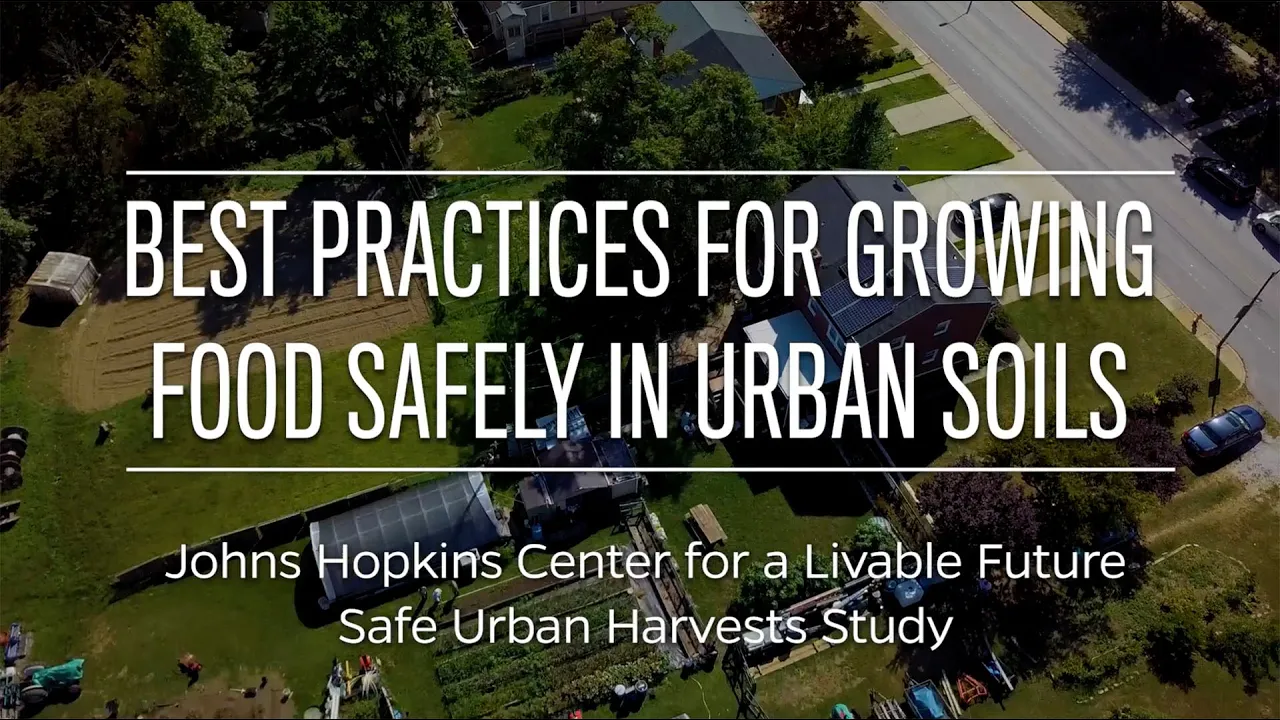
Best Practices for Growing Safely in Urban Soils
1.1K
Urban gardening can be safe by following key practices: select garden sites away from busy roads, industrial areas, and drainage zones; test soil for heavy metals initially and every three years; use raised beds with clean imported soil if contamination exists; flush city water for 10 minutes at season start and 1-2 minutes thereafter; wear gloves, wash hands, and prevent children from ingesting soil; avoid drinking from rain barrels or hoses; and wash/peel all produce before consumption.
Click to watch →

La ville: un retour de la nature
259
Urban agriculture faces food safety considerations: (1) Urban soils may be contaminated with heavy metals or other pollutants; (2) Vegetables grown near major roads may absorb pollutants from vehicle emissions; (3) Leafy vegetables tend to accumulate more pollutants than root vegetables; (4) Best practices include using clean soil amendments, growing appropriate crops, and avoiding production near major roads. Urban agriculture can be safer than conventional agriculture when proper practices are followed.
Click to watch →
Soil Testing
Safety Tips
Soil Testing
0:04- 1
Demonstrates how to collect six soil samples from garden beds using gloves and clean tools.
- 2
Combines samples into one composite bag for lab analysis to detect lead levels.
The Universal Mitigation and Bioavailability Approach
While testing soil for lead is widely recommended, some urban agriculture experts and soil scientists argue that standard testing—especially composite sampling—has significant limitations and can be bypassed in favor of universal mitigation. First, composite sampling can dilute localized 'hotspots' (e.g., near old painted walls), giving a false sense of safety. Second, standard tests measure 'total' lead rather than 'bioavailable' lead, which is the actual amount absorbable by plants or humans. Because testing can be expensive and complex, this alternative perspective advocates for assuming urban soil is contaminated and immediately implementing universal safety practices: building raised beds with imported clean soil, using geotextile barriers, and adding organic matter or phosphorus to bind lead and render it harmless. This shifts the focus from costly diagnostics to practical, immediate risk reduction.
Understanding the common historical sources of lead contamination in residential soils, such as lead-based paint and leaded gasoline.
Basic concepts of soil science, including soil composition and how heavy metals bind to soil particles.
The fundamental health risks of lead exposure, particularly its neurotoxic effects and how it can be ingested through homegrown food.
The general principle of representative sampling in scientific testing to ensure a small sample accurately reflects a larger area.
How to interpret laboratory soil analysis reports, specifically understanding lead concentration thresholds measured in parts per million (ppm).
Soil remediation and mitigation strategies, such as using raised beds, importing clean soil, or adding phosphorus to reduce lead bioavailability.
The concept of bioavailability and how soil pH and organic matter content influence a plant's uptake of heavy metals.
Best practices for safe urban gardening, including barrier placement, dust suppression, and crop selection guidelines (e.g., avoiding root vegetables in compromised soil).
361 views7likes4:19@healthyhomescoalition6490Original Release: 2020-05-13
hi everybody I'm Paul Han I'm the director at the Healthy Homes coalition and we are out at our garden here and we thought we'd teach you a little bit about soil sampling to see if there is lead in your soil so you can keep your kids safe so this is our garden plot and you can see in the back there is a cold frame and what we're going to do is we're going to test these two beds right here in front of us use an Eliot Coleman style to garden here 30 inch wide beds and we're gonna take a couple soil samples right here now the first thing I'm gonna have to do is I take these soil samples is I'm gonna have to put on a pair of protective gloves here I have latex gloves I'm gonna use those to make sure that I don't paint the soil sample so here I am putting on my gloves wanna make sure that we don't contaminate that sample okay now that I have my gloves on we'll grab our sampling supplies it's a simple ziplock bag and a kitchen spoon you want a clean spoon one that you know that hasn't been in the dirt because you don't want to contaminate your sample again so it's pretty simple process we're just going to take in these beds six samples we call this a composite because it's going to be six samples from different locations we're going to blend them all together and test that as a composite sample if you're taking deposits you want to be careful here you don't want to take more than ten in one ziplock bag and you don't want to take less than three so to get started you're gonna take your spoon and you're gonna clear out just a little spot about half an inch deep about four or five inches long and then you're gonna take your first sample about a half inch of that soil an inch deep a half inch deep so dig in a half inch take the next half inch of soil so that's one sample we're going to do two more from that bed and three from the other so there you go six samples done real quick here they're all in the bag I'm gonna take this bag home now I'm gonna label it and I'm gonna fill out my chain of custody form to go with it I'm gonna send it off the lab I'm gonna find out how much lead is in the soil so there you go just a couple minutes working you got your soil samples a couple things to keep in mind now the soils in Michigan are always going to have a little background level of lead typically in Grand Rapids we're seeing that at about 20 parts what we're really looking for in gardens is to keep it as low as possible a plain area for a child should not have more than 400 parts per million so that's what we're gearing to stay well under that level a couple things you can do to really stay safe biggest thing you can do is wash your hands after you're working in the garden before you eat before you touch things so you don't get that soil in direct contact with you know your children that it's not consumed and then when it comes to your vegetables it's really those root vegetables that we want to be careful with you'll want to wash them off get them good and clean before we consume them when it comes to your other vegetables that grow above the ground again wash them off but we're really not as worried about them absorbing the lead into the vegetable itself unless your garden has really really super high levels of lead I wouldn't be too concerned about that kind of absorption so wash your vegetables wash your hands test your soil and say safe we got some links down below in the comments that will bring you to your chain of custody form and some information about how to take that soil sample and how to send it to the lab please stay safe at home at this time
Up Next

39:22
Leah Penniman on Black Agrarian Farming Traditions
@TheNOFAVT
30.8K views•2019-03-18

178:38
Whole Brain Architecture: First International Workshop 2024
@thewholebrainarchitecturei9784
640 views•2024-07-22

9:49
FastAPI vs Flask vs Django: Choosing the Right Python Web Framework
@TechWithTim
302.5K views•2024-05-26

1:42
Game of Thrones Opening Credits: A Cinematic Analysis
@gameofthrones
46.3M views•2011-04-18
Related Study Plans & Knowledge Roadmaps
Structured learning paths in General & Interdisciplinary Studies
general-studies
Artificial Light: History, Tech & Human Impact
01The Pre-Electric Era: Fire, Oil, and Gas Lighting
02The Incandescent Revolution and Grid Electrification
03Gas Discharge and Fluorescent Illumination
+ 3 more learning modules
14h6 modules
Explore Roadmap
general-studies
Elevator Engineering: History, Physics & Cities
01From Hoists to Safety Brakes: The Dawn of Vertical Lift
02Hydraulic vs. Traction: The Engineering Physics of Elevators
03Modern Speed, Safety, and Algorithms
+ 2 more learning modules
12h5 modules
Explore Roadmap
general-studies
Rubber: Material Science, History & Geopolitics
01Origins of Natural Rubber & Mesoamerican History
02The Chemistry of Natural Rubber & Vulcanization
03The Geopolitics of the Rubber Boom & Colonization
+ 2 more learning modules
12h5 modules
Explore Roadmap
general-studies
Containerization: Evolution, Logistics & Trade
01Ancient Trade & Bulk Cargo: Amphorae to Barrels
02The Industrial Revolution & Cardboard Packaging
03The Containerization Revolution: Malcom McLean
+ 2 more learning modules
12h5 modules
Explore Roadmap