



![[유선배 - 유체역학 - Chapter21] 레이놀즈수, 무차원수](https://i.ytimg.com/vi_webp/8hH86nxFypM/maxresdefault.webp)





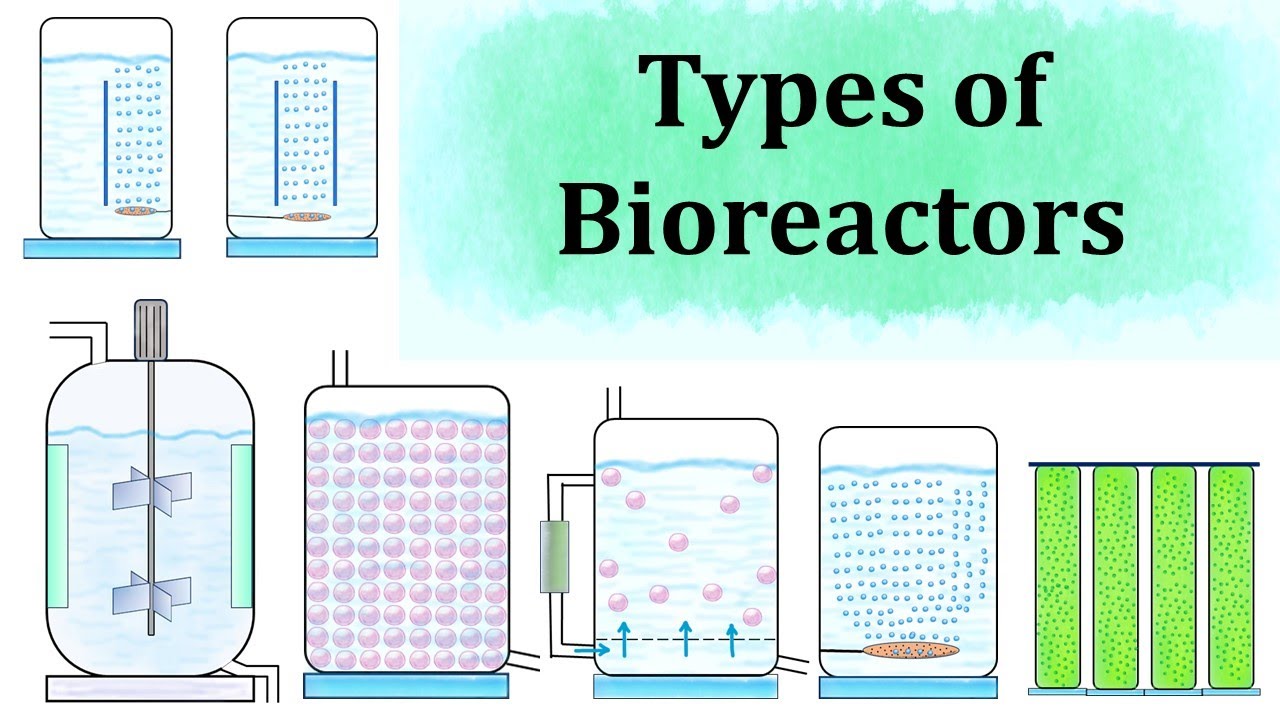








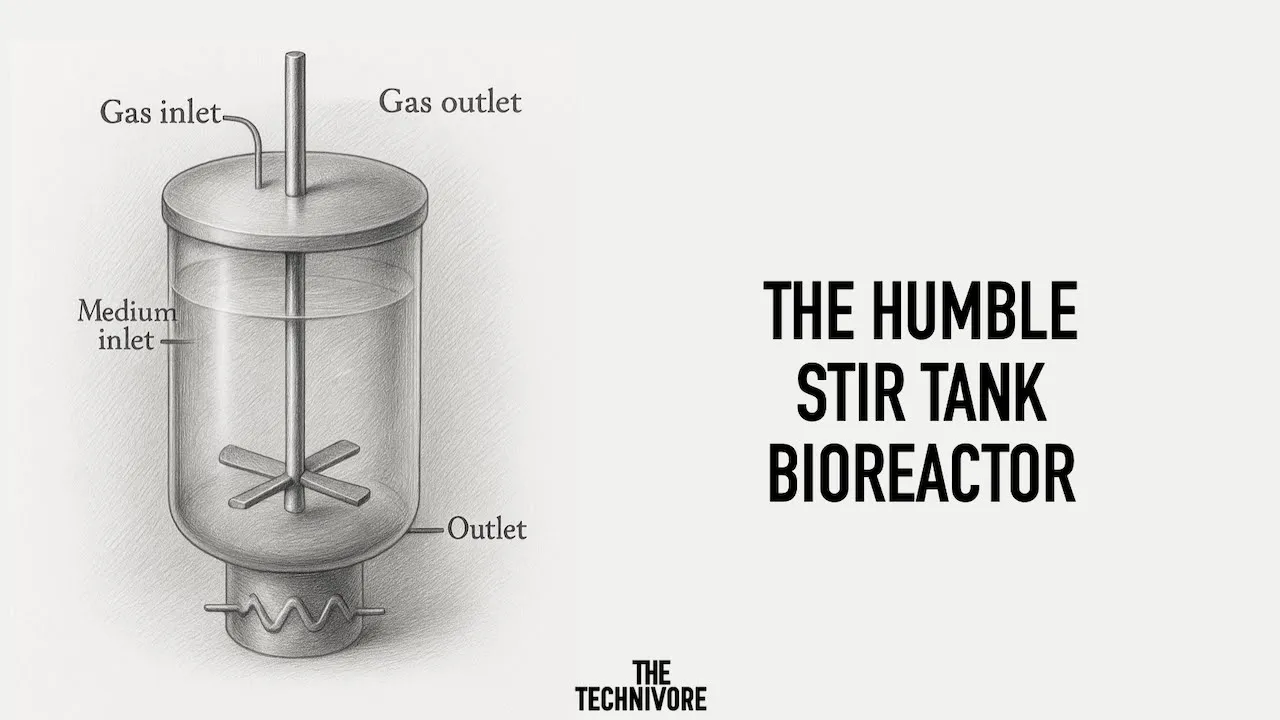









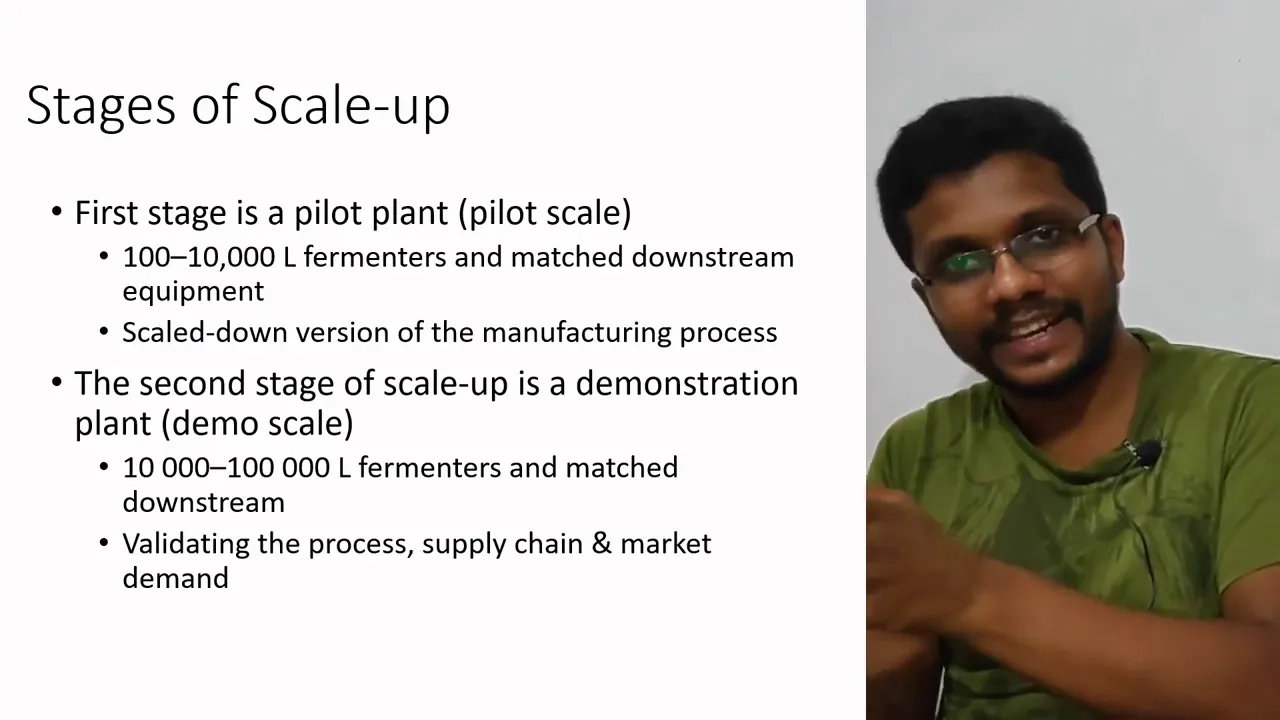
This video explains the fundamental principles of bioreactor scale-up, demonstrating how to calculate power consumption and impeller speed using dimensionless numbers (Power Number, Reynolds Number, and Froude Number) while addressing the challenge that achieving complete dynamic similarity across all dimensionless groups is practically impossible, requiring engineers to prioritize specific criteria such as constant power per unit volume or constant impeller tip speed based on process requirements.
Bioreactor Scale-Up Practice Problems: Power & Agitator Speed
Added:Understanding of dimensionless numbers in fluid mechanics, particularly the Reynolds number (Re) and Power number (Np).
Basic principles of fluid dynamics in stirred-tank reactors, including flow regimes (laminar, transitional, and turbulent).
Familiarity with the geometric configurations of standard bioreactors, such as impeller types and the function of baffles.
Fundamental mathematical relationships governing power consumption in agitated vessels, specifically how power scales with impeller speed and diameter.
Scaling up based on mass transfer limitations, specifically maintaining a constant volumetric oxygen transfer coefficient (kLa).
Analyzing the impact of shear stress on biological systems (e.g., shear-sensitive mammalian cells versus robust bacterial cultures) during scale-up.
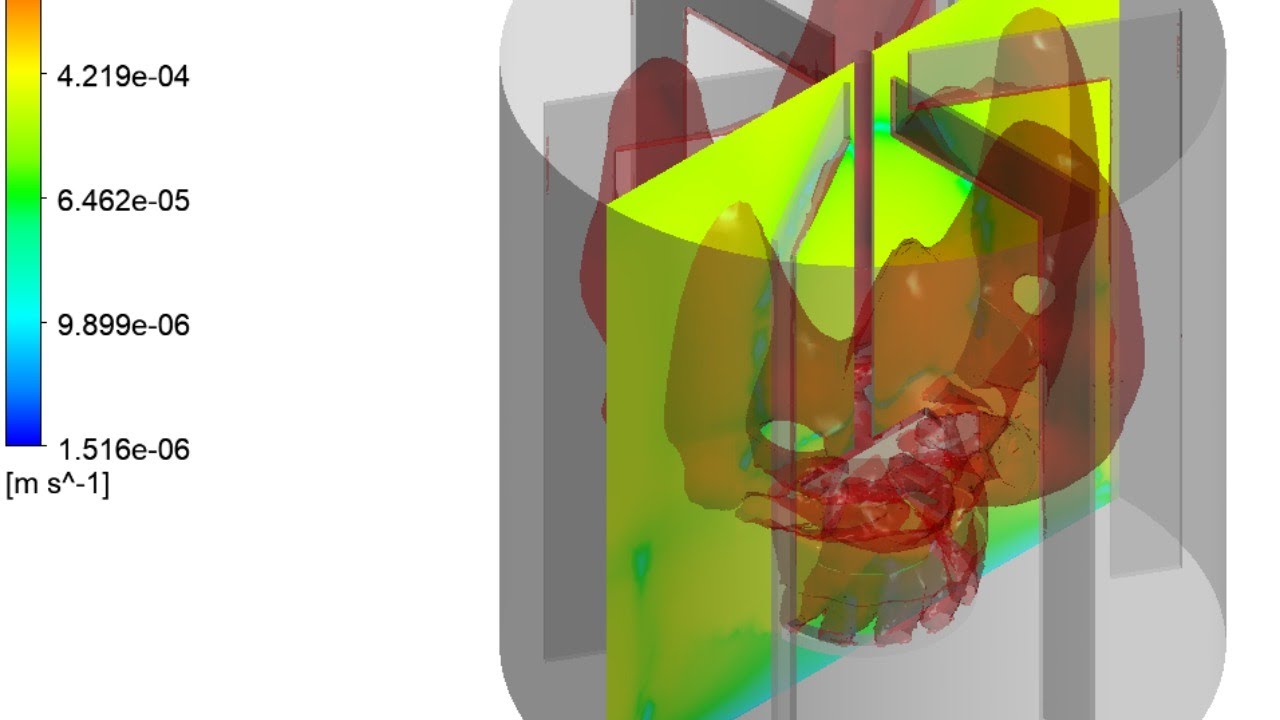
Utilizing Computational Fluid Dynamics (CFD) to simulate flow patterns, mixing times, and dead zones in industrial-scale bioreactors.
Addressing thermodynamic scale-up challenges, such as heat removal limitations caused by decreasing surface-area-to-volume ratios in larger vessels.
341 views0likes19:35Original Release: 2023-09-22
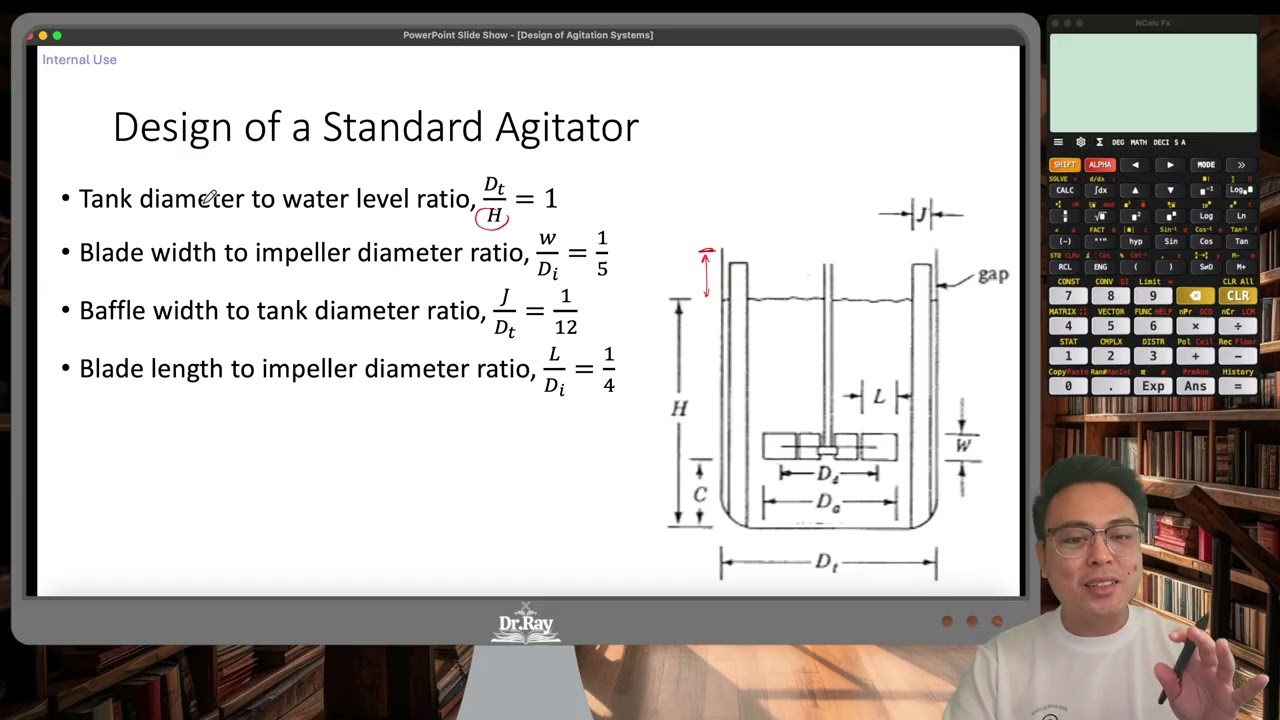
[Music] swam prha digital India educated [Music] India welcome back students so today we'll do some practice problems on uh scaleup of bioprocesses so let's begin with the first problem so if you can see on the slide uh the problem here uh is about power consumption by an agitator in an unbaffled vessel so we know that this is how the expression which is given the power number is a function of your froud's number and impellers renold's number so your LHS stands for the power number and uh inside the two terms they stand for the impeller rals number and your froud's number so based on this correlation we need to determine the power consumption and impeller speed of 1,000 gallon fermentor based on the optimum conditions derived using one gallon vessel so we also need to demonstrate that whether scale up is possible or not with respect to Dynamic similarity so let's first look at the first part of the problem so we'll mark p with the Prototype and we'll have model marked as M so so your volume of the prototype to model type it is increasing by 1,000 folds from the model type so this is one correlation between the volumes at the two level so we know now the scale ratio which is the ratio of the linear Dimensions at the model and the Prototype would be taking the cube root of this which will be a factor of 10 so for the linear Dimensions the ratio is 10 the scale up ratio now in order to achieve Dynamic similarity your dimensionless numbers should be equal at the two scales which is the model and the Prototype and we are using the same fluid so obviously the properties of the fluid will not change at the two scales so we can negate those terms so by the equality of these dimensionless numbers for dynamic similarity you can find a correlation between the power consumed and the impeller speed at the two levels where we know the linear dimensions are changing by a factor of 10 so using the equation two given here we'll get this correlation which will correlate your power consumed with the impeller speeds at the two levels while if you use ral's number equality as shown here in three equation 3 then the liquid properties I said can be negated the linear dimensions are related by a factor of 10 at the two levels so your impeller speeds at the two levels are correlated as given here we'll call this as equation five so this we'll call it as equation five this is equation 6 so if you see equation five where the equ equality of Power number was assumed we saw that this is how power consumed and impeller speed can be related and equality of ral's number gave you the correlation between the impeller speeds at the two levels as shown here and if you do the equality of froud's number given in equation 4 then the linear Dimension factors are known the gravitational constant value is same linear dimensions are related by a factor of 10 so your impeller speeds at prototype and model type can be related as an under root of 10 so if you see the equality of these dimensionless numbers it is very clear that it is very difficult to keep all the dimensionless numbers same at the two levels because then the equality between the operating parameters here it is impeller speed changes so since the equalities are conflicting one can make out that it is impossible to satisfy the requirement of dynamic similarity until unless we change the fluid properties so if at the model and the Prototype the density and the viscosity are unequal then equation three and four where the equality of a n number and we were looking at the equality of froud's number so here gravitational constant is the same so we'll get an equality that NP is 1 byun 10 of NM if this can be substituted here so we can find how the fluid properties the mu by row at the Prototype will be related to Mu by row of the model type which comes out to be changing by a factor of 31.6 so if the kinematic viscosity so mu by R is nothing but the kinematic viscosity is similar to that of water let's assume of the Prototype it is similar to that of of water then the kinematic viscosity of fluid which needs to be employed for the model should be 1 by 31.6 of the kinematic viscosity of water it is impossible to find the fluid whose kinematic viscosity is that small hence all three dimensionless groups they play an important role however keeping all of them equal at the model and the prototype to satisfy the dynamic similarity is very difficult so one has to find depending on which characteristics are important whether heat transfer characteristics Mass transfer characteristics or sheer sensitivity or oxygen Mass transfer is more crucial we use the scaleup criterias let's see the problem problem two so a pilot scale fermentor of diameter and liquid height so diameter and liquid height both are5 m is fitted with four baffles of width 1/10th of the tank diameter stirring is provided using scaba curved blade disc turbine which is 1/3 of the tank diameter okay so the impeller diameter is of this impeller is 1/3 of the tank diameter the density of the culture broth is given as 1000 kg per M Cube the viscosity is 5 ctio so Optimum culture conditions are provided in the pilot scale fermentor where the impeller speed is 185 RPM now following completion of the pilot studies a larger production scale fermentor is to be constructed the larger fermentor has a capacity of 6 M Cube and is geometrically similar to the pilot scale vessel so geometrical similarity has been met and it is also equipped with a impeller of diameter 1/3 of the tank diameter okay so again the diameter of the impeller is 1/3 of the tank diameter at the production scale so the linear dimensions are the ratios are possibly same what is the power consumption in the pilot scale fermentor so we need to find the power consumption at the pilot scale so let's first find out the linear Dimensions let's list down the information which is provided to us so the diameter of the tank and the height of the tank the liquid height in the tank are the same which is 0.5 four baffles are there and width to diameter ratio of these baffles it is 1x 10 and the turbine has the diameter the impeller has the diameter 1/3 of the tank diameter so impeller diameter can be calculated.5 / 3 which is1 167 density is given viscosity is also given and the impeller speed Optimum impeller speed has been provided at the pilot scale so volume can be calculated for the tank assuming cylindrical so working volume can be calculated as volume of the tank would be PK r² h H so we can calculate so it comes out to be 98 M Cub using the diameter of the tank and the height now large fermentor the volume is given as 6 M cub and the diameter is the same as the height in this tank and again the impeller diameter is also 1/3 that of the tank diameter so it's a geometrically similar vessel using the volume we can find out the diameter of the tank because D is equals to H so p d ² by 4 into H so D andhr equal this becomes cube is equal to 6 so we can calculate the value of D and find its cube root so once we know the tank diameter we can find out the impeller diameter which is 1/3 of the tank diameter now for the pilot scale reactor the are all number is given by the expression d i n di i s row by mu now viscosity and density remain the same of the fluid the impeller diameter is known and the impeller speed at the pilot scale level is also known which was 185 RPM so we can find the ral's number at the pilot scale reactor now this is greater than 10,000 value so which means it is in the turbulent region now for turbulent region the power number is constant and for the kind of impeller six blade Rustin turbines Caba the power number has a value of 6.2 so using the power number expression we can find the power consumed at Pilot scale by the value of the power number and fluid density impeller speed is known and diameter of the impeller also at the pilot scale is known so we'll find that the power consumed at the pilot scale is 23.5 watt this is the power consumed in the pilot scale fermentor let's see Part B Part B says that if the production scale fermentor is operated so so that the power consumed per unit volume is the same so our scale up criteria is power per unit volume at the pilot scale level what is the power requirement after scale up okay so we need to find at the production scale how will the power consumed will change so if P by V is the scale of criteria then we can find the power consumed at the production scale which comes out to be 1.4 kilow because now the volume is known at the two scales and the power consumed at the pilot scale is known so we can determine the power consumed at the production scale let's see problem three consider the scale up of a ferment fermentation the small scale fermentor has a height to diameter ratio of three so H by the linear Dimension ratio at the small scale is given H by D ratio which is 3 the impeller diameter is 30% of the tank diameter so di by D is also given as3 so Q by V is given to us as 1 BBM so where Q was the volumetric gas flow rate and V is the volume so the air parging rate is 1 vvm agitator speed is 500 RPM agitator speed so n is given to us as 500 and three rusten turbine impellers are being used so we need to determine the dimension of the large charge fermentor and agitator speed for the scale up criteria as constant P by V so we know that for constant P by V criteria how impeller speed and diameter they can be related so let's see the for a SP system so volume at the model type is given H by D ratio is given uh so the tank diameter and the height can be calculated based on the volume which is given agitator speed is 500 RPM and impeller is3 * the tank diameter so now we can come to know about the impeller diameter as well so at the Prototype the volume is 10,000 so we can see that the scale factor for the linear dimensions is 10 which means the diameter ratios at both the scales so your height at the production scale would be three times the diameter at the production scale assuming the linear Dimension ratios are the same because it is having geometrical similarity for scale up so your tank diameter at the Prototype and your height at the Prototype level is now known for constant P by V if you remember the correlation between the impeller speed and the diameter of the impeller is shown here n Cub d s turns out to be constant so if this is constant then for the pro prototype if the impeller speed is to be calculated we know the ratio of the diameters of the impellers which is the linear Dimension linear ratios of the tank Remains the Same so there's a factor of 10 and the impeller speed is 500 RPM so we can calculate the impeller speed at the Prototype now constant impeller tip speed if that is the scaleup criteria then the correlation between the impeller speed and the diameter of the impeller changes as ND is equals to constant so if this is constant we know the scale factor as 10 and the impeller speed as 500 RPM so let's assume this is prototype and that is model type m stands for model type so if we need to find out the RPM at the Prototype with a constant impeller tip speed then it can be calculated as 1 by 10 the linear ratio was 10 of scale factor was of 10 so the impeller speed at the Prototype will be equal to 50 rpm with constant impeller tip speed as the scale up criteria
Up Next

18:36
Bioreactor Scale-Up: Stirring Strategies for Single-Use Systems
@bioprocessinternational
201 views•2024-05-17
14:12
Quantitative Real-Time PCR (qPCR): Principle, Method & Data Analysis
@animatedbiologywitharpan
129.2K views•2023-09-06

23:33
Microbial Degradation of Plastics: Biodegradation Pathways & Sustainability
@majeedhammad
2.9K views•2021-04-11

16:04
CRISPR and Genetic Engineering: How Gene Editing Works and Why It Matters
@kurzgesagt
30.5M views•2016-08-10
Related Study Plans & Knowledge Roadmaps
Structured learning paths in Biotechnology
biotechnology
AAV Production: Transfection, Prep & qPCR
01Introduction to Gene Therapy and AAV Biology
02Mammalian Cell Culture: Suspension HEK293 Cells
03Upstream Bioprocessing: Triple-Transfection Optimization
+ 2 more learning modules
18h5 modules
Explore Roadmap
biotechnology
Building Gut-on-a-Chip: PDMS, Cells & TEER
01Foundations of Microfluidics and Gut Anatomy
02Cleanroom Fabrication & PDMS Soft Lithography
03Epithelial Cell Culture and On-Chip Seeding
+ 2 more learning modules
26h5 modules
Explore Roadmap
biotechnology
Optimizing CFPS: E. coli Extract & Yield
01Fundamentals of Molecular Biology and Translation
02Introduction to Cell-Free Protein Synthesis (CFPS)
03Preparing E. coli Crude Lysate (The Extract)
+ 2 more learning modules
19h5 modules
Explore Roadmap
biotechnology
Haematococcus PBR: Design, Stress & Astaxanthin
01Biology and Life Cycle of Haematococcus pluvialis
02Bench-Scale Photobioreactor (PBR) Design and Engineering
03Culture Media Formulation and Inoculation
+ 2 more learning modules
15h5 modules
Explore Roadmap