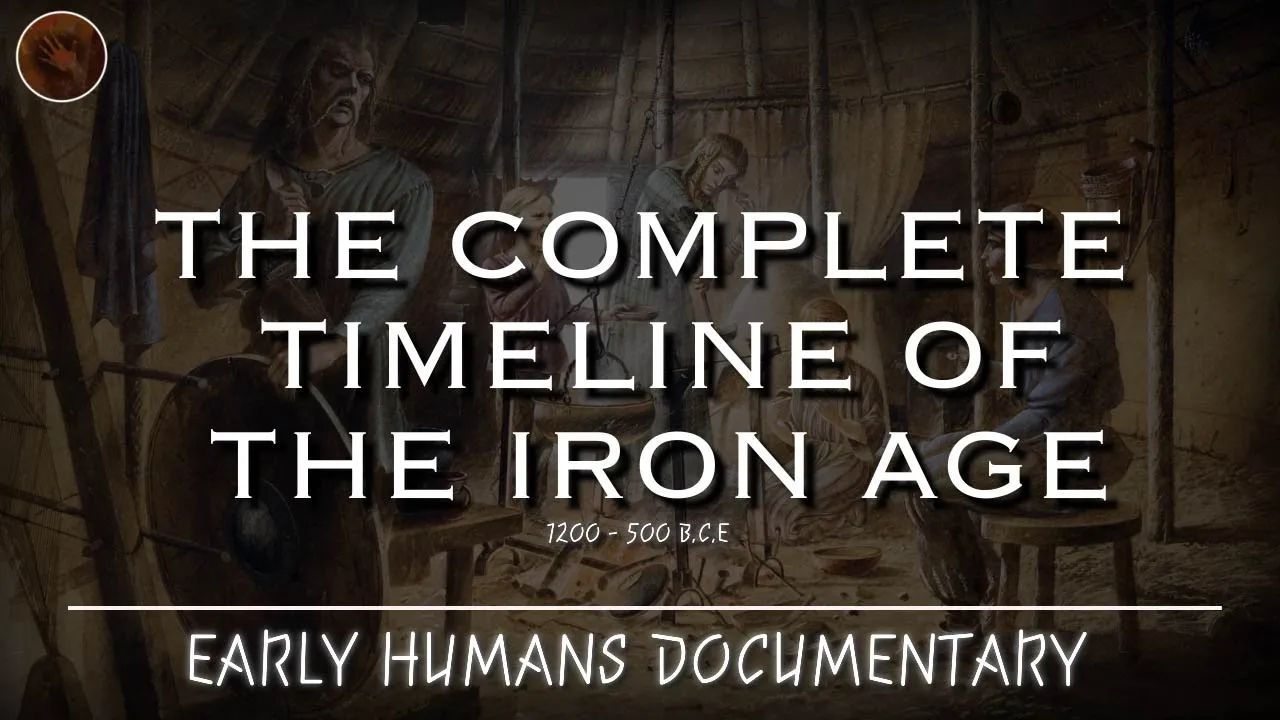




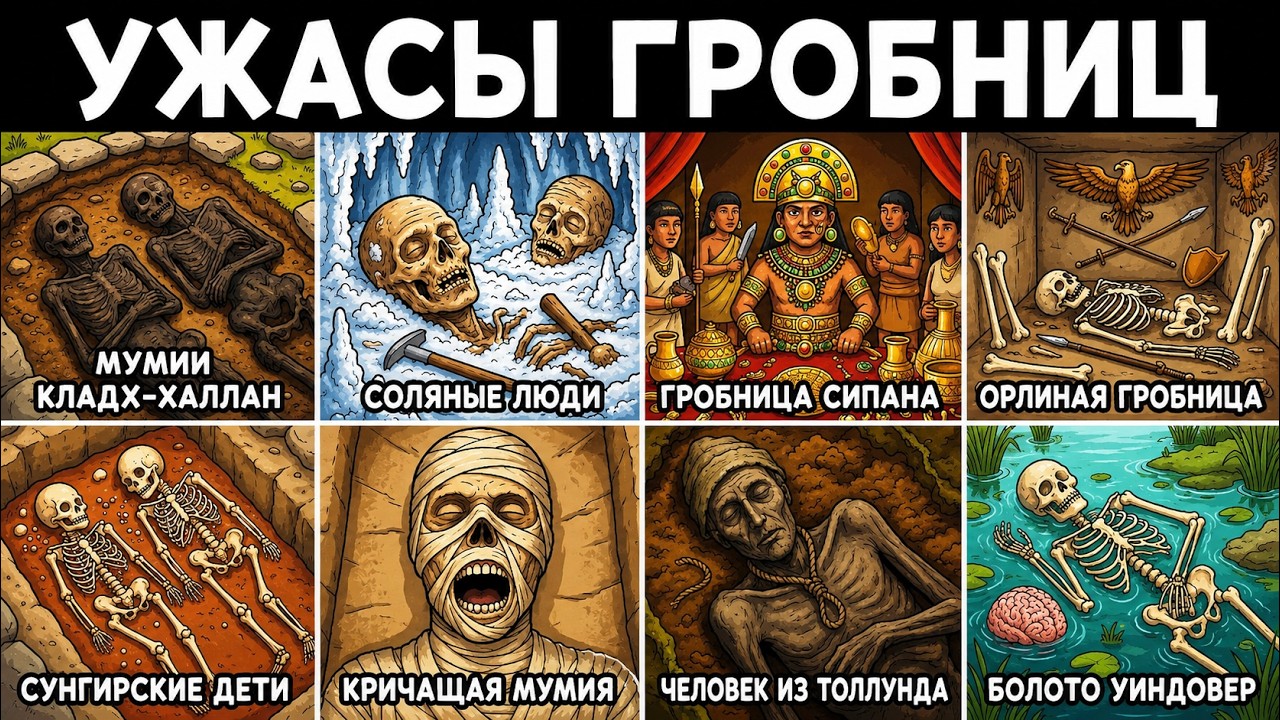







Archaeological evidence from Iron Age burials, such as the woman found bound with a lead collar in Northamptonshire and the woman pinned in a bog in Denmark, reveals that ancient Celtic communities practiced ritual sacrifices during times of crisis like famine or disease, where selected individuals—often respected community members or priestesses—were deliberately killed and buried in unusual positions as offerings to gods of nature, particularly water deities, to ensure the survival and prosperity of their people.
Iron Age Human Sacrifice: Bound Bog Burials Explained
Added:Understanding of the European Iron Age, including its general timeline, geography, and tribal social structures.
The unique chemical and environmental preservation properties of peat bogs, particularly anaerobic and highly acidic conditions.
Basic principles of forensic archaeology and taphonomy (how organisms decay and become preserved over time).
The anthropological concept of ritual sacrifice and its socio-religious roles in prehistoric societies.
In-depth case studies of famous European bog bodies, such as Tollund Man, Grauballe Man, and Lindow Man.
Advanced bioarchaeological techniques, including stable isotope analysis (to trace diet and migration) and radiocarbon dating.
The religious and mythological systems of Iron Age peoples, specifically Celtic and Germanic belief systems regarding wetlands and deities.
Ethical debates surrounding the excavation, conservation, and public museum display of prehistoric human remains.
213.4K views3.8Klikes49:54Original Release: 2025-05-13
A gloomy autumn in a deserted, lonely corner of Britain. This place was possibly once the scene of a dreadful event. Here, a woman may have faced a cruel and frightening death. Why? Who was she? Was she being punished? What had she done? Was she being murdered?
2 and a half thousand years later when her remains were discovered, archaeologists ask what happened.
I'm sure it wasn't a pleasant death. The individual appears to have been thrown unceremoniously into the grave. So, this is a unique discovery. To my mind, the mystery doesn't surround the individual.
It surrounds the burial and everything that goes with it.
[Music] The case of an Iron Age woman buried in suspicious circumstances is possibly one of the greatest murder mysteries ever investigated. Andy Chapman, a Northampton share archaeologist, came across the body during a routine dig in 1996. At first, there seemed to be nothing unusual about the burial, but soon the alarm bells rang, and Andy realized he might be dealing with a case of murder.
[Music] 2,400 years ago in this desolate part of England's Northamptonshire, a heinous crime may have been committed. A woman was buried, possibly still alive, seemingly with her arms and legs tightly bound and with a strange metal collar around her neck. Andy Chapman was determined to get to the bottom of this ancient mystery. Well, this is now just a muddy field again, and there's no sign that we were here, but four years ago, all this was stripped down to the bare subs soil and this is where we found the burial. So as we cleaned the soil away, first of all we found the skull and then we gradually exposed the whole body. If we imagine just about on this spot now she was lying down partly on her right side. The arms have been crossed underneath her and she was lying face down and her head was spent back with the face right up against the side of the pit. Not a very comfortable position, but then she was past caring by that time.
These photographs of the victim show clearly that her body was buried in a very strange position. There's plenty of room in the pit for the body to have been laid out flat, but she looked as though she was tightly bound up. Now, this wasn't the only case of an Iron Age body being buried crunched up in this way, but this was the only known example in the area. And the position of her head suggested that she was alive and struggling for breath.
It's a very uncomfortable position. I hope she wasn't alive when she went in.
As a result of that, most of the facial bones have gone. They've all they've been crushed. Whether that happened before death or after death, we can never be certain. When Andy Chapman first saw the skeleton, it certainly looked like the victim had suffered a very frightening death. This was a puzzle for the archaeologist. The local press got very excited about the find.
Journalists concluded that the body must be that of a witch. After all, she may have been buried alive, tightly bound, and wearing a weird neck ring. So, was she indeed an evildoer who needed to be punished by other members of her community? Now, finding a burial in a pit like this, it's possible to jump to all sorts of conclusions about how this person may have got there. They may have been murdered and just dumped in the pit, hidden away so that nobody knew about it. They may have been buried alive. They may have been sacrificed and then buried afterwards. All we've got is a few bones to go on. We've got a hole in the ground and a heap of bones, but the whole point of the object is to try and reconstruct a story of how did this person really get here. In order to find out exactly how old the bones are, Andy Chapman sent samples off to be radiocarbonated. The results showed that the women lived during the Middle Iron Age around 400 BC. The skeleton was found in a remote part of England's East Midlands on a hillside overlooking Northampton, a settlement that's been inhabited since prehistoric times. It blossomed in the 8th century, and by medieval times, it had become renowned for its shoe makers. During the Iron Age, there would have been just a scattering of small farming settlements here. Living in the roar of nature, life was harsh and death frequent. So, how did these Iron Age Kelts see death among their own peoples? Iron Age skeletons are extremely rare finds. During this time, the dead would be cremated or the remains left out to rot naturally. Dr. Andrew Fitzpatrick, an expert in Iron Age religious rights, has a theory on why there was only one body found buried on the hillside. In modern western society, we tend to think of having one god. In Christianity, there is one single figure. But many societies are certainly in the past thought of there being many gods. They believed in gods, some of whom were a god of war, another one who be the god of the underworld, gods who would ensure prosperity and look after people on their journeys. So we shouldn't think of a single god, but we should think of many gods. So the diversity of religion should lead us to think I would say that we should have a diversity in burial rights. Not all the people who lived in even a smallcale community were selected for burial in this way. And one of the interesting questions but one which we don't know the answer to is why only some people are selected. So why was this woman selected? After all she was the only burial from this time period found on the site. What was special about her? Was she a valued member of the clan or an outcast? Forensic science might help solve the mystery. The historic city of Canterbury, site of the infamous murder of Archbishop Thomas Beckett and Chor's medieval tales, is Chapman's next destination. Its most prominent landmark is the 7th century cathedral. This magnificent monument and the streets surrounding it still exude the atmosphere of old England.
Trevor Anderson is an expert in bones.
He will be able to give Andy Chapman a profile of the woman, her age, health, and stature, and may even be able to tell how she died. But it's not just ancient victims Anderson examines.
Occasionally, he works with the police when they come across a potentially suspicious death. Can his expertise help with this suspicious death?
These remains that he's bringing down seem as if they're going to be very exciting. U we've got a good idea of the date and we know from the side photographs that the individual appears to have been thrown in unceremoniously into the grave. We know a lot about Iron Age buildings, forts, but we know relatively little about burial. So, it's very interesting to have an Iron Age burial. And this one is even more interesting because of the unusual position of the body in the grave. So it all begins to add up to something that I think is going to be a very interesting project. Who was this woman? What was her position in the community? A noble woman, a working woman, an outcast? Why was she buried in such a strange position? Can her bones help Andy Chapman find out what happened to her?
We've got the bones that we really need for working out the sex. We've got most of the pelvis. First, Anderson confirms the sex of the victim. Grooves and notches in the pelvis suggest that indeed it is a female. The skull can verify this. If you look here, just above the eye sockets, this is the frontal bone. And can you see how that rises straight up? It goes straight. It doesn't curve back at all. And there's a lack of brow ridges. That area is very, very smooth. And that is typically female. That's very female looking skull. How old was she when she died then? Well, we can tell that because we have the teeth here. And you can see there's not that much wear on those teeth at all. And that makes it look as if she may still just be in her 20ies.
But then when we look at the upper jaw, you can see that these mers here on the right side, these have been lost during life because the socket has totally healed over there. And in addition, those two mers have been lost many years before death because the loss of bone around the region of the teeth. So she's probably older than the lack of attrition suggests. Probably in her 30s or maybe about 40. In the ancient world, life expectancy was short. This was a good age. She could easily have been a grandmother.
We have in the lower spine, in the lumbar spine, evidence that the joints themselves have been compressed. Is this telling us anything about her life, the sort of work she was doing every day?
Well, it suggests that she didn't have a completely easy life. She was involved in repetitive tasks. Quite a lot of pressure on the spine, quite a lot of bending, possibly carrying objects on a head even. Now, this is the bone just above the feet. If you're standing upright, that's more or less the position of your lower leg. But when you're squatting, this bone comes forward like that and is flexed on the feetbones. And that when we look is exactly what you've got there because there's the joint surface. And the joint surface is extended forward over there where my finger is now. And that's formed a new facet. That's called a squatting facet. So we've got evidence that you spending a lot of time squatting down. So we could imagine kneeling down grinding the wheat for the flour. H that would make sense because you've got the evidence of the squatting on the ankle bones and also the grinding that moving backwards forwards and pushing would be pressure on the back as well. So that that seems to fit in. But of course you're really interested in this, aren't you? Because she was buried in this rather strange position looking at the bones. There's no obvious pathology as to why the bone should be in that position. One or two of the things that we might want to consider from a medical point of view. After death from about 12 hours to 36 hours, you have a period in which rigor mortise sets in. After 36 hours, it wears off.
But between those time periods, the body is more or less immovable. The limbs will be held in that position. So if she had died in a position such as you suggest with the lower limbs tightly contracted and the upper arms under her body and she was buried let's say a day after her death it would be difficult to move the limbs. So what you're saying then is that the position she was in was most likely just part of the ritual of the burial. There's no other reason why she would have been in that position. I think she's been deliberately placed like that. Bone analysis shows that the victim probably lived an ordinary life, but the mystery is still to be solved.
Why was this the only body to have been found here? The metal neck collar might provide a vital clue. We've been cleaning the burial up and I'd actually gone on to do some other work at the time and the person who was working on it walked across to me and they were holding this length of twisted lead and they showed this to me and said, "Is this anything special?" And as soon as they um put it in front of me, I knew well it could only have come from one thing, a neck ring or collar around the burial. And as far as I knew then, no other burials had ever been recovered with one of these collars actually in place around the neck. I think I spent the next few minutes running around the site shouting.
As the only Iron Age burial found in England with a metal torque in place around the deceased neck, the evidence perhaps adds weight to the local newspaper's accusation that Andy has uncovered Britain's first witch. Was this heavy lead neck ring to weigh her spirit down and prevent her returning to haunt us? Could there be any truth to these superstitious [Music] rumors? We know we've got a woman 30 to 40 years old, about average height. We know she's been doing a certain amount of work for a living, but not an excessive amount. She is in pretty good state of health for her age. So, there's still something we have to explain here.
Just how did she get in this position?
How did she die? Perhaps the most useful clue lies in the torque, the neck collar found with the body. Torques were very special items of Celtic jewelry, usually worn by warriors and leaders. There were lengths of metal bent into a circular shape and worn around the neck with rounded terminals at the front. The Kelts would bury treasuries of gold and silver torqus as offerings to the gods, such as these from the largest horde found in Norfolk. Dr. Andrew Fitzpatrick believes that the presence of the talk might cast light on how this woman was regarded by her community. The way these things were used were to display status. But we also find ordinary people with talks around their necks throughout the Iron Age of a period of 500 years or so. That's quite a long time. It's like almost from the time of Christopher Columbus to the present day. But within that period, the the meaning and usage of talks changes.
So they start off, I think, as being very high status objects. Then they become a bit more mundane, and then later on, I think they are they become a sign of a god. So they're obviously something which the Kelts felt brought great powers to them. And that may be quite important in trying to understand why the lady who is buried in the settlement just up behind me here had a neck ring. Maybe she was very important and she was very highly regarded in her society. If talks were associated with status and divinity, was the burial a religious right? Exactly what kind of importance did the woman have? Her talk was strange, different from others found. made of lead, broken in two, and positioned back to front. Chapman took it to Butzer Ancient Farm in Hampshire, an Iron Age working museum, to get some more clues. Oh, David, there's the torque. Oh, lovely. Yes. David Freeman has studied Iron Age metal. Perhaps he can help solve the puzzle of why the torque was broken in two and worn backwards. So, there's a number of interesting aspects about the torque.
One is, of course, we've got those nice rounded terminals. Yes. the decorative pieces as you'd expect to be at the front. Yes. We're actually at the back of the neck as we found the body. So, the torque was actually on backwards.
Yes. Good heavens. So, of course, while most of the torque is quite well made, we've got the twisted metal. These ends are quite obviously much more roughly finished. You can see the perforation there. And this side is just two notches roughly cut into the metal. So, how do you see that perhaps being fastened?
Well, one assumes if the talk was made in one piece, it may have been a fracture. Lead won't stand too much movement. It may well be an attempt to sort of hold it in one piece. Possibly a leather thong through there. And if it's laid either side of that one, so you've actually got a loop and then using the notches there to actually bind it using perhaps a linen thread. And that would have made in effect a leather hinge. A leather hinge. That's right. I don't suppose we'll ever know unless we could time travel. That would be very useful.
But certainly we can we can have a look at the object as a as a a working item and perhaps that will give us some clues. Yes, the torque was well made, the terminals neatly finished and the twist very even. What stands out is the brake and the crude chiseling of the broken ends. Could the brake have occurred when making the torque for a particular occasion? Is the rough hinge a quick repair?
I've got some lead tin mix waiting on the fire. Let's fill the mold and then see what happens from there. Lead occurs naturally in combination with an ore called galina. Easily obtainable and easily smeltable, but far less valuable than gold or silver. Perhaps this was the best that people from a simple farming community could afford for their religious right. Lead would have been shiny when new and a good cheaper alternative to a precious metal. And then a nice gentle pour into the mold so that it fills nice and evenly. It'll change from a silver to a nice gray. There it goes. And then we can just leave it to cool. Well, that's uh solidified nicely.
What I'm going to do is lever it out from the end very gently. Lift it without trying to bend it too much. In Celtic societies, the smith was amongst the most highly honored of craftsmen.
The art of changing dull ore into shiny molten metal which hardened and could be fashioned was magical, alchemical, considered a divine art.
Okay, twisting. I'm going to cheat. I'm going to use some spanners. And I'm also going to use some pieces of leather in the spanners themselves so that we don't mark the lead any more than we have to.
Right, here we go.
Oh, there we go.
question of whether we can get an even twist. Oh, it's going nicely at this end. Yes, there's a lovely twist developing there. Look. But of course, on yours, we've also got something else, which is the rounded ends. And to do that, we need a hammer. Now, again, this work hardens it as well. So, we got to be a little bit careful. See, that's beginning to to round off.
If you take a little bit of time, eventually you will end up with a nice round end on your terminal. But how did the victim's torque break? Was it deliberate or an accident? Now, the next stage is the most critical of all. What we're going to do now is bend it that way to become torque shape. What we do is very gently, little bit at a time. There you go. Look, the position of the fracture in the new torque is remarkably similar to the one in the original. Now, before that actually drops into two halves, give you a chance to handle it. You can see the problem immediately because we've work hardened it. We're already developing a fracture in the middle. But if you would like to just try to bend it very gently just to take that final fracture out into two halves. It won't take very much pressure. Just just gently push together. Now it's gone. Look, you can turn that over and have a look. There's the fracture. And with very little more effort, gone. It's as simple as that. Yeah. But not quite exactly. Not quite exactly.
Just like Just like the original. So there's our excavated one in its two pieces. And there's the one you've just made. Yes. In its two pieces. That's right. After breaking. So the torque, a sacred item, could have been specially made for a religious event and broke in the manufacturing as this one did. The rough hinge could be a hasty repair done in time for a special event. But what exactly was the event? A murder, a religious ritual, or the punishment of a witch? I didn't believe she was a witch at all. Using a term like witch, which comes out of medieval Christianity and has all these problems of post-medieval Christianity as well with witchcraft and so on, I don't think it helps us at all in trying to understand the way people lived in the Iron Age. I think general opinion is that virtually all these burials are ritual sacrifices of some sort. Dr. Fitzpatrick is an expert in Iron Age burial and ritual sacrifice. So Andy Chapman has invited him to the scene of the crime to ask his opinion.
Just why is she there? What reason was she buried? What was the thinking behind it at the time? Was obviously the question we were posed. If we think about how people were buried in the Iron Age, most people, well, we don't know what happened to most of them, do we? We find bits of people on settlements as well, skulls, long bones, maybe partial burials. But what we think is that most of the people were put out into the countryside and for their bones to be picked clean by the animals and the birds of the kinds which we've seen circling around here. And only sometimes were parts of them brought back for burial in the settlement. So a complete burial is actually quite unusual. is still left with this question of just what happened at her death. One idea that I've been playing with is that perhaps she was a sacrifice possibly is a time of need. Their crops had failed, their animals were dying, so she may have been perhaps even a voluntary sacrifice to help ensure the life of her grandchildren. I I'm not sure I agree with you there. Um I think sacrifices are very rare at this time. We know that they happen. we can identify them in certain places maybe to bring good luck to that settlement. So sacrifice can have many different roles in trying to see into the future to thank the gods to try and bring more powerful magic to your settlement and to your people and sometimes to say sorry to the gods.
So those kind of contexts are quite clear to me as an archaeologist. I'm not sure that this is particularly unusual and I wonder whether the talk really tells us this woman was very important and much loved member of her community rather than she was deliberately killed.
So another way of looking at this burial is that perhaps this woman was actually the grandmother of her people. Her children, her grandchildren were there when she was buried. So they're actually burying her with respect as a valued member of the community. Indeed. And that was why she may have warranted such a valuable object in their terms. Of course, it's the mourers who have made this statement. It's what people think about that woman. And if they feel that they regarded her so highly and she was so popular, they may have chosen to put this unusual and rare find with her but turning it round on her neck so it faced the other way so that the status which she took with it in life couldn't be carried into the other world with her.
It's a really fascinating find. So Dr. Fitzpatrick has introduced the new less sinister theory burial not sacrifice.
But Chapman remains suspicious. But while we have this other story now that she may have been the grandmother who was buried with respect, she still can't just be the average grandmother because they didn't all end up in the ground. So there's still something more to this story. There's still an extra dimension that we can't account for just from this heap of bones in the pit.
Did the victim end up in the ground as a sacrifice to a Celtic fertility god in times of need? Was she buried, punished?
Can we reach any conclusions? So, we started our story in a muddy field in Northamptonshire. And there we found this 2 and a half thousand-y old burial of a woman buried face down in the pit, very uncomfortable position with this lead collar around her neck. And as the archaeologist responsible for this fine, my job has been to try and find out just why she got there. The idea that she was a witch is just nonsense. But also, clearly she wasn't a murder victim or something like that. She's a ritual burial put in the ground for a special purpose by her people. And I think we must see these people as farmers. They depended on their crops and their animals. If they failed, they died. So I think we're seeing something in time of great need. Perhaps famine, drought, animals dying of disease, there was a need to make a sacrifice. So I think here in a time of extreme danger, perhaps she paid the ultimate price and offered herself as a human sacrifice to help save her children and perhaps her grandchildren.
Denmark 1835. Danish peepd diggers make a shocking [Music] discovery. They find the petrified body of a woman in a boggy marsh pinned down underwater by wooden stakes. Was it murder? A hostage? A criminal? Who is the body in the bog?
I want to know why this woman was placed here. Is she murdered or is she sacrificed?
Well, we don't know whether she was killed first or whether she was drowned by being pinned down. We have some evidence that it couldn't be a strangulation.
We're almost able to reach out and touch her and speak to her and say, "Who were you? Why did you die like this?
[Music] Danish archaeologist Dr. Lorna Vas has been investigating the case for over 20 years. Vas's long journey has been to uncover the truth of what happened to this woman.
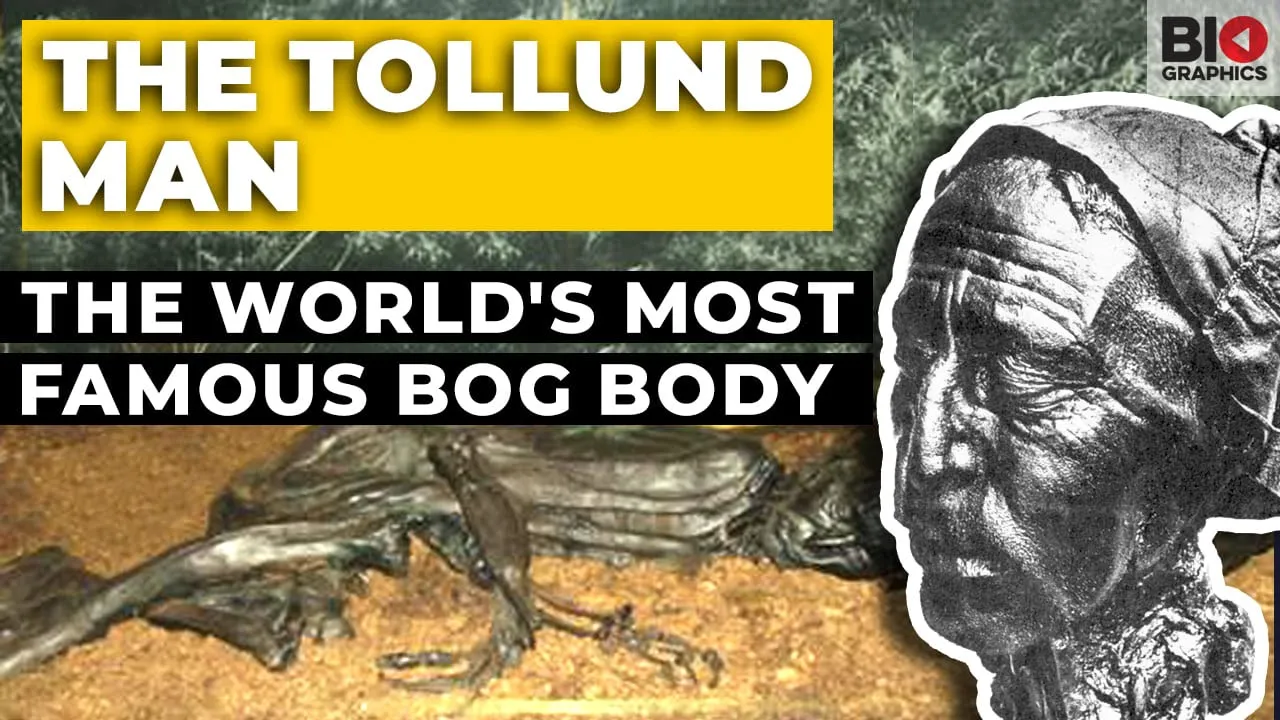
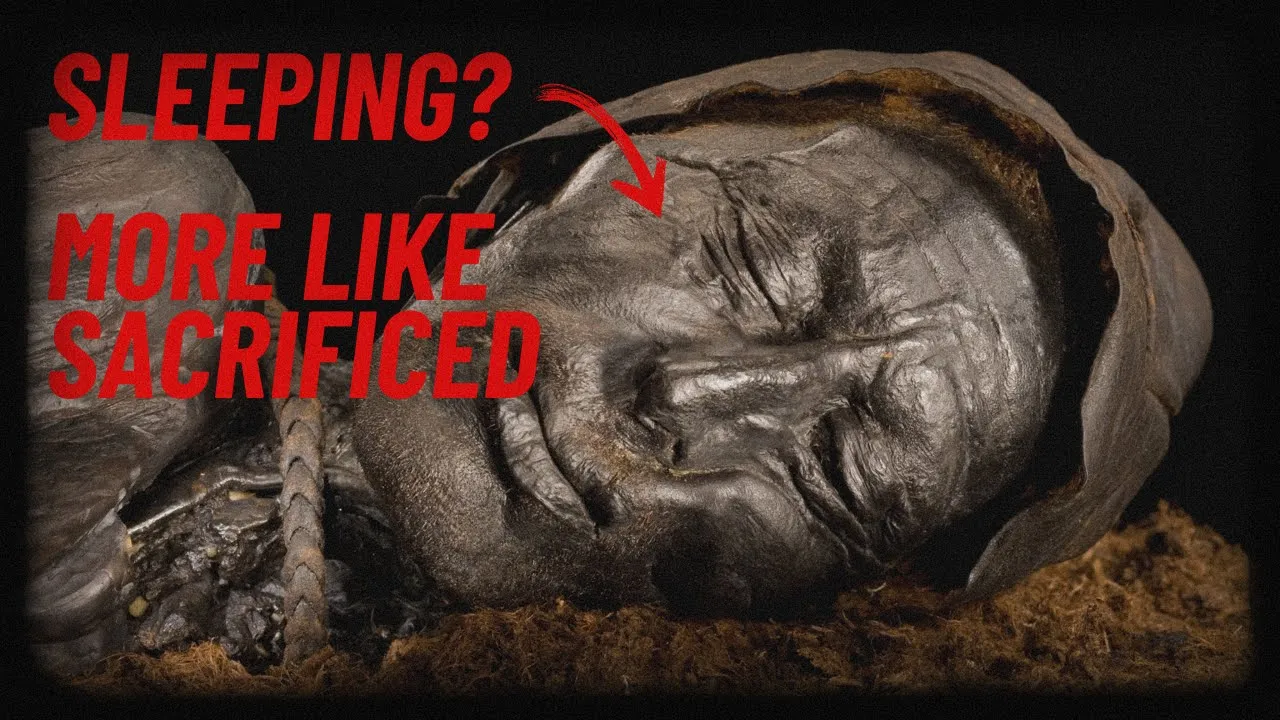
[Music] Denmark is a land of contrasts, watery wildernesses, labyrinths of streams and rivullets, and bustling beautiful cities such as his capital, Copenhagen. His most famous son is storyteller Hans Christian Anderson, whose fairy tales have delighted children the world over, and none more so than his most celebrated character, The Little Mermaid. But this is also a country that stands on the shoulders of a rich and intriguing past. This is Jutland, a landscape of marsh, fen, and bog. The land of fearsome Vikings, dramatic Norse sagas, myths, and legends. Here in murky waters of these marshes, hundreds of prehistoric bog bodies have been discovered. Ancient people that met an untimely end. Restless souls, windows into the past. Forensic science has proved that many of the bog bodies had been strangled or hanged. Many were found with rope around their necks, the likely murder instrument. The question remains, why were they killed in this way and then sunk into the bogs? Bogs are tracks of soft water logged land containing organic acids and hydrocarbons and layers of pete. These chemical properties preserve the soft tissue of any corpse that might end up in the bog. This figure found in Tolen Fan is actually over 2,000 years old.
His skin is blackened and leathery, and some of his flesh has decayed, but his face is so well preserved you can even see the whiskers on his chin. Does the Tlen man's fate help us solve the mystery of what happened to the woman found in the Pete bog?
The tunnel man's face is very expressive. His survivors has arranged him exactly like a sleeping person. They also bent his arm and his legs exactly like a sleeping child when they put him out in the B. If he was a man they have executed because of some kind of criminality or think that they will just have thrown him out. And that demonstrates for me that he was a sacrifice. The restful position and peaceful face of the Talon man might indicate that he was a sacrifice dealt with carefully and honorably. But this woman's face surely tells another story.
Mouth contorted, eyes bulging. Her expression is of sheer terror. The victim was discovered in 1835 by a workman digging a boundary ditch in a pete bog known locally as Gonhild's bog.
Far from the peaceful sleeping position of many of the other bog bodies, she was found pinned down by wooden crooks at her knees and arms. Archaeologist Dr. Vas wants to solve the mystery of what appears to be a terrible violation. We are in a small bug and uh it's a very exciting place because we have found a bug body here.
And now I will look around. Perhaps I will find a place where it is found. Her first line of inquiry is at the scene of the crime to see if she can figure out exactly where the woman was killed.
I think at that time when they found the body in 1835, the buck perhaps was much bigger and there was much more water.
So I really think it had to be inside the bug there. So uh we can try and go and look after [Music] it. Yes. Now we are here at the border and I think this place has a very strong atmosphere. Perhaps it is the place where this crime or this sacrifice had taken place. The 19th century Pete diggers first noticed the human arm and foot just below the water's surface. When they tried to pull the body out, they realized it wasn't going to budge.
When they looked closer, they found to their horror that the body had been pinned down in a shallow pity waters by wooden stakes. Heavy branches had also been thrown on top of her to keep her under the water.
I want to know why this woman was placed in the bulk here and why is she don't have the normal barrier. Is she murdered or is she sacrificed? And why is he hold down by sticks? Is a sheer sort of witch or was it what is he? To our 21st century eyes, the case of a woman drowned, staked, and waited down, smacks of murder most horrid. But who was she? And why was she killed in what appears to be a cruel and calculating way? The next port of call in Dr. Vas's investigation is Vile, a small town in Jutland, about 3 mi from Gonhold's bog. St. Nicholas's church is the victim's final resting place. Vas believes that a closer look at the body might give us some inspiration. Another 20 bog bodies were found by diggers during the 19th century when Pete was a major fuel source. Most of them were destroyed because of lack of scientific interest in such a quantity of bog bodies. But our victim was preserved because she was thought to be a queen.
They decided to take it away into V this city here and it was uh uh taken to the hospital where the the doctors um made a very detailed examination of the body.
19th century rumors abounded that this must be the body of a very special person. She had been found in Gonhild's bog, named after a young 8th century Norse queen who, according to Viking Saga, was killed and drowned in the bog by order of the dreaded King Harold Bluetooth. Frederick V 6th was king of Denmark in 1835, and he ordered that she should be given a royal burial. King Frederick V 6th decided that he had to honor this old queen. He had been told that this is a body from the Viking age and therefore he put her in this beautiful coffin and placed her here in the church.
The story wasn't properly contested until 1977 when she was radiocarbonated to 450 BC, making her early European iron age, 1 and a half millennia older than the Viking Queen Gonhild. But thanks to this welcome case of mistaken identity, the victim's body escaped disposal during the 19th century. But if she wasn't the murdered Viking Queen Gonhild, who was she? The Iron Age was a time when most people were cremated when they died, a burial of any kind was unusual. First impressions would surely point to a dreadful death, perhaps [Music] murder. Dr. Vas turns to modern forensic scientific analysis in her search for clues. About 35 mi away from Gonhild's Bog is a town called Arus. Here at the hospital's forensic medical institute, she has come to meet radiologist Dr. Langfeld and forensic pathologist Dr. Gregerson to see if they can help solve the crime. By analyzing the body as if she was a modern-day murder victim, they may be able to tell exactly how she died. X-rays will help build the picture. There was a vital piece of evidence found with the body that makes Dr. Langfeld suspect that she didn't die by drowning after all. When the corpse was stickked out, there was a rope around her neck and the question is, is that lady strangulated or hanged? Now we can see here between the base of the skull and the first two segments of the cervical column the first and second segment are completely intact. There are no bones broken.
There's no fracture and that means then she is certainly not hanged uh by the falling method but are strangulated. So the forensic evidence is beginning to suggest that there is a high probability the victim was strangled. This adds to the puzzle. Can the pathologist Dr. Gregerson corroborate this new finding?
We saw at the front of the neck a horizontal groove and when we look carefully we saw a similar groove on the left side of the neck and there was also one at the back of the neck. And this is very interesting for my point of view because it's exactly on that place where we see strangulation marks from groups. My conclusion is that uh it's most probably is a homicide and she can have died from strangulation and then placed in the pete bach. But I can't tell you why they did the homicide. The scientists conclude then that this was an ancient homicide. Further scientific analysis may reveal the true nightmare of the woman's death, strangulation, or drowning. But what was the motive? Was this murder? Or could it be some form of ritual sacrifice?
The forensic scientists have since proved that the likely cause of death was strangulation.
But the fact that the 19th century scientists removed and destroyed her organs means that a complete picture can never be built by Dr. Gregerson, a pathologist. What he has been able to establish is that she was about 40 years old when she died. Perhaps you can tell me was she alive when they staked her down in the book. If we shall see about she had been alive when she come down, we must have the organs to look at it.
um if you had been alive I think so the cause of death should be drowning but we cannot make that diagnosis without organs and is difficult also when we have the organs to make the diagnosis drowning okay I have see any signs of violence on the x-ray photos there are signs of violence but all the signs we have has come after the death this we can see here in uh the fractures in the lower ribs on the left side they are fractured but there's no sign of healing there's no new bone as it would be in in living persons so that has happened after the death but then I have another question to you Dr. I guess have they uh done anything harm or uh to her or had they uh poisoned her? Oh yes, I have a look at the skin. Uh we have no indication of blunt trauma uh to the body uh before she has died. But you Dr. Long can you see anything sickness in her life on the X-ray? What we are looking especially for is uh the vertebra here the column and uh uh the hips because we are very eager to find out if she had rheumatic disease. Yes.
Many of the oil corps we have found uh in the pete box in Denmark and in all Germany they have rheumatic diseases but this lady has absolutely nothing. She's quite healthy in it. So she's quite healthy. So uh then I must ask to the last uh what was the way she died? We have uh this grooves on the neck. So a possibility is that she had been strangled. But uh if you have a fresh body, we will look at the organs in the face uh for small particular bleedings.
It's a sign of strangulation and uh suffocation but we have no possibility to look at associated now. Dr. Vas has learned that the woman had reached a good age of 40 years and was fit and healthy the day she died. The grooves in her neck and fractured ribs were all results of the terrible act. As modern scientists research more ancient bog bodies, patterns of ritual practices in the Iron Age are becoming clearer. Some bodies were placed in the fetal position, others with the remnants of ritual meals in their stomachs.
Mistletoe, hazelnuts. Was the woman a sacred offering to the gods? V is still haunted by the image of the poor woman being held down in the water by her asalants, stakes pinning her below the surface, suffering a terrifying death. If she was also strangled, could this be an ancient ritual killing? an Iron Age religious practice. Dr. Vas has sought the help of Iron Age specialist, Professor Miranda Green, who has come to Denmark from Britain to visit the scene of the killing. Okay, Miranda, here you can see the bug. It is uh here where this bug body was found in 1835.
She may be able to help Vas understand Iron Age communities and their religions and point to a motive for this killing.
Oh, this is very spectacular, isn't it?
Yes. Wonderful. Yes. We don't know exactly where this body have been found, but I really think this place is where it got here. What kind of community had the woman belonged to? Well, she may have been quite local. She may have lived on the sort of upper ground, you know, not far from here. And we've got to think about a relatively small farming community. I think we're not dealing with a city or with an isolated farm, but probably with maybe an extended family, 20, 30, 40 people living in small probably wooden houses with maybe reed thatch roofs with livestock and they would have had um arable arable land as well. So Miranda, could you tell me about the gods at that time?
We think that during the iron age in this part of the world there were lots and lots of gods and they would have been mainly to do with the elements to do with the natural world. Gods of the sky, gods of the sun and a god of each and every place and particularly water.
Water would have been very very sacred.
And if our lady was sacrificed here, then she may have been sacrificed to a particular god or goddess residing or being the kind of personification of this sacred iceberg. Here Iron Age peoples of Northern Europe would make human sacrifices in times of great need, perhaps a sudden famine or epidemic. Many would have been willing sacrifices honored by their community as messengers to the gods. Honor or not, it would have been a terrifying death. We have to sort of wonder as to what kind of things were going through her mind.
Was terror the most important emotion for her or was it tremendous pride?
Maybe that emotion overrode all the terror. We It's difficult for us to think in those terms. Very difficult.
But can Professor Green explain why the woman was staked down under the water if she was such a precious sacrifice? I think it goes back to this idea of she being a sacred gift and the bog being sacred as well. So again, she needed to be placed in it. She couldn't float away from the spot where she needed to be and she needed to be in a sense embedded within the great heart of the marsh. And the only way to guarantee doing that is to stake her down. That I think you've got to try and build the story. And that seems to me to be as likely as as anything that it is a ritual killing. She was a special person. Yes. And she had a very close relationship with the goddess. And she was actually a mediator. She was the kind of link person between the community and the goddess. And by being killed in this way, she may even almost have become the goddess herself and blessed the community as a result.
So far from the idea of a murder victim, she may have been a special person, a precious sacrifice to the gods. To sacrifice someone in bog land would have had a particular meaning to Iron Age peoples. Sometimes bogs look deceptively like dry land, but to take a step onto a bog can be treacherous. The ground gives way to deep watery pete. To the superstitious people of the Iron Age, bog land could have seemed to have a life of its own, like an unpredictable living creature that can look fairly harmless, but can deliver death. This may have drawn people to make human sacrifices in marshes. These peoples also believed that marshes and water in particular were gateways to the other world, the land of the spirits and the dead. The gods could come seeping out from the other world. Humans could actually communicate with the gods, perhaps by sacrificing somebody deep down in the heart of a bog. But who was the woman who was sacrificed in Gonhold's bog? My favorite theory is that she is a priestess. perhaps even the priestess of this sacred site itself where maybe the community or community is at a time of tremendous crisis threatened maybe by extinction through famine through warfare through disease the ultimate sacrifice would be to kill ritually the priestess of the god or goddess of the marsh itself.
So, not only was she a precious sacrifice, but perhaps a priestess, but why was she killed so violently and her body so harshly treated when other sacrificial bog bodies found, such as the tool man here, were gently laid to rest with eyes and mouth closed, seemingly at peace? How will Professor Green react when she sees the Gonhilds bog woman face to face? Will she still consider her a willing sacrifice?
This is the first time Professor Green has seen the body, and it's a special moment for her.
Gosh, I didn't know what to expect. This is It's unbelievable. It really is just so mindbending just to see her like this cuz she's she's different from how I thought she'd be. She's in a way more real, you know?
It's it's just such a privilege to see her to sort of look at somebody so ancient and probably so special. My goodness, what an experience. Gosh. Yes. She's much smaller than I thought she'd be. And her head particularly is much smaller, but it's very delicate. You can see the cheekbones clearly. It's a beautiful skull.
Actually, she must have been quite a good-looking woman. I think. And she's got delicate bones. She had quite a fine features. And one likes to think maybe she was somebody noble.
Maybe somebody who deserved her coffee. Oh, I would love to have met her. You know what a story she could tell. Amazing.
It's important for us to know who she is because this is one of the very few occasions when we're coming directly face to face with our past. We normally can't see the individuals who died in the Iron Age. This person is immediate, we can look at her and because she's well preserved, we're almost able to reach out and touch her and speak to her and say, "Who were you? Why did you die like this?" and we are coming to face with the past but also our own identity in trying to find out who this person was.
So Luna, what did you learn from the forensic scientists? I learned that she was an a lady on 40 years old when she died. They couldn't see that she had any sickness in life. But what is important was a groove and at her neck and her throat because it can tell us perhaps that she had been stronger but we don't know exactly right but still there is a lot of question we have no answer for yes those those questions are going to stay aren't they yes [Music] the sacrifice woman was killed brutally and cruy she and her clan lived in this harsh environment relying on the sun and the rain for good harvests. But if the crop failed, human survival was in jeopardy. To a simpler society, the gods of nature could seem cruel. They needed to be placated. Perhaps the Gonhild's bog woman died willingly as a gift to the gods from her people in times of great need. But Dr. Vas's investigation has certainly unraveled a great deal of the mystery surrounding the day of the woman's death. Her journey has given us a fascinating glimpse into the culture and practices of Iron Age Denmark. We now know that the woman's death was violent and terrifying. But this woman wasn't murdered. Her death was no accident. She was a sacrifice to the gods. Probably voluntary. An honorable woman chosen to answer the needs of her people.
[Music] [Music]
Up Next

47:21
Rethinking Maize Domestication: Assemblage Theory Applications
@assemblagethinkingsymposiu6935
113 views•2017-06-21

38:41
Astrobiology Through an Anthropological Lens: Field Insights
@georgiatechastrobiology
128 views•2021-04-14

4:45
Proxemics Explained: The Study of Personal Space
@Vox
536K views•2016-07-05

10:38
Psychology of Internet Trolling and Pranks Explained
@AzzyLand
10.7M views•2017-12-20
Related Study Plans & Knowledge Roadmaps
Structured learning paths in Anthropology
anthropology
Space Anthropology: Analogs, Culture & Habitats
01Foundations of Space Anthropology & Cosmic Imaginaries
02Extreme Isolation & Micro-Societies in Orbit
03Space Analog Habitats & Earth-Based Simulations
+ 2 more learning modules
15h5 modules
Explore Roadmap
anthropology
Legal Anthropology: Customary Law & Pluralism
01Foundations of Legal Anthropology and Social Justice
02Legal Pluralism: Coexisting Legal Systems
03Customary Law and Indigenous Dispute Resolution
+ 2 more learning modules
15h5 modules
Explore Roadmap
anthropology
Global Tourism: Gaze, Authenticity & Heritage
01Introduction to the Sociology of Tourism
02The 'Tourist Gaze' (John Urry)
03Staged Authenticity in Tourism
+ 3 more learning modules
14h6 modules
Explore Roadmap
anthropology
Modern Kinship (ART, Adoption & Chosen Family)
01Foundations of Kinship and Family
02Assisted Reproductive Technologies (ART) & Relatedness
03Transnational Adoption and Global Kinship
+ 2 more learning modules
12h5 modules
Explore Roadmap