






















Braver Angels teaches three core communication skills for respectful dialogue: (1) Listening - truly hearing others without formulating counterarguments, (2) Acknowledging - validating others' perspectives without offering your own opinion, and (3) Pivoting - transitioning to share your own views by asking permission first. These skills help people across political divides communicate more effectively by understanding that conservatives and liberals often have different values and concerns, and by avoiding assumptions about why others hold their beliefs.
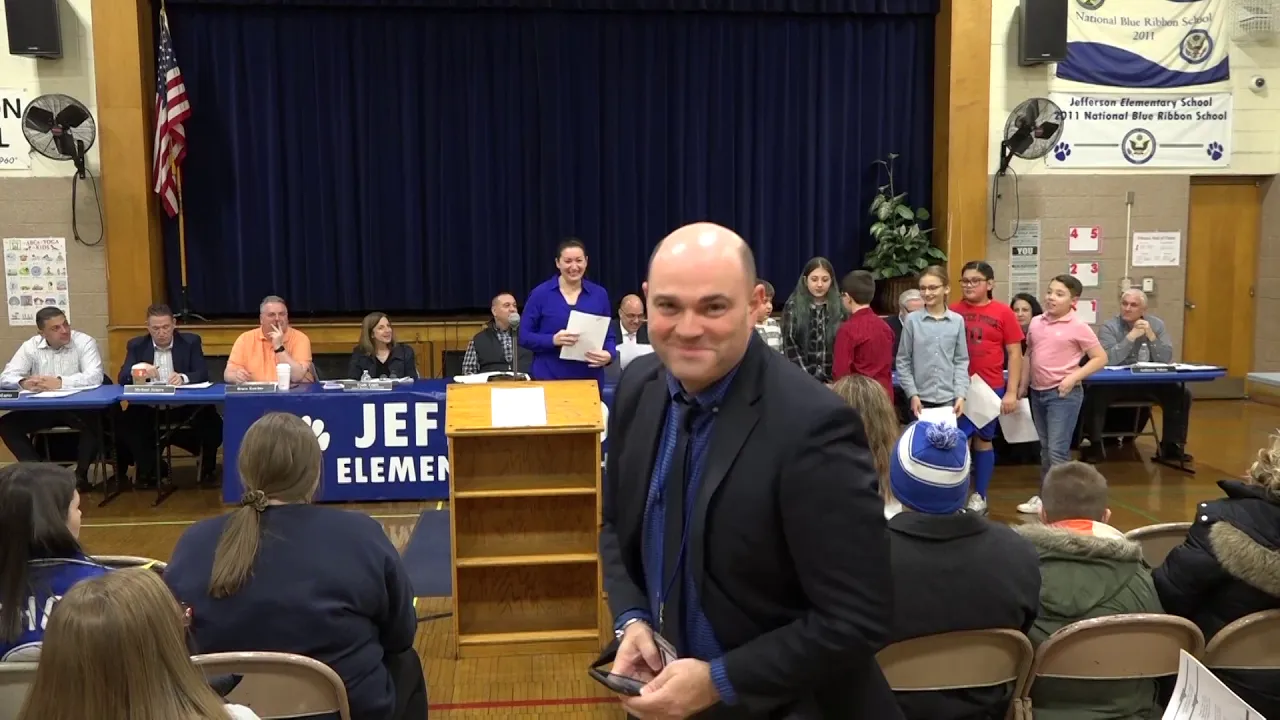
Mentor Board of Education: Special Meeting on Braver Angels Discussion
Added:Understanding Affective Polarization: The psychological and sociological concept of political division characterized by mutual distrust and hostility between opposing factions.
The Role and Structure of Local School Boards: Familiarity with how school boards operate as democratic, local governing bodies and why they frequently become lightning rods for broader cultural disputes.
Fundamentals of Civil Discourse: Core concepts of active listening, mutual respect in debate, and non-violent communication models.
Overview of the Braver Angels Organization: Knowing their mission as a national, grassroots movement dedicated to bridging the partisan divide through structured dialogue.
Advanced Conflict Resolution and Mediation: Exploring formal academic and professional strategies for resolving deep-seated, identity-based disputes.
Deliberative Democracy: Studying how structured, respectful citizen dialogue can be systematically integrated into governmental decision-making.
Facilitation and Moderation Skills: Training on how to lead depolarizing workshops, manage heated public comments, and maintain neutral ground during contentious discussions.
Policy Impact Assessment: Investigating whether collaborative communication strategies lead to objectively better, more durable policy outcomes in public administration.
179 views0likes53:23Original Release: 2025-05-30
Good evening. The May 29th, 2025 special meeting of the mentor exempted village board of education is called to order.
This meeting is being held in accordance with section 3313.15 of the Ohio Revised Code. Please place your mobile phones on silent mode for this meeting. And if you would please join me in the pledge of allegiance. I pledge allegiance to the flag of the United States of America and to the republic for which it stands, one nation under God, indivisible, with liberty and justice for all.
As we start the meeting, I'd like to um motion to elect Miss Jessine as our um treasure prompt. Second. Thank you. Be glad to keep the notes. I'll second. All righty. So, we call for a vote. Yes.
Please call the RO. Mrs. Cook, yes. And Mrs. Marchazza? Yes. And I also vote yes.
All right. We're a little bit reversed order, but now that we have a president prom, could you please call the role for this meeting? Indeed. Mrs. Cook. Yes.
Present.
And Mrs. Marchazza, present. And Mrs. Jessling is also present. Ready to continue. Okay, great.
Thank you. Um, we have a board work session today to improve communications between board members and to learn strategies for respectful dialogue and we have um Nancy Miranda here with Braver Angels to um volunteer her time giving us a um instruction. So, if I could please have you come up and you may join us at the table here. Thank you very much. May have you spell your last name presentation.
M I R A N D A just like do I clicker or clicker? Oh, okay. I didn't know he was a person forward.
So this um with brighter angels we have a series of workshops which are called skills building. This is just one of those. The other workshops focus on uh depolariz yourself and family and politics which helps you work out the difficulties between family members who differ. And we also have one on social media and then of of course skills for disagreeing better which teaches us how to speak to those across the aisle. Now, I am just going to go over this slide by slide so you understand what the presentation is about. As I mentioned to somebody, I'm not going to have you run through any exercises or do any of the work. It's just for you to understand it. So, please um ask any questions you want. Don't be hesitant to interrupt me if you want. And I just want to make this very clear so if we do go ahead and have this you'll all be aware of what's pres being presented. Okay, next screen please. Then first of all we identify the goals just page through them is two.
The first one is understanding the values and concerns of both liberals and conservatives. Then we go into skills for better listening and skills for sharing. During these two last bullets, we actually have practice sessions where we ask the participants to partner with each other and practice skills.
Okay. Then agenda I'll quickly go over going to go over the ground rules, expectations to abandon, introductions, the basic skills, practice and wrap up.
So the ground rules are that these workshops are focused on skills. You are not debating any issues. So there is shouldn't be any type of contention going on where people disagree or agree with certain ideas. If that happens, we politely shut it down, reiterating, we're not here to discuss issues. We are here to learn skills.
That's it. It's not a competition. Nobody wins or loses. Everybody is here simply to learn. Then we ask for people to agree on that.
Okay. So, we do have some expectations to abandon. One is that you're not here to persuade anyone to change their views.
And coming out of this session, you may not have the same skills as those who don't partake in the session. Meaning that hopefully you will have learned something and you could take them into practice in your daily life. You may run into somebody who has no idea how to tackle a contentious discussion. So you might help to sort of do the heavy lifting in these discussions and help them along to keep things from derailing.
Okay. Then we do a I think this is about a five or 10 minute breakout session where we ask people to break out into groups of two or three. We always ask that you sit with somebody you do not know to get to know one another. You introduce each other. You tell each other why you have come and what you hope to get out of the session.
Okay? And you could just put all the bullets up in here. The first skill we talk about is listening. And we always reiterate that everybody thinks they know how to listen, but very few people really do.
We hear, we all can hear. We never listen. And it's very difficult to listen to somebody without using that inner debater and thinking, you know, when you truly want to listen to somebody, how often do we think, what am I going to say again?
What am I going to counter them? How am I going to prove they're wrong? This is reiterating. You just shut up and listen and pay attention.
Okay. Then we just ask for participation. Why do people think it's hard to listen? Again, this workshop lasts about an hour and a half. A lot is built into these type of exercises and seeing how many people are participating. Obviously, if we try to urge people to speak up, but sometimes you just might get much quiet people and sometimes everybody wants to talk. So, we try to manage it to make sure these workshops end on in an hour and a half.
Four years ago, I had an opportunity to participate in the dinner in a fight.
Oh, yeah. If you're familiar, this reminds me of many of the same opportunities and goals that they managed with a group of people coming together and modeling how you could listen to very polar opposite opinions respectfully and how that discussion could kind of un unravel or not quickly.
Yeah, you have to pay attention. And we are partners with Ted Wel from Fighting to Understand. And as a matter of fact, the next Northeast Ohio Braver Angels Alliance meeting is going to be doing a dinner. Oh, nice. I think the subject is going to be the Brown Stadium. You know, so there's five chairs and they take from strongly agree to agree, neutral, strongly or disagree and strongly disagree. That's neat. It's sort of a a nice you eat dinner, you talk. It's it's a nice event.
Okay. So, next is the values and concerns. What we do here is stress that in order for you to listen to the other side, it's important that you know the values and concerns of the other side. And when I go through the next couple slides, you you know I don't know we could stop a little bit on the next slide so you could sort of read through these. We have identified five conservative values and five conservative concerns and the safe for liberals.
Now, as we go through these, often we'll get some push back from the audience saying, "Wait a minute, you know, I'm a liberal, but I still feel I'm patriotic." You know, so we emphasize this is not a one-sizefits-all. These were vetted by Braver Angels, conservatives, and liberals. And if you Google, just Google it, you'll find some very similar values and concerns.
It's not saying the other side doesn't share them and you have them the other side. It's just in general. So these are the values and then we're going to list the concerns and people are asked just to be very open-minded. We we've had push back as I said when people say well you're pigeonholding us by saying these are our concerns but we try to work the way and I understand the purpose of this exercise and then we have the liberal values. Could you go back? Just go.
Yeah.
How much time do you typically spend on this portion of the Oh, probably about five or There's an exercise. Okay. Over this is about five minutes. I was going to say it might trigger some discussion.
So I was I'll explain that. Yeah. So after we go through the the uh concerns of liberals, we do an exercise. Gotcha.
Okay. Yeah, you could go ahead and show the concerns.
And these were written by Braver Angels staff. You said they or like participants or they took a survey of Braver Angels, what we call what we called each other as reds and blues.
Okay. you know, the reds being conservatives, blues being liberals, and ask them as a group to come up with what they think are the key concerns and key values of of both sides. Okay.
Now, once we have gone through this, we do another breakout session.
How balanced is your group with the reds and the blues? Pardon me. How balanced is the group as a whole? that you have read. We have we have a higher percentage of liberals in the organization. Okay.
Um we we always are looking and wanting more conservatives to join. Okay. Uh I think and I think this is unique to Braver Angels. I think it's in the mindset of conservatives and liberals are different. Not just in their political beliefs, but you know, we think differently than each other. And I think liberals have more of a tendency to belong to these type of organizations to that like to co- talk you know that okay um and there's nothing wrong or right it's just different but our leadership everywhere from the national regional state local level that is balanced okay our board of directors is balanced our funing is balanced. And when I'm talking about funding, I'm talking about the six figure big grants we get like from Templeton or something like that where we are ensure that we're not getting x amount of dollars strictly from liberal organizations even if we have to say no.
You know, we want it balanced. Okay. And we do partner with organizations. Um they're organizations similar to Braver Angels. They could be manufacturing companies, their churches, there's universities and that is also we strive balance. So if we have we now have close to 400 organizations in this braver network. So if we have 200 liberal and 200 conservative and another conservative wants to get in, well we have to put them on a wait list. Do we get another liberal organization, you know? Oh, okay. So, you're one to one found. Yeah. Of course, that um some organizations simply do not claim partisansship, especially like universities, churches, they don't. So, they're considered nonpartisanship. But those who are like if you have the young Republican club, you know, you have to have the young something on the Democratic side to maintain it. What do you do with participants who say they're purple that they or they're more moderate? Do do you ask them to kind of like which side do you lean more toward like which of those values speaks to you? No. No. I think I think we what we're seeing is an uptick in purples or others.
But my personal belief is that people are dissatisfied with both parties and they're not necessarily I mean I think even Pew Research did a study that most independents or purples or whatever you call it only 10% are truly independent. Most are going to lean a little bit left or right. But now people are pretty discouraged with both parties. So they don't want to say I was affiliated with the Republican party. So you know but I'm still conservative or I'm still liberal. Right. I can understand that for the purposes of the the larger presentation and the larger workshop. Do people have to come in and choose signs? Okay. We only have one workshop that requires you identify and that is called the red blue workshop. So obviously you talk to and that is where you really get in and discuss your concerns about your side about the other side you know and that is at that it's we always limit that to 8 to 10 conservatives 8 to 10 liberals. Yeah. I think it's really important just to allow folks to not have to though identify with one or the other. It doesn't matter. Never ask anybody. If somebody wants to volunteer it that's fine. Yeah. and our moderators. Um, you should never ever know what's what the way they lead. And you're not the moderator. I won't be the moderator this time unless Valerie can't be for some reason. Okay. But they never show their colors. I had read a study referenced about a year ago that said that often times the response from those disperate groups lights up a different part of the brain and that in the red group there was that fight or flight. Mhm. In the blue, I believe it was problem solving and it's just a visceral response to a situation or a topic. Have you seen anything? Well, I know Jonathan Height has written a book I the name escapes me where he really does a study on the red blue brain kind of thing and says, you know, reds use all five components or or whatever and blues use only three or four. And it just shows that they're different. They have different ways of thinking. Mhm. You know, like one of our one of our co-founders who who is a he is a liberal. He says, "Well, you know, you get the blues together, they want to talk and they want you to get the reds together and you think when are we going to get something done?" I mean, he says that kiddingly, you know, but it's just different. Not wrong, not right. It's just different. Mhm. So the reason we use this exercise is because people often make assumptions about why you believe what you believe and they're wrong assumptions uh about the other side. And I use the example is you might make the assumption that a conservative is is racist or homophobic because they are against DEI or against affirmative action. When if you listen to that conservative, the reason they are against those programs is they believe in personal responsibility and not pigeon holing people. The same thing on the left where you may think a liberal or a Democrat just wants government handouts and is lazy and doesn't want to work when in reality they want social nets. They want programs there to help the unfortunate, the elderly, the disabled. So, you know, don't judge. understand what they mean by what goals they have or what they have before you just label people because they disagree with a policy that you agree with. So we get them they think about give them two minutes to think of this then they break out into small groups and discuss it. We ask them to pick one or two of the concerns and one or two of the values and then discuss why they think understanding those values is going to help them better when they're listening to somebody on the other side.
Okay. Then what's next here? Let's see.
Okay. We break off the group. We give them five minutes. Then we always do a group share. Ask anybody. We give spend about five minutes. people just raise their hands and say what they felt. And now we get into the skills.
So, so listening is our first skill.
This sort of a passive skill. Now we talk about acknowledging. And why is it so important for you to acknowledge when somebody's talking? So say for instance, you know, you're expressing your view. love listening, but it's important for me to say I get what you're saying. You know, not offering you're not offering your opinion. You're just saying I understand you or I see a from personal experience why you feel this way. Um, and it makes that other person think, "Oh, wow. They're paying attention to me." you know, they're and they're more apt to be reciprocal when you start talking about your feelings. So, we explain what acknowledging is, why it's important. Then, we ask the people to pair off, write down an acknowledge statement, and then pair off and with your partner and talk about the acknowledge statement.
Um, sometimes it's it's very hard for people to get the fact they're just acknowledging because people already want to talk, you know, they just and and sometimes we'll go back and say sometimes it's just good enough to say, I got it. You know, that's what an acknowledgement is. You're not expressing your opinion. You're just telling them, I heard you. That's it.
So, we get into this. We do a practice session.
Then we uh the next one then we have we offer this this is a prompt and Lauren we talked about this um we offer a conservative prompt this is our standard one it's on policing a conservative prompt and a liberal prompt and when people are writing their uh pivot which we'll see in perspective ive statements, we ask them to take the prompt furthest away from their own view. So, if you're a liberal, you're going to look at the conservative prompt and pretend you're talking to somebody who has that view of policing.
Now, Lauren and I discussed if you would want different prompts and you could come up with your own prompt that is more pertinent to mentor schools if you you know you mentioned cell phone usage or something like that.
Did talk about that when we when we do this workshop for teens obviously we're not going to do policing but we'll do dress codes, cell phone use, you know, those types of things. So this is the only thing that we would change in this workshop is if you again you're not going to be really discussing this. So it's just to use as you walk through these exercises. But if you want it more pertinent to something applicable your school you let us know and we'll figure out write up something.
So then we do the acknowledging where we're we you know take turns on uh people to bring their acknowledge statement. We do the group share. It's always part of everything. And then we go the pivot and this is the time you've listened, you acknowledge now you're ready to tell your side.
This is a problem for a lot of people because they don't you know you're again your nature is not to just ask to pivot it is to tell your views already and this is a pivot we describe this as like a turn signal you know you're warning people I want to give my opinion but you haven't done it yet so it's a simple statement like hey I heard what you said now my views are a little bit different. Do you mind if I share them?
Um, if people acknowledge, if they say yes or their body language says they're open to hearing you, you go ahead and share. If they grunt or shake their head or have some kind of body that they're not interested in learning or what do you have to say, you might want to go back and listen to them more. You know, in in this this is like classroom exercise where it's sequential. In real life, you might listen, acknowledge, go back to listen, but for exercise purposes, we're doing it sequentially. So often people will instead of just saying, "Do you want could I express my opinion?" They'll say, "My opinion is so a pivot is just asking permission."
And people think why do I have to ask permission? They they already told me their opinion. They weren't, you know, going on and on. Now I have to ask permission. Yes. Because if that person is not willing to listen to you, it may be time to end the conversation. You know, you don't have to be in every conversation you start.
And if somebody is not open to listening to you, sometimes you just can't force it.
So, we do the same things. I'm sorry.
How would you adapt that at the board table when, you know, I think sometimes people want to hear from everyone and they'll say, you know, they're kind of looking at you to weigh in on an issue.
Do you feel like do you do you back down and hold your opinion or I would say you would ask you know if somebody expresses their opinion you simply say you know I have different thought on that would is it okay if I go ahead and express my views so you're asking like the chair for the floor oh yeah yes fair point yeah So this is um you know always use I statements meaning you're speaking for yourself. You are not speaking for all liberals or all conservatives. You're speaking for yourself. I always warn people about it says name the sources of your views and I kiddingly say if you're speaking to a conservative and use a source as MSNBC it's not going to happen and the same thing if you're liberal and you're using or using Fox I said so if you're going to use a source make sure they're unbiased you know something from Pew Research or something like that. So again, we do the same thing. We do breakout groups. Did I miss there? Let's go back. Oh, I think I went ahead. I wasn't paying attention. I'm sorry. The final one is perspective. That is after they give you the okay, now you go ahead and and speak your peace. And this is when you use the statements. My mistake, I was focusing on pivot. That's where and they always say it's it's so much more meaningful if you share your story. You know, if if it was about policing and you are and gun control, you are very much an advocate for gun control, you know, maybe maybe you lost a loved one or something through a drive by shooting or some kind of gun violence, you know, that you want to bring that up. So it's very impactful if you have something and people are more affected if if you're speaking from the heart. So after that it's uh they break up into groups, we do group share and then we finally just we have an evaluation. Um we have a standard Braver Angels evaluation that we use uh with the QR code. There are organizations, especially what I found out in in church communities that a lot of people are not familiar with QR codes and not comfortable with doing a little survey on their phone. So, we do offer like hard copy and we'll just pass out hard copy like eight questions. The uh Braver Angel official evaluation is much more than that. When we're doing in person, we see the demographics.
Now, we see if you're old, young, black, white. Um, but in here, because they're trying to analyze the data, you're going to get more questions on your, you know, your age, your ethnicity, and that of thing. So, one of the things that I liked, if you go back two slides, I think it was in that Yeah. agree if you can, I could see having either the presiding officer or somehow looking for commonality. Where do we agree because it's so difficult often times to believe that there's anything but opposition.
And if that could be a point of emphasis as to recapping commonality, maybe it if it at a minimum it points out that we're not just polar opposites. we have different views and maybe different um suggested plans of attack, but if we agree we're all in it for student safety or wellness or whatever it might be, I think that could be a very valuable part of what we can do from our role and and perspective um to make things come together a little better. No, I I often use an example like in policing there, you know, people who are very much for gun control. There are people who are very much for the second amendment, but I think most of us agree that too many young men are dying for violent reasons.
You know, I think every most people would agree to that. Um, you know, same thing with immigration. You might be for building a wall. might be for open door policies but I think all of us are concerned about the children you know so what you said yeah we do have things in common and if we invite wherever you are in the continuum if a person over here might be invited to find commonality on the other side and vice versa so I know what I think but I'm looking for ways that I can overlap or agree agree with somebody who has a very different view than mine.
Maybe that's a good exercise in itself to help build our skills to find that common ground.
And we do have great workshops on common ground. Oh, what are those are how different are those than this from this?
Pardon me. How different are those workshops from this one? Well, in a common ground workshop, you are actually discussing issues learning skills. We always recommend learn how to talk, okay? Or learn how to discuss before you get into it. A common ground workshop doesn't necessarily have to be red and blue. It just has to be a certain group are for or against. Abortion could be a perfect example. There are de Democrats and liberals who are against abortion and there are Republicans who are for abortion, you know, so it's not necessarily partywise.
Um but they worked together to find common ground. We did this. We did a big study on election integrity and that was a series of national workshops of core group and they came with a whole list of recommendations on how we could better our election and they actually took it to I know governor Dwine got it and I think governors around the state and even the house of representatives and things but because that seems like that would be a meaningful way to contribute to the the discussion and improving our ability to work together. So, but is this one a that this is a prerequisite? Well, it's not I mean it's not like a college course progress that you can't but but you're saying it's better to I think yeah if people don't have the skills or aren't practicing having civil conversations, you get them into a common ground and you know they're just going to be butdding heads. So maybe then a two-part yeah opportunity where we learn the skills and maybe folks would be invited to to do both. So everybody who's had this orientation through this first workshop could be part of the second sub round of discussions about common ground and problem solving. Yeah. And then the moderator, whoever could say, "Hey, remember what you heard beforehand."
Right. Right. Could call you back because it would be too long to do it all together because this, you said, is about 90 minutes. Mhm. And that would be similar. Yeah. We we had um the original version of this workshop was two and a half hours. Oh wow. Um we found that That's That is long. you know, especially after work. Yeah. Or on a Saturday. That's a long time. So, we're cutting these back. And I think people are getting just as much out of it. And because if you start at 7 o'clock, people are not till 9:30, you know.
Yeah. And that's long for a lot of people. That's that's a great idea.
Still shorter than some of our board meetings.
Yes. I wanted to ask about the um evaluations. Can you talk about outcomes and like what what the evaluations are like?
Um well the results are that I think it's about 85% feel they have come out of this knowing better on how to communicate with others. Um, and those are the type of questions that ask, you know, did you learn anything? Did you come out, have your opinions changed on your discussions or do you feel open to talking to people now? Were you afraid to talk to people before? Now you feel more comfortable that you could handle a conversation with somebody who disagrees with you. Okay. Are the evaluations confidential when you collect them? And then do we get feedback? Yes. there's no name on them.
Um, and these these go right into our national and they consolidate the results. If you choose to do a handwritten one, which I think we we only there's only about eight or 10 questions, what I do is collect them and put them into a Google form and then consolidate it and send it back. So, we could have information on our specific outcomes. Yes. And um there's no name. I always I always put on the back of the evaluation if you want to know any more about Braver Angels, put your name, but we could do that on a separate form, too. It's not required. Okay. People do not have to fill out their name. What do you find people are most uncomfortable about in the sessions?
I think they're they're really they don't know how to talk to people.
They're afraid, you know, that they're going to be bullied if they have a different view. They feel that um, you know, people don't really want to listen and and then there are people who do come in as as bullies, you know, and you'll see it even in these workshops which are issue related. We've had cases where we have to bring okay we're not you know we're not discussing issues and you have to keep bringing people back and that's the moderator's job not the majority you might have one person or something like that but the moderator like inter intervenes they cut it. Yeah.
I love this for not just the community but for our students. I don't I don't know Mr. Heath if you feel it would be useful for them in some capacity. Yeah, and it would be interesting to see where that might fit within some of the curricular offerings that we have, you know, at the different grade levels, too. Um, you know, it might fit well in in an English course at the high school.
It may be better in an advisory at the middle school, you know, maybe in a a classroom, you know, morning meeting at the elementary school. How that could be incorporated in would be that's a great idea conversation. We we did it at Lakeidge Academy North Ridgeville. We did it for all grade well freshman, sophomore, juniors, and seniors. We haven't done a lot of this in Ohio for teens, but we do have a very our um head of what we call our braver school community who who revised some of these for teams is out in California. So that's her zone. So and she's a teacher, a former teacher. So, she's done a lot in in that area. I'm trying to build it up here in Ohio. Um, we're going to be doing something similar to this workshop for a East Cleveland youth empowerment group called the Spot, which um this woman's doing remarkable things for these kids. So, we're going to be doing something for them.
Sounds great. And again, it it changes a bit. We're going to get an issue that is relevant to a teenager, not adults.
Yeah. Sure.
And how and we try to make the um that's where I think you really need a a a moderator skilled in working with kids.
They don't have to be a former teacher or anything like But you've met Valerie.
Yeah. And and she's she's great. She she's worked with kids a lot because adults will sit and listen here. With kids, you know, you make it more interactive as possible because I I mean my grandson, he's a senior. He's going to be graduating from mentor on Sunday and I I I threaten him with this all the time.
And now he says, "Go ahead. Go for it."
But I can't he I can't imagine him and his football buddies sitting through this, you know, without it being very interactive. My piece of advice. How many sess workshops has Braver Angels done? Do you thousands and thousands which is that's exciting. I probably done you know over hundred this past year. My goodness. Where are you doing most of that work like in the Ohio?
Yeah. Community organizations or you know um we did a lot because I was introduced to the head of the um social justice committee of the Catholic dascese. Oh okay. So, you know, when you do it in one parish, the next parish is sort of. So, we did it a lot in the the Catholic parishes. Uh, we've done it for leadership Madina. I am going to be reaching out to leadership.
Yeah. Lake County and um we're going to be doing one for leadership Giaga County. Oh, good.
So, some schools uh Cleveland State uh TRC fantastic.
Wow. So, making the rounds. You're going to need more staff eventually.
It's so funny because when you do you did it, you know, even with college students, they're so much better behaved than adults, you know, because they know when to talk and not to talk and they look at you as being one of their professors, you know, and with when you're doing it with adults, everything is just Oh, interesting. Huh.
You know, peers sure imagine that.
Okay. Well, thank you. I don't have other questions. Do we have next steps?
Yeah. I mean, I know we had talked about um a community workshop uh in in doing that. I think, you know, summer seems like a good time, but I don't I would worry, I guess, about people being on vacation and not really available. Um so, I still like that plan, but I'm absolutely open to other avenues, other ways of of moving forward. Maybe is you like advertise at least four weeks in advance. Oh yeah, definitely. For um what that's what I for other church or other obviously universities that are stuck they're in class they have to go but for other libraries and other things they they usually do it in four weeks or so. What is the average size? Oh I was going to ask the same thing. Yeah. Okay.
We've done it for as small as 10. Okay.
which does not offer enough in you know interaction. We did one for an organization in Hudson about two weeks ago. There were 85 people. Oh my goodness. What we recommend is between 20 and 50.
that gives everybody pretty much a time to speak and um because you're always going to, you know, you're always going to have out of the audience just the quiet folks who don't want to say anything. So, and when you have 10 people and five of them don't want to talk. Sure. Sure.
So, then how would the board fold into that? because I know there's we we want to be careful with OMA sunshine laws. Um how how do we manage that especially with our topics if our topics are somewhat related to something we're dealing with? I don't think we can participate. So if so if we may maybe have two board members participate or or do we have two participate and three observe or we still can't do that. We don't have to just observe.
Have you ever done them virtually?
Our national ones are always virtual.
We have workshops. Um obviously they're national so anybody could join.
Um they work but they lose the Yeah.
personal touches. So not your preference. Not my preference because there is so much that goes on when you're talking like this that you know Yeah. You have Zoom breakout. Zoom breakout. They're so awkward. I've done them before. But um people talk before, they talk after. And I like the personal present. Yeah. In person. In person. I'd be happy to participate in any way. You know, we could even do because you've participated in one of the regular sessions. Yes. No. No, I haven't. Oh, you haven't? You're just familiar?
Right. So, I had the the um the Ted Wetszel version, which I think has some similarities, a little bit different, but some similarities. So, if we offer two, one, the foundational one that you've just shared with us and then a followup that tackles some of the issues. Now, if anybody's interested in participating in one before we would do it for mentor, I could send them Lauren the information and you you could register for one of our national ones.
They're of course on Zoom. Of course, there are no cost to them and they're usually in in the evening.
So, that might be another opportunity. So, anything that you'd like to do going forward, I would support. Thank you. Okay. I'm a little concerned about topics. That's just something that I would want to maybe have some conversation on. Um maybe we just focus on this first. Well, the topics are embedded. Yeah. Because you said you could write some things. Do we want to use these? Do we want to work write things in? And and that's I'm not really sure how I feel about it. I just I think we could do topics that are not applicable.
Um the only time you're going to really talk about the topic is when you're giving your perspective because when you're acknowledging you're just saying I heard you kind of thing. When you're pivoting you're saying can I give your perspective and then the perspective is the only time but again you're you're not have the chance to give your perspective and the other person now counter and then counter it is just you're giving your perspective on for this case gun control policing but it's not a discussion.
So you know would you want to personalize it to make it maybe education related? It doesn't have to be about our district in specifically, but it it could be something that's related more to the work that's done by a public school district. Well, I mean, if we're going to split it, if we're going to do two sessions, then that becomes no longer an issue, right? Because that would mean only two of us would be in attendance, right?
Well, two and three, I'm assuming everyone attended.
So, but the second session I thought we were talking about the common ground common ground and it would be predicated on the group who attended the first session. Those folks would be invited to participate in the second. Okay. So, we're still only talking about two board members going through the entire process though possibly. Yeah. Otherwise, and if you had all five, you could be there or you just wouldn't be able to just don't speak an observer. Be sitting off to the side observing what's going on. And it might be best all the way around if we're only observers. Yeah. I mean, we can still learn. Yeah. So, we get a chance to, you know, be present and hear what the community's sharing. It would be enlightening, but we're not running into this sunshine issue. I mean, it could be posted, but it's not.
Or do we do it ourselves? No, we can't do it ourselves first because we need more people to attend. You were saying, well, unless you want to do it online, you know, I see other people on other people across the country. Oh, that's an idea, too. We all just do a virtual one.
a good idea and then observe. That could be a good idea. And then we could just talk about how we want to go from there.
That's probably a smart way to start out. So we would all have that opportunity to to see the Braver Angels model in action. And when you do a common ground is going to require more prep because you just don't open the door to anybody. Um you're going to have to have a balance. Whatever issue you pick, you can't have three people for it and you know people tested or something like that. You have to have a good balance.
And if we have two board members present versus five, then it's not a sunshine notice.
Yes. But aren't we saying board members would go out and separately attend a virtual session? Correct. And then we'd all attend an inerson session in our own community but only observe. Correct. But if we do common ground piece, that would be different. that would be next. So sort of like a three-part Oh, okay.
I think that it would have to be gauged too on how many people came to the first one because if we need them to be trained in this method to go to common ground and we don't have a lot of interest at the first level, then you don't even pointless to plan common ground. I'm hoping that we have buyin. I would like I feel like this would be valuable for me personally at the board table listening to perspectives, finding common ground, but also listening to speakers that come up, emailing us, talking to us, you know, just being able to better listen and and get their needs met. So, I'm I'm interested in that from that standpoint, but I don't know how we trade to our community why it's important to them to come.
These skills one of our members and he's a moderator too that he used his skills of his wife when they were talking about home remodeling. He said I was amazed.
It worked. I acknowledge I pivoted. I said oh that's funny.
I'm not going to give it.
Another individual just did it with his son because they had such different opinions and he said that was the first good conversation we ever had. And just as a side question, but for your the one on families and communicating with family members, do you also recommend that folks do this one first and then do or is that something totally different?
It's it's similar. They you go through the same skills. Okay. Okay. But they focus on um I think they're focusing they they're changing that a bit but they focus on family personalities like they what they call the gladiator or the sniper or the peacemaker and how do you get and I think the new version is going to focus mostly on what is called the gladiator because those are the ones who attack. Oh you know in your Thanksgiving dinner you might have a relative that is just going to hammer you from political police.
But it teaches the same listening and acknowledging too lying and wait.
That's interesting. Okay. All right. So then what do we what do we want to do next then? We want to have Nancy send us the opportunity to attend virtually separate maybe something over the next five six weeks. I'll look at the schedule. I I can't say when you know virtually when is popping it up but I'll look on the schedule. Yeah. after we have a chance to do that, maybe we discuss. Yeah, we can discuss um scheduling a community workshop after we attend. Yeah. Okay. Okay. Because we don't have anything. I was going to say a lot of a lot of local organizations, they would be fine with having, you know, people come in, but um we have something for leadership Giago, but that is that is going to be a one to polarizing ourselves. That's not this one. That's going to be in August. Okay. But we don't have anything in the next couple months local. That's fine. I mean, honestly, virtually is easier if I know for me. Um, sure. Yeah. So, I think that would make a lot of sense and we might each choose something different which could be very good. It could be valable.
Get a good a good cross-section of three different ones or five different ones if our board colleagues decide to participate.
Okay. Thank you very much. Yes. Thank you. so much for taking the time and and you know you have to applaud the the idea. That's why I felt about Ted, you know, you got to keep trying. Yeah. That we can do better. Maybe this is how let's all try. Yeah. Well, thank you very much for having me. Thanks for coming. Lovely to meet you, Nancy.
Anybody's going to be there on We all will be there. So, we'll see you. We'll give you a little Congratulations. What's your son's name?
Grand. I'm sorry. Grant Gavin Bridge.
Gavin. All right. We'll keep an eye out for him. And what is his plan for the fall? Does he have something special for fall that he's I was surprised that so many of the seniors football team uh went on for college. He's going to University of Wisconsin.
Oh my gosh, I forget the I forget. Clear water or something like that.
Yeah, to him.
Thank you for taking the time. Thank you very much. It was a pleasure to meet you. Do I have a motion to adjurnn?
Motion to adjurnn. Second.
Please call the role. And so Lauren, yes.
And I say yes. I may. Yes. Thanks, Jenny.
Up Next

13:34
Social Media's Role in Political Change: Wael Ghonim's TED Talk
@TED
454.6K views•2016-02-04

12:54
Triumph of Orthodoxy Icon: Byzantine Art & History Explained
@BenCallan
2.1K views•2024-08-06

9:49
FastAPI vs Flask vs Django: Choosing the Right Python Web Framework
@TechWithTim
302.5K views•2024-05-26

1:42
Game of Thrones Opening Credits: A Cinematic Analysis
@gameofthrones
46.3M views•2011-04-18
Related Study Plans & Knowledge Roadmaps
Structured learning paths in General & Interdisciplinary Studies
general-studies
Elevator Engineering: History, Physics & Cities
01From Hoists to Safety Brakes: The Dawn of Vertical Lift
02Hydraulic vs. Traction: The Engineering Physics of Elevators
03Modern Speed, Safety, and Algorithms
+ 2 more learning modules
12h5 modules
Explore Roadmap
general-studies
Rubber: Material Science, History & Geopolitics
01Origins of Natural Rubber & Mesoamerican History
02The Chemistry of Natural Rubber & Vulcanization
03The Geopolitics of the Rubber Boom & Colonization
+ 2 more learning modules
12h5 modules
Explore Roadmap
general-studies
Containerization: Evolution, Logistics & Trade
01Ancient Trade & Bulk Cargo: Amphorae to Barrels
02The Industrial Revolution & Cardboard Packaging
03The Containerization Revolution: Malcom McLean
+ 2 more learning modules
12h5 modules
Explore Roadmap
general-studies
Textile Tech: Evolution, Labor & Global Impact
01Pre-Industrial Textiles: Handloom & Cottage Industry
02Mechanization: The Spinning Jenny to the Power Loom
03The Factory System & Global Labor Transformation
+ 2 more learning modules
10h5 modules
Explore Roadmap