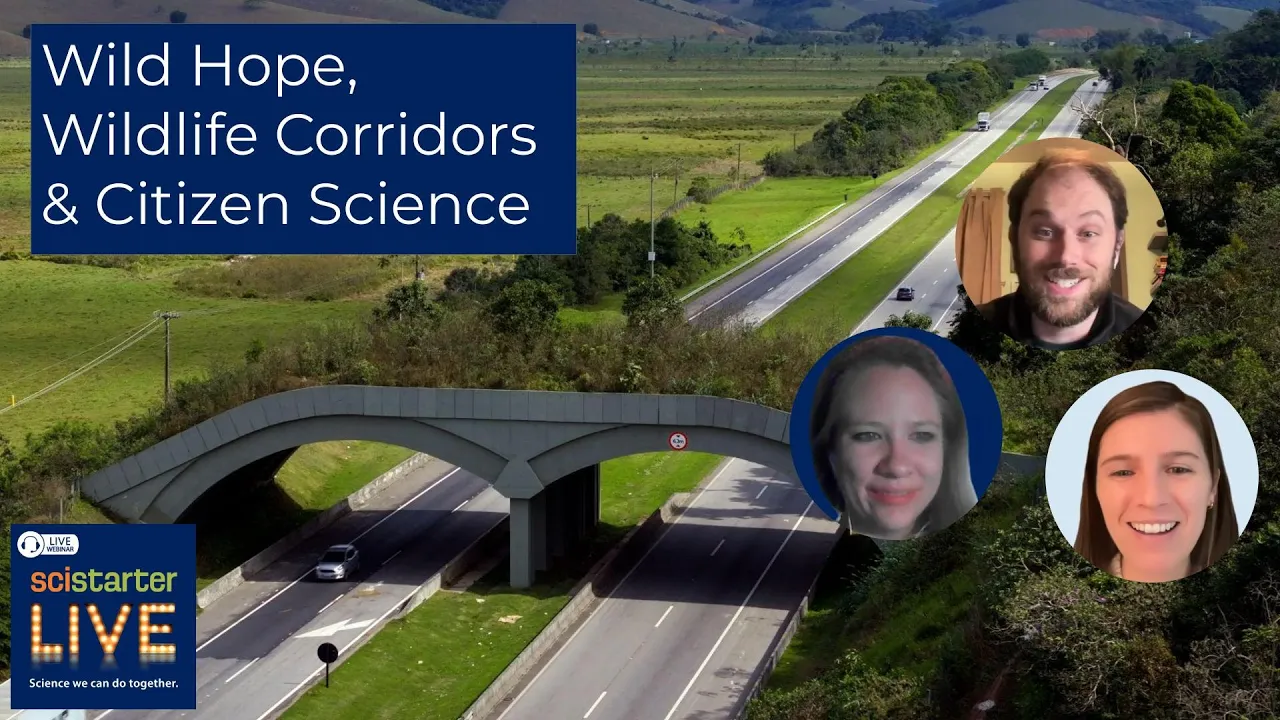
















![This highway bridge saves lives but humans aren’t allowed to use it [LH]](https://i.ytimg.com/vi/xGS8PMohkyw/maxresdefault.jpg)


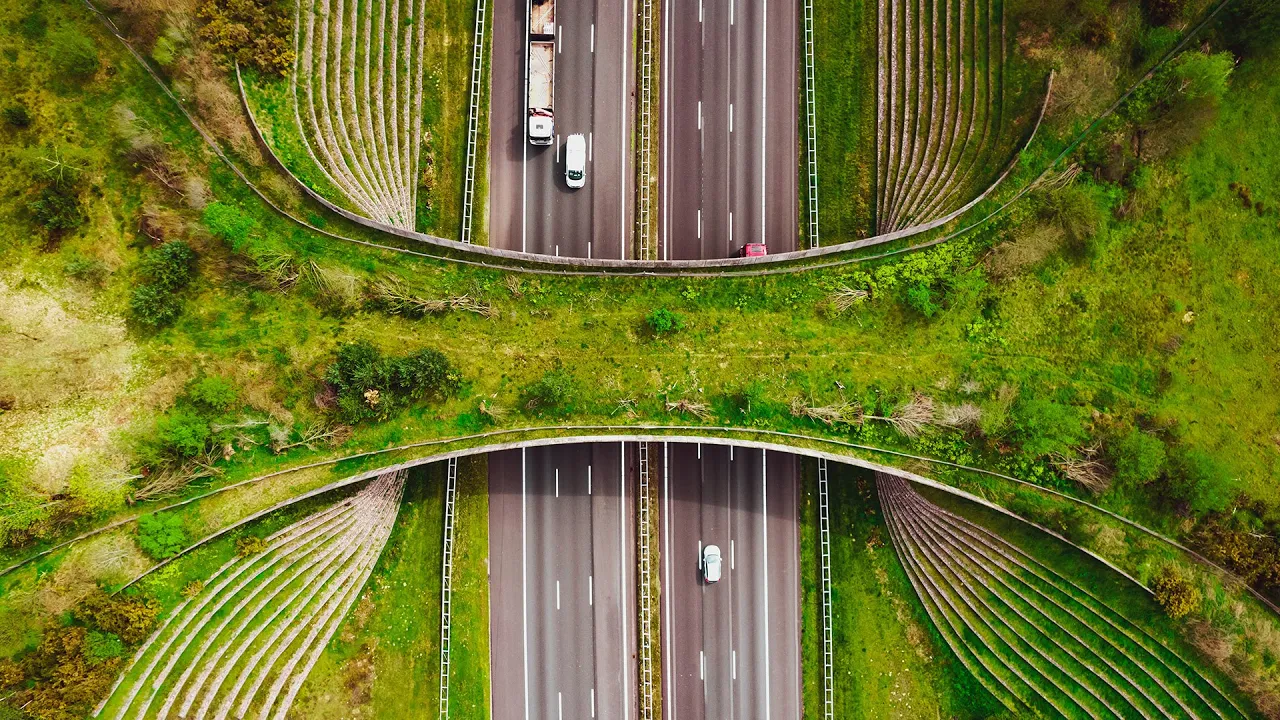




Wildlife crossings—overpasses and underpasses designed specifically for animal use—significantly reduce roadkill by funneling wildlife away from roads and restoring genetic connectivity between fragmented habitats; research in Banff National Park demonstrated that these structures decreased elk-vehicle collisions from over 100 per year to fewer than six, while also enabling species like grizzly bears to expand their home ranges and access mates across highways, though their implementation remains limited in North America due to high costs (several million dollars per structure).
Wildlife Crossings: Evidence-Based Solutions to Reduce Roadkill
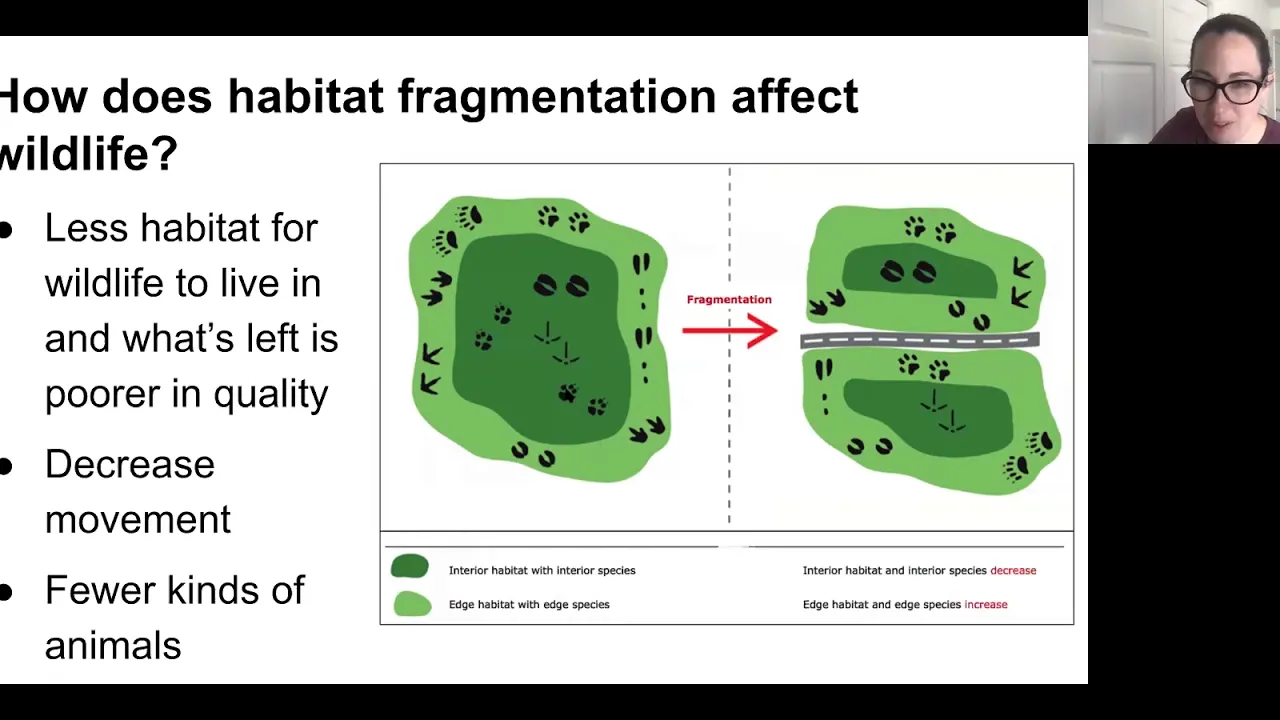
Added:The concept of habitat fragmentation and how infrastructure like highways disrupts ecosystems and isolates wildlife populations.
Basic ecological connectivity, including wildlife migration patterns, gene flow, and the necessity of contiguous habitats for survival.
The fundamental impacts of vehicular traffic on wildlife mortality (roadkill) and its demographic consequences for vulnerable species.
An introductory understanding of conservation biology principles, specifically the balance between human development and biodiversity preservation.
Advanced spatial ecology techniques, such as using GIS (Geographic Information Systems) and GPS telemetry to identify wildlife corridor hotspots.
Economic valuation and cost-benefit analysis of green infrastructure, comparing construction costs of crossings with savings from reduced vehicle collisions.
Species-specific design requirements for wildlife crossings, analyzing why different taxa (e.g., large carnivores vs. amphibians) prefer overpasses versus underpasses.
Environmental policy, zoning laws, and the integration of wildlife mitigation measures into civil engineering and national transportation planning.
2.5M views51Klikes6:37Original Release: 2017-07-03
When you're driving down the highway it's hard to avoid a deer because you never know when it's coming.
By the do time you see it, it's often too late.
But what if there were crossings for animals just like the ones used by humans?
In some places, planners have built exactly that and data shows that animals are using them, which means that close calls like this are far less likely to happen.
Hitting an animal is a risk anywhere roads are built through animal habitats.
And as more roads are built, there are more opportunities for collisions.
According to a 2008 study commissioned by the US Congress, the number of animal vehicle collisions was increasing.
Experts blamed the rise on more vehicle miles traveled combined with a growing North American deer population.
But the official tally excludes accidents that have less than $1,000 in property damage.
If you account for minor collisions, unreported accidents and other variables, experts estimate at least one million collisions with large animals meaning deer, elk, and moose occur every year in the United States.
And while animal vehicle collisions rarely cost lives, they do cost money.
In the US, wildlife vehicle collisions cost over $8 billion dollars every year.
Money that is spent on vehicle repairs, medical costs, and other expenses.
And although humans tend to survive, animals often get killed.
In the same report, researchers found that vehicular traffic threatened 21 endangered including the bighorn sheep.
In some places, highway planners have solved the problem by building fences to keep animals off the road.
A relatively cheap solution that has been proven to reduce roadkill by over 50%.
But although fencing reduces roadkill, it neglects a wider problem: Besides the risk of collision, roads harm animals by dividing wildlife populations and limiting their ability to find mates, food, and other necessities of life.
In Canada, wildlife scientist Tony Clevenger has been studying how road construction affects animals in Banff National Park.
"It can have important impacts on the reproductive success because females aren't being able to access important spring habitat because they are not crossing the highway, So it's important that we maintain these movements and we maintain this access to the important biological resources throughout the year and wildlife crossing structures do that."
Beginning in the 1980s, authorities began installing a system of underpasses and overpasses in Banff.
The structures were for animal use only and were located where animals were likely to cross the road.
"The data speaks for itself, for example here on the Trans-Canada Highway in Banff National Park there were on average more than one hundred elk-vehicle collisions per year before the fencing and the wildlife crossing structures and now it's down to less than a half dozen.
So these are huge reductions by having these mitigation measures in place that are improving motorist safety, they are saving lives, and also, in a protected area like Banff National Park, it's important because the objective of this National Park is to protect wildlife."
Instead of blocking the road entirely, planners used fences to funnel wildlife towards the crossing structures, which were planted with native vegetation.
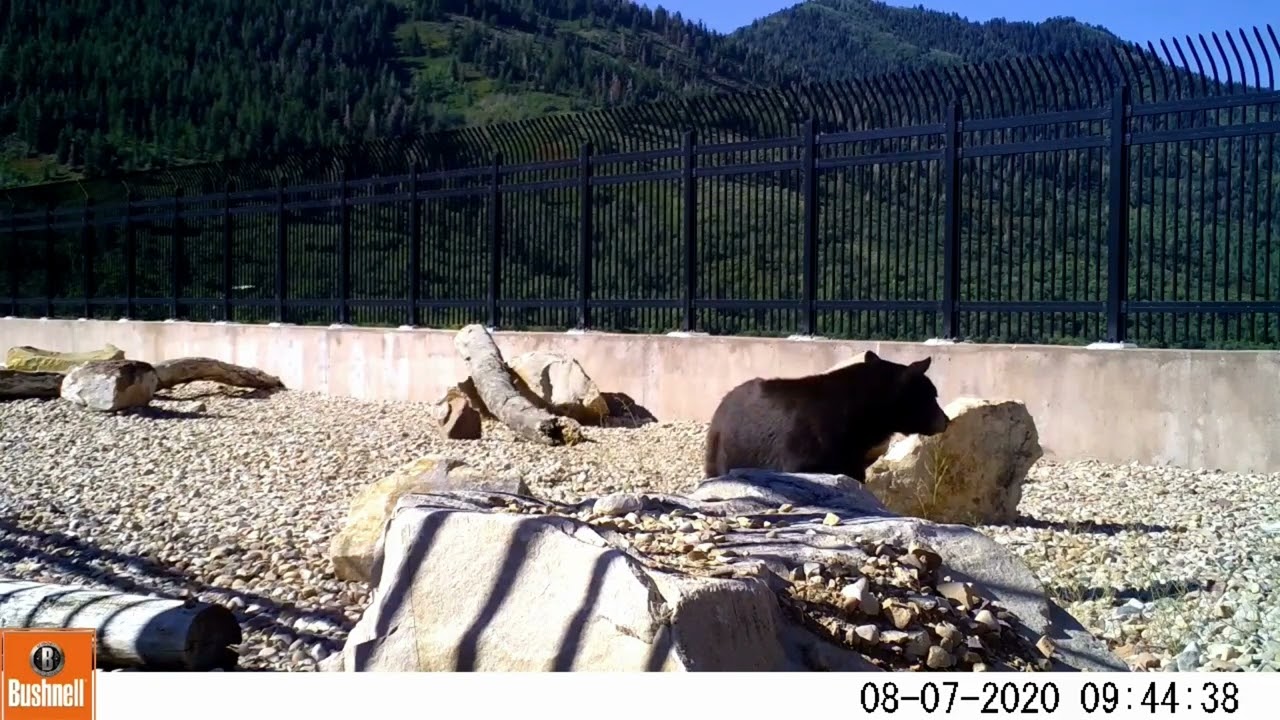
A few species, like deer, elk, and moose, immediately started using them and were followed by more skeptical species, like wolves and grizzlies.
Within a few decades, even the most reluctant species, like lynx, had adapted to using the crossings.
In 2012, a male grizzly was recorded crossing the structures 66 times in one summer.
By crossing the highway, the bear's habitat expanded to include potential mates on the other side of the road, which decreases the likelihood of inbreeding.
"What we've been able to show is that, by having these overpasses and underpasses in place, we've restored genetic connectivity across the highway here in Banff National Park."
Wildlife crossing structures are fairly common in some parts of the world, particularly in Western European countries like the Netherlands.
But there are relatively few in North America and the success of the Banff crossings has encouraged similar projects in The United States, like this rendering of an overpass being built in Washington State.
And in 2012, The Wyoming Department of Transportation built an overpass that reconnected an ancient migration route of the pronghorn antelope.
So, if these crossings are improving safety and restoring habitats, why aren't they everywhere?
"Probably the biggest factor that would limit construction of wildlife crossings is cost and having the funding within the transportation agency budgets to build these wildlife crossing structures.".
Structures can save money in the long run, but the initial investment is significant.
Constructing an overpass like this one in Banff typically costs several millions of dollars.
So to create more cost-effective solutions, Clevenger organized a design competition with a group of experts that included ecologist Nina-Marie Lister.
They named it "ARC": short for "animal road crossing".
Instead of adapting traditional plans from highway engineers, ARC encouraged different stakeholders to collaborate on structure design.
"There had to be a landscape architect, an architect, and an engineer, as well as ecologist.
And so for the first time ever, you had a very different way of designing a structure and we asked for them to be ecologically sustainable.
They had to consider materials that were recyclable, reusable, or modular and moveable.
The contest was a success and ARC generated groundbreaking solutions, including a winning design that reduced costs and improved safety by removing the need for pillars on the highway.
"The cost of that overpass was about 30-35% cheaper than overpasses that were being built at the same time in Banff National Park."
The state of Colorado agreed to build the design, but more immediate needs, including a flooding event in 2013, have prevented development.
"...you can see entire roads washed out."
The design was never built, but that doesn't mean it won't be.
As climate change strains ecosystems and reduces habitats, animals will change their patterns of movement and the need for effective crossings will become even more acute.
To solve the problem, Lister hopes that planners will return to the ARC designs, which remain viable solutions.
"These things work and they solve the problem once and for all."
"It's done. Problem solved."
Up Next

23:24
Wildlife Crossings and Habitat Corridors Explained | Edge Effects
@BiologistDillon
132 views•2023-07-10

15:54
Life in Biosphere 2: Sustainable Ecosystems & Human Survival
@TED
334.9K views•2009-06-16
14:30
Microplastics Everywhere: How Plastic Impacts Our Lives
@TEDx
100.9K views•2018-05-08
10:28
Ice Stupa Artificial Glaciers: Solving Ladakh's Water Crisis
@SonamWangchuk66
3.2M views•2015-05-03
Related Study Plans & Knowledge Roadmaps
Structured learning paths in Environmental Science
environmental-science
Ocean Noise: Cetacean Impacts & Mitigation
01Fundamentals of Underwater Acoustics
02Marine Mammal Bioacoustics
03Anthropogenic Noise: Shipping & Seismic Surveying
+ 2 more learning modules
16h5 modules
Explore Roadmap
environmental-science
Road Ecology: Corridors, Overpasses & Fencing
01Foundations of Habitat Fragmentation and Carnivore Ecology
02The Road Barrier: Ecological Impacts of Transport Infrastructure
03Principles of Ecological Corridors and Connectivity Mapping
+ 3 more learning modules
14h6 modules
Explore Roadmap
environmental-science
Ocean Acidification: Kelp Buffering & Shellfish
01Fundamentals of Ocean Chemistry & pH
02Chemical Pathways of Coastal Acidification
03Bivalve Physiology & Calcification Under Stress
+ 2 more learning modules
18h5 modules
Explore Roadmap
environmental-science
Ice Stupas: Glacial Retreat & Water Security
01Foundations of Glaciology & Mountain Hydrology
02Climate Change and Glacial Retreat Dynamics
03The Science of Ice Stupas & Artificial Glaciers
+ 2 more learning modules
14h5 modules
Explore Roadmap