After the Meiji Restoration (1868), Japan rapidly transformed its economy through deliberate industrial policy, where the government established model factories that trained technicians but weren't profitable, eventually selling them to private hands to create the zaibatsu conglomerates (Mitsubishi, Mitsui, Sumitomo, Yasuda); unlike American monopolies focused on single industries, these Japanese conglomerates diversified across mining, textiles, banking, and insurance, operating both in cities and rural areas, and this industrial model influenced subsequent East Asian economic policies.
Japanese Industrial Development & Corporate Organization | CitiesX
Added:Deep Dive
Understanding of the Meiji Restoration (1868) and the transition of Japan from a feudal, isolated society (Tokugawa shogunate) to a modernizing nation state.

How Japan became a rich and developed country? History of Meiji Restoration & rise of Japan | UPSC
901.4K
The Meiji Restoration (1868-1912) transformed Japan from a feudal, isolated society into a modern industrialized nation through comprehensive reforms in political systems (constitutional government), military modernization, industrialization (railways, banking, silk industry), and education (compulsory schooling), enabling Japan to defeat major powers like China and Russia and become a significant global power within just three decades.
Click to watch →
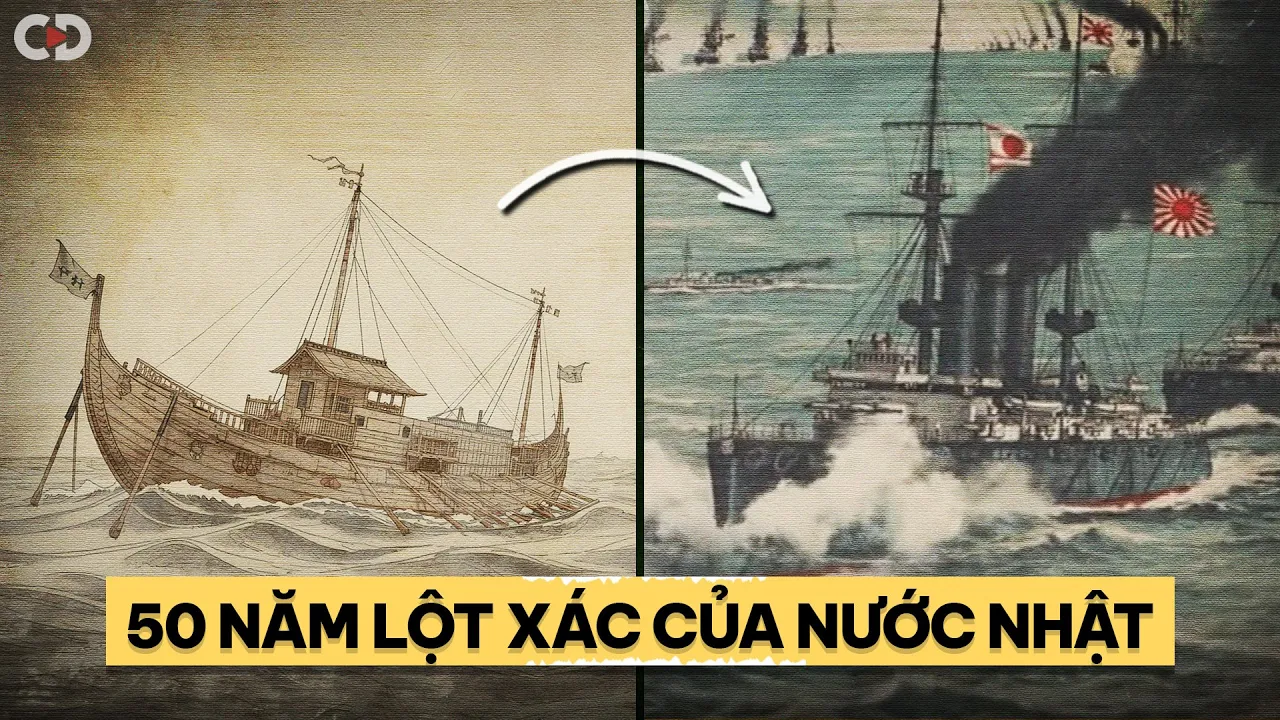
Duy Tân Minh Trị: Cuộc Cách Mạng Đưa Nhật Bản Trở Thành Cường Quốc Hàng Đầu Thế Giới
160.3K
Japan underwent a profound transformation from a feudal society to a modern nation-state through the Meiji Restoration. Under the Tokugawa Shogunate (1603-1868), Japan operated as a feudal society with power concentrated in the hands of the Shogun ruling from Edo. The country was divided into approximately 200 domains ruled by daimyos, each functioning as a mini-kingdom. Samurai served as the warrior class, trained in strict discipline and absolute loyalty. The traditional social hierarchy (shi-nō-kō-shō) placed samurai at the top, followed by farmers, artisans, and merchants. By the mid-18th century, Japan experienced rapid urbanization with Edo growing to over one million residents. However, this prosperity masked deep economic problems. Samurai received fixed stipends in rice funded by agricultural taxes, but declining rice prices severely impacted their livelihoods. Meanwhile, merchants accumulated enormous wealth despite their low social status. The sankin-kotai system required daimyos to maintain residences in Edo, imposing enormous financial burdens. Agricultural productivity stagnated while population growth made arable land increasingly scarce. Repeated natural disasters caused severe famines, leading to widespread social unrest. In 1543, Portuguese sailors shipwrecked on Japan's southern coast, marking the first Western contact. Portuguese merchants established trade networks introducing firearms and Western goods. By 1657, some domains had converted to Christianity, with over 100,000 Japanese converts by 1852. In 1612, the shogunate issued the Edict of Expulsion, banning Christianity and executing missionaries. In 1639, Japan officially closed its borders, implementing the sakoku policy with only Dutch traders permitted at Nagasaki. This isolation lasted over 200 years, protecting Japan from Western expansion but preventing it from keeping pace with global developments. In 1853, Commodore Matthew Perry led four warships into Edo Bay, demanding Japan reestablish trade relations. Under military pressure, Japan was forced to sign the Treaty of Kanagawa in 1854, opening Shimoda and Hakodate to American ships and establishing extraterritorial rights. In the following years, Britain, Russia, and the Netherlands signed similar unequal treaties, granting diplomatic rights and extraterritoriality. These humiliating terms sparked outrage among both the ruling class and general population. The shogunate's acceptance of unequal treaties sparked widespread rural uprisings and urban riots targeting foreign debtors and warehouses. Traditional Confucian learning that had maintained shogunate power gradually declined as new intellectual movements emerged. Rangaku (Dutch Learning) allowed Western knowledge to enter through Dejima in Nagasaki, with scholars translating scientific, medical, and military works. By the mid-19th century, Japan was ripe for revolution. Meanwhile, China's defeat by Britain in the Opium War of 1842 served as a warning about the dangers of isolation. On May 1, 1867, Emperor Kōmei died and his 15-year-old son Sachi ascended as Emperor Meiji. The anti-shogunate movement spread rapidly, particularly in Satsuma and Chōshū domains. The ideology of 'sonnō jōi' (revere the emperor, expel the barbarians) gained widespread support. Satsuma and Chōshū initially opposed opening Japan but recognized they needed Western technology to defeat the shogunate, beginning army modernization. On November 9, 1867, Shogun Tokugawa Yoshinobu submitted his resignation, hoping for a smooth transition. However, this action motivated reform factions to push for complete abolition of the shogunate system. In early 1868, the imperial faction issued a decree stripping Tokugawa of all positions, effectively declaring war. In January 1868, Tokugawa forces of approximately 15,000 soldiers faced an opposing force of only 5,000 from Satsuma, Chōshū, and Tosa. Despite the numerical disadvantage, the imperial forces suffered a crushing defeat because they were equipped with modern Western weapons including rifles and field artillery, while many Tokugawa soldiers still carried swords and spears. The imperial forces were forced to retreat to Osaka Castle, where Tokugawa Yoshinobu fled by boat. In February 1868, the imperial army captured Osaka, ending Tokugawa power in the Kansai region. By March, imperial forces surrounded Edo, and through skillful diplomacy, secured a peaceful resolution on March 14, 1868. On April 6, 1868, Emperor Meiji issued the Charter Oath containing five key principles: expanding deliberative assemblies and deciding national issues through public discussion, working together to improve the nation, rewarding officials based on merit rather than birth, and abolishing all feudal customs. The emperor would follow the will of heaven and earth and seek wisdom from the world. In autumn 1868, the imperial government declared Kyoto would remain the spiritual center but the emperor would relocate to Edo, which was renamed Tokyo (Eastern Capital). A new government model based on Western patterns was established, with ministers responsible for specific areas. The feudal system was abolished, and by 1872, approximately 200 domains had been absorbed into the imperial government. Emperor Meiji approved an 18-month diplomatic mission to the United States and Europe, led by Iwakura Tomomi, including approximately 100 members and nearly 50 young students. The delegation visited 120 cities across 12 countries, observing Western civilization in politics, economics, military, education, and culture. They recognized that Western strength lay in technological progress, the integration of commerce and industry, and the industrious spirit of the people. England left the deepest impression as the birthplace of the Industrial Revolution. They compared various political systems: the United States was too young and diverse, Russia remained autocratic, and small nations like Belgium and Switzerland were too limited. The majority concluded Japan should learn from Britain, though initially applying the German model. The Meiji government adopted the principle of 'Japanese spirit, Western knowledge' and established slogans of 'Fukoku kyōhei' (rich country, strong military). The textile industry was chosen as the spearhead of industrialization, leveraging Japan's traditional silk and fabric production with skilled workers. Unlike heavy industries, textiles required less capital and technical expertise, making it suitable for initial industrialization. On October 14, 1872, Japan's first railway officially opened, connecting Tokyo to Yokohama. By the early 20th century, Japan possessed a modern railway network spanning the entire country, connecting major urban centers and becoming the most vivid symbol of a rising nation. The Meiji government undertook comprehensive military restructuring. The shogunate had not maintained a unified army, relying on feudal lords to provide troops. By early 1870, the conscript army model prevailed, requiring all adult males to s
Click to watch →
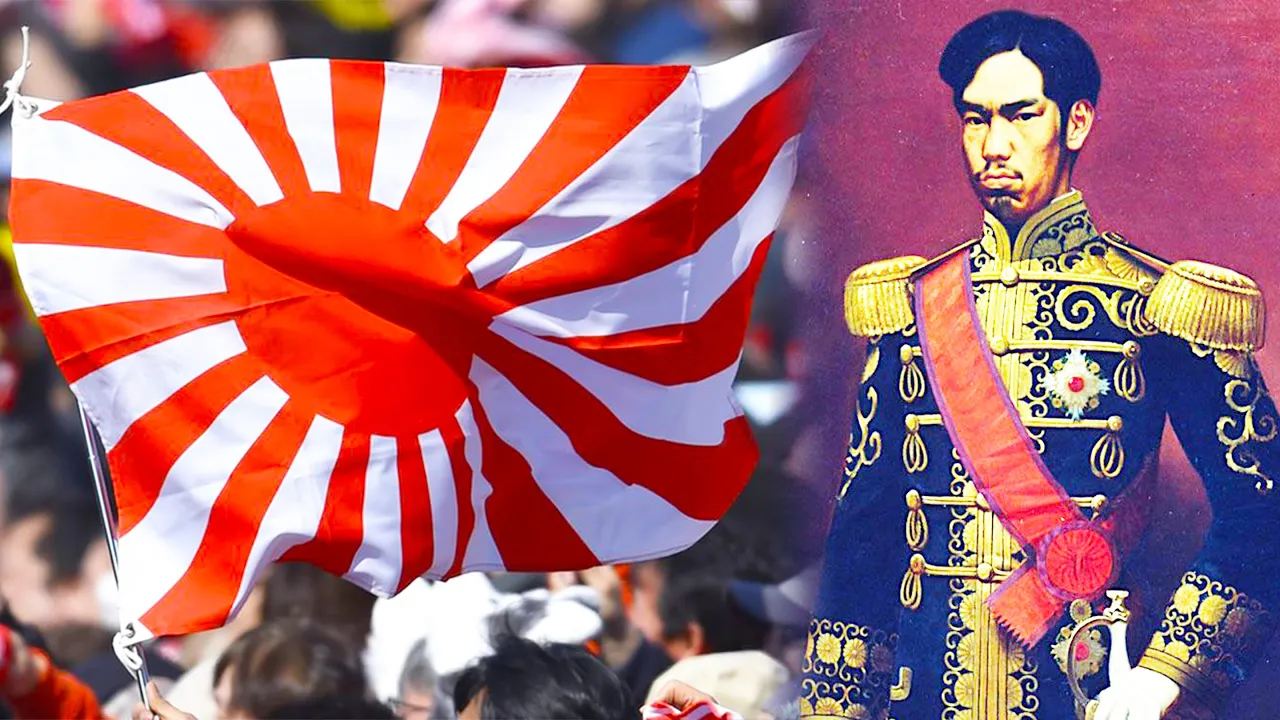
How The Meiji Restoration Changed Japan Forever
18.2K
The Meiji Restoration (late 1860s) was a coup d'état that overthrew Japan's feudal Tokugawa shogunate, replacing it with a constitutional imperial state that rapidly modernized and westernized Japan through universal education, conscription, and industrialization, transforming it from an isolated feudal society into a major world power and imperial force by the early 20th century.
Click to watch →

SAMURAI PALING MEMATIKAN INI BERSUMPAH TAK AKAN MEMBUNUH LAGI‼️
22.3K
The Meiji Restoration (1868) marked Japan's transformation from a feudal society to a modern nation-state. The Tokugawa Shogunate, which had ruled for 300 years, was overthrown by reformist domains including Choshu, Satsuma, and Tosa. The Battle of Toba-Fushimi destroyed the Shinsengumi and ended the samurai era. This period established new governance based on peace, progress, and international cooperation, replacing the warrior culture that had defined Japan for centuries.
Click to watch →

SATU KAPAL BIKIN JEPANG BERUBAH TOTAL SELAMANYA! | RESTORASI MEIJI AWAL KEBANGKITAN JEPANG?
494
The Meiji Restoration (1868) marked Japan's transformation from feudal society to modern nation-state. The Boshin War ended the 700-year Shogunate rule, returning power to Emperor Meiji. The government implemented radical reforms: abolishing the feudal system, replacing Daimyo domains with prefectures, and sending the Iwakura Mission to study Western systems. Industrialization accelerated with railways, steel factories, and the emergence of Zaibatsu conglomerates (Mitsubishi, Mitsui, Sumitomo, Yasuda). Universal conscription ended samurai privileges, leading to the Satsuma Rebellion (1877) and the definitive end of the samurai class.
Click to watch →
Deep Dive
Basic economic concepts of the Industrial Revolution, including mechanization, factory systems, and the shift from agrarian to industrial economies.

Grade 10 Economics - Exam Revision (Part 5) Term 3 CAPS
255
The industrial revolution brought about large-scale manufacturing of durable goods and services. Mass production refers to manufacturing large numbers of identical products at low cost per unit, achieved through mechanization. Mechanization resulted in the need for expensive machinery and large volumes of raw materials. It created demand for skilled and productive workers, as factory work required different skills than agricultural labor. Additionally, fewer workers were needed to produce the same output due to mechanization. These changes fundamentally transformed economies from agricultural-based to industrial-based systems, increasing productivity and changing labor requirements.
Click to watch →
10 lines on the industrial revolution/short essay on industrial revolution/hinglish padhai
24.8K
The Industrial Revolution fundamentally transformed economies by shifting them from agrarian and handicraft-based systems to industrial economies dominated by factories and machines. This transition marked a complete restructuring of economic foundations.
Click to watch →

La prima rivoluzione industriale
1.1K
The Industrial Revolution (1760-1840/1850) was a gradual transformation originating in England that fundamentally reshaped economic and productive systems. It was characterized by mechanization using inanimate energy sources, factory-based production replacing artisanal work, and mass production of consumer goods across textiles, iron and steel, and transportation sectors. Prerequisites included the Agricultural Revolution creating capital accumulation, the Protestant work ethic fostering entrepreneurial spirit, empiricist philosophy emphasizing practical experimentation, colonial empire providing raw materials, strong naval power protecting trade routes, massive labor supply from rural populations, and population growth creating expanding markets. Key innovations included the Spinning Jenny, Power Loom, and James Watt's steam engine, which enabled factories to be located anywhere coal was available. The factory system concentrated production in urban areas, creating new social relationships between employers and workers while maximizing capitalist profits.
Click to watch →

औद्योगीकरण का युग🚂 Class 10 History Chapter 4 Full Notes| class 10th History ch 4 most imp Questions
635
Industrialization refers to the historical period when production shifted from hand-made goods to factory-based manufacturing using machines and technology. The era from 1760 to 1840 marked the transition from agrarian societies to industrial economies. Key terms include 'Prajati' (countries east of Europe, primarily Asian), 'Stapler' (one who grades wool/fibers), 'Fuller' (one who cleans cloth with fulling hammers), 'Fly Shuttle' (mechanical weaving device), and 'Spinning Jenny' (machine producing multiple threads simultaneously). Before industrialization, European merchants paid village farmers and artisans to produce goods for international markets. The first factories opened in England during the 1730s, with the cotton industry being the first major industrial sector. Britain imported 2.5 million pounds of cotton in 1760, growing to 220 million pounds by 1787. Factory establishment brought benefits: improved worker skills, increased production quantities, and consistent product quality. The iron and steel industry developed as railway construction expanded, with iron and steel exports reaching 770 million pounds by 1873.
Click to watch →

Clase II - La Revolución Industrial 1780-1830
159
Capitalism originated in the 15th century in northern Italian cities like Venice, Florence, and Genoa, long before the Industrial Revolution. These cities developed banking systems, credit mechanisms, insurance, accounting infrastructure, and international trade networks. The First Industrial Revolution is periodized by Eric Hobsbawm as occurring between 1780 and 1830, fundamentally British in origin. It began with humble beginnings and was not immediately dependent on the factory system. The revolution began with intensification of manual labor and new work organization methods. Cottage industry involved families working in homes with basic tools like spinning wheels and looms, where merchants controlled prices and market access. Proto-factories introduced capitalist ownership of means of production with specialized workers performing single tasks, increasing productivity through division of labor. The factory system, dominant after 1815, combined mechanized production with human labor using steam power. This hybrid model proved highly successful for over a century. The adoption of factory systems was driven by economic rationality rather than technological necessity—when market expansion created demand that cottage industry could not satisfy, mechanized production became more profitable. The Industrial Revolution was impossible without a preceding Agricultural Revolution. In feudal societies, most people produced food for their own consumption, leaving no surplus to support industrial workers. For industrialization to occur, agriculture had to produce enough food to feed workers who specialized in manufacturing. This required fundamental changes in agricultural production methods, including improved crop rotation, better seeds, and more efficient farming techniques. The enclosure movement transformed land ownership by converting communal lands into private property, eliminating traditional communal rights and forcing many small farmers to sell their land or become wage laborers. The Poor Laws were designed to force displaced rural populations into the industrial labor market. This policy effectively pushed rural populations toward urban areas where they could become industrial wage laborers, providing the workforce necessary for industrialization.
Click to watch →
Deep Dive
The concept of state-led capitalism or developmental states, where governments actively intervene to guide and fund industrial growth.

Theory of State in Political Science in Hindi | राज्य का सिद्धांत | PSIR For UPSC IAS, PCS, UGC NET
137.7K
The developmental state model combines elements of capitalism with active state intervention in the economy. In this model, the state promotes economic growth while maintaining the basic structures of capitalism. This approach allows for rapid industrialization and economic development while preserving the benefits of market-based economic organization.
Click to watch →

Trump, Lula e o interesse nas terras raras
14.6K
Developing rare earth industries requires significant state intervention because the industry is not economically viable under free market conditions. China's dominance resulted from deliberate state planning beginning in the 1980s, including nationalization of mining operations, consolidation into state-controlled enterprises, public financing, coordinated research and development, workforce training, and industrial subsidies. The United States and European Union are implementing similar policies, subsidizing private companies for extended periods to establish domestic production capabilities. This approach represents a deliberate rejection of neoliberal free market principles in favor of state-planned industrial development to achieve technological and productive autonomy.
Click to watch →

🔴 This is HUGE: Gold Just Signaled A 'Once In A Lifetime' Event | Chris Macintosh
26.4K
The US has badly neglected its mining sector for decades, outsourcing mining activities to other countries. According to Standard & Poor's, it takes 29 years to build an average mine in the US largely due to the onerous permitting regime. Under current leadership, the US has made mining a priority for national reindustrialization, investing hundreds of billions of dollars in mining projects through debt and equity, including equity investing which the government has never done before. China uses state-led capitalism where the state decides where to focus and incentivizes businesses, then lets them succeed or fail. The US is moving toward state-led capitalism where the government directly allocates capital, which is historically problematic. Systems compete with one another, and the US is realizing it has been caught off guard by China's approach. The speed of action is constrained by the democratic system, with elections every 3 years that could flip policies.
Click to watch →
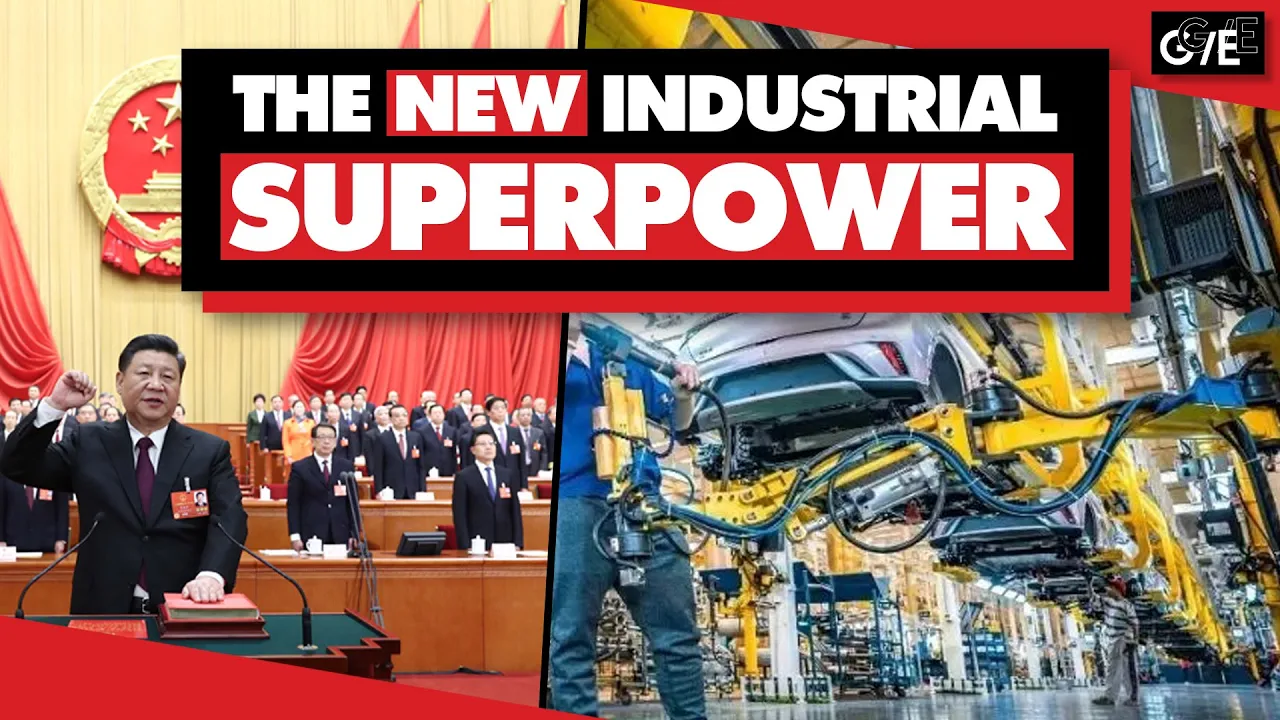
China is now the 'world's sole manufacturing superpower'. How did it develop so fast?
401.5K
China's development model combines state ownership of commanding heights (energy, infrastructure, telecommunications) with strategic industrial policy. The four largest banks are state-owned and direct credit to productive sectors through mechanisms like window guidance. This mirrors Japan's post-WWII model where MITI guided industrial development. Both nations used state intervention to move up the global value chain, demonstrating that successful industrialization requires active government involvement rather than pure free markets.
Click to watch →

REVELADO: CAMINHONEIROS NÃO QUEREM PARAR, ORGANIZADORES SÃO GOLPISTAS BOLSONARISTAS DO AGRO
179K
The video presents the concept of state-led industrial development, using Brazil's ethanol program as a historical example. The analysis explains that Brazil became the world's second-largest ethanol producer and consumer because the state, through institutions like BNDES (National Bank for Economic and Social Development), invested in developing the technology and infrastructure over 50 years. The video argues that this state intervention was necessary because multinational corporations would not develop the technology in Brazil. The concept of 'industrial autarky' refers to a nation's ability to produce essential goods domestically rather than relying on imports, which the video presents as a legitimate goal for national development.
Click to watch →
Deep Dive
Fundamental principles of urban geography, specifically how industrialization influences demographic shifts and the physical growth of cities.

المحاضرة الاولى الفصل الثاني جغرافية 2026
4.5K
Urban geography studies cities through analysis of internal activities, land use patterns, social groups, and population movements. Cities have become major geographical phenomena, with over 50% of the world's population now urbanized. Cities emerged around 4000 BCE in the fertile crescent of southern Iraq along the Tigris and Euphrates rivers. Two main theories explain urban origins: agricultural surplus enabling food storage and population growth, and fortified villages attracting refugees from threatened settlements. Urbanization is the change in urban population proportion or rural-to-urban migration, accompanied by changes in social organization. Urbanization follows different patterns: developed countries experienced gradual urbanization through stages driven by industrial development, while developing countries experience rapid rural-to-urban migration due to rural backwardness. Urban growth measures the percentage change in city population over time.
Click to watch →

CAI COM CERTEZA EM GEOGRAFIA NO ENEM | DESCOMPLICA
171.7K
Urbanization (the growth of urban populations) is primarily driven by industrialization. Cities grow because they offer employment opportunities in factories and industries. This pattern occurred in the United States, Germany, and other industrializing nations. While some modern cities have grown due to service sectors, the primary driver of urbanization throughout history has been industrial development.
Click to watch →

AO VIVO | Geografia - ENEM 2020 | Demografia | Desafio ENEM do ZER0 | Me Salva!
14.2K
Urbanization and industrialization are the primary drivers of demographic change. Industrialization attracts population through job opportunities and economic dynamism, while urbanization creates lifestyle changes, increased costs, and better healthcare access. These factors reduce fertility rates: rural populations historically had 6-15 children to help with agricultural work, while urban populations have fewer children due to economic constraints and different priorities.
Click to watch →

Sr Inter Economics - Remedies For Population Explosion 3
231
Urbanization and industrialization fundamentally alter demographic patterns: (1) Industrial expansion creates employment opportunities that reduce poverty and increase living standards; (2) Urban areas have higher cost of living, limited space, and different social norms that discourage large families; (3) Migration from rural to urban areas exposes people to new ideas and lifestyles; (4) Industrial development increases awareness of family planning and reproductive health; (5) Urban families tend to invest more resources in fewer children, improving child welfare outcomes. These changes represent a natural demographic transition that contributes to population stabilization.
Click to watch →

GEOGRAFIA - 6º ANO -A INDÚSTRIA, O COMÉRCIO E OS SERVIÇOS
1.7K
Industry revolutionized human history and geographic space configuration. Industrialization occurred not only in production methods but also in societies, geographic spaces, and landscapes. Industries installed in cities, responsible for urbanization and population growth in cities at the expense of rural areas. Cities attracted rural populations to work in factories, leading to greater work diversification and expansion of commerce and services in urban spaces.
Click to watch →
Prerequisite Knowledge
- Concept 01Understanding of the Meiji Restoration (1868) and the transition of Japan from a feudal, isolated society (Tokugawa shogunate) to a modernizing nation state.
- Concept 02Basic economic concepts of the Industrial Revolution, including mechanization, factory systems, and the shift from agrarian to industrial economies.
- Concept 03The concept of state-led capitalism or developmental states, where governments actively intervene to guide and fund industrial growth.
- Concept 04Fundamental principles of urban geography, specifically how industrialization influences demographic shifts and the physical growth of cities.
Subsequent Learning
- Step 01The post-WWII dissolution of the Zaibatsu conglomerates and the subsequent rise of the Keiretsu corporate network system in Japan.
- Step 02The post-war Japanese 'Economic Miracle' (1950s-1980s) and the role of institutions like the Ministry of International Trade and Industry (MITI).
- Step 03The evolution of contemporary Japanese urbanism, examining how historical industrial centers transformed into modern global megacities like Tokyo and Osaka.
- Step 04Comparative analysis of East Asian developmental models, such as South Korea's Chaebol structure and its similarities to the Zaibatsu.
Meiji Reform
Urban Legacy
Zaibatsu Role
Meiji Reform
0:00Playing Section
- 1
Tokugawa order collapsed, triggering vast political and social shifts.
- 2
Post-1868 state prioritized mass education to build national power.
- 3
Samurai privileges abolished, unleashing talent and transforming cities.
The Market-Driven and Bottom-Up Development Critique
This perspective, championed by economic historians such as Yoshiro Miwa and J. Mark Ramseyer, challenges the traditional narrative that credits state intervention and monopolistic Zaibatsu conglomerates for Japan's rapid industrialization. Critics argue that the role of government bureaucrats and state-led factories has been greatly exaggerated. Instead, they contend that Japan’s economic success was primarily driven by robust market forces, fierce domestic competition, and a highly active bottom-up sector of small-to-medium-sized enterprises (SMEs). For example, traditional and decentralized industries, such as silk reeling and cotton spinning, flourished largely independent of direct state planning and provided the crucial capital that fueled urbanization. By overemphasizing top-down state guidance, the standard narrative overlooks how flexible private contracts, spontaneous entrepreneurship, and market mechanisms actually facilitated Japan's modern transition.
Deep Dive
The post-WWII dissolution of the Zaibatsu conglomerates and the subsequent rise of the Keiretsu corporate network system in Japan.

ราชาทะเลทราย - ประวัติ Mitsubishi Pajero
6.6K
The Zaibatsu were powerful family-controlled business conglomerates that dominated Japan's economy before World War II. Four major groups controlled most of Japan's industry: Mitsubishi (heavy industry and aviation), Mitsui (finance and trading), Sumitomo (mining and chemicals), and Yasuda (banking and insurance). These groups had their own banks and received government support under the 'rich country, strong army' policy. After Japan's defeat in WWII, the Allied Powers ordered their dissolution, viewing them as integral to the war effort. However, due to Cold War politics, the US needed Japan as a strategic ally, so the Zaibatsu were restructured into 'Keiretsu' - cross-shareholding networks that allowed continued operation without direct family control.
Click to watch →

Keiretsu: Why Foreign Companies Struggle in Japan
37.9K
This comprehensive examination traces the evolution of Japanese corporate organization from the 19th century to the present day. The Keiretsu system emerged from the Zaibatsu, 19th-century family-owned conglomerations that copied Western business models like Rockefeller and Carnegie. The Japanese government supported Zaibatsu growth during the 1960s as they helped Japan catch up economically with the West. However, Zaibatsu became so powerful they controlled Japanese industry during WWII, leading to their dissolution after the war. SCAP banned Zaibatsu names, broke up major trading companies like Mitsubishi Shoji into 170 separate entities, and squashed the largest conglomerates. Despite these efforts, the pieces began reuniting almost immediately. By 1952, only four companies remained of the old Mitsubishi group, which then merged back into Mitsubishi Shoji. The Korean War created urgency for Japan's economic recovery, and Washington pressured the US to relax antitrust laws. This allowed Keiretsu to reform and become the engine driving Japan's post-war economic miracle. By the 1960s-1970s, Keiretsu were explicitly used as tools for economic protectionism, with MITI Minister Miyazawa Kiichi stating Japan needed 'Keiretsufication' to keep foreign companies out. A key difference between Zaibatsu and Keiretsu is management structure: while Zaibatsu were originally family-owned and family-run, by the 20th century they were family-owned but run by professional managers. The Keiretsu system continued this professionalization while maintaining group identity. Companies are now managed by independent professionals who still share a sense of group solidarity. Major structural changes have transformed the Keiretsu landscape: Mitsui and Sumitomo banks merged, bringing together rival Keiretsu, while Sanwa and DKB banks were absorbed into larger institutions. Japan's economic problems in the 1990s forced banks to sell shares to raise capital, breaking the cross-shareholding model that held Keiretsu together. Banks reduced their holdings by about 50%, loosening rigid structures. The Keiretsu has become more like a club than a tightly controlled organization, though fundamental connections remain essential for understanding contemporary Japanese business.
Click to watch →
![[주식] "실패하면 다 뺏긴다" 현대가 주가 부양에 목숨 건 진짜 이유 (현대그룹)](https://i.ytimg.com/vi_webp/XH6bmtyx--I/maxresdefault.webp)
[주식] "실패하면 다 뺏긴다" 현대가 주가 부양에 목숨 건 진짜 이유 (현대그룹)
32.3K
This segment traces the transformation of Japanese corporate governance from post-WWII zaibatsu dissolution to the keiretsu system. After the US occupation forced dissolution of major conglomerates like Mitsubishi and Mitsui, Toyota developed an alternative model. The keiretsu system creates loose family-like alliances where companies share small portions of shares, forming defensive networks. Toyota's structure includes over 10 layers of interconnected shareholding. The 'Banto' system ensures professional managers work exclusively for Toyota throughout their careers, creating corporate loyalty. The Master Trust system allows the founding family to maintain 12% effective control while publicly showing only 0.15% ownership. This 80-year structure faced simultaneous threats from government pressure, activist hedge funds, and succession concerns.
Click to watch →
The Companies That Created Modern Japan
7.4K
The evolution of Japanese corporate structure represents a fundamental transformation in business organization. During the Meiji period (1868-1912), the government sold state-owned industries to private enterprises at low prices, creating family-controlled vertical conglomerates called Zaibatsu that dominated 60% of the stock exchange by the 1900s. These family-controlled empires controlled entire value chains through main banks and trading companies. Following WWII, the US occupation dissolved Zaibatsu, imprisoning family members and forcing asset sales. This created opportunities for less politically connected specialty traders to consolidate, forming 12 Keiretsus (later reduced to 9). Unlike Zaibatsu, Keiretsus consist of interlocking shareholder groups that own each other's companies, achieving economies of scale without centralized family control. This structural transformation enabled Japan's post-war economic miracle while preventing the concentration of economic power that had characterized the pre-war era.
Click to watch →

The Titans of Japan Inc. - Mitsubishi, Mitsui, Sumitomo, Itochu & More
11K
The US-led occupation after WWII dissolved Zaibatsu families and imprisoned controlling members, forcing companies to sell assets associated with Japan's former military government. This created opportunities for specialty traders like Marubeni, Itochu, and Nichimen to grow. The government implemented division of labor, ordering manufacturers to increase output while trading companies focused on import/export. As infrastructure was destroyed during the war, Sogo Shoshas became crucial for rebuilding Japan's economy by supplying raw materials, industrial machinery, and equipment while importing energy resources and foodstuffs. The Korean War accelerated their reemergence, leading to mergers and the eventual formation of 12 Keiretsu groups by the mid-1960s. Unlike Zaibatsu's family control, Keiretsu involved cross-shareholding among independent companies achieving economies of scale.
Click to watch →
Deep Dive
The post-war Japanese 'Economic Miracle' (1950s-1980s) and the role of institutions like the Ministry of International Trade and Industry (MITI).

Episode 8: King Kong vs. Godzilla (1962) (The Japanese Economic Miracle (The Golden 60s), MITI)
934
The Ministry of International Trade and Industry (MITI) played a central role in directing Japan's economic transformation through protectionist policies and resource allocation. MITI restricted imports to protect emerging industries while using the Japan Development Bank to provide cheap loans to private businesses. The over-loaning system created interconnections between the Bank of Japan, city banks, and business conglomerates, giving the central bank tremendous economic control. Prime Minister Ikeda's income-doubling plan lowered taxes and interest rates, promising to double Japanese incomes within a decade. Trade liberalization aimed to increase liberalized imports from 41% in 1960 to 80%, addressing nationalist concerns about foreign competition. MITI's power diminished gradually, losing foreign currency allocation authority in 1979 before being reorganized into METI in 2001.
Click to watch →
The Rise of Japan after World War 2 | World History | General Studies | UPSC CSE
859.6K
Japan's post-war economic recovery relied on fundamental structural reforms. Land redistribution eliminated the semi-feudal agricultural system, empowering tenant farmers through government subsidies. The dismantling of zaibatsu conglomerates promoted economic decentralization and healthy competition. The United States provided $1.5 billion in Marshall Plan aid between 1948-1952, distributed as food supplies, industrial materials, and transportation equipment. Prime Minister Shigeru Yoshida established MITI (Ministry of International Trade and Industry) in 1948 to coordinate industrial policy and promote exports. These institutional foundations—combined with American guidance—created the framework for Japan's subsequent economic miracle.
Click to watch →

Japonya’nın Büyük Çöküşü
747K
Japan's post-WWII economic miracle (1950-1973) was driven by state-led industrialization through MITI, keiretsu networks, and protectionist policies, but the Plaza Accord (1985) forced yen appreciation that devastated exporters, leading to an asset bubble burst in 1992 and a 30-year deflationary spiral that persists today, compounded by demographic decline and technological stagnation.
Click to watch →

We Talk Books – “MITI and the Japanese Miracle The Growth of Industrial Policy, 1925-1975”
311
This comprehensive arc traces Japan's transformation from WWII devastation to economic powerhouse through MITI's strategic intervention. Beginning with Chalmers Johnson's analysis of the 'Japanese Miracle' phenomenon coined by The Economist in 1962, the narrative explores how MITI evolved from the Ministry of Agriculture and Commerce—an ironic choice given Japan's industrialization goals. The Great Depression intensified urgency for government control, leading to the 1931 Temporary Industrial Rationalization Bureau and Important Industries Control Law. Wartime experience provided intensive training in resource mobilization for single objectives. Post-war, SCAP's zaibatsu dismantling backfired, creating bureaucratic vacancies filled by officials inheriting pre-war policy ideas. MITI emerged as a developmental state balancing strategic intervention with market forces, employing tools like administrative guidance and 'picking winners' to identify and nurture globally competitive industries such as automobiles, ultimately transforming Japan into an industrial powerhouse.
Click to watch →

ЯПОНІЯ: США хотіли її зламати, а натомість створили економічного монстра
2.9K
After 1952, MITI (Ministry of International Trade and Industry) became Japan's economic planning cornerstone, controlling import licensing, currency, and industrial policy. MITI represented a hybrid between Soviet planning and American markets, using administrative guidance rather than direct orders. MITI identified strategic industries (steel, coal, shipbuilding, electronics, automobiles) and coordinated private business toward national goals. MITI controlled access to foreign currency, development bank credits, and technology imports. Case studies include Sony's transistor technology acquisition (1955) and acceptance of automotive industry independence. Simultaneously, William Deming's quality revolution transformed Japanese manufacturing. Deming introduced the concept that quality is built into every production stage, not inspected at the end. His principles—statistical defect identification, worker involvement in improvement, and continuous incremental gains—became fundamental to Japanese industry. The Deming Prize (1951) institutionalized quality excellence.
Click to watch →
Deep Dive
The evolution of contemporary Japanese urbanism, examining how historical industrial centers transformed into modern global megacities like Tokyo and Osaka.
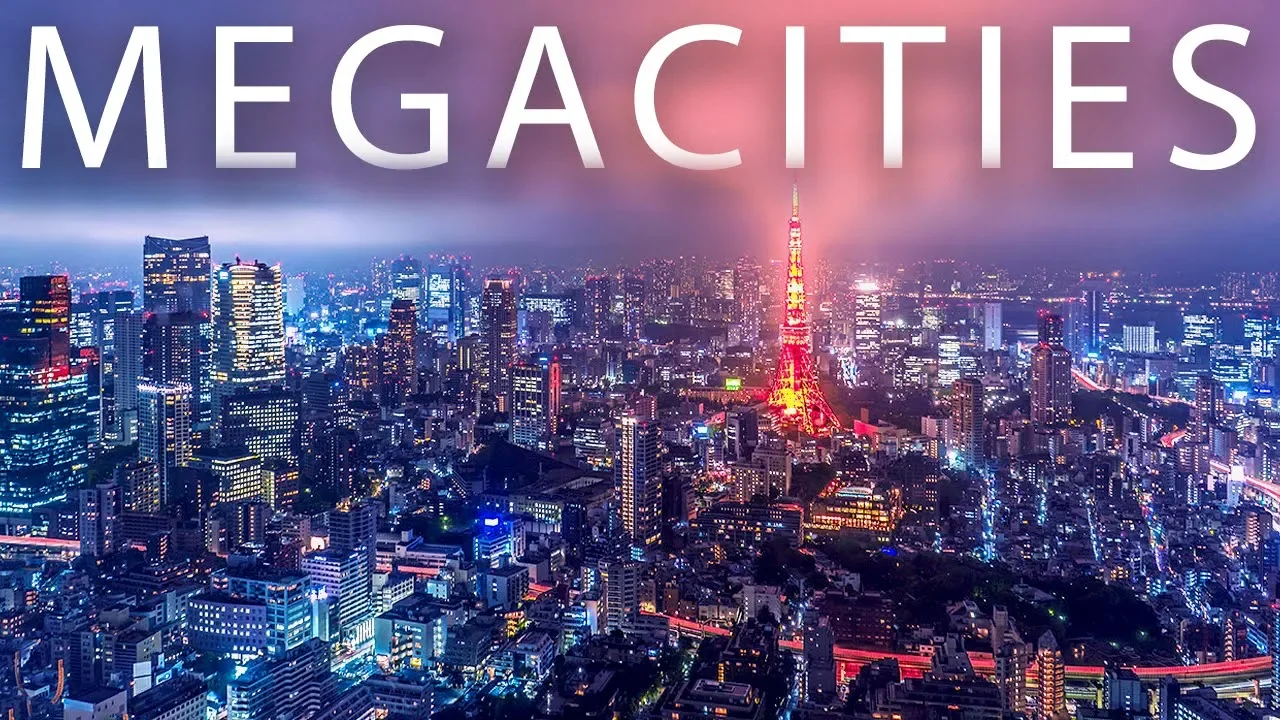
MEGACITIES of the World (Season 1 - Complete)
4.7M
Tokyo evolved from Edo, a fishing village founded 561 years ago. In 1600, Tokugawa Ieyasu established Edo as Japan's most important city, which later became Tokyo after the Shogunate ended. Despite devastating fires and earthquakes, Tokyo thrived through strategic investments in rail infrastructure post-WWII, becoming the world's most advanced mega city with 39 million residents and a GDP larger than most countries.
Click to watch →
高校地理 第42回 都市の発達・都市の形態・都市の機能 【大澤会の映像授業】
2.4K
Modern urban development was transformed by industrialization (Manchester, Saitama), creating manufacturing centers. Globalization produced world cities (New York, London) as financial hubs. Developing nations experienced rapid urbanization, creating primate cities (Mexico City, Bangkok) where one city dominates national population. Japan developed industrial cities (Toyota, Kitakyushu) and satellite cities (Tama New Town) around Tokyo. This evolution reflects technological change, economic restructuring, and population concentration patterns that continue to shape contemporary urban landscapes.
Click to watch →
日本の諸地域11 近畿地方③ ニュータウンのの建設と都市の開発
156
During Japan's high economic growth period (1960s), rural populations migrated to cities like Tokyo and Osaka, creating housing shortages. Cities responded by developing New Towns in suburban areas. Kobe City innovated by cutting mountains and reclaiming sea land to create Port Island. Osaka developed massive New Towns (150,000-180,000 residents) by clearing forests. These developments connected to city centers via railway. However, as Japan's manufacturing declined, city center factories closed, creating urban renewal opportunities. Former factory sites were converted to commercial buildings and high-rise apartments. Kyoto City presents a contrasting approach, preserving its 1,000-year-old historical character through strict regulations limiting building height and controlling signage. This creates tension between property development rights and cultural preservation.
Click to watch →

History professor explains why Tokyo is built the way it is
5.5K
The Meiji period represented Japan's deliberate attempt to appear equal to Western powers through urban transformation. Osaka and Tokyo were redesigned with Western-style buildings, street pavements, and infrastructure. Tokyo Station (1914), designed by Josiah Conder, exemplified this with its monumental gateway appearance. This Westernization effort spread to other Asian territories. However, repeated destruction meant few pre-war buildings survived, leading to reconstruction efforts like Tokyo Station's 2012 reopening. The association between modernity and Western forms persists today, shaping how Japanese cities developed and continue to be perceived.
Click to watch →
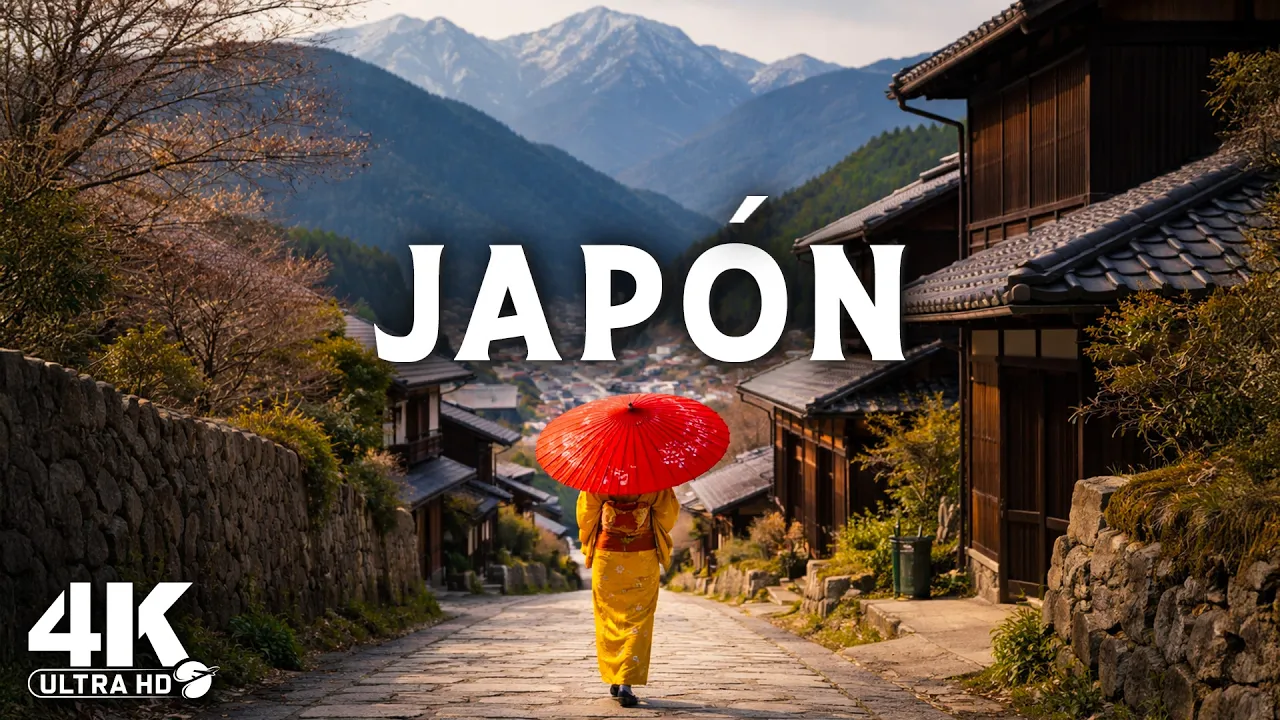
JAPÓN | El verdadero Japón que la mayoría de la gente nunca verá | Documental de viajes 4K
2.3K
Japan's contemporary identity emerges where density, infrastructure, and movement converge at metropolitan scale. Tokyo occupies the Kantō plain, Japan's largest continuous flat area, bounded by mountains and Tokyo Bay, with elevated railways and underground metro systems structuring daily movement through vast districts. Osaka, historically 'the kitchen of the nation,' developed as major commercial center with canal systems facilitating rice distribution during the Edo period. Both cities demonstrate how geography—mountains, horizons, and coastlines—continues shaping urban form even within hyperurban environments where traditional shrines and parks persist amid high-density development. Sensō-ji in Asakusa represents continuity of ritual life integrated into contemporary metropolitan Tokyo, with incense smoke rising from purification burners beside five-story pagodas.
Click to watch →
Deep Dive
Comparative analysis of East Asian developmental models, such as South Korea's Chaebol structure and its similarities to the Zaibatsu.

中国、香港、台湾、シンガポール、韓国。今のアジアの繁栄は全部、日本モデルのコピーでした。各国で認める声相次ぐ理由
35.6K
Korean chaebols (large family-controlled business conglomerates) exhibit striking structural similarities to pre-war Japanese zaibatsu. Both systems feature vertically integrated family-owned enterprises that received government support for industrialization purposes. After World War II, American occupation authorities formally dissolved Japan's zaibatsu, dispersing their holdings and reducing their political influence. Similar structural concerns exist regarding Korean chaebols, suggesting that institutional frameworks developed under Japanese influence may require similar scrutiny and reform.
Click to watch →
![[해티티맛보기] 이완배 초청강좌 | 한국에만 있는 재벌, 이런 기형적 지배구조가 가능하다고?](https://i.ytimg.com/vi/vSrG-_Ffp8I/maxresdefault.jpg)
[해티티맛보기] 이완배 초청강좌 | 한국에만 있는 재벌, 이런 기형적 지배구조가 가능하다고?
592
South Korea's chaebol system originated from Japan's zaibatsu (财阀) system, which included major families like Mitsubishi, Mitsui, and Sumitomo. However, the US military government in Japan implemented three laws that dismantled the zaibatsu system, breaking up these family-controlled conglomerates. In contrast, South Korea's chaebol system was allowed to develop and flourish. Chaebol refers to family-owned business conglomerates characterized by complex corporate structures where multiple companies are controlled by a single family. Unlike Western conglomerates like General Electric, which may have diverse business lines managed by professional managers, chaebol families attempt to control multiple industries simultaneously, creating governance challenges as no single family member can be an expert in all business areas. Lee Jae-yong inherited only 600 million won from his father before 1995, which grew to nearly 10 trillion won through complex corporate transactions including share acquisitions and restructuring. South Korea's tax laws were shaped by corporate interests, with loopholes that allowed chaebol families to accumulate wealth.
Click to watch →

ประวัติศาสตร์เศรษฐกิจเกาหลีใต้ รวดเดียวจบ | The Secret Sauce MEDLEY#54
890.2K
South Korea's chaebol system can be compared to Japan's keiretsu system, with both representing concentrated economic structures dominated by large conglomerates. The key difference is that Japan's system includes banking as the central element, while Korea's system separates banking from industrial conglomerates. This structural difference affects how economic power is concentrated and distributed. The chaebol system has both enabled and constrained innovation, with large conglomerates providing resources for research and development while also creating barriers for new companies.
Click to watch →

NHẬT QUÁ GIÀ - HÀN KIỆT SỨC: VÌ SAO CẢ 2 ĐANG RƠI VÀO ĐƯỜNG CÙNG?
59K
Japan and South Korea, despite being East Asian tigers, developed through fundamentally different models. Japan's gradual, layered approach emphasized harmony between tradition and modernity, building upon centuries of cultural accumulation. South Korea's rapid, urgent development focused on catching up with the global economy after post-war poverty. These different approaches created distinct corporate structures: Japan's keiretsu system provided stability, while South Korea's chaebol system enabled speed but created intense competition. Both nations now converge at a critical demographic point with extremely low birth rates, facing shared challenges despite their different cultural approaches to development.
Click to watch →

How the Chaebol Crashed South Korea in 1997
122.3K
Chaebol (재벌) are Korean business groups owned by single families, originating from entrepreneurs who diversified into multiple businesses. This structure provides advantages in emerging economies: internal diversification allows self-supplying, trust among family businesses reduces transaction costs in weak legal environments, financial interconnections enable bailouts, and family enforcement ensures contract compliance. Examples include India's Tata Group, Taiwan's Evergreen Group, and Mexico's Grupo Carso. However, these advantages diminish as economies mature and formal institutions strengthen, creating structural vulnerabilities that can lead to systemic crises.
Click to watch →
Meiji Reform
Urban Legacy
Zaibatsu Role
Meiji Reform
0:00- 1
Tokugawa order collapsed, triggering vast political and social shifts.
- 2
Post-1868 state prioritized mass education to build national power.
- 3
Samurai privileges abolished, unleashing talent and transforming cities.
The Market-Driven and Bottom-Up Development Critique
This perspective, championed by economic historians such as Yoshiro Miwa and J. Mark Ramseyer, challenges the traditional narrative that credits state intervention and monopolistic Zaibatsu conglomerates for Japan's rapid industrialization. Critics argue that the role of government bureaucrats and state-led factories has been greatly exaggerated. Instead, they contend that Japan’s economic success was primarily driven by robust market forces, fierce domestic competition, and a highly active bottom-up sector of small-to-medium-sized enterprises (SMEs). For example, traditional and decentralized industries, such as silk reeling and cotton spinning, flourished largely independent of direct state planning and provided the crucial capital that fueled urbanization. By overemphasizing top-down state guidance, the standard narrative overlooks how flexible private contracts, spontaneous entrepreneurship, and market mechanisms actually facilitated Japan's modern transition.
Understanding of the Meiji Restoration (1868) and the transition of Japan from a feudal, isolated society (Tokugawa shogunate) to a modernizing nation state.
Basic economic concepts of the Industrial Revolution, including mechanization, factory systems, and the shift from agrarian to industrial economies.
The concept of state-led capitalism or developmental states, where governments actively intervene to guide and fund industrial growth.
Fundamental principles of urban geography, specifically how industrialization influences demographic shifts and the physical growth of cities.
The post-WWII dissolution of the Zaibatsu conglomerates and the subsequent rise of the Keiretsu corporate network system in Japan.
The post-war Japanese 'Economic Miracle' (1950s-1980s) and the role of institutions like the Ministry of International Trade and Industry (MITI).
The evolution of contemporary Japanese urbanism, examining how historical industrial centers transformed into modern global megacities like Tokyo and Osaka.
Comparative analysis of East Asian developmental models, such as South Korea's Chaebol structure and its similarities to the Zaibatsu.
13.8K views0likes4:54@CitiesXOriginal Release: 2018-01-18
ED GLAESER: After 1853, after Perry's visit, massive political changes happen.
ANDREW GORDON: Right. ED GLAESER: And social changes, and economic changes then follow about that.
ANDREW GORDON: Right. ED GLAESER: Why does the Tokugawa order finally crumble after two and half centuries, and did cities play any role in that change?
ANDREW GORDON: Starting in the 1860s, or no, I'm sorry, after 1868 into the early 1870s, the government resolves to promote mass education, seeing education of its subjects as a key to the power of a modern nation state.
And they send missions gathering knowledge all around the world in the 1870s.
They come home with this idea.
Economic development is important.
Also that the samurai privilege was an impediment to development, they decide.
It's also a financial cost, because the samurai class was basically on welfare.
They were getting hereditary stipends and a lot of them weren't doing much.
So the samurai were essentially expropriated, and this is interesting because the people who did the expropriation were also former samurai themselves.
ED GLAESER: Mm-hm. ANDREW GORDON: But they were secure themselves, and this was a great unleashing of talent or forcing the issue.
Well educated samurai had to find other things to do.
Ambitious farmers and others could find things to do.
It initially hurt the cities because the samurai had been living in the cities.
ED GLAESER: Sure. ANDREW GORDON: And they leave, especially Edo is depopulated, and actually there's a decline in Edo's population and its vitality and the 1870s.
But things pick up with the growth of industry, and then a flow of population into the cities.
ED GLAESER: Japan in some sense, and there are many fascinating things about Japan's response, the first of which is maybe just that it was so successful.
ANDREW GORDON: Mm-hm. ED GLAESER: That relative to other East Asian countries which also tried playing technological catch up with Europeans- ANDREW GORDON: Right, right.
ED GLAESER: They did it to a point in which they were beating the heck out of the Russians in 40 years, right?
ANDREW GORDON: Right. ED GLAESER: Or 45 years, and education was surely hard not to think that education was a very wise and powerful response, but they also engaged as you mentioned in industrial policy.
And in some sense all of the East Asian industrial policies that have followed, whether it's Singapore, or China, or Korea, are, in some sense, descendants of that initial industrial policy.
ANDREW GORDON: Yes. ED GLAESER: But the legacy is mixed, right, of Japanese industrial policy?
One could argue that it did some good things, but it also wasn't as if every firm they invested in ended up being a winner.
ANDREW GORDON: The factories, I think, were effective in training an initial generation of technicians on managing the enterprises.
But because they had two goals, one, which was to serve as a model and bring people in and show them around, and the other was to make the products, they weren't actually profitable.
ED GLAESER: Mm-hm. ANDREW GORDON: And, the government sells them off in the 1880s into private hands, and that's origins of the Zaibatsu.
ED GLAESER: Mm-hm.
ANDREW GORDON: And, the story of Japanese economy from the Meiji restoration through, say, the 1940s, very roughly maybe has three episodes, a relatively high state control in the first 15 years, and then a period of relative laissez faire from the 1880s through the 1920s.
ED GLAESER: Mm-hm. ANDREW GORDON: And then a tightening of state control in the 30s and into the 1940s.
ED GLAESER: Which is associated militarization, right?
ANDREW GORDON: Yes.
ED GLAESER: The Zaibatsu, I guess, that first emerged with the sales of the early model factories, their names like Mitsui and Mitsubishi, right?
ANDREW GORDON: Right. ED GLAESER: And some of them become largely urban firms, I guess, or they remain dispersed throughout the country?
ANDREW GORDON: Well they have their hand in so many activities.
ED GLAESER: Right. ANDREW GORDON: Not all of them are in the cities, but the corporate headquarters are, and a lot of the enterprises are.
What distinguishes the Zaibatsu I think from the big corporations in the era of monopoly in the United States in the late 19th early 20th century is how dispersed they are.
We think about Vanderbilt or Carnegie, and you think about anchoring on one industry.
ED GLAESER: Sure. ANDREW GORDON: Whether it's railroads or whether it's iron and steel.
Mitsui had a hand in everything, and so did Mitsubishi, so did Sumitomo, so did Yasuda.
Those are the four main ones.
They had mines, so those were not in cities.
ED GLAESER: Mm-hm, right.
ANDREW GORDON: They had cotton textile mills.
They had paper mills.
They tend to be, especially the textiles, in cities.
They had banking.
They had insurance.
Those were urban-centered operations.
So they were doing everything across the range, including services as well as manufacturing, as well as resources.
Up Next

57:52
The Meiji Revolution: Japan's Transformation into a Modern Power
@pacificcentury--2--themeij704
197.6K views•2016-05-25

33:02
The Great Schism of 1054: Causes and Consequences
@SacredCathedrals
113.5K views•2026-02-19

91:57
The Geopolitics of the Ukraine War and the Rise of Global Autocracy
@JordanHarbingerShow
468K views•2025-04-19

17:05
Understanding the Cold War: Superpower Conflicts and the Road to Détente
@OverSimplified
46.1M views•2019-01-24
Related Study Plans & Knowledge Roadmaps
Structured learning paths in History
history
Byzantine Iconoclasm: Theology, Art & Politics
01Foundations of Byzantium and Early Christian Images
02The First Iconoclasm: Leo III and the Crisis of Images
03Empress Irene, Nicaea II, and the Second Iconoclasm
+ 2 more learning modules
9h5 modules
Explore Roadmap
history
Iranian Revolution (Causes, Events & Legacy)
01The Pahlavi Dynasty and the Roots of Discontent
02The Spark of Rebellion and the Rise of Khomeini
031979: The Fall of the Shah and the Climax of the Revolution
+ 2 more learning modules
8h5 modules
Explore Roadmap
history
Mali Empire: Mansa Musa, Trade & Timbuktu
01Foundations of the Mali Empire
02The Trans-Saharan Gold and Salt Trade
03The Reign and Pilgrimage of Mansa Musa
+ 1 more learning modules
6h4 modules
Explore Roadmap
history
1947 Partition: Politics, Borders & Legacies
01Foundations of British India and the Divide
02The Political Negotiations and the Mountbatten Plan
03Drawing the Boundary: The Radcliffe Line
+ 2 more learning modules
8h5 modules
Explore Roadmap