









![Economía institucional y Políticas públicas [Sesión I: Fallas de mercado] | Martín Krause](https://i.ytimg.com/vi/Q5mNwkQt6hA/hqdefault.jpg?sqp=-oaymwEmCOADEOgC8quKqQMa8AEB-AHeA4AC6AKKAgwIABABGGUgZShlMA8=&rs=AOn4CLAUN4XtFzNxHPl2oCYafZAGnzfdew)

![Economic Imperialism, Explained [AP World History Review—Unit 6 Topic 5]](https://i.ytimg.com/vi_webp/vQkfpKHOQiw/maxresdefault.webp)
![Global ECONOMIC Changes from 1750-1900 [AP World History Review—Unit 6 Topic 4]](https://i.ytimg.com/vi_webp/VdZxy_3JH0c/maxresdefault.webp)




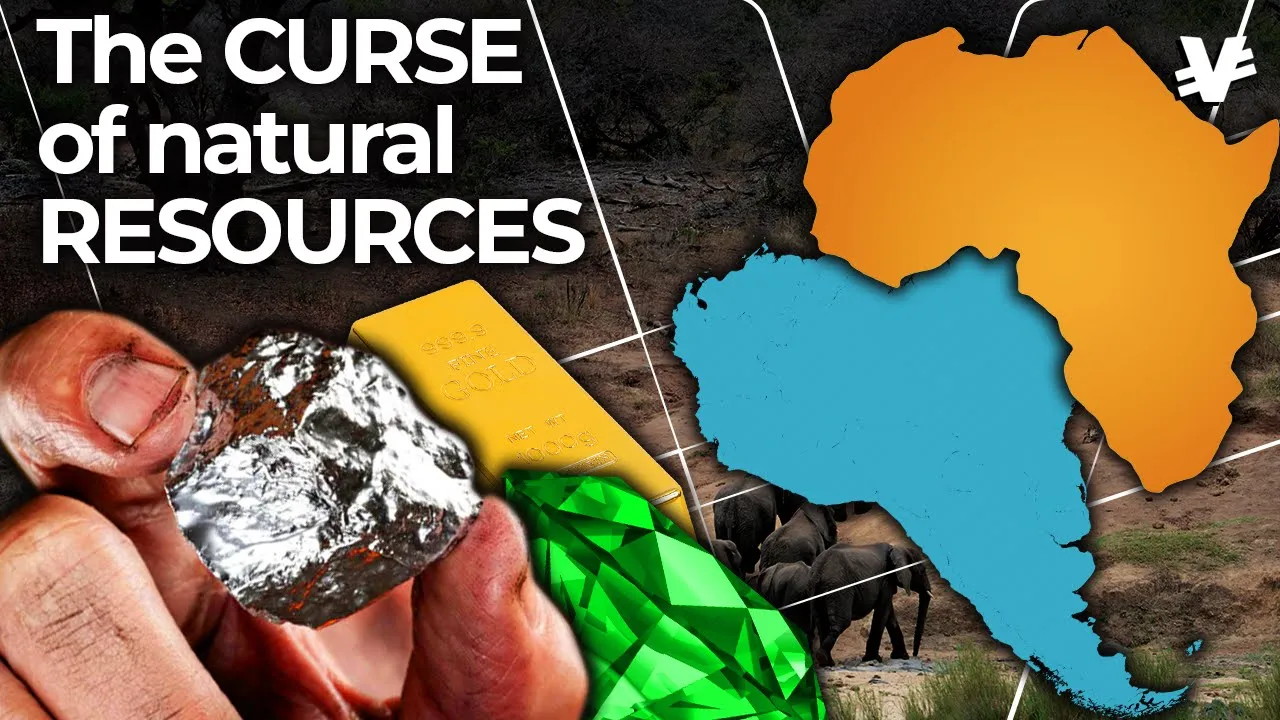
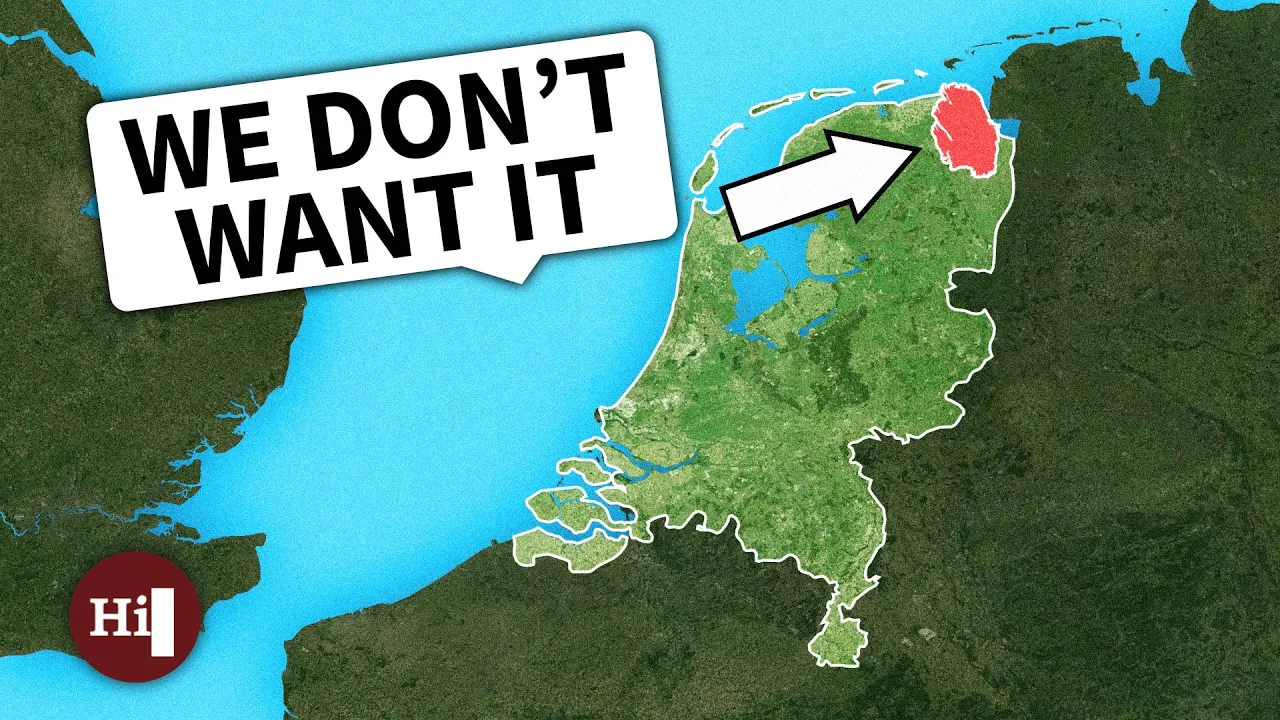












Resource extraction alone does not guarantee economic development; successful resource-dependent economies like Canada, Australia, and Norway achieved high income and diversification because they already had pre-existing high GDP per capita, manufacturing industries, and high wage structures before their resource booms, which enabled them to create economic linkages and spread resource wealth throughout the economy, whereas resource-dependent Latin American economies like Ecuador, Venezuela, and Peru remained middle-income with developmental challenges due to their lack of prior economic development.
Extractivism and Economic Development | John Minns | ANU
Added:Basic definition and economic understanding of 'extractivism' and the primary sector's role in global trade.
The core concept of the 'Resource Curse' (or Paradox of Plenty) in development economics.
Fundamental principles of Institutional Economics, particularly how political, legal, and social institutions shape economic behavior.
An introductory grasp of colonial history and how imperial powers historically structured resource-exporting economies.
The macroeconomic mechanics of 'Dutch Disease' and how resource booms can inadvertently deindustrialize an economy.
Comparative analysis of national policy responses to resource wealth, such as Norway's Sovereign Wealth Fund versus Venezuela's oil-dependent state model.
The theory and contemporary political debates surrounding 'Neo-extractivism' in late-developing nations.
Advanced institutional design and policy frameworks aimed at fostering economic diversification and curbing corruption in resource-rich states.
179 views2likes48:33Original Release: 2015-11-23
good afternoon everybody welcome to the second session of today we just have one presenter for this panel which is uh john mintz john is the director of the australian national center for latin american studies this is a conference theme that he's organized and is very close to his research so it is with great pleasure that he will be talking to us today about resource extraction and development and historical perspective and without any further ado i will present john thank you thanks this paper is by way of excuses this paper is at the start of what is probably a very long research project which looks at very long run historical data about resource extraction and the potential for broader forms of economic development a long historical perspective and taking a number of different countries as case studies what i've done here is to take seven case studies and not all of them have i yet collected sufficient data on but i'll present what i've got and my tentative conclusions so far the seven case studies that i've taken are grouped into two groups for obvious reasons the first group group one is canada australia and norway in other words resource extraction economies which at various points have undergone resource booms which have had at various points high resources in their export profile and at various points high resources to gdp ratio and they've managed to become fairly generalized high d hdi economies human development index economies high gdp per capita they've tended to become diversified economies with a number of different sources of strength uh in their economy and become over time less resource dependent the other four that i'm looking at are four from latin america and they are ecuador chile peru and venezuela of those four the work that i've done mostly so far has been on ecuador and that's because i'm working with carlos laureate and his colleagues in universidad and dina and some colleagues here at the anu on the yassini project and this is part of my involvement in that project so it's clear that these two groups have had very different outcomes in terms of their historical economic trajectory with one group clearly being in the high income first world if you like economies the other at best middle income with major developmental problems remaining and with a degree of exposure to external shocks related to the concentration on a single export the reason in part that i've chosen the first three australia canada and norway is that in a great deal of the mainstream literature about resource extraction these three are commonly presented as the some of the most successful economies in using resources over time and therefore the implication and sometimes a very impressive very a very explicit notion is that these economies can be historical exemplars for the latin american economies based on resources so a couple of things that i want to say about this the first is that that's not my position at all in fact by and large this is a critical a paper critical of that position and arguing that in fact there are things about the first group of countries in particular the historical sequencing of events what they had prior to the resource boom that was absolutely crucial in determining their later trajectory a few things about what this paper is not first of all it's not a policy paper which attempts to suggest what could be done in the latin american economies that's an important area and carlos mentioned in relation to ecuador some alternatives to extractivist approaches that i think are very valuable but i'm not going to do that in this paper and secondly well i'm mostly interested in ecuador and oil drilling in the ecuadorian amazon i've chosen four case studies in latin america which are not just oil oil has obviously some differences from other resources but it also has some significant similarities what i've done is to choose two countries ecuador and venezuela which are relatively oil dependent and two countries in chile and peru which are dependent on other minerals thirdly the term development economic development is always one which creates questions and in the discussion no doubt i'll be challenged about that but i want to try to forestall that by saying i'm not dealing with this question i'm dealing in a fairly conventional way with things like gdp per capita things like the diversification of economies their long-term growth patterns and so on and obviously that avoids an important debate that has to be had because development is not just a simple objective measure development is development for someone development benefits some people and very often disadvantages others and quite often historically many of the people subject to what we in retrospect call development were actually opposed to the process at the time okay so i want to begin with a review of a fairly standard economic theory that was developed in relation to canadian economic development reviewing it in the 19th century called staples theory a few two or three important canadian economists h.a innis w a macintosh and later mel watkins were crucial in developing this theory because looking back at canadian economic history they saw a series of staples wheat fur timber and fish were crucial in shaping the way in which the canadian economy was formed but in the process of that it appeared that canada also developed a manufacturing sector developed very high incomes developed high wages and so on and their theory was that there were important linkages between those staples and the other forms of industries which were crucial to canadian economic success particularly manufacturing and they mentioned three three key ones which are backward and forward production linkages that is a backward linkage is where for example the transport infrastructure necessary for transporting wheat across the canadian territory can be produced locally and therefore stimulates perhaps a transport industry or particularly a manufacturing industry a ford linkage where the staple that's produced is then further processed on and creates another industry in both cases you can see the process of economic diversification taking place and therefore an economy becoming less reliant on that staple over time and this appears to be what happened in canada the third kind of linkage uh demand total demand linkages which is essentially that the wages paid to people in the resource sector in the stable sector contribute to broader demand in the economy and stimulate the development of local industries for consumer goods etc a fourth that's been mentioned more recently are revenue linkages where states which tax the staple industry can use the revenues from that tax in a developmentalist way to create new industries that hadn't been there before in the early 1960s staples theory came under sustained attack of attack from the dependence tradition and the structuralist tradition and people like alberto hirschmann as well also mentioned that in looking at latin american development over the long run historical development of latin america staples theory simply didn't seem to work after all latin america had been inserted into the world system on the basis of the export of exactly those kinds of staples you know it was going to be the beef from argentina the sugar from brazil the minerals of gold silver from bolivia etc all of those things were the way in which primarily latin america interacted with the world economy and yet in most of latin america it did not track along the same kind of developmental path as had canada or other countries such as australia in fact hirschmann argued that in latin america the linkages simply didn't work at all what they did rather was that when staples were produced they simply contributed to an increase in imports of manufactured goods etc or imports of capital goods in order to make the staples work or of luxury goods for an elite which profited from the export of those staples hershman argued that this was at least a part part of the reason for latin american underdevelopment in the long term the previous singer thesis that carlos mentioned yesterday arising the late 1940s and the 1950s argued a different kind of took a different kind of tack on this and argued that there was a long run trend for the terms of trade for commodity producers producing these staples to decline and argue a number of reasons for that now the literature on that since the previous singer thesis has been mixed with some people arguing it empirically it's simply wrong other people arguing that it's correct but i think the while the jury's still out the bulk of opinion is that there is some truth to the previous singer thesis indeed grateful to madeleine who pointed out to me a very recent imf paper which shows that probably twice as many staples fell in relative price in the long term over the last century or more than rose so there's some truth at least in the previous singer thesis but what's clear i think is that whether or not linkages such as this could be created reliance on a single or even a couple of major commodity exports for an economy in the long term is extremely dangerous to rely on a single price in the world economy for your economic growth is always going to be dangerous perhaps even more important than any of those effects is the volatility of commodity prices in fact a number of bits of research that have been done on price volatility in in commodity prices suggest that it's a much greater problem than the long decline in relative terms of trade for resource extractors and in fact the oil which is about twice as volatile in price as most commodities is an extreme example of this but this is the long run uh movement of oil prices extraordinarily difficult to plan the same thing on a less dramatic scale is true also of uh of other commodities of minerals for example they tend to be extremely sensitive to changes in the broader world economy and swing wildly in fact more studies show that price volatility for commodities tends to have increased rather than decreased in other words the swings have got wilder particularly over the last four decades and making it more difficult for commodity producers to plan in the long term the impact of that is that investors find it very difficult to plan long term or to invest long term large amounts for the long term based on those kinds of price volatility structures if they do invest and this is both public and private investment it will tend to be shorter run investments because they can't predict the future of the economy based on these commodities and shorter run investments will tend to be less riskier investments but they'll also tend to be lower return investments and therefore the rate of growth overall for the economy is likely to be lower than it otherwise would be because the economy is folk is focused on this i won't go into the dutch disease phenomena which carlos mentioned yesterday simply that there's there's an observable tendency in some economies for the appreciation of the currency as a result of export of a commodity to result in other sectors of the economy becoming less competitive uh less able to to to export other goods but there's another factor which is that unlike other sectors of the economy in particular unlike manufacturing and services or even agricultural primary commodities extracted resources are eventually depleted and again carlos mentioned yesterday stealing my fire once again that based on hubert peak oil calculations ecuador for example will only able be able to continue exporting oil for two or three decades more and an economic structure built on that therefore is heading for ruin disaster in the relatively short term already ecuador's oil exports have declined by about twenty five percent based on depletion of resources the yes and the ite area which is the particular project that we were studying and that was designed to be protected by the initiative originally put forward by the government and cancelled on the 15th of last months if that exploitation was to go ahead it would be in preparation for five years and then be in production for just 13 years more before total depletion had taken place so a very very short run benefit for what appears to me to be a very small long-term result there are also long-term uh longitudinal studies about the effects of resource richness on countries and their economic growth saxon warner in 2001 did a study of a large number of economies and they were actually able to quantify quantify the loss of economic growth from some of them venezuela which is the extreme example the most resource dependent uh mineral dependent economy in latin america in the 20-year period up to 1990 they reckon had a gdp in the end 14 lower than it would have been if the country had no natural resources at all no oil whatsoever to export and a study of opec members found that they experienced an average cut on their per capita gnp of 1.3 between 1965 and 1998 quite a long run period at the same time as other comparable lower and middle income developing countries had an annual average growth of 2.2 percent so quite a stark contrast in resource course moreover the trend over time in resource rich countries especially this century since the minerals boom has been a failure to diversify the composition of their exports and to lift the level of product sophistication of those exports in marked contrast to what's happened in the most dynamic parts of the world economy in east and southeast asia where precisely that process of diversification of exports and increasing product sophistication has been the hallmark of their export industries now there are of course rent-y-estate theories which i don't intend to go into partly because i think there's uh i'm not entirely convinced about the rentier state theories that is that states which rely on external rents for their income have no necessity to represent their population someone turned the phrase around there's no taxation without representation to there's no representation without taxation in other words unless you're taxing your population you don't have any responsibility to them and the spending therefore is likely to be inefficient could well be corrupt etc and therefore the developmental path is likely to be slower and less efficient than it would have been otherwise a great deal of literature about this suggests yes or no but i it seems to me a somewhat determinist view of how the state operates in relation to these economic stimuli i'll leave that aside for the moment but the current context of this century is one in which a significant reaction against neoliberalism has led to the election of a number of left-leaning governments they are generally inclined more inclined to use state intervention in the economy and to use public policy and funds directly to improve education health social services and so on and resource abundant countries in this way have actually changed the level of poverty rates for example again carlos mentioned in relation to ecuador but you can see similar sorts of things in brazil bolivia and elsewhere that poverty rates have actually come down when such governments have used resource rents in order to increase social welfare but this new extractivism of the left has come into criticism because it seems to have entrenched the historic role of those economies in the world economy rather than transformed it so in discussions of this i've looked at australia canada and norway as they apparently successful resource exporting resource-dependent economies each of these has a high gdp per capita ranks highly in the human development index and each of them appear to have solid tr institutions transparent institutions well-established institutions and efficient introduce in institutions i'm grateful to several colleagues for pointing out the importance of institutions and tony remington did again yesterday in this debate for the way in which countries deal with resources and transform it into broader forms of economic growth or development there are long-term studies of this as well melania and torvik in 2006 did a study of 42 countries that had more than 10 of their gdp as resource exports over a long period as well between 1965 and 1990 and they did find that there was high correlation between high quality institutions transparent non-corrupt and so on and longer term economic growth so i think there's a clear correlation there on the other hand i don't believe it's the only factor involved i think there are clearly other factors to do with the endowment of an economy before the resource boom begins let me explain my suggestion is that the linkages of staples theory appear to work in these three developed countries because they already had significant industrial basis on which to be able to produce forward and backward linkages and importantly there are wealthy countries and relatively high wage countries and when resource rents if you like flowed into those economies it was possible via those wages to increase domestic demand not just for a small group of workers but to spread throughout the economy the increase in demand leading to an increase in demand for consumer goods so the hypothesis to test is that the prior existence of a high level of gdp per capita a high level of manufacturing industry and a relatively high wage economy at the beginning of the extractive industry boom is strongly and positively linked to future diversification long-term growth and avoidance of resource curse so what follows is a preliminary preliminary snapshot of the situation of each of these case studies at the time of the resource booms the most readily available data is gdp per capita because we're talking about data here which can go over in some cases more than a century and a half and some of the data is very difficult to obtain for example comparative wage rates and you have to use qualitative information as well as the quantitative data so i'll show and present what i have what i've done is to compare the wealth of those countries these all of these countries compared to the global hegemon of the time the most developed economy of the time and that changes in 1905 up up until then the uk britain was the highest gdp per capita country in the world aside from a couple of very small outliers in 1905 that changes to the us so what i've done in these in these graphs is to compare the blue line there which is the global hegemon with the extractivist economy or what was an extractivist economy over the long period for as much as i've got data and i'm sorry my graphs aren't as nice as some others that have been presented in this but the best i can do norway so norway is the seventh largest oil exporter in the world and in 2010 it was the second largest gas exporter norway is one of the countries most admired as an oil producer around the world for what it's been able to do in terms of standard of living and economic growth laura rival who writes on ecuador and other development questions noted in one of the things that she wrote that one of her one of the people she interviewed said we would be a different country if we'd done what norway did way back in the early 1970s my suggestion is that equal could not do what norway did back in the early 1970s and i'll explain why 19th century norway was not heavily industrialized and it's true this is often pointed out in the literature that lords norway's handling of the resource burn in the 1970s however it was very closely connected to modern industrializing europe in important ways it had wide commercial connections with manufacturing networks in europe it exported mostly primary commodities but it also used very sophisticated shipping services for example although as a very small country in 1875 it already accounted for seven percent of the world's merchant fleet so it had a significant small but nevertheless a significant industrial base to be working from and after it got full independence in 1905 from sweden further industrialization took place in a whole series of ford linked industries such as fish preserving cellulose and paper industries in 1905 extraordinarily for an agricultural country such as norway still primarily norsk hydro was established and manufacturing industry was connected up to sources of hydroelectric power the electrification network was one of the first in the world and one of the most efficient in the world in the interwar years norwegian ship owners were pioneers and the transformation from steam to diesel and after the second world war you can see here in this period of german occupation obviously there's a major downturn in the economy but immediately after the segment war from about 1950 there's what's referred to until the early 1970s as the golden age of norwegian economic development when it started to develop again a small but diverse manufacturing basis a very high wage economy and a welfare system a substantial welfare state which evened out incomes across the country so in 19 in the 1970s in the early 1970s norway went through the boom of north sea oil and massive massive amounts of resource rents poured into the country i'd suggest that a couple of the key manufacturing industries that had already been established in particular the shipbuilding industry were able to benefit enormously from this and diversify the norwegian economy to make it much less susceptible to shocks that occurred later on in the oil economy also because it already had a high wage system and a welfare state it was able to do what most of the poorer resource-dependent economies were unable to do which is to forego the resource income for some considerable period the pressure of the population for increased living standards higher wages to pull people out of poverty that's there for example in ecuador in peru in venezuela at the time of their resource booms didn't occur in norway in anything like the same way and therefore it was able to establish a pension fund by 1990 which is now i believe the largest funds such fund a sovereign fund in the world about 730 billion dollars where by law governments cannot touch more than i think four percent uh in any one year it's possible to do that on the basis of that prior economic development not possible in relation to for for the other resource dependent countries that i'm talking about australia and by the way when you look at these two graphs the hegemon and norway you'll see this with virtually all of well with all of those in the first three group with australia canada and norway that while norway is below the level of the hegemon it basically tracks the same the same path more or less follows the same path of growth and you find pretty much the same with australia now australia is clearly one of the most developed countries involved in extractive industries it's the largest producer it was the largest producer of iron ore bauxite rutile zircon largest reserves of brown coal mineral sir sorry mineral sands uranium lead zinc and salt and a top ten producer of a wide range of other minerals which i won't go through it's uh it was the fourth largest contributor to australia's gdp uh a couple of years ago with eight percent of total gdp and mining has played a very important part in australia's development since the middle of the 19th century in fact you can date it since 1851 and i'll explain why it's according to the data that i've got here of gdp per capita in 1850 before the first mineral boom that australia experienced it was the third la it's the third third wealthiest country in the world after the uk and holland and not very far behind either of those right back in 1850 it had a higher gdp per capita than the united states way back then so it was already clearly a relatively wealthy economy it was also a high wage economy almost from the very beginning it happened of course with european settlement in australia is that the indigenous population either suffered catastrophic demographic collapse or were marginalized from the mainstream economy which meant that there was a huge labor shortage throughout the colony's existence right throughout the 19th century in fact the shortage was so severe that it was necessary to pay convicts to work in their free time something unheard of and the convicts were being paid at a wage rate higher than british labourers at the time of free labourers back in britain certainly throughout the 19th century wages generally for free for free workers were significantly higher than in britain and australia perhaps undeservedly got the reputation of something of a workers paradise in britain for this very reason it was the first country in the world to institute minimum wage laws and was able to do so and in a sense had to do so because to attract labour from europe white labor from europe was very difficult to do it was a harder more expensive more riskier voyage than going for example to america which is where most people wanted to go now the gold rush of 1851 is interesting the very first mineral boom that australia experienced because it led to a massive rise in wages even further employers commenting at the time of the gold rush that it was almost impossible to get free labour anymore and that skilled labor was extremely expensive it could almost name its own price now the wage levels came down but what we see in that period is that the benefits if you like of the gold rush are fairly widely spread throughout the population by a general rise in wages not just in a small enclave of mining development but throughout the economy and led to significantly increased demand for consumer goods here in australia perhaps the second reason why australia was lucky uh is that its distance from the manufacturing centre of britain to which it was connected gave it a certain natural protection and therefore encouraged the development the growth of local industries to satisfy that that high demand so manufacturing and construction took off throughout the gold rush they weren't sidelined by it they there wasn't evidence i think here of resource curse taking place and in fact manufacturing had overtaken mining by the late 1860s manufacturing was 17.3 of the australian economy even in 1863 mining was only 10.6 the gold rush is running out but manufacturing is still growing very strongly there are a series of other booms which i won't talk about very much because they're not particularly important as the second one at the end of the 19th century which raises uh the importance of mining a bit there's another one in the early 1930s which does so again but even so at to that point until the 1960s mining is never more than about three percent of gross gross domestic product and it is an economy which is overwhelmingly based either in agriculture and on developing manufacturing now the most recent major increases in mining begin from the late 1960s with iron ore coal and other minerals nickel and some and its contribution then to gdp rose to about five percent or so now several points should be made about these booms the first is that despite the booms that took place australian gdp only really very rarely just around here in the late 19th century tracks above that of the hegemon but also that by and large it follows the same pro the same course as the hegemon it goes up uh in the period well during the war it rises at roughly the slightly lower rate than the hegemon in the post-war period and on in other words if you identify the mining booms that take place here in the early 1850s uh here at the end of the 19th century here a little in 1930 and beginning here in the 1960s we don't see any particular evidence of a rush of growth into the australian economy it follows the pattern of basically the developed economies of the rest of the world and what's interesting to note is that although we have the we have the idea of australia as a de-industrialized country which and it's true that industry fell to as a proportion of gdp to about 10 or 11 by the early 2000s in a pattern consistent with most developed economies what's interesting is that even as a share of exports mining only overtook manufacturing as a share of exports in 2008.
up until then manufacturing although it's not talked about very much still played a fairly important in fact a decisive role in the export profile of australia so canada canada also has a substantial mining uh sector making up about nineteen percent of total exports and about five percent of gdp and that began as well in the 19th century probably much more important in the 19th century were the agricultural exports that i mentioned before wheat timber furs if you can call them agricultural and fish however mining was important for a period mineral development was important but it's i've struggled to get quantitative data about canada but you'll see a couple of things about the graph one is that again it follows very closely the general trajectory of the hegemon at a lower level canada was actually a poorer country in the 19th century most of the 19th century than australia for a variety of reasons but it by the end of the century developed a very high wage structure for somewhat similar reasons as australia that is people tended to want to go to the united states rather than to canada and by certainly by the 1860 by 1868 its wage levels were higher than those of australia or britain so some of the same features of a high-wage economy and a high level of demand being established very early in the picture also it had very substantial manufacturing very early on there was for example railroad construction it railroads were extremely important driver of manufacturing and you can see them as one of those crucial linkages to staples to develop a broader base for the economy the typical large railway by 1860 which is very early remember the railway age doesn't begin in britain until the 1840s so this is 1860 in canada the typical large railway chain the grand trunk or the great western lines had the capacity to rebuild and to make their own lines to repair their tracks to manufacture their own railroad cars and even their locomotives and to create thanks to great a good part of the machinery and equipment used in the manufacturing process now you think in terms of the latin american comparators this is nowhere near the case at the beginnings of any of their resource booms in fact the massey company of agricultural machinery manufacture it was very important one in canada it rapidly became it was the first canadian multinational beginning in the 1840s and in fact within a couple of decades it was the largest uh agricultural machinery manufacturer in the british empire so this is a dominion and an outline outlier of empire but nevertheless already developing a very significant industrial structure within it and there are lots of other examples that i won't have time to to continue with okay i better get on to ecuador here we see a very different kind of trajectory of gdp per capita much poorer obviously as you would expect nowhere near the level of the hegemon even earlier but also not following the same track as the hegemon at any point now carlos mentioned some of the details about about ecuador that were significant and on a graph which zeroed in more on this period here so probably looking a bit more dramatic than this long-run graph but petroleum reserves were discovered uh in the east of ecuador in um in the late 1960s and started to be pumped out in the early 1970s by 1973 the 76.2 million barrels of oil were being extracted and gdp growth in what is typical of a resource boom takes off around this period hitting a top of 8.7 so very significant rise rapid growth of the economy and while oil was only 1.7 of gdp in 1970 1972 it was 23 of gdp just two years later in 1974. so this is the classic resource boom very very rapid inflow of funds into the economy and we do see an element of dutch disease happening in ecuador i think it's one of the clear examples of dutch disease because agriculture for example clearly goes backward in the process it barely keeps pace with population growth despite the inflow of funds from the oil boom and manufacturing also does appear to increase in this period in the 1970s which is which is an interesting phenomenon but i think you have to drill down into the statistics and i haven't been able to do that successfully yet but while manufacturing does increase as a proportion of the economy and does increase in terms of total output it appears to be extremely small scale manufacturing there was a government industrial census done in the early 1980s which listed 35 000 manufacturing firms but of those only 28 had more than 500 employees and 31 000 of them had just between one and four workers so what appears to have been the case is because of the weak pre-existing manufacturing structure of ecuador all the oil boom did was to increase the small number of firms that were already there at the beginning rather than industrial concentration accumulation of capital increases in productivity and so on and the period after again i'm afraid as carlos mentioned the 25 period 25 year period after 1982 from here right up to 1997 thereabouts that 25 year period was a disaster per capita income barely grew it was a mere 0.7 percent over that whole period now there's no question that since 2009 with the korea government that the revenues from oil have been used to reduce rates of poverty very effectively and i won't go through the statistics but urban poverty particularly but also rural poverty has decreased significantly as a result of government expenditures in that period however what hasn't happened is any diversification of the economy in fact there's arguably it's been the opposite that ecuador's fortunes are more closely to it tied to oil than ever now i'm going to have to wind up and i i said anyway that i wasn't going to talk in detail about the other latin american examples but i will just take you through a couple of graphs there's ecuador and there's peru and it has a very very similar profile a very very similar reaction to resource booms in a period when commodity prices are high not as much as ecuador because the oil price is more volatile than the kind of minerals that peru relies on but what you don't see is any very significant upward trend until very recently with the latest increase in mineral prices now venezuela i could do a whole talk on venezuela because venezuela is very different from the other latin american comparators because at a certain point in the 1950s it gets actually in gdp per capita very close to that of the hegemon and then it goes into basically stagnation from which it's pretty much never recovered since the 1950s despite opening up new oil fields having vast income from oil over that period so again venezuela seems to me perhaps the best case for resource curse of anywhere and chile chile is another really interesting case uh that people argue about a lot because it seems to be following the pattern by and large of ecuador and peru for most of this period until the 1980s when there's takeoff in growth now some people put that down to the neoliberal reforms of finishing working their way through the system from the 1970s and into the 1980s but i don't think that's necessarily the case i think there are a series of reasons for that growth however what is very interesting and the only thing that i really talk about here is that growth only takes off when copper prices collapse the copper price on which chile is pretty much dependent for its export income in that period collapses in 1982 and yet we get the growth and stays down into the later 1990s and yet we get significant chilean growth okay so a couple of conclusions before i'll wind up um firstly while those who pointed to the success of resource-intensive countries and developed countries have pointed to things like institutions and i think they may be right in emphasizing that we shouldn't take institutions in the abstract out of their context these institutions existed and were embedded in societies which were already fairly highly developed capitalist economies in the case of canada norway and australia and that they were embedded in situations where there was already significant manufacturing development capable of taking advantages of the linkages that the canadian staples theorists talked about and they are existing in situations where the level of wages was high enough that an increase in wages in one section of the workforce the mining section of the workforce were able to flow through to others in the economy increase the general level of demand and therefore stimulate local production so i'm not saying of course that extractivist economies can drop mining or oil immediately what i am saying is that optimism about using extractivism in the long term in order to diversify economies and to become wealthy countries in the long term is probably not well founded historically thanks i was thinking maybe i could tie all four first questions together and just answer one but i think they're similar sorts of questions about uh inequality the ability to fight for wage rises via a labor movement or a socialist movement and asset distribution because they all go to questions of class structure really and it's true you do see i think very significantly different class structure i know less about canada but certainly in australia the club what happens i think in australia is you get restrictions on the development of anything like a very narrow oligarchy as you get in many places in latin america the restrictions are largely imposed or partly imposed i think by the fact that the colonising power is the most developed capitalist power well it is the only developed capitalist power at the time in 1788 and through the 19th century what you see certainly in australian colonial history is an ongoing struggle between both the british crown and its local representatives governors at that point to restrain the development of something like that kind of oligarchy the closest thing you have to it in australia are the squatters and you see elements of that in early new south wales colonial history the struggle for example between the governors and someone like macarthur who's probably macarthur of the sheep runs and so on who probably comes closest to fulfilling the potential of becoming an oligarch so for example the squatters don't get the kinds of rights to the land that they demand the crown puts this under some control also it reserves rights for smaller farmers in the countryside but also because under the conditions of labor shortage the state actually steps in and tries to regulate the labor market to prevent extreme exploitation but also as a way of attracting labor to the colonies so all of those reasons you get a kind of a structure in australia where there's certainly a bigger middle class no question about that but also a labor movement which is in political circumstances where it's more capable of mobilizing more capable of organizing uh you know it's in first of all it's in good economic circumstances to organize because of the situation of labor shortage but the political circumstances also allow some some space so you get mass labor movements emerging in the latter part of the 19th century and particularly the 1880s and the 1890s when you get the new so-called new unionism of the large-scale organization of unskilled workers well considered unskilled then people like warf workers timber cutters and shearers whereas before it had been craft unionism based on small on high levels of skill stone masons and so on and relatively small numbers of people so yeah the the circumstances that allow a labor movement to exist in the first place then allow it to beat up the wage the wage price even more labor price even more so again i think the economic effect of that as i said before is if you had a level of wages which starts up here and you get a mineral boom which creates a small enclave it tends to raise the general level of wages still further it can't easily be quarantined from the rest and to sort of go to carlos's question as well about ecuador one of the things if you have a very low wage economy and you establish an enclave of high wages within it is that even if you get some leakage from that so some of the demand slips through to the rest of the low wage population if it's low wage enough for example close to subsistence then what you get is an increase in spending on things which are essentially subsistence items so people in the first place will eat more food for some considerable time until their wages rise quite a bit but if their wages are higher to start with they're already eating enough they've already got the absolute basics then what they'll tend to spend on are the things that are most commonly produced by manufacturing industry and that form the basis of large-scale industrialization so yeah the pre-existing level of wages is very important and as you say the exclusion of whole sections of the population from really much role in the market economy at all makes that even more difficult to develop that kind of demand so yeah i think those those are critical now what else was i supposed to answer uh inequality and and sovereign wealth funds yeah i think that's really clear in norway that as far as i can see there was no pressure on the norwegian government at all to spend all the wealth straight away it was already essentially they had a welfare state you know one of the most sophisticated welfare states anywhere in the world at the time there just wasn't a huge social demand to absorb all of that revenues whereas the temptation for a government of a of a poor country is of course to use it immediately and not to use it immediately would probably be politically non-viable be unable to do it so sovereign funds i think typically or ways of saving the resources can take place there or perhaps in the middle east in circumstances of either relatively low population and low levels of social demands in some of the smaller oil rich states uh the pressure isn't there you know in order to to just to spend it i mean the mining companies in australia i think spent 22 million dollars on an advertising campaign which must be the best 22 million dollars they've ever spent about the resource mining and resources tax that was proposed because they saved billions and billions of dollars had the original scheme gone ahead and of course actually that tax the super tax has raised virtually nothing uh in australia yeah that's right i mean i think arguably in australia what you could say is that over the last period of mineral boom the uh the boom has held up growth in the australian economy and of course you expect any kind of burn any kind of income is going to keep gdp growth going and you know you could argue that that saved us from recession in the g in the gfc and so on i think that's reasonable but the deeper question is what transformative effects does that boom have the transformative effects that existed in some of the earlier booms were much greater in australia than i think has been in the last burn on the other hand i don't think we've suffered huge resource curse effects either because of the existing diversification of the economy level of skill etc thank you very much you
Up Next

17:21
Greed vs Grievance: The Economics of Civil War Explained | Economics of War & Peace Ep. 3
@NewEconomicThinking
11.8K views•2024-10-30

5:07
Impact of Yuan in Indo-Russian Trade Amid Sanctions
@WION
261.9K views•2022-07-01

10:33
Behavioral Economics Explained: Rationality, Nudges, and Risk
@crashcourse
1.1M views•2016-03-12

113:18
The Age of Easy Money: Fed & Inflation | Full Documentary
@frontline
21.2M views•2023-03-15
Related Study Plans & Knowledge Roadmaps
Structured learning paths in Economics
economics
Sovereign Debt: Defaults, IMF & Restructuring
01Introduction to Sovereign Debt & Government Bonds
02Debt Sustainability & Credit Ratings
03Anatomy and History of Debt Crises
+ 2 more learning modules
12h5 modules
Explore Roadmap
economics
Market Design: Matching Theory & Gale-Shapley
01Introduction to Market Design and Price-Free Markets
02Two-Sided Matching & The Gale-Shapley Algorithm
03School Choice Systems and Mechanism Design
+ 2 more learning modules
10h5 modules
Explore Roadmap
economics
Impossible Trinity: Forex, Capital & Policy
01Introduction to Monetary Policy and Central Banking
02Exchange Rates and International Capital Flows
03The Mundell-Fleming Model
+ 2 more learning modules
8h5 modules
Explore Roadmap
economics
Healthcare Economics: Market Failures & Systems
01Introduction to Healthcare Markets and Market Failure
02Asymmetric Information and Adverse Selection
03Moral Hazard and Insurance Design
+ 2 more learning modules
12h5 modules
Explore Roadmap