





















Rebel groups that develop proto-party structures during wartime—such as governance wings, political messaging divisions, and social service wings—are significantly more likely to successfully transform into political parties after civil wars, as these pre-existing organizational components enable smoother repurposing rather than requiring complete organizational reconstruction.
Rebel to Party Transformation: FMLN Insurgent Paths to Power
Added:Historical context of the Salvadoran Civil War (1979-1992) and the origins of the FMLN as a coalition of guerrilla groups.
The concept of 'rebel governance', including how insurgent groups manage territory, resources, and civilian populations during conflict.
The basics of post-conflict peace processes, specifically Disarmament, Demobilization, and Reintegration (DDR) frameworks.
Fundamental political science theories on political party institutionalization and electoral mobilization.
Comparative analysis of rebel-to-party transitions globally, such as the FARC in Colombia, the ANC in South Africa, or Sinn Féin in Northern Ireland.
The governance performance and policy challenges of former rebel parties once they successfully win executive power, specifically analyzing the FMLN presidencies in El Salvador.
The long-term effects of former insurgent party dominance on democratic consolidation, polarization, and party system stability.
Advanced theories on how wartime social networks and clandestine organizational structures adapt to peacetime democratic competition.
111 views2likes1:00:38Original Release: 2024-04-26
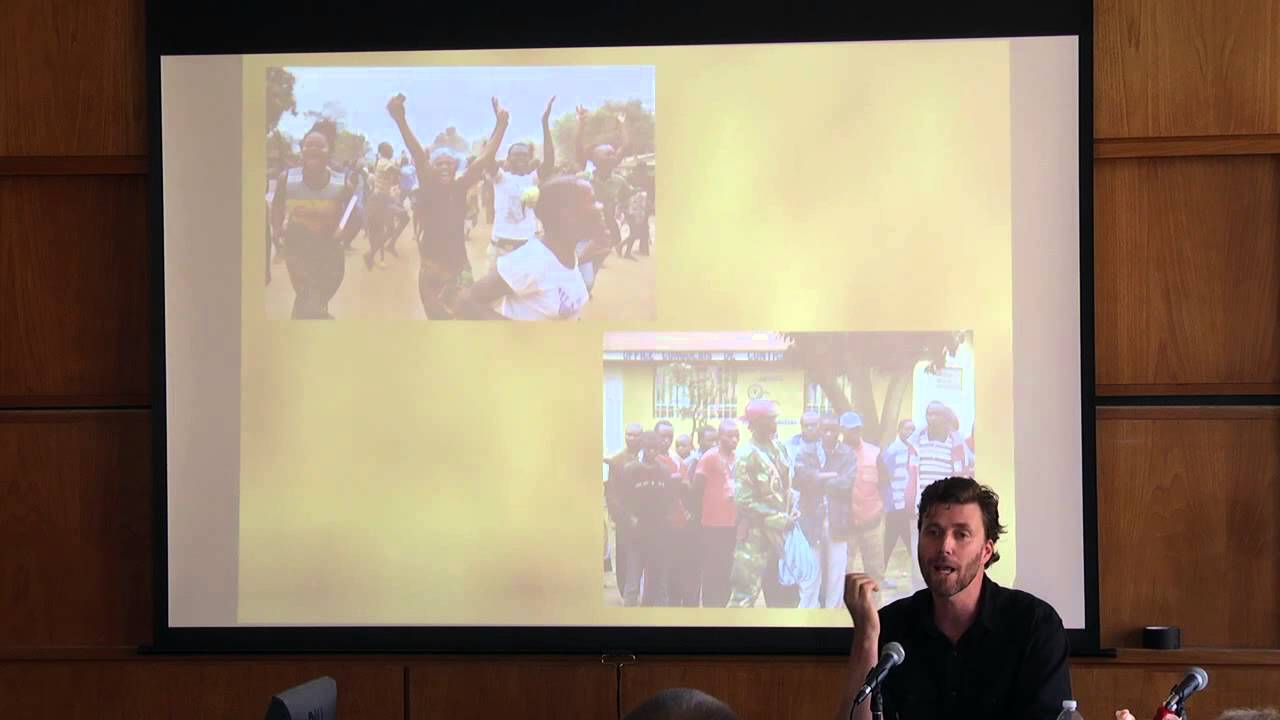
Dr Sher saaks uh Dr saaks is an assistant professor of comparative politics and methodology at the University of Southern California they will be speaking to us today about their uh research topic repurposing Rebellion how today's Rebels become tomorrow's parties uh Dr Zach is joining us this year at CC as a visiting scholar although they were also previously a CAC fellow in the 201819 cohort so uh uh their substantive work examines the conditions under which Rebel groups are able to transform into political parties in the aftermath of Civil Wars I'm really looking forward to hearing Professor Zach talk today uh just a couple rules of the road before we get started uh one finger to get on the Queue when we go to Q&A at the end uh two fingers to jump the queue to talk about uh for an immediate followup we'll ask the CC fellows to ask the first couple of questions uh if you're in the online audience please use the Q&A function on zoom and for every everyone if you would please introduce yourself when asking a question that helps our online audience know who's in the room so without much further Ado uh Professor Zach thanks so much I turned it off because Harold was getting feedback now I'm here um all right thank you so much um uh still going to give it about a 40% chance that I trip over wires um that is part of the presentation um Okay so countries beset by Civil War face a host of uphill battles toward reconstruction right and even after Wars end there is no guarantee that a cessation of fighting actually means lasting peace and for a while research on the efficacy of Civil War termination strategies was quite split and inconclusive and some argued in favor of negotiated settlements some for third-party monitoring and others argued that we should just let the two sides fight it out until somebody eventually wins uh more recently though we found that one of the most tenable paths toward postconflict stability and even democratization occurs when former Rebels are allowed to create political parties and participate in postconflict elections and in light of this insight and a few high-profile success cases two phenomena have really characterized the end of civil conflicts since the late 80s um first we've seen an upsurge in negotiated settlements granting former Rebels amnesty and giving them the opportunity to become political parties and postwar governments and second and more surprisingly we've actually witnessed a significant number of groups succeeding in this Venture right and so what we have our battle hardened insurgents trading combat fatigues and guns for khakis and campaign signs and they've made really impressive showings at the ballot in doing so the question is how did they do it because if we think about transforming a rebel group into a political party it actually seems really odd to ever expect this outcome but nearly 50% of Rebel groups managed to refashion themselves into durable party organizations at the end of war and this raises the question at the heart of my research why are some militant organizations able to seamlessly transform into political parties on the heels of War While others die trying and to be clear this phenomenon is not just about getting enough signatures to register as a political party right because Rebel to party transformation means we have to take something that at least according to much of the literature looks like this and turn it into something that looks like this a party organization capable of building a political platform forging linkages with Society winning elections and governing and again only about 50% manage to fully transition into electoral politics while the others fail which subsequently raises uh the risks of conflict recurrence um pretty substantially and so the stakes of understanding which groups are capable of transer and which are at risk for failure are are really pretty high and I'm going to argue today that to understand how an organization transforms uh from one into the other what we need is a theoretical approach that places the structures and traits of the respective organizations at the center of the analysis uh the problem with taking this approach though is that the mystery actually gets deeper before it gets better because one of the primary insights from organizational sociology is that organizational change isn't only hard but it comes with a vastly increased risk of organizational death uh one of my favorite quotes from the literature is failing churches do not become retail stores but in the case of Rebel to party transformation isn't this great though I was like I wonder if there are any turns out there are quite a few um uh in the case of Rebel to party transformation they certainly seem to right and so it's not to say that change never happens but when it does understanding it requires a very careful specification of the structures organizations have and what they need and the process by which change unfolds which political science just largely does not yet have the tools for and so to situate this project more broadly I'm going to quickly review The Rebel to party literature to take stock of what we know about transformation and what questions are left unanswered so the question is why why can't we get traction on this phenomenon right because if we look at political science we know a lot about rebellion and we know a lot about political parties and I argue that what we don't know enough about is organizations and how organizational change works and this deficiency comes to light when we examine both how Scholars describe the rebel to party transformation process and how they explain it uh and I'm going to go through these in turn now Scholars descriptions of the transformation process is say okay what it takes for a rebel group to build a political party includes the following tasks they need to dismantle their combat units reconfigure their decision-making structures restructure their finances recruit candidates and build party structures and this is a seemingly comprehensive to-do list um that looks really great on paper but it betrays a naive optimism about what organizations are actually capable of surviving because if we think about the organizational implications of taking a group and saying you've got two years uh to dismantle over half the organization reconfigure your chain of command restruct finances and bring in new people to run it any one of these on their own is massively destabilizing uh they also compromise the legitimacy of organizations and they tend to prevent organizations from adapting to changing environments which is exactly what these organizations need to do uh while they're in the throws of change um and finally while building party structures does seem like a kind of obvious task in becoming a party no one really specifies what party structures are what it takes to build them or how Rebels know what party structures are and what it takes to build them uh and so I'm going to put a pin in this description and take a look at existing theories to see how much traction we could get on even explaining the phenomenon and so Rebel to party Scholars rely on kind of three main factors to explain why some militant groups are more successful than others at building functioning parties the first argument is that if they were a party before they could recall those skills and be become a party again pre-war party experience the problem there is that if the average Civil War is lasting usually more than 10 years there's no real reason to expect that electoral skills on the heels of War are going to be as sharp as they were going in because if any of you played an instrument in high school or college and I were to give you that instrument my guess is that you would be a little bit Rusty and there's no real reason to believe that uh that that party skills are any different second Scholars argue that transformation is easier if organizations are centralized and cohesive with strong moretime bureaucracies thing is these traits are really great if the goal is to avoid fragmentation at all costs but they become extreme liabilities if the goal is to adapt to a changing environment right because we don't normally associate bureaucracies with flexibility which if anyone's had an issue with their pay or insurance at any point at any University we know that again flexibility is not not does not comport with bureaucracy and the third argument which is pretty intuitive right access to sufficient Financial Resources will make it easier to hire Personnel deal with startup and overhead costs of becoming a party um and obviously resources are necessary condition to BU to to party building the problem with this argument is that some organizations are going to be able to more efficiently redirect resources than others and ultimately we can only get so much traction on an organizational phenomenon like transformation when we propose explanations independently of the internal structures that mediate how effective each explanation would be um and the fact is existing depictions don't account for the difficulty of organizational transformation which makes both describing it and explaining it nearly impossible and so the question is what does Mak what makes change easier in some cases than others and turning to organizational Theory we find that while organizational change is always hard uh it's not uniformly hard and it's easier to the extent that groups have two properties one a general Legacy of flexibility and second and most importantly uh what we call transferable skills here skills that are as useful for being parties as they were for being Rebels but this Insight reveals its own problem because political science also lacks the conceptual vocabulary to specify the types and the diversity of skills that militant organizations really any organizations have at their disposal um and to illustrate this consider this uh this drawing now this is a sketch from a field Diary of one of the commanders of the fmln which is the rebel group in El Salvador during the 1980s now given the tools that we generally use in political science to describe organizations we can specify that you know this is a hierarchical group uh we can assume perhaps or learn that it has a strong bureaucracy we could say that it's likely not diffused or fragmented but all of these Concepts describe only the shape of the organization and the strength of the chain of command but this illustration depicts a multifaceted group with diverse wings that operate both inside and outside the combat domain and here here we have full subdivisions that doesn't work at all supposedly there's a laser pointer there pretend them pointing to the right hand side of the document umit there are full subdivisions that are dedicated to propaganda political education domestic and international diplomacy and a variety of others and with these issues in mind I build a theory that starts by questioning the conventional wisdom about the composition of Rebel organizational structures so Rebel groups are generally modeled as though they comprise mostly full-time soldiers divided into sets of combat units right something that looks like this and I ask what if not all Rubble groups look like that and instead some look more like this right we're in addition to combat roles or combat subdivisions we have full subdivisions dedicated to propaganda full subdivisions dedicated to civilian Administration others often look like this where in addition to combat we have some uh uh subdivisions dedicated to natural resource extraction and processing and still others look like this where we have press divisions and Social Service wings and the empirical reality of rebellion is that reveals an unmodeled diversity in the roles and subdivisions that Rebel organizations build during wartime but the conflict literature hasn't caught up with a systematic way of incorporating this structural diversity into analysis of both the groups themselves and the Civil War outcomes that we really do care about and I argue that this diversity and specifically the variability in it across groups is going to affect the prospects for successful transformation and to see how we're going to start by looking at the end point of transformation the structure of political parties um and so similarly you know uh party uh breaking down and specifying organizational structures poses the same challenge for parties as it does for Rebel groups but digging into the literature we can identify three core subdivisions that are common across political party organizations um I'm borrowing from a particular framework um from from cats and mayor but broadly we have a subdivision or a wing called the party in public office which is the contingent of members elected to office who do the governing the party on the ground which comprises the mass organizations in charge of building linkages with society and the party in central office and which is the wing that sort of builds the party platform and forges and disseminates party identity and identifying the variety of roles within parties allows us then to specify the types of activities and the types of structures that aspiring Rebels need in order to succeed in the political Arena and if change is easier if groups have these pre-existing competencies or these transferable skills the question is are some Rebel groups competent in these domains and the answer is yes and I identify a set of wartime organizational subdivisions that I call Proto party structures which map on to these party divisions and have key implications for the likelihood and the the process of Rebel to party transformation and the Three core Proto party structures are Rebel governance Wings they're Wings dedicated to Shadow governance and administration uh wings that provide Social Services which broadly map on to the party in the ground by forging linkages with society and political messaging and press divisions which map onto the party in public office by generating and and and sort of releasing the organization's political ideology and so functionally these wartime structures mirror the key elements of party organizations but not all Rebel groups build them and I argue that Proto party structures will confer two advantages to groups as they ATT attempt to transform into political parties the first is that these subdivisions that engage in like party-like activities will imbue the organization with relevant and structured skill sets the second Advantage comes to light when we consider how you actually build a party out of the pieces of rebels so the second part of my theory identifies two possible Pathways toward post-war party building now recall that Rebel to party Scholars almost uniformly posit that the transformation process entails building a party from scratch when once the war ends and to be fair if Rebel organizations look like this which some of them do right combat Centric organizations with a fairly homogeneous set of roles the process of transforming is going to proceed exactly the way the literature says it will right all of these units are going to have to be dismantled uh and the governing and platform building and Outreach structures are going to have to be built in their place right so in short nearly the entire organization is going to have to be rebuilt but that process is highly disruptive and greatly increases the risk of failure um and while this is the situation that some find themselves in my theory points to another possible path to transformation because if alternately a rebel organization looks like this when the war ends then transforming into a political party doesn't necessarily involve dismantling everything and building from scratch since this group has an existing set of party-like structures and skill sets transforming into a political party can actually just occur by both in the relevant structures augmenting them hiring a few more Personnel um and then only dismantling what's no longer needed and this repurposing is the mechanism by which Proto party structures facilitate the rebel to party transformation process and so I'm going to move on now to how I test this Theory empirically I test this theory in the in in the paper uh I using within group comparative process tracing to trace the transformation of the far Martin National Liberation Front in El Salvador uh this case workk draws on over 400 archival documents from six archives across El Salvador and the US dozens of recorded interviews and radio broadcasts from the war and a handful of published individual histories and I'm going to provide just a little bit of background to contextualize the case uh so in response to Growing oppression from the Salvadoran government uh five groups with five very different approaches to Rebellion sprung up throughout the 1970 I'm going to apologize for this the FPL the Erp the RN the PCS and the prtc there will not be a quiz on This Promise um each of these groups was vying for Cuban support to try to get like the one true Rebellion off the ground uh and ultimately after the Sandinista victory in Nicaragua Castro agreed to support a Salvadoran Revolution uh under one condition that the groups unite uh and so two months before their first incursion into the country they came together to form the fmln which was an umbrella organization headed by a fiveman council one person from each of the subsequent groups um and yeah and so that's all fine and well but you should be asking why the fmln why is this case ideal and a few key features of this organization make create an unparalleled opportunity uh for an analysis of of the theory I just prevent presented uh the first quite frankly is that the groups hated each other so merging wasn't just logistically complicated it was like morally abhorent to everyone involved adding to that Castro and the leaders were in a rush to get the Rebellion off the ground and in light of these two issues they made a snap decision at the beginning of the war that shaped the fmln well into the 90s or arguably the 2000s they allowed every subsequent group to retain their own organizational structures and the third reason this case is ideal is that they completely bungled their Insurrection into the country um it was supposed to overthrow the Salvadoran government in two to three days um and they just they they completely bungled it for a number of reasons and after this failure each constituent group retreated to a different area of the country where they largely remained throughout the war and together these circumstances give rise to a really unique Geo organizational phenomenon that makes the fmln an absolutely ideal case because what we had are five different groups with five views on rebellion and five different organizational structures operating in distinct areas where they fought under the same name against the same regime for the same outcome and most importantly these groups differed considerably in the extent to which they built Proto party structures throughout the war and this allows me to test how organizational structures affect the transformation process while holding just just about everything else constant to make the analysis a little bit more tractable I'm going to focus on two groups in two different areas uh the Erp in morzan and the FPL in chatango now these were the two largest groups uh within the fmln each formed their rear guard among uh very poor rural peasants or or cinos uh and some quick background on the two areas which will become relevant later uh both areas again were extremely poor uh and they were very influenced by Liberation theology which in practice meant that local populations in these areas but few others had some experience with political engagement and organization which was otherwise illegal in that period right any organizing like any social organizing was was illegal outside of actual just being social or religious organizations and so in short what we have are two Marxist groups of similar size who were part of the same organization who buil rear guards among similar social networks in roughly the same socioeconomic context now every single organiz like explanation in political science would have us expect these groups to build similar organizational structures and eventually to have a roughly equal share of influence in the post-war party the catch is that the Erp and the FPL had very different views on what Rebellion should entail and I'm going to trace how their organizations evolved and what the implications were for transformation now of course the fmln was still supposed to work as a unified front and in the first phase of the war the Strategic directive from the top was was to rebuild forces ahead of a second Insurrection um and for their part Erp leaders adhered to a te they believed that all that was needed to mount a successful rebellion was a sufficiently strong military and that these these these sort of like grandstanding shows of force uh would would incite popular mobilization kind of inevitably um and so their focus was exclusively on bolstering combat structures by any means necessary and even though then the organization was built on these highly politicized social networks with really intense government grievances the Erp viewed them as little more than potential recruits and logistical support and this is evident in letters and interview transcripts with the Erp leadership right and this quote betrays a very unidimensional understanding of what local populations could contribute to Rebellion right we move with the masses because we depend on them right um without them we would not have human reserves or we wouldn't have supplies um and the Erp remained fairly steadfast in this laser focus on milit militancy throughout the war even when other groups enjoined them to to Branch out and I'll demonstrate how this affected the transformation process in a bit but I'm going to turn now to chalot tango where a very different story unfolded and so while the FPL was technically operating under the same strategic directive they took a very different tack after after being told to prepare for another Insurrection they did what any good marxists would do they taught people how to read uh they also deeply engaged the politicized religious networks in the area and their their their priorities had very clear organizational implications uh they emphasized developing Grassroots governance structures which they built by repurposing pre-war religious networks among locals to actually create Democratic participatory institutions where citizens could organize politically they created a radio wing and a press division to disseminate their political message uh and they leveraged their affiliation with the radical teachers union to develop a very robust education wing and a formal curriculum that they Ed to not only provide schooling to members but uh to local populations as well here's actually a page from one of the fpl's literacy uh uh literacy books and what this what this illustrates is that even from very early on in the war the fpl's Proto party structures were sis icated and they were highly institutionalized and before I move on to talk about how these different organizational structures affected transformation I'm going to forestall an important question did the rebels know what they were doing at the time the answer is yes they did so here are two quotes from two different groups uh about halfway through the War uh both come from internal documents detailing their respective organizational goals the first is tasks form cadres with specialized party objectives so that their eventual promotion organically strengthens the party because we have the core elements already in place and the second to create in the process of struggle organizational structures that are guaranteed to work after the conflict right because for my theory to hold Rebels can't just build politically relevant structures they have to know that these structures have post-war utility and with that in mind we're going to look at the transformation process so quickly take stock of the facts leading up to transformation right so as part of the settlement the fmln was given the opportunity to participate as a political party in the 1994 elections and the internal directive in light of this opportunity was that each group would have equal representation and equal say in the new party and the party formation process if I'm right however I don't expect the party building process to play out that way in practice I expect instead that groups that ended the war with Proto party structures already in place uh will emerge as leaders in the new party because they have these transferable skills ready to go and in contrast I expect the Erp despite being the largest and most well-funded group throughout the war to to falter uh and to test these expectations I'm going to compare internal narratives about the transformation process on the next set of slides I'm going to present two sets of quotes one from groups with robust Proto party structures built during wartime and the other from the Erp and what we find is two very different conversations about the same task and let's take a look at the first set so we have here from the fmln general command um we're in a period where we must have the capacity to translate our political Capital developed during wartime to the moment when there's peace in El Salvador from the FPL we can reorient our local popular power structures and control mayorships from the PCS we from the Communist Party we've accumulated Democratic uh and revolutionary countries with strategic value they been developed under the conditions of dual political military power which puts us in a very good position to succeed the next one I I swear I didn't make this up this is one of those quotes that you find Once in a career all of our structures and men will follow three paths the fighters will go to agricultural production on the lands we have left a percentage of the structures will go to the National civil police and another percentage of the structures will go to the political party organization into which we're going to transform now these quotes are optimistic and they're very concrete right they demonstrate not only that leaders understood the value of their wartime structures but that they were confident in the ability to convert them uh into the party organization moving forward and in contrast the discussions inside the Erp were really quite Bleak uh we need to discuss how we're going to shape political structures we need to discuss the principles of political party organization and create the functional structure that binds the union social judicial and electoral struct struggles into a single effort we recognize that many of the organizational allines we've promoted have been in service of the war and we uh the Erp has established uh that it is being reimagined in light of the new struggle we humbly recognize that we need other capacities for the new challenges um right and and these quotes verify that one the Erp structure was considerably more homogeneous than the others and that leaders knew it um and this last quote really shows that lead recognize the limitations of that homogeneity uh and so I'm just going to conclude with how the transformation process unfolded on the ground um you know despite the internal directive for equal representation clear Front Runners emerged immediately right so the FPL and the Communist party uh emerged as backbones within the within the new party within just a few months of party formation um and as for the organization itself examples of the sort of structural repurposing I expect abound throughout um the fpl's Press division became the Press division of the new political party um the Salvadoran Association for local development and democracy was repurposed to uh help mobilize voters uh kadre is in charge of the territorial Administration and land allocation during the war were repurposed to facilitate the land transfer program uh and uh yeah and so ultimately uh after being marginalized in the transformation process the Erp actually broke off from the fmln attempted to form their own party uh and they failed and disbanded within a year so the core takeaway here is that while Rebel to party transformation is a common opportunity that's granted to militant organizations after War the ability to take advantage of that opportunity after the conflict depends largely on their wartime organizational legacies and the reality is that some groups come to the negotiating table looking a lot more like parties than others and these groups are the ones who are most likely to see succeed at the ballot and uh and Beyond it um the research has implications for both scholarship and policy but I want to am I am I about out of time do I do I have a second okay I'm GNA quickly run through the the the implications so on the scholarship side um the at at the most narrow this has vast implications for how we understand Rebel to party transformation by giving us new found mechanism on or New Found traction on the mechanism um it also brings to the conflict literature um the the idea of taking organizational approaches and how we can sh use them to shed new light on Old questions uh and finally it helps bridge the gap between both conflict literature on the one hand and the political party literature on the other hand and as for policy knowing what we know now about which groups are more likely a priori to be able to um transform into political parties this could allow us to better tailor negotiated settlement at the end of conflict by building in contingencies for not you know not to say that we shouldn't give groups the opportunity to try um but we could build in contingencies for groups that are likely to fail um it also has implications for the microdynamics of disarmament demobilization and reintegration processes um DDR programs are generally structured to demobilize what we consider to be just combatants who we generally consider to be young men between the ages of 16 and 34 uh and the fact is it's like a huge percentage of the rebels in El Salvador had pH they had as many phds in the Rebellion as we have in this room um and we have you there are writers and there are you know um radio operators and engineers and you know giving people the sort of pittances of a demobilization process where it's like oh you have you can have a little bit of Farmland is not actually going to work well for everybody and you might actually have more luck um uh getting getting people to commit to demobilization um if they're are tailored uh a demobilization uh uh institutions um and it also gives us understanding how Rebel organizations are structured and the diversity within Rebel organizations gives us a new understanding of Rebel recruitment profiles which could presumably help people better Target um where where militant group recruitment is coming from all right thank you very much and I'm looking forward to your questions sorry thank you very much shering I think uh we'll open for Q&A again one finger to get on the que I see Caleb already um and Ren and then um you're online please use the Q&A function on Zoom uh thank you Sherry this is fantastic fantastic I'm Caleb pomoy Stanton nuclear security fellow here at seesac um uh which which organizational structure the more uh Combat versus kind of participatory structures which one is more likely to emerge victorious in the Rebellion because it seems like there might be a trade-off between investing your resources in combat units versus investing your resources in your like education and propaganda units and it would be kind of counterintuitive if the groups with these Proto party structures actually produced better Fighters as well thanks yeah that's a really good question um you so so in terms of like assuming that um assuming that negotiated settlements toward you know party transformation doesn't exist um are groups that allocate finite resources toward diversity more like less likely to succeed militarily um I've had this question kind of in the back of my mind and there are I so far I've kind of found mixed evidence but the evidence itself is is a little bit anecdotal and it's very likely to just suffer a few types of selection effects the fact is these the the diversity of structures is a lot more common um uh than uh than we think um but I am not as likely to believe that so there's a selection effect story which is if they have the resources to build Proto party structures might also be more likely to have good resources to train good Fighters so if we take for example the Ruf in Sierra Leon which was like a very very homogeneous organization that was like mostly forced recruitment of very you know young kids they didn't diversify their structures they also weren't very good militarily they were just kind of brutal um and that that might also be a resources story and so there's it's a good question there's like reasonable evidence that could go either way but it's something I've thought about okay um Ranna great thanks so much Sherry uh Ranna neelon I'm the cyber security postdural fellow here um I have a sort of two-pronged question um this was fascinating and I'm G to ask you to go even more deep into the actual internal dynamics of the parties themselves so this is kind of a quiz because I can't quite remember the two parties that you were talking about was it the flp and the Erp Erp yeah FPL Erp oh great okay amazing sorry you talking about how the structures of a lot of these groups were made up with like writers and people with phds and educated people did you find that there was a concentration of those kinds of people within the FPL as opposed to the Erp like was the Erp more made up of buying into stereotypes like the farmers and like the sort of more uneducated groups um and then the second part of my question is kind of piggybacking off what Caleb said do you think there was a greater recognition among those successful groups that it's not just about the bombs bullets like you can be more successful if you're leveraging the the population and so that was the reasoning behind it as opposed to concentrating all their efforts into um Munitions and combat resources yeah um so good question um the the answer to the first one is is yes they were more concentrated in the FP uh they because they actually um the FPL split off from the Erp because they're like you guys are just you just want to shoot things can we please just not um and so so so part of it is a function of like you have like all of the Nerds were like we're going to like build our own organization and like we should just write a bunch um uh and so oh my gosh I'm so sorry I I remind me your second qu prompt me your second question it's because they were successful and then recognizing it's not just about the bullets and and the ammunition yeah and but so but one of the problems was um arguably they were more successful in in in in recognizing that but there are a lot of groups that want to be able to build these structures that also can't because because they don't have the resources to so it's actually not just about the recognition it is about the the being able to execute on it um uh and yeah but there was on on the on the flip side of that there was very much an intransigence um on the side of uh on the side of the Erp where they were like we're just going to remain militant this is the way to do it this is the way to mobilize because they were like we're going to Galvanize support and we're going to like you know blow a lot of things up and so um so yeah actually put myself next on the list uh but I have some other people on the list as well so I'll go ahead and ask um you brought up uh you briefly mentioned some of the international influences on the different organizations um in El Salvador and I wondering if you could expand on that whether that translated into choices about organizational structure because as you know sort of the Soviet Union traditional Marxist londonist parties had one theory of victory in fact they thought these countries were not were still feudal so we're not ready for revolution in certaines there's Chinese model sort of rural Rebellion seizing power at the end and then there's sort of the Cuban fiso you know a small band of determined Fighters can you know lead the lead the the country Into Revolution by spurring popular Uprising as occurred in Cuba and so to what extent are these different International influences affecting the organizational choices of the groups um and did one model do better that's such a great question I'm like so thrilled about this because I'm literally working on a paper right now called hash not all marxists um one of specifically one of the reasons that I love this case which I didn't have a chance to get into is because they broadly subscribe to Marxist leninist ideology but we see fiso in the Erp and like and and we see you know um uh like the um the FPL took a you know a much more maist approach um and so the fact is though because their Patron was Cuba um for the most part Cuba was not the one that was influencing their organizational structures per se um and I'm actually that's my the the sort of next branch of my work is that what what we find is a really intense distinction between the dogmas to which organizations subscribe and the organizational ideology that they that they sort of derive from it which actually which they use then to guide both the structures that they build and and the behaviors um and the sort of principles of of of war that they that they follow thereafter um and so there there I I do think that there there might be some like I I I could say based on this that fmo is not particularly great um for the rebel to party transformation thing um but wasn't particularly great it wasn't particularly great for a lot of things that's that's true um uh but um but yeah the international influences you see considerably less on organizational structure than you might otherwise expect that's great um so let me go to Max and Jim next and I have I also have a couple people on this but I'm going to work in an online question in the middle of that so let's go to Max first then to Jim Kar hi sh we thank you so much for your talk I'm Max computer science poster here at CX s and the center for AI safety um I was wondering with Hamas and Gaza in mind can you view through the lens of your work explain to me the difference between a terrorist group and a rebellion group please sure um terrorism is a strategy um just as um you know uh the you know the people are our mountains is a Str like terrorism as it's defined which is you know the the the use of fear to inspire you know to political action right is is a wartime strategy one could argue that there are a variety of um Terror I mean like one of the groups in here they really liked blowing up Bridges um uh because it was just to like mess up the infrastructure and show how bad the state is at fixing it um that would be considered a terrorist tactic right if somebody some group blew up a bridge in the United States we would say oh that's terrorism um the fact is uh there's really no such thing as a terrorist group it's just that there are a variety of of non-state armed groups some of which use what we call terrorist tactics to um you know to to as as part of their strategies of achieving results but Hamas is is you know I also do a bunch of quantitative work on this Hamas is a group in my data set because they similarly you know had you know a variety of these sort of like they were a rebel group they have these press Wings they do all sorts yeah great let's go to Jim now great thanks um so much Jim goldgar visiting scholar here at seesac and thanks for such a great talk that was really um was great I learned a lot and what I really could kept thinking during the talk was like well yes this seems so obvious for a group to do this why aren't other groups doing this why are why are why are other groups failing and you mentioned a couple times you know uh you know some some groups are just bad at it um including being bad at the military strategy as well but I was just curious because you didn't mention leaders much I mean is there a role here for individual leaders in terms of why some groups are more successful at this than others and also is there any learning that like like are these people learning from other situations that they're seeing or are they parochial enough that they only know their own situation and there's there's no question of learning but those were the two things I was just curious about as I just was trying to think about why the fmln was so so much more successful than other groups that you've looked at might be yeah that's a really great great question um so uh the the fact is there the that leaders have leaders have a lot of agency at some areas of organizational building so we're going to take a kind of classic political science like a historical institutionalist approach to this um leaders are going to have a lot more agency over the the forms that their organization takes um at early stages uh and at critical junctures than than throughout because organizations kind of end up having a sort of path dependent life of their own thing um why other groups aren't doing it some there are a lot of leaders who who just don't want to do it um I mean so the Erp absolutely had the resources to do it they were affiliated with the same radical teachers union they built on the same social networks they could have done it the leader didn't want to um similarly I brought up the Ruf in Sierra Leone um the leader like I have this great quote from a former fighter that was like um he preferred the loyalists he did not like the educated ones um and so he was spec he continued uh fod senko continued to marginalize um the the the what what was originally the core of the Ruf which was a bunch of exiled College professors and um uh and students who wanted to create this much more diverse uh structure but when he emerged as a leader he wasn't doing it and it was specifically out of um fear or ego or something to that extent um as far as organizational learning learning is concerned um they aren't so parochial that they don't know what's going on in other contexts the funny thing about the Ruf is that um one of the things they said early on in the war is we want to do a renamo um and so they they they knew what had happened this at this point it was you know five or six years ago um uh they just didn't think about what it would actually take to to do that all right um let me work in an online question from Graham Davies uh and this relates to that maybe your broader qu quantitative work which um can you take reflect on sort of the lessons learned from El Salvador that might be applicable elsewhere or other examples that might have something in common with El Salvador for example he gives Palestine or Northern Ireland we also have multiple uh uh groups arm not State actor groups uh yeah um so the this is this is an excerpt from a larger Book Project um that uh engages in two cases from South Africa in in the book so I look at the Ruf as a failure and um Ramo in mosambique as a success and I do also have a a quantitative data set that codes to the extent that it can diversity of militant organizational structures worldwide up through uh it's 2019 now um and so the lessons do carry um uh it it travels fairly well um and we see different different factors um are you know affect groups a little bit more in some cases some groups are just incredibly resilient to to change and so what renamo lacked in the resources and the literacy to be able because they had an 8% literacy rate so they weren't going to teach a lot of people how to read um during the war they but they did have an incredibly flexible organization um and they were able to incorporate people into it very easily while mitigating those sorts of tensions um uh but but yeah I mean so I have um actually a variety of Palestinian groups um so the plfp DPL dfp and Hamas is as part of it as well um and yeah it's it it travels fairly well and is common and again going back to your question it also carries across ideological bents great I have two on this side of the table um I think the person yeah okay thanks we're we're friends and as you'll find out a second colleagues um thanks so much for this talk it was really interesting uh my name is Andre I'm a postto downstairs in cgdl um and I guess I wanted to ask you uh maybe your take on two potential alternative explanations that haven't come up yet or sort of have but maybe not as much as they could um one is about the role of ideology I think was mentioned which is you know I imagine that some groups are of more committed not just in taking power but in democracy itself the Democratic process itself more prepared because this is something they sort of know about in care about from beforehand in a way that possibly leads to organizational structures but isn't caus by them um then relatedly sort of what is the role of of the voters or the masses or the constituents and all of this right does it matter that you know could it be the case that some groups that have these governance structures Etc also just have more popular support and how does that translate then into this excessive political parties the sort of case I have in the back of my mind here is the case of the farc in Columbia which has this incredibly robust differentiated you know bureaucratic structures what does terribly right was 2016 how how of theory account yes they they thank God for their quota system um which I think is coming to a close next year um or guys um okay um so I the the first question in terms of um I'm gonna actually separate role of ideology from commitment to democracy uh so one of the scope conditions that I place on I I'm not going to call this I I'll tell you in a minute why this isn't a cop out um but it's going to sound like a cop out and that's okay um the one of the scope conditions that I place on the analysis though is you have to at some point during your conflict say that you want to be a party right I'm not going to include boo Haram in this and I'm not going to include you know Isis in this they don't want to be a party there's actually and then also because with the nature of transnational organizations there's no clear Target State necessarily in which they would become a party um and so I think there's a certain extent to which an ideological commitment to or at least okayness with democracy um needs to be a scope condition on understanding Rebel to party transformation um and and yeah because and so what what I would argue is just that what we are dealing with are two fundamentally different types of armed actors right and so I would say that groups that don't that aren't willing to you know show up at a ballot alongside the other belligerant in war that represents a difference in uh kind uh rather than than a difference in degree um of A Sort and this is one of the issues with you know how we consider organization like Rebel organizations we don't have a lot of different ways of parsing uh where there are actually differences in kind um uh and so and even even where we expect to see non like the the fmln they started their War they were like we're not doing the Democracy thing we want full Revolution and then in 1983 they were like well a little democracy is a treat would be nice um and so what we actually see is is is um a change in organizational ideology over the course of the war when they start to assess what is and isn't possible um as for the role of the voters so the the rebel to party story is actually kind of two outcomes rolled into one on the one hand there's this internal organizational transformation um this paper focuses on that because I think it's cool we get to look I I get to do a lot of fun archival research and get fmln Christmas cards um there is also the question of Rebel to party transition which is the actual transition into electoral politics and what governs that um and so this role of Voters kind of deals with the demand side um aspect but and so that's sort of like that the second question this explains the supply side what allows you to be a party um I I do actually argue and I can show this with substate data in El Salvador which I might have a slide about um uh that groups that created Proto party structures during war perform better at the municipal level than than the more homogeneous groups even where there wasn't forced conscription and there wasn't terribly like people had similar like favorability levels um between like the Erp and the and like some of the others but people voted for the fmln in droves where the Proto party structures were were there one might argue that that's a function of like oh this is like favorable you taught us how to read the other thing is in places where there were these really robust institutions they were able to not it's voter mobilization isn't the issue it's voter registration that's the problem um Proto party structures give Rebels the ability or you know uh Rebel successor parties the ability to actually um register and mobilize and do all the institutional stuff that you need to do before you can actually get voters to vote for you at the ballot and that's what we actually find there okay before we go to Ken I think there was one more just to the right of you or are you were this you were the second person okay okay um my name is Maria kurel I'm also a post at cddrl so Andes and I um together um got lost on our way here um so I also uh study retive party uh transition super inspired by your work my focus on the case um of the F and something I thought a lot about in my work so I'm curious as to whether and how youve thought about it is uh civilians and their recruitment not just as voters but their Recruitment and integration into Rebel parties um like their function within the party bureaucracy and even in party leadership so does that is that a part of the story here and do you see that the extent to which they can incorporate um militant civilians matters um or or or not when you say civilian recruitment into the part when you say civilian you mean people who were non combat non people that weren't like within the formal structure of the fmln in this sympathizers I kind of take it I since we're in the same thing I'm sorry to everybody else I take a very Libby wood approach to the idea and I'm just like who is this civilian though really um because it's like what it's so so hard like if if somebody is if if a government official comes to somebody's door and they say we would like to root out the fmln and they were like yeah I don't know man I don't know where they are and like there's six in their attic but they're not carrying a gun is that person a civilian is the person a civilian who like makes tortillas for the you know and so the the fact is there is a lot there a lot of people who were part of the community organization um and like just like participants in the community did get kind of funneled into the party organization or Affiliated unions thereafter um I just kind of get squicked out about the concept of civilians like I did a search and like delete for the word civilian in the book because I I like get so what's a civilian about it um distinction between militants and Fighters you can be a militant but even a but this is the is I was no I'm agree with you they're part of the same structure but they might have different functions but let's go to Ken um and then I have Cameron and that's I think where we might stop so hi Ken Schultz political science great talk Sher um I guess my question is is also is about um what explains some of the variation in the rebel organizations in the first place and you already just mentioned for example Isis and boo Haram who like like might they would they're not they have no interest in this and they probably wouldn't even accept a they're not looking for a deal that makes them a party which seems to be like the starting point of your analysis as we start with a deal that we've accepted so there's going to be a set that aren't going to want that but I'm also thinking about there must be lots of Rebel groups that are operating in such repressive environments where they they're not they don't have their press office and they don't have govern they just can't do any of that stuff because they don't have territorial control uh they just don't have the ability to do that and I'm just wondering like so do they ever end up as parties or is this are these groups just doomed to fail I would argue that the fmln was in a really really repressive State I mean like there was a complete like one of one of the things that started the war in the first place uh was that there was there were numerous like full media blackouts um the government was black bagging somewhere between five and 10,000 people per year like that it was was really indiscriminately um and you find you do find you do find a diversity of structures even in places where the government actually has the reach to um uh uh to to to kind of quash them out um and you also see like so the FPL controlled a lot of territory because they were kind of in in the sort of rural Hinterlands of El Salvador uh the Communist Party mostly operated out of San Salvador and one of the things we don't talk about is the fact that like like they they had a very robust press division they certainly didn't control territory right because they were in the middle of the City and we don't really talk about like Urban territorial control um and so territorial control it becomes a little bit less it's it's more about how good you are at being sneaky which you know is difficult to quantify um and to the first question about what explains the variation in Rebel organ organizational structures in the first place um this is a really important one um what I find like I use organizational ideology as as sort of this inroad into determining like H how Rebels are at at nent stages in the Rebellion are allocating their resources and leveraging social networks to build to build these structures um and you can actually find I I have just Oodles of documents of like sort of pre off like the Rebellion is official um talking about what types of structures they want to build that comport with how they believe the war ought to be fought um and so there is there is quite a bit of like you know we think we think our organization should be Ed this way because this is what it means to fight the type of rebellion that we want to fight um and again it's one of the reasons that I like using this CA or that I find this case to be so analytically useful is because um for the most part the overall goals of the organization remained the same and so it's not just that we find these very systematic differences between what Isis builds which I argued five minutes ago was a difference in in type um versus versus groups that are willing to come to the table just quick two finger on this what interesting thing to follow up on would be I understand in the Salvador case there were actually some uh pockets on the Salvador Honduras border that did serve as re rear guards left over from this uh Honduras Sal Salvador War 1969 that were neither the Honduras or the South Military would go in there to avoid another conflict and so that those were like rear bases that might be the closest you got in El Salvador to like areas that were sort of truly Rebel held that interesting counter example might be to look at Argentina and where do the left peronists who make up the sort of the leftwing fighters during the 70s end up in the political parties in the 1980s because the parist party is still dominant after the Dirty War so there might be a way of getting at this question using slightly different set of faes um let's go to Cameron for the last question try resarch scholar at cesac uh I was wondering how typical what you saw in this case is where you had multiple Rebel groups competing with one another to achieve this successful transformation and if that's not always the case looking at your larger data set are there aspects of um this uh Proto party apparatus that helps these groups compete with other groups to make a successful transformation that wouldn't necessarily be helpful if they were doing so in the absence of other groups or vice versa that's a really good question um yeah the the nature of competition in the Salvadoran case is really interesting because technically they were all on like they they were all entitled to the same thing right these five groups were under an umbrella they should have all gotten equal representation and whatnot um and I think it did help them Edge out people who they didn't want there um as far as how common we see in ter how frequently we see the same Dynamic of Intergroup competition it's a lot more difficult because the cases where we have multiple Rebel groups like multiple non-state armed groups operating are really difficult cases to kind of parse so we see that in like the DRC and in Chad where we had multiple Rebel groups um and what parties they maybe transitioned into or what parties recruited from different groups is so murky that they are mostly cut out of every data set that claims to study this um and so I am not sure uh is really the answer um because the Dynamics of a state such that multiple non-state armed groups are continually functional are are likely just so dire um that it's it's difficult to imagine that suddenly a multi party democracy is going to is going to erupt instead of instead of War um and it's also hard because then you have to do multiparty negotiated settlements and so usually the war doesn't stop in this way that allows elections to to function um and so this type of competition often happens in the context of like umbrella organizations which are like somewhat common um but actual like true competition between rebellions I I truly don't know all right well I think unfortunately that's all the time we have there's a couple of questions left online that I'll pass on to our speaker uh but please join me and thank professors a for a fascinating talk
Up Next

59:32
Alhaji G.V. Kromah: ALCOP 1997 Presidential Campaign Interview
@MyBlackPlanet-1
750 views•2022-04-13

24:30
BRICS Pay and de-dollarization: A New Financial Order Emerges? | 55 chars
@DannyHaiphongYT
164.6K views•2024-10-22

58:36
Cyber Threats and Nuclear Weapons: Risks, Scenarios, and Policy
@CISACatStanford
757 views•2021-12-13
10:19
Explaining the Saudi-Iranian Proxy Conflict in the Middle East
@Vox
18.2M views•2017-07-17
Related Study Plans & Knowledge Roadmaps
Structured learning paths in Political Science
political-science
Economic Statecraft: Sanctions & Chokepoints
01Foundations of Geoeconomics and Economic Statecraft
02The Mechanics of Weaponized Interdependence
03International Sanctions: Types, Implementation, and Efficacy
+ 2 more learning modules
12h5 modules
Explore Roadmap
political-science
Central Bank Independence: Politics & Policy
01Foundations of Central Banking and Monetary Policy
02The Time Inconsistency Problem & Inflation Bias
03The Delegation Model and Designing Independence
+ 2 more learning modules
12h5 modules
Explore Roadmap
political-science
Consociationalism: Power-Sharing & Stability
01Democratic Dilemmas in Divided Societies
02Introduction to Consociational Democracy
03The Four Pillars of Consociational Design
+ 2 more learning modules
12h5 modules
Explore Roadmap
political-science
Rebel Governance: Legitimacy, Economy & State
01Foundations of Rebel Governance and Statehood
02Establishing Political Legitimacy and the Rebel Social Contract
03Wartime Economies and Rebel Resource Management
+ 2 more learning modules
14h5 modules
Explore Roadmap