















![[핵융합 플라즈마 개론] Lecture 16-1 Resistive MHD instability. 서울대 나용수교수님](https://i.ytimg.com/vi/BygNdVC-fNs/maxresdefault.jpg)





![[플라즈마 Kinetic Theory] Lecture 11-b. POSTECH 윤건수교수님](https://i.ytimg.com/vi/RE2N4Z9WQx4/sddefault.jpg)

![[ИАД, осень 2025] Foundational models for spatial-time series. Занятие 8](https://i.ytimg.com/vi/VccbYbZc4Ow/hqdefault.jpg)


![[OpUS] Application of Control](https://i.ytimg.com/vi/b9DFto2-UGY/sddefault.jpg)




Magnetohydrodynamics (MHD) studies low-frequency interactions between magnetized plasmas and magnetic fields, particularly relevant for space plasmas and nuclear fusion research. In ideal MHD, the magnetic pressure on plasma is given by B²/(2μ₀), and the beta parameter (β = p/(B²/μ₀)) represents the ratio of particle pressure to magnetic pressure. For stable magnetic confinement in fusion reactors, β must be less than 1, meaning magnetic field pressure must exceed particle pressure. Two key instabilities arise from magnetic pressure effects: the sausage instability occurs when plasma pinches inward, increasing the toroidal magnetic field and creating a positive feedback loop that squeezes the plasma further; the kink instability happens when plasma bends, causing higher magnetic pressure on the inner side of the bend which reduces the bend radius and amplifies the distortion. Both instabilities are detrimental to fusion plasmas as they cause particle loss and disrupt confinement.
Magnetohydrodynamics Lecture: Beta, Pressure, & Instabilities
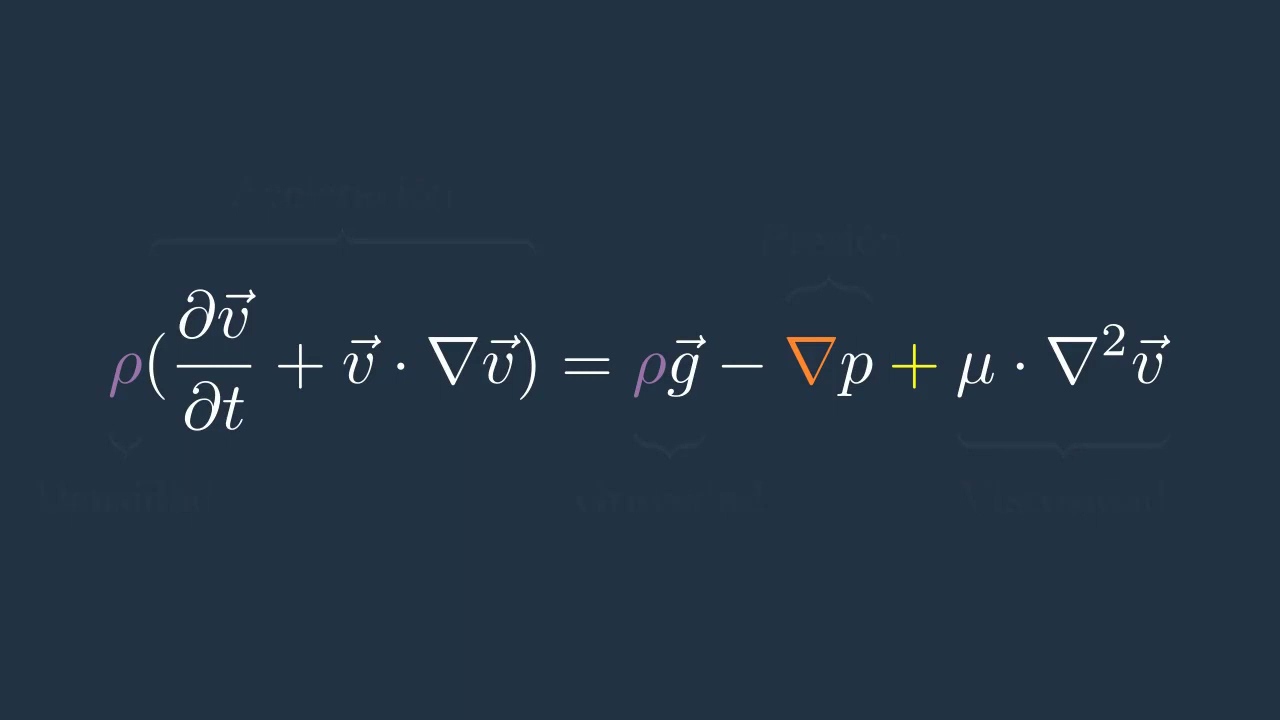
Added:senior plasma physics lecture 15 we're going to examine the hydrodynamics of magnetized plasmas which is commonly known as Magneto hydrodynamics or mhd for short the term mhd implies that we are dealing with low frequency interactions of the plasma with the magnetic field we've already seen one example of this in a previous lecture which is the alphane wave mhd is mostly useful in space plasmas and in magnetically confined plasmas used in nuclear fusion research we're going to examine a couple of basic mhd concepts first we'll look at what we mean by ideal mhd then we'll discuss magnetic pressure finally we look at mhd stability or rather instability ideal mhd recall that MMS law for a normal conductor can be written like this where e is the electric field strength EA is the resistivity and J is the current density it can be shown that if there is a magnetic field also applied that a generalized MMS law can be written like this this could be derived from the fluid equations under some circumstances we want to regard the plasma as essentially collisionless so we say that there is no resistivity and we write the socalled ideal mhd equation given by this let's now derive an expression for the pressure applied on a plasma by a magnetic field recall the momentum equation from the fluid model of a plasma given by this in the steady state where the drift velocity U is constant we can let the derivative be zero that means the right hand side of the momentum equation can be written as follows the left hand side is the familiar Loren Force term without an electric field in this case and it's equal to the force due to the plasma pressure gradient now let's substitute into it this Maxwell equation we replace J by the Maxell equation and rearrange and we end up with this now the two cross products can be simplified to this term this is obtained from Vector identities that you can find in any Vector calculus book Let's rearrange this equation as follows what you'll notice is p the plasma pressure term that is the pressure applied by the particles in the plasma and this term is also a pressure term it's the pressure applied by the magnetic field on the plasma if we assume we have a situation where the magnetic field B does not change in its own Direction so that is its gradient is zero then we can set the right hand term to zero what the this says is that for the left hand side to equal to zero that means the expression in Brackets must be a constant keeping the two pressures constant has implications to the pressure inside a plasma take this cylindrical plasma where the magnetic field is along its axis assume the plasma has a high enough density such that you get significant di magnetic fields in the center as shown that means the magnetic field at the center will be reduced so if there's a low magnetic field at the center there must be a high particle pressure p at that point however if we now move out towards the edge of the plasma where the DI magnetic effects aren't as strong so the magnetic field becomes higher that means now the particle pressure p must be lower to maintain the constant sum of particle and magnetic field pressures so the relative values of the particle pressure and the Magnetic pressure are quite significant in plasma Fusion research so we Define a parameter beta which is the ratio of the particle pressure to the magnetic pressure given mathematically by this the pressure in the plasma is caused by all species for example the electrons would cause a pressure and so would the ions so p is really the sum of all particle pressures we can rewrite this equation as follows where we've used the ideal gas law p = nkt for each species of the plasma in Fusion Plasma Research where tox are used beta must be less than one for the reason that the magnetic field must confine the plasma that means the magnetic field pressure on the particles must be greater than the particle pressure so the denominator in the beta must be greater than the numerator that is beta has to be less than one another application of magnetic pressure is in plasma stability imagine we have a cylindrical plasma and just ever so momentarily a part of it is reduced in size it just wobbles a little bit and is reduced in size as shown there now it so happens that the aamal magnetic field that is the magnetic field along the Theta Direction which is shown by the circular arrows there is inversely proportional to the radius so if the plasma radius is reduced you'll have an increase in the Asim magnetic field now from what we've just seen the pressure on the plasma from the magnetic field is proportional to B squared so an increase in the aamal magnetic field causes a greater pressure on the plasma which has the effect of squeezing it down even narrower which has the effect of increasing the field further and so on in a kind of a positive feedback system which clearly is not sustainable at some point the plasma will spring back in trying try to maintain its original size but it could overshoot and the whole process repeats again in some other part of the plasma this is called a plasma instability and it can oscillate quite wildly and is generally not regarded as beneficial to Fusion plasmas because it has the effect of throwing particles out from the plasma for almost obvious reasons this is called a sausage instability the magnetic pressure can also be applied to another instability imagine now that the cylindrical plasma doesn't pinch in on itself as in the previous diagram but just bends the magnetic field lines on the inside of the bend are closer together that means the magnetic field there is higher than the outside if the magnetic field is higher than the outside then that means there is more magnetic pressure there which reduces the radius of the bend which produces a larger magnetic field and so the process continues until the bend becomes quite severe and the plasma tries to spring back and the whole process repeats in another part of the plasma this is called a kink instability and is also regarded as not very beneficial to Fusion plasmas there is quite an assortment of instabilities that one can study but these two are the most well-known and it would suffice to make the point of how magnetic pressure can contribute to instabilities
Up Next

Magnetic Confinement Fusion: Tokamaks and Stellarators Explained
@ImprobableMatter
125.8K views•2022-07-11

21cm Hyperfine Transition in Neutral Hydrogen: Radio Astronomy Basics
@AaronRobertParsons
12.4K views•2011-10-13

Plasma Physics: Definition, Temperature & Debye Shielding
@usyd-seniorplasmaphysicsle6653
124.6K views•2017-04-24

Entropy and the Second Law of Thermodynamics Explained
@veritasium
27.5M views•2023-07-01
Related Study Plans & Knowledge Roadmaps
Structured learning paths in Physics