
















![Ultrafast transient absorption spectroscopy [WEBINAR]](https://i.ytimg.com/vi/zy7iPVTvdm4/maxresdefault.jpg)


Photochemistry is the study of light-matter interactions, where UV-visible light (200-800 nm) excites organic molecules to form intermediates and products. The Grotthuss-Draper Law states that only absorbed radiation produces photochemical changes. The Stark-Einstein Law (Law of Photochemical Equivalence) states that one molecule absorbs only one photon for excitation, with quantum yield (Φ) defined as molecules reacted divided by photons absorbed. Beer-Lambert Law describes light absorption: A = εcL, where absorbance is proportional to concentration and path length. The Franck-Condon Principle explains that electronic transitions occur so rapidly that internuclear distances remain unchanged during excitation, due to the nucleus being approximately 1000 times heavier than electrons.
Photochemistry Laws Explained: Grothus-Draper to Franck-Condon
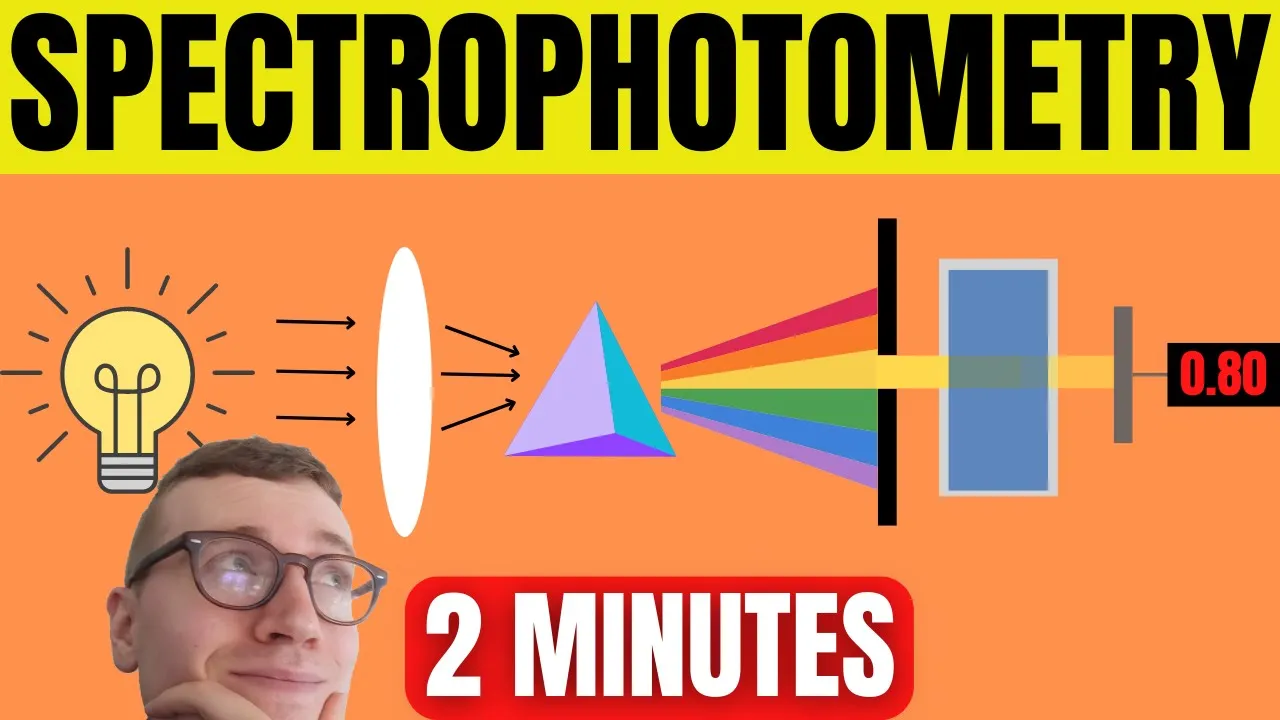
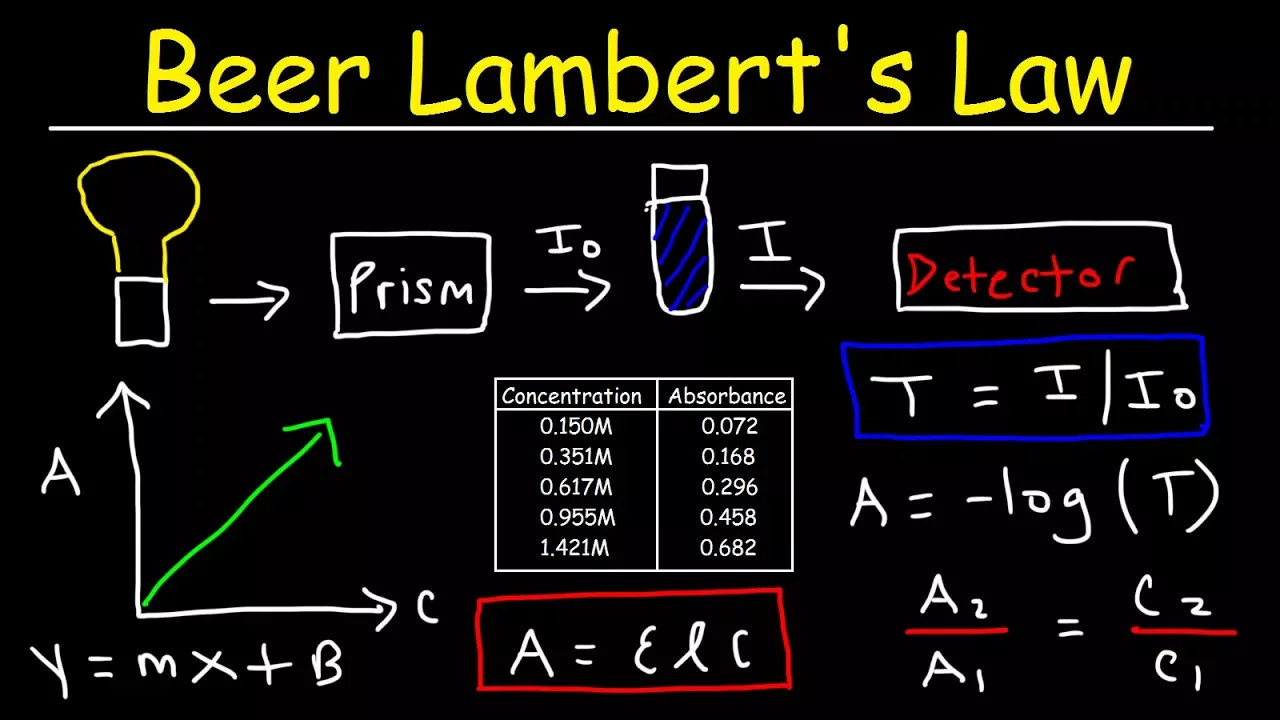
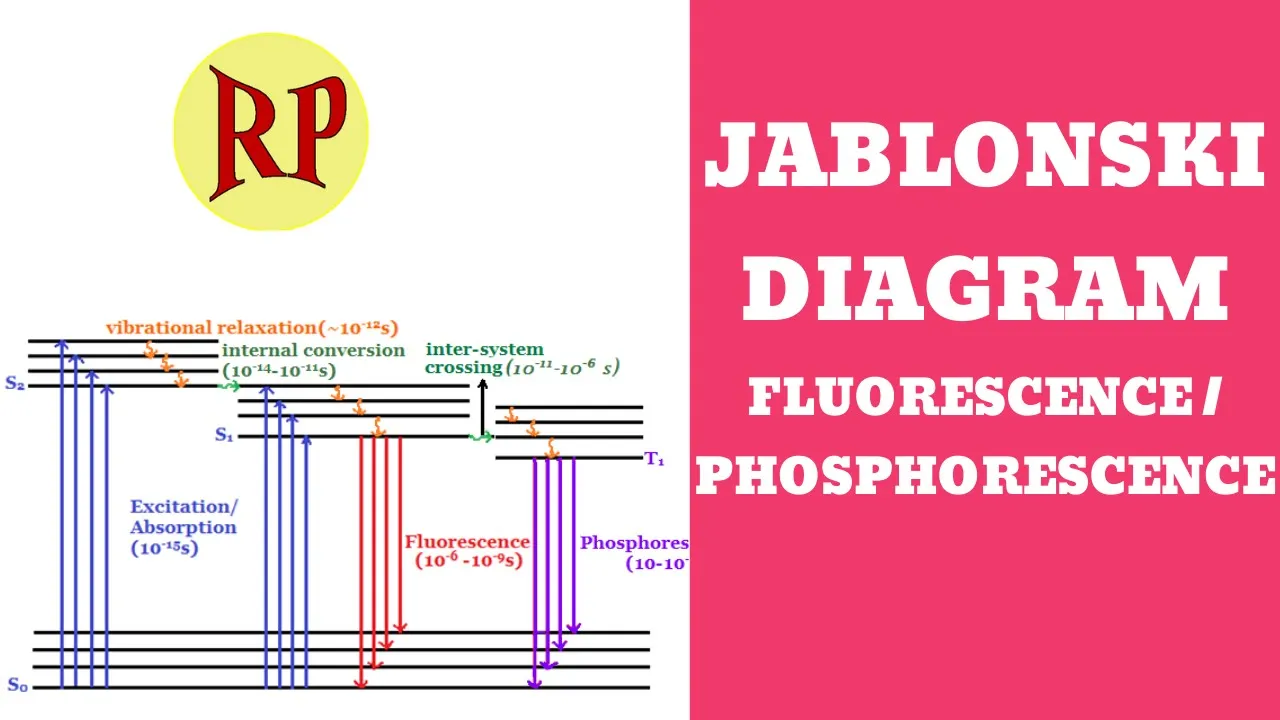
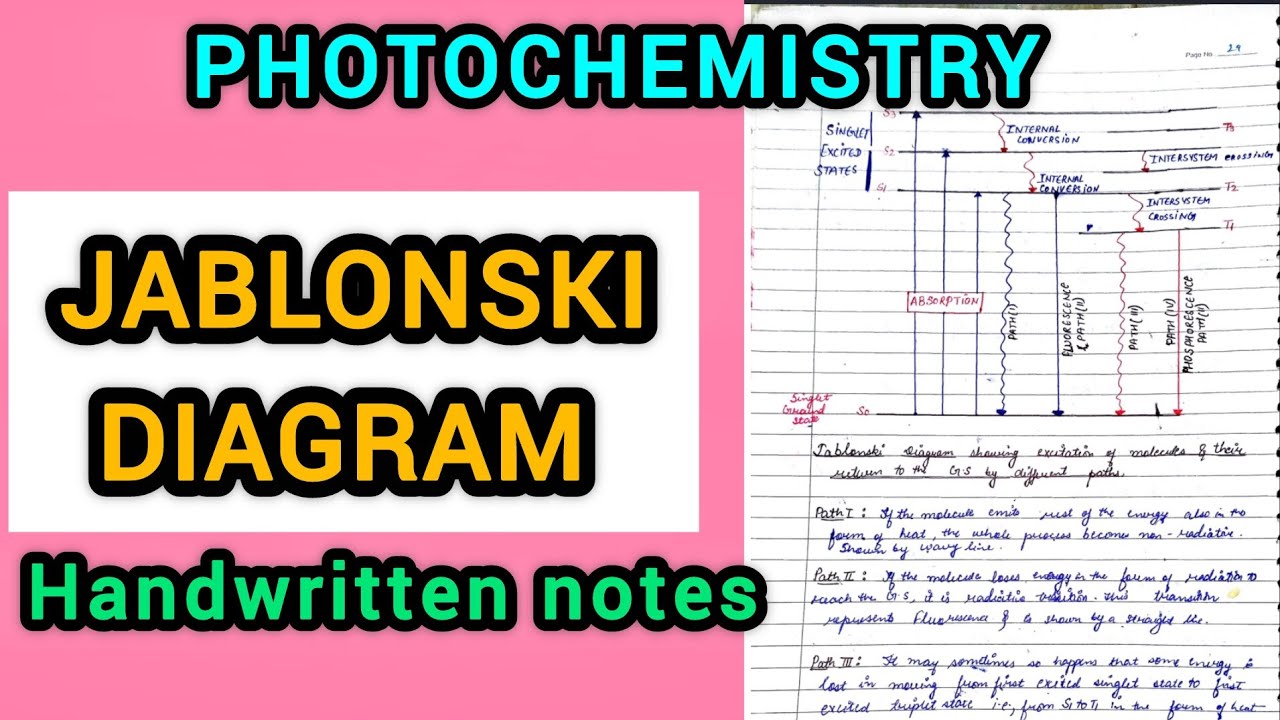
Added:hello strains welcome you all in organic photochemistry so in photochemistry I will explain the photochemistry of alkenes and photochemistry of a carbonyl compounds in detail so before going to that I should give you the introduction of photochemistry so in introduction I will tell you what is photochemistry what is the difference between photochemical reaction and thermal reaction then some of the laws which governs the photochemistry for example and growth Trapper law style keinstein law which is also called as a law of photochemical equivalence then I will tell you the peer Lambert's law then and this Frank Quantum principle that I will tell you and after that I will explain the jablonski diagram one of the important diagram in to understand this photochemistry and some of the ways of energy transfer we will also see the energy transfer process then we will come on the photochemistry of alkenes and photochemistry of carbonyl compound so in introduction if you see this photochemistry this is it is the interaction of light takes place with matter interaction of light with matter okay so usually means here we are discussing only this organic molecule so we are concerned with the organic molecule over here light that we use is UV visible light and this unit visible light having the wavelength 200 nanometer to now on the approximate range 200 nanometer to 800 nanometer okay so light interact with the molecule and after interaction it will undergo Activation so whereas in thermal reaction uh we use the heat heat is used to excite the molecule to make it active to make it activation and activate Okay so if we have suppose a reactant molecule and if we irradiate this is a reactant molecule with light then it will undergo it will go to the excited state and this excited state that would now be converted into some intermediate would be formed and after this formation of intermediate the product we will get the product so this is the excited state and this is ground state it is the intermediate and usually in photochemistry you will see a free radical intermediates are formed free radical intermediates are the most common intermediaries which are formed in the photochemistry and sometimes what happens is excited state in this molecule it may undergo deactivation it may deactivation may also takes place deactivation may occur may occur and if deactivation occur then no doubt the field of the reaction that will be low okay so now some of the examples uh either in daily life or usually in photochemic Via this photochemistry is used like photochemist this photosynthesis is the most common example and which takes place in plant plant uses light to synthesis synthesize and its food you can see then photo luminescence O2 luminescence in Firefly it is also one of the common example and then photo chromosome this is the another word photo chromosome which we have seen that the color of glass changes in presence of sunlight and as soon as we remove the sunlight then color of the glass comes so it's natural and color so photochromism the change in the color of glass change in in the color of color of class and as soon as we remove this light the color wheel becomes the same natural color then photo tropism phototropism is the next phenomena and photographism and it is the interaction it is the orientation of some plants are there which Orient themselves towards the sunlight okay for example the sunflower so this this is one of the photochemical process this is the orientation of plant towards the sunlight towards sun light for example if you see a sunflower is the example then photography it also photography and then some treatment of jaundice usually in a newborn baby sometimes jaundice and this suffers from jaundice so they are suggested to take sunlight so treatment of jaundice treatment of jaundice in newborn baby and then like Photo degradation of polymers of boilers so these are few examples of this photo chemistry now so what is the difference between photochemical reaction and the thermal reaction so let us see now if we have suppose a photochemical reaction and thermal reactions what are the main difference between this photochemical reaction thermal reaction so here in photochemical reaction this light is used and here heat is used simple we use the Heat is used to activate the molecule it is used to activate the molecule here heat is used to activate the molecule that we can write now next activated here the activated molecule it goes to the from from ground electronic state it goes to the next higher excited electronic State whereas in thermal reaction after getting the energy activated molecule undergo Collision or and after it may go to the some other from ground translational rotational vibrational state to the excited and translational rotational vibrational state so here activated molecule activated molecule goes from ground state ground or we can say the ground electronic State ground electronic state to excited electronic state funny state okay so but here this activated molecule activated molecule undergo Collision collisions and their they go from ground translational vibrational and rotational state to ground translational vibrational and rotational state to excite it s translational rotational and by additional state okay now so another difference here after excitation means in this case in photochemistry in photochemical reaction after excitation the electron goes from bonding orbital to the anti-bonding orbital so electrons pull from bonding molecular orbitals to anti-bonding molecular orbital here the electron remains in electron remains in bonding molecular in bonding molecular Hospital you see ok so here if you will see this is this way is usually spontaneous this process is spontaneous and this one is non-spontaneous non-spontaneous and that's why the Gibbs free energy may be greater than zero Z filter then zero this is positive here this gives free energy it means that should be negative here okay so next here the rate of reaction about the it depends upon the intensity of light so rate of reaction depends upon the depends upon the intensity of light whereas here if you see the rate depends upon the depends upon the heat energy given okay so these are some differences between the photochemical reaction and thermal reaction now so there are some laws there are some laws which governs these photochemical reaction so let us see some laws which governs the photochemical reaction so one of the law I suppose if you want to understand it by diagram this photochemistry suppose and in this thermal and photochemical reaction then how can you understand suppose if we have a reactant Force if we have reactant and after absorbing the light after absorbing the light it will go into the excited state length so this is cited reactant molecule okay now so now this excited molecule it will now go into the intermediate State this will go into the intermediate State and form this intermediate state it will it will form some product and product having the energy whereas now so this is the energy of we can say this is the energy of activation that we are here whereas in thermal reaction in thermal reaction if you will see then after absorbing the heat it it will go into the excited state and it would undergo excitation or it acquires some energy minimum energy and which is called as the which is called as the activation actually and now so after acquiring this minimum energy so this is the minimum energy energy of activation you can see and after acquiring this activation energy it can transformed into some transition state are formed and then this transition state then it utilized the product so like this we can differentiate this the photochemical reaction and the thermal election now what are the laws which governs the photochemistry so some of the laws one of the law so laws for one name photochemistry so one of the law is growth strapper law name is it is given by growth first trapper law and this was law was given in early 1800 in like from up to this 1847 this law was given scientists and they gave this law so according to this law on the absorbed radiation only the absorbed radiation uh is only absorbed radiation produces the photochemical changes effective in producing the photochemical change so suppose if any molecule is there and if we irradiate light then some of the light will get absorbed and it is also possible that some light may get reflected or some light may get transmitted so only absorbed radiation only absorbed radiation is responsible for producing the photochemical change reflected and transmitted radiation are not responsible for photochemical change so this is simple this is very simple statement so the only what this law tells only absorb radiation radiations are responsible foreign for producing photochemical changes it means or what we can say means reflected and transmitted radiation are not responsible or for any photochemical change so ah or we can say reflected and transmitted radiation radiations does not produce any photochemical change does not produce any photochemical change does not produce and in photochemical change so how can we know that what amount of light what should be the wavelength of light that should fall on the molecule so that it may produce any photochemical change so nowadays we can easily find out by UV visible spectrophotometer so the by useful photo spectrophotometer we can determine the Lambda Max for any molecule means wavelength which is absorbed by the molecule so first of all what we may do first we we can take the U visible Spectra of any molecule and suppose if we take the U visual Spectra of manual between this absorbance and lamb Lambda Max and then what we we got one of the spectrums so this is the Spectra that we got and this is the Lambda Max so this is the absorbed radiation this is the absorbed radiation by the molecule and if we fall suppose this is of 220 nanometer if we fall if we irradiate any molecule if we radiate that molecule with a light of wavelenet 220 nanometer then the there must be some photochemical change that we can see okay so we can determine the absorbed light by the yield miscible spectrophotometer close so this is a simple law so second one is the dark Einstein law and steam law so according to this law what this law tells so tells one molecule absorbs only one quanta or one Photon of light okay one molecule cannot absorb two Photon of light or two point of light so this is also very simple law but it has lot of meaning so one molecule absorbs only one quanta of light for getting excited okay so this is uh the law or it is also known as the law of photochemical equivalence photochemical equivalence so according to this law what is law tells this law tells one molecule one molecule absorbs only one point of light only one Photon we can say or one quanta point of light light for getting excited for cutting excited so to excite the molecule if molecules get excited it means one if one molecule is excited it means it has absorbed only one Photon of light if two molecule is absorb excited it means two molecules has absorbed two Photon of light and so on so suppose if we have one molecule then it will absorb only one Photon of light for getting excited to this so but one of the exception here and if we use a laser light in case of laser light one molecule can also absorb two quanta of light in case of this laser light so this is the exception this is the exception so exception is here so where the one molecule can also absorb two Photon of light for getting excited okay so but one thing that should be noted one thing that should be noted here that this x it does not mean it doesn't mean that the excited molecule will under produce any photochemical change it is possible that excited molecule doesn't produce any photochemical change and it is also possible that single excited molecule give rise to the more than more than one product and that is the case in case of that is the case for the Chain Reaction so what is the main important method this law is only limited for the excitation of molecule it is not necessary that excited molecule is giving any product so one important note is this law is law is limited Limited only for producing for the molecule to be excited for for molecules to be accepted okay that is it it doesn't mean that excited molecule produces photochemical change that is excited molecule excited excited molecules may not produce may not produce photochemical change or or we can say it a excited molecule may not react finally it is possible that excited Monsoon may not react finally to give the product okay so so that's why we can say the yield of product in that case the yield of product may be higher or low so if excited molecule undergo chain reaction then it may give rise to the that the yield may be very high if excited molecule may get deactivated by any way then the yield of the product yield of the reaction may be low and that is called as the quantum milk so yield of this photochemical reaction that is for that we use the word that is quantum area the unit of photochemical reaction is is determined is we assign it the term that is called as a food Quantum age and we denote it by play so this Quantum yield it may be high or low depending whether the excited molecule has reacted completely or the exciting molecule may not react completely so this Quantum will this Quantum L is equal to what we write this Quantum male this is equal to number of molecule react number of molecules reacted or formed or we can say formed divided by total number of total number of photon absorbed Photon absorbed okay so if number of photons absorbed is equal to the number of molecule reacted it means in that case if quantum end may be should be fun so Quantum yield that should may be one when if this and this they both are same total number of photon absorbed that is equal to the total number of molecule that same number of molecules that reacted and this Quantum meld it may be less it may be less than one so when it will be less than one then total number of reacted molecules is less as compared to the total number of photon absorbed and Quantum is may be very high Quantum is it may be very high very high when in case of chain reaction okay so we will discuss this Quantum yield in detail later on now so this is the second law that is Stark Einstein law and suppose if we a one mole of light is absorbed and then that one mole of light that is called as the Einstein so one mole of light absorbed is equal to so what is this one Einstein one Einstein one Einstein so this is equal to this is equal to one mole of light of photon absorbed that is called as the one einstead okay and we know that this one mole of light absorbed and then then that is equal to so suppose it is it is used and here that is avocado number H this is the one this is our 1hd this is one Einstein and avocado number means 6.023 into 10 to the power 23 multiplied by 6.6 multiplied by 10 to the power minus 34 3 into 10 to the power minus 8 and this is Lambda Lambda in nanometer because uh usually inspector photometer if you will see the Lambda that we determine in terms of nanometer so we should convert all into SI unit and if we convert it then in terms of nanometer then we should minus 9 okay so if Lambda is equal to suppose 230 nanometer and what we should write over here we should write 230 into 10 to the power minus 9 mm so this Lambda that should be converted into this one and this is this is equal to this 1.496 divided by Lambda kilo Joule kilojoules per moles figure okay so now so this is about the growth vapor lock and Stark Einstein law next law I will tell you this next law in slide in brief about this the next law is the beers Lambert law peers Lambert's law and according to this law we can write the beers and members store separately or we can write in a combined way now according to the Beer's Law the right BS law then what we write now suppose if we have a if we want to find the a u visible Spectra of any solution that is containing any solute then and then we put that solution in a sample cell and we keep the samples in a UV visible spectrophotometer and suppose this is the sample cell or and this sample cell is made up of quartz this is made up of quartz and it is probably the quartz Q red and suppose this cos cuet contains a sample solution having the concentration C and the length of this sample cell is suppose this is the total length is suppose B and suppose a beam of monochromatic light or incident light falls on it having the cone having this intensity of that incident light is I naught and the intensity of transmitted light is suppose I then what would be the intensity of absorb light intensity of incident light minus the light which is transmitted out okay so the intensity of absorbed light that would be is I naught minus I that would be the intensity of absorbed light so according to this Beer's Law when a monochromatic light falls on any absorbing medium then decrease in intensity of light with uh they say decrease in density of light is directly proportional to the concentration whereas according to the Lambert's law according to Lambert's law that decrease in intensity of light with path length the decrease intensity of light is directly proportional to the path length suppose this path length we write B is the path length or suppose we write this L is the path plant so this is a peers and Lambert's loss updating now if we want to write the beers Lambert law in a combined way then how can we write when uh when a beam of monochromatic light Falls on any absorbing medium medium then then the decrease in intensity of light then the decrease in intensity of light is directly proportional to directly proportional to the intensity of incident light and and path length and concentration of solution and concentration of solution so this is the statement for the Prius Lumber class when it is when a beam of monochromatic light falls on any absorbing medium then decrease the intensity of light is directly proportional to the intensity of incident light and concentration of solution so mathematically we can write t i naught P upon with path length is directly proportional to the intensity of light and and concentration of absorbing medium okay so this is the uh our this is our statement for this BS Lambert law and now now so suppose we want to integrate this we want to integrate this then according to this what we can write now d i naught upon i 0 Force this is equal to but we can write suppose proportionality constant we take k and c t l okay now let's integrate it from I is equal to i 0 to I is equal to I and this one from L is equal to 0 to L is equal to p and suppose we write it n what should be the so this is equal to L and L and I not upon l n this is I this is equal to this is equal to MP minus 0 and this is K and this is c e so finally what we can write this is equal to l and i 0 upon all right this is equal to k c b Now log to the page 10 if we take K divided by 2.303 c b so what we can write finally what we can write so this is equal to log of I naught upon I this is equal to Epsilon not C D and this is equal to the absorbance and this is the mathematical relation for this d s Lambert law and here this is a is called as the absorbance or optical density absorbance or we can say optical density and and here this I naught is the intensity of a in the intensity of incidence right okay and this this I is the intensity of this transmitted light and here this Epsilon node is the molar absorptivity smaller absorptivity coefficient molar absorptivity coefficient or or we can say molar retroactivity coefficient or it is also called as the extinction coefficient which is also called the extinction coefficient and C is the molar concentration of the solution smaller concentration of solution and P is the your path length this is B is the path length of sample cell this is path length of sample cell okay so this is uh the mathematical relation now from here what we can write this actually the transmittance what what is the percentage transmittent uh percentage transmittance if we say this transmittance this is equal to this I upon I zero would be the transmittance and this percentage transmittance we can write the percentage T that is transmittance this will be equal to the sorry this is total right I zero I upon I zero multiply by 100 and from here we can determine one of the relation and suppose I take log of this percentage T this is equal to and this log of log of i 0 upon I I upon the i 0 plus plus log of 100 is log of 100 is 2 and now this can be written as log of percentage T this is equal to log I upon Ico this is this is minus a this is minus a plus 2.
and this a that we can write this a is equal to okay so this a this will be equal to 2 minus log of percentage so we can use it to solve numerical problems see if percentage transmittance is given then we can determine the absorbance from this formula directly we can use it okay so this is about pears Lambert law in a short in a b and one of the uh one of the uh this we can say the condition for this beer Lambert law the solution that we are using here that should be dilute it it is not obeyed when a solution is in a concentrated form because in concentrated forms some Association of a solute molecule takes place or the formation of complex takes place and that will not give you the uh use visible Spectra for the original ah solute molecule okay so it is only a only applicable if your solution is a dilute one okay so now next law is photochemistry the next flow that I should tell you I think condom principle now what this principle tells so according to this the statement the what this statement is uh when suppose it when electronic transition or we can say the electronic transitions are electronic transition are so fast and Rapid so fast and rapid that there is no appreciable change in the inter-nuclear distance foreign [Music] the atom of the molecule okay so let us understand this what this principle tells electronic transitions are very fast and it is so much fast that in between that time there is no change in the inter-nuclear distance between the atom of the molecule now so how can we understand it and we can understand it with the help of a MOS curve and we know that if we draw one of the most curve and suppose this is our curve and according to this mosque curve suppose if we have any any molecule and suppose this is a molecule A and B and this molecule it has the inter nuclear distance between the atoms of the molecule is suppose this is R equivalent is the internecular distance and when it is in stable form okay then the suppose the molecule Lies over here and this is the inter nuclear distance is suppose from a to P okay and this is our distance and this is R left now after absorbing the energy after absorbing the energy what will happen the uh the molecule will undergo some vibration so vibration in our uh atoms vibration between the atoms of the molecule takes place and suppose and we can say that the bond length the bond length of the molecule that will that will be expand and then it will come to its original position after some some time so after absorbing the energy after absorbing the radiation the molecule will the inter nuclear distance between the molecule will increase like this from here okay it will increase and now again it will relax back and it will now decrease to here now if so this is the num it is expanded and then decrease and this is the equivalent uh equivalent Bond distance here now after absorbing more energy little more energy then again the it will the bond length we can say it expands and then it after expanding it will go here then it compresses it will come here so next state that would be natural vibrational State suppose this is one vibrational state is a zero next vibration suppose one and again after absorbing more energy it will go over here it will expand then relax back to its position so one length first it is increases and then after when it relax back it decreases okay so suppose this state is vibrational state is 2 and loud like this this is three and so on okay and after absorbing suppose we give more and more energy then what will happen uh this may under good dissociation and this may be called either this dissociation energy this may be called as the dissociation energy suppose so this is our ground electronic State this is our ground electronic State and we will present it by suppose e naught and suppose if we give more with a u visible energy in that case after absorbing so much of energy the electron may go from ground electronic state to the next higher electronic state so after absorbing the energy now the electron may go to the next higher energy State and this is suppose excited electronic State and we write it by so this is e Dash is excited state and here the molecule again after going to the excited state the molecule the vibrational now it will in excited state now the suppose if this is the V naught this is a vibrational State and suppose this is again a internuclear distance this is the equilibrium distance in a now the equilibrium distance will not mean change according to this figure the equilibrium distance will change from R equivalent to R Dash equivalent okay equilibrium distance will change from R equivalent to R Dash equivalent and now if some more energy slight more energy is given then the energy the electron or the molecule will undergo in a next vibrational State and suppose it write it V Dash is equal to zero now some more energy V Dash is equal to 1 V Dash is equal to 2 and these are the excited vibrationalistic corresponding to this excited electronic state okay now suppose a molecule here the the more the molecules are highly populated at this place then we may write like this so and again and like this here also so the transition okay so the transition and what we expect we expect that electron go from ground after absorbing the UV visible light electron go from ground electronic state to the higher excited electronic State and it will go from here most problem from most preval region to the next probable region like this the electron will go so this is expected one this is the expected uh figure that we expect means electron are going from here to the here and during that time during the electronic transition reading the electronic transition the uh the inter-nuclear distance is changing or what we can write here this R Dash equivalence is more than R equivalent so we expect this much so but what is Frank Condon says according to this principle he says that he said that electronic transitions these electronic transitions are so fast and Rapid that there is no change in the inter nuclear distance between this so what is the reason that means this inter nuclear distance will not change okay this internuclear distance will not change so according to this one the what kind of figure that we may expect the flicker would be something like this this is the ground okay and this will be the excited one excited electronic state so this is e naught this is e Dash okay and here are equivalent in left ground electronic State and after absorbing the energy more energy then electron will go into the excited label and during this excitation during this excitation the the internuclear distance will not change here in an electrode after going into the excited electronic State you can see that internuclear distance is remaining same our equivalent is the same inter-nuclear distance so this is the flank Quantum principle this is our Frank Quantum principle okay so and what is the reason for this so here we can say that in the nuclear distance between the atoms of the molecule that doesn't change so the reason for this the reason for this is that the mass of the mass of the nucleus is so much higher in comparison to the mass of electron that the nucleus cannot move and during the time when the electron get excited and and during that time the electron again relax back to its ground state okay it could not change its position the nuclear distance could not change and during that time the electron relaxed back to its ground state so reason is that the nucleus is around 1000 times heavier than the than that of left one so the mass of nucleus mass of nucleus is around thousand times more than the mass of electron so this is the reason if mass of nucleus is so much higher then in that case it is it is not able to move from its one position to the another position and during that period the electron during that period the electron first excite and come back to its original position okay so this is about the flat Quantum principle hope you are understood thank you
Up Next
Electronic Transitions & Selection Rules in Quantum Chemistry
@physicalchemistry_pchem
214 views•2023-11-16
Biocatalysis and Catalysis in Islatravir Synthesis | Merck Webinar
@SCIwheresciencemeetsbusiness
675 views•2020-10-08

Photochemistry: Jablonski Diagram & Selection Rules
@pgchemistrylectures177
1.2K views•2022-11-27

Edible Water Bottles: A DIY Guide to Sodium Alginate Spherification
@ryan
10.5M views•2019-06-21
Related Study Plans & Knowledge Roadmaps
Structured learning paths in Chemistry