




















![1 - Introduction à la dynamique des fluides numérique [CFD]](https://i.ytimg.com/vi/0eiS1J8DFS8/hqdefault.jpg)

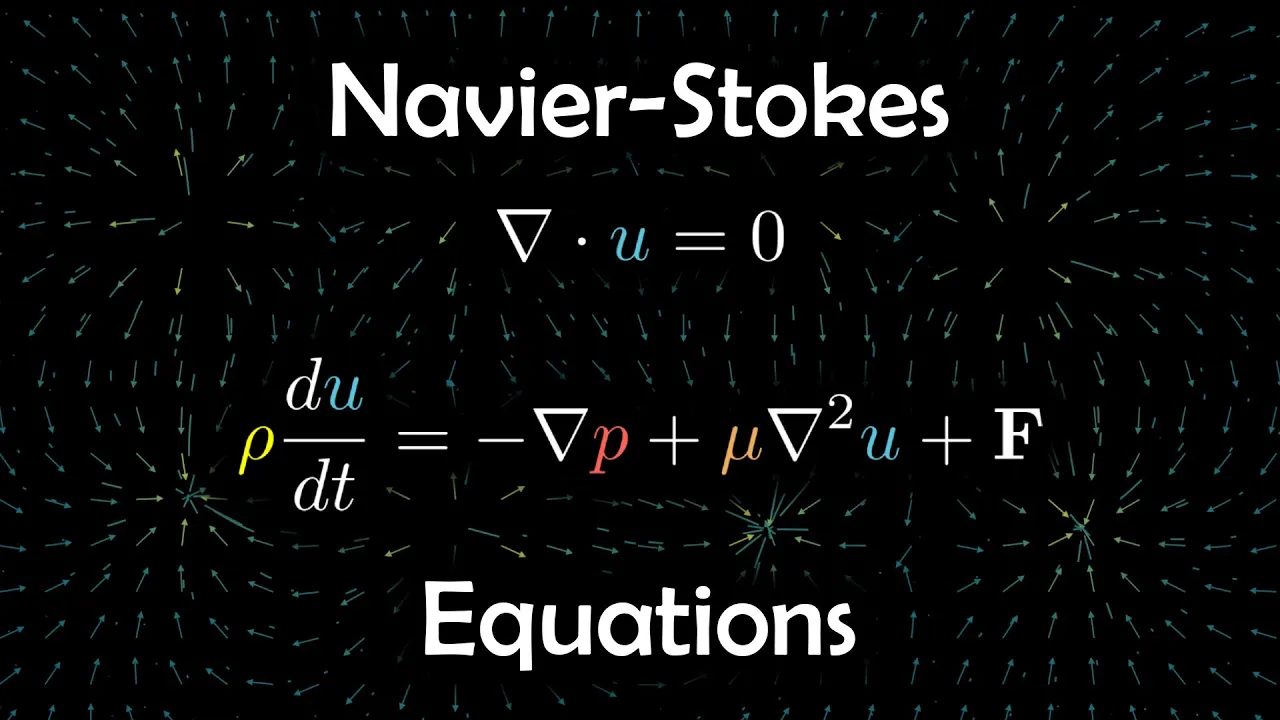

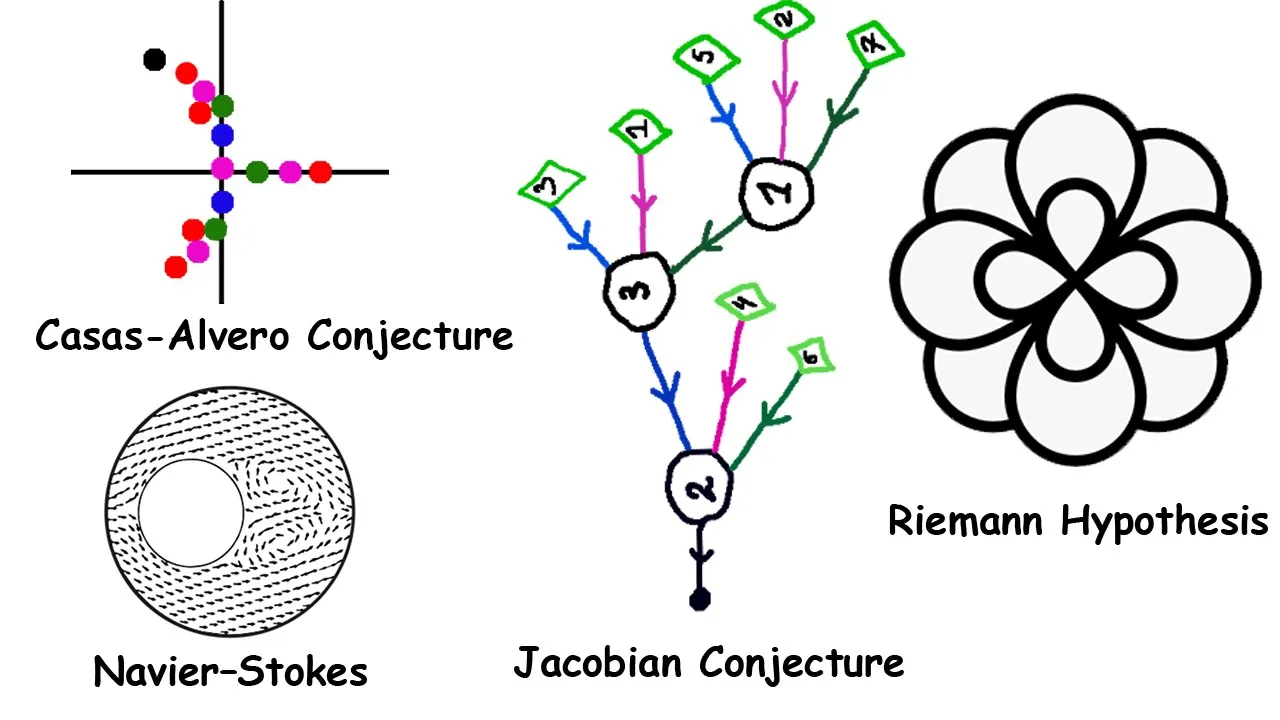

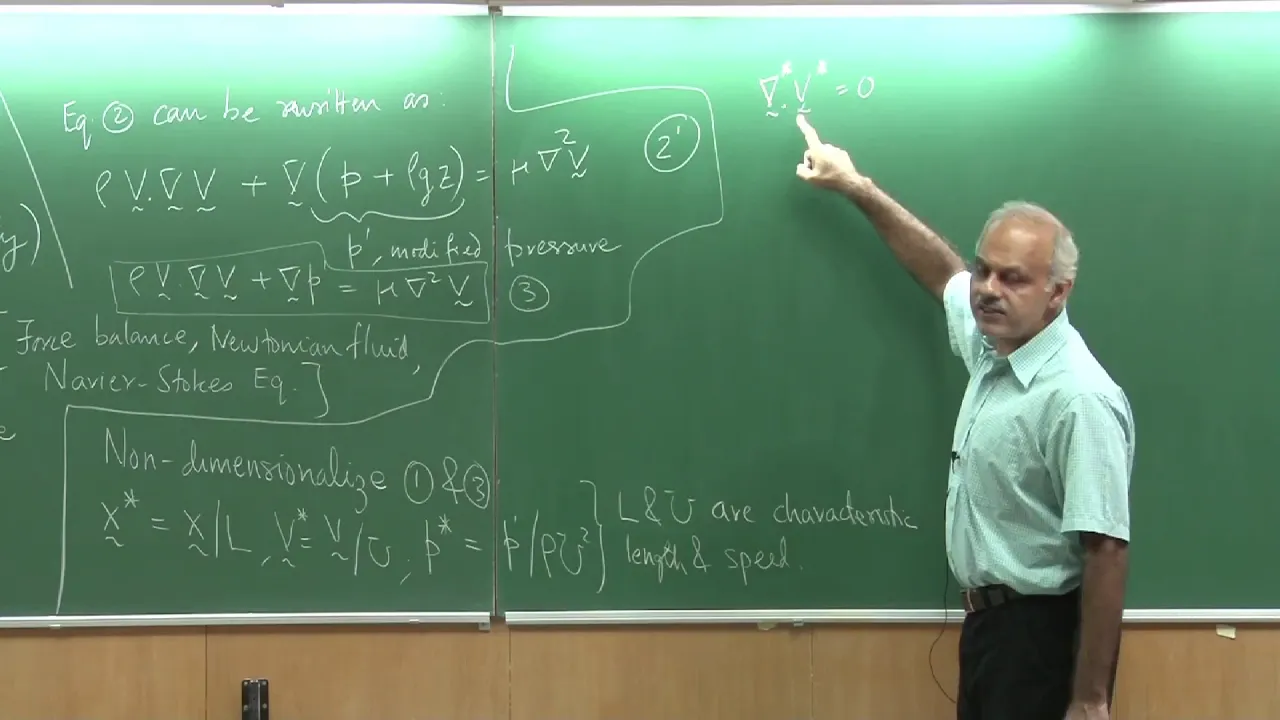
The Navier-Stokes equations are derived from Newton's Second Law (F = ma) applied to an infinitesimal fluid element, expressing that the sum of forces (gravity, pressure, and viscous forces) equals the mass times acceleration on a per-unit-volume basis; the acceleration comprises local acceleration (time derivative of velocity) and convective acceleration (velocity gradient terms), with the final equations relating stresses to fluid viscosity through constitutive relations for Newtonian fluids.
Navier-Stokes Equations: Derivation from Newton's Second Law
Added:Newton's Second Law of Motion ($F = ma$) and its application to continuous media rather than point masses.
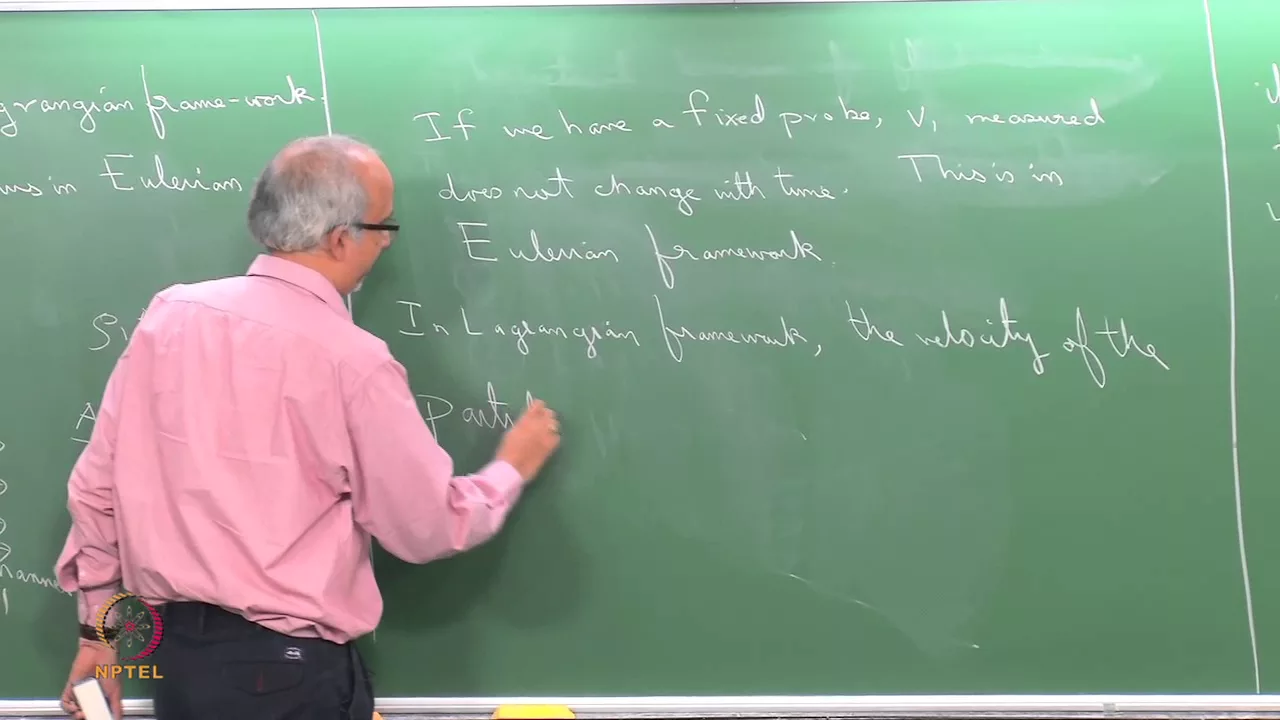
The concept of the Material Derivative (substantial derivative) used to transition between Lagrangian and Eulerian descriptions of fluid flow.
Fundamental vector calculus, specifically the physical meaning of gradient, divergence, and curl, as well as the Divergence Theorem.
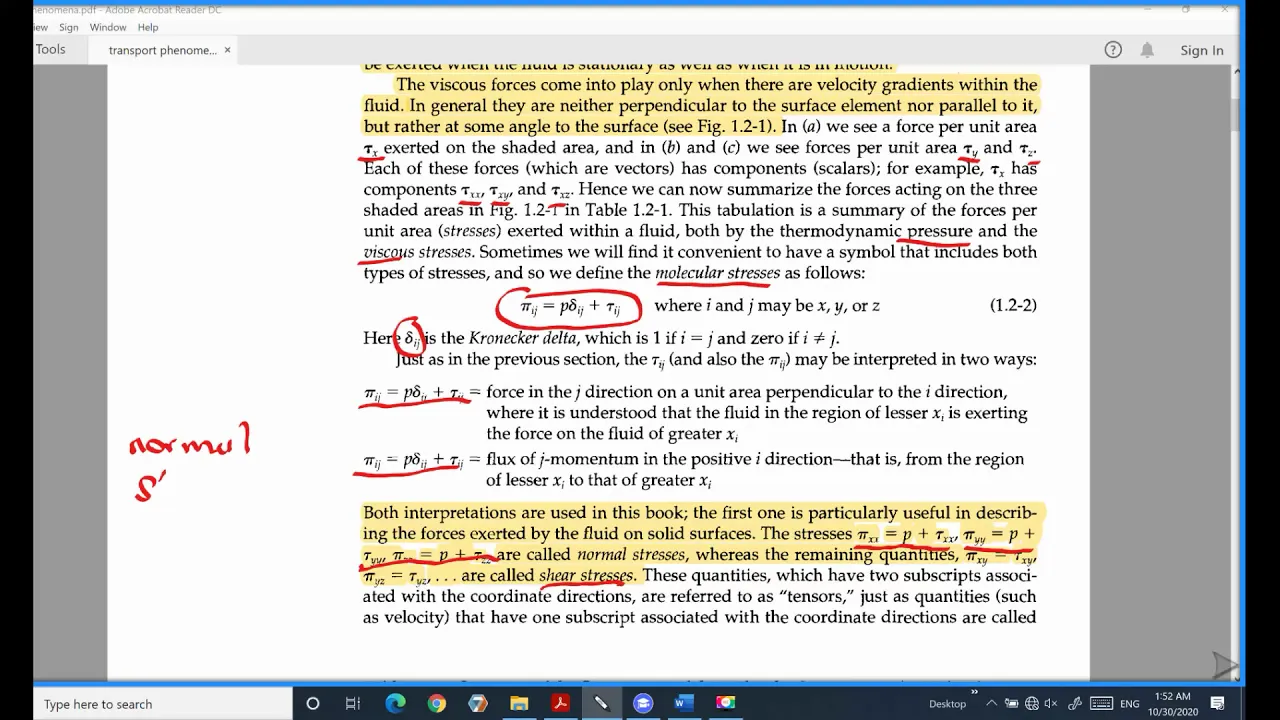
The concept of stress in a continuum, including the distinction between normal stresses (pressure) and shear stresses (viscous forces).
Simplifying the Navier-Stokes equations for specific regimes, such as inviscid flow (Euler equations) or low-Reynolds-number flow (Stokes/creeping flow).
Application of boundary conditions, particularly the 'no-slip' condition, to solve classic fluid flow problems like Couette and Poiseuille flows.
Nondimensionalization of the equations to derive key dimensionless scaling parameters, most notably the Reynolds Number.
Introduction to Computational Fluid Dynamics (CFD) methods for numerically approximating solutions to the equations when analytical solutions are impossible.
The mathematical open question regarding the existence and smoothness of physically reasonable solutions (the Navier-Stokes Millennium Prize Problem).
379.5K views7.7Klikes11:17Original Release: 2017-10-23
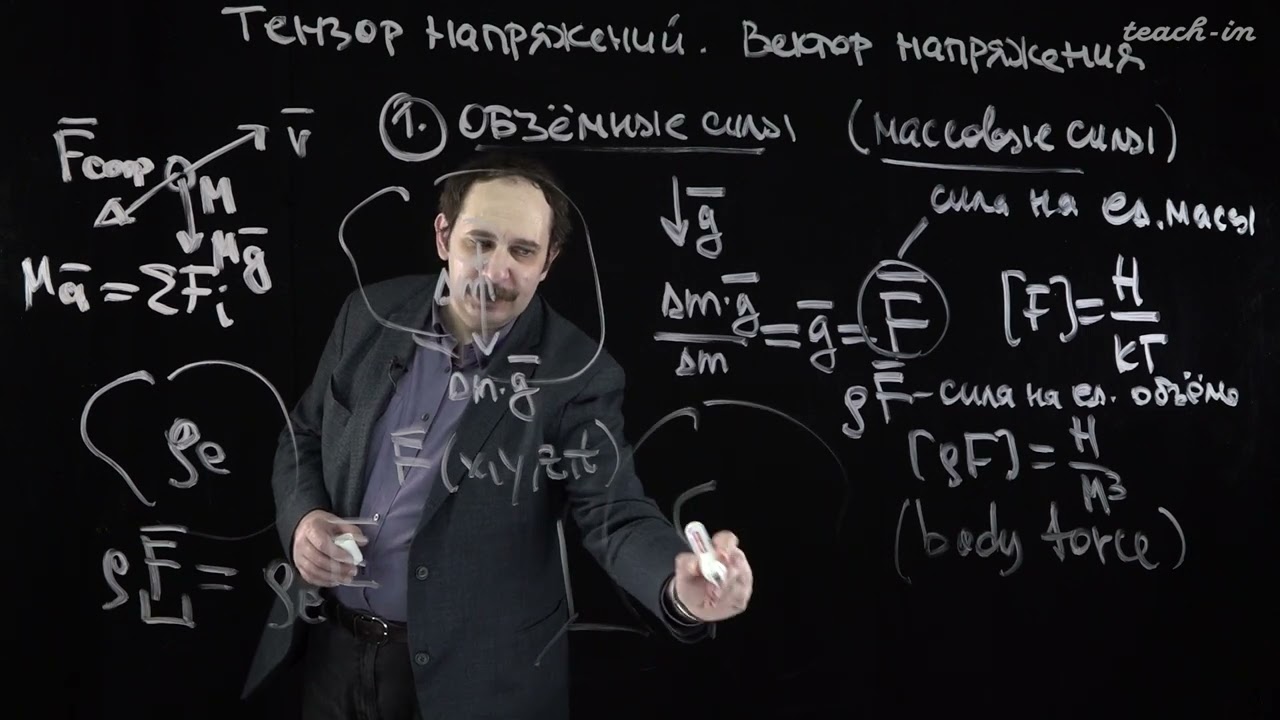
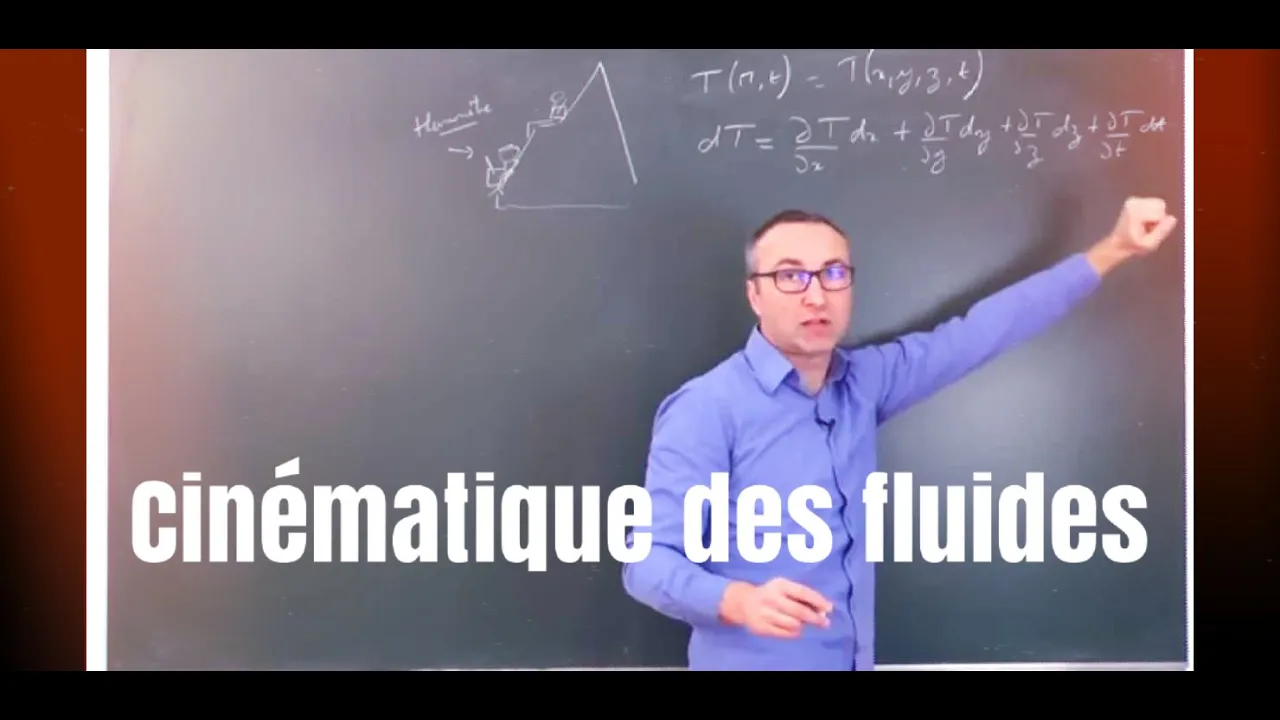
these are the navier-stokes equations as they're commonly written in this screencast we examine their physical meaning and perform a simple mathematical derivation based on Newton's second law while these equations may look intimidating and complicated to a lot of people all they really are is a statement that the sum of forces is equal to the mass times the acceleration to make it a little bit more apparent let's flip the equations about the equal sign so what we have in the first equation is the sum of forces in the x-direction is equal to the mass times the acceleration in the x-direction in the second and third equations of the some forces in the Y and Z Direction equal to their respective accelerations these equations are written for a differential element of fluid which is infinitesimally small so as small as we can possibly imagine the three forces we're concerned with of forces due to gravity forces due to differences in pressure and forces due to the viscosity of the fluid keep in mind that each of these terms is on a per unit volume basis so typically we would say the force due to gravity might be the weight of something if I took the weight and divided by the volume what I'm left with is the density M over V times gravity we see this occurring for gravity most explicitly on the right-hand side of the equation if we have mass times acceleration if we were to divide that by the volume of the fluid we would be left with the density times the acceleration so we're looking at the sum of forces is equal to MA on a per unit volume basis for this screencast let's deal only with the x-direction the same mathematics would apply for the Y in the Z directions but we'll leave it with two the X direction to save time let's examine the right-hand side of the X component the X component of velocity for a fluid we'll call it lower case U and strictly speaking you could be a function of X Y Z and time the X component of acceleration for the fluid is equal to the time derivative of U is a derivative of U with respect to time but because U is not simply a function of time it's also a function of XY and Z we need to use the chain rule to perform this differentiation so I'm going to do the partial you with respect to time plus D u DX times DX DT Plus D u dy dy DT Plus D u DZ times DZ DT if I use the definition that DX DT simply equal to u dy DT is equal to lowercase V and DZ DT is equal to lowercase W we're left with something that looks an awful lot like the right-hand side of the equation above the first term on the right hand side is known as a local acceleration and the remaining three terms are known as the convective acceleration to think about what this means physically let's consider some fluid that's flowing steadily from left to right through this two dimensional constriction and let's consider a differential element of fluid which will be infinitesimally small so I'll make it a real small cube and let's place it right here to begin with if you think about the motion of this element to fluid as it flows through it's flowing steadily from left to right it's slow in this region but then it begins to accelerate because of the constriction where the fluid is moving very rapidly here and now when it reaches the right hand side it slows down again and it recovers to a steady velocity as it moves towards the exit if the flow of fluid is at steady state then the velocity of the differential element to fluid at points one two and three we'd see no change over time but let's examine the constricting region we've got U is a positive quantity it's moving from left to right and D U DX is also a positive quantity so this term of the convective acceleration is greater than zero so we see in the highlighted region that the fluid element is accelerating from left to right conversely in the expanding region although U is positive D u DX is less than zero it's a negative quantity the fluid is slowing down within that region so the convective acceleration term is less than zero or it would be the acceleration would be to the left in the highlighted read let's examine the forces acting on the differential element to fluid a little bit more carefully call this point XY Z in our differential element two flew it has length DX a height dy and a depth DZ the first force will consider is gravity and typically when you draw a free body diagram gravity will be acting downward in the Y direction but let's do an arbitrary case where a component of gravity could for example could act in the X direction so the force due to gravity is the mass of our differential element two fluid times the X component of gravity let's rewrite the mass is equal to the density times the volume of our differential element two fluid DX dy DZ so again have the mass times gravity in the X direction let's examine forces acting on the left and the right sides of our differential element we could have a normal stress acting directly to the right on the right face and a stress acting to the left outward from the left face the notation we'll use for these stresses is Sigma xx and we're going to evaluate Sigma xx at X plus a distance DX and on the left face we have Sigma X X evaluated at X on the top and the bottom faces we could have a shear stress acting to the right on the top face and a shear stress acting to the left on the bottom face the notation we'll use for these stresses is tau YX evaluated at y plus dy for the top of the cube and tau YX evaluated at Y for the bottom of the cube and additionally we could have stresses acting to the right on the front of the cube and a stress acting to the left at the back of the cube for the back of the cube we'll use the notation tau ZX evaluated at Z and at the front of the queue we'll use the notation tau ZX evaluated at Z plus DZ so continue writing the sum forces in x-direction I've got any X component of gravity plus a normal stress Sigma X X evaluated at X plus DX multiplied by the surface area of the right side of the cube which is equal to dy DZ because it acts to the left I'll subtract Sigma X X evaluated at X multiplied by the same area dy DZ then I'll add the force due to the shear stress at the top of the cube tau YX evaluated at y plus dy multiplied by its area which is DX times DC I'll subtract the shear stress acting on the bottom face multiplied by its area then I'll add the force due to the shear stress at the front of the face and subtract off the shear stress acting at the rear face the sum of these forces will equal the mass times the acceleration in the X direction or I could write mass is equal to Rho times DX dy DZ times the acceleration in the X direction you have cleaned up that equation divided by the volume of the differential element and what I immediately see is that DX dy DZ Zwilling out and in some terms if I simplify a dy and DZ will cancel out DX cancels out as well as DZ in this term and so forth as I cancel out terms as I continue to simplify am left on the neck with this expression and in the limit of DX dy and DZ are approaching zero this turns into a differential form and the resulting equation represents the sum of forces in the x-direction due to gravity due to the normal forces acting on the left and the right side of the differential element the shear stresses acting on the top and the bottom of the element and the shear stresses acting in the front in the rear faces of the element so these are equal to the density times the acceleration of the differential element in the X direction and if I expand the raishin into its local and convective components were left with the an expression on the right hand side if I did the same analysis for the Y and the Z directions I would come up with these three equations which are known as the equations of motion for a fluid but to get from these equations to the navier-stokes equations we need a way to relate the normal and the shear stresses to the viscosity of the fluid and the velocity profiles and this is done using these equations which are the constitutive relations for a Newtonian fluid which we won't get into here but if we accept them as being true for this screencast becomes a series of algebraic manipulations to arrive at the navier-stokes equation the first substitution into the left hand side gives me the expression at the bottom if I differentiate the three terms I'm left with this expression and some additional manipulations leaves me with this expression in which I've split this term into two parts and I've switched the order in which I differentiate these two terms so I'm switching dy/dx and DD and this expression as I continue to simplify and rearrange terms I'm left with this expression but what's interesting is the sum of these three terms D u DX plus DV dy plus DW DZ is equal to zero by way of the continuity equation so that whole term on the right is identically zero for an incompressible fluid so what I'm left with the sum is three forces the force due to gravity force due to any pressure differences in the fluid plus all the forces due to viscosity the sum of these three is equal to the density of the fluid multiplied by the X component of its acceleration and expanding a X out into its local and convective components of acceleration I've just arrived at the first the X component for the navier-stokes equation so we could do the exact same thing for the Y and the Z directions it will arrive at the navier-stokes equations for those directions as well if I flip the order of the equations you're left with the navier-stokes equations as you'll commonly see them and although they may look intimidating and complicated to begin with if someone asks you to sum up what the navier-stokes equations are in words just simply tell them they're an expression of the sum of forces is equal to the mass times the acceleration
Up Next
31:49
Navier-Stokes Equations Explained: Fluid Dynamics and Newton's Second Law
@engineer_leo
57.3K views•2018-03-18
73:35
Deriving Maxwell's Equations in Geometric Algebra (QED Prereqs) 11
@XylyXylyX
2.6K views•2024-09-08

32:32
NMR Spin Physics I: Zeeman Effect, Resonance Condition & Larmor Frequency
@nptel-indianinstituteofsci8064
2.3K views•2024-01-17

33:44
The Blue LED: A Decade-Long Scientific Challenge Explained
@veritasium
46.5M views•2024-02-08
Related Study Plans & Knowledge Roadmaps
Structured learning paths in Physics
physics
Medical Physics: Imaging, MRI & Radiotherapy
01Foundations of Radiation and Matter Interaction
02X-Ray Imaging and Computed Tomography (CT)
03Magnetic Resonance Imaging (MRI) Physics
+ 3 more learning modules
15h6 modules
Explore Roadmap
physics
Nuclear Physics (Decay, Fission & Reactors)
01Atomic Structure and the Binding Force
02Radioactive Decay and Half-Life
03Nuclear Fission Mechanics and Chain Reactions
+ 2 more learning modules
12h5 modules
Explore Roadmap
physics
Soft Matter (Polymers, Colloids & Rheology)
01Foundations of Soft Matter & Thermal Forces
02Polymer Physics and Macromolecules
03Colloids, Surfactants, and Self-Assembly
+ 2 more learning modules
38h5 modules
Explore Roadmap
physics
Analytical Mechanics: Lagrangian & Hamiltonian
01Mathematical Foundations: Calculus of Variations
02From Newtonian Mechanics to Constraint Dynamics
03The Principle of Least Action & Lagrangian Mechanics
+ 3 more learning modules
28h6 modules
Explore Roadmap