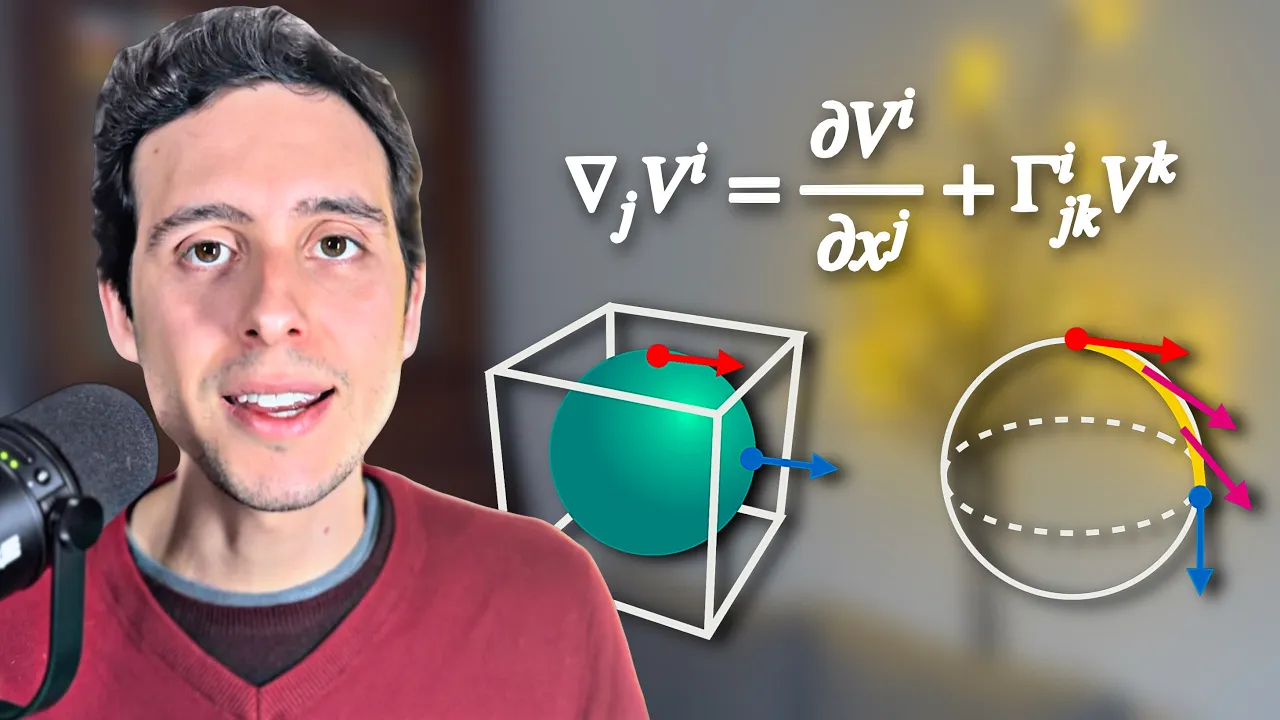
![[다변수 미적분 심화 스터디] Connection에서 Riemannian curvature tensor로](https://i.ytimg.com/vi/snNrsEnaURA/maxresdefault.jpg)



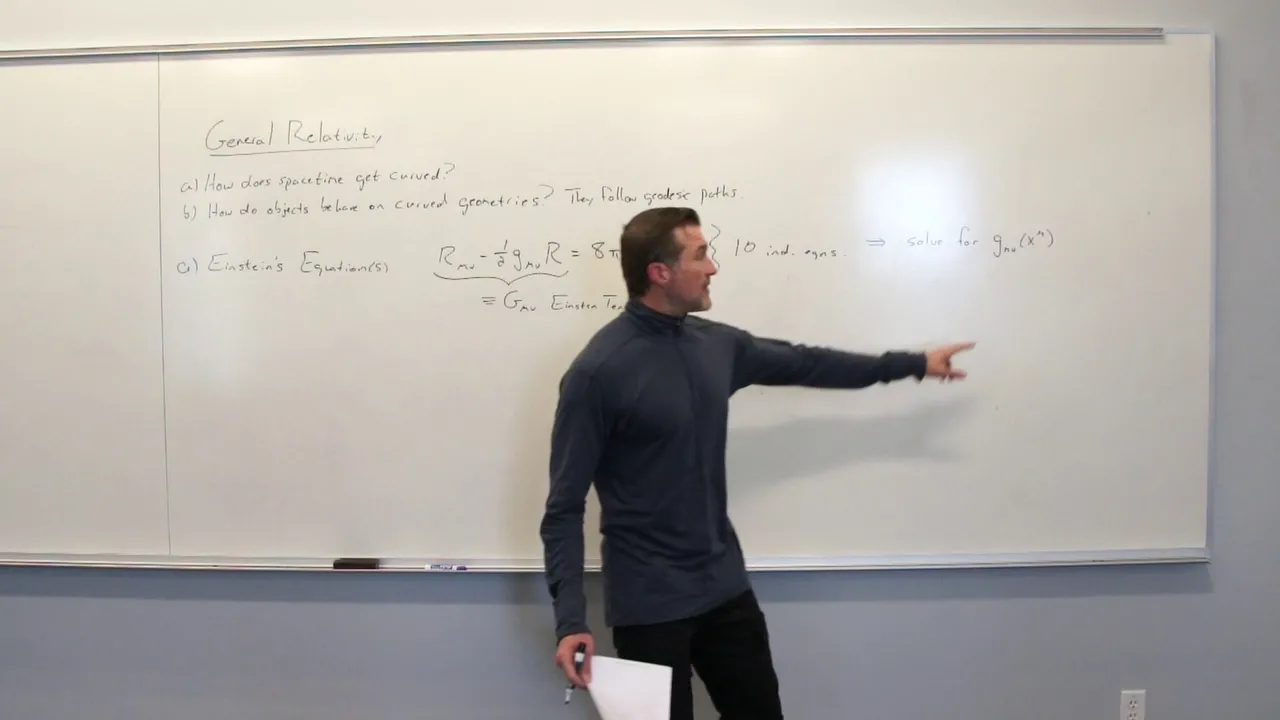










![59 - Curso de Relatividad General [Ecuaciones de Campo & Constante Cosmológica]](https://i.ytimg.com/vi_webp/HI3m80zLo24/maxresdefault.webp)
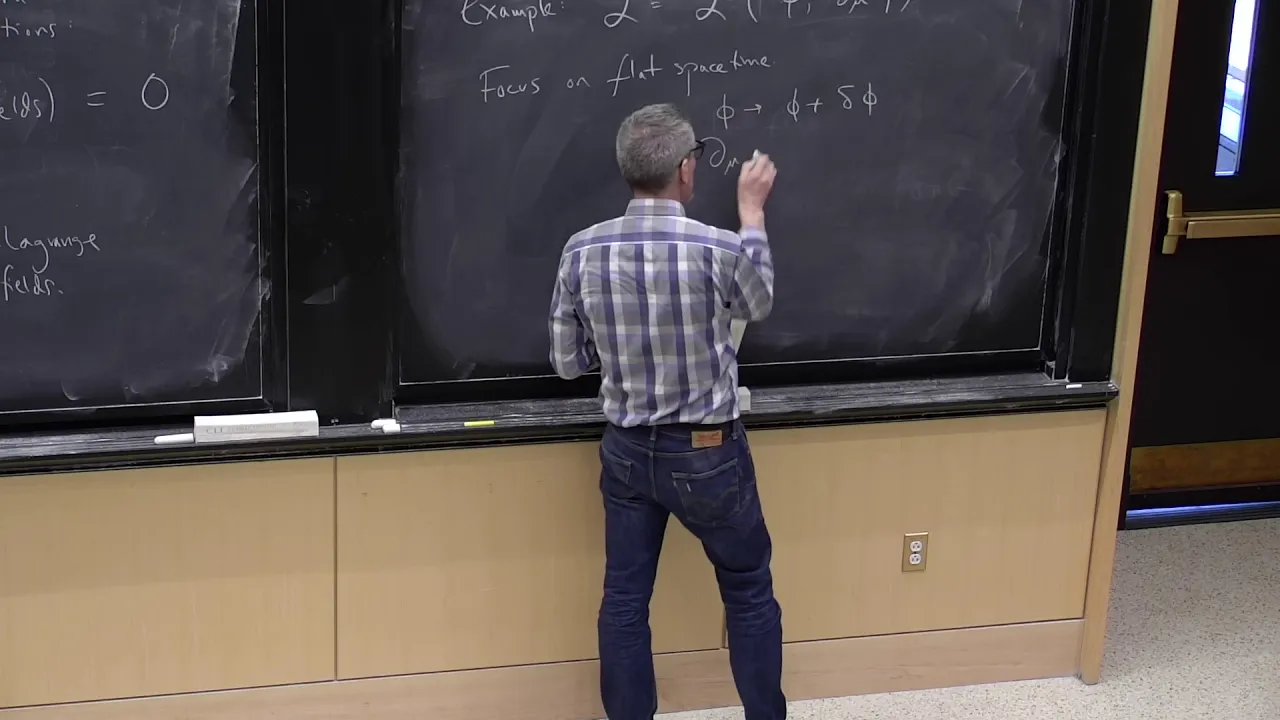

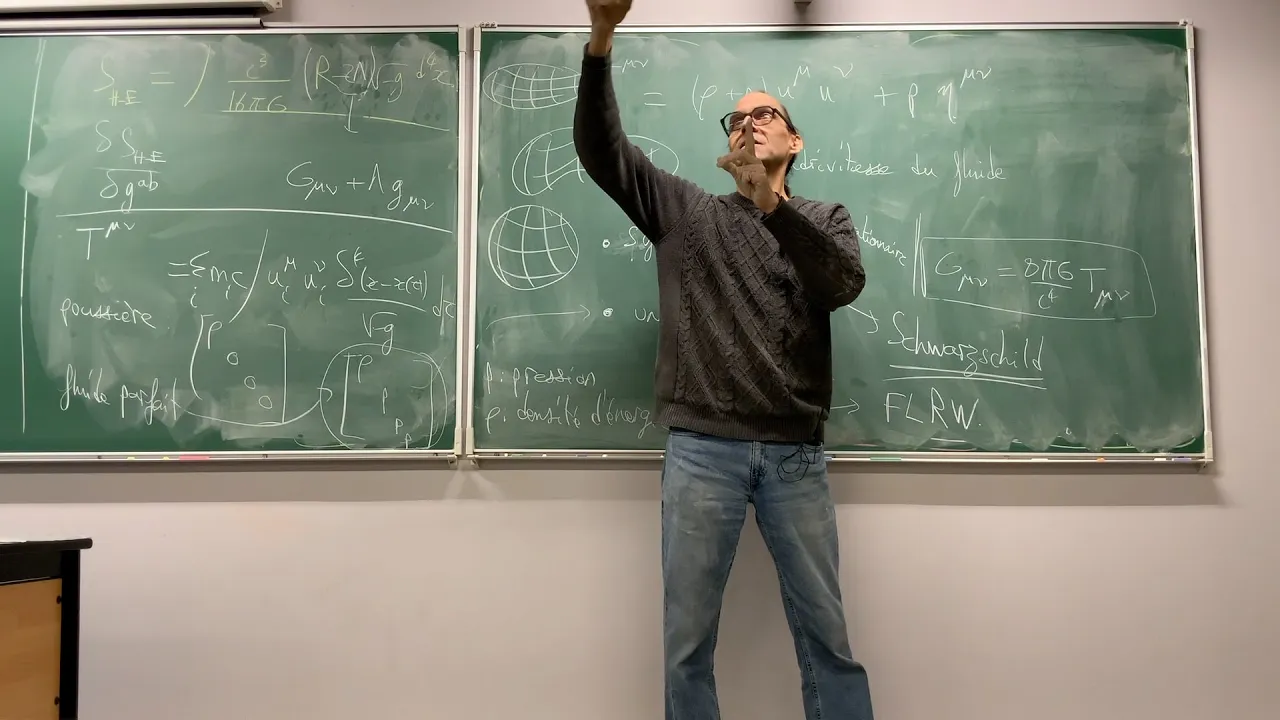
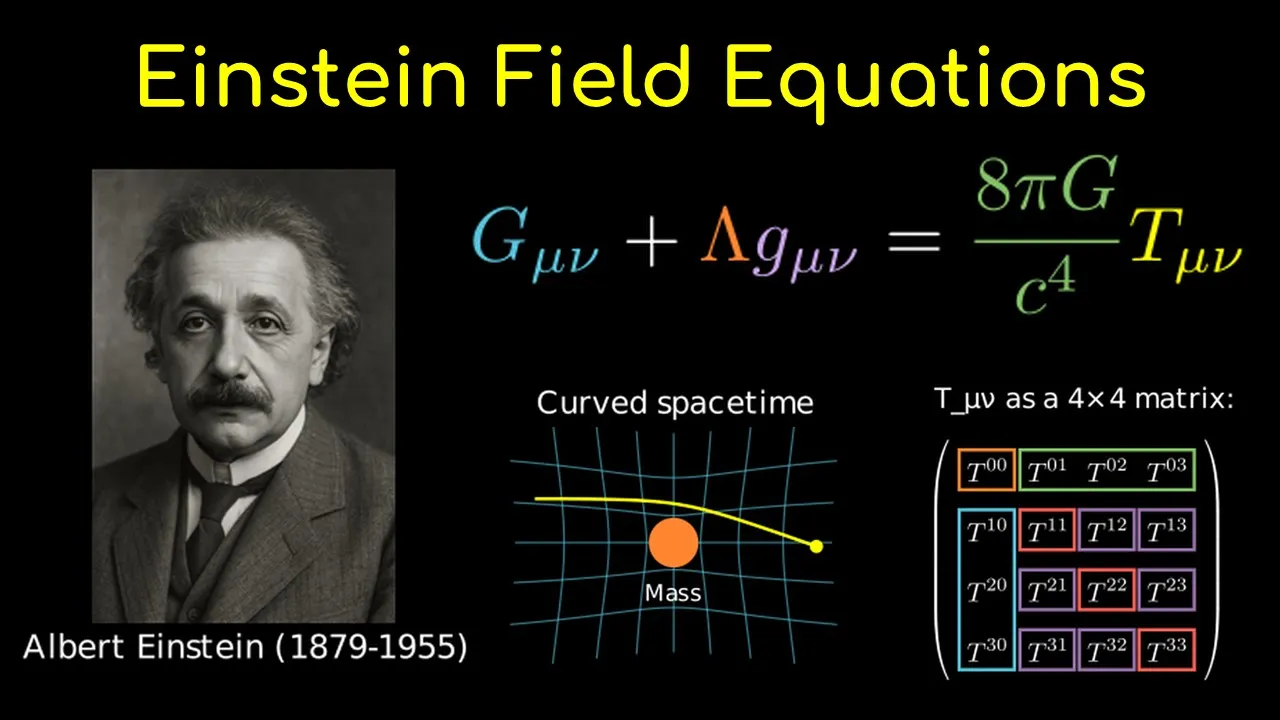
Einstein's Field Equations (R^μν - ½g^μνR = 8πGT^μν) are derived by generalizing Poisson's equation (∇²φ = 4πGρ) to be relativistic, requiring the left-hand side to be a second-rank tensor equation linear in second derivatives of the metric, satisfy local energy-momentum conservation (divergenceless EMT), and reduce to Poisson's equation in the Newtonian limit; applying the contracted Bianchi identity and analyzing the static weak field limit yields the coefficients a = -1 and b = ½, resulting in the final form where matter tells spacetime how to curve and curved spacetime tells matter how to move.
Deriving the Einstein Field Equations | Tensor Calculus Finale
Added:Fundamentals of tensor calculus, including the metric tensor, covariant derivatives, Christoffel symbols, and the Riemann curvature tensor.
Newtonian gravitation and Poisson's equation for gravity, which serves as the essential classical limit for General Relativity.
Special Relativity concepts, specifically flat Minkowski spacetime, four-vectors, and the physical significance of the stress-energy tensor.
Basic differential geometry, particularly the concept of curved manifolds and how geometry represents physical space and time.
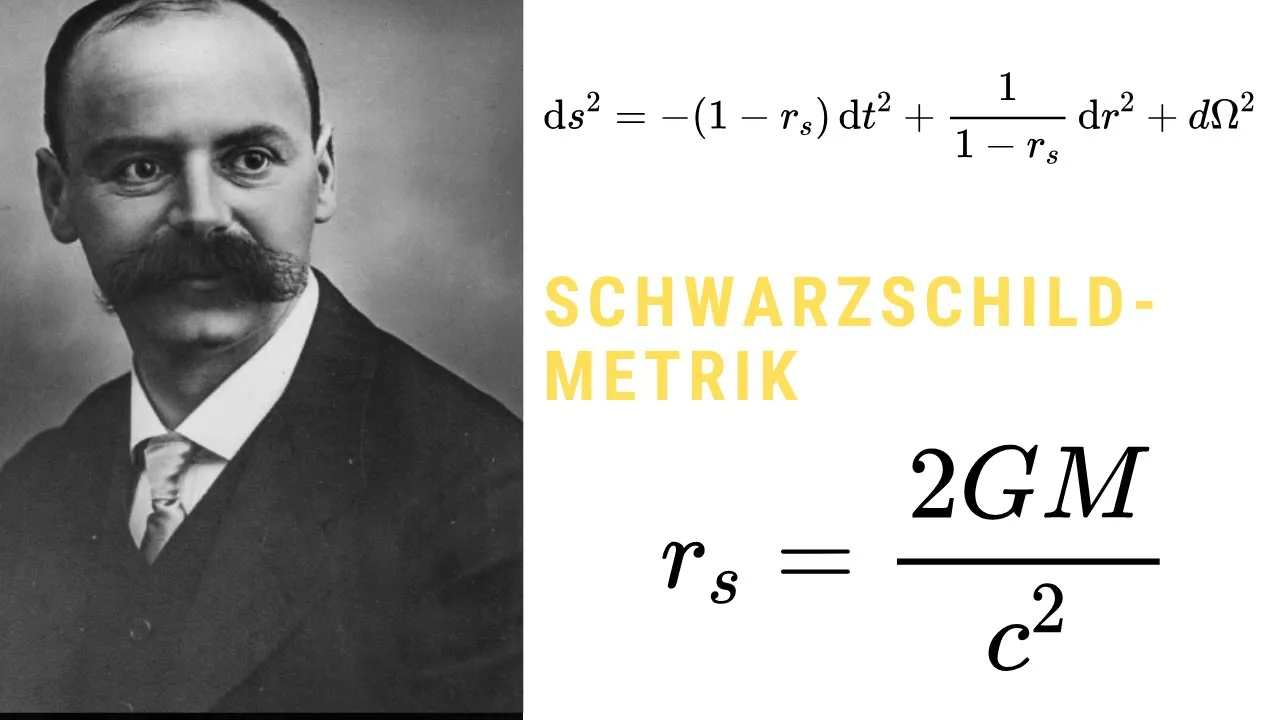
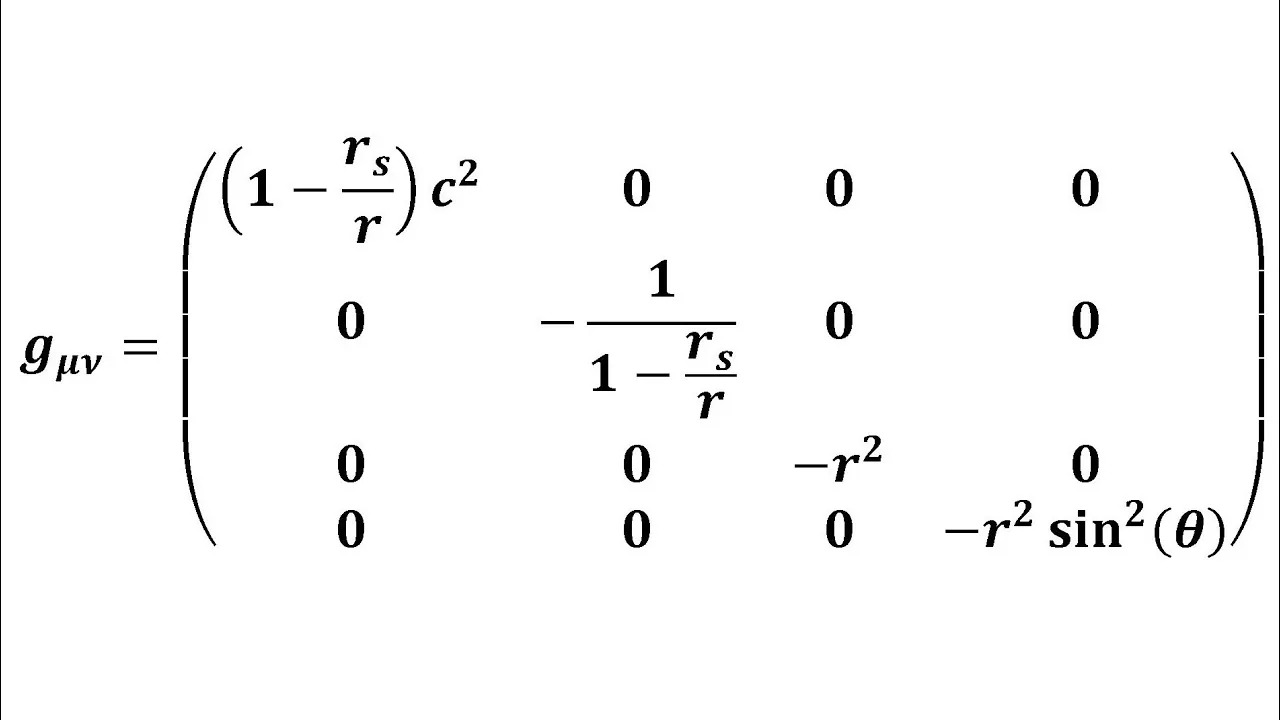
Exploring exact solutions to the Einstein Field Equations, starting with the Schwarzschild metric and its implications for black holes.
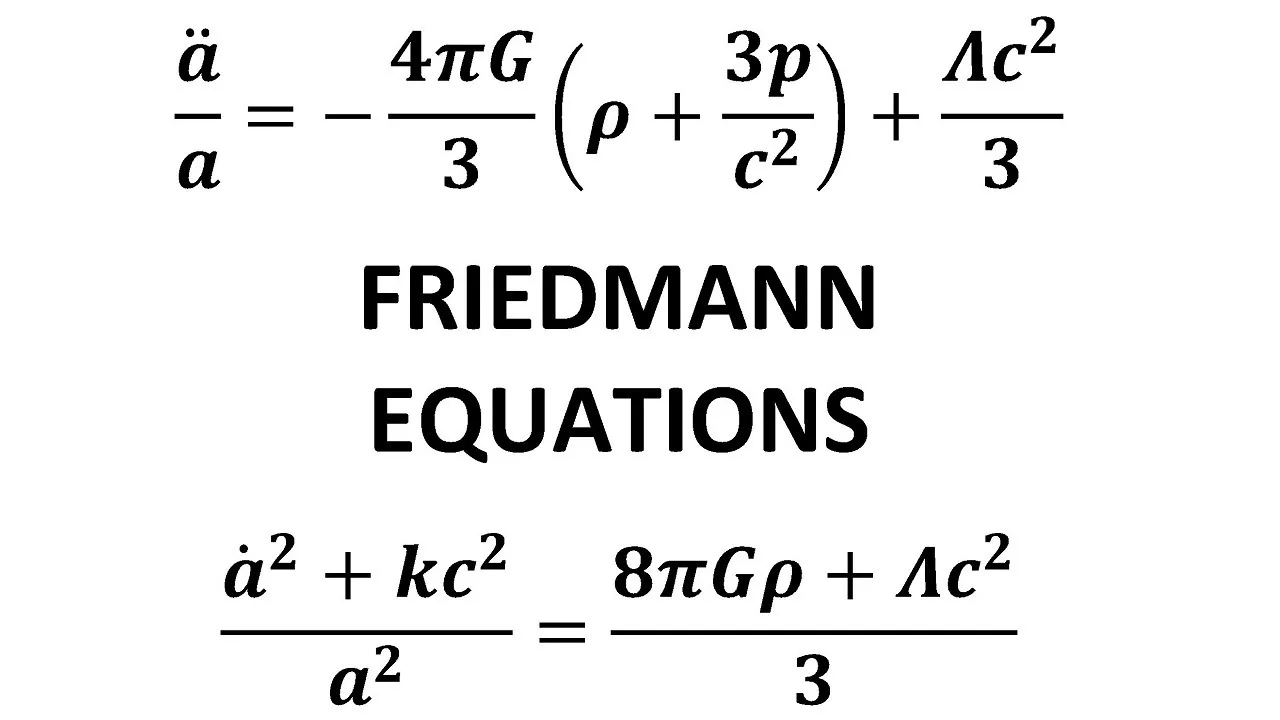
Applying the field equations to cosmology, specifically deriving the FLRW metric and the Friedmann equations to describe an expanding universe.
Studying linearized gravity and the weak-field approximation to understand the derivation and detection of gravitational waves.
Understanding the Einstein-Hilbert action and how the Einstein Field Equations can be derived using the variational principle.
29.6K views944likes35:23Original Release: 2021-04-15
what's going on smart people bringing you the final episode of tensor calculus for physics based on the book tensor calculus for physics i will leave a link in the description i put quotations on final because i love tensor calculus i'm gonna make more videos on it in the future but this is a nice spot to wrap things up with the goal of this video is to arrive at einstein's field equations it's not going to be a formal derivation per se but we are going to be able to make a series of arguments and arrive at it and i think it'll be pretty satisfying maybe in a future video i'll do it more formally by varying the einstein hilbert action or something like that uh in a previous video i think i was a little bit overly optimistic thinking i could cover both einstein's field equations and have a discussion on the interpretations of the different curvature tensors all in one video i'm going to save that curvature tensor stuff for a one-off video i have made a video on the riemann curvature tensor but not really assigning interpretations to what they mean but the riemann curvature tensor means what the rigid tensor means and the richie scalar what do these three different curvatures really mean so i'm going to save that for like a one-off video in the future um but yeah today is all on einstein's field equations if you'd like to catch up on some of the important uh videos that have led us to this to be able to tackle it in a kind of simple manner i'll leave links in the description namely to the ones where i describe the riemann curvature tensor and the bianchi identities and also how we can relate the metric tensor to uh the gravitational potential in in the newtonian limit that's the stuff we're going to be pulling from for this video to make it go a little bit faster okay now in one of those videos we showed that in this newtonian limit we had that the uh let me change this color we had that the laplacian of the metric tensor in the newtonian limit was equal to 8 pi g times the mass density and the relativistic generalization of this mass energy density is all encoded in the energy momentum tensor uh so that is defined so this could be also expressed in like a pseudo tensor form as i shouldn't call it pseudo tensor because that's actually a thing in this almost tensor form as uh eight pi g t zero zero in the newtonian limit where t is the energy momentum tensor and throughout this video c is equal to one just so i'm not tracing down uh factors of c throughout everything now if you're unfamiliar with the energy momentum tensor it encodes all the information of you guessed it energy momentum pressure grad school which is sheer stress all that stuff is in here so the zero zero component is effectively the hamiltonian density it's like the energy density we also have the t0i components which is the momentum density um oops let's not do that the momentum density we can take the diagonal i term so t i i which is the pressure i know i'm using p for both but we're not going to be actually using the energy momentum tensor so just bear with me on that and then also we have the off diagonal components i not equal to j which is the shear stress uh typically denoted with a tau so all that stuff contributes to the total energy and mass density and all that stuff of the system and it's what's necessary to fully describe how the geometry of space changes okay um so with just this right off the bat we can tell that we're looking at something like a second rank tensor equation so the goal is to generalize poisson's equation to be fully relativistic and the way that we're going to start that off is by guessing that that generalization is going to be a second ranked tensor equation so i'm going to say we're going to posit that the equations of motion will be some second rank tensor equation g t mu nu where t mu nu is now the full it's not newtonian lemon it's the for the full energy momentum tensor and g mu nu is to be determined in a i think the bianchi identity video it did we actually did define what jimmy knew is we're going to pretend that we don't already know we're going to figure out what it needs to be okay so we're going to posit that this is going to be our field equations and we're going to look at a series of criteria to narrow down what g-munu could possibly be so let's go ahead and do that over the criteria criteria for gmeonew and also just in general the criteria for the einstein field equations what does this stuff need to satisfy well first and foremost as you can tell it's a second rank tensor equation and i'm going to put a little asterisk there because it's easy to see i shouldn't say it's easy to see from what it needs to reduce to we can identify it with something like a second ranked tensor equation but maybe that's just the simplification maybe that's a special case or something but i'll talk about that more in just a few minutes but this does look like a second rank tensor asterisk uh what else so it needs to be if we look at poisson's equation so i'm going to write it up here just so that we have something to reference besides the equation del squared of the gravitational potential is equal to 4 pi g rho and in the static weak field limit that we used in the previous video we were able to identify so g mu nu was equal to the constant minkowski metric plus a static kind of like a perturbation h mu nu where h mu nu h zero zero i should say was eventually identified with two phi so that's why in our uh simple case we have an eight pi here because we're effectively taking the laplacian squared of two times the potential so it's eight pi instead of four pi okay so if we look at poisson's equation poisson's equation is linear in second derivatives of the gravitational field or linear and second derivatives of the metric so that's a property we would like our field equations to inherit as well so we like to think that it will be linear in second derivatives of g mu nu so that means we could form combinations of like d mu d nu g alpha beta d mu d alpha g beta nu et cetera now this is a second rank tensor equation so in these combinations we'd have to form contractions so that we're left with a two index object and we'd also have to add certain terms to it to make sure the end result is in fact a tensor because if you just take derivatives we know that the derivative of a tensor in general is not going to be a tensor so that's something to consider so we have these linear and second derivatives of the metric uh we also want to keep it simple we want to keep it simple stupid we don't want this to be any more complicated than it needs to be if nature presents itself in a more complicated manner then yeah we could add more corrections to it in fact that's people's careers is modifying trying to modify einstein's field equations for higher order contractions of the riemann tensor and its covariant derivatives and the vile tensor but for this we're just not going to include it if you think of all of that higher order stuff as being multiplied by a number we're just going to assume that number's either really really small or zero for this video i'm not an expert on gr though so i don't want to ruffle any feathers for the people who uh i don't know what i'm talking about for how do we introduce these higher order terms that's that's not this video um okay so we want to keep it simple what else do we need we also would like it to it needs to satisfy some form of local energy momentum conservation right so local emt conservation emt is the energy momentum tensor mathematically this can be phrased in the in terms of uh the energy momentum tensor being divergenceless the fact that this is local just be a little bit more careful with conservation laws and uh divergence lists and making the connection between the two but in any case so the reason i say conservation leads to divergence less is because say that we were taking the divergence of the energy momentum tensor that would be equal to d zero uh t zero and let's set nu equal to zero as well plus d i t i zero the zero zero component of the energy momentum tensor is like the energy the energy density and the zero derivative is something like a time derivative so we get like a dt of an energy and the i zero term is like the momentum density and we get the minus sign from the metric forget about gr let's just gain some intuition with why this stuff means conservation so it's going to be minus like a divergence of this momentum and that should be equal to zero is what i'm saying this is just the continuity equation so it's a statement of conservation of energy and momentum or if we took new equal to other things so we have four continuity equations that's all that i'm saying with local energy momentum tensor conservation but if we're assuming left hand side equals right hand side that means that g mu nu also needs to be divergenceless so the divergence of g mu nu has to equal zero as well and oftentimes so the metric tensor is a symmetric tensor um so that means it should have ten independent components but this requirement here actually helps us reduce it to six because if you think about it we have a d zero let's say g zero zero uh our g zero nu is equal to uh d i g i new we're saying this tensor here is going to be in terms of second derivatives of the metric okay here we have a spatial derivative of g which means the right hand side i mean the spatial derivative is not a time derivative so that means g i new is a second derivative of the metric and here we're taking a time derivative of g zero nu but if this is supposed to be a second derivative of the metric that means that g zero nu must only be a first derivative instead of a second derivative in other words we don't get any dynamics of the metric from these equations they're more so constraints on the coordinates so there's four equations there which is why a lot of times you'll hear that uh really there's six independent components of the metric tensor if you think about think about it this way that's what i need okay and then the final the final criteria is it needs to reduce to poisson's equation right needs to reduce to del squared phi equals 4 pi g rho that's what we're that's what we're trying to generalize so of course it should reduce to it in a special case all right so now we are free to ask ourselves what could g-munu possibly be in terms of what could g mu nu b in terms of before we get into that i want to talk a little bit more i guess i'll save it for a little bit later well we need second derivatives of the metric and we need these combinations and first derivatives could be fine as well because in this local inertial frame non-relativistic limit we can transform away uh christopher symbols which are first derivatives of the metric so we could also contain those um so we need tensors that are built from second derivatives of the metric well we know one that's a fourth rank tensor we know the riemann curvature tensor and an interesting property about it i'll leave a link in the description to a proof of this is that the riemann curvature tensor is unique meaning if you say i want a fourth rank tensor linear and first and second derivatives of the metric and you succeed in finding one you can show that it is equivalent to the riemann curvature tensor so you could go through a shitload of algebra uh linearly combining these first and second derivatives of the metric and see what correction terms you have to add in order for everything to transform as a tensor at the end or we can go ahead and try to construct these tensors from the riemann curvature tensor itself and luckily we already did that heavy lifting we know what those objects are because we have the re the reachy tensor r mu nu which is in our sign convention uh r lambda mu lambda nu as we'll find out sign conventions are incredibly important once we end up trying to get these coefficients of what the equations could possibly be in terms of so um but we'll get to that so we have the richie tensor and we also have the rigi scalar now the richie scalar is not a second ranked tensor but you know what is the richie tensor times the metric jimmy knew we can also add terms that vanish in the limit that we go to non-relativistic or rather uh the newtonian limit that just vanish and as long as it's divergenceless we could add those terms as well so we could add some constant times the metric it's not the reachy uh scalar uh so this is what we would include if we wanted to add a cosmological constant term we're keeping it simple stupid we're not including this guy for this but yeah it turns out if you were to go through adding all this stuff up and adding your terms and saying i want the end result to be a tensor these would be these would end up being your options these are not the only second rank tensors that you can build um like we could also take regi tensors to certain powers and things like that but uh for keeping it simple stupid this is this is all we have so we can actually guess the form of the einstein field equations and it'll be something like some constant times the richie tensor plus some other constant times the richie scalar times the metric and that's going to be equal to 8 pi g t mu nu these are our options the rest is the an amount of uh the rest amounts to finding what these coefficients need to be and that's what the rest of this video is going to be okay uh the first thing that we can do to try to um actually let me talk about the the riemann curvature tensor a little bit more personally when i learned this stuff i was very dissatisfied that it's the rigid tensor for some reason that shows up in einstein's field equations explicitly rather than the riemann curvature tensor that literally is the intrinsic curvature of subspaces of vectors scaled it means the inter if that thing is flat space is flat if it's not there's some curvature going on so my mind was uh i wasn't satisfied knowing that the riemann curvature tensor wasn't explicitly in the field equations and one reason i mean generalizing poisson's equation into into uh where is it into this guy where it looks like a second ranked tensor equation that may be satisfying to you but also if you wanted to try to formulate field equations in the in terms of the riemann curvature tensor say well why can't why can't it be one uh well one thing that you could try is you could try setting the riemann curvature tensor let's say mu alpha beta nu equal to some properly anti-symmetric combination of energy momentum tensors mu alpha uh beta nu plus whatever needs to be added in order for the stuff to be anti-symmetric about the indices and whatnot well you can you can look at the vacuum solutions to this where the energy momentum tensor is zero so the vacuum solution and what that tells you is if the right hand side is equal to zero that would tell you that r mu alpha beta nu is equal to zero so that means there's no mass there then there's no curvature now initially that may sound like it makes sense but if you have a planet orbiting a star you know outside of the star where there may not be any mass that the planet is orbiting through space is still curved there so they're not being masked there doesn't mean that there's no curvature okay so something like this just wouldn't wouldn't work for the vacuum solutions and there's other things like the riemann curvature tensor contains more information than the richie tensor that just isn't needed to uniquely determine the metric uh things like deformations not changing volumes when you parallel transport vectors i'll talk about all that stuff once i make an additional video on what these objects mean riemann richie and richie scalar but for now i hope that's at least a little bit satisfying so this is going to be our template this is what we're going to try to find the coefficients for and if we successfully do that then cool if does it agree with experiment yeah awesome then these must be right or at least the corrections must be very small so the way that we're going to find these coefficients first is we're going to go ahead and use uh this criteria here first local energy momentum tensor conservation we're going to take the divergence of both sides may sound horrible but it's simple because we did the heavy lifting already when we did the contracted bianchi i did any video so if we take the divergence of both sides let's do d mu a r uh let's just already apply it why not so we have a d mu r mu nu plus b g mu nu d mu r andrew why did you pull the covariant derivative through the metric well because the covariant derivative commutes with the metric because uh the christopher connection is metric compatible that's how we define the covariant derivative and that's how we can like raise and lower indices uh through this stuff okay and that should be equal to zero because the divergence of the energy momentum tensor is zero and from the contracted bianchi identities we already know we know that d mu r mu nu is equal to one half it's going to be a g mu nu d mu r so this follows from the contracted bianchi identity which we did in the last video hell yeah let's substitute this in um so we have a well we have one half a g mu nu d mu r plus b g new new d mu r equals zero if we factor that stuff out we get g mu nu d mu r times stuff on the inside one half a plus b equals zero okay we can have the trivial solution such that this guy is zero or we can have a or b is equal to minus one half a okay so we've already narrowed it down to one unknown variable which is a and that may seem like oh wow we're almost there no finding a takes a lot more work to give you a bit of a spoiler we're going to spend probably 10 15 minutes finding out that a is one or the magnitude of a is 1.
let's go ahead and do it so let's substitute this in first so we have a and factor out the a r mu nu minus one half g minu r is equal to eight pi g t mu nu all right uh so now it's a matter of finding out what a is so finding a so in the interest of not having you watch me uh write down expressions for two minutes i all i've done is i've copy and pasted from previous video the definition of the riemann curvature tensor and then set lambda equal to nu which allowed us to uh express the richie tensor and this stuff is in riemann normal coordinates so in order to find out what a is we're going to take a look at the static weak field limit we're going to be investigating what the stuff needs to reduce to and in that limit we're going to be looking at riemann normal coordinates to simplify our expressions a bit so all we have is the riemann tensor which i've used to contract one of the indices and obtain the richie tensor in this coordinate system and then we have the standard definition of the christopher symbols in the static weak filled limit the metric tensor is just minkowski plus some small perturbation that depends on x static means the h doesn't depend on time okay so we know the stuff once we go to the weak field limit should be in terms of zero zero components of the metric so let's go ahead and look at r zero zero so r zero zero would then be uh well if we look at this guy we have nu is zero so that's a time derivative but we're taking the time derivative of the christoffel symbols and the christopher symbols are in terms of just the metric and its derivatives but if the metric is static then the time derivative is just zero so we don't actually this term is actually just zero so we get this is equal to minus d lambda gamma lambda zero zero and we're summing over lambda but yet again the lambda equal to zero term vanishes because that's the time derivative so this is just equal to minus d i gamma i zero zero okay now let's take a look at what this christopher symbol actually is gamma i zero zero is equal to one half g lambda beta or i guess it's going to be i beta uh again in these terms we're going to mu and new or equal to zero so these are time derivatives of the metric which vanish so we're only left with minus d beta g zero zero um and i should probably put newtonian on here we're looking at newtonian limits and then we contract uh actually we can just keep it like that i guess we can raise the index why not so this is equal to oops there's a minus sign there minus one half d i g zero zero newtonian limit all right so then the reaching tensor zero zero component r zero zero is just minus d i of minus one half d i g n zero zero now if we want to compare this to the usual laplacian we should convert this to the lower index and we're still summing over i and numerically that's just multiplying that term by minus one right if we compare the if we're using the uh mostly minus metric signature then when we lower this guy it just gets a it's just the negative of its covariant counterpart i should say so we can write this as one half the laplacian of g00 newtonian limit and so yeah so we had two minus cancels and then we get another minus sign from lowering this guy uh and then we know that the metric g00 newtonian is equal to minkowski zero 0 plus h 0 0 which is equal to 1 plus 2 phi so when we take the laplacian we're just getting we're just showing that r zero zero is equal to uh and there should be a minus sign here sorry about that uh r zero zero should equal the laplacian minus the laplacian of phi yeah explained why we needed a minus sign then i didn't actually write the minus sign here so yeah this has a minus sign cool so we got that for the rigid tensor now let's do a similar thing with the richie scalar so the richie scalar r is just the contraction of r alpha r alpha which is just going to be r 0 0 minus r i i right if we say you can do this by just saying like r is equal to uh g alpha beta r alpha beta and then you get the minus sign from the metric tensor for the spatial components okay um so if we want to compare this guy to its doubly covariant counterpart again we just get well actually nothing changes because the time like component of the metric is positive so we get r is equal to r 0 0 minus r i i and now we just got to take it home so in this newtonian limit the metric tensor is really just the mass density the other components of the metric tensor are just gonna be zero okay but if the other components so that's the tij components are gonna be zero in other words t zero zero the magnitude is much more much larger than the t i j components but if the t i j components are small then that means that these terms must be for mu nu equal to i j that these terms must be really close to zero right so that means r i j must be really close to one half g i j r in this limit so under that assumption so assume r i j is approximately equal to one half g i j r and g i j is just minus 1 right all those well i guess let's not do that just yet then we can go ahead and take the trace of both sides this would be an i r i i is then one half g i i r and these spatial components have the minus sign so when we take the trace this is just equal to minus three halves r so now we know what r i i is so r is equal to r 0 0 plus 3 halves r okay now if we move r to the other side that lets us relate the zero zero component of the richie tensor to the richie scalar namely we get r is equal to minus two r zero zero okay so if we substitute that into our equation so we have a r zero zero minus one half g zero zero r is equal to eight pi g t zero zero then substituting r zero zero just writing it again r zero zero is equal to minus the laplacian of the gravitational potential and then we have this guy here as well so we have a times minus laplacian of the gravitational potential minus one-half g zero zero is one and r is minus two r 0 minus 2 times minus the laplacian of the gravitational potential alright so we have a minus del squared phi now we have three minus signs uh so it's going to give us a minus del squared phi which is equal to minus 2a del squared phi which is equal to 8 pi g i'm just going to go ahead and write t 0 0 as rho okay and this is exactly laplace's equation so we have a times del squared phi is equal to minus 4 pi g rho which tells us that a is equal to minus 1.
now the sine the magnitude of a does not depend on the sign conventions that you've used that we've used throughout the series but the sign of a does matter the fact that we're using the mostly minus metric signature as opposed to the primarily positive you could probably also get different signs if you use instead of r mu nu equaling r lambda mu lambda nu if instead of this we contracted it with the final index that would be equivalent up to a minus sign so all of these things can contribute into the sign of a so the one that we've derived is uh using all of these signed conventions that have propagated throughout the series that's actually not the standard to my understanding of the signed conventions that are typically used so more often than not if you use say the primarily positive metric signature and maybe the other convention for the reach for the riemann tessa or maybe that actually cancels out you'll get the a equals one so the standard gives a equals positive one okay so we've done using our metric signature nothing is wrong we would calculate exactly the same observables but just for the sake of writing it in the form that you've probably seen it before let's go ahead and use a equals one which gives that our einstein field equations read r mu nu minus 1 half r g mu nu is equal to 8 pi g t mu nu and these are einstein's field equations and what this says is if you put a really massive object like your mama in space then we can calculate directly how the geometry of space changes and i've been waiting three years to tell that joke this has been a long series but we are finally at einstein's field equations so i know this wasn't the most formal thing ever the difficulty of this video was not the tensor calc and that's what's kind of amazing about this is if you follow through this lecture series nothing i've done in this video as far as the tensor manipulation goes is really all that crazy uh the hard part was the assumptions that we're allowed to make and the static weak field limit the physics was the hard part go figure um so that just goes to show you i mean you follow the series and it's like it's not that this is was easy necessarily but all we had to do was calculate coefficients so uh i guess that's all i really have to say now you understand that matter tells space time how to curve and curve space time tells matter how to move in a future video maybe i'd love to actually solve this guy for simple cases like the vacuum solution i'm in no rush to do that though but i really do appreciate all five of you sticking around through the lecture series i hope you guys enjoyed the series let me know in the comments section if you did and i'll see you guys there you
Up Next

4:34
Acoustic Levitation: Standing Waves and Schlieren Imaging Explained
@NatSciDemos
2.8M views•2017-02-23

12:53
21cm Hyperfine Transition in Neutral Hydrogen: Radio Astronomy Basics
@AaronRobertParsons
12.4K views•2011-10-13

17:05
Tensor Calculus for Physics: Christoffel Symbols Derivation
@AndrewDotsonvideos
50.8K views•2020-03-16

27:14
Entropy and the Second Law of Thermodynamics Explained
@veritasium
27.5M views•2023-07-01
Related Study Plans & Knowledge Roadmaps
Structured learning paths in Physics
physics
Nuclear Physics (Decay, Fission & Reactors)
01Atomic Structure and the Binding Force
02Radioactive Decay and Half-Life
03Nuclear Fission Mechanics and Chain Reactions
+ 2 more learning modules
12h5 modules
Explore Roadmap
physics
Soft Matter (Polymers, Colloids & Rheology)
01Foundations of Soft Matter & Thermal Forces
02Polymer Physics and Macromolecules
03Colloids, Surfactants, and Self-Assembly
+ 2 more learning modules
38h5 modules
Explore Roadmap
physics
Analytical Mechanics: Lagrangian & Hamiltonian
01Mathematical Foundations: Calculus of Variations
02From Newtonian Mechanics to Constraint Dynamics
03The Principle of Least Action & Lagrangian Mechanics
+ 3 more learning modules
28h6 modules
Explore Roadmap
physics
General Relativity (Spacetime & Cosmology)
01Foundations of Relativity: Special Relativity
02The Geometry of Spacetime: Equivalence Principle & Curvature
03Einstein's Field Equations: The Mathematics of Gravity
+ 2 more learning modules
55h5 modules
Explore Roadmap