

























Molecular Orbital Theory explains chemical bonding by combining atomic orbitals to form molecular orbitals through linear combination (LCAO), where constructive interference creates bonding orbitals with lower energy and enhanced electron density between nuclei, while destructive interference creates antibonding orbitals with higher energy and a node between nuclei; bond order is calculated as half the difference between bonding and antibonding electrons, determining molecular stability—for example, H₂ has a bond order of 1 and exists, while He₂ has a bond order of 0 and does not exist, and for molecules with p-orbitals, the order of molecular orbitals depends on atomic number Z, with π orbitals below σ orbitals for Z < 8 and vice versa for Z ≥ 8.
Molecular Orbital Theory Explained | MIT Principles of Chemical Science
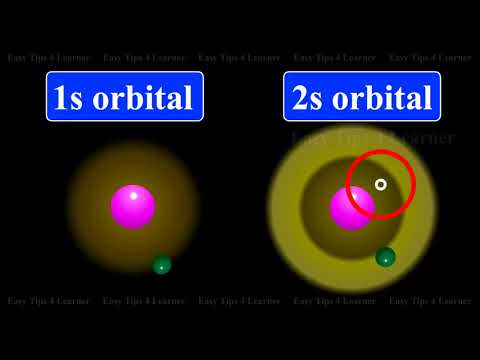
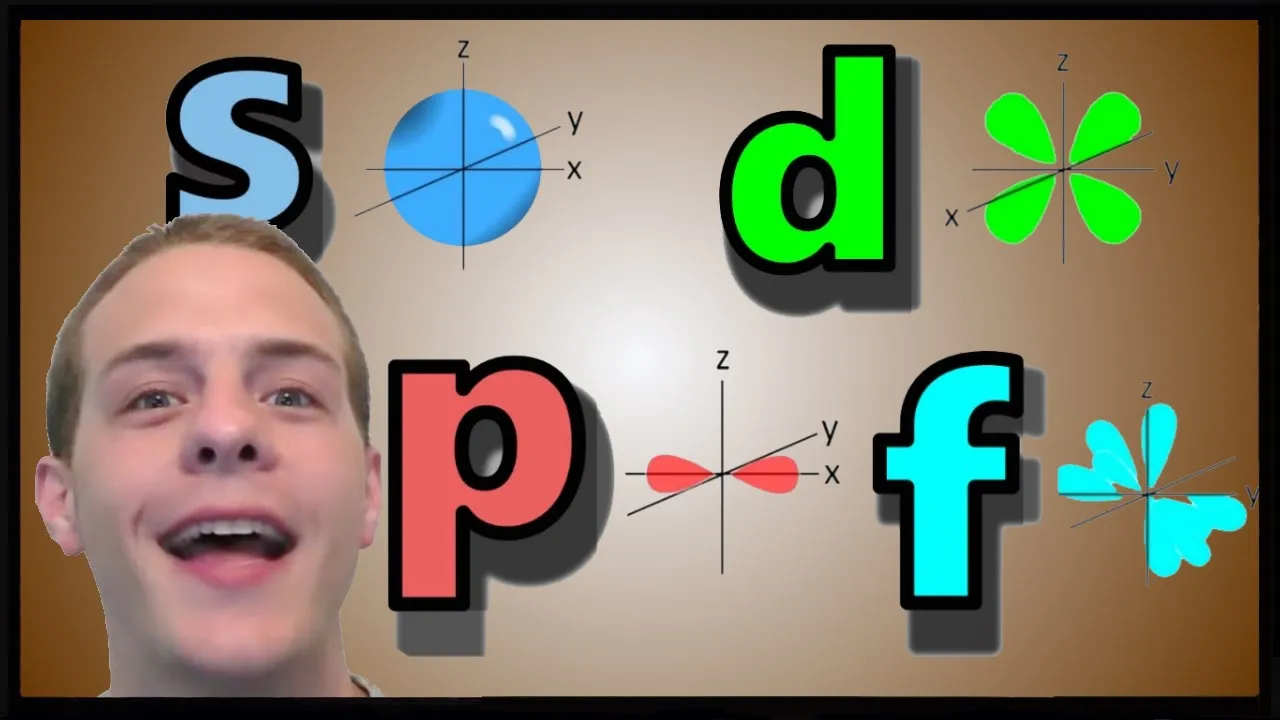
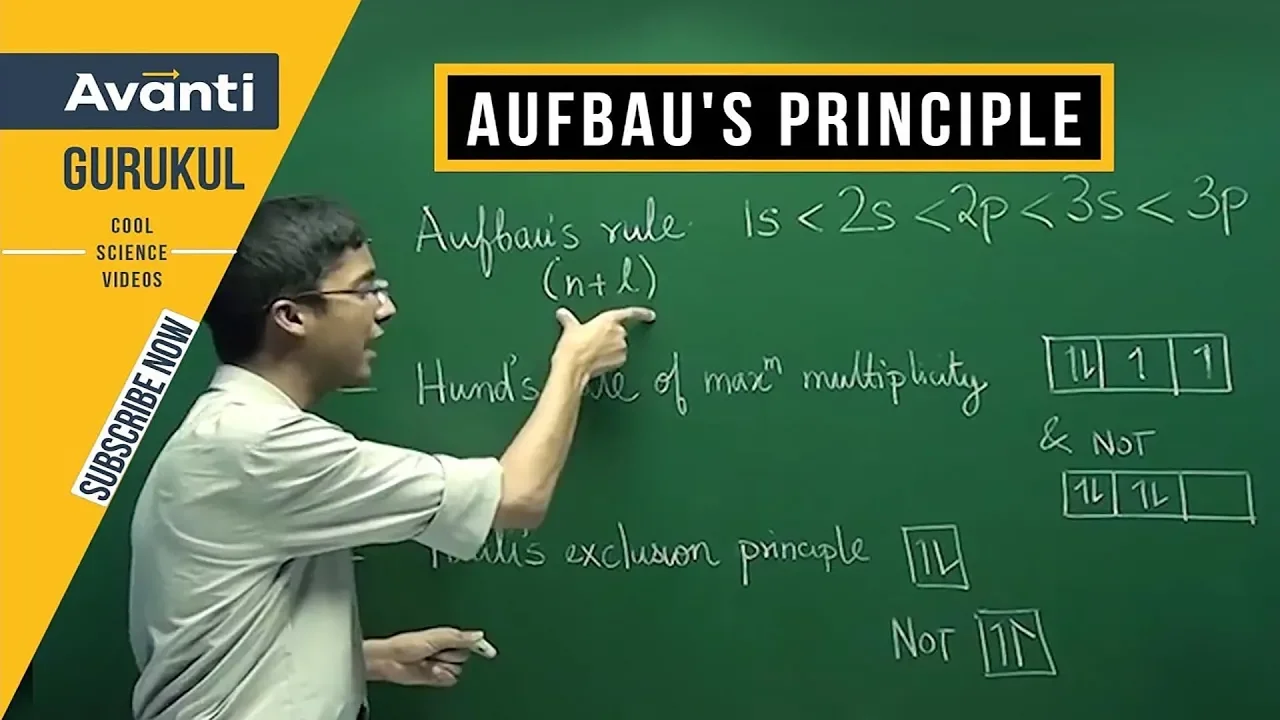
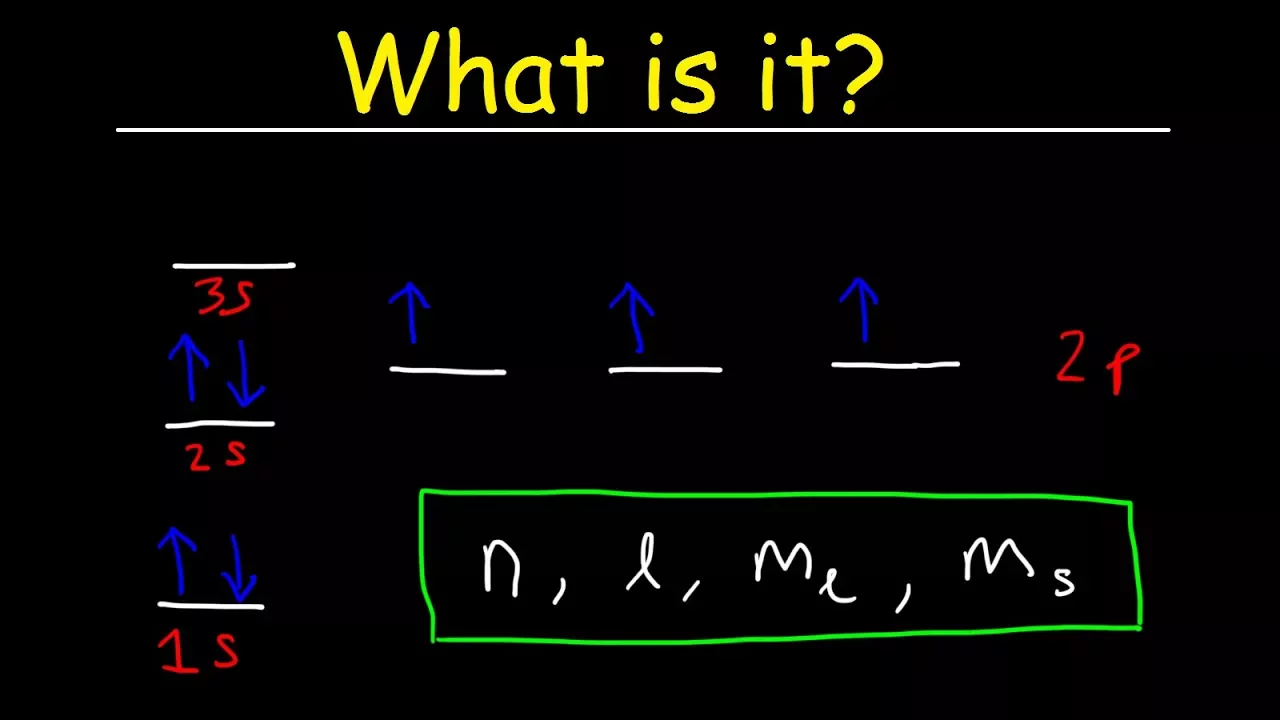
Added:the following content is provided under a Creative Commons license your support will help MIT open courseware continue to offer highquality educational resources for free to make a donation or to view additional materials from hundreds of MIT courses visit MIT open courseware at ocw.mit.edu if you haven't uh clicked in yet please pay attention to the clicker question and I'll give you a little bit more time to uh to click in and I'll give you a 10c warning all right let's let's just go ahead and take 10 more seconds all right does someone want to say how they how they got this one right have anyone willing to say how they got it right we have a American Chemical Society whatever these are called that hang around your neck and clip things to them yes there 's the word no oh there we go thank you um okay so this uh molecule is the phosphorus has five veence electrons and then each hydrogen has three so for a total of eight so it has three bonding and then um one lone pair which makes it a tetrahedral but then the lone pair push the other Bond so it's less than 109.5 degrees excellent yep so I see that some people just decided that um there were three things bound to it and so then uh then they decided either 120 or less than 120 but you really need to do the Lewis structure and see how many many lone pairs there are first so once you do the leis structure then you figure out the parent geometry sn4 system or tetrahedral uh system all right so more more practice on on these uh coming up all right so we're continuing on now uh with molecular orbital Theory and we started the course talking about atomic structure then we talked about Atomic orbitals or wave functions and then we moved on to bonding that atoms can come together and bond and talked about the structure of molecules and now we're going to molecular orbitals so uh and then we'll also talk more about the structure of molecules based on those molecular orbitals on Wednesday so we're really coming all the way around we're using a lot of the ideas that you've seen before but now we're applying them to molecules and then to me this is really an exciting part I love getting up to the molecules um and talking about structures of molecules and how orbitals really play a role in those properties that molecules have and then to me the really exciting I like reactions so after we finish with the structures we're going to talk more about how molecules react and so on Friday we're going to be starting that reactions of molecules and getting into thermodynamics so we're sort of winding our way um away from orbitals for a while we will come back to De orbitals around Thanksgiving time but we'll have a long time before that where we're talking about reactions so we're about to kind of do a transition in the type of material but before we do that more orbitals but these are super cool because these are molecular orbitals so we're going to talk today about Mo Theory Mo for molecular orbitals so molecular orbital Theory um presents the idea that these veence electrons are really going to be delocalized around these molecules and not just sitting on individual atoms so to think about this electron delocalization we need to think about molecular orbitals molecular orbitals as we've learned another word for orbitals also wave functions wave functions or orbitals orbitals or wave functions you need to consider the wav likee properties of electrons to think about where the electrons are going to be what is their probability density how are they going to be arranged with respect to the nucleus and so we take Atomic orbitals and we bring them together as atoms come together to form bonds Atomic orbitals come together to form molecular orbitals so we're going to be adding superimposing Atomic orbitals to form these molecular orbitals and this is called a linear combination of atomic orbitals or lcao um and so we're going to bring those atomic orbitals together and create molecular orbitals and we're going to create two types of molecular orbitals we're going to create bonding and antibonding and some basic uh math principles apply here and that is that you can create n Atomic orbitals from n um n molecular orbitals from n n Atomic orbitals all right so that's really the basis of molecular orbital Theory and now let's apply it to our friends the S orbitals all right so we're going to think about really simple molecules bringing together two atoms that are identical with each other and what happens to their s orbitals when this happens so first we'll talk about bonding orbitals so bonding orbitals again arise from this linear combination of atomic orbitals the lcao and if it's a bonding orbital it's going to arise from constructive interference so we talked before about the properties of waves and one of the great properties of waves is that they can constructively interfere or destructively interfere and orbitals are wave functions so they can constructively interfere and destructively interfere bonding orbitals are generated by the constructive interference so let's look at two Atomic orbitals and so here we have an orbital the nucleus is in the middle it's a little dot is a nucle and these two Atomic orbitals are going to come together there's going to be a bonding event and so we have a 1 s orbital from from atom a and a One S orbital from um atom B and they're going to come together and they're going to form a molecular orbital an AB molecular orbital and this is called Sigma 1s so a sigma orbital is symmetric around the bond axis so the bond axis here would be um just a vertical align between these two nuclei here and so this molecular orbital is symmetric around that Bond axis there are no nodal planes for something that is symmetric there are no nodal planes for our um s orbitals um and so there's none for the molecular orbital either and we can also write this as 1 SN a plus 1sb so the atomic orbital from 1sa the atomic orbital 1sb coming together to form Sigma orbital 1s that is a bonding orbital because it's constructive interference um it's a bonding M Mo or molecular orbital so now let's consider the wavelike properties and think about these Atomic orbitals coming together as waves and what is happening so here we have the same uh equation up here we're bringing together one sa and one SB but now let's think about this as a wave function so there is an amplitude associated with the wave function for 1sa and there is an amplitude associated with the wave function for 1 SB these wave functions come together here's one nuclei here's the other nuclei and for a bonding orbital it'll be construct Ive interference and so the amplitude where these wave functions Atomic wave functions overlap will be increased when you have constructive interference so our Sigma 1s now has increased amplitude between these two nuclei due to that constructive interference so an increased amplitude between these two nuclei again this is the bonding axis here's one nuclei here's another so an increased amplitude here incre in corresponds to an increased or enhanced probability density remember our wave function squared is probability density it suggests the likelihood of finding an electron in a certain uh region of volume and if it's enhanced by this constructive interference so if that density probability density is enhanced you have a greater chance of finding an electron uh between these two nuclei which will be attracted by both nuclei so now when don't you tell me what you think is going to happen to an electron that is in this region of uh constructive interference this increased uh area of probability density okay 10 more seconds interesting okay so uh we should have probably not put up the answer there uh and repul um so yes so here um if we have an electron that's attracted to both nuclei then we want to think about whether that's going to be lower or higher in energy than something in an atomic orbital so if it's attracted to both it's going to be more stably bound to those it'll be harder to remove that electron which means that it's lower down in energy and so we should look at that and we're going to so um the answer is it should be lower in energy more stable harder to remove that electron it's in a sweet spot it has two positively charged nuclei and it's kind of hanging out right in the middle it's very happy it's going to be more stable and that means lower in energy all right so let's take a look at that so so the electron is lower in energy and the bonding orbital energy is also going to be decreased compared to the atomic orbitals and that has to be true if that's where the electron is so let's look at the atomic orbital from a and the atomic orbital from B and now I'm going to put the bonding orbital at a lower energy level oh first I was going to put the electrons on and now I'm going to put the orbital in a lower at a lower energy so remember this is increasing energy here so the atomic orbitals would be up here whereas the molecular orbital is down here molecular bonding orbital will be lower in energy and now we'll put our electrons there so we have one electron um up here and one here and so when they come together we're going to have two electrons in this molecular orbital so when you have these two electrons and they both occupy the bonding orbital and this is the case for H2 each H atom is bringing one electron H2 has these two electrons and that's going to make H2 more stable and we saw that before that you have to dissociate the H2 Bond you have to add energy into the system H2 is more stable than free H+ H so when you bring Atomic orbitals together and you have constructive interference an increased probability of electrons between those two nuclei that's a sweet spot they're going to those electrons are going to be very happy there and that'll result in a more stable lower energy structure that's bonding but whenever there is a a positive event like this there's always a negative event because that's just how life works so have bonding orbitals but we also have anti-bonding orbitals so anti-bonding orbitals arise from the linear combination of atomic orbitals lcao through destructive interference so here these are going to be destructively interfering and that will generate a molecular orbital that is an antibonding orbital so here our little nuclei again and this anti-bonding orbital is called Sigma 1s star so we can write an equation for this as 1sa minus 1 SB equals Sigma 1s star that is an antibonding molecular orbital and let's just think about how this kind of uh uh shape arises considering the wav likee properties of these atom Atomic orbitals so I'm going to now move this equation up to the top and now I have my uh one one sa here my 1 SB here and now it's destructive interference so we have opposite phase of the wave functions and when we'll put up a wave function there now the next one has the another the opposite phase so they're going to destructively inter interfere there is overlap over here but when you have destructive interference then the amplitude is going to decrease so now when we consider this destructive interference between these two orbitals you see that you have what arises between them instead of enhanced probability of finding an electron you actually get a node so you have decreased amplitude translates to decreased probability density between these two nuclei one here one here and that results in a node between the two nuclei so in the antibonding orbital there's even there's a much lower probability that it will be in this sweet spot between these two um between the two nuclei that have this nice positive charge for its little uh negative charge so there's pretty much no shot at being in that nice sweet spot and so what that ends up meaning is that an electron in an antibonding orbital is pretty much excluded from that internuclear region that region between those two nuclei and that results in a molecular orbital that has higher energy than the atomic orbital there's just no chance of being in that wonderful spot it's really very sad for the poor electron that has to occupy an anti-bonding orbital so now let's put this on our energy scale so we'll go back to our energy scale and we saw before that when we had one sa and one SB and you had a sigma 1s a bonding orbital that was lower in energy electrons that occupy it are more stable compared to their positions in the atomic orbital but we also now have an antibonding orbital from dest structive interference between the wave functions of the atomic orbitals and that's higher in energy and so that's up here so this is what our diagram is going to look like that brings two Atomic orbitals together to create two molecular orbitals so the antibonding orbital up here is raised in energy by the same amount that the bonding energy is lowered and so that gives rise to this diagram and importantly as I mentioned we have n Atomic orbitals forming n molecular orbitals so if we have two Atomic orbitals we generate two molecular orbitals one is bonding lower in energy and one is antibonding higher in energy all right so let's take a look at some examples so always start with hydrogen so hydrogen has how many electrons one hydrogen hydrogen atom one so we have two hydrogen atoms and so we have two on S orbitals 1s a 1 SB and now we're going to where where do we want to put our our electrons in the highest energy possible lower energy where do we want to put them always start with lower energy so we're going to put them down here and so this is now the M Mo diagram for H2 and we can write the electron configuration for the mo diagram which you'll note is a different electron configuration than you were writing when you were looking at the periodic table because now we're not writing it in terms of 1 S2 2 S2 we're writing it in terms of molecular orbitals and there's some of these on uh the problem set and I tried to indicate example to make sure you know what kind of electron configurations we're talking about so foro diagrams when it says electron configuration we're talking about where the electrons are with respect to the molecular orbitals so the answer to this would be Sigma 1s2 they're two electrons in the molecular orbital Sigma 1s good so that means that you can do the same thing for Di helium and that's a clicker question so let's just take 10 more seconds okay you can put it yep all right so uh so someone want to uh tell me that is correct um what uh what's number two what's number two for for hydrogen okay what about uh number three what what was what was wrong there okay everyone's doing really well yeah so uh we had all of the electrons are uh were parallel in there and what what what does that violate what would be true in that case Y and so we they'd have they'd have the same four principal quantum numbers this is not allowed so that one's not good and what's wrong with four yeah star was on the bottom so they were flipped around antibonding was lower in energy great okay so we'll just put those in over here and so we had two uh electrons helium brings two so two went into the bonding and two went into the antibonding with opposite um spins um and we have the bonding lower energy anti-bonding higher energy all right so then we can put in the electron configuration here and we have um Sigma 1 S2 Sigma 1 s star two so that's the electron configuration now interestingly you see you have two at lower energy and two at higher energy so there's no net loss or gain in energy of H2 compared to just two helium atoms and so that raises the question does helium 2 exist so what would molecular orbital Theory tell you about whether it exists and it would actually predict that it does not exist and the way that molecular orbital Theory gives you these predictions is through the calculation of something called bond order so bond order is half of the number of bonding electrons minus the number of anti-bonding electrons so let's just write out what the bond order for helium would be so helium 2 our di helium molecule so we have bond order equals half there's always a half and now the number of bonding electrons so how many bonding electrons do we have for helium two how many anti-bonding electrons do we have for Di helium two and can someone do this math for me zero right so that would suggest a bond order of zero which means no bond and let's just compare that to hydrogen H2 which should have a bond order equal to a half it's always a half in the hydrogen how many bonding electrons did we have we had two how many anti-bonding electrons did we have zero zero and the math bond order is one so that means one Bond or a single Bond so Mo Theory would predict that di helium has no bond I.E it's not really a molecule without a bond but H2 should exist so let's take a look at what experiment tells us and it does exist but only really not that much so it was not discovered until 1993 which for some of you might seem like quite a long time ago but since we've been mostly talking about discoveries that were made um in the 1800s it took a long time before someone could prove that di helium existed and if we look at the bond dissociation energy for H2 0.01 and compare that that to H2 432 th helium really doesn't exist very much zero is a much better approximation of its Bond than one would be it really is not a very good molecule so I would call this a win for molecular orbital Theory it correctly predicts that H2 is not going to be a very good molecule or or helium 2 is not going to be a very good molecule but H2 will be a good molecule and that that works works all right so now let's consider 2s so 2s orbitals are analogous to 1s except that you have to remember that they're bigger so we have our 1s and our 2s but for the purposes of this it doesn't really matter um so let's look at a diagram now that has 1 s and 2s so we have lithium so how many electrons does lithium have yep so we'll put on lithium di lithium we'll put on lithiums has two in 1 s and one in 2s and so we have one lithium here and one lithium over here and our 1s orbitals are going to be lower in energy so they're down here our 2s orbitals are higher in energy so that goes goes for both the atomic and the molecular orbitals that are generated so bringing together 1 s with 1s we get Sigma 1s and also Sigma star 1s and so we can start putting our electrons in we're going to start with the lowest energy and move up so we have four electrons that we need to put in so we fill up everything here and now we go up to our 2s the 2s orbitals will generate Sigma 2 s and sigma 2s star we have two electrons so they both can go down here so here is what our Mo diagram looks like we can write out the electron configuration again based on this diagram so we have two electrons in Sigma 1s so we have a two there we have two electrons in Sigma 1s star our anti-bonding orbital and we have two electrons in Sigma 2s and now we can calculate the bond order which is another clicker question okay just 10 more seconds excellent 84% so if we do out the math here we always have our half we have four bonding electrons we have two down here and two up here we have two anti-bonding electrons in our Sigma 1s star and so that gives us a bond order of one and in fact the dissociation energy does suggest there is a bond it's not a great Bond it's 105 K per mole not necessarily enough to power a Starship but still um this molecule does exist all right so let's look at burum now do another example so how many electrons is uh ilum going to have it'll have four so we'll put those up now we're going to start with our lowest energy orbital and we're going to put some in the antibonding as well and then we'll do this and then we'll do that and we filled up everything and so we can write out our configuration we have two in our um Sigma 1s orbital we have two in our our Sigma 1s star we have two in our Sigma 2s and two in our Sigma 2s star anti-bonding orbital there and now there are two different ways that I can calculate the bond order here and we'll do both of them and show you that they come out the same way one way that we can calculate this is to consider all electrons so if we consider all electrons our bond order and that's often just said b period O is a half of our bonding and now we can count up both the 1s and the 2s so how many bonding electrons do we have we should have four so we have two here two here so four how many antibonding also four so that suggests a bond order of zero or we could just consider our veence electrons so that would be the the electrons in 2s and if we do that bond order equals a half it's always a half so how many valence electrons do we have in bonding orbitals two how many in anti-bonding orbitals two and that gives the answer of zero so it should always work unless you did something very strange um you should be able to do it both ways and get the same answer so if this is a complicated problem you might want to only consider the veence electrons in fact on a test you may only be asked to draw the molecular orbital diagrams for the veence electrons and you don't have to do the other uh the other ones okay so that should work both ways and we get a bond order of Z Z and in fact the dissociation energy is only 9 K per mole it's a little stronger than D helium but this is an exceedingly weak molecule so when you have the same number of electrons in bonding as antibonding doesn't lead to a very strong Mo molecule all right that's the S orbitals now it's time for molecules that have P orbitals as well so in this case now I have my p orbital and another p orbital and we have our nuclei in the middle and we're going to bring these together and we will have constructive interference and so here we're bringing together 2 p x of a and 2 p x b or 2 p y a and 2 pyb so just X and Y we're considering right now and if we bring those together with constructive interference then we're going to form a bonding orbital that has enhanced um probability density in both cases and a nodal plane along the bond axis because we had nodal planes along there to begin with so if we think about this and we have both of these we're bringing them together and we're going to have they're going to interfere constructively enhance probability density here enhance probability density down here um but we still have our nodal plane because we started out with one and so if we have a nodal plane this cannot be a sigma orbital it has to be a pi orbital because Sigma orbitals are not going to have a nodal plane along the bonding axis all right so we could generate Pi 2 PX or Pi 2 py this way so a pi orbital is a molecular orbital that has a nodal plane through the bond Axis or maybe I should say along the bond axis so here is our nodal plane right through the bond axis we can also have antibonding which means destructive interference so now I'm going to be subtracting one of these from one of these and I'm going to get something that looks like this and it will be Pi 2 p x star or Pi 2 p y star and it will have two nodal planes so let's look at this so this is destructive interference I'm subtracting one of these from one of these so the phase has to change so I'm going to change the phase on one of them and then bring them together now we're not going to have that awesome constructive interference increased increased probability density these are negatively interacting with each other and this generates a nodal plane between the molecules they really look much more like this now so we have still our nodal plane through the bond we had that before we're always going to have that but now we have an additional nodal plane between the nuclei so in one case we have enhanced density probability density again in the other case in antibonding we have another nodal plane all right so now let's look at what happens to the energies of these um Pi orbitals and the diagrams that I'm about to show you we're only talking about PX and py now we have for the moment forgotten 2 pz so these diagrams are rated I for incomplete warning to the viewer people come to me and go where where are the 2pz yes they're not in these diagrams um but when you're asked for a complete diagram you will always have to put those orbitals in and in fact completing these diagrams could be a question you get later okay but for now we're going to have 2pz here but we don't have it's not forming a molecular orbital in this diagram this diagram is thus incomplete but we're going to start simple and build more complicated so only only two P orbitals first then we'll add the third one because this compound doesn't actually need that orbital um so we're we're good for now all right so we have moved on to the first element that has a p uh electron in a p orbital we have Boron and we have two of them so now I dropped off One S to simplify this so we're starting just with now we just have our veence electrons so it's a good thing we can calculate bond order just using our veence electrons all right so we have two in 2s and one in 2 p x or 2py I could have put it either place so let's put in uh where they would go so we we have two s orbitals they'll form go into bonding um Sigma 2s first then into antibonding Sigma 2s star and now we have P um P electrons and we're going to put them into our PI orbitals our molecular orbitals I'll put one in and where am I going to put the other one am I going to put it next to it or over here what do you think yeah so we're going to do that because again uh when you're going to sit on a bus you want to have if they're degenerate in energy levels as they are here you're always going to put one electron um in each orbital of the same energy first before you pair them up and they'll have parallel spins so we're reviewing things we learned before I love doing that okay so now let's see um what our electron configuration is and this is just the veence elect configuration um we're simplifying we're not going to consider the one the 1 s orbital and we can write this down so we have two electrons in Sigma 2s and we have two electrons in Sigma 2s star our anti-bonding orbital and we have one in pi 2 PX and one in pi 2 p y and I don't put I can put a one or not put a one if I don't put anything for a one one is assumed and we can C calculate our bond order as well so we have half and again we're just using our veence electrons but that's okay we have four now who are bonding two down here two up here these are bonding orbitals and we have two that are anti-bonding and notice for our PI orbitals this is what we saw before bonding are lower in energy anti-bonding or higher in energy with the bonding orbitals we had constructive interference enhance probability of the electrons near the nuclei and so that's lower in energy but in our antibonding ones we have a nodal plane in between our nuclei so we don't have any probability that electrons are right in between there because there's a nodal plane so those are higher in energy okay so here is our B2 diagram so now let's try the same thing for carbon C2 and that is a clicker question all right let's just uh take 10 more seconds okay so let's take a look at that over here the easiest thing to do to answer this question was to fill in the diagram in your handout and so if you did that you would have put two down here and you would have put two up here then you would have put one here one there another one there and another one there okay so now we have used these up and so our configuration is Sigma 2 S2 Sigma star 2 pi 2 p X2 Pi 2 p y 2 and the bond order is a half there are six bonding electrons 1 2 3 4 5 six and two anti-bonding electrons and so that adds up to a bond order of Two And so sometimes on a test there'll be a simple question what is the bond order but to get there you have to draw your whole molecular orbital diagram and figure out how many bonding and how many antibonding so these are not really that fast questions and it's nice sometimes we give you like a little space and you see this whole little molecular orbital diagram like fit in there to answer the question all right so let's just compare these two diagrams for a minute so in both cases we had two s orbitals two Atomic orbitals for 2s and they both generated two molecular orbitals a bonding and an antibonding the bonding is lower in energy and the antibonding is higher in energy we also had two 2px Atomic orbitals they generated um two Pi 2 um PX orbitals one bonding one antibonding and the same for our two Atomic orbitals for 2py we had two of those and they generated one lower energy bonding Pi bonding and one Pi star antibonding so you always have n Atomic orbitals generating n molecular orbitals so the stability of the resulting molecules in these cases depend on how many of the electrons are bonding how many are in lower energy as a result of formation of the molecule and how many are at higher energy as a result of formation of the molecule and if the net result are more electrons in lower energy more electrons in bonding orbitals then that molecule is more stable if there's a very slight or kind of no difference then that's not a very stable molecule so now let's just compare these two and think about which of these is going to be more stable so we have our configurations again so in the case of B2 how many electrons are in lower energy or bonding orbitals yeah we have four 1 two 3 four how many in higher two up here for carbon we had six 1 two 3 four five six two and higher and so the bond order here was one the bond order here was two which is more stable higher dissociation energy which one do you think carbon right has a bond order of two it has more electrons in lower energy orbitals so it came out really well out of this bonding deal um and the the dissociation energy for B2 289 whereas for C2 599 so when molecules come together such that more of the electrons are in lower energy or bonding orbitals you form a nice stable molecule when molecules come together such that more of their electrons are an antibonding or higher energy that's not a happy molecule so I'll just end with one way to think about this um in this cartoon molecular breakup lines sometimes two atoms just have an incompatible number of veence electrons and there are just too many you just hear this molecule saying I'm sorry too many of your electrons are in my anti-bonding regions I don't know how many times we've all heard that but you know it's time to dissociate but our Atomic orbitals well they can still be friends okay see you on Wednesday take a look at the clicker question all right let's uh let's just take 10 more seconds all right let's just go through this one so this is a review of where we were last time but um so the correct answer is one so Sigma orbitals are cylindrically symmetrical let's quiet down a minute you can hear hear the answer um so this one is true the second one is not true a bond order of zero doesn't mean that you just have anti-bonding orbitals when whenever you bring together two Atomic orbitals you have to make two molecular orbitals so it isn't that sometimes you make bonding orbitals and sometimes you make anti-bonding orbitals every time you bring together two Atomic orbitals you make two molecular orbitals one that's lower in energy um and that's the bonding orbital and one that's higher in energy and that's the anti-bonding orbital so uh so that is not what that means a bond order of zero means that you have equal numbers of electrons in your bonding and anti bonding orbitals so there's no net stabilization due to the formation of uh of these bonds so um here bonding occurs when you bring together two Atomic orbitals to make two molecular orbitals that are both of lower energy no every time you make the two orbitals one is lower in energy and one is higher than energy you can't make two that are both lower in energy and a bond order of one means constructive interference is generated um a one bonding orbital uh that's not what a b bond order of one is and again every time you generate a bonding orbital you generate an anti-bonding orbital and one means that you have um twice as many um electrons in your bonding orbitals as anti-bonding orbitals because the formula is a half the number of bonding minus antibonding but that's good and it's important to remember that Sigma or orbitals are symmetric around the bond axis all right so we had these diagrams for Boron and carbon just talking uh about these uh the interactions of the PX and uh py and so we had forgotten about our pz and you can't do that on a test to get into trouble so um I'm always telling people uh for these two handouts you must include the molecular orbitals that were derve from p2z so on a test you need to put them even if they're empty even if they don't have anything in them they need to be part of your molecular orbital diagram we didn't have them in the diagram because we hadn't talked about them yet so now we're going to talk about them so 2 pz orbitals again this is on on Monday's handout um you have this linear combination of atomic orbitals so now and you know all our P orbitals they all look the same as each other they're just different in orientation you have one along X One along y one along z um but they're the same so now we're going to bring our two 2 pz orbitals together and we're going to do it along the bonding axis so we've defined this as the bonding axis in the class so we'll bring them together and there'll be uh constructive interference with our bonding orbitals there's always constructive interference that generates bonding orbitals and so we're going to create a uh enhanced um uh amplitude as the wave functions come together and it's going to be cylindrically symmetric so what type of orbital do you think this is going to be Sigma or Pi it'll be Sigma because it's cylindrically symmetric so we do not have any bonding plane along the bond axis and it's it's symmetric around and we have enhanced probability density um and uh we have a wave function squared enhanced probability of having an electron between the two nuclei and so this is a sigma 2pz so P orbitals can form Sigma molecular orbitals so we do have nodes passing through our nuclei here are our nuclei again we do have them they were here before in our P orbitals there's a nodal plane um in our P orbitals but we do not have in this case a node along the bond axis so that that is our bonding so whenever you generate a bonding orbital which is lower going to be lower in energy um we're going to have our increased amplitude between the nuclei again our increased probability density and therefore lower energy so whenever you have constructive interference generating a molecular orbital of lower energy you got to create something of higher energy that's just how life works so um we also we're going to have anti-bonding orbitals which are generated by destructive interference and again these orbitals can be thought about as wave functions and a property of waves is that they constructively interfere and destructively interfere so now we can uh subtract our two orbitals which Bas you're just going to switch the sign and have they're going to be out of phase so they'll destructively interfere and that's going to look like this so now you're going to generate a nodal plane between the two nuclei but it's still symmetric around the bond axis so this is a sigma 2 pz Star so it's an anti-bonding orbital so again it's Sigma so it's still cylindrically symmetrical with no nodal plane along that Bond axis but you do have a new nodal plane that's generated so nodes pass again through the nuclei but also now between these two orbitals so we have a new nodal plane that's generated that's between these nuclei and that's a result of destructive interference generates that noal plane you have decreased probability density for a nucleus be or an electron being found there and so that poor electrons kind of shut out of that sweet spot the electrons like to be between those two nuclei where they have the two positive charges of the nuclei and then their little negative charge and they can sit right there and be very happy in a low energy State um but here there's really lower probability density lower likelihood the electron will be found here and that generates a molecular orbital that's antibonding or higher in energy all right so now we have to go back to our Amo diagrams and figure out where to put these new molecular orbitals onto our nice diagram s and it's not as simple as it was before because where we put these new Sigma 2pz molecular orbitals depends on what Z is so it depends on the value of Z so if Z is less than the magic number of eight then we have our PI 2px and 2py orbitals are lower in energy than our Sigma 2 pz molecular orbital but if we are equal to or greater than 8 then the sigma 2pz orbital is lower in energy than the pi 2px and 2 py so less than 8 Pi is first it's lower in energy as you go up your energy SC scale and if Z is equal to or greater than 8 Pi is second and sigma is first so how are you going to remember this there could be many different ways one could remember it but I'll tell you how I remember it and I sort of uh my life revolves around my daughter um and my dog um and so at Thanksgiving we always have the question can I eat pie first so if you are under the age of eight you always want your Pi first so if Z is less than eight Pi comes first Pi is lower in energy and sigma is higher however when you mature to the Grand age of nine say or 10 if you a kid 10 is like the oldest you can possibly imagine being very mature and you can eat your Thanksgiving dinner and wait for pie so that is how I would remember it um under eight Pi is first equal to eight or greater you can wait till after dinner to have your Pi Pi comes second note that the ordering of the anti-bonding orbitals is the same so all you have to remember is uh down here depends on Z is pi first or is pi second so let's take a look at an example let's look at our friend molecular oxygen that has a z equal to 8 so oxygen is at the old mature age of eight and so it's going to have its Sigma 2 pz first it can wait for its Pi orbitals until later so let's start putting in our electrons so we have each oxygen making up molecular oxygen or O2 brings two 2s orbitals to the uh Thanksgiving dinner table and two of them go down in energy into the bonding Sigma 2s orbital and two go into our antibonding um Sigma star 2s orbital now we have four electrons um in our pz orbitals in our Atomic pz orbitals four from each molecule so we need to put all of those in so we always start with the lowest energy orbital so we'll put two in there then we'll go up we have two more here two more here we'll put them in singly um with their spins parallel and then we'll pair them up in the lowest energy orbitals and then we have two more left so we're going to have to put those up in our anti-bonding orbitals so they go into pi 2px and Pi 2py star orbitals up here all right so now we can calculate the bond order for oxygen and that's a clicker question all right let's just take 10 more seconds all right so let's uh take a look over here so bond order again is half the number of bonding electrons minus the number of antibonding um electrons and we have have eight bonding 1 2 3 4 5 6 78 and we have four antibonding 1 2 3 4 so that gives us a bond order of two and the bond order equation is one that you do have to memorize that will not be given to you on an exam and with a bond order of two we have a pretty big number for dissociation energy again that's the energy you have to put into a bond to break it to dissociate it and that means it's a pretty strong bond if it's a big number if you need a lot of energy that's a strong bond another thing that you can see from this diagram is that O2 is a biradical it has two lone pair electrons so two unpaired electrons which also makes it paramagnetic or attracted to a magnetic field so whenever you have unpaired electrons you will have a paramagnetic species and diamagnetic means they're all paired and so there's some questions on problem sets and on exams so you need to know the definitions of those all right so we talked about this when we were doing leis structures if you recall and we drew a beautiful Lewis structure of molecular oxygen that had two lone pairs on each oxygen and a double bond but I told you that that was not really a complete uh description of molecular oxygen that molecular oxygen was actually a bir radical but you would not get a hint of that from the Lewis structure so if you draw the um Lewis structure as a by radical then you have single electron here and a single electron there and a single Bond but we also see the bond order is two so this one does describes the biradical nature but doesn't really describe that double bond character that it has so neither of these leis structures really completely describe molecular orbital a a molecular oxygen and we need a molecular orbital diagram to really help us understand the properties of molecular um oxygen that it's pretty strong bond between it it has double bond character but it also is re very reactive it's a biradical so this is just a bizarre molecule and really that is why this diagram right here really tells us why our life our planet is what it is right here um that describes it it's because of oxygen that we have the life forms that we did life was very different on this planet before molecular oxygen came about you did have microbes that lived anerobic without oxygen but when oxygen came everything changed and so here this if you said can you explain life to me you can draw this and though there it is this explains Life as we know it because life as we we know it exists because of this crazy molecule that is O2 nothing else really like it it is an amazing molecule that allows us to live so there you go so I say you don't learn anything in chemistry this diagram I just explained Life as we know it to you right there all right we also it's not just there's a few other elements that yeah are pretty important and one of them is nitrogen we wouldn't really be much anywhere without nitrogen either oxygen is h no nitrogen is pretty special too okay this this also helps maybe these two molecular orbital diagrams really sum up Life as We Know It All right so let's look at molecular nitrogen and two so we have two um electrons in our 2s orbitals so we're going to bring them together we're going to put two in the lower energy orbital our Sigma 2s and two in our anti-bonding orbital and then we have three in our P orbitals from this nitrogen three electrons from this nitrogen and so we'll put them down here we'll put in two three four five six so we didn't need to use any of these antibonding orbitals and this is a z less than 8 case so here we have our PI orbitals first because it is z less than 8 so let's look at the bond order here and the bond order is is half of eight 1 2 3 4 5 6 78 eight bonding electrons and just these two anti-bonding electrons so a half of 8 minus 2 is three and you have a really big number for your dissociation energy 941 this is a very stable molecule and you can draw the leis structure of this without much difficulty this one works quite well and you get a triple bond and two lone pairs so this would be a diamagnetic molecule no unpaired electrons no uh no uh radicals here but this is a crazy strong bond it's really hard to split nitrogen because of this triple bond and molecular orbital Theory tells you it should be a triple bond it should be really really strong uh interactions between these nitrogens and so this is a very hard thing we want to do this industrially and we'll talk more about this when we get to chemical equilibrium how do you split the nitrogen bond this is actually currently a big area of research how you break that Bond because we need nitrogen for life and so how do you split it there's lots of nitrogen and two in the atmosphere but we need it here and we need it usable so we need to break that bond to use it so we'll come back to this in chemical equilibrium and how people are able to split the nitrogen Bond so forget Man of Steel we should have have man of nitrogen that's strong nitrogen's strong forget Steel Man of nitrogen okay one more thing to do before uh we move on to today's handout and this is really fast um you can also be asked to draw molecular orbital diagrams where both atoms are not the same so if you're asked to do that you can use the following rules if Z is less than eight for both atoms Pi is first if Z is not less than eight for both atoms you don't really know what it's hard to know what to do so you don't need to know what to do um and that's it okay so we might tell you something about it and then you can do it but otherwise just just just worry about things when Z is less than eight so that's molecular orbital Theory for
Up Next

The Electron Configuration and Electron Shells in Chemistry
@crashcourse
3.9M views•2013-03-12
Biocatalysis and Catalysis in Islatravir Synthesis | Merck Webinar
@SCIwheresciencemeetsbusiness
675 views•2020-10-08
Ocean Acidification Chemistry | MIT Solid-State Chem
@mitocw
5.5K views•2020-12-07

Edible Water Bottles: A DIY Guide to Sodium Alginate Spherification
@ryan
10.5M views•2019-06-21
Related Study Plans & Knowledge Roadmaps
Structured learning paths in Chemistry