










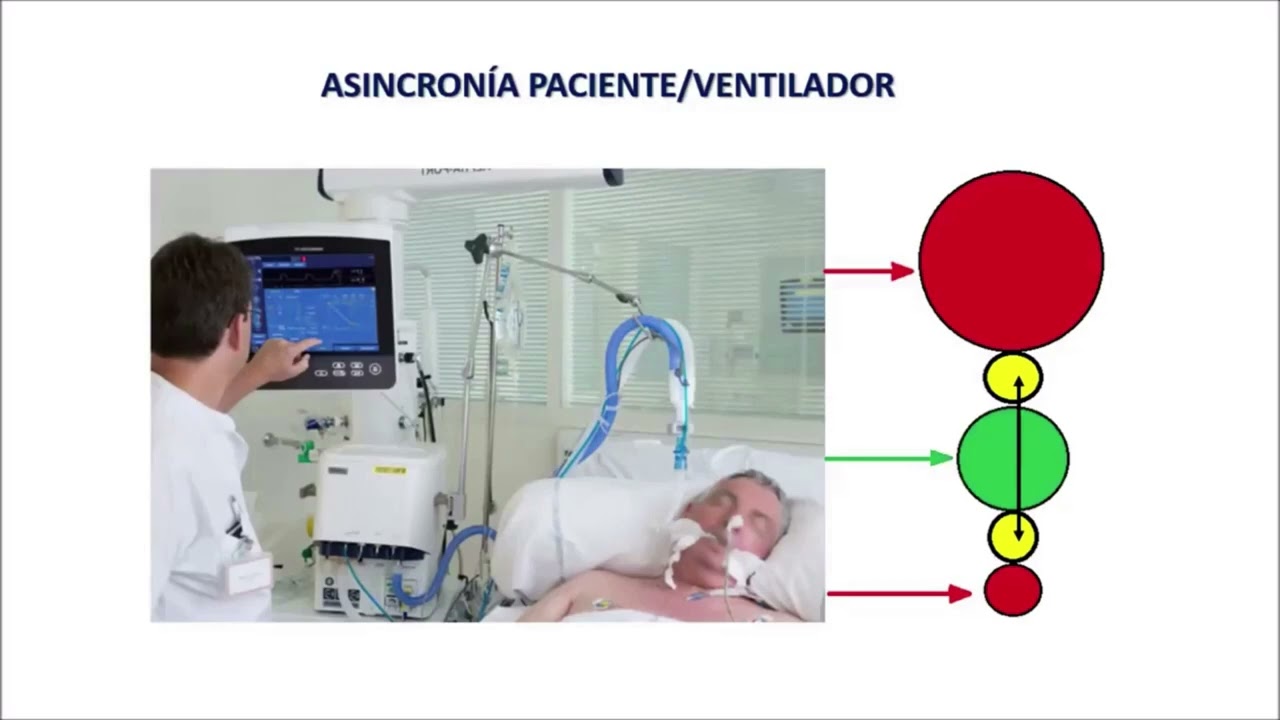




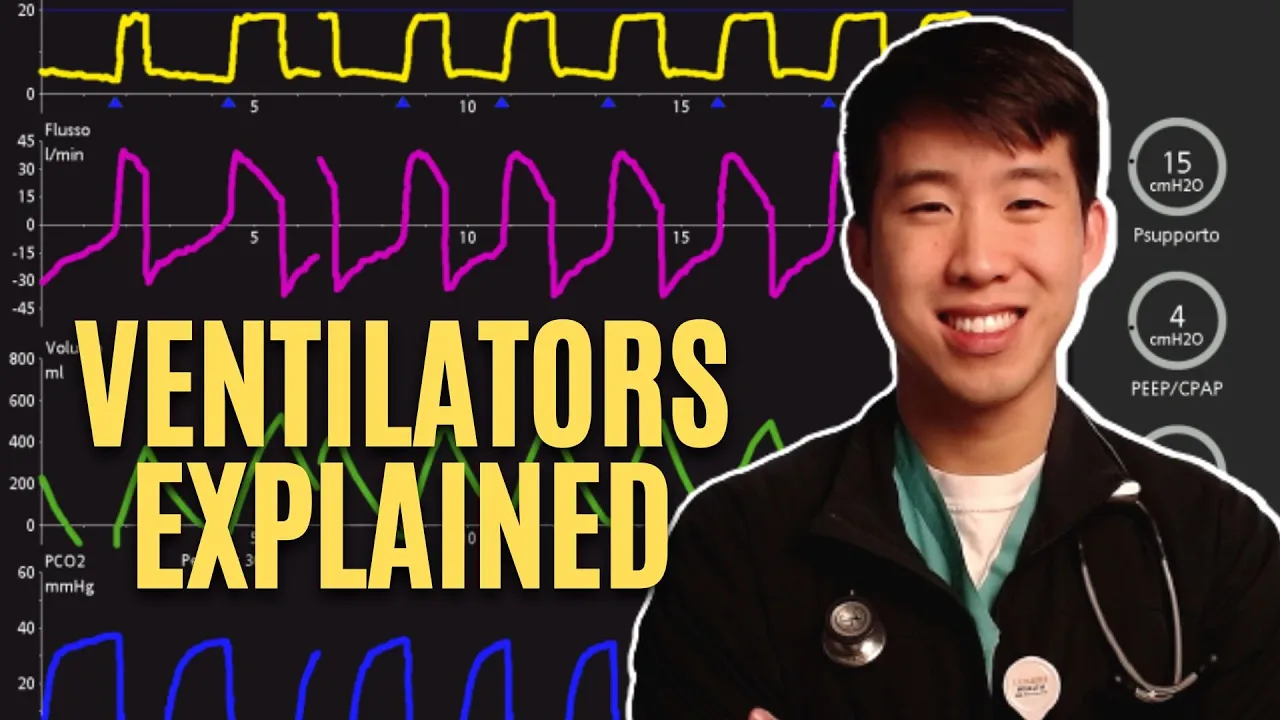


Patient-ventilator asynchrony refers to the mismatch between a patient's respiratory needs and the ventilator's assistance, which can be classified into three main categories: trigger asynchrony (including delayed triggering, ineffective triggering, auto-triggering, and reverse triggering), flow asynchrony (characterized by inadequate flow causing scooping or double-hump patterns on the pressure-time scalar), and cycle asynchrony (comprising premature cycling and delayed cycling). These asynchronies manifest clinically as increased work of breathing, agitation, tachycardia, desaturation, decreased sleep, prolonged ventilation duration, and extended hospital stay. Recognition through waveform analysis and timely intervention are essential for improving patient outcomes, as asynchronies are associated with poor clinical results but are correctable once identified.
Patient Ventilator Asynchrony Classification
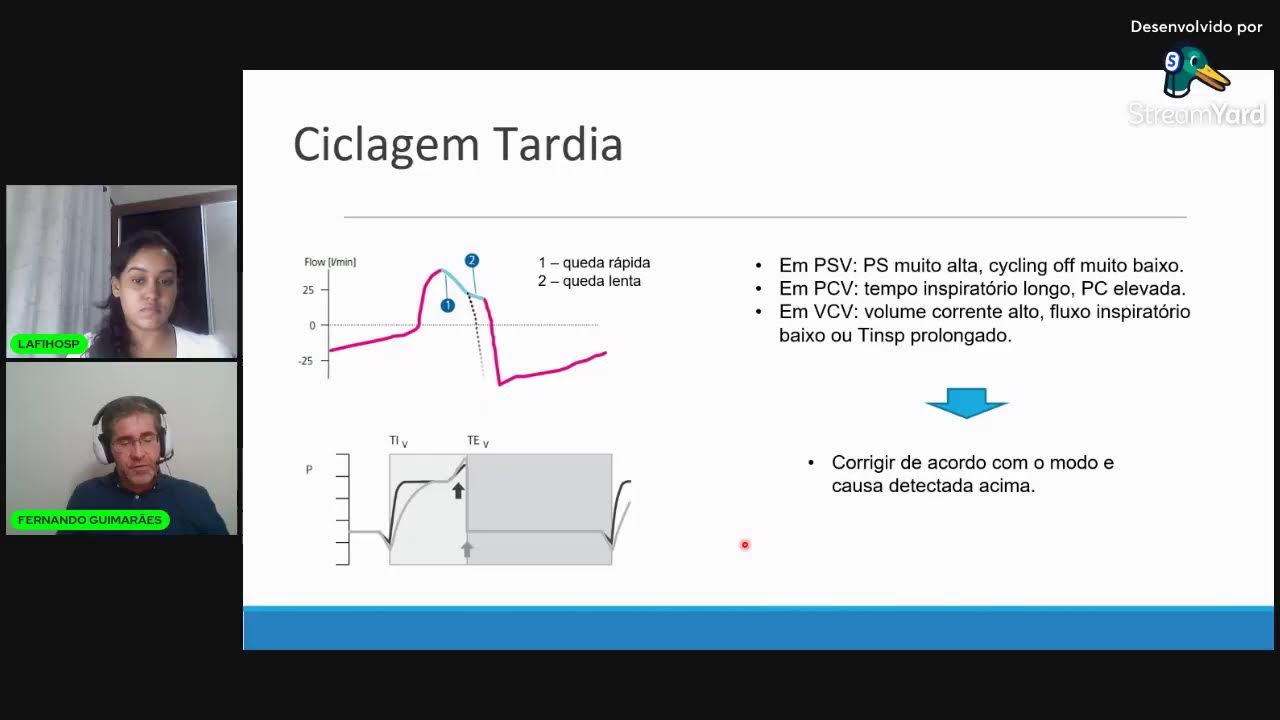
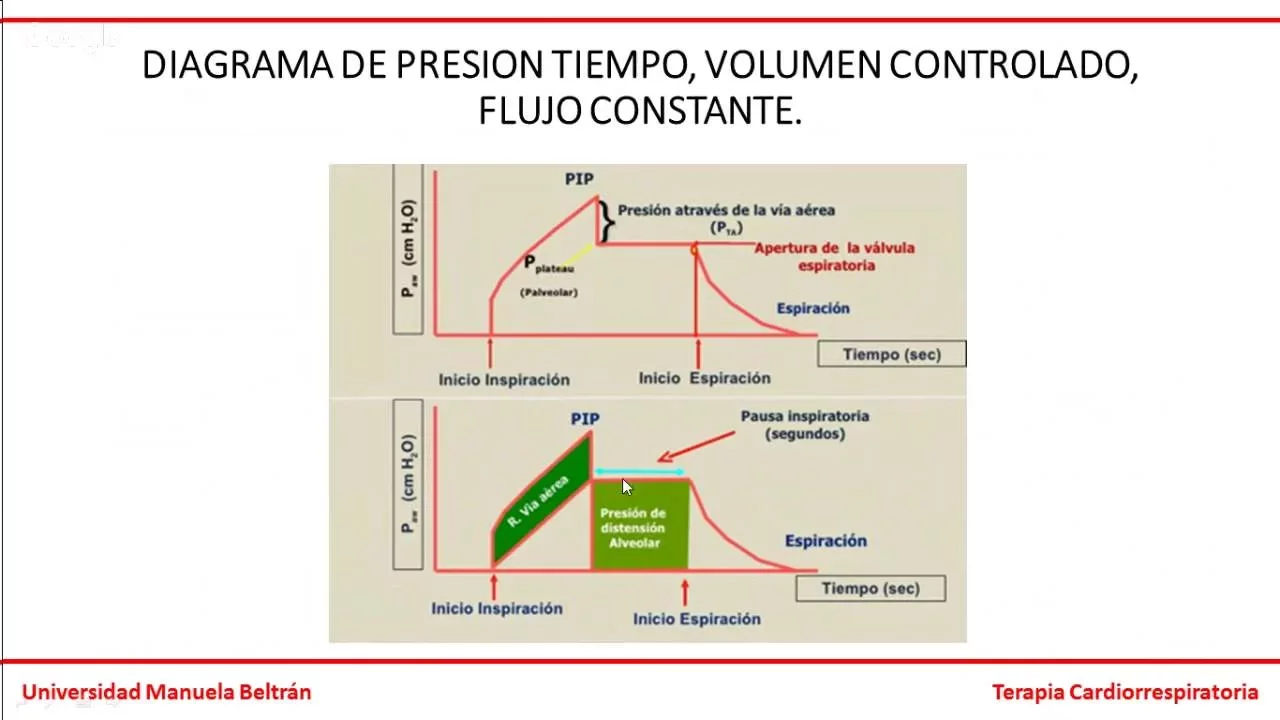
Added:[Music] patient ventilator asynchrony this is a state of mismatch between the patient's needs and the assistance delivered by the ventilator this can be related to the ventilator setting humidification or circuit connection or it may be related to the patient ventilator interaction we in our previous lectures discussed about the circuit connections and it is very important to ensure that all the components are properly set it is important to do a pre-check before connecting the patient to a ventilator this includes pressure check for tubing complaints and leak checking the flow meter or pneumotachometer calibration of the o2 cell checking the battery source checking the equipments which are accessory parts of the circuit which may include capnography inline suction and nibilizer the features of asynchrony include increased work of breathing and agitation abnormal tachycardia or tachypnea desaturation decreased sleep increased duration of ventilation and increased length of hospital stay asynchrony can be classified based on the phase in which asynchrony occurs during the phase of inspiration it can be a trigger asynchrony or a flow asynchrony trigger asynchrony can be of delay triggering ineffective triggering auto triggering or reverse triggering there can be flow asynchrony and during the phase of expiration there can be cycle asynchrony this can be premature cycling or delayed cycling so broadly there are seven types of asynchrony that one needs to recognize in the bedside before moving on to asynchronies let us quickly revise the types of breaths in a pressure control breath we know that there is variable flow and constant pressure in a volume control breath we know that the flow is kept constant and the pressure varies we will not try to understand asynchronies in each type of breath trigger asynchrony delay triggering is a common problem inherent with conventional modes of ventilation there is a delay between the patient's initiation of breath and ventilators delivery of breath here we observe that in response to the patient's effort the ventilator triggers a pressure control breath we observe that usually there is a short inspiratory time delay between the patient's effort and the ventilated breath however in certain cases this duration may get exaggerated resulting in delayed triggering in most of the modern ventilators this problem of delayed triggering does not occur ineffective triggering or mixed triggering or wasted effort is one where there is failure of patients effort to trigger a ventilator breath this is the most common type of asynchrony that is observed during ventilation here we observe that in this pressure control mode of ventilation where there is episodes of increased flow or decrease in pressure but are not sufficient enough to trigger a breath these results in ineffective ventilation triggers one can also notice that the esophageal pressure that accompanies these ineffective triggers are lower when compared to normal pressures the same has been depicted in volume control mode of ventilation ineffective trigger commonly occurs due to an inappropriate trigger setting decreased respiratory drive muscle weakness and auto peak in this case it is important to lower the trigger threshold appropriate for the condition and appropriate for the age we can adjust oxidation correct autopip by measures such as bronchodilator and adequate correction of electrolyte and nutrition is very important in cases where ineffective trigger does not respond to corrections newer modes of ventilation like nava may be tried auto triggering occurs when signals other than patient's effort triggers a ventilator breath here we observe that in this pressure control mode of ventilation after the first breath which is patient triggered there are three consecutive breaths which are not triggered by the patient then there is a patient triggered breath followed by auto triggered breaths notice that the esophageal pressure changes are evident only in the first and fourth breath the rest three breaths are auto triggered breaths we can observe a similar finding in the volume control mode of ventilation as well auto triggering commonly occurs due to a circuit leak condensate in the circuit cardiac oscillations and during nebulizer treatment it is important to identify the cause of an auto trigger be it leak or condensate and correct them sometimes inappropriate triggers may also lead on to auto triggering which may require increase in triggered setting reverse triggering is a type of trigger asynchrony that is incompletely understood but increasingly recognized the ventilator insufflation during passive lung inflation triggers diaphragmatic contraction at the end of inspiration the first breath in a reverse triggering event is a ventilator program breath and not triggered by the patient let us see the graphics in this pressure control mode of ventilation here we observe that in the first breath there is a pressure trigger followed by an inspiratory effort during the next breath cycle one can observe that at the end of inspiration diaphragmatic contraction occurs resulting in scooping of the flow loop towards the baseline and a slight increase in pressure one should be very careful to note that the first breath is not patient initiated but ventilator triggered in extreme cases when the flow loop reaches beyond the baseline and triggers a breath it can result in something similar to double triggering it is important to note that the first breath is ventilator initiated and not patient initiated this is an important point to differentiate double triggering due to premature cycling the possible reasons which can be identified for reverse triggering include over sedation and over distension the stretch receptors cause a herringbone reflex resulting in reverse triggering many cases we may need to reduce the sedation and initiate patient triggered breaths in order to reduce reverse triggering more studies are needed in order to ascertain the exact cause of reverse triggering and modalities to reduce them flow asynchrony flow asynchrony is one where there is inadequate flow the flow rate is too low to meet the patient's respiratory demand in this volume control breath one can observe a typical scooping of the inspiratory limb of the pressure time scalar when the flow is inadequate in conditions when there is higher inadequacy one can also see a typical double hump appearance of the pressure time scalar based on the severity of deflection of the inspiratory limb towards the baseline we can classify flow asynchrony as mild where there is less than 50 percent fall and moderate when there is more than 50 percent fall and severe if the inspiratory limb falls below the baseline inadequate flow commonly results from high ventilatory demand in settings of ards or a low ventilator setting such as inappropriately low flow rate or tidal volume or p ramp increase in flow rate or increase in tidal volume to suit patients ventilatory demand a change to pressure control mode of ventilation which delivers variable flow may help these patients finally analgesia is an important component to reduced flow asynchrony parallels of the patient should be the last resort after correcting flows and tidal volumes cycle asynchrony this can be premature cycling or delayed cycling premature cycling occurs when ventilator ti is too short relative to patients inspiratory time patients inspiratory efforts continue into the expiratory phase of the ventilator breath let us try to understand premature cycling based on three breath cycles the first cycle is a normal cycle where at the end of the inspiration the pressure drops the flow switches on to expiratory the tidal volume starts to decrease and the esophageal pressure starts to decline towards baseline in the second breath cycle one can observe that during the phase of expiration in the esophageal pressure the patient continues to inspire this will result in an upward stroke in the expiratory phase of the flow time scala you can also notice a small hump in the pressure time scalar these are suggestive that the patient's neural inspiratory time is higher than what they set in the ventilator thus he continues to inspire during the phase of expiration in severe forms where the patient continues to inspire more and reaches a trigger threshold he may trigger a breath this will result in double triggering it is important to note that both these breaths are initiated by the patient though classically described as double triggering it is actually the result of premature cycling thus in order to overcome premature cycling in volume control mode of ventilation increase in tidal volumes can result in increase in ti in pressure control mode or ventilation one can directly increase inspiratory time and in pressure support lowering of cycle threshold or increasing the pressure support or slower rise time can help reduce premature cycling delayed cycling results when ventilator inspiratory time is too long relative to patients inspiratory time the ventilator continues inspiration when actually expiration has started this can be overcome by decreasing pi in pressure controlled ventilation decreasing tidal volumes in volume control ventilation and by increasing the cycling threshold in pressure support mode of ventilation in this pressure control breath one can observe that at the phase of end of inspiration a typical beaking that occurs in the pressure time scalar this results from the ventilator delivering a breath when the patient has actually started exhalation in pressure support mode of ventilation one can observe that in the first breath cycle the cycling threshold is inappropriately low hence the ventilator continues to give support when the patient has actually begun expiration in the second breath cycle we can observe that by increasing the cycling threshold to a higher value we can see reduction in asynchrony in the third breath cycle by further reduction in cycling threshold to an appropriate level based on esophageal pressures and flow time scalar we can observe that the cycling asynchrony completely disappears in many modern ventilators where waveform assisted cycling is possible the incidence of cycling asynchrony has come down in summary asynchronies are common during ventilation and are associated with poor outcomes it is important to recognize them by paying close attention to the graphics they are easy to correct if identified correctly and attended to in a timely manner if you like these videos please subscribe us at little criticals for latest updates you
Up Next
Setting the Ventilator Right | Mechanical Ventilation Principles | CPD Programme
@anaesthesiacollege9292
473 views•2026-04-02

Graphic Medicine: Comics for Collaborative Healthcare Communication
@nationalpatientadvocate
189 views•2023-12-04

Neuroanatomy: Central and Peripheral Nervous System Divisions Explained
@AKLECTURES
136.2K views•2014-09-20
Stages of Labor and Vaginal Birth | Childbirth Animation
@nucleusmedicalmedia
52.1M views•2017-08-18
Related Study Plans & Knowledge Roadmaps
Structured learning paths in Medicine