
















The Silver Tsunami, also known as the Gray Tsunami, refers to the massive wave of baby boomers (70-80 million in the US, born between mid-1940s and early-to-mid 1960s) entering retirement age, which will cause older people to outnumber children in the US for the first time in history by 2030; this demographic shift requires addressing increased healthcare needs (heart disease, dementia, cancer), caregiving infrastructure, and economic planning, while also recognizing that older adults remain productive workers whose contributions should be valued.
The Silver Tsunami: America's Aging Workforce Explained
Added:Demographic concepts, particularly the definition of the 'Baby Boomer' generation and the phases of demographic transition.
Basic principles of labor economics, including labor supply, labor demand, and labor force participation rates.
The concept of the Dependency Ratio and how it affects the balance between the working-age population and retirees.
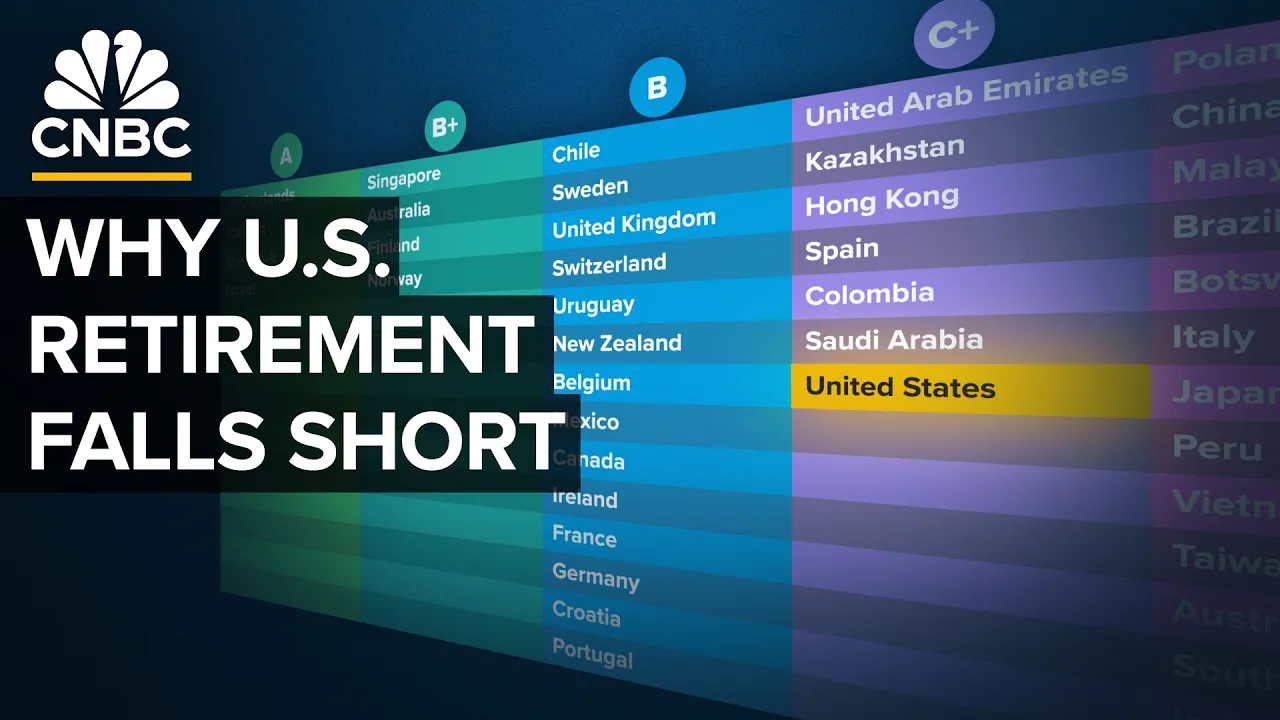
Fundamental understanding of national retirement structures, such as Social Security and defined-benefit versus defined-contribution pensions.
Public policy reform models, such as adjusting statutory retirement ages, tax incentives, and immigration policies to bolster the labor force.
Corporate human resource strategies for aging workforces, including phased retirement, ergonomic adjustments, and intergenerational knowledge-transfer programs.
The macroeconomic impacts on healthcare systems, specifically addressing Medicare solvency and the growth of the 'Silver Economy'.
The role of automation, artificial intelligence, and technological integration in mitigating labor shortages caused by mass retirements.
337.8K views9.4Klikes4:31Original Release: 2018-11-15
This video was made possible by our friends over at hollywood health and society who sponsored this video.
Hey there!
Welcome to Life Noggin.
oh!
Thanks for the avocado, and all these avocados.
Why are there so many avocados!?
News reporter Blocko here.
I usually don’t dress up this nicely, but I really needed to tell you about this big thing that’s about to hit your world.
It’s called the Silver Tsunami.
No, it’s not some big tidal wave from the ocean… it has to do with a wave of /people/.
More specifically, /older/ people.
Oh no!
Look out, everyone!
It’s old people!
Ahhh!
Joking aside, the Silver Tsunami, also known as the Gray Tsunami, is all about the aging population, especially in the workforce.
Grandma here is what you would call a “baby boomer”.
A baby boomer is a term that people use to define a person that was born in the years closely following World War II, which was a time where we saw a temporary increase in birth rate.
The baby boomer window varies a bit depending on who you’re asking, but generally includes people born between the mid 1940’s and ends around the early-to-mid 1960’s.
Recent estimates put around 70-80 million baby boomers in the US alone; that’s a lot of people!
And this Silver Tsunami that we’re talking about has a lot to do with those baby boomers.
According to the U.S. Census Bureau's 2017 National Population Projections, older people are projected to outnumber children in just a couple of decades, which would be the the first time in U.S. history.
By 2030, every baby boomer will be over 65, expanding the size of the older population so that 1 in every 5 people will be around the typical age to retire.
Similar things are happening at other places around the world, including Japan, where a recent UN report put around /a third/ of the population as being 60 or older.
And this rising percentage of older citizens is certainly going to affect our world.
The more senior citizens you have, the more you’ll need to focus on long-term healthcare plans, caregiving, infrastructure, or things like accessibility, and since we you have to fund those initiatives, they come with a cost.
They can’t all be funded by Grandma Blocko’s hand-made sweaters, But it’s super important that we address all of this because healthcare for our older pals really matters.
Rates of heart disease, dementia, and cancer all increase as we age and require unique healthcare needs.
The National Institute of Cancer has estimated that the overall number of cancer survivors in the U.S. will continue to grow substantially, mostly with people 65 or older.
So if more people are living longer, then we’re going to need to address these growing issues.
So what can we do about any of this?
Well, we gotta get a little creative.
Literally!
That’s the vision of EngAGE, a nonprofit that’s trying to change the way people think about aging, and it’s doing that by changing the very way that our older friends live.
Rather than go the more traditional route of typical senior homes, EngAGE tries to create a more wholesome and enriching experience by transforming affordable senior and multigenerational housing communities into vibrant centers of learning, wellness, and creativity.
Their classes and programs range everywhere from photography and creative writing, to tai chi and even dancing!
Go Grandma, it’s your birthday!
It's actually your birthday.
I don't know if you remember, Grandma, but I got you a present!
In Japan, they’re a bit more tech-minded and looking into using things like robots to help assist with caring for their senior citizens.
And let’s be real — we all hope to be older one day, so whatever we do to help older generations now will just help others in the future, and who knows?
There might be another tsunami one day, made of millennials!
So we all really should be trying to help, even just in lending our support, because older people are also super important and productive.
And in fact, a 2016 study that looked at the relation between a worker’s age and their productivity on assembly lines suggested that a person’s productivity doesn’t decline as they age, at least until age 60.
See Grandma!
You’re awesome.
And to all my other friends out there, no matter how old you are, you’re super important to bettering this world and making it a great place to live!
Grandma, I cannot eat another oatmeal raisin cookie.
I'm not hungr- I'm not.
Okay.
I love you so much.
They're great oatmeal cookies Grandma.
Thank you.
Thank you so much to our friends over at Hollywood Health and Society for sponsoring this video!
To find out more about what they do, and see how you can help their great causes, click the link in the description.
As always, my name is Blocko, this has been Life Noggin, don't forget to keep on thinking!
Up Next

54:59
Population Aging: Trends, Causes, and Policy Responses
@sungo12
164 views•2016-05-11

12:54
Triumph of Orthodoxy Icon: Byzantine Art & History Explained
@BenCallan
2.1K views•2024-08-06

9:49
FastAPI vs Flask vs Django: Choosing the Right Python Web Framework
@TechWithTim
302.5K views•2024-05-26

1:42
Game of Thrones Opening Credits: A Cinematic Analysis
@gameofthrones
46.3M views•2011-04-18
Related Study Plans & Knowledge Roadmaps
Structured learning paths in General & Interdisciplinary Studies
general-studies
Elevator Engineering: History, Physics & Cities
01From Hoists to Safety Brakes: The Dawn of Vertical Lift
02Hydraulic vs. Traction: The Engineering Physics of Elevators
03Modern Speed, Safety, and Algorithms
+ 2 more learning modules
12h5 modules
Explore Roadmap
general-studies
Rubber: Material Science, History & Geopolitics
01Origins of Natural Rubber & Mesoamerican History
02The Chemistry of Natural Rubber & Vulcanization
03The Geopolitics of the Rubber Boom & Colonization
+ 2 more learning modules
12h5 modules
Explore Roadmap
general-studies
Containerization: Evolution, Logistics & Trade
01Ancient Trade & Bulk Cargo: Amphorae to Barrels
02The Industrial Revolution & Cardboard Packaging
03The Containerization Revolution: Malcom McLean
+ 2 more learning modules
12h5 modules
Explore Roadmap
general-studies
Textile Tech: Evolution, Labor & Global Impact
01Pre-Industrial Textiles: Handloom & Cottage Industry
02Mechanization: The Spinning Jenny to the Power Loom
03The Factory System & Global Labor Transformation
+ 2 more learning modules
10h5 modules
Explore Roadmap