Cyclic voltammetry is an electrochemical technique that measures current-potential relationships by cycling the potential of a working electrode while monitoring the resulting current; the experiment requires a three-electrode system consisting of a reference electrode (silver/silver chloride for aqueous solutions), a counter electrode (platinum wire), and a working electrode (platinum solid), with KCl serving as the supporting electrolyte to ensure ionic conductivity and enable reversible redox reactions at the electrode surface.
Cyclic Voltammetry of Ferricyanide with KCl Electrolyte
Added:Deep Dive
Fundamental principles of redox (reduction-oxidation) reactions and electron transfer processes.
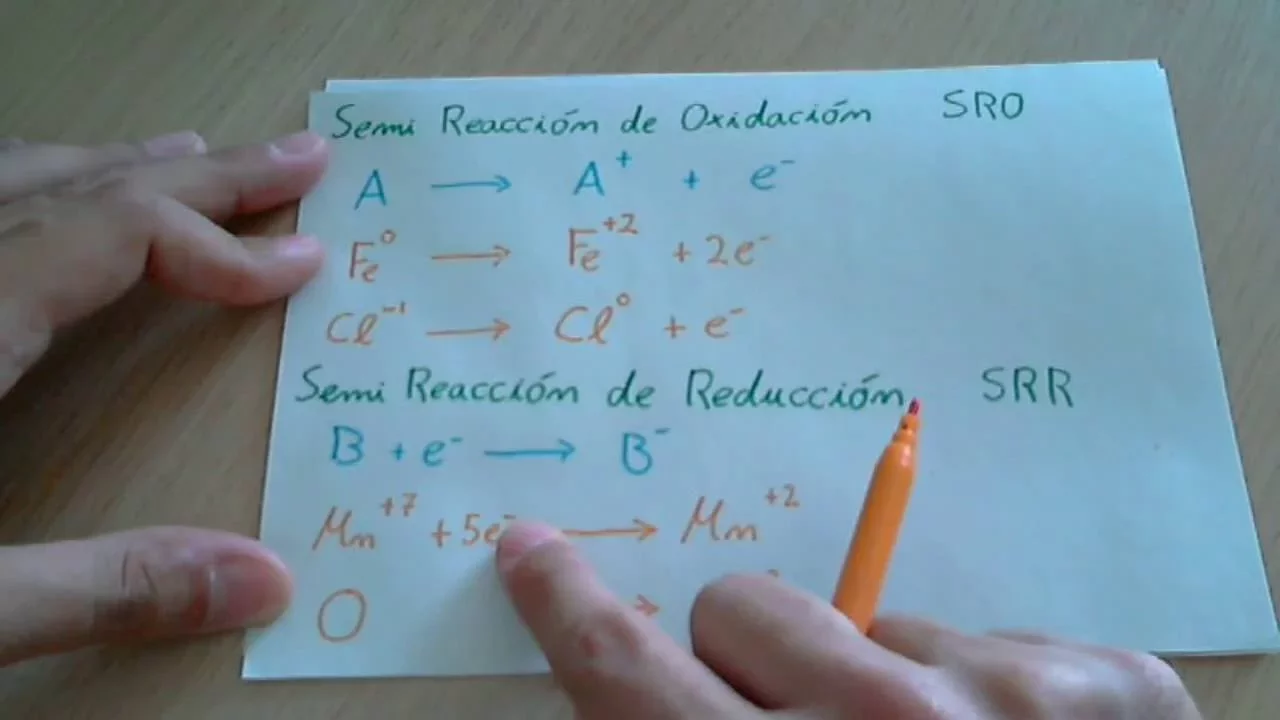
Concepto de reacción redox (oxidación-reducción) o de transferencia de electrones
197.6K
Redox (oxidation-reduction) reactions involve electron transfer between reactants. The reducing agent loses electrons (oxidation) while the oxidizing agent gains electrons (reduction). These processes are reciprocal: what one substance loses, another gains. Understanding these fundamental concepts is essential for analyzing chemical reactions where electron transfer occurs.
Click to watch →

Electron transfer concept of Oxidation and Reduction:: Redox Reactions :: Part 1
19.1K
In redox reactions, oxidation is defined as the loss of electrons by a chemical species, while reduction is defined as the gain of electrons by another species; these processes always occur simultaneously as electron transfer from one species to another, with the species losing electrons undergoing oxidation and the species gaining electrons undergoing reduction.
Click to watch →
Oxidation and Reduction
6.9K
Redox reactions involve the transfer of electrons between substances. Oxidation is defined as the loss of electrons or gain of oxygen, while reduction is the gain of electrons or loss of oxygen. The mnemonic OIL RIG helps remember: Oxidation Is Loss, Reduction Is Gain. For oxidation reactions to occur, an oxidizing agent is needed; for reduction, a reducing reagent is required. These fundamental concepts form the basis for understanding electron transfer processes in chemistry.
Click to watch →

Equilibria Questions and More | O Levels IGCSE Chemistry
2.3K
Redox (reduction-oxidation) reactions involve simultaneous electron transfer between species. Oxidation is the loss of electrons, while reduction is the gain of electrons. These processes cannot occur independently—electrons lost by one species must be gained by another. Redox reactions underpin fundamental processes including combustion, cellular respiration, and corrosion. Understanding electron flow is essential for analyzing these reactions and predicting their outcomes.
Click to watch →

এক ক্লাসেই Basic to Pro রাসায়নিক বিক্রিয়া পার্ট ০2 | নবম দশম শ্রেণি।। রসায়ন। Asik, DU
2.8K
Redox reactions are fundamentally electron transfer processes. In a redox reaction, one substance loses electrons (oxidation) while another gains electrons (reduction). The oxidizing agent gains electrons and gets reduced, while the reducing agent loses electrons and gets oxidized. Redox reactions always occur simultaneously - oxidation cannot happen without reduction.
Click to watch →
Deep Dive
The Nernst equation and its application in relating electrode potential to chemical concentrations.

💥Plustwo Chemistry Important laws and equations💯 | Plustwo chemistry #plustwo
38.3K
The Nernst equation describes the relationship between electrode potential and ionic concentration of an electrolyte. The equation is: E = E° + (RT/nF) × ln([M]/[M]), where E is the electrode potential, E° is the standard electrode potential, R is the gas constant, T is the temperature, n is the number of electrons transferred, F is Faraday's constant, and [M] represents the concentration of the metal ion. The equation shows that electrode potential changes with the concentration of ions in solution.
Click to watch →

Plus Two Chemistry Public Exam | Electrochemistry | Eduport Plus Two
206.4K
Electrode potential is the tendency of an electrode to lose or gain electrons. Standard electrode potential (E°) is measured at unit concentration and standard conditions (298 K, 1 atm). The Nernst equation relates electrode potential to concentration: E = E° - (0.059/n) × log([M]/[M⁺⁺]) at 298 K. For Daniel Cell: E_cell = E°_cell - (0.059/2) × log([Zn²⁺]/[Cu²⁺]). This equation shows how electrode potential changes with concentration and is essential for non-standard conditions.
Click to watch →

Nernst equation || Electro Chemistry- ||
45.8K
Electrode potential is the measure of the tendency of a chemical species to acquire electrons and be reduced. The Nernst equation relates the electrode potential to the concentration of ions in solution, temperature, and the number of electrons transferred in the reaction. The equation is: E = E° - (RT/nF) × ln(Q), where E is the electrode potential, E° is the standard electrode potential, R is the gas constant, T is temperature, n is the number of electrons, F is Faraday's constant, and Q is the reaction quotient. This equation allows calculation of electrode potentials under non-standard conditions.
Click to watch →

Plus Two Chemistry | Sure Questions | Electrochemistry | Eduport Plus Two
104.7K
The Nernst equation relates electrode potential to concentration: E = E° - (0.059/n) × log([M]/[M⁺]). For the Daniel Cell, this equation is applied to both electrodes. The standard electrode potential (E°) is subtracted by a term involving the natural logarithm of the ratio of metal ion concentration to metal concentration, scaled by the factor 0.059/n where n is the number of electrons transferred.
Click to watch →

CLASS 12 CBSE - Chemistry - Electrochemistry | Xylem CBSE 11 & 12
115.7K
The Nernst equation establishes the relationship between electrode potential and electrolyte concentration. The equation is: E = E° - (RT/nF) × ln(1/[M⁺ⁿ]), where E is the electrode potential, E° is the standard electrode potential, R is the gas constant, T is temperature, n is the number of electrons transferred, F is Faraday's constant, and [M⁺ⁿ] is the concentration of the metal ion. This equation shows how electrode potential changes with concentration.
Click to watch →
Deep Dive
Basic mass transport mechanisms in electrochemistry, specifically the differences between diffusion, migration, and convection.

Episode #74: This is why concentration gradients don't cause diffusion
271
Mass transport in electrochemical systems occurs through three primary mechanisms: diffusion (random molecular motion), migration (movement under electric field influence), and convection (bulk fluid flow). Diffusion follows Fick's laws and is modeled computationally using finite difference methods that simulate random walk behavior at the electrode surface. Migration becomes significant when charged species experience electric fields, particularly when supporting electrolyte concentration is low, causing larger electric field effects. Convection dominates in flowing systems but is typically minimized in stationary electrode experiments. The Butler-Volmer equation describes electron transfer kinetics at the electrode surface, relating current density to the difference in concentrations of oxidized and reduced species. Computational simulation tools like Aftermath Live enable visualization of concentration profiles during cyclic voltammetry experiments, showing how diffusion-controlled processes develop over time.
Click to watch →

Abruna Electrochemistry Crash Course Day 1
4.3K
Three primary mechanisms transport species to electrodes: (1) Diffusion under concentration gradient influence (J_diff = -D × ∂C/∂x), (2) Convection/hydrodynamics from rotating electrodes or stirring, and (3) Migration under electric field influence. The Nernst-Planck equation combines these: J_total = J_diff + J_conv + J_mig. Supporting electrolytes (100-1000x concentration of redox species) mitigate migration effects by providing excess ions.
Click to watch →

(Teknik Elektrokimia) Perpindahan (bag. 1)
191
Mass transport in electrochemical systems occurs through three fundamental mechanisms: (1) Diffusion - driven by concentration gradients, where species move from high to low concentration regions according to Fick's laws; (2) Convection - driven by bulk fluid motion, which can be natural (due to density differences) or forced (due to stirring or flow); (3) Migration - driven by electric fields, where charged species (ions) move in response to the electric field. Cations move toward the cathode (negative electrode) and anions move toward the anode (positive electrode).
Click to watch →

Part-3. Voltammetry || Modes of mass transfer ( Diffusion, migration, convection)
30.4K
In electrochemical systems, mass transfer occurs through three distinct mechanisms: diffusion, migration, and convection. Diffusion is the spontaneous movement of ions from areas of higher concentration to lower concentration, driven by random molecular motion. Migration involves the directed movement of charged ions in response to an applied electric field, with cations moving toward the cathode and anions toward the anode. The rate of migration depends directly on the applied voltage. Convection refers to bulk fluid movement caused by mechanical forces such as stirring or external agitation. Among these, diffusion is the most important mode in analytical electrochemistry because it provides a predictable, controllable mechanism for mass transport without requiring external electrical inputs or mechanical intervention.
Click to watch →

5 Mass transport (*diffusion, Fick's laws, Cottrell equation, Nernst diffusion layer)
5.3K
In electrochemical systems, mass transport occurs through three primary mechanisms: diffusion (movement from high to low concentration, governed by Fick's laws with current inversely proportional to √t in diffusion-controlled processes), convection (fluid motion caused by density or temperature differences or external forces like rotating electrodes), and migration (movement of charged species in electric fields, screened by ionic strength via the Debye length). The Nernst diffusion layer concept defines a finite boundary where concentration transitions from zero at the electrode to bulk value, enabling evaluation of diffusion rates through the mass transport coefficient k = D/δ.
Click to watch →
Deep Dive
The role and purpose of a supporting electrolyte (such as KCl) in minimizing migration currents and increasing solution conductivity.

IOCL Junior Executive (Quality Control Analyst) | Analytical Chemistry Full Course | Er. Saurabh Sir
1.3K
In electroanalytical solutions, two main components are present: (1) Analyte - the substance being analyzed that undergoes reduction/oxidation, and (2) Supporting electrolyte - an inert electrolyte added to the solution. The supporting electrolyte (such as KCl, KNO3, or HCl) is used in concentrations 100 times greater than the analyte concentration (10⁻² to 10⁻⁵ M). The supporting electrolyte increases conductivity and ionic strength of the solution, reduces migration current, and improves measurement accuracy. The supporting electrolyte must be non-reactive and should not interfere with the analyte's electrochemical behavior.
Click to watch →

Analytical Chemistry Lect-06 By Sonia Ma'am | Free Youtube Series | CSIR NET Chemical Science
2.8K
Supporting electrolyte (e.g., KClO3) is added in excess (50-100 times analyte concentration) to eliminate migration current caused by ion movement from bulk solution to electrode. This prevents unpredictable additional current that interferes with analysis. Gas purging with nitrogen or hydrogen removes dissolved oxygen, which would otherwise produce interfering reduction peaks. The supporting electrolyte also increases solution conductivity and ionic strength, ensuring accurate electrochemical measurements.
Click to watch →

Polarography part 3| factors affecting polarographic wave
1K
Migration current describes the movement of electroactive species toward the dropping mercury electrode under two mechanisms: electrostatic attraction and concentration gradients. Positively charged ions are attracted to the negatively charged mercury electrode through electrostatic forces, while concentration gradients drive ions from higher to lower concentration regions. In proper polarographic analysis, only concentration-driven migration should contribute to current. Large quantities of inert supporting electrolyte (such as KCl) eliminate unwanted electrostatic migration by carrying almost all current and shortening the potential gradient near the electrode. A supporting electrolyte is defined as an inert electrolyte that does not react with the substance under study within the applied potential range. KCl serves as the optimal supporting electrolyte because potassium ions are reduced only at very high potentials, preventing interference with test substances and ensuring accurate polarographic measurements.
Click to watch →

Cyclic Voltammetry- Experimental Section.
475
A supporting electrolyte (inert/inactive electrolyte) contains non-electroactive species within the experimental potential range. Its critical functions include reducing ohmic drop for accurate measurements, modifying electrode-electrolyte interfaces by minimizing double layer size, increasing solution conductivity, eliminating electroactive species transport through ion migration, maintaining constant ionic strength, and stabilizing pH. Classification includes inorganic salts (KCl, Na2SO4), inorganic acids, buffer systems (acetate, phosphate, citrate), and organic solvents. Common anions are halides (Cl-, BF4-, PF6-) and cations are alkali metals. However, excessive concentration can impact biological systems, destabilize double layers, and introduce contamination from impurities.
Click to watch →

شیمی تجزیه (2)-کارشناسی-قسمت 26
170
A supporting electrolyte (inert salt like KCl) is added to prevent migration effects where charged species move toward the electrode due to electrostatic forces. This ensures only diffusion-controlled transport of the analyte occurs. The electrochemical cell requires three electrodes: working electrode (where the main reaction occurs), counter electrode (completes the circuit), and reference electrode (provides stable reference potential). The counter electrode has large surface area to minimize current density and prevent polarization. The potentiostat controls the working electrode potential relative to the reference electrode while measuring current between working and counter electrodes.
Click to watch →
Prerequisite Knowledge
- Concept 01Fundamental principles of redox (reduction-oxidation) reactions and electron transfer processes.
- Concept 02The Nernst equation and its application in relating electrode potential to chemical concentrations.
- Concept 03Basic mass transport mechanisms in electrochemistry, specifically the differences between diffusion, migration, and convection.
- Concept 04The role and purpose of a supporting electrolyte (such as KCl) in minimizing migration currents and increasing solution conductivity.
Subsequent Learning
- Step 01Quantitative analysis of voltammograms using the Randles-Sevcik equation to calculate diffusion coefficients or electrode surface area.
- Step 02Evaluating electrochemical reversibility by analyzing peak-to-peak potential separation (Delta Ep) and peak current ratios.
- Step 03Exploring non-trivial reaction mechanisms, such as coupled chemical reactions (EC mechanisms) occurring after electron transfer.
- Step 04Real-world applications of redox probes, including the characterization of chemically modified electrodes and the design of electrochemical biosensors.
Setup Basics
Electrode Roles
Run Experiment
Setup Basics
0:04Playing Section
- 1
Introduces cyclic voltammetry fundamentals and ferric/ferrous system.
- 2
Details potentiostat and three-electrode configuration specifics.
The Non-Ideal Reality of the Ferricyanide Redox Benchmark
While the ferricyanide/ferrocyanide couple in KCl is traditionally taught as the textbook example of an ideal, surface-insensitive, outer-sphere electron transfer reaction, modern electrochemistry challenges this assumption. Research shows that ferricyanide's electron-transfer kinetics are actually highly sensitive to electrode surface states (particularly surface oxides and impurities on carbon electrodes) and specific interactions with the supporting electrolyte's alkali metal cations (such as K+ vs. Na+). It behaves more like an inner-sphere reaction pathway than a true outer-sphere one. Relying on this system as a universal educational baseline can foster misconceptions about ideal reversibility and electrode-electrolyte interfaces. Consequently, many electrochemists argue that truly outer-sphere species, such as ruthenium hexammine [Ru(NH3)6]3+/2+, serve as far better and more robust benchmarks for teaching fundamental cyclic voltammetry without the confounding variables of surface chemistry.
Deep Dive
Quantitative analysis of voltammograms using the Randles-Sevcik equation to calculate diffusion coefficients or electrode surface area.
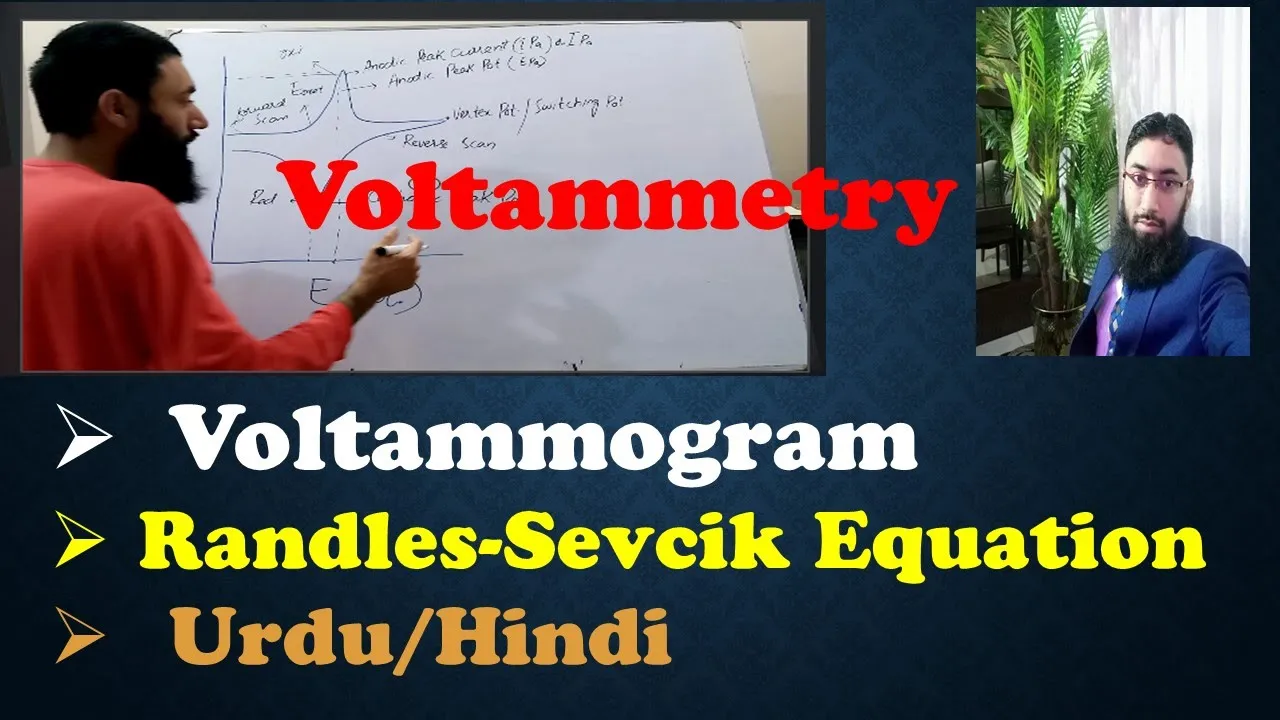
Voltammetry|Electrochemistry|Analytical Chemistry|Cyclic Voltammogram|Randles Sevcik|Hindi|Saad
24.6K
Cyclic voltammetry is an electrochemical technique that studies current-voltage relationships at a working electrode by applying a varying potential and measuring the resulting current, producing a cyclic voltammogram with oxidation and reduction peaks. The Randles-Sevcik equation (Ip = 2.69 × 10^5 × n^(3/2) × A × D^(1/2) × C × v^(1/2)) describes how peak current depends on scan rate, electrode area, diffusion coefficient, and analyte concentration, allowing calculation of unknown parameters when others are known.
Click to watch →

Cyclic Voltammetry: Interpretation of Simple Cyclic Voltammogram
69K
For diffusion-controlled electrochemical reactions, the peak current follows the Randles-Sevcik equation: i_p = 2.69 × 10^5 × n^(3/2) × A × D^(1/2) × C × v^(1/2). To confirm diffusion control, plot peak current versus the square root of scan rate; a linear relationship confirms that diffusion is the rate-determining step. This analysis allows determination of kinetic parameters including the diffusion coefficient. The relationship between peak current and scan rate provides quantitative information about mass transport limitations in electrochemical systems.
Click to watch →

Episode #109: Calculating diffusion coefficients, from Randles-Sevcik to EIS
349
Three quantitative techniques characterize electrochemical systems: (1) Randles-Sevcik equation from cyclic voltammetry—plot peak current vs √(scan rate) to extract diffusion coefficients; (2) Warburg impedance from EIS—circuit fitting yields diffusion coefficients but requires knowing which species dominates based on potential relative to E°; (3) Tafel slope analysis—requires purely kinetic data (values >120 mV/decade for one-electron transfers suggest contamination); (4) Faradaic efficiency—integrates current-time curves, divides by Faraday's constant, and compares to theoretical moles. Each technique has assumptions and limitations requiring careful experimental design.
Click to watch →
Cyclic Voltammetry
24.2K
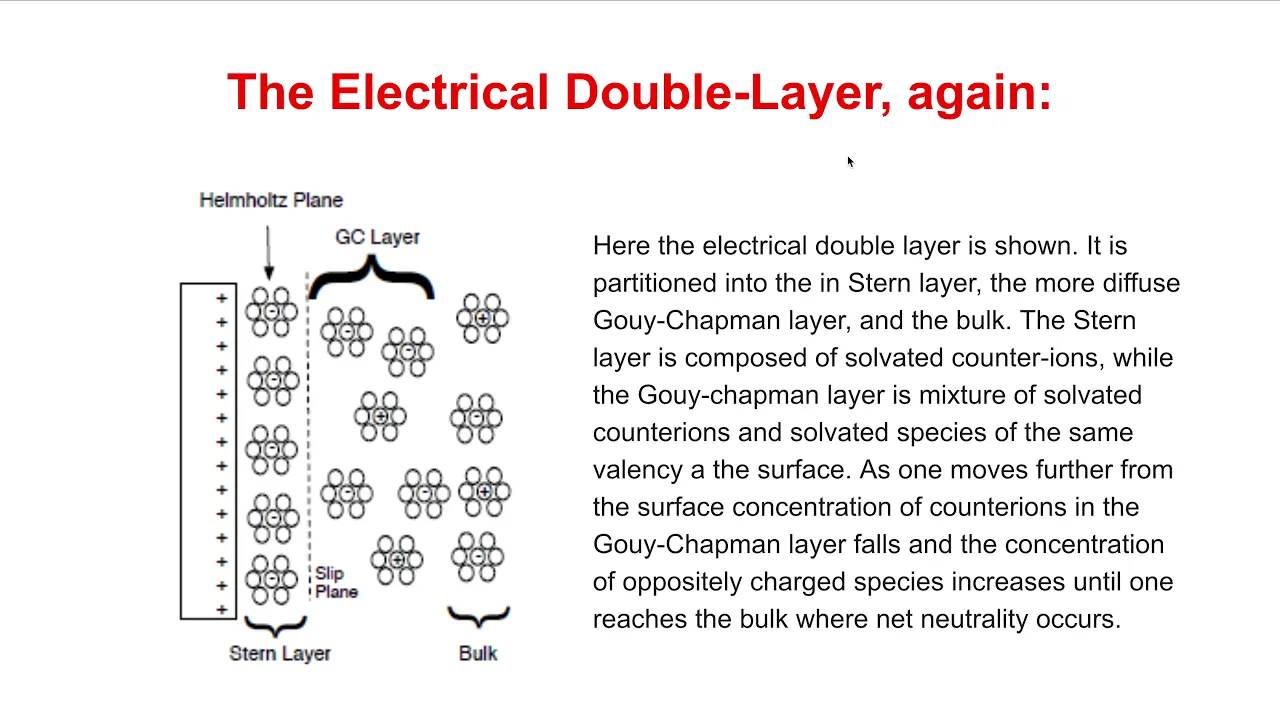
During potential sweeps, capacitive current dominates initially. When potential reaches oxidation/reduction potentials, sharp current spikes emerge from Faradaic reactions. Current decreases as species deplete near the electrode, requiring diffusion from progressively farther distances, creating a depletion layer. Higher concentrations produce proportionally larger peak currents. Reversible reactions exhibit peak-to-peak separation below 57 mV/n and equal oxidative/reductive peak currents. The Randles-Sevcik equation (ip = 296nAD^(1/2)v^(1/2)C) relates peak current to electrode area, diffusion coefficient, scan rate, and concentration. By plotting peak current against scan rate (with concentration constant), the diffusion coefficient can be determined from the slope. Alternatively, plotting against concentration (with scan rate constant) yields the concentration value.
Click to watch →

Numericals Voltammetry| Randles Sevcik Equation|Diffusion Coefficient|Numericals Problems|Hindi|Saad
6.5K
The Randles-Sevcik equation (Ip = 2.69 × 10^5 × n^(3/2) × A × C × D^(1/2) × v^(1/2)) is used to calculate the peak current in cyclic voltammetry, where n is the number of electrons, A is the electrode area, C is the concentration, D is the diffusion coefficient, and v is the scan rate. This equation allows determination of the diffusion coefficient when other parameters are known, and the units must be consistent (typically cm² for area, mol/cm³ for concentration, cm²/s for diffusion coefficient, and V/s for scan rate).
Click to watch →
Deep Dive
Evaluating electrochemical reversibility by analyzing peak-to-peak potential separation (Delta Ep) and peak current ratios.
Cyclic Voltammetry
24.2K
Cyclic voltammetry is an electrochemical technique that applies a triangular potential sweep to a three-electrode system (working, counter, and reference electrodes) to measure current responses, revealing oxidation and reduction peaks that provide information about electroactive species; the technique relies on the electrical double layer phenomenon, where capacitive current (non-Faradaic) appears as the linear baseline while Faradaic current from redox reactions produces characteristic peaks, and the reversibility of reactions can be determined by examining peak-to-peak separation and current ratios, with quantitative analysis achievable using the Randles-Sevcik equation.
Click to watch →

23_AMC - Lecture 20
175
For reversible electron transfer reactions, peak-to-peak separation (ΔEp) equals 57 mV according to the Nernst equation. The formal potential (E0') is estimated from the half-wave potential between anodic and cathodic peaks. When electron transfer kinetics are slow (quasi-reversible), ΔEp increases due to overpotential development. Faster scan rates decrease diffusion layer thickness, increasing peak current but potentially making reactions appear more irreversible.
Click to watch →

Webinar By Prof. Vijayamohanan K Pillai
358
Redox systems are classified by the dimensionless parameter λ = k√(4D/ν), where k is rate constant and ν is scan rate. Reversible systems (λ > 10² cm/s) show ΔEp = 59/n mV, ipc/ipa = 1, and ip ∝ √ν. Quasi-reversible systems (10⁻⁴ < λ < 1 cm/s) show intermediate behavior. Irreversible systems (λ < 10⁻⁴ cm/s) show large ΔEp and asymmetric peaks. For reversible systems, peak current versus √ν plots pass through origin, enabling calculation of diffusion coefficients and electron count. As rate constants decrease, peak potentials shift increasingly negative and peak widths increase, providing systematic diagnostic criteria for kinetic analysis. Three diagnostic tests confirm reversibility: peak-to-peak separation ΔEp = 59/n mV; ratio of cathodic to anodic peak currents (ipc/ipa) = 1; and peak current versus √ν plot passes through origin. These criteria must be verified at multiple scan rates to conclusively establish reversibility. The Randies-Samuels equation (ip ∝ √ν) assumes both oxidized and reduced forms are freely diffusing; deviations indicate product adsorption or surface confinement effects.
Click to watch →

Let's Speak Electrochemistry: A Conversation Series with Anantharaj Sengeni (LSEChem) | 26-Feb-2022
1.4K
Electrochemical reactions are classified based on their reversibility: Reversible reactions require peak-to-peak separation close to 59 mV (typically 70-80 mV accepted), cathodic/anodic peak current ratio equal to 1, and peak positions independent of scan rate. Quasi-reversible reactions show oxidation and reduction peaks but fail these criteria: peak-to-peak separation increases with scan rate, peak positions shift with scan rate, and current ratio never equals 1. Irreversible reactions show only one peak (no reverse reaction) because the product escapes solution, becomes highly stable, or converts to a different molecule. Scan rate studies differentiate these: lowering scan rate reveals reverse peaks for slow backward reactions, while gas evolution reactions show no reverse peaks regardless of scan rate.
Click to watch →
Voltametria
12.5K
Cyclic voltammetry applies a triangular potential waveform to study electrochemical processes, revealing key information about reaction mechanisms, reversibility, and kinetics. During the forward scan, reduction occurs; during the reverse scan, oxidation occurs. For reversible processes, peak currents for reduction and oxidation are equal in magnitude, peak-to-peak separation equals 59.16/n mV, and peak current is proportional to √v. These relationships allow verification of reversibility and determination of kinetic parameters. Irreversible processes exhibit unequal peak currents, larger peak-to-peak separation (>59.16/n mV), and no well-defined reverse peak. The Randles-Sevcik equation provides the theoretical framework: ip = (2.69 × 10⁵) × n³/² × F × A × D¹/² × C × v¹/², showing how peak current depends on scan rate, electrode area, concentration, and diffusion coefficient.
Click to watch →
Deep Dive
Exploring non-trivial reaction mechanisms, such as coupled chemical reactions (EC mechanisms) occurring after electron transfer.

CE -- Sesión 5 - Voltamperometría Cíclica -- TECCS - FQ
3.3K
The EC mechanism describes a process where an electrochemical step (E) is reversible, followed by an irreversible chemical reaction (C). After reduction at the electrode, the product undergoes an irreversible transformation. In cyclic voltammetry, this appears as a reduction peak during forward scan, but no corresponding oxidation peak during reverse scan because the product cannot be restored. The scan rate dependence reveals kinetic information: very slow scans allow complete chemical reaction before reversal, eliminating the reverse peak. Faster scans may partially detect remaining reducible species. This mechanism helps characterize coupled chemical reactions following electron transfer.
Click to watch →
Coupled Chemical reactions and Chemical Reversibility
148
The EC mechanism involves heterogeneous electron transfer followed by homogeneous chemical reaction. The ascorbic acid oxidation demonstrates this: ascorbic acid loses two electrons at the electrode, forming an electrogenerated species that reacts with water to produce the oxidation product. Other examples include nucleophilic addition of water or cyanide to electrogenerated organic radicals, and ligand exchange in coordination compounds. The key principle is that product formation necessitates the formation of the electrogenerated species through the electrode process.
Click to watch →

Abruna Electrochemistry Crash Course Day 3
922
Coupled chemical reactions involve chemical steps occurring before or after electron transfer events, fundamentally modifying electrochemical responses. The notation uses 'C' for chemical steps and 'E' for electron transfer steps. Pre-kinetic (CE) mechanisms have chemical equilibria preceding reduction, while post-kinetic (EC) mechanisms have reactions following reduction. The transit time through the Nernst diffusion layer (δ²/D) must be compared with chemical half-lives to understand reaction effects. For pre-kinetic processes, normalized current reveals kinetic parameters: at low rotation rates, current reflects both X and Ox concentrations; at high rates, only Ox contributes. Detectability depends on the product of forward rate constant and equilibrium constant. For post-kinetic processes, limiting current remains unchanged, but Nernst potential shifts toward less negative values as reduced species is consumed. The collection efficiency in RRDE experiments reveals coupled reactions by showing how products reach the ring electrode.
Click to watch →

Coupled Chemical Reactions in Electrochemistry
673
In electrochemistry, coupled reactions involve electron transfer (E) steps followed by chemical (C) steps, where the overall mechanism is denoted by EC notation; the reversibility of these steps (reversible, quasi-reversible, or irreversible) depends on the time scale of observation, and species are classified as electroactive (a,b) or non-electroactive (w,x,y,z) based on their participation in electron transfer processes.
Click to watch →

INTERNATIONAL WEBINAR ON CYCLIC AND LINEAR SWEEP VOLTAMMETRY
8.4K
Voltammetry identifies reaction mechanisms through characteristic CV signatures. EC (Electrochemical-Chemical) mechanisms show reduction peaks but no reverse oxidation when products cannot oxidize. ECE (Electrochemical-Chemical-Electrochemical) mechanisms show two reduction peaks depending on intermediate reduction potentials. EC' mechanisms describe catalytic cycles where reduced products react with catalysts to regenerate starting materials, showing catalyst-dependent behavior. These mechanistic insights enable rational catalyst design and reaction optimization without complex labeling experiments. The EC mechanism involves electron transfer followed by chemical conversion of the reduced product. At slow scan rates, sufficient time allows complete chemical conversion, eliminating oxidation current. At fast scan rates, incomplete conversion allows partial oxidation current. The ECE mechanism involves two sequential electron transfers separated by a chemical step. The EC' mechanism describes catalytic cycles where the reduced product reacts chemically with a catalyst to regenerate the starting material.
Click to watch →
Deep Dive
Real-world applications of redox probes, including the characterization of chemically modified electrodes and the design of electrochemical biosensors.

CHEMICALLY MODIFIED ELECTRODES | ELECTROCHEMISTRY | CHEMISTRY | APPLICATIONS | DR. HAMMAD MAJEED
877
Chemically modified electrodes are conductors whose properties are altered through chemical modifications during operation, enabling them to perform specific electrochemical functions such as oxidation-reduction reactions with enhanced selectivity and sensitivity; these electrodes are created by forming thin chemical films on their surfaces, which allows them to selectively detect and respond to different chemical species in analytical and sensing applications.
Click to watch →

Determining electrochemically active surface area using a redox probe- e.g. ferricyanide, ferrocene
2.8K
The redox probe method determines electrochemically active surface area (ECSA) by measuring charge transfer during reversible redox reactions. In aqueous systems, potassium ferrocyanide serves as the probe, while ferrocene is used in non-aqueous environments. The experimental setup involves cyclic voltammetry in a solution containing supporting electrolyte (e.g., 100 mM KCl) and redox probe (e.g., 1 mM concentration). Flat electrodes produce characteristic CV curves, while rough electrodes show proportionally larger peak currents due to increased active surface area. This method provides direct electrochemical measurement of sites that participate in redox reactions.
Click to watch →

WEBINAR: COVID-19 Teşhisi için Optik ve Elektrokimyasal Sensör Dizaynı & Cihaz Üretimi
464
This segment covers the technical details of electrochemical measurements for biosensor characterization. Electrochemical measurements typically use cyclic voltammetry with a three-electrode system, with the working electrode being the modified biosensor, reference electrode as Ag/AgCl, and counter electrode as platinum. The potential scan range is typically -0.8 to 0.9 V, with scan rates of 20-50 mV/s. The redox probe used is typically 1 mM ferrocyanide and 1 mM ferricyanide in 0.1 M KCl solution. Buffer preparation requires precise pH control using phosphate buffer systems. Matrix effects from sample components like enzymes, ions, and other biomolecules are evaluated to ensure biosensor reliability in real clinical samples.
Click to watch →

Eastern Oregon University 2022 Spring Symposium
183
Electrochemical biosensors utilize redox mediators like ferro/ferricyanide to transduce molecular binding events into electrical signals. Screen-printed electrodes combining carbon ink and graphene oxide enable simple, reproducible fabrication. Ferro/ferricyanide reduction depends on mediator access to the electrode surface, with bulkier target molecules obstructing this access and rendering the system irreversible. Electrochemical impedance spectroscopy measures impedance changes upon aptamer immobilization, while cyclic voltammetry characterizes system reversibility through peak separation (ΔE). These complementary techniques enable comprehensive biosensor characterization and optimization.
Click to watch →

CHEM 233 (10/20)
128
Modified electrodes have diverse applications: (1) Electrocatalysis - electrodes capable of reducing oxygen to water for fuel cells and batteries; (2) Electrochromic devices - smart windows that change color upon oxidation/reduction for temperature and light control; (3) Electronic nose and tongue - devices mimicking human senses for chemical detection; (4) Analytical sensors - the most important application, using specific functional groups to interact with target analytes (e.g., sulfur-containing groups for heavy metal detection). The choice of modifier depends on the target analyte and the desired interaction mechanism.
Click to watch →
Setup Basics
Electrode Roles
Run Experiment
Setup Basics
0:04- 1
Introduces cyclic voltammetry fundamentals and ferric/ferrous system.
- 2
Details potentiostat and three-electrode configuration specifics.
The Non-Ideal Reality of the Ferricyanide Redox Benchmark
While the ferricyanide/ferrocyanide couple in KCl is traditionally taught as the textbook example of an ideal, surface-insensitive, outer-sphere electron transfer reaction, modern electrochemistry challenges this assumption. Research shows that ferricyanide's electron-transfer kinetics are actually highly sensitive to electrode surface states (particularly surface oxides and impurities on carbon electrodes) and specific interactions with the supporting electrolyte's alkali metal cations (such as K+ vs. Na+). It behaves more like an inner-sphere reaction pathway than a true outer-sphere one. Relying on this system as a universal educational baseline can foster misconceptions about ideal reversibility and electrode-electrolyte interfaces. Consequently, many electrochemists argue that truly outer-sphere species, such as ruthenium hexammine [Ru(NH3)6]3+/2+, serve as far better and more robust benchmarks for teaching fundamental cyclic voltammetry without the confounding variables of surface chemistry.
Fundamental principles of redox (reduction-oxidation) reactions and electron transfer processes.
The Nernst equation and its application in relating electrode potential to chemical concentrations.
Basic mass transport mechanisms in electrochemistry, specifically the differences between diffusion, migration, and convection.
The role and purpose of a supporting electrolyte (such as KCl) in minimizing migration currents and increasing solution conductivity.
Quantitative analysis of voltammograms using the Randles-Sevcik equation to calculate diffusion coefficients or electrode surface area.
Evaluating electrochemical reversibility by analyzing peak-to-peak potential separation (Delta Ep) and peak current ratios.
Exploring non-trivial reaction mechanisms, such as coupled chemical reactions (EC mechanisms) occurring after electron transfer.
Real-world applications of redox probes, including the characterization of chemically modified electrodes and the design of electrochemical biosensors.
94.5K views547likes5:35@dheerajdhOriginal Release: 2011-08-14
purpose of this video is to know the fundamental of cyclic voltametry here we are going to perform the experiment the cyclic voltametry in ferat system using KCl as a supporting electrolyte now this is the potential stat autoab PG stat 302n it has sensitivity up to 10 - 12 ampere it can read up to P ERS now we switch on this main of the autoab switch off this this is the part when we will set up the electrode we will switch on this button now we are using three electrode system this is the reference electrode that is silver silver chloride electrode used generally for aquous Solutions this is the counter electrode that is platinum wire and the electrode which we are using is the Platinum solid electrode for the study of fery feride solution we can see the surface of the Platinum electrode we keep this in our holder we keep this in our holder now this electrode has been put into the solution now we have three electrode system the reference electrode the counter electrode and the working electrode now this reference electrode which is silver silver chloride electrode balances the or the provides the potential to the working electrode while this counter electrode it balances the current of the working electrode now we will make connections of the auto PG stat 302n with this electr system this is the working electrode this blue one is for reference electrode then the counter one for the Platinum wire now our system is ready for running the experiment we switch on this for this button e e e e e
Up Next
16:37
Introduction to Electrochemistry: Galvanic Cells & Electrolysis Basics
@tdewitt451
2.1M views•2015-08-26

83:56
Biocatalysis and Catalysis in Islatravir Synthesis | Merck Webinar
@SCIwheresciencemeetsbusiness
675 views•2020-10-08
10:06
1H NMR: Determining Number of Peaks from Structure
@MSJChem
59.2K views•2017-04-06

17:31
Edible Water Bottles: A DIY Guide to Sodium Alginate Spherification
@ryan
10.5M views•2019-06-21
Related Study Plans & Knowledge Roadmaps
Structured learning paths in Chemistry
chemistry
Nuclear Chemistry: Decay, Meds & Fuel Cycle
01Introduction to Nuclear Structure and Radioactivity
02Decay Dynamics and Kinetics
03Radiation Interaction and Detection
+ 2 more learning modules
24h5 modules
Explore Roadmap
chemistry
Supramolecular Chemistry: Forces & Machines
01Foundations of Chemical Bonding and Intermolecular Forces
02Introduction to Host-Guest Chemistry
03Thermodynamics and Dynamics of Self-Assembly
+ 2 more learning modules
16h5 modules
Explore Roadmap
chemistry
Photochemistry: Excited States & Reactions
01Foundations of Light-Matter Interactions
02Molecular Orbitals and Electronic States
03Photophysical Processes and Jablonski Diagrams
+ 2 more learning modules
18h5 modules
Explore Roadmap
chemistry
Coordination Chemistry: Bonding & Properties
01Introduction to Transition Metals and Ligands
02Crystal Field Theory (CFT) and Geometry
03Magnetic Behavior and Spin States
+ 2 more learning modules
14h5 modules
Explore Roadmap