


















![사실주의, 자연주의, 인상주의 미술- 19세기 근대미술에 대해 알아보자! [배워볼까 서양미술사 #08]](https://i.ytimg.com/vi/d4EoZuPAKvE/hqdefault.jpg)

The Pre-Raphaelite Brotherhood revolutionized Victorian landscape painting by introducing scientific observation and microscopic detail into their artwork, using the expanding railway network to access natural settings and painting en plein air with unprecedented precision, thereby bridging the gap between art and science in 19th-century Britain.
The Pre-Raphaelites: Scientific Landscape Art in Victorian Britain
Added:The foundational philosophy and origins of the Pre-Raphaelite Brotherhood (PRB), particularly their rejection of Royal Academy conventions in favor of 'truth to nature'.
The intellectual landscape of Victorian Britain, especially the mid-19th-century scientific revolutions in geology (such as Charles Lyell's uniformitarianism) and natural history.
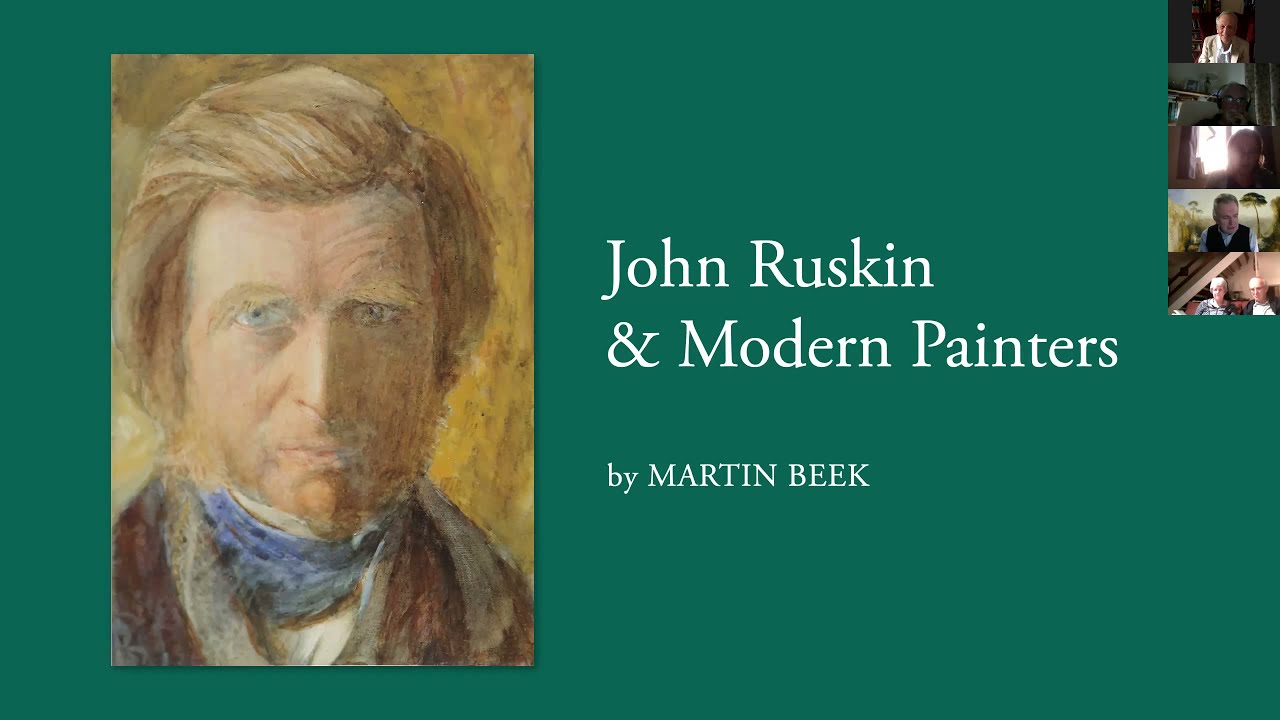
John Ruskin's art criticism, particularly his influential treatise 'Modern Painters', which championed empirical observation and the detailed rendering of the natural world.
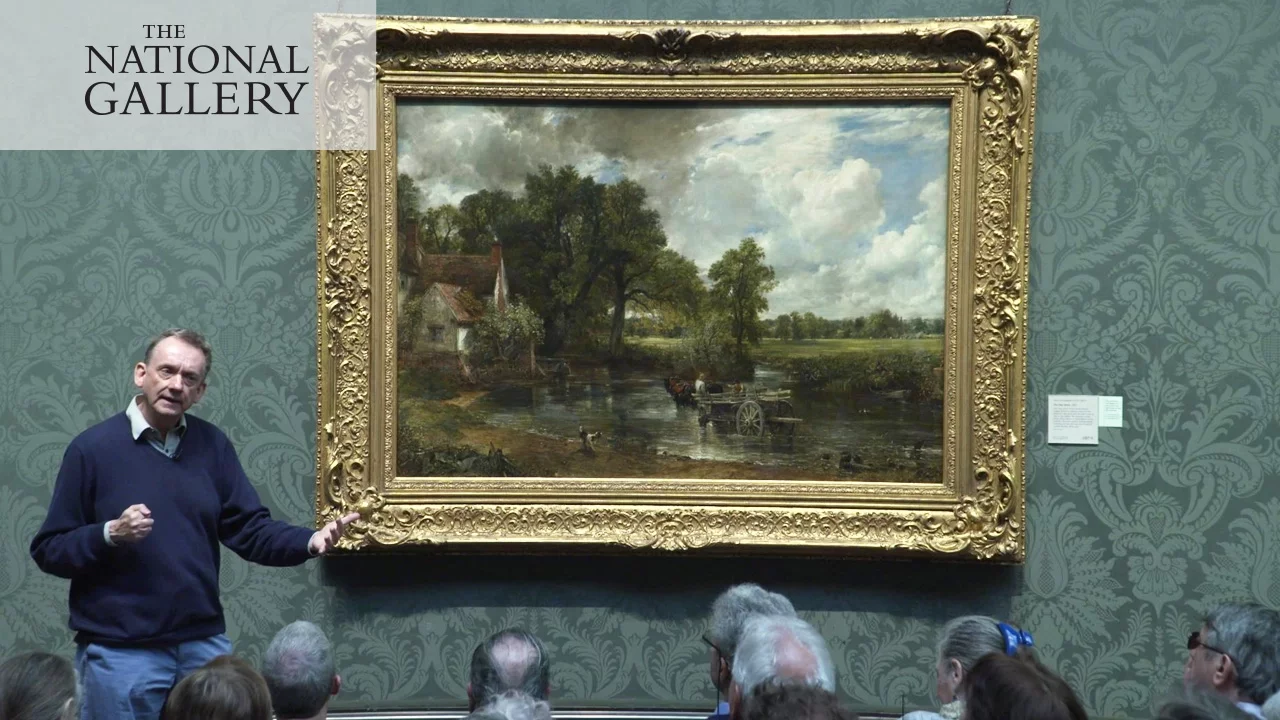
The prevailing landscape painting traditions of the late 18th and early 19th centuries, including Romanticism and the works of J.M.W. Turner and John Constable.
The emergence of the Aesthetic Movement and the Arts and Crafts Movement as offshoots or reactions to the rigorous scientific naturalism of the early Pre-Raphaelites.
The intersection of early photography and Victorian landscape art, analyzing how painters and early photographers influenced each other's documentation of nature.
Eco-critical art history, specifically examining how 19th-century British landscape art visually documented the environmental impacts of the Industrial Revolution.
A comparative analysis of British Pre-Raphaelite naturalism with contemporaneous European movements, such as the French Barbizon School and the rise of Impressionism.
90K views1Klikes29:00Original Release: 2014-09-12
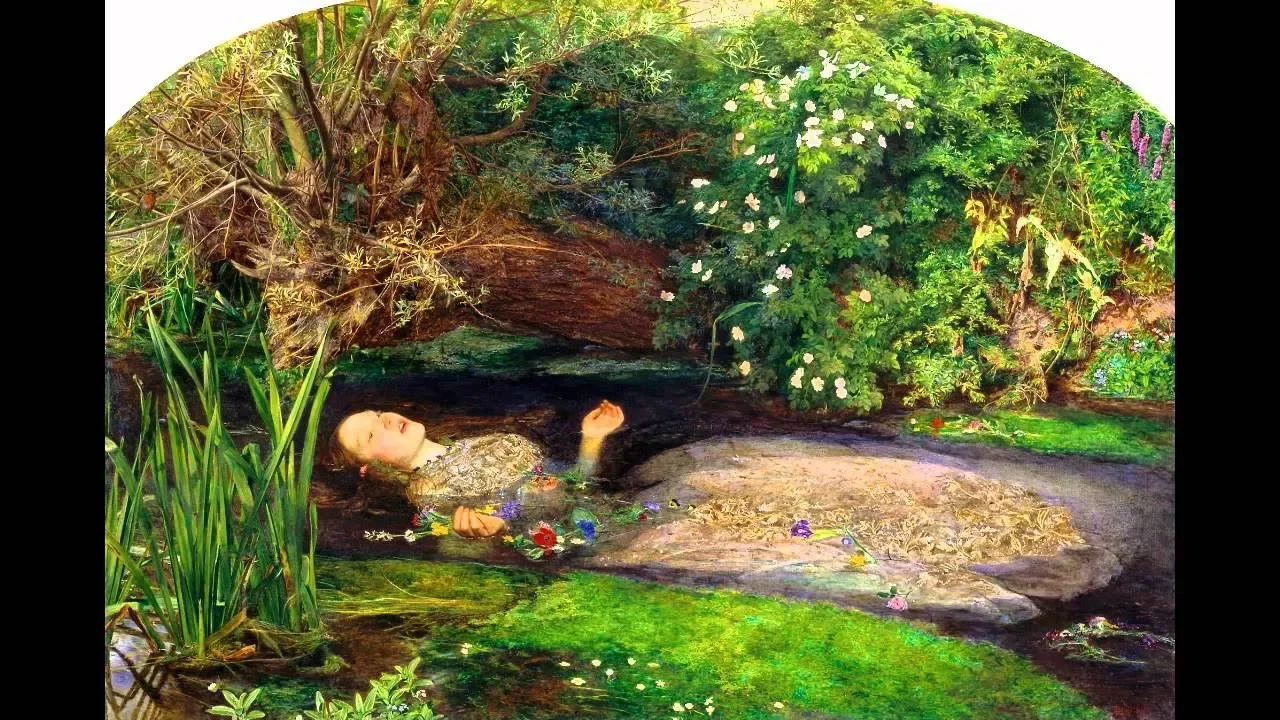
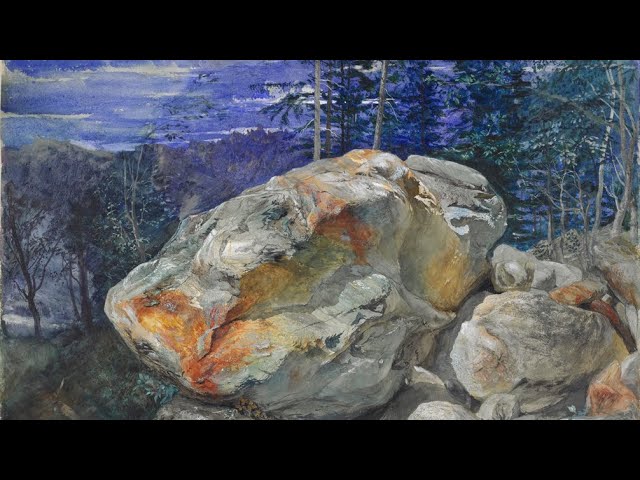
[Music] the pre- ralik Brotherhood brought notoriety to British art in the 19th century bursting into the spotlight in the mid-century they shocked their peers with a new kind of radical art this program explores how they began a new chapter in the history of art transforming landscape painting with a microscopic examination of the natural world [Music] I think all artists working at this time would have been aware of Natural History so it was important that their paintings did reflect something of this interest and this curiosity about the natural world and wanting to understand it the idea of painting the landscape as it really is with a kind of scientific fidelity was at the heart of [Music] this by 1850 the Industrial Revolution was at its height coinciding with the revolution that was taking place in British art the prer ralit founding members John Everett melee William Holman hunt and Dante Gabriel Rosetti had created a critical storm by bringing a new realism to British Ark and now with the expanding rail network offering quick travel to the countryside they ventured outside London and turned their attention to a landscape that had only just become accessible to [Music] them painting all details outside was new and predated the Impressionists by 10 years traditionally landscape painting was executed in the studio from sketches but the praly Brotherhood was a group who embraced experimentation although embarking on such an Excursion demanded preparation first they had to prepare their [Music] paints powdered colored pigments were ground with a glass mua then mixed together with an oilbased matter [Music] the paint was then put into a pig's bladder for [Music] transportation they would then have to find protection against any inclement weather conditions only then could they pack their easels and canvases and board the train M and hunt in particular were eager to paint what was real with a new microscopic Precision so in 1851 they took advantage of the southeast rail line extension and set off for sur with melee deciding on hogsmill River for the setting of his picture it was to become one of the most famous paintings in British art and one that transformed the landscape genre [Music] ailia it's based on Shakespeare is play Hamlet on the scene where Gertrude Queen Gertrude describes the tragic death of ailia ailia is Hamlet's betrothed she's been rejected by him and after the death of ponus her father she's been driven out of her mind and it shows her some pathetic and tragic death when she's singing songs Gathering flowers slips into a brook and is dragged by the weight of her garments underneath the waters to her murky [Music] depth it goes against the rules of composing pictures usually we read images you know in the west from know left right but of course the flow of the river here is from right to left so he's actually doing something sort of quite counterintuitive in a way and perhaps in doing so is inviting us to look at this image as being a very disturbing image indeed it is was the first artists to actually show ailia in the process of [Music] drowning M was quite concerned to relay the natural elements to the story of ailia so a lot of attention has been sort of spent on the natural specimens at U so the dog rose that obviously alludes to the Rose in the vud speech [Music] you also have the long purples Shakespeare refers to indicated here by this s of new loose strife on the right hand side you have these daes scattered in the composition so starts off with Shakespeare's text that goes beyond that to include um flowers which really relate symbolically to the near the plight of ailia [Music] a professor of Botany thought it was better to teach botany to his students from mil's painting of ailia that it wasn't taking them on a field trip into the country you're so accurate and precise was this depiction of you know the natural [Music] phenomena so you could actually read this in snia as a piece of darwinian image really that it's a struggle for existence um you know all these plants here are struggling for survival on this on Riverbank ail is one of these specimens but being the weaker of the species she is doomed to die rather than survive so he's obviously looking at sort of new human history even though it's a pre- darwinian image once mle had painted All Landscape he went back to London to sketch the figure of ailia this in itself reversed the normal practice his model was the 19-year-old Elizabeth Sidle who had already posed for a number of prolite pictures Lizzy posed for melee lying in a tin bath heated by just a few candles but so preoccupied was he that he didn't notice when the candles went out afraid to mention anything Lizzy remained in the pose getting numb with cold it was the last time she sat for melee but despite this the painting was exhibited to huge [Music] Acclaim ailia is a really important painting for Millie because it really marks the breaking point from being a s of neant terer someone who desecrated by the critics the subject of a ium suddenly people see this picture and um they think wow this artist is doing something completely new and different but rather than alienating his audience he's existing the sympathy of The Spectator and there a wonderful review of this painting by Tom Taylor in punch he say it brings tears to his eyes that he is an artist who has actually managed to make dying beautiful [Music] [Applause] [Music] just as melee was examining the landscape with the eye of a camera William Holman hunt was also applying his own detailed vision of the natural world in a field close by painting the Hing Shepherd hunt was Keen to get a s of the Luminosity of nature as it actually looked under the Vivid sun to achieve this he departed from the norm of painting onto a d backing by preparing his canvas with a white ground this had the effect of Illuminating the colors far more [Music] brightly he would then use a very fine brush more like a watercolor brush to paint the minute detail every blade of grass each eyelash such Precision would often mean only an inch of canvas could be completed in a day [Music] this scrutiny and demanding work chimed with the Victorian obsession with technological progress and scientific thinking which was eagerly promoted by the art critic and Ardent geologist John Ruskin Ruskin said quite simply that you should go to Nature in all singleness of heart rejecting nothing selecting nothing and believing always in the truth so the idea of painting the landscape as it really is with a kind of scientific Fidelity was at the heart of [Music] this Ruskin saw how melee's scientific Fidelity had achieved a sense of majesty in its detail so he commissioned him to paint his portrait but this was to be no ordinary portrait under ruskin's guidance melee was to turn his formidable technical skill in painting the detail of the Scottish landscape historic landscape painting as Raskin called [Music] it so off they all went this is uh Ruskin his wife Effie who he' married in 1848 same time as the Brotherhood was formed and uh melee and melee's brother William Henry who was also a painter and of course ruskin's manservant Crawley they all went up together and they stayed in this tiny and I mean tiny little sort of Farmhouse really uh at at Little Village of brigo Turk uh in Glenn Finas uh in the [Music] TRX at briger Turk Ruskin and melee found the perfect site at the bottom of a Steep Ravine a stream ran over some ancient rocks the view had no Horizon this in itself would be an innovation in landscape portraiture but would give melee the setting to which he could turn his camera's eye I think one of the reasons why Raskin was attracted to this particular site was because of the The Rock The Rocks he was passionate about what he called the slatey crystallines the prime example of which was this nice rock he loved this because of its banding its filation how it was composed of different minerals so it's quite interesting how he wants to be associated with it in this portrait the idea that this rock has this ennobling effect so he's presented in the portrait standing on the Rock the idea that there are parallels between the two between his steadfast fixed gaze and the firmness of the rock so the idea is the rocks are to be S read in ethical or moral terms and whilst melee painted the details of the landscape Ruskin a very fine draftsman and watercolor artist in his own right sketched The Rock in the background of the portrait keeping a watchful eye on what melee was doing so vkin of new f focuses in on a patch of rock in the um distance and it's quite interesting comparing the way the two artists approach this melee is obviously fascinated with the surface he attends to the the light and on the Rocks the textural patterns but I think Ruskin is far more interested in the um the structure the the nicec banding and it's interesting how he picks out these quartz veins in the Rock which you don't get in melee's composition so his really as an artist he's far more aware of how these rocks have been formed you know the the movement of water and how they came to being years and years ago for the Rock cooled and UNH hardened as part of this particular process Vin was very keen on this portrait he obviously saw it as being a collaborative process he was instructing melee in and geology and in turn melee was instructing him about painting Out of [Music] Doors the relationship between melee and Ruskin was not the only one developing during this painting holiday whilst living together in the confined space of the little cottage melee discovered he was falling in love with ruskin's wife Effie when she revealed that despite 5 years of marriage she was still a virgin melee at first shock began to see an opportunity for them to be together evident in some of his sketches of the [Music] time so we bought this rather beautiful drawing here which is um of angels forming a Gothic Arch and of course they're e we took the back off that drawing to get it conserved and on the back hidden since the 1850s was that instead of two angels are and Effie caressing I suppose it's wishful thinking but it's very beautiful well not so wishful a year after the Scottish trip Effie attained an analment to her marriage on the grounds of non-consummation with Ruskin and In 1855 she married melee and the relationship between Raskin and melee that also changed really um melee couldn't stand the sight of him and he couldn't understand why Ruskin was almost supine in the face of all these accusations uh the only the only spark that Ruskin showed was when the marriage was being aned he offered to prove to the court bizarrely his manhood and uh it's very difficult to imagine how he could have done that but he offered it I have no idea it would have been fascinating if the judge had said yes Ruskin I think you really should such public humiliation made any future working relationship between Ruskin and mle impossible so Ruskin perhaps for spite diverted his patronage to the third founder of the prer rafalik Brotherhood Dante Gabriel [Music] Rosetti Ruskin was much taken with Rosetti's watercolor the first anniversary of the death of beatric Dante joying the angel painted in 1853 Rosetti's interests were diver verging from those of his fellow brothers while they were pursuing realism the earlier prite interest in medievalism was dominating his work Ruskin offered Rosetti first refusal on all his Works which freed him from the need to exhibit he also offered Rosetti's mistress the prite model Lizzy Sidle featured in Dante drawing an angel an annual income in support of her own Ambitions to become an artist Elizabeth Sidle was just over a year younger than Rosetti so she had been working I think in the fashion trades for quite a few years before she uh became the pb's sort of favorite model and she posed for whole sequence of paintings by other members of the group and then she went to pose for Rosetti and at that moment her own dreams began to be realized because she turned out she had artistic Ambitions of her own and at this moment um Rosetti transformed Lizzie from a an ordinary model into his sweetheart and his student he believed that Lizzy's Talent was best served by allowing her to to draw and paint in the naive manner without any instruction which explains why her drawings have a very char artlike character they're very intensely emotional but the drawing and and particularly the anatomy is very primitive and whilst Rosetti and Lizzy explored the medieval fantasy world the other members of the prer raites continued with their fascination of the burgeoning Sciences of Victorian Britain I think all artists working at this time would have been aware of Natural History and was a text they would have been aware of would have been Charles Lyle's principles of geology which was new widely read and was really a wonderful survey of you know geological formations and structures in the British Isles and I think they want to be part of that culture they were modern British artists after all they were painting for contemporary audience so it was important that their their paintings did you reflect something of this interest and this this sort of curiosity about the about the natural world and wanting to understand [Music] it hman Hunt's curiosity led him to board the train down to Hastings in 1852 to paint a stretch of land that scientists were beginning to classify as a prime example of coastal erosion he showed it in his painting our English coasts or lost sheep as it's also known Hunters painted very carefully the geological formations of this Coastline and it's not a grand magnificent Cliff like do Cliffs it's actually a piece of collapsing Coastline and so the actual geology of the rocks seems to express the anxiety that we see in the lost sheep and this very much relates to research that's going on in this time into geology AR English Coast depicts these extraordinary Cliffs at kve has Bay near Hastings and assembles sheep at the very brink of these Cliffs as a metaphor for what is going on in Britain at this time this is exactly the moment when Napoleon III has come to power in Paris when there is a feeling that there might be a renewal of the hostilities of the Napoleon aqu Wars and Hunt expresses this idea with the idea of the lost sheep the Sheep standing precariously at the edge of the [Music] cliff and Hunt stresses the modernity of that scene with the tiny little steam ship which travels across the Horizon in in the background so that he turns the landscape with all the extraordinary detail of the landscape into a much richer picture that becomes a kind of condition of England picture we see one sheep here is caught in the brambles and who looks straight at us in a kind of appealing way very typical technique of hun to get us involved in the painting we see the Shadows a blue shadow lengthening across the green fields in the background in a slightly ominous manner the painting painted at the end of the day to add to the atmosphere we can even see the light coming through this sheep's [Music] ear capturing such naturalistic light effects also interested another painter associated with the prer ralyes Ford Maddox Brown in his painting of 1852 pretty bar Lambs so he takes up some of the praet ideas about um responding to Nature and he applies his own particular interest in light effects [Music] he doesn't just paint the landscape Out of Doors he actually poses his figures out of doors and paints the entire scene so that there's consistent conditions of light bright sunlight over the figure as well as the landscape now as far as I know that's actually the first time this been done in painting So Ford miners Brown is actually doing something really novel by making his model stand out out in the hot sunshine you can see her cheeks are pretty red the painting is the first to represent figures in the open air and in the conditions of sunlight that are particular to a specific moment um that is the really the middle of the day another way in which it's the first is actually observing um all of the details such as the colored Shadow the um the baby is holding a uh a little sprig of foliage which casts a blue shadow on its white dress again this is an innovation that is definitely observed from nature Shadows are colored they're not just [Music] dark he's not painting according to the rules of painting he's actually painting by fresh new obser obervation of what's before his eyes that I think is the idea behind it being a new chapter a new event in the history of art Ford madx Brown was slightly older than the other pites he was never a fully-fledged member of the Brotherhood but rather a close associate and supportive elder brother whose work both inspired and Drew inspiration from them but in contrast to melee and Hunt Brown wasn't interested in using the steam train to travel for his landscape painting he'd much rather stay at home in 1852 Ford Maddox Brown moved to Hampstead which is then just outside London and for my money the most extraordinary pral light painting uh of a landscape is the work he completed out of the back window of his lodgings in Hamstead looking over Hamstead Heath an English Autumn afternoon began in 1852 and he worked on it solidly for 3 years every single detail that was visible out of that rear window can be seen in this canvas it completely contravenes every rule in the book it doesn't look like any landscape painting ever made before it's panoramic and its scope but it has no vertical features to disturb that flat Horizon it's also microscopic in its an examination of the natural world it's like a work of science on the one hand a kind of treatise on the on the life of North London in 1852 on the natural history of North London and on the other hand it's this incredibly evocative and poetic account of the way madx Brown feels about this landscape as well he manages to be both deeply objective and deeply subjective at the same time the shape of the canvas is an unusual one it looks like a great eye it's an oval and I've always imagined that as some kind of metaphor for some great Optical apparatus and it's worth thinking that these these paintings come from the early years of Photography it's almost as if madx Brown saying the camera can represent this world but only in cpia and white the camera can show us details but only the artist can actually see the detail represent it and interpret its meaning and I think this is one of the great poetic paintings as well as one of the great representations of reality in British art so in an English Autumn after madx Brown shows us a very familiar scene and we're invited to identify with two figures down to the bottom left a young girl and her friend it's 3:00 p.m. and he particularly wants you to notice the effect of color in the sky the kind of duck egg Blue Sky just before the sun sets over hamstad Heath in that moment of the day and you can see that color reflected on the shiny top of the boy's hat if you look more closely at what's going on in the Middle Ground you can see people picking [Music] apples you can see cockerels and hens which are being farmed on the heath in the foreground there's a dovecot with just the the activity of birds coming and going but what you have to remember is that these things had never been painted like this before and I think that immediacy which of course would be an important claim made later by the French Impressionists but that that immediacy of vision almost a kind of photographic process is what makes this painting so absolutely striking to us even today and it was this immediacy of vision seen in all the prolite landscape paintings in the colors the truth to Nature that made their work admired at home and abroad the prer raites had engaged with the scientific thinking of the age taking advantage of the expanding railroads to visit New pastures and in the process revolutionized landscape painting with the eye of a [Music] camera they were all still only in their 20s but had propelled British art in a New Direction and our look at the pr raites continues next Tuesday at Half 8 coming up tonight they do say that truth is Stranger Than Fiction and you really couldn't make some of this up TV believe it or not is next [Music]
Up Next

7:33
Christ in the House of His Parents: Millais & Pre-Raphaelite Art
@paintingoftheweek
3.5K views•2013-03-06

114:18
Christian Iconography: History, Theology, and Meaning | Fr. Panayiotis Papageorgiou
@Trisagionfilms
58.8K views•2020-02-21
7:48
Ukiyo-e Art: History, Woodblock Printing & Influence
@japanathand
6.3K views•2023-06-08

16:34
Earliest Depictions of Jesus in Art: 10 Ancient Images Explained
@UsefulCharts
5.9M views•2022-06-03
Related Study Plans & Knowledge Roadmaps
Structured learning paths in Art History
art-history
Gothic Cathedrals: Engineering, Light & Society
01The Birth of the Gothic: Romanesque to Suger's Vision
02The Structural Triad: Pointed Arches, Ribbed Vaults, and Flying Buttresses
03Theology of Light: Lux Nova and Sacred Geometry
+ 2 more learning modules
14h5 modules
Explore Roadmap
art-history
Pre-Raphaelites: Realism, Symbolism & Critique
01The Victorian Art Establishment and Academic Formula
02The Founding of the PRB and Radical Realism
03Medieval Revivalism and Literary Symbolism
+ 1 more learning modules
8h4 modules
Explore Roadmap
art-history
Street Art: From Subways to Art Market
01Subcultural Origins in Philadelphia and New York (1970s)
02The Subway Era and Style Wars (Late 1970s - 1980s)
03The East Village Scene and Early Gallery Crossover
+ 2 more learning modules
10h5 modules
Explore Roadmap
art-history
Classic Maya Art: Iconography, Glyphs & Ritual
01Foundations of Classic Maya Visual Culture
02Deciphering Maya Hieroglyphs & Text-Image Integration
03Sacred Geography and Cosmological Architecture
+ 2 more learning modules
14h5 modules
Explore Roadmap