
























Lowering the pH of a solution significantly increases the solubility of basic salts like metal hydroxides (e.g., Mg(OH)₂), because the decrease in hydroxide ion concentration shifts the dissolution equilibrium toward the dissolved ions, while the KSP remains constant; this principle applies to any salt containing a basic anion.
How pH Affects Solubility: Mg(OH)2 Example | Ksp Chemistry
Added:Understanding the concept of Chemical Equilibrium and how to write equilibrium constant expressions.
Familiarity with the Solubility Product Constant (Ksp) and how to calculate molar solubility of a salt.
Knowledge of Le Chatelier's Principle and how concentration changes shift an equilibrium system.
Fundamental definitions of pH, pOH, and the mathematical relationship between [H3O+] and [OH-] in aqueous solutions.
Exploring the Common Ion Effect and its quantitative impact on salt solubility.
Applying pH-controlled solubility to Selective Precipitation, which is used to separate metal cations in chemical analysis.
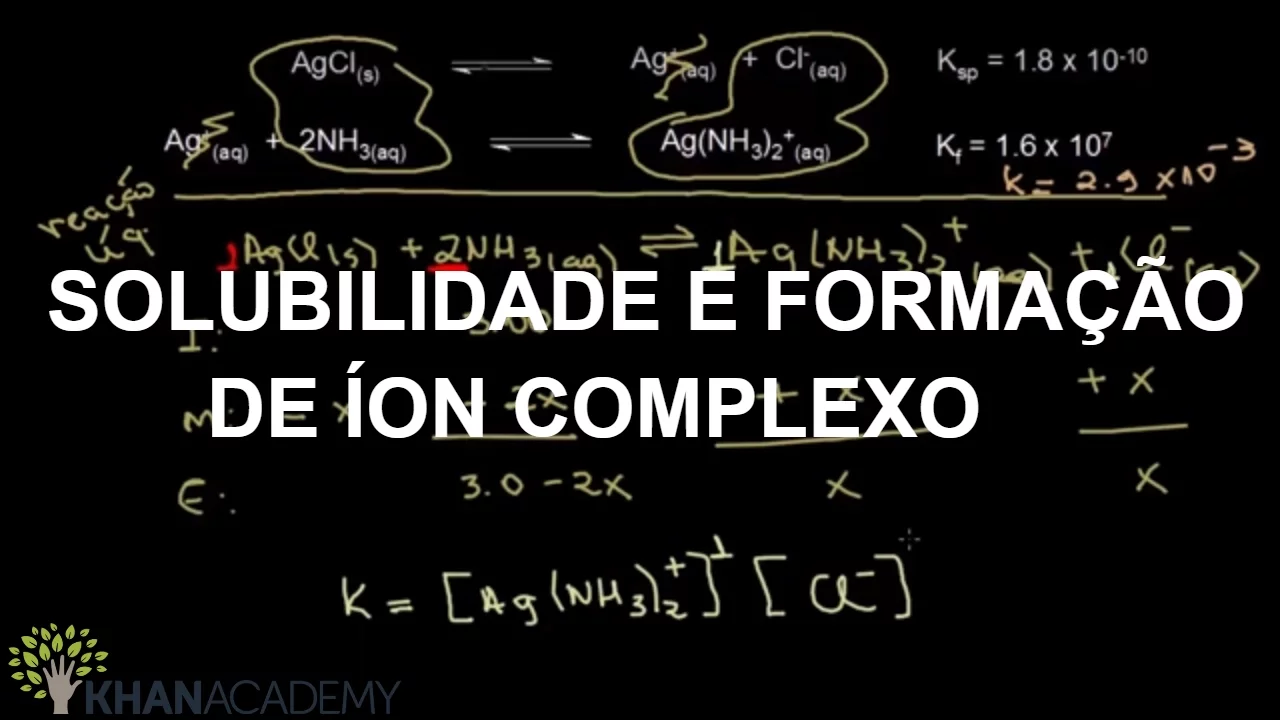
Understanding how Complex Ion Formation (via Lewis bases) can dramatically increase the solubility of otherwise insoluble salts.
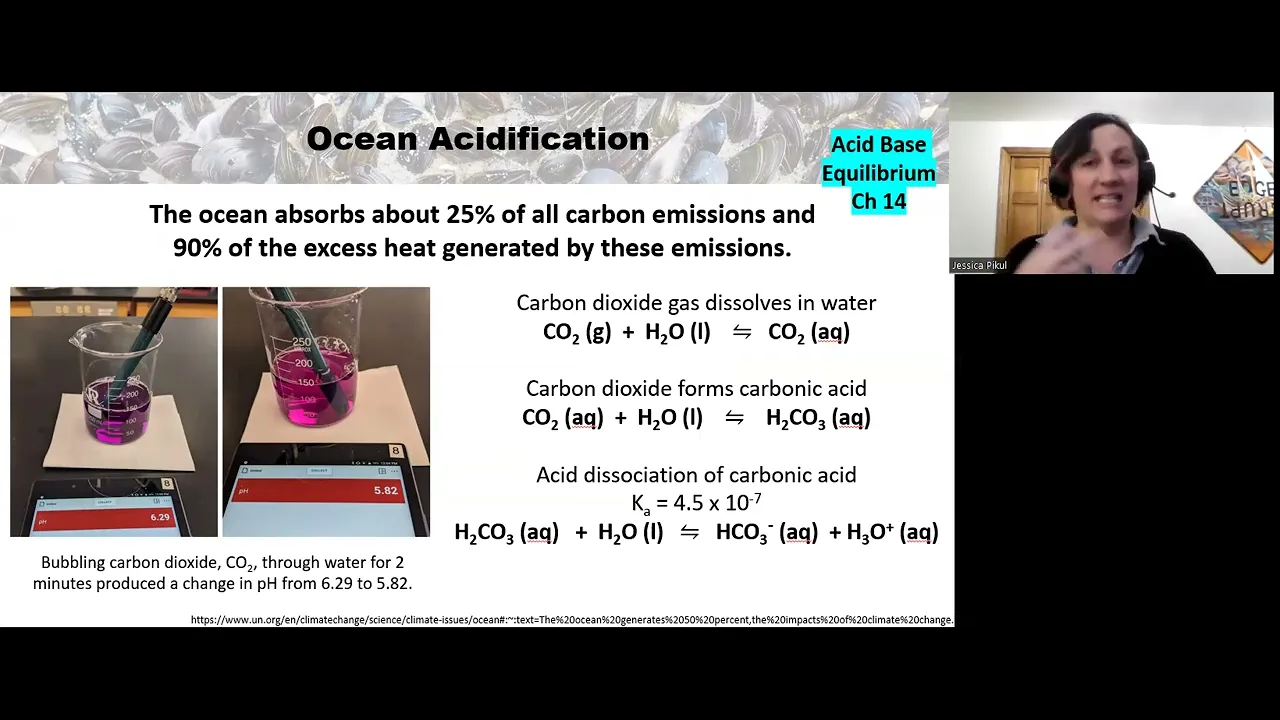
Investigating real-world environmental and biological impacts, such as ocean acidification's effect on calcium carbonate (shells and coral reefs) solubility.
249 views0likes16:11Original Release: 2020-03-30
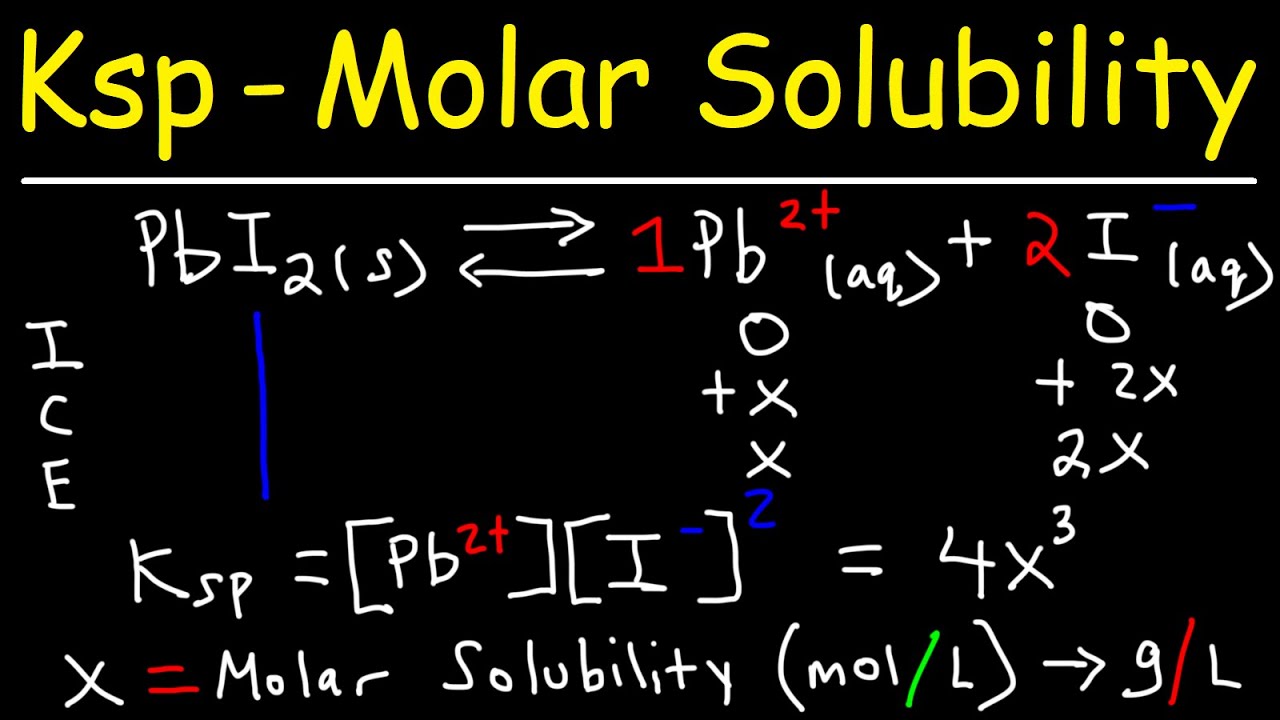
greetings Panthers is dr. Augustine I hope you all are doing well today we are going to talk about the effect of pH on solubility just a quick recap this is the third video part 3 of a 3 part video series part 1 dealt primarily with just KSP what is KSP the solubility product constant and how you can use that to calculate the concentration of ions that dissolve in solution part 2 is the difference between solubility and KSP KSP and solubility are related to each other but they're not the same and in it we talked about solubility is actually sort of the maximum amount of stuff that you can dissolve in a solution so for instance the unit's are typically in grams per liter or in moles per liter and we talked about the differences in solubility in KSP they sound similar on the surface but they're not exactly the same thing and at the end of that video we talked about some factors which affect the solubility the one that we talked about we spent some time on in the video is that what's called a common ion effect and we showed that if you tried dissolving a salt in a solution that already has one of the ions in solution that you will significantly decrease the solubility and so that's called the common ion effects that was the focus of the last video this video is going to affect look at the effect of pH on solubility and we're gonna see that once again the pH has a profound impact on the solubility of certain things not everything but certain things and then the third factor which affects solubility is what's called a complex ion I'm actually not going to make a video on this it's chapter 17.8 intro if you want to read a little bit more about it it's kind of a subtle topic and not super important pH is a really important topic because you can change the pH very easily and of course the common ion effect is really important so these two are gonna be the main ones we're gonna deal with and then we're gonna just review KSP and solubility and and how it can be used okay so as a recap this is a table from your book 17.2 these are some selected KSP values and we're gonna look at some specific types of materials which are affected in strongly by the PA and an example of this is a metal hydroxide so something like magnesium hydroxide or calcium hydroxide those are two examples of metal hydroxides that would have a significant impact on the pH and probably the easiest way to do them and I can tell you that in words they're probably the easiest way to do that is to take a look at a problem that specifically has these parameters in it all right so here's the problem fact the pH on solubility of a metal hydroxide solution suppose you have a saturated solution of magnesium hydroxide says remember saturated solution means you've completely dissolved it it's in equilibrium now and you can't put any more in so we've now completely dissolved the magnesium hydroxide in solution the calculated pH of this saturated solution is nine point eight seven based on the KSP values for magnesium hydroxide given in the table above so I make a note here at this point you should be able to calculate this and if you're not quite sure how to calculate this hang with me I'm actually gonna do this calculation but you should be saying yourself I know how to calculate this we've done a couple problems like this this would be a great place to stop the video see if you can calculate the pH of nine point eight seven based on the fact I've told you this is a saturated solution of magnesium hydroxide this would be related to the first video specifically the KSP because we're given the KSP value so using this KSP value I'm actually going to do this calculation we're gonna find out what the pH is I mean I'm telling you it's nine point eight seven but I'm gonna show you how you can convince yourself that that's the pH using a saturated solution of magnesium hydroxide okay so here's our start it's just like the last first video we're going to start with zero of magnesium we're gonna start with zero of hydroxide remember it's an ice table and we've just created this we've said magnesium hydroxide solid it's in equilibrium with the magnesium two-plus ions and two hydroxide ions this one's going to increase by s this is going to increase by 2's remember these are in a two to one ratio two hydroxides for every one magnesium so my final concentration here is going to be s to s and we can write a KSP expression down for this KSP expression equals the mg 2 plus times concentration of O H minus squared this is equal to two point I'm going to round here two point one times 10 the minus 13 the pH will be slightly different if we don't round this we're going to plug in our values so s times 2's the whole quantity squared equals a two point one times 10 minus 13 there's going to be four s cubed is equal to two point one times 10 a minus 13 s cubed is equal to five point two five times 10 minus 14 take the cube root of both sides s is going to be equal to three point seven times ten minus five and remember if we look back up on this table that's actually the magnesium ion concentration the hydroxide ion concentration is going to be two times that so I'm just going to write down this is equal to the concentration of magnesium ions now I'm trying to find the pH right so if I know the hydroxide ion concentration I can find the Poh and from the PA o itch I can find the pH so I'm gonna do that so now I want to find the concentration of hydroxide ions which is actually equal to 2 times s which is equal to 7 point 5 times 10 minus 5 molar okay so before we dive into this problem just think about this for a second if we know the pH we know the pH is 9 that tells us that we also know the O H minus concentration right we can find the h3o plus concentration directly from the pH just take 10 to the 10 to the 9 and that will also tell us the Poh which means we can find the hydroxide ion concentration of this resulting solution so let's quickly show what that looks like pH is equal to 9 that means that the Poh must be equal to 5 and 10 to the minus 5 this is the O H minus constant generation 10 the minus 5 is equal to 1.0 times 10 the minus 5 so that's the molar concentration of the Oh h minus at this new solution concentration that we have of a pH of 9 all right so what we can do is we can take the KSP expression and we can just rewrite it with our new values in n so we have oh H minus squared this is equal to 2 point 1 times 10 to minus 13 so magnesium ion concentration we don't know that's we're actually trying to find we have one point zero times 10 to minus 5 whole quantity squared equals to two point one times 10 minus 13 if I just want to isolate the magnesium ion concentration it's equal to two point one times 10 to minus 13 divided by one point zero times 10 minus 5 whole quantity squared so the magnesium ion concentration when we do this calculation is zero point zero zero to one molar or in other words two point one times 10 to minus 3 molar okay so that's my concentration add up at a pH of 9 the magnesium ion concentration has increased from three point seven times 10 minus 5 molar up to two point one times 10 minus 3 molar now you might be like ok what's the big deal that's a factor of a thousand a hundred difference okay this is a hundred times more soluble than the magnesium ion was in the saturated solution and we did not change the pH by much we dropped it from nine point eight seven to nine and with that relatively small pH change the solubility of magnesium increased by over a factor of a hundred alright so what that tells you is if you have a basic ion like magnesium hydroxide or calcium hydroxide or something like that if we lower the pH we're going to significantly increase the solubility and in fact if we keep lowering this PA if we did the same calculation at 8:00 and you might want to convince yourself of this do this same calculation at 8:00 you'll see the concentration goes up even higher and we can get it if we get a low enough pH we can get this to be completely soluble in other words we can change this from being insoluble to completely soluble just by controlling the pH now as we said in the last one the KSP is the same okay this is a constant at 25 degrees C KSP has not changed what has changed as a solubility so solubility and KSP are not the same thing they're related to each other but they're not the same thing so if we have a lower pH for a basic ion like magnesium hydroxide we can significantly increase the magnesium ion concentration we can significantly increase the solubility of this by lowering the pH okay so let's quickly recap everything we've talked about first of all KSP and solubility are related to each other but they are not the same KSP is a constant at a constant temperature so at 25 degrees C these are the values for the KSP for these particular things there's many other things you can look up the KSP s for the solubilities however can vary significantly depending on the solution so if you have a common ion you can you can significantly lower the solubility of a material if you have a basic anion by lowering the pH you can significantly increase the solubility in fact to the point where you can make it completely soluble and then again in chapter 17 point 8 the formation of complex ions you can also increase the solubility we're gonna skip that section one last comment on the KSP if you want to predict which thing is going to be the most soluble and say you have four or five different possibilities you wanna say which one's the most soluble look for the one with the largest KSP value so like in this table right here lead chloride is gonna be the most soluble out of these first actually of everything on this on this side of the table well how do I know that because lead chloride is one times n minus five and all these are much smaller KSP values so therefore they're gonna be less soluble and if you have to rank order them just put them in the order of largest to smallest that is going the one with the largest is gonna be the most soluble the one with the smallest like 10m is is going to be the least soluble all right that wraps up part three of this three-part series on solubilities and KSP values for solutions alright so here's the general rule if you have a basic anion in a slightly soluble or insoluble material as we lower the pH the solubility increases okay if you have basic anion as we lower the pH the solubility will increase in this now this this will should remind you back to chapter 15 where we talked about the acidity and basicity of ions back in chapter 15 this is the table that the book gave I don't really like this table it's a little bit confusing to me so I'm I've rewritten this table in a way that makes more sense to me hopefully it'll make a little more sense to you so the way you read my table is for anions you have three choices either it's acidic neutral or basic for cations either acidic neutral or basic so what this is saying is if you have an anion a negatively charged ion you will never have an acidic solution okay anions never form so the acidic solution so you might you might just put a big X through this Square and likewise if you have a cation it never forms a basic solution so anions either form neutral solutions or form basic solutions and cations either form acidic solutions or neutral solutions so I think the easiest way to think about this table is to think about the neutral solutions okay so the neutral solutions come about when you have the counter ion you have either a strong acid or a strong base so in the anion case if you have the counter ion I'm a strong acid so what what is a strong acid think about some strong acids something like HCl HBR h i nitric acid hno3 sulfuric acid h2so4 chloric acid HCL for all the strong acids the counter ions in other words the thing is attached to the H+ our Neutral chloride bromide iodide nitrate sulfate chlorate those when they dissolve in water do not change the pH likewise for cations the counter ion of a strong base those are also neutral so like lithium hydroxide sodium hydroxide potassium hydroxide calcium hydroxide strontium hydroxide barium hydroxide those are the strong bases those counter ions are neutral in solution when they dissolve so like a solution of sodium chloride NaCl is going to be a neutral solution because you've got a counter ion of a strong base and you've got a counter ion a strong acid both those are neutral all the rest of the anions are actually weak bases so if you have a weak conjugate base like a carbonate or a phosphate or something those are going to form basic solutions you can convince yourself of this by just writing out there the reaction so let's take Co 3/2 minus aqueous in solution plus h2o liquid is in equilibrium with hco3 minus plus o h- okay so if you have a weak conjugate base like a carbonate it's gonna react with the water to form hco3 minus plus so h minus u we're gonna end up with a basic solution okay so let's just recap here again anions if you have the counter ion or a strong acid your solution is going to be neutral if you have a weak conjugate base the solutions actually gonna be basic the pH is going to be greater than 7/4 cations if you have a counter ion of a strong base lithium sodium potassium etc you're going to have a neutral solution if it's a weak conjugate acid you are going to have a an acidic solution also aluminum ions magnesium ions and all the transition metal ions those all form acidic solutions in other words the pH is going to be less than 7 and if you want to know how strong an acid is going to be this favorite table showing acid strength the stronger the ass the weaker its conjugate base right that's how this that's how we read this table okay so what does this mean basic anion lowers the pH the solubility will increase and the stronger the conjugate base the more this pH is affected alright so for example that that hydroxide one that we showed in the last the magnesium hydroxide that's a really strong base that's going to have a really big impact on the pH can have a really big impact on the solubility something on the other end of the spectrum like f- is not going to have nearly as big an impact on the solubility
Up Next

58:23
P-Block Elements II: Group 15 | Ammonia & Nitric Acid | Chemistry
@DPUEDKPUCPA
40.9K views•2020-10-14
83:56
Biocatalysis and Catalysis in Islatravir Synthesis | Merck Webinar
@SCIwheresciencemeetsbusiness
675 views•2020-10-08
10:06
1H NMR: Determining Number of Peaks from Structure
@MSJChem
59.2K views•2017-04-06

17:31
Edible Water Bottles: A DIY Guide to Sodium Alginate Spherification
@ryan
10.5M views•2019-06-21
Related Study Plans & Knowledge Roadmaps
Structured learning paths in Chemistry
chemistry
Nuclear Chemistry: Decay, Meds & Fuel Cycle
01Introduction to Nuclear Structure and Radioactivity
02Decay Dynamics and Kinetics
03Radiation Interaction and Detection
+ 2 more learning modules
24h5 modules
Explore Roadmap
chemistry
Supramolecular Chemistry: Forces & Machines
01Foundations of Chemical Bonding and Intermolecular Forces
02Introduction to Host-Guest Chemistry
03Thermodynamics and Dynamics of Self-Assembly
+ 2 more learning modules
16h5 modules
Explore Roadmap
chemistry
Photochemistry: Excited States & Reactions
01Foundations of Light-Matter Interactions
02Molecular Orbitals and Electronic States
03Photophysical Processes and Jablonski Diagrams
+ 2 more learning modules
18h5 modules
Explore Roadmap
chemistry
Coordination Chemistry: Bonding & Properties
01Introduction to Transition Metals and Ligands
02Crystal Field Theory (CFT) and Geometry
03Magnetic Behavior and Spin States
+ 2 more learning modules
14h5 modules
Explore Roadmap