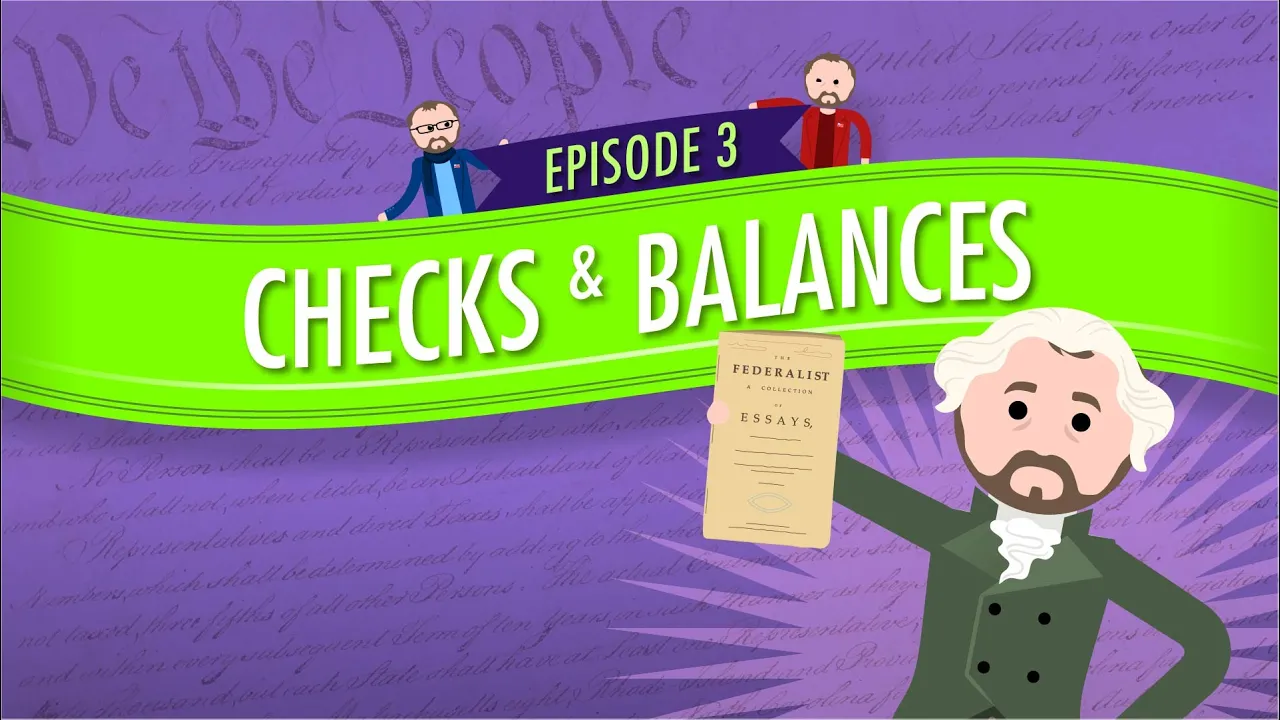
![Principles of AMERICAN GOVERNMENT [AP Government Review, Unit 1 Topic 6]](https://i.ytimg.com/vi_webp/JUiJhnx_K40/maxresdefault.webp)

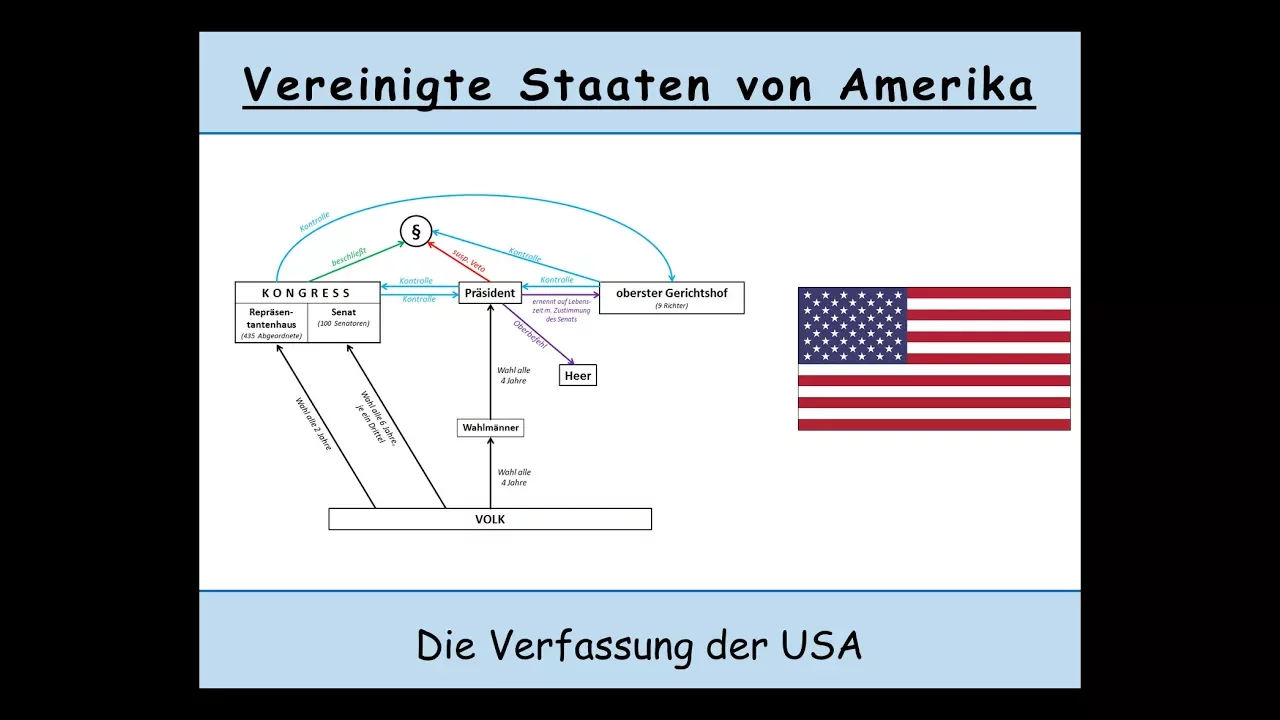

















The US constitutional framework, designed with checks and balances to prevent authoritarianism, has become vulnerable to democratic backsliding due to nationalized polarization, the rise of unitary executive theory, and partisan teamsmanship that has eroded traditional institutional guardrails. The Supreme Court's 84% success rate for the Trump administration, combined with attacks on judicial independence and the willingness of civil society actors to defer to executive demands, demonstrates how pluralistic institutions can be systematically undermined. However, historical patterns of democratic resilience, including the civil rights movement's success in generating sympathetic media coverage and building civic capacity, suggest that organized resistance and strategic mobilization remain essential tools for defending democratic institutions.
Democratic Backsliding in the US: A Panel Discussion | UC Berkeley
Added:Okay, welcome everybody.
>> We are 10 after. So, let's go ahead and and get the event underway. On behalf of the Berkeley Economy and Society Initiative, uh welcome to the second in a series of panels on democratic backsliding in the United States.
We are nine months into the second Trump administration and I'm not going to editorialize further. Uh but uh yeah, it's a time for stock taking where the first Bessie panel convened last February to discuss the rapidly unfolding constitutional crisis and it very me much felt like a moment of emergency. We're here today with Berkeley scholars from political science and law to assess the more sustained threat matrix to democratic institutions that is emerging. as panelist Eric Schler puts it in a forthcoming paper uh looking at the deeper roots of our current situation. Um and Eric points to the rise of nationalized polarization, the development of the unitary executive theory and the go the growing sway of populist conservatives within the Republican party. He writes, "Political scientists," and then I editorialize, "We might add a vast range of scholars, even those of us with overactive imaginations, did not anticipate the potential for democratic breakground breakdown that has emerged. We must now direct our energies to understanding this new constellation of power as well as the pathways available for opponents to respond."
So we are very fortunate to have with us today Eric Schikler, Katherine Layman, Omar Wasau, and Paul Pearson. Each will talk for several minutes on their research and insights before we then collect a um sorry before we collect questions from you, the audience. Uh please, when the time comes, submit your questions via the index cards we've set out at the front and the back of the room. Feeling a little bit like a flight attendant here. Um, there are even extra index cards out in the hallway if needed. Um, I will then coate those questions and relay them to the panelists.
Before handing it over to the panel, let me make a few fuller introductions.
Eric Schikler is the Jeffrey and Ashley McDermott Professor of Political Science and co-director of the Institute of Governmental Studies. He studies American politics with a focus on the US Congress, American political development, political parties, and polarization. He is the author of three books which have won the Richard F. Feno Jr. Prize for the best book on legislative politics, as well as the prize-winning book racial realignment, the transformation of American liberalism, 1932 to 1965.
He is also the co-author with Paul Pearson of dare I say the very preient partisan nation the dangerous new logic of American politics in a nationalized era which appeared last year well before the election.
Katherine Layman is the inaugural executive director of the Edley Center on Law and Democracy at UC Berkeley Law.
until January 20th, 2025. She was the assistant secretary for civil rights at the US Department of Education, where she served following US Senate confirmation.
From January through October 2021, Layman managed President Biden's equity policy portfolio as deputy assistant to the president for racial justice and equity. From December 2016 until January 2021, she chaired the US Commission on Civil Rights appointed by President Obama. She also served in California Governor Gavin Newsome's cabinet as legal affairs secretary from January 2019 through January 2021. Before these roles, Layman had also been assistant secretary for civil rights at the US Department of Education during President Obama's administration.
Omar Wasau is an assistant professor in political science. His research focuses on race, politics, and statistical methods. His co-authored work on Pluto populism and Trump's uh diversifying donor base and his paper on the political consequences of the 1960 civil rights movement were published in the American Political Science Review. His co-authored work on estimating causal effects of race was published in the annual review of political science.
Before joining the academy, Omar was the co-founder of blackplanet.com.
Under his leadership, blackplanet.com became the leading site for African-Americans, reaching over three million active users a month. Omar also worked to demystify technology issues through regular national TV and radio segments.
And Paul Pearson is the director of the Berkeley Economy and Society Initiative and the John Gross Distinguished Professor of Political Science. He also serves as the co uh the co-director of the multi-university university consortium on American political economy or cape. His research which focuses on the American political economy and public policy has been awarded several major prizes from the American Political Science Association. He's the author or co-author of seven books including the best-selling Winner Take All Politics, one of four books he has written with Jacob Hacker. His latest book with Eric Schikler is Partisan Nation: The Dangerous New Logic of American Politics in a Nationalized Era. And we're going to go in the order that we are seated.
So without further ado, Eric.
>> Great. Thanks so much, Amanda. Um, so, oh, yes, it is. I just need to raise it up a little bit. So um the essay that Amanda talked about emerged from a invitation from a political scientist Larry Bartell's who basically was uh writing his field exam for his American politics students and proposed the following questions voters what were they thinking institutions which will they miss which will we miss and then third why don't we I general, why didn't I just study comparative politics rather than the United States? Right now, the students were fortunate that these questions didn't end up on their field exam. But that led Larry to say, you know, the reason I wanted to ask these questions is because political science really doesn't have really needs to think hard about itself as a discipline in wake of what's gone on in Washington in the last several months. And it was a provocation on his part to try to get political his students to think about those questions.
And so he decided well I can't make my students do this but I'm going to ask a couple professors colleagues to write about uh pieces what what the frame was Donald Trump's contributions to political science right so which parenthetically was a a take or spin-off of something very different moment in American politics there was a great essay by John Zer called Monica Lewinsk's lessons for political science in 1998 where turned out political scientists did not really do a great job understanding the impact of that scandal as it unfolded in particular the American people's kind of collective shrug even as Washington became so you know focused on that scandal so he asked to think about well what are the implications of this for political scientists what lessons do we learn and so as a point of departure in writing that I thought about the book that Paul and I wrote and and our argument in the book is was essentially that the US Constitution's formula of separation of powers, checks and balances and federalism had created a system of counterveilling power that was intended to limit the chances for a president to govern as an authoritarian. It's the famous formula ambition to counter ambition. And the basic argument Paul and I made in our our book was these institutions no longer provide the kind of protection against democratic backsliding that they once did. And the reason for that we argued was that nationalized polarization and partisan teamsmanship had across these formally separated institutions had eroded this traditional system of checks and balances um both from Congress and the courts. In other words, that rather than politicians primarily thinking of themselves as lo representing local constituents, they were part of national partisan teams with the same constituencies across districts. And so members of Congress, instead of thinking first and foremost, oh, how do I represent my constituents in the Central Valley or in the Imperial Valley or in um in Los Angeles are thinking about their partisan team and justices on the Supreme Court rather than thinking about doctrinal they were always politicians in one sense, but they weren't necessarily partisan politicians recruited through partisan channels in the same way that they are today. And and so the basic argument is that that erodess this system of ambition countering ambition. So if you think about that, well, I think Paul and I both expected, boy, when we think about how this plays out when under Donald Trump, Congress is not going to be a serious check on him as long as Republicans are in control. And I would say that part of the story has played out kind of like we would have expected in our book. So Trump has made aggressive use of empoundments, infringing on Congress's core prerogative over spending under the Constitution. No more precious power than the power of the purse. Yet congressional Republicans have stood aside and abdicated.
there's absolutely no serious oversight of the administration even the in the face of blatant illegal conduct. Now we would see this in a sense as as really concerning but also culmination of a longer term trend. You know, you can think about the lesson of the first Trump administration in the impeachment cases being that Republican- elected officials incentive is to ignore or excuse illegal activities rather than scrutinize them from somebody like Trump. So, there we are. When it comes to Congress, kind of shocking difference, but not necessarily surprising, right? I'm gonna leave the courts to Katherine, but I think the same what I I would just note the same Supreme Court that found Biden's debt forgiveness plan to be an agg too aggressive an incursion on on legislative powers has stood aside for far more aggressive moves by Trump again reinforcing this partisan teamsmanship idea. So, so shocking, concerning, not surprising. I think there are also some real surprises and reasons for even deeper worry when it comes to other sources of counterveailing power in the US system. So there I would say that Paul and I, we thought we were pessimistic, right? We want to say realistic, but if we were going to be criticized, we thought, "Oh, you guys are a little too alarmist." I think these are cases where we probably underestimated quite the depth of the the the issues.
So first source of counterveailing power I want to talk about is the bureaucracy or the American state. Now it took decades to build the modern administrative state. decades from the 1870s into the 1930s and 40s, extracting islands of competent government administration out of a patronage oriented state of courts and parties was a huge political project.
Once that state was built, that bureaucracy often frustrated presidents.
capturing this dynamic. Harry Truman quipped when contemplating Dwight Eisenhower as a general Dwight Eisenhower becoming president. He said, "He'll sit here and he'll say, "Do this, do that, and nothing will happen." Poor Ike. It won't be a bit like the army.
Right now, since Truman made that joke, presidents gradually gain more control over the bureaucracy. really starting in the 1970s, a process of politicization where layers of political appointees were added at the top layers of the bureaucracy to try to give presidents some tools to control the admin administrative state, but they they were still often frustrated. Right. Now, one thing to note about these presidents is they typically shared an interest in the government performing its functions well, limiting the extent to which this politicization threatened the core competencies of the administrative state. In other words, presidents wanted the bureaucracy to do to pursue their priorities, but they also worried about making sure that they kept a competent, well-running state below them.
Furthermore, constituencies in Congress and civil society defended agencies if presidents did threaten to do their their ability to do their jobs. Now, I think the early months of the Trump administration have demonstrated a strong man president can simply run roughshod over seemingly entrenched government agencies. In other words, it took decades to build the administrative state and it's taken only a matter of months to destroy key foundations of it.
So what Trump has done is use unitary executive theory with court help to destroy much US state capacity. Some of this is quite visible. Think about USID.
Think about what's going on at CDC today. Think about the use of of massive layoffs through reductions in force.
schedule F which allows him to turn and schedule G to turn ten potentially tens of thousands of workers into at willill political appointees who were career civil servants.
So all of that is visible, but I think there's a deeper issue. Trump's transformed the expectations of potential future federal workers.
Following Trump, attracting talent will just be much harder because anybody entering the federal workforce will know their job could be taken away at any time. A Democrat could come in as president and restore civil service protections, but there's nothing to stop the next Republican from taking them away. And the results likely to be a long-term decline in the policymaking capacity of the American state.
So political scientists like to think of have always thought about state institutions as tenacious, hard to change. But what we see is the US state has was much more vulnerable and rested on an equilibrium of incentives and norms that has not held up in over these last several months. Right? So that's one source of counterveailing power to worry quite a lot about. The other one that has fallen short is our institutions of civil society. I think this is to me maybe the biggest surprise or big and biggest worry. And I think there's a sense in which Trump's proven a point that some conservatives had been making since the New Deal. They argued a big national government that has extensive regulatory and spending tools can use that leverage to bend societal institutions to its will.
These conservatives just did not anticipate it would be an ostensively conservative president who used that leverage to exert authoritarian control.
Right? So think about the wealth and power concentrated in America's far-flung business community, the diversity and influence of media corporations, the prestige and economic importance of the legal bar and of academia that they each had a degree of autonomy. They're spheres of counterveailing power every bit as much as Congress, the courts, and bureaucracy undergirling American pluralism.
But faced with a president willing to use arbitrary power to reward and punish civil society actors and a compliant Congress and Supreme Court, a diverse set of these civil society actors have each decided it's in their self-interest to defer to unprecedented and in many cases illegal demands from the president. We see this from corporate leaders, elite law firms, media companies, and some elite universities.
Each basically bending the knee. Now, a key insight from political science scientist Steve Scoranic's book on the presidency is the most consequential reconstructive presidents left their mark by destroying one element of the preceding political order. And this dismantling is what was necessary to bring about a new political order and an enduring transformation.
Trump differs from these earlier leaders in being willing to destroy not one but essentially any element of the old order, leaving aside the bond market, one might argue, to achieve dominance.
And this willingness to impose serious harm on multiple key sectors of civil society. wealthy corporations, media companies, universities among them, turns out to provide amazing leverage for a president, if you're willing to destroy, right? The alternatives for those civil society actors look really bad in the face of that. Now, the US has long been viewed as the prototypical case of strong society coupled with a weak coercive state, at least domestically.
And even as the reach of the federal government expanded in the 20th century, a pluralistic civil society and this ambition to counter ambition machinery seem to limit the scope of its despotic potential. But I think we've seen these auxiliary precautions have proven vulnerable in ways that most political scientists had not anticipated.
So where does this leave us?
I would argue this combination of Republican populism, unitary executive theory, and a conservative dominated Supreme Court have unleashed despotic state power against all manner of perceived enemies.
A nice an analogy I reach for is to think of Trump as a kind of modern machine leader, political machine leader.
But the tools available to his a him as a president are way beyond the wildest imaginings of Richard Daly or UEI Long.
Unlike a state or local machine leader, the businesses in Trump's territory don't have good exit options, and his tools to influence their bottom line are innumerable.
The enforcement apparatus at his command, including a much strength in ICE and immigration control bureaucracy and a highly politicized justice department, is way beyond local law enforcement tools that a machine leader might have for support. And most importantly, unlike a state or local machine leader, Trump is not embedded in a federal system with authoritative decision makers above him. and he can in overpower any state or local political forces from below.
So that where that leaves us is we urgently need to better understand how opposition parties and civil society groups can and should respond when faced with these kinds of unprecedented threats that that were not contemplated in any way in the constitutional design.
And so last thing I'd close with is the potential for democratic breakdown.
Something very few political scientists anticipated 15 years ago is all too real and underway today. Thank you.
>> So on that chipper note, can you all hear me?
>> Yeah. So on that chipper note, my job is to cover the role of courts today and I u intend to describe just how dangerous things are, but also my hope is to u bring us to some hope for what is still available notwithstanding all the badness. So, as consumers of news, I expect we are all generally aware that the Trump administration actions have been the subject of very much litigation and that the Trump administration has had overwhelming success in the United States Supreme Court. I want to unpack for us what those facts mean for our de democracy and also discuss the Trump administration's attacks on judges and lawyers with democracy damaging consequences as well. So, first to level set, I want to look at data regarding court actions in this second Trump administration. So, as of June 2025, Georgetown Law Professor Steve Ladak uh reported that the Trump administration had lost in court in 97 different cases from 73 different district court judges, sitting in 25 district courts across 10 circuits appointed by seven different presidents, including President Trump himself. Of course, those losses and some wins have continued since then, including on my walk over here about a case that I was going to tell you about that I now not. Uh, but that flurry of litigation and the varying interim wins and losses at different levels of courts in the litigation process can make apples to apples tally challenging u to capture. But Forbes reported in July that the Trump administration had a 60% loss rate in court. And as a big picture capture, I find that data helpful even if the specific data point may be slightly higher or lower depending on the court rulings as they happen. In contrast, Supreme Court data are uh easier to compare because those capture only the cases in which the court rules.
So two weeks ago, the New York Times reported that the United States Supreme Court had ruled in favor of the Trump administration in 84% of the cases it has decided. And that compares with 53% of the cases it decided uh in the Biden administration and that it has ruled on 19 cases already from the Trump administration just since January 20th. Uh and that compares to ruling on 17 total cases for all four years of the Biden administration. So real flurry of litigation. Uh and so notwithstanding that flurry and the solidly majority loss rate in court, the Trump administration's wild success in the United States Supreme Court, including including through repeated and often unexplained emergency docket orders, effectively overturning long-standing precedent and redirecting litigation options without the information necessary for judges, much less litigants, to know how to apply newly crafted legal rules to the different facts that come in different circumstances give us all reason for dismay regarding the effectiveness of courts in upholding our constitutional democracy and acting as democracy guardrails. To offer just a very recent example on Friday, the United States Supreme Court permitted the Trump administration to declin to spend $4 billion in congressionally appropriated funds for foreign aid because the administration does not want to. And it did that without deciding whether in future another president would similarly be able to ignore congressional appropriation or even whether this president could do so again or why and ignoring the constitutional provision in the first article of the constitution of the power of the purse to the congress and not to the president. Also last week, the Supreme Court issued the third of its unexplained shadow docket rulings allowing the president's termination of an appointee to a supposedly independent agency to proceed even though litigation about the lawfulness of that question is still ongoing. Effectively, the Supreme Court has operated as if prior binding Supreme Court precedent on the question does not exist and has allowed in practice something that the Supreme Court itself has said cannot be done.
And it's done that all while pretending that the real world impact of removing officers prior to court doctrine saying that they uh that prior do court doctrine says they cannot be removed does not matter because lower court litigation to answer the question can still proceed. while the person is not in office. As Justice Kagan put it in descent last week, and this is a quote, "Our emergency docket should never be used, as it has been this year, to permit what our own precedent bars."
Still more. It should not be used, as it also has been, to transfer government authority from Congress to the president and thus to reshape the nation's separation of powers. That's the end of her quote, but it has happened, which is jarring. So, I caution us to remember at least the Supreme Court takes up only a fraction of the cases that the Trump administration loses. That leaves intact lower court rulings that the Trump administration chooses not to appeal and that the Supreme Court chooses not to take. So that means litigation, including through lower court resolutions, does continue to operate as an important check on the Trump administration's actions. And I think it's important not to lose sight of that. For example, I expect many of us have followed litigation which continues that has required returning to the University of California millions of dollars in federal grant funds.
And we do need to be concerned about the Supreme Court's activist behavior now, both in using an emergency docket to change doctrine without explanation and in its general willingness to change long-standing legal principle and to operate in transparent contrast to the traditions of the court. But that's not all. While we're cataloging bases for concern regarding courts, we should also keep in mind the attacks that the Trump administration itself initiates to undermine public confidence in justice and in the rule of law and the widespread lack of public confidence in courts. Before the Trump administration in December 2024, Gallup reported Americans confidence in the nation's courts had dropped to a record low. And this month, Pew Research Center reported that half of Americans hold an unfavorable opinion of the Supreme Court, which remains close to a three decade low. So far from taking action to correct those views and to shore up public confidence in courts and therefore our democracy, the Trump administration stokes the lack of confidence. President Trump himself and his appointees repeatedly attack judges and judging. And in addition to the rhetorical and social media attacks which are bad in themselves, for example, the Department of Justice in the Trump administration filed suit last summer against every judge on the Maryland federal district court, every one of them, because the Trump administration did not appreciate a standing scheduling order that one of those trial court judges had issued. The judge who dismissed that complaint called it quote not ordinary, which is an understatement. And the same judge whom by the way President Trump himself had appointed wrote, and this is a quote, "This concerted effort by the executive to smear and impugn individual judges who rule against it is both unprecedented and unfortunate." Again, understatements, but the Department of Justice also filed a misconduct complaint against the DC Circuit Chief Judge, James Bose Boseberg, regarding comments he made at a closed-d dooror non-public judicial conference last March, relaying to the Chief Justice of the United States Supreme Court his fellow judges on his court's concerns that the Trump administration may disregard federal court rulings leading to a constitutional crisis. That complaint is still pending, but that filing and the Department of Justice tweeting about it appear designed to discourage judges from speaking out. And just to say, they filed it in a case against a judge whose order the Trump administration did ignore. In this in this spring, Judge Boseberg had found probable cause that the Trump Department of Justice acted in quote willful disregard of a temporary restraining order that he had issued when they removed Venezuelan nationals to El Salvador after he had ordered that that not happen. So it wasn't speculation that he was describing and also it wasn't his own view. It was as reported and as described in the complaint from the department of justice the view of his fellow colleagues who for whom he was the chief that he was reporting to the Supreme Court in a closed door session. So the president and his appointees are not alone in fuamenting distrust of the courts. Though Congress, this Republican le Congress has held multiple hearings about ways judges supposedly abuse their authority when they block the Trump administration's actions which is by the way their job for you know any president. So in June, just as one example, there was a Senate Judiciary Subcommittee hearing titled the supposedly least dangerous branch, District Judges versus Trump. You do with that what I will. Uh but also uh Justice Amy Coney Barrett this month dismissed the significance of attacks on judges and she said, "This is a dance that we've seen before." and she had to reach pretty far back in our history to pretty low points in our history to attempt to normalize these current attacks. She cited to presidents Andrew Jackson and to f uh FDR conflicting with judges nearly 200 years ago and nearly 100 years ago respectively. And in point of fact, these attacks are ahistorical and they also reflect the hallmarks of autocracy operating at warp speed. In contrast to this justice, the chief justice said in a speech at Georgetown that the rule of law is endangered and he blames civics's education. So I appreciate the opportunity to engage in some civics education with you all to address our respective lack of confidence in courts. Before I end, I note as a lawyer who loves litigating and deeply believes in court's important role in our system of laws. We are not going to litigate our way out of the democracy harm that we live right now.
And that is not to say that litigation is not an essential tool. It actually is. But I want to say why litigation is not going to be enough on its own. Well, first I'll say why I like litigation as an effective tool and then I'm going to say why it's not enough on its own. Uh but it's an effective tool because at bottom even when litigation loses it serves both rhetorical and symbolic purposes to remind others that they are not alone in their belief in democracy and that they are not imagining that some action is and should be curbed because it is unlawful. And litigation is of course even more successful as a tool when it succeeds which I note at the top it often is doing particularly in lower courts where rulings are often final. So keep litigating all of us. But I also really want to be clear that litigation cannot be our only tool.
Partly because we are watching the United States Supreme Court act in a way that is not neutral or consistent with its role. But also because no one tool is ever sufficient on its own. We all of us have to use our tools to shore up our democracy. and I look forward to talking with you all more about what those tools we all have are and how we use our power. Thanks.
Uh so again, my name is Omar Waso. I'm an assistant professor here at UC Berkeley. I'm thankful to Paul and Amanda and Bessie for the opportunity to be a part of this panel. Uh I am a political scientist, but I was trained, my PhD is actually in African-American studies, and my training sits at the intersection of these two disciplines.
And that hybrid education has had some puzzling moments. I wanted to take you back to one I experienced in graduate school when I was studying how democracy was measured um and looking at some crossnational data and the United States. I was really stunned to see in this one uh very highly regarded data set on a scale of negative to 10 least democratic to positive 10 most democratic was rated as positive 10 for most of the 20th century.
And you don't need a PhD in African-American studies to see that maybe denying approximately 10% of the population the right to vote under Jim Crow segregation might not justify a plus 10 rating. Um, and I mentioned that small detail because in the long arc of American history, we might think of what's happening now not so much as democratic backsliding but democratic reversion to the mean.
So I want to I want to draw on some work that's been very helpful for me which is um in a couple of different American political development uh uh which is a sub field of American politics uh tradition. So, one is a a piece called Race and the Dual State by Richard Young and Jeffrey Meiser, and they draw on they're talking about antibbellum America, as you might have gathered from the title, and they draw on um Nobel Prize-winning uh economist Douglas North's conceptualization of two different kinds of states, contract states and predatory states. In a contract state, you have the rule of law. You and I go into business together, we can establish a contract.
You violate the contract, I can go to court, we have rights, we have recourse to courts and and and the law. In a predatory state, you are constantly at risk of predation, right? You you you do not have recourse to the state. You are um at risk of having your rights violated constantly. And they they make a case that we should think of antibbellum America as a kind of hybrid contract and predatory state together, right? Held together by an economy. But but in practice, if you were uh I mean in their lines, right? The government of the antibbellum antibbellum America was a predatory state in its dealing with non-white Americans, but a contract state in in respect to the internal governance of the dominant group, Anglo-American males. They go on this duality. This duality meant that a prosperous expanding liberal democratic Anglo-American society was made possible by the dispossession of Native Americans from their traditional lands and the enslavement of African-Americans. Right?
So dispossession of Native Americans from land and dispossession of African-Americans from labor. Um, and so if we think about that as an important part of the American democratic tradition, um, then it's not so much of a deviation that we had Jim Crow or Japanese incarceration during World War II or Eisenhower's program that was called Operation in the mid 1950s.
um and and and and that there's and again while young and miser are talking about antibbellum America we can see a kind of predatory state at work across many different periods of American history. So the bad news of that is, you know, self-evident. At any given moment, there are significant swaths of the American uh significant swats of people in the United States who are here with at best secondass status, right? Limited recourse to the contract state, more or less subject to a predatory state.
The good news though is that we don't have to look for other countries for how those kinds of predatory state traditions were overturned. Right? So, um, I think it's really important to put American political science in conversation with comparative politics, but but we have our own tradition of not just democratic backsliding, but democratic, we don't really have a phrase for what's the opposite of backsliding, but like like gains, becoming, you know, restoring democracy, expanding democracy, right? So, um, so I'm going to draw on two bits of research I've done. um one in particular on civil rights protest in the 1960s and I looked at uh between 1960 and 1972, how did counties that were exposed to different kinds of civil rights protest respond? Um and I found that in counties that had civil rights protests that were predominantly nonviolent, those counties voted more liberally. um that that uh and in particular I want to emphasize that protests were generating sympathetic media coverage. I show that uh looking at 250,000 headlines in eight newspapers in the United States, a nonviolent protest today led to a front page headline the next day about civil rights or voting rights. Um and that those newspapers are driving public opinion and public opinion is shifting voting. Right? So we get civil rights protests driving public opinion and we get the 64 civil rights act. We get the 65 voting rights act. We get essentially dismantling of Jim Crow through this sustained mass movement. Right. Um I won't go into this too much, but I also find that counties that were close to violent protests vote more conservatively. That likely contributed to Richard Nixon beating Hubert Humphrey. Hubert Humphrey was the lead author of the 1964 Civil Rights Act. Uh Nixon was a champion of law and order enacted among other things, you know, led the charge on the war on drugs. So, so you know, these things are are fragile and contingent, but but one core lesson of the civil rights era is that mass movements that can generate sympathetic coverage can move an often uh disinterested and often even hostile mass public to care about concerns. and that that in turn in the words of Bod Rustin can build a kind of uh a a winning governing coalition right um so that's obviously one tradition canonical a lot of you will know that story already um another that's less wellknown is uh earlier in the Jim Crow period in the 1920s actually beginning of the 19s black leaders were struggling to figure out how to resist Jim Crow under just profound conditions of authoritarian racial domination. And one of the few areas that they found some capacity to to kind of mobilize was in schools.
Booker T. Washington uh the leading the the the the most influential black leader of the early uh 1900s partnered with a gentleman named Julius Rosenwald.
Rosenwald was, to have a modern analogy, the Jeff Bezos of that era. He was the president of Sears, a company that did mail order delivery using a new network called the train um to uh build a very wealthy company. And uh Rosenwald had been heavily influenced he uh by things like pagrams in Russia um anti-Jewish violence and was an incredible philanthropist s supporting black civil society. So with Booker T. Washington they go on the Rosenwald Foundation they go on to open 5,000 schools in the rural south for black kids. um it's like an a a a remarkable philanthropic undertaking. But this is there's an active debate in the black community and beyond about the kind of accommodation these schools are making to get open.
Right? So at the heart of Booker T.
Washington's model is a um a story about maintaining racial hierarchy. To be clear, he's his his quotes are roughly uh you know it's at the bottom of society that every people must begin. We don't need to create poets. We need better brick layers, right? We don't need uh, you know, Shakespeare scholars.
We need better seamstresses. So, we're going to raise the floor, but we're not going to challenge the hierarchy, right?
So, people like Dubo and IdB Wells are extremely critical of this. Um, and so there's an open question of did these schools that were set up explicitly to to sort of not threaten Jim Crow, did they help strengthen it or undermine it?
And in a working paper with a co-author uh Jake Rumbach who's at the public policy school, we're finding pretty strong evidence that where in counties where those schools were opened 30 and 40 years later, there are more civil rights protests. Right? So this strategy of trying to build civic capacity under conditions of domination seems to have worked more like Booker T. W. I mean the critiques from Dubo and Wells are well taken but then the working title of the paper is the long fuse and what we're arguing is that Booker T. Washington's idea of a kind of slow burn of building civic capacity uh in these exceedingly challenging times was nevertheless over the long run potentially effective at contributing to the destruction of Jim Crow. Right? So I think there's a model there potentially also of how do you what do you do under authoritarian rule you build civic capacity for the moment when it's possible to overturn that kind of uh authoritarian regime. So just to wrap um want to close with one other bit of uh uh APD American political development work from two scholars uh Desmond King and Rogers Smith. They have an influential uh book uh sorry influential paper on racial orders where they sort of argue there are two traditions in American politics. One is a white supremacist tradition. One is what they call an egalitarian transformative order. I might revise their work a little and think of maybe more an ethnationalist tradition to uh kind of broaden it a bit to the modern period. They they kind of stopped in the middle of the 20th century. Um and and that those traditions are constantly kind of swapping power in the United States. And if we think of uh to just to kind of wrap very quickly, right, the their story is you could think of like the ethnationalist tradition is dominating under the slaveocracy. Uh then you have a civil war and uh there's an egalitarian tradition that like captures power. Um and then the reconstruction ends and the ethnationalist coalition captures power again. And we're now in one of these moments where maybe uh and then again the sorry civil rights era the the egalitarians capture power and now it feels like even though they don't extend their model to the present that an ethnationalist tradition in America has captured power right and and and that is unsettling but it is also not new. Um and so we might be in the midst of a like the 1920s uh era a multi-deade contest over the rule of law over equality um before the law. Uh but I also take some encouragement from that egalitarian tradition that it is possible to make fundamental change.
Okay. Uh I'm I'm thinking about there's a a famous line from a faculty meeting if there's such a thing as a famous line from a faculty meeting where somebody said well everything has been said but not everybody has said it and then proceeds to go on. So because you guys have said a lot so I'm going to I'm going to I'm going to try to add something different rather than just repeating. Um, I think it's a really challenging time to try to really think through what the space that we're in is u how to understand it. And I think we need to understand it in order to be able to do anything about it. Um, I've been thinking a lot recently of the line from Warren Buffett uh at the time of the financial crisis, right, when he said um when the tide goes out, you figure out who was you find out who was swimming naked. Um, and I think a lot of analysts, particularly analysts of American politics, it turns out we're swimming naked, like we're looking at the wrong things, right? And I think, um, you know, we all need to try to be nimble, right? And figure out how do we how do we draw on the resources that we have, where can we learn about this to actually speak to the moment that we're in, I think is I think it's extremely challenging. And as a a couple of people on the panel have already mentioned I think one place where you can definitely turn for insights because for them what's happening in the United States I think is quite recognizable is people who have studied comparative politics right who have been studying the breakdown of democracy uh in in various countries and so I think they give us a really useful kind of conceptual apparatus for think thinking about things the term democratic backsliding itself right the idea that like democracy is not it's not like there's onoff switch, right? Where we used to think of like democratic breakdown as meaning uh there was a coup, right? Uh that's that's when when democracy broke down, but instead that it's something that can happen gradually, right? I think that's just very very important for people to think about. It's important to recognize as comparatives do that the main process of democratic breakdown in contemporary democracies is what they call executive arrandisement.
right executive arandisement.
All right, that it is typically the executive that takes over in these situations. Right? So I think that just as a way of situating what's going on is very important to recognize that we're not just talking about like there is a struggle between the branches, right?
But there is a particular source of danger in uh in contemporary democracies. the idea of competitive authoritarianism, right? Which is the idea that in most of these cases, you're going to continue to have elections. You're going to continue to have all the forms of democracy or many of the forms of democracy. You're just going to do it on like a increasingly tilted playing field. Like I went to way too much youth soccer over the last 20 years of raising my kids, right? But just like so this is why I probably use like the metaphor of like imagine you got a soccer field and then it's like a little tilted, right? But it's still like you're still playing soccer. It's tilted a little more. It's tilted a little more. Pretty soon you're not playing soccer anymore, right? And it's pretty clear who's going to win that contest, right? So comparativeists, I think, very helpful for thinking about that. They're also helpful in thinking about like who are the actors that we need to look at to try to understand what's happening, what the political dynamics are. So they'll think a lot about things like the media and not just like what happens if somebody listens to a political ad, right? But like who controls the media and what are their incentives? What's the political economy of media, right? And can and can it be disrupted? Those are things that people studying American politics have not studied, right? uh we need to understand them. We really need to understand them.
thinking about the power ministries like what comparativeists would call the power ministries like you know traditionally in American politics you mean oh like treasury you know is a is a power you know some some cabinet positions are more more powerful than others they don't mean things like that they mean things like who controls the people who have guns right who controls the department of justice who controls the FBI who controls the department of defense now we would say ICE like these how these ministries work, right? And how that connects to who actually has power in society. So they they help us, I think, to think, and I'm like very rapidly scrambling trying to learn from this literature and think about how to apply it to the United States. Um because there's going to be a translation process. Not everything that makes sense if you're studying Turkey, right, is going to make sense if you're studying the United States. Um there are problems with the comparative literature. Um you know the traditional view was uh and I um based on you know a lot of a lot of research and data collection was the two best predictors of democratic stability were how wealthy is the country right and how long has it had democratic institutions right how well institutionalized are they and with the very important you know uh points that Omar was making about when you code the United States as a democracy it does have very long-standing democratic institutions right that it you know imperfect but of course they were imperfect in a lot of other countries too they gradually improved um over time so I think it makes sense to code the United States as having long longstanding democratic institutions I was reading an interview the other day with um Adam Przvorski who's probably like the dean maybe the dean in political science of thinking about what uh produces uh democracy and what produces democratic breakdown and the and In that interview was noted that one of the regressions right one of one of the regressions that they used based on these kinds of variables suggested that the US could expected be expected to witness a democratic break breakdown about once every 2.5 million years clearly not right right um so there has to be some kind of translation process to think like how do we think about what's distinctive about the United States and I want to just bare quickly mention three things that I think are really important for understanding how it could be that this country with very long-standing constitutional democratic constitutional arrangements and extremely high wealth by comparative standards and by historical standards nonetheless is in the situation that it's in now. The three things that I would point to, one is the weakness of the American constitutional framework that Eric was talking about and that was central to the book that we that we wrote that it is not designed to deal with highly polarized, highly nationalized political parties, right?
Where people no longer ask where do I sit? I'm going to protect my institution. I'm going to protect Congress or I'm going to protect the courts. They think which team am I on?
Right? So that's a huge problem. Second huge problem pointed out by much of the comparative literature is the significance of what these scholars call formative riffs. Right? Deep formative rifts in a society that make polarization particularly dangerous. The United States has such a formative rift around race.
Um some of the things that that Omar was talking about clearly relevant. And the third one that I would mention is extreme economic inequality with extreme concentrations of wealth. Right? Um that Jacob and I wrote about that uh in our most recent book. And I think oligarchy, the emergence of oligarchy, peculiar kind of oligarchy is a really important um aspect of what's what's going on in the United States.
Okay. So I'm just beginning to kind of think about how you put together the insights of comparative with what we what we ought to be paying attention to the United States and s and my initial thinking about this is can be captured in a single sentence which is to say right-wing populism is not unusually popular in the United States semicolon not unusually long sentence not unusually popular in the United States right-wing populism like 30% of the vote in every advanced democracy roughly, right? And it's not so different here.
Right-wing populism is unusually powerful in the United States. It's unusually powerful. It's not unusually popular. And I think that helps us to think about um what's what's going on. I can say more about that. I'm not going to say more about I want to turn to I'm going to give you guys three reasons for optimism and three reasons for pessimism. And even though the proper way to do this is to end with the optimism, I'm going to end with the pessimism because I'm pessimistic.
Okay, but some reasons for optimism. Um, one really important, Trump is not popular, right? And much of what he's doing and much of what he wants to do is also not popular, right? Um, he's likely to get less popular over time, at least if kind of like normal political gravity still applies. I think pendulum pendulums are real in politics. They're certainly real in American politics. You could write much of the electoral history of the last 25 years in the US.
It's just what like one backlash against a sitting government after another.
Right now, the Republicans are are in unified control of the government. That makes them vulnerable, especially when they're doing really unpopular stuff. Um the comparative literature on backsliding suggests that elections are a focal point right for opposition resistance elections for very understandable reasons like that's when people are really paying attention that's when it's easiest to for them to be mobilized elections matter even if they're not totally fair right so the fact that he's not popular and there's reason to think that he might get less popular that really matters like and the comparative literature suggests very hard to consolidate competitive authoritarianism if you're not very popular. That that is what the comparative literature suggests. Second, there's a lot of resistance still built into the American political system. I mean, I think what Katherine was saying about the role of litigation, like it's like you can slow stuff down. You can direct attention to a lot of things.
There are a lot of things you can do through our highly legalized governance structures. Authority in the US is still pretty decentralized compared with a lot of countries. Federalism matters. State governments matter. Blue state governments matter. It's a big and diverse country. It's a big and diverse country. And that that helps.
Republicans have a tiny majority in the House, right? which which again if it's at all a normal election I think you'd have to say like even you know conventional now naked political scientists would say Republicans are probably going to lose the house given given given what we know that may not may not apply in this in this situation.
Um and the last about the source of resistance is constitution in the US is extremely hard to change extremely hard harder than any other significant democracy. Right? Um so and that has been in many other countries a really important mechanism for producing consolidation of authoritarianism right you change the constitution right um and that that option is not you know you can totally change the way the court interprets the constitution right but you can't actually change the constitution third reason for optimism is there Trumpism after Trump right he's not going to be there forever Um, you know, I personally don't think we're going to be in a world where he can run for a third term. I don't know. We'll see. It's a long way off still. But at any rate, he's not going to be there forever, right? And I think there is a real question about whether MAGA can just be handed off to to somebody else.
Okay. So those are those are all reasons for for optimism. Okay. Some reasons for pessimism.
The pace of backsliding is alarming. The speed at which I talk to PE scholars who study democratic backsliding in other countries. they are really really surprised at the speed at which this is happening in the United States. You know, now that that creates risks for for Trump, right? Getting out over his skis hasn't really got everything lined up, right? So, but it but the fact that it is happening this fast is is really astonishing. Um, second, there's there are continuing quiet processes going on that arguably strengthen his control.
All right. Um, and I was I was so like he is continuing to pack key institutions with loyalists, right? They are going to become more and more full of loyalists. Every time somebody stands up and says no, they get fired and they get replaced by somebody who isn't going to say no. Right? We see that with respect to things like the US attorney's office. We don't see it with respect to things like the FBI, you know, lower levels of the Department of Justice. I mean all the the defense department right you know they they are systematically replacing anybody who has shown that they are going to resist or that that they're going to put some limits on what on what what he wants to do. And then finally so they're like termites in the basement right even in in these institutions which already look weak they could be get they're they're probably getting weaker over time because of this. Uh, and then finally, the thing that really is why I'm ending with pessimism.
Does Trump need to be popular?
Does Trump need to be popular?
Crossnationally, we say, "Yeah, all these guys, these would be authoritarians. They need to be popular." But three reasons why we might think that that's not the case uh in the United States. One is we have very powerful minoritarian institutions in the United States, the Senate and the Supreme Court in particular.
Minoritarian meaning you do not have to win the majority of the popular vote or have the support of the majority of voters in the United States to control those institutions. Republicans have not represented a majority of voters in the United States in the Senate, right?
people the populations of states voting voting in the Senate since 1996 since 1996 but they've been in the majority of the Senate a lot of the time and their advantage is actually growing right minoritarian institution and that is carried over to the Supreme Court where every single Republican justice their six votes on the Supreme Court was either nominated by a president who lost the popular vote or confirmed by senators who represented a minority of the American population or both in some cases. Not one of them was put on there by a president who won the popular vote and by senators who represented a majority of the American electorate. Not one. But it's very powerful. Right? So minoritarian institutions.
Second reason for wondering if Trump needs to be popular is because of his tightening grip on law enforcement in the military. Like very conventional. Um right. How popular do you need to be if you have that kind of control? And then finally, Trump increasingly can draw on the support of oligarchs, attention merchants in particular, rapidly increasing his control, the the stacking of media in particular with Trump allies, right? And if you look at other countries like India or Hungary, this has been a absolutely critical part of the sh of the shift towards competitive authoritarianism is that the media is put in the hands of allies of of the government, right, of the executive, right? So those are all big things to worry about. Um they're they're reasons why I'm really worried. Um but I think that you know the real task before us all now is to really think like how do we understand this situation? We have not we everything you say about Jim Crow totally true but we have not been in this situation before where a national government was moving in this direction with these kinds of powers and I think we need to move very quickly to understand both its strengths and its weaknesses.
So, I'm a congenital optimist and I just feel like I I need us to not end on on the note of pessimism. And maybe this is, you know, I'm a black woman civil rights lawyer growing up just in the promise of the civil rights laws that we worked to generate and to create. And I I just want to push back a little bit on some of the assumptions. I think we have lived these kinds of moments already. We didn't it wasn't as visible to all of us. But our founding documents were premised on a promise and an aspiration of equality that we never lived. And and we have always had an incredibly fragile democracy that didn't recognize me, that didn't recognize my family. It didn't it took until 1965 actually to amend our constitution to to get rid of pole taxes and to to promise that we could be fully inclusive in our democracy. We are on the cusp of losing those six decade promises which are incredibly dangerous and incredibly offensive to me in terms of what we have said about ourselves and who we promised to be.
up until the the civil rights movement, we did not have even the expectation or even a federal guarantee that those rights would be available on an equal basis to all of us. So, we've always had this risk. We've always had reason if we thought about it to worry about the fragility of our democracy and and whether it could succeed. And we have over and over and over turned that tide.
We are equal to that task now. And we know how to live in an environment that is repressive, retrograde, and not inclusive for all of us. And we've done it. We shouldn't leave. We should stay here, and we should be making sure that this is not our democracy for us moving forward. So, I just I want us to stay optimistic. And I want to remind us we have agency. We have tools we can use.
It is our time.
Thank you. And I think the four of you certainly can have a very rich exchange just on your presentations alone. And again, the call for for arms now. Um I'm going to put out one question and then I'm going to uh gather up the cards that might be out in the room. Uh, but I did want to sort of look at the distinction between what we're concerned about as the instability and fragility of our democracy and the exposed weaknesses in the constitutional framework. And I wonder if we can take those or separate those for a second.
And I think still listening to all the presentations, my mind still goes to what have we been getting so wrong? for the most part. I mean actually there are four people here who've been able to speak uh convincingly for the better part of two decades about the weaknesses in our constitutional framework. But what did you find you were fighting against or working against? What were the assumptions that have in some ways left us very blinkered for this extraordinary moment? And now I shall get cards with apologies for leaving you.
Thank you.
Oh no, somebody I will defer on. Yeah, why don't you go first?
>> I um I loved your Eric's analogy to thinking about what's happening as a version of machine politics. There's a film I teach uh about Corey Booker's first run for mayor of Newark called Street Fight. And it's both like a great film and very engaging and um but I teach it partly as just a story of like kind of race and politics in America. Um but more recently I teach it as a story about authoritarianism. And I think it's useful to watch it as a film about authoritarianism because the incumbent mayor Sharp James uses every arm of the state to try and hold power. So, and for most I think part of what's hard about grasping this moment is like it's just it's sort of too vast to to understand.
But when I teach street fight and students see uh you know firefighters painting over Cy Booker's signs, they're like, "Is that legal?" Right? You know, or threatening uh eviction if you put up a Cy Booker sign in public housing um to residents, right? That's kind of coming back to Eric's point, that's uh authoritarianism writ small, but it's comprehensible and it's like it's it's a good place to sort of get a sense of like what is happening. Oh, it's like every arm of the state, the police, the firefighters, public housing, the people who give tickets for zoning violations, the people who are uh you know uh legalizing your business, all of them are being mobilized to like repress uh the opposition, right? Um and so in that sense there is this long tradition and I feel like coming back to the question now like what is what did we miss? I sort of I mean I teach that film as part of a larger class where I I I I think I I you know maybe it's growing up in again in a certain kind of black politics tradition but it's like for me the sort of fairy tale of American politics of American exceptionalism and to be clear I'm not saying anybody in this room is articulating that but that like we don't have a dirty democracy where people are doing uh you know that you know kind of using the state uh as Eric Adams was doing you know in New York very recently right like this kind of thing is happening all the time in America um and so coming back to uh teaching street fight I was teaching this at Princeton and you know a student said is that legal and a Mexican national student of mine said that's what politics looks like where I live right and I think what I want to encourage my students but maybe also everybody in this room is to kind of take a little bit of the American exceptionalism lens off and think about no no no like our politics have looked like comparative politics a lot longer than I think we fully appreciate. Um there's been a lot more kind of mob boss style machine politics at work. It's it's happening at a national scale and I think it's really important to think about what's specific to this moment. Um but I think the the the our politics have not been so clean for much of American history both at the local and the national level. and and that um and that it's it's it's it's helpful to you know I mean sorry last example another film I recommend called the act of killing about um uh what's sometimes called a politicide or an ethnicide in Indonesia um and the the the filmmaker is asking this one guy who engaged in mass killing of Chinese nationals ethnic Chinese in Indonesia you know what if you were taken to the HEG and he says what are you talking about me who is accountable in the United States for the genocide of Native Americans Right. And it's like, oh, right. Like, you know, like we we're preaching human rights to the world and like not fully taking account of our own our own our own hands are not clean.
>> I have nothing to add to that.
>> So, and partly because I want to I just want to say something about what what Katherine said. I mean, how pessimistic or optimistic I am varies by the day. I think it's probably true true for a lot of us though honestly like in some ways I don't whether one is optimistic or pessimistic to me is not really the big question like I personally plan on being as engaged with trying to do what we can whether I'm feeling optimistic or pessimistic right so I so I think we we really want to try to see things clearly we want to and I and I think I think that is it is really noisy out there right the media is really noisy and mostly pretty crummy even the people who are trying hard um and because we don't know it's this is unfamiliar terrain and so and again so I I do want to just I think it's really actually very interesting to think about what we can learn from the profoundly undemocratic aspects of America both you know pre-Trump American politics >> and but also what some what feels different now and and one way to think about this and this may be this may feel quite inadequate but I think it's an important distinction like again if you asked these comparative politics scholars well what do you mean by democracy so and shvorski for example offered about the pathiest definition possible he said I I mean parties lose elections and they leave leave office parties lose elections and they leave office right that's a very minimalist definition of democracy right and of course for you know you think about until pre965 5, right? That was not true in the American South, right? That parties didn't lose elections, right? Um so, uh you know, and we we know about that, right? But but we're now facing a situation where possibly national at the national level, right, that this could happen, right? I I think we know that this could happen. I mean, how many people think >> I mean, it happened, right? But in January, it happened. It happened.
There's certainly reason to think, you know, why would we think we're in better position now than we were then, right?
So that and again, so the comparative politics scholars would say that that is that is a different kind of threat, right? That I think actually the US has not experienced before.
>> We have uh some absolutely terrific questions and I would like to thank you for submitting these. Um due to the time we have to end at 5:30, I'm going to bundle a couple of questions together.
Um I think one to continue down the slightly darker road is um what is going on and what does the Trump administration want? Um so uh a very piffy question is executive arandisement the essential motivation for the Trump administration or if that's not quite right what is it? And I think that goes nicely with another question that is thinking about how this fundamentally changes American politics going forward.
Um, if we're looking at a strongman presidency uh with now a a newly uh sort of emboldened executive, does that mean that we then need powerful leaders uh to overthrow other powerful leaders, authoritarian regimes?
Any any takes?
>> Well, I I don't think it's essential to the Trump administration, which is not good actually. I mean, you know, I I the every President Reagan forward has taken significant steps in this country to arandise the presidency. So, and and the executive action. So, we we've been seeing that in pretty consistent ways, but we've had active electorate. We've, you know, we've had better use of of other guard rails. I think for President Trump, it's a convenient tool because people keep exceeding to the aandisement and so it's working for him. But if it weren't working, he would be doing something else. else. I mean, I I just don't think that's the thing that's particularly animating for him. U and and so it's important for us to be thinking about why are we letting it work? Why why are we not more participant in saying no to that for this president or any other president? A and also why are we not more insistent on usage of the rest of the guardrails and and and that's available to us.
On the question of the future, I think that that the huge question for how do you organize an opposition party against a populist reactionary governing party is you know I mean we see Democrats struggling with it right now and and it's it's not I mean what it's clear that you're not going back to pre Trump America. That's not what's going to happen.
what you do, how do you, you know, what kind of coalition is likely to be effective to move beyond that and what kind of which norms do you continue to abide by and which norms do you not? I mean, I think becomes really fraught. I mean, think about Proposition 50 in California, right? That's at a moment because that was probably something that 10, 15 years ago, you know, most Democrats would not have been on board for. and I think vast majority are now right and it's a different it's a response there going to be a whole series of other decisions about political strategy that have to be made and I don't think the answers are are are that straightforward.
I want to be very sensitive to the invitation to think about the specificity of this moment and not over interpret the past into the present. And I think two things that are really important about Trump that we just kind of take for granted but are like worth underlining. He is exceedingly atypical in the degree to which he was a global celebrity with, you know, 15 years of marketing as a successful business person on television, right? And um there's a great piece in the New Yorker years ago, a profile of um Mark uh Bernett, I think the producer of uh The Apprentice, and he describes how when they went to see Trump uh to, you know, to pitch this show, like Trump was down on his luck, and there's this line about the furniture was chipped, you know, and it's like it's a trivial thing, but it's like he was not uh you know, he was uh struggling. Um, and there's another line that echoes in my mind, which is they would often Trump would make some capricious decision in the course of a taping. Um, and they would have to reverse engineer the episode so it looked like it followed a kind of logical arc, right? Um, not not uh so unusual, not so atypical. I mean, you know, there echoes of that in the present. Um, all to say that, and there's some good political science on this, that like he exists in the American mind for a large number of not particularly engaged voters as America's dad and America's successful businessmen, right? And those and, you know, I mean, in a weird kind of way, he's now much richer for uh for the president, you know, through the presidency. So, he has been a successful businessman. Um and uh that's not easily going to translate to another person, right? Like you can't just build a couple of decades worth of brand recognition in this very particular kind of way. Um, and the other thing that I think is very specific to Trump, um, which is true, I think, of other kind of strongmen politicians, but is not necessarily an easily, uh, uh, you know, kind of a baton you can hand off, is the the very bizarre collection of insecurities and obsessions he has, right? So, like going after Comey uh, looks to be bad politics and a losing case. and maybe it's good because you send a signal, but like it's not obvious to me that even another deeply conservative ideological politician would be that obsessed with these like minor grievances. Um, and that suggests to me that whoever inherits the mantle of Trumpism is unlikely to be as, you know, kind of famous and influential, which which is a substantial reduction in power. and and um they're likely to be less kind of weird in this in set of ways that might work for them and might work against them, but it will be different. Um and and so in that sense, I think it it's uh it's it's quite unclear what the next wave of Trumpism looks like because it's it's so built around his peculiar personality and and and presence in the media.
just say a couple quick things. So, one, we we didn't talk very Omar's just start starting to get it. We didn't talk much about the spectacular level of corruption, just astonishing levels of corruption in what's going on, which I do think is a potential source of political vulnerability, especially if the economy sour. Um, you know, I think that there's a lot of crossnational evidence again that corruption is of is often a really weak point, something something that people can mobilize around and there's certainly going to be lots of lowhanging fruit if that if that is is something that comes about. And then the second thing I would just say I this question so somebody asked like well you going to need a strong man to counter or a strong woman to counter this the strong man. I do think I do think there is no going back to what we had before. Um I think it was pretty broken. Um and um that the institutions were pretty broken. And so I think if you imagine an election in which a party loses and leaves office and is replaced by another party that that party had better think pretty have thought pretty hard about how to bring about political reforms that will really make a difference um and in in a situation that was getting more and more uh rickety over over an extended period of time. I think that's especially true about the courts, but I think it's I think it's going to be true when we think about I mean you could tie it if you want to things like I I would tie it to things like the abundance agenda. Like it's a problem if you can't actually deal if governments can't deal with the problems that that that people face, right? If you can't build highspeed rail and instead you build pyramids in the central valley, right, for 15 billion dollars, that's a problem, right? So, so a government that wants to restabilize democracy is going to have to work both on political institutions and on effective governance.
>> Do we have time for one more question which sums it all up?
>> We I guess we better.
>> Yeah, now we want to know. I have to say um this is a just a a rough paraphrase of about 10 of the note cards. Um, what do any of the panelists propose that we underscore we do? Um, and I think that the Wii speaks volumes there.
Some very very eloquent phrasing, but I'll leave it at that.
Uh, I mean, I I mean, I do think that I mean, Omar's point about protest I think is right. I think non I think nonviolent especially under the current situation where violence will be a pretext even nonviolence will be a pretext for repression but violence will be an even more effective pret pre pretext for repression but I do think protest it's not comm you know the media today is not functioning well in communicating the amount of protest that's happening but it still is something that people can do should do and can be effective. So, >> and I guess I I'll just say I I think we should seize our moments and there will be many. Um, so I'll start with one that's I think readily accessible to all of us and then think about uh lessons from the civil rights movement again.
But in the McCarthy era, we had lived for years years of hearings where we were asking for names, we were asking for people to rat out their neighbors and we exceeded to it as a country until finally one lawyer, one witness said, "Have you no decency left?" And that caught C national attention and Joe McCarthy no longer had the power that he had. So not all of us are going to be sitting in that seat. Not all of us are going to have that moment that that will be televised and u and then captured for all of us. But when you have your moment, take it and stand for your values and use it because it will help all of us. And then to say that that's something that is a wei. That's something that we all can do. The civil rights movement had incredibly charismatic leaders who benefited us and had incredibly beautiful ideas that they advocated for. But it was a movement of children. It was a movement of everyday Americans saying this is unacceptable.
Rosa Parks was not the first to refused to give up her seat, but people rallied behind her when she did it. There were children who stood, who marched even when it was scary. So, let's remember that we're not waiting for somebody else to do for us what we need to do to protect our democracy. It is our job.
And when it is scary, when it is hard, that is the lesson of history. And somebody has to do the scary and hard thing. So I hope we will be those people who will do it. And I hope we will have dinner table conversations, grocery store conversations. We will vote. We will use all the levers that we have all the time to stand for what are our actual values and not only to be asking what someone else will do for us, but what are we going to do for ourselves?
I'd pick up on what Eric and Katherine said first about um just a variety of kinds of civil action, protest among them, but also strikes and uh boycots um and and I would really underline the point Katherine made. I mean to be clear a lot of my work is on the strategic value of protest but I've been thinking a lot in the last couple of weeks about something that we don't pay as much attention to which is the importance of protest for the participants in terms of feeling a sense of agency in terms of being in community of having a sense of I am not alone in uh my uh frustration and despair or anger um and so I think part of why participation in a variety of forms forms can be powerful is not because you get the right article that influences public opinion that tips voting but because it strengthens your commitment to civil society and democracy and a feeling of I am in this with other people together and together uh we we can make a difference.
Um so I wanted to say first thanks to my colleagues for sharing their time and their wisdom and to all of you guys for coming. Um it's important to have these conversations. Um I'll say two things.
Um one is people need to not do the circular firing squad thing, right? Like like you need a broad coalition for resistance.
And so um try not to I I would say very very important not to go after people because they don't agree with you about something you know but to to figure out whether they agree or could agree with you about the big what I think at the moment is the big thing right um so so that's one and then the other is which I think is complimentary to what to what others have said here backsliding is to a significant degree an elite name, right? And by and by a lead, I mean it can be university presidents or people at law firms, right? Or journalists.
It's I don't necessarily mean like the top 1,000th of 1% though they have all the money now, but but uh but it's a game played at the tops of a lots and lots of organizations. And one thing that many people have observed about the United States is those systems are highly decentralized, right? So it's a colle there's a huge collective action problem. Um you know there you know some high university official said I want to try not to be the tallest nail right I don't be want to be the one that they hit right and if everybody tries not to be the tallest nail all the nails go down >> right so so collective action problem that's a it's just a huge structural problem in in many parts of American society but how does that relate to us what I would say is if you see elites whatever that means in this context people who actually have influence in these organizations. If you see them being strong, congratulate them for that. Back them up, right? Reward them for that. And if you see them being weak, chastise them for that, right? Shame them for that, right? And and you know that's we can only do a little ourselves. But I think those things potentially really matter because the more people who stand up, particularly the more people at the top of these organizations who stand up, the easier it is for other people to stand up, right? That's the thing. It's that's all these things are interdependent, right? So so if pe people will get picked off one by one if they're left in isolation. So we need to we need to bolster each other.
Right?
>> Please join me in thanking the panelists. Thank you all for coming.
Up Next
Understanding the Collective Action Problem: Free Riders and Public Goods
@WhatThePolitics
23.6K views•2019-12-10

BRICS Pay and de-dollarization: A New Financial Order Emerges? | 55 chars
@DannyHaiphongYT
164.6K views•2024-10-22

Government Surveillance Methods: 10 Ways You May Be Watched
@BeAmazed
1.6M views•2017-04-09
Explaining the Saudi-Iranian Proxy Conflict in the Middle East
@Vox
18.2M views•2017-07-17
Related Study Plans & Knowledge Roadmaps
Structured learning paths in Political Science