


![The ENLIGHTENMENT, Explained [AP World History Review—Unit 5 Topic 1]](https://i.ytimg.com/vi_webp/teTYdvjpSoM/maxresdefault.webp)







![Kant - Ops [Reação/ Análise] (Ft. @7Juliao7) | Falei Sobre A Diss](https://i.ytimg.com/vi/rLJkHF5bRS8/maxresdefault.jpg)
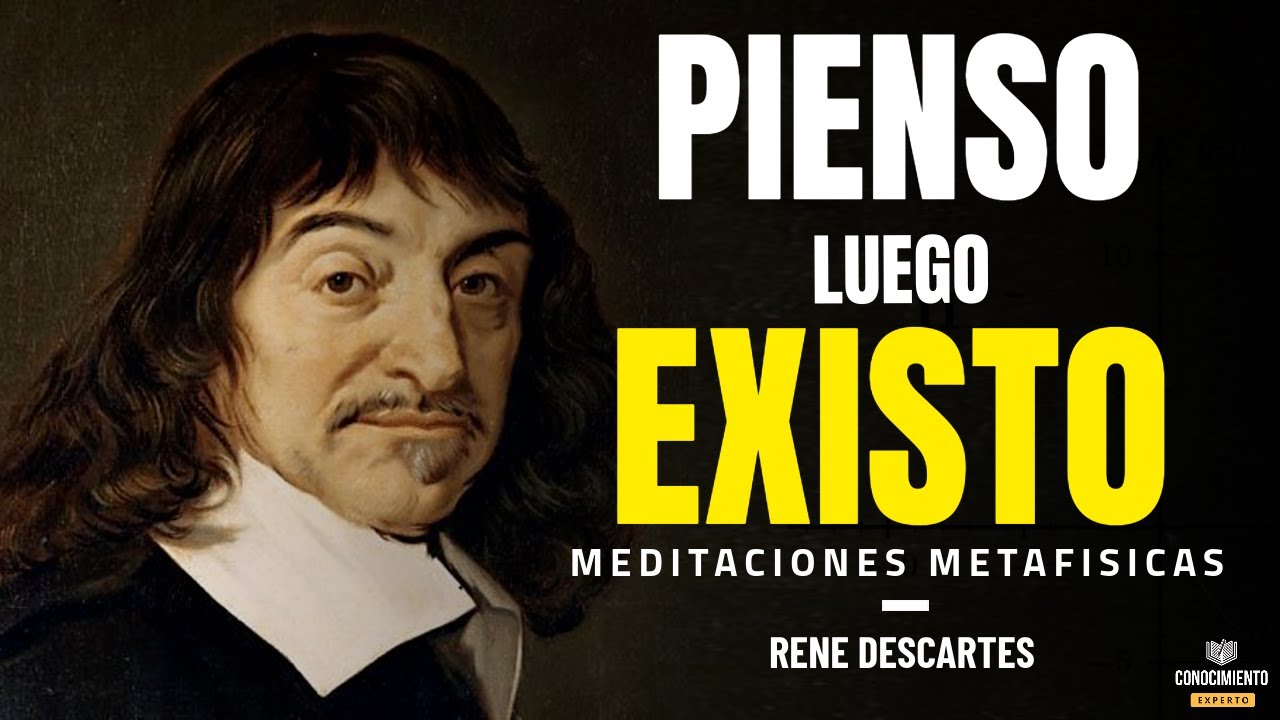


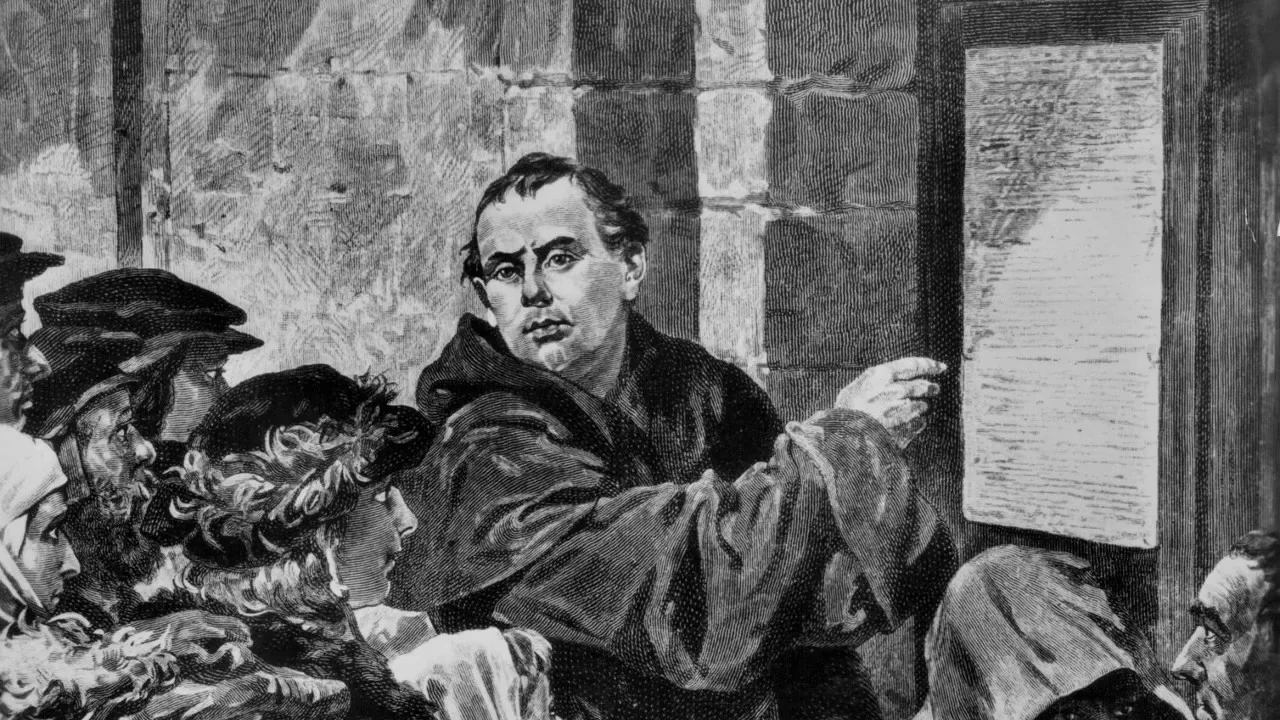


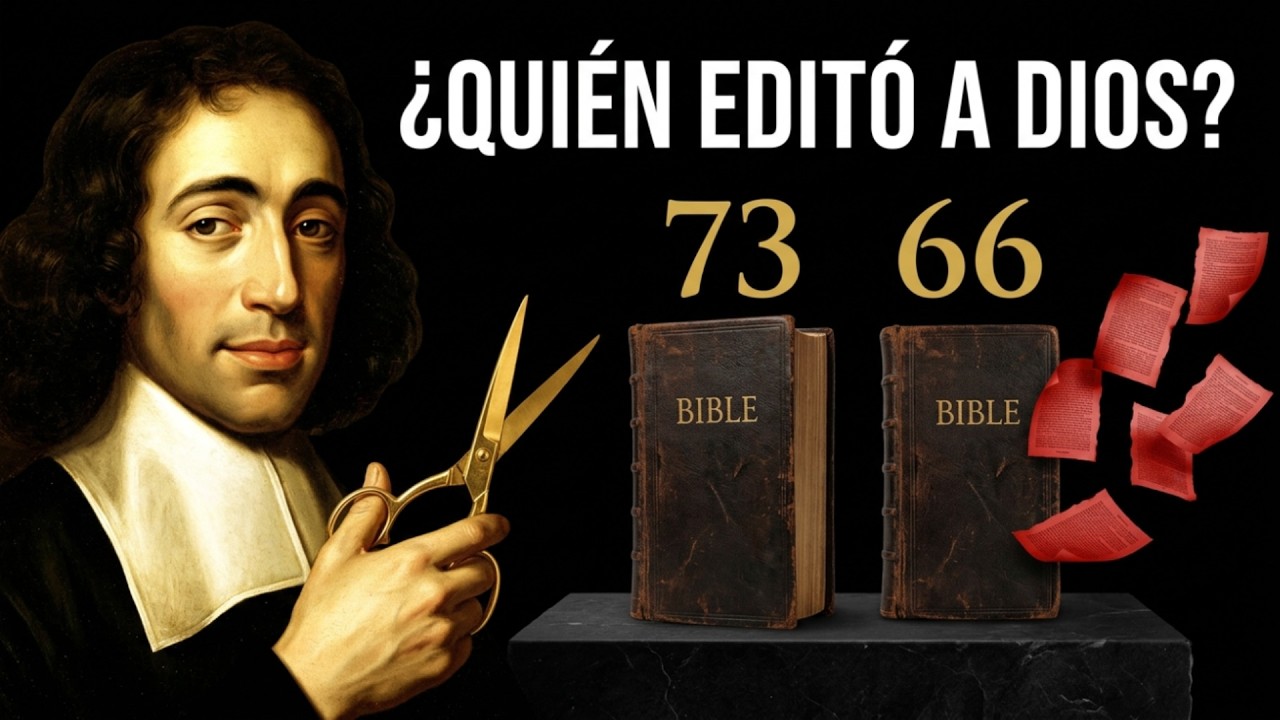





The Index Librorum Prohibitorum (Index of Prohibited Books), published by the Catholic Church from the mid-6th century until 1966, banned thousands of philosophical and literary works deemed heretical or dangerous, including foundational texts by Descartes, Pascal, Galileo, Hume, Bentham, Hobbes, Rousseau, and Kant, reflecting the Church's historical efforts to control intellectual discourse and maintain doctrinal orthodoxy.
Banned Philosophy Books: A Guide to the Index Librorum Prohibitorum
Added:An understanding of the historical power and political influence of the Catholic Church during the Reformation and Counter-Reformation eras.
Familiarity with the core tenets of the Scientific Revolution and the Enlightenment, particularly the shift toward rationalism and empirical inquiry.
Basic awareness of key philosophers of the early modern period, such as René Descartes, Baruch Spinoza, and Immanuel Kant.
An introductory concept of institutional censorship and the role of the printing press in spreading dissenting ideas.
A deep-dive analysis into specific banned works, such as Descartes' 'Meditations' or Kant's 'Critique of Pure Reason', to examine the precise arguments deemed heretical.
Study of the geographic shifts in publishing and intellectual hubs, particularly how censorship in Catholic regions boosted the print industry in Protestant areas like the Netherlands.
An exploration of the eventual abolition of the Index Librorum Prohibitorum in 1966 and the Vatican's changing relationship with modern philosophy and science.
Comparative analysis of the Index with modern forms of state, corporate, and digital censorship to evaluate how intellectual freedom is restricted today.
455.8K views17.8Klikes25:50Original Release: 2025-08-30
The index laborum prohibitorum or index of prohibited books was a list published by the Catholic Church banning certain texts which were too heretical and therefore just too dangerous to read.
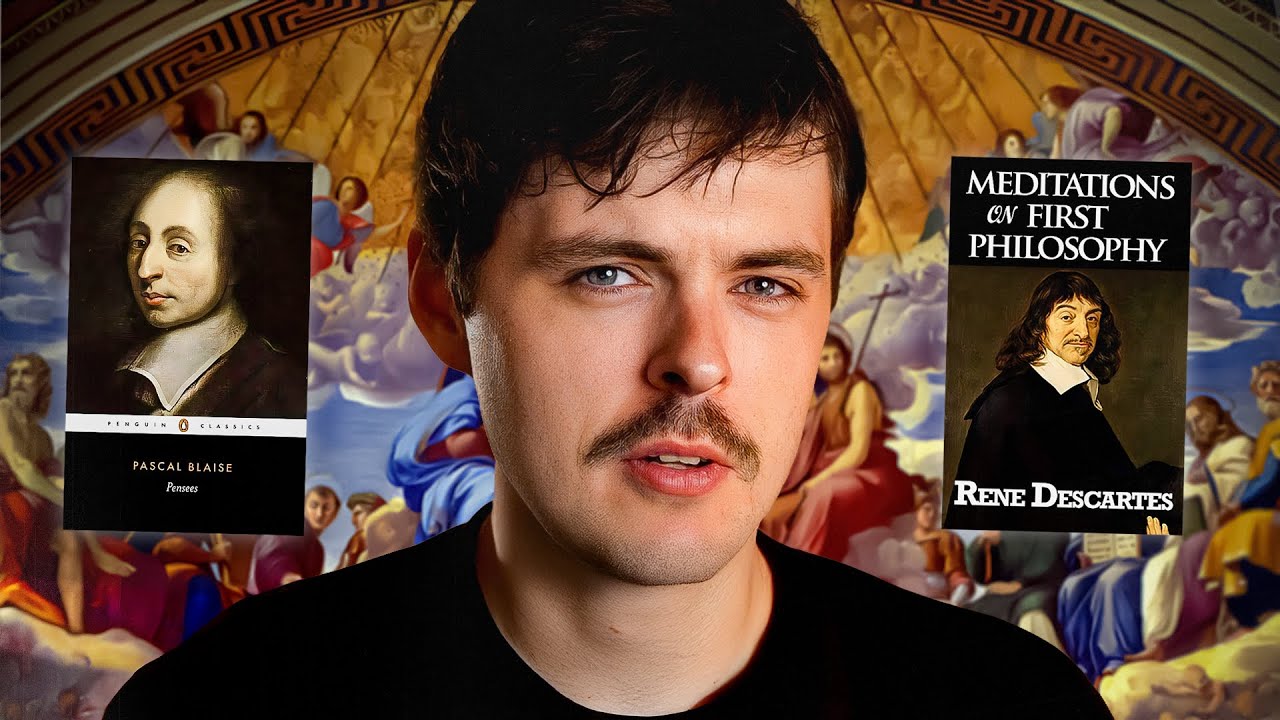
The first versions of this index appeared in the mid6th century. But the most amazing thing about this index is that it was still publishing well into the second half of the 20th century only being officially abolished in 1966. This means that Catholics who were alive when the Beatles were releasing albums were still officially prohibited from reading from what was now a list of thousands of banned texts. And of course, ladies and gentlemen, if you want a recommended reading list containing the great of philosophy, of history, of fiction, look no further than the index laborum prohibitor. Up first is meditations on first philosophy by Renee Decart. Decart is considered by many to be the founder of Western Philosophy. And the reason for this is that he began to notice something strange about his beliefs.
There were all kinds of things that Daycart believed about the world. He believed that he had hands, for example, or that chairs existed or that the sky was blue. But he began to realize that at least in principle, he could be mistaken about a great number of these things. For example, the belief that he has hands. Well, he's got good evidence that he's got hands. He can see his hands. But how does he know that his sense data is accurate? How does he know that the external world exists at all?
It certainly appears to, but what if he's mistaken? In the modern world, you often hear people hypothesize that we live in a simulation. And this essentially captures the same thought.
It might seem as though we're living in a real world of real objects. But what if it's all an illusion? What if you're just a brain in a vat somewhere and you're being prodded or fed electrical signals to give you the illusion of living in the real world? Now, to be clear, Daycart didn't think that this was the case. He didn't think the world was an illusion, but he realized he had no way to prove that it wasn't. He believed that the world was real, but how could he know that? Well, to find out, Daycart took everything that he could even possibly doubt and treated it as if it was false. And the question is, what are we left with? It's false that I have a body. It's false that the sky is blue. It's false that the earth exists.
Is there anything that I'm just not capable of doubting? Famously for Daycart there was one such example something which it was impossible for him to doubt and that's that he exists in some form. Why? Well because doubting is a kind of thinking. And so as long as you're trying to doubt that you exist, you're doing some kind of thinking. But if you're thinking something, then there must be a you doing the thinking. So the very act of doubting being a form of thinking proves the existence of a thinker. And although he didn't word it like this in the meditations, he previously captured this thought in first a French phrase japon donui then in Latin cogito ergosum meaning I think therefore I am. Now this doesn't mean that I exist as a man with hands and feet and hair and a camera in front of me. But it means that I must exist in some form. Even if I am just a brain in a vat or being fooled in some kind of simulation, there must exist something that I can meaningfully call me that's doing the thinking. I've got a whole video on Daycart's I think, therefore I am. Lots of people have criticized this line of thought, but whether you agree with it or not, what's undeniable is that it's one of the most influential phrases and influential thoughts in the history of philosophy. And of course, it was banned by the Catholic Church.
Daycart's radical doubt and rationalist philosophy wasn't super friendly to Catholic doctrine. But interestingly, Daycart was a believer in God. And in fact, the very next thing he does in the meditations is tries to use the same kind of logic that he's just used to prove that he exists to prove the existence of God. And Daycart's approach was a little bit controversial. He tries to prove the existence of God, but he does this as a means to ground his epistemology. He sort of uses God as this foundational tool upon which he can build a justification for knowing things. But once he's built that foundation, he kind of doesn't really need God anymore. And that's actually why bla1 Pascal the famous 17th century thinker wrote in his pon that he can never forgive daycart. He writes, "I cannot forgive Daycart. He would gladly have left God out of his whole philosophy, but he could not help making him give one flip to set the world in motion. After that, he had no more use for God." This is followed by a thought that simply reads daycart useless and questionable. Of course, Catholics of Pascal's time wouldn't have known this because the Pon was also banned on the index. That's right. My second recommendation is Pascal's Pon. Pon just means thoughts. You can think of it as like a diary or a journal that Pascal kept. It's quite aistic. It consists in a list of sayings essentially that aren't always entirely connected to each other. It's split into two parts, man without God and man with God. And Pascal is one of the most important religious thinkers in Christian history. Pascal was also of course a celebrated mathematician and physicist and is probably most remembered I think quite unfortunately for his famous wager in which he said that if you're going to bet on theism or atheism you should bet on theism because you've kind of just got less to lose. That wager is derived from some of the writings in the pon. Uh but the pon contains all kinds of really interesting nuggets of philosophical wisdom. In fact, one of my most viewed reels and YouTube shorts is me just talking about one of Pascal's ideas. So, I've been recommending this for some time, and of course, all of the texts mentioned today will be linked in the description. Now, if I asked you to just think randomly of an idea or a person that's been censored by the Catholic Church at some point in its history, what would come to mind? Perhaps the most famous example of Catholic censorship is against helioentrism. The idea that the Earth orbits the sun rather than the other way around.
Helioentrism is usually first attributed to Nicholas Capernicus who wrote about helioentrism but at a time when it certainly was far from proven science and his seinal text on the revolutions of the heavenly spheres was written before there really was an index of banned books that the Catholic Church was publishing and so at the time of its writing and even for decades and decades after its publication it wasn't really an issue for the Catholic Church and didn't make an appearance on the index.
However, in the year 1610, a man called Galileo Galilee published a text called Starry Messenger, which used some recent observations in astronomy that he'd made to advocate for the Capernac view of the heliocentric solar system. But in 1616, the Catholic Inquisition officially told Galileo that he was not allowed to write about helioentrism. Now it is worth pointing out that although of course Galileo was eventually vindicated by history even in his time helioentrism was far from established science and so the Catholic Church were not out of step with the general scientific consensus in being suspicious of what he was saying.
Robin Vos has a wonderful book chronicling the history of the index called the index of prohibited books.
And he puts it well when he says sensors working in the 17th century followed what they believed to be the best scientific consensus of their day and sought to suppress what they considered junk science that could be harmful to society. He points out that while we might condemn their decision today, we have to at least understand the context in which they were working to issue a judgment. It might still very well have been the wrong thing to do. I think that it was, but it's not like this was proven science that the church was proactively trying to suppress. So, Galileo was silenced, at least for a decade or so. In 1632, his former friend had been elected as the new pope, Pope Urban VI, and although he had been warned not to write about helioentrism, he had spoken to the pope, his former friend, and seemed to be under the impression that as long as he wrote about it in a hypothetical manner, it wouldn't be a problem. This led to Galileo publishing his dialogue concerning the two chief world systems which consisted of a dialogue between different characters who were discussing and debating the structure of the solar system. And although this was a dialogue, some of the characters seemed to be a bit more intelligent than some of the others. In fact, the main character defending helioentrism, Salviati, which shares an ethmological route with saved or salvation, would debate against a character called simplicio. So the next year, the Catholics officially condemned Galileo and sentenced him to house arrest for the remainder of his life, saying in the sentence, "The proposition that the sun is the center of the world and does not move from its place is absurd and false philosophically and formally heretical because it is expressly contrary to holy scripture." It was also at this point, by the way, that remember Capernacus's book that no one really cared about? Now it became a problem. So, it was placed on the index pending corrections, and it could only be taken off again if the text was edited to only speak hypothetically and mathematically about the Earth orbiting the Sun and have any insinuation that it actually orbits the sun removed. Again, for the time, not an unreasonable thing to think, but it's the confidence with which the church condemned his views as absurd and false and contrary to religious scripture that has led history to look back with such embarrassment on this incident. In fact, in 1835, Galileo's dialogue was removed from the index as it was beginning to become clear that yeah, the Earth does actually orbit the sun. Something which, by the way, the Catholic Church did eventually, to its credit, admit that helioentrism is true and it was a mistake to condemn Galileo in 1992.
It was a slow burner helioentrism in the church, but eventually they got there.
But today, ladies and gentlemen, I don't just have recommendations for your intellectual diet. I have recommendations for your physical diet, too. If you're anything like me, you find it quite difficult to stay on top of your nutrition, especially getting all of the necessary vitamins and minerals and things like that, especially if I'm short on time because I'm busy or I'm traveling or something.
Today's sponsor, Hule, has come to the rescue a number of times for me. spelled h ue l. Hules black edition is a complete meal, so it will leave you feeling full, but also focused and ready for the day. It's affordable and with just a tiny bit of prep in its powdered form. Just shake it up in a shaker like this and you can grab and go. But it even also comes in pre-prepared form.
400 calories, 26 vitamins and minerals that you need to thrive, all inside of this bottle. As you can see, I like the classic chocolate flavor, but it also comes in chocolate peanut butter or vanilla or iced latte. There are all kinds of different flavors. So, whatever you like, it also tastes great. And it's a full meal inside of this shaker with over 40 g of protein and working out at less than $3 per meal. It's incredibly budget friendly. I've actually really liked Hule for quite a long time now, so I'm genuinely excited that they're sponsoring the channel. If you go to hule.com and use the code alex okconor, new customers can get 15% off. The link is in the description with terms and conditions. But yeah, 15% off for new customers at hule.com using the code Alex Okconor. Try it out. Complete nutrition. Easy as it gets. Let's get back to it. It is worth pointing out that authors who found themselves on the index of banned books didn't always receive the same kind of punishment or censorship. And this doesn't just have to do with the kind of text that was being censored, but also when and by whom. There were different versions of prohibition indexes. There was a Roman index and a Spanish index and a French index, and they didn't always agree with each other. But also, these indexes were published over centuries. So, the consequences an author might face would depend on when they were writing. So when the 16th century Italian philosopher Geodano Bruno was writing that the universe was probably infinite and that stars might be sons of their own, even maybe with their own planets and potentially having life on those planets, he had his works banned and was also burned at the stake. Later the works of Capernicus and Galileo were banned, but Capernicus' work was only banned after he died and Galileo only ever suffered house arrest. Fast forward to the end of the 18th century and a Scottish philosopher has written a text which would revolutionize economics and bring new ideas to the table about how it is that nations gain wealth. For 15 years, this book wasn't even known to Catholic inquisitors. But in 1791, a French translation of it was found in a Spanish bookshop and suddenly the Catholics took an interest. This French translation of Adam Smith's Wealth of Nations, now a foundational text in the study of economics, was subsequently condemned by three inquisitors and nearly a 100red years later finally added to the Spanish index of prohibited books. And as again Robin Vos points out in his wonderful book, this initial condemnation of the Wealth of Nations in 1792 didn't prevent a Spanish translation from emerging in 1794. readers pointed out that the Catholic condemnation had technically only applied to the French translation, so a Spanish translation shouldn't officially speaking be a problem. Say what you like about the logic of a move like this, but it does at least demonstrate the waning of the practical power of the Spanish Inquisition by the end of the 18th century. In fact, when the Wealth of Nations was finally officially added to the Spanish index in 1873, the Spanish Inquisition didn't exist anymore, having disbanded in 1834. So, in adding this next book, The Wealth of Nations by Adam Smith to our list, I hope to also demonstrate that the kinds of consequences authors could face from Catholic censorship would depend on the time, place, and reason for the censorship. Okay. Next, we're going to look at another Scottish philosopher, probably more famous than the former, and that's David Hume. And in this case, I can't really recommend a particular text because all of his works were banned on the index. Hume was famously an empiricist, meaning he thought that all knowledge is derived from observations of the natural world, that knowledge can't come from anywhere else.
I made a whole video about Hume's empiricism. Actually, it's about chat GPT and how that relates to his empiricism, but I explain it there. So, take a look if you're interested. But Hume's empiricism led him to some unusual conclusions. Most famous perhaps is his so-called problem of induction.
Induction is a kind of reasoning that we employ every single day. It's the kind of reasoning in which a conclusion doesn't necessarily follow from premises, but we draw a conclusion anyway. This is opposed to deductive reasoning where the conclusion does follow from the premises. So an example of deductive reasoning might be premise one, all men are mortal. Premise two, Socrates is a man. Conclusion, Socrates is mortal. An inductive argument might be something like this. How do you know that the sun will rise tomorrow? That day will follow the night. Well, because it happened yesterday and it happened the day before that and the day before that and the day before that. And it seems as though the laws of physics will keep working. That's what's always happened in the past. This doesn't guarantee the conclusion. Logically speaking, the conclusion the sun will rise tomorrow seems like a reasonable move to make, but it's not actually guaranteed by these premises that it's risen in the past. And this is the nature of induction. It's reasoning from things that we have observed to things that we haven't observed. And most commonly, this occurs when we reason from things that happened in the past, like the sun rising in the past, to things that happen in the future, like the sun rising tomorrow. This kind of thinking, this induction is embedded in so much of what we do every single day.
Not to mention the fact that it's also the basis of the scientific method, for example. But when Hume tries to find a justification for inductive reasoning, he comes up short. Hume believes in induction. He believes that the sun will rise tomorrow and that the laws of physics won't stop working in 5 minutes and that if I drink a glass of water, it won't suddenly have inexplicably become poisonous to me or something. But when he tries to justify how he can know any of this, he runs into some difficulty.
This problem of induction is probably too complicated to get into now. But it leads to this interesting skeptical scenario that we have no way to justify our inductive reasoning. And Hume is also suspicious of the concept of causation. If I roll one billiard ball into another one, the second one will move in the same direction. But why?
Well, it seems like the first ball causes the second ball to move. But Hume being an empiricist tries to find the basis for this causal connection. He looks in the first ball. There's no causal guarantee. He looks in the second ball. He looks in the air between them.
He looks everywhere he can. And he doesn't find any empirical basis for justifying this crucial and fundamental principle of cause and effect. If you're interested in why, then he writes about this in his inquiry concerning human understanding. He wrote about it before, but in a much lengthier text, so I would probably start there. But Hume also wrote a work called dialogues concerning natural religion, where he considers various arguments for the existence of God. For example, the argument from design features prominently in the conversation between the three main characters. And Hume has these characters represent different opinions.
And it seems like Pho who's a bit of an empirical skeptic probably represents Hume's own view. So this text contains criticisms of religious arguments. For example, the universe is compared to a house. A house is complex and seems to be designed and it does have some kind of intelligent designer. The universe seems similar. It's complex. It's made up of matter. It seems to require a similar kind of designer. But Hume, sorry, Pho this isn't a great analogy because it's not like you've got the house over here and the universe over here. The house is a part of the universe. It's inside of it. So maybe that's an unfair analogy to draw. And the text basically contains a lot of back and forth on this kind of stuff.
But as you can imagine, this doesn't really jive well with the certainty of Catholic dogma. And so this along with every other work that David Hume ever wrote found its way onto the index.
Another foundational figure for modern philosophy at least is Jeremy Bentham. A name you might recognize as the founder so to speak of the school of utilitarianism. Bentham believed that the basis of ethics is in securing the greatest good for the greatest number and good he identified with utility. And what's the most utile thing for us?
Pleasure. So for a utilitarian the maximization of pleasure and the minimization of suffering is the basis of ethics. Utilitarianism is a popular but controversial idea that has birthed an unholy number of philosophical thought experiments. But relevant here is the fact that this kind of rationalist mathematical pleasure-based ethics is not in line with Catholic theology. And so deontology or the science of morality written in 1834 found its way one year later onto the index. Interestingly, John Stewart Mill, often thought of as a kind of successor to Bentham, updating utilitarianism and defending it against some of its critics, does find his way onto the list, but it's not his work on utilitarianism or his perhaps more famous on liberty. Instead, it's his principles of political economy and that work alone which found its way onto the index. So, something of an honorable mention. Next up, we need to talk about political power. If there's one thing that the Catholic Church cared about most during the height of its inquisitorial scheming, it's power.
Someone else who was thinking a lot about power in the 17th century was the political philosopher Thomas Hobbes.
Hobbes lived through the English Civil War, a bloody battle between the royalists who supported the rule of King Charles I and the parliamentarians who opposed it and whose most famous advocate was Oliver Cromwell. Hobbes himself was a royalist and fearing for his safety in 1640 he fled to Paris.
While he was there, King Charles I was executed by the parliamentarians. And this horrified Hobbes not just because he was a royalist, but because of the anarchy that this represented. The idea that if you just decide I don't like that leader anymore and somebody else disagrees, this can lead to bloody civil war. And so two years later, Hobbes published his famous Leviathan, a philosophical work defending absolute submission to an absolute sovereign.
Hobbes gives an account of why it is that authority evolves in the first place. In his view, life before society, man in the so-called state of nature, was, as he famously put it, solitary, poor, nasty, brutish, and short. And in short, the best way that we could find to protect against this state of nature is to institute authority. And today, the same remains the case. The only way, according to Hobbes, of avoiding the kind of calamity that we witnessed with the English Civil War is via a social contract that binds us to absolute submission to some kind of sovereign ruler. Now, absolute and unwavering submission might sound quite attractive to an institution like the Catholic Church, but Hobbes also thought that this sovereign ruler of a nation should be able to dictate religious affairs.
Hobbes had his own religious views. But he thought that if the sovereign wanted something else for his nation, that's what the sovereign will get. He would submit to this ruler who demanded of him a different kind of religious practice.
So yeah, giving a human ruler an unlimited and pre-approved ability to dictate religious affairs is not particularly friendly to Catholic doctrine. Thus, Leviathan, along with again all of Thomas Hobb's published works, found their way onto the index, although not actually until 1703, which is some 50 years or so after the Leviathan was originally published.
Another philosopher famous for discussing the so-called state of nature, is Jeanjac Rouso. Russo had a much more optimistic view of human nature. Unlike Hobbes, he believed that living in the state of nature, humans were essentially cooperative and living peacefully. It's modern society enforcing its own laws and rules on people which enslaves them. Thus, if you open Russo's social contract published in 1762, you'll find the famous first words, "Man is born free, but everywhere he is in chains." For Russo, the way to organize society is in accordance with what he called the general will, a slightly more democratic view than Hobbes's that we should just submit to an authoritarian dictator. Russo's idea is itself controversial. Those who don't agree with the general will of society will be forced to follow it anyway and in his words thereby forced to be free. But at any rate, it's another foundational text in political philosophy and of course was banned by the Catholic Church in 1763. Interestingly, that was a year after the text was published. And in the same year it was published, the Parliament of Paris, which was France's sovereign court at the time, ordered a previous work, Emile, as well as the Social Contract, to be burned and threatened him with arrest such that he fled to Geneva, where they also burned the books and so he had to flee again.
So it upset quite a few institutions it seems. Okay, before we get to number 10, I'm just going to list some honorable mentions here. Voltater's Candid added in 1759. Interestingly, Voltater hearing that Jeanjac Rouso had had to flee Geneva offered to take Rouso into his own home and give him refuge. Although this is something Russo didn't take him up on. Machaveli's The Prince was added in 1559. John Milton, a fierce critic of Catholicism, found his magnumopus Paradise Lost, added to the index in 1694. Edward Gibbons decline and fall of the Roman Empire. Added in 1783, this was notoriously harsh towards Christianity and blamed it in part for the weakening of Rome, which is one of the reasons why the empire would ultimately come to an end. Victor Hugo, who you may recognize as the author of Lay Miserab and of The Hunchback of Notradam, found both of those novels added to the index in the 1800s, but in fairness, they were eventually taken off the list of prohibited books in 1959.
Simone Devoir also found her way onto the list with the second sex, a foundational text in second-wave feminism. Let it not be said that the Catholic Church is not in at least some contexts inclusive. her life partner, not husband. She wasn't a big fan of marriage as you can read about in the second sex, Jean Paul Sartra, also found his way onto the list with nausea, being a Nothingness, and his roads to freedom trilogy all being deemed just too dangerous to read. Finally, at number 10, we have Emanuel Kant's critique of pure reason. Emanuel Kant is widely considered to be one of the most important philosophers who ever lived.
The critique of pure reason called for what K can't compared to a Capernac revolution in our understanding of the way that we relate to the world around us. He attempted to ground morality and aesthetics in reason. He founded the philosophical system of transcendental idealism which describes space and time as human intuitions which don't exist outside of our own perception. He tries to revolutionize our understanding of the world around us. Objects can never be known in and of themselves. We can never have direct interaction with or knowledge of objects like this microphone because all of it is filtered through our senses and the way that our mind constructs our experiences. I don't know much about Emanuel Kent, as is probably obvious from my rather botched attempt at summarizing his important contributions to philosophy. But one thing I do know about the man is that he's one of the most important thinkers that history has ever known. And so, of course, he makes for a wonderful rounding off point for today's list of recommended authors banned by the Catholic Church.
Up Next

1:42
Renaissance History: Bernd Roeck on Modernity's Origins
@convergingdialogues
226 views•2025-09-15

33:02
The Great Schism of 1054: Causes and Consequences
@SacredCathedrals
113.5K views•2026-02-19

91:57
The Geopolitics of the Ukraine War and the Rise of Global Autocracy
@JordanHarbingerShow
468K views•2025-04-19

17:05
Understanding the Cold War: Superpower Conflicts and the Road to Détente
@OverSimplified
46.1M views•2019-01-24
Related Study Plans & Knowledge Roadmaps
Structured learning paths in History
history
Byzantine Iconoclasm: Theology, Art & Politics
01Foundations of Byzantium and Early Christian Images
02The First Iconoclasm: Leo III and the Crisis of Images
03Empress Irene, Nicaea II, and the Second Iconoclasm
+ 2 more learning modules
9h5 modules
Explore Roadmap
history
Iranian Revolution (Causes, Events & Legacy)
01The Pahlavi Dynasty and the Roots of Discontent
02The Spark of Rebellion and the Rise of Khomeini
031979: The Fall of the Shah and the Climax of the Revolution
+ 2 more learning modules
8h5 modules
Explore Roadmap
history
Mali Empire: Mansa Musa, Trade & Timbuktu
01Foundations of the Mali Empire
02The Trans-Saharan Gold and Salt Trade
03The Reign and Pilgrimage of Mansa Musa
+ 1 more learning modules
6h4 modules
Explore Roadmap
history
1947 Partition: Politics, Borders & Legacies
01Foundations of British India and the Divide
02The Political Negotiations and the Mountbatten Plan
03Drawing the Boundary: The Radcliffe Line
+ 2 more learning modules
8h5 modules
Explore Roadmap