The Sun undergoes an 11-year sunspot cycle where solar activity, measured by sunspot numbers, rises to a maximum and falls to a minimum, driven by the flipping of the Sun's magnetic poles every 22 years; during solar maximum, sunspots appear at middle latitudes and magnetic fields intensify, producing more frequent solar flares and coronal mass ejections that can affect Earth, while during solar minimum, sunspots may disappear entirely.
Understanding the Solar Cycle and Sunspot Activity
Added:Deep Dive
Basic anatomy of the Sun, including the photosphere, convective zone, and corona.
भूगोल : लक्ष्य 2023 | Cosmology | Lecture-2 | Naveen Kumar Tanwar | Let's Crack UPSC CSE
40.3K
The Sun has a layered internal structure. At the center is the core, where nuclear fusion occurs. Surrounding the core is the radiative zone, followed by the convective zone. The visible surface is called the photosphere. Beyond the photosphere lies the chromosphere and the corona (outer atmosphere).
Click to watch →

태양계 2편 - 태양 그리고 수성과 금성 / 최초의 태양탐사선 파커호 / 세포구조의 태양 표면 / 금성에서 코로나 발견 / 하루가 1년 보다 긴 금성
1.1M
The Sun has no solid surface but consists of the photosphere (visible surface), chromosphere (lower atmosphere), and corona (outer atmosphere). The photosphere shows granulation from convection cells. Sunspots are cooler regions caused by magnetic fields inhibiting heat transfer, following an 11-year cycle. The Sun's interior consists of the core (where nuclear fusion converts hydrogen to helium), radiative zone (energy transfer through radiation), and convective zone (energy transfer through fluid motion). The core produces 99.9% of the Sun's energy, with temperatures reaching 15 million Kelvin and density 150 times water.
Click to watch →
【総集編】夜寝る前に聞きたい太陽系天体の謎10選【睡眠用】
640.7K
The Sun has several distinct layers: the core (where nuclear fusion occurs), the radiative zone (where energy moves by radiation), the convective zone (where energy moves by convection), the photosphere (the visible surface), the chromosphere (a thin layer above the photosphere), and the corona (the Sun's outer atmosphere). The photosphere is about 1,000 km thick and has a temperature of about 5,500°C. The chromosphere is about 2,000 km thick and has a temperature of about 10,000°C.
Click to watch →
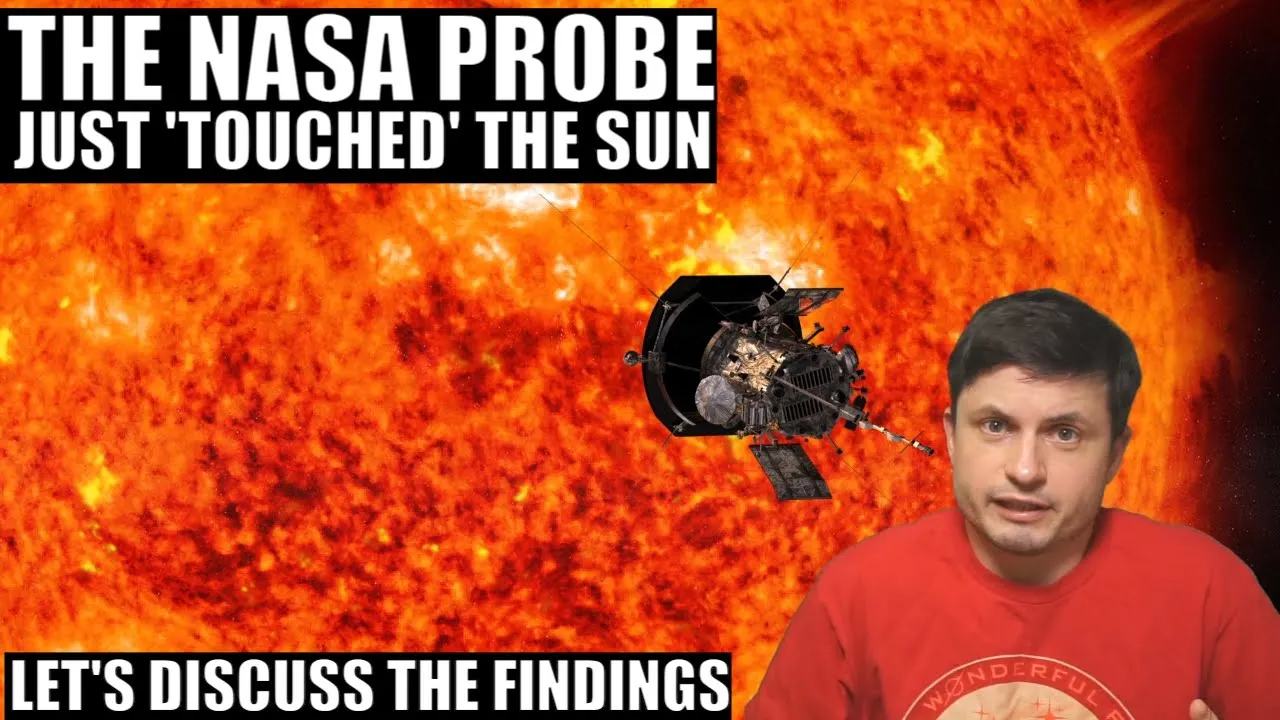
NASA Solar Probe Finally "Touches The Sun", Here's What It Found
227.5K
The Sun does not have a solid surface but consists of plasma layers. The photosphere is the visible surface composed of convection cells formed by the convective zone beneath it. The radiative zone transfers heat through radiation in one direction, while the convective zone circulates plasma, creating the cellular pattern observed on the photosphere. The core at the center produces nuclear reactions.
Click to watch →
Viaje a los límites del Sistema Solar
20.4M
The Sun is a G2V-type main sequence star, 4.6 billion years old, with a surface temperature of 5,780 Kelvin and a diameter 109 times Earth's. Its composition is 92% hydrogen by volume, fueling nuclear fusion in the core at 14 million Kelvin, converting 4.26 million tons of matter to energy annually. The Sun's structure includes a core, radiation zone, convective zone, and atmosphere (photosphere, chromosphere, corona). The Parker Solar Probe, launched in 2018, achieved a record 8.5 million km approach in 2021, becoming the first spacecraft to touch the corona. The probe studies solar magnetic fields, energy transfer, and the mysterious corona heating problem.
Click to watch →
Deep Dive
Fundamental principles of electromagnetism, particularly how magnetic field lines behave in a fluid or plasma medium.

Magnetic Fields Revision
3K
A magnetic field is a region of space where non-contact forces can be exerted. Charged objects produce both electrical and magnetic fields simultaneously, always at right angles to each other. Current-carrying wires become electromagnets due to moving charge carriers. The four basic principles of electromagnetism are: (1) current produces magnetic field, (2) stronger current produces stronger field, (3) no current means no field, (4) changing current changes field polarization. Magnetic field lines around a straight wire form concentric circles perpendicular to current flow.
Click to watch →
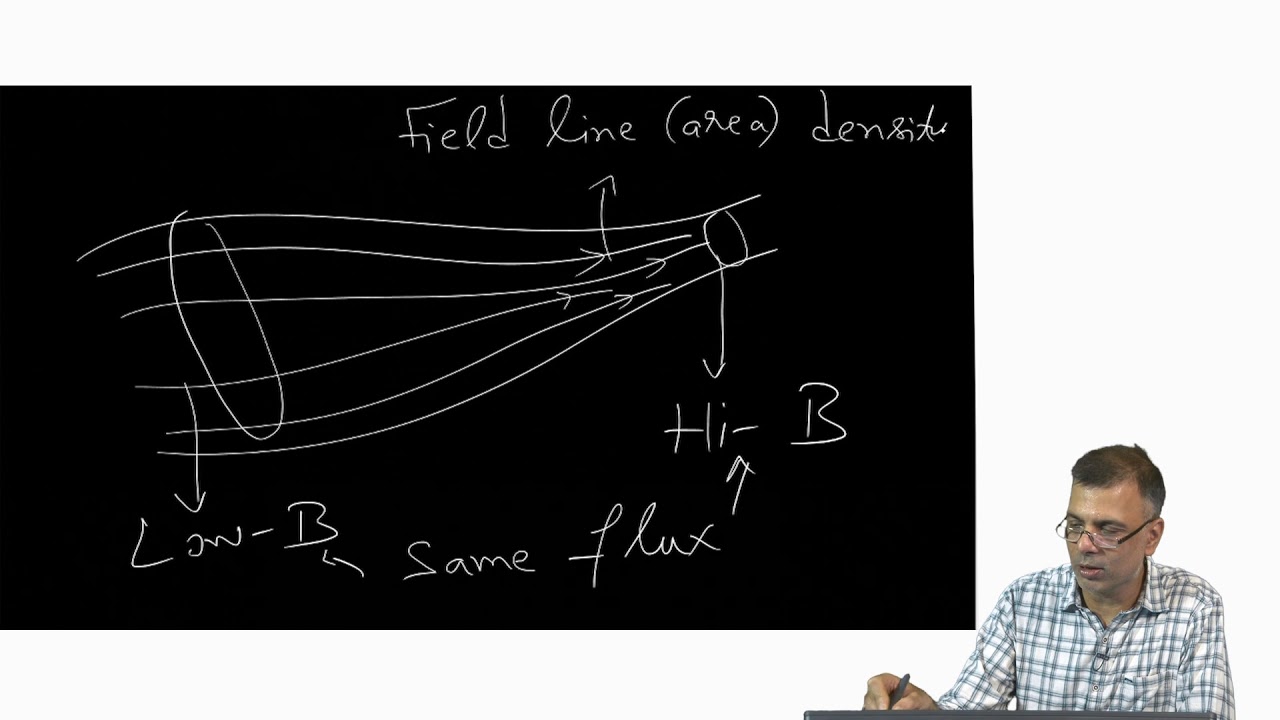
mod10lec52 - Magnetohydrodynamics (MHD) : Magnetic flux-freezing
2.4K
Ideal magnetohydrodynamics assumes zero electrical resistivity (infinite conductivity), leading to the magnetic flux freezing theorem. In this regime, magnetic field lines become permanently attached to fluid particles, moving with and being carried by the fluid. This creates a fundamental connection between magnetic field topology and fluid dynamics. The theorem states that magnetic flux through any closed loop moving with the fluid remains constant over time. When a magnetic flux tube constricts (smaller cross-sectional area), the magnetic field strength must increase proportionally to maintain constant flux, causing field lines to concentrate in constricted regions. This principle applies universally to all ideal MHD systems, distinguishing them from resistive MHD where magnetic field lines can diffuse through the plasma.
Click to watch →

Introduction to Plasma Physics: Magnetohydrodynamics Basics
98.5K
Magnetohydrodynamics (MHD) is a fluid theory for describing plasmas where magnetic fields are frozen into the plasma and evolve with it, governed by four fundamental equations: continuity (mass conservation), momentum (Newton's second law with Lorentz force), energy (entropy conservation), and induction (magnetic flux freezing). MHD applies when the mean-free path is small compared to system scales, enabling treatment as a fluid rather than tracking individual particles. Key concepts include the plasma beta (ratio of thermal to magnetic pressure energy), Alfvén waves (transverse waves along magnetic field lines), and the distinction between ideal MHD (perfect conductor, negligible resistivity) and non-ideal MHD (including effects like ambipolar diffusion and Hall effect in weakly ionized plasmas).
Click to watch →

Plasma as fluid chapter no. 3 Introduction lecture no.27
6.7K
Faraday's law states that the curl of the electric field equals the negative time derivative of the magnetic field (∇×E = -∂B/∂t). This equation reveals that moving charges generate magnetic fields—when electrons or ions move in plasma, they create circulating electric fields that produce magnetic effects. This electromagnetic coupling is fundamental to understanding how plasma behaves as a fluid, as the collective motion of many charged particles creates observable macroscopic electromagnetic phenomena.
Click to watch →

WS 4E P-Phy Chp 19 Magnetism – Self Study Go through
871
Magnetic field lines follow specific rules: they emerge from north poles and enter south poles, always coming in pairs with no isolated poles. Lines repel against each other because they are imaginary north poles, causing them to spread apart and curve outward. They should never cross each other and must have a line of symmetry through the magnet. The starting points where lines emerge should be evenly spaced. Compass needles always point tangentially to field lines at their location.
Click to watch →
Deep Dive
The concept of sunspots as localized, temporary regions of intense magnetic activity and lower temperatures on the Sun's surface.

Marathon Complete Physical Geography (World & India)|| By Ajeet Sir #geography #currentaffairs
452.2K
Sun spots (सौर कलंक) are temporary dark areas on the Sun's surface caused by intense magnetic activity. They are cooler than the surrounding photosphere (about 1400-1500°C cooler). Sun spots follow an approximately 11-year cycle of increasing and decreasing numbers.
Click to watch →

Солнце
90.3K
Sunspots are dark regions on the Sun's surface, much cooler (about 4500 K) than the surrounding photosphere (6000 K), appearing dark due to reduced blackbody radiation. They can be tens of times larger than Earth and are visible to the naked eye during high solar activity periods. Sunspots form where strong magnetic fields inhibit convection, preventing hot gas from rising and reducing energy transport to the surface. These magnetic fields arise from the Sun's differential rotation and convective motions in the outer layers.
Click to watch →

Sunspot in News-To The Point
76.1K
Sunspots are temporary dark regions on the Sun's photosphere (surface) that appear black due to their lower temperature (approximately 3,800°C compared to 5,820°C of surrounding areas), caused by intense magnetic fields (250 times stronger than Earth's) that suppress heat transfer from the Sun's interior; these magnetic concentrations create regions where solar flares can occur, potentially disrupting Earth's communications, power grids, and satellite systems, with sunspot activity following an 11-year solar cycle.
Click to watch →

"Application of the multi cross-wavelet to geophysical times series"*
534
Sunspots are temporary dark regions on the Sun's surface caused by intense magnetic activity, consisting of an umbra (central dark region where magnetic field lines are nearly perpendicular to the surface, inhibiting convection) and a penumbra (outer lighter region where magnetic field lines are more horizontal). They form primarily at mid-latitudes (30-40°) and migrate toward the equator over time, following a pattern known as the butterfly diagram. The Maunder Minimum (1640-1710) was a period of exceptionally low solar activity characterized by very few sunspots, demonstrating that solar activity varies dramatically over time. Understanding sunspot formation requires solving complex equations combining Maxwell's equations for electromagnetism with hydrodynamic equations for plasma behavior, which remains a significant computational challenge.
Click to watch →
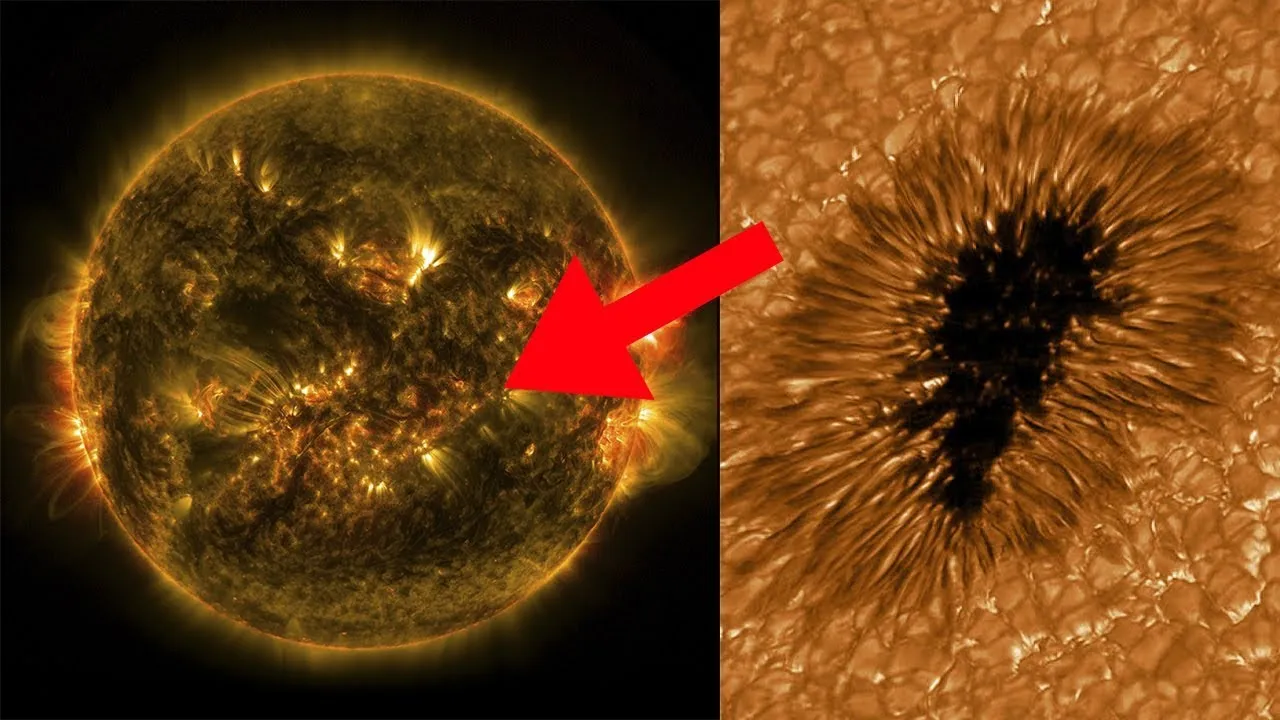
First Images of the Sun’s Surface - What We’ve Discovered?
476.6K
Sunspots are dark formations visible on the sun's surface that appear cooler than their surroundings. Because they radiate less light than surrounding areas, they appear darker. These temporary phenomena occur when magnetic activity inhibits convection, reducing heat transport to the surface. They provide evidence of the sun's dynamic magnetic field.
Click to watch →
Deep Dive
An understanding of the solar wind and how charged particles propagate through interplanetary space.

KNOW YOUR STAR, THE SUN
252
The solar wind is a continuous stream of charged particles expanding from the corona at supersonic speeds (500-800 km/s), meaning there is no true vacuum in interplanetary space. Ludwig Biermann studied comet tails and proposed solar wind particles push comet tails away from the Sun, identifying dust tails (pushed by radiation) and ion tails (pushed by solar wind). He estimated solar wind speed at ~470 km/s. Luna 1 (1959) provided first direct measurements of solar wind particles, confirming Parker's theory.
Click to watch →
![Reconexión Magnética, Anillos de radiación, física de plasmas y Satélite Chileno [Ep.107 Podcast]](https://i.ytimg.com/vi_webp/pDvBfBu-A8c/maxresdefault.webp)
Reconexión Magnética, Anillos de radiación, física de plasmas y Satélite Chileno [Ep.107 Podcast]
4.1K
The solar wind is a continuous stream of charged particles flowing outward from the Sun's corona into interplanetary space. This phenomenon results from the pressure differential between the Sun's extremely hot corona and the near-vacuum of space. The solar wind travels at supersonic speeds, carrying both plasma particles and the Sun's magnetic field throughout the solar system. This challenges the common misconception that space is truly empty—it is actually filled with a very dilute plasma medium. The solar wind creates the heliosphere, a bubble of solar influence that extends far beyond Earth's orbit.
Click to watch →

UK-SOSS on 12th of November, 2020
101
The average interplanetary magnetic field is a Parker spiral, lying in the heliographic equatorial plane on cones of constant latitude, winding around the Sun over 100 AU. However, real conditions include disturbances: solar wind turbulence, CME-driven shocks, corotating interaction regions, and current sheets like the heliospheric current sheet. Turbulence affects particle propagation in two ways: (1) Field line meandering causes particles to experience motion across the average magnetic field; (2) Scattering events produce sudden velocity changes as particles interact with turbulent structures. These effects are crucial for understanding how particles spread through interplanetary space.
Click to watch →
mod01lec08
5K
The solar wind is the continuous flow of charged particles (mainly electrons and protons) from the Sun's corona into interplanetary space. At Earth's location, the solar wind has a number density of 3-10 particles per cubic centimeter, flow speeds of about 400 km/s (with occasional streams at 750 km/s and impulse events up to 1000 km/s), and a temperature of about 150,000 Kelvin. The solar wind extends to hundreds of astronomical units, forming the heliosphere that interacts with the interstellar medium. It affects satellite communications and spacecraft trajectories.
Click to watch →

MEDO! ERA G4 E VIROU G5 - TEMPESTADE SOLAR EXTREMA ATINGIU A TERRA EM 12 de AGOSTO!
26.9K
Solar storms consist of charged particles and electromagnetic material ejected from the Sun, traveling through space as solar wind. The interplanetary magnetic field (IMF) carries this material toward Earth. When the IMF's magnetic polarity aligns with Earth's magnetic field (North pole of Sun connecting with South pole of Earth, and vice versa), it creates an 'ideal connection' that allows solar material to be injected into Earth's magnetosphere, intensifying the storm's effects.
Click to watch →
Prerequisite Knowledge
- Concept 01Basic anatomy of the Sun, including the photosphere, convective zone, and corona.
- Concept 02Fundamental principles of electromagnetism, particularly how magnetic field lines behave in a fluid or plasma medium.
- Concept 03The concept of sunspots as localized, temporary regions of intense magnetic activity and lower temperatures on the Sun's surface.
- Concept 04An understanding of the solar wind and how charged particles propagate through interplanetary space.
Subsequent Learning
- Step 01The physics of solar flares and Coronal Mass Ejections (CMEs), and how they trigger geomagnetic storms on Earth.
- Step 02Space weather forecasting techniques and strategies used to protect global power grids, satellite communications, and astronauts.
- Step 03The Solar Dynamo Theory, which mathematically models the generation and periodic reversal of the solar magnetic field.
- Step 04Long-term solar variations (such as the Maunder Minimum) and the debate surrounding their influence on historical climate cycles.
- Step 05The mechanics of Earth's magnetosphere and how it interacts with solar radiation to produce auroral displays.
Cycle Basics
Future Impact
Cycle Basics
0:01Playing Section
- 1
Sun appears calm but has 11-year sunspot activity cycle.
- 2
Sunspot numbers and locations shift between solar min and max.
- 3
Sunspots mark magnetic fields driving flares and CMEs.
The Planetary Hypothesis of Solar Cycles
While the mainstream scientific consensus attributes the 11-year solar cycle to internal magnetohydrodynamic dynamo processes within the Sun, an alternative theory suggests that planetary tidal forces influence or even drive this cycle. Proponents of the "planetary hypothesis" argue that the gravitational pull and orbital alignments of major planets—particularly Jupiter, Venus, and Earth—exert weak but synchronized tidal forces on the Sun's tachocline. They suggest these external forces modulate the solar dynamo, aligning solar activity with planetary orbital periods. However, most mainstream astrophysicists reject this hypothesis, arguing that planetary tidal forces are far too weak to affect solar interior dynamics and that internal plasma instabilities are sufficient to explain the cycle.
Deep Dive
The physics of solar flares and Coronal Mass Ejections (CMEs), and how they trigger geomagnetic storms on Earth.

COLAPSO no Sistema Mundial e o BRASIL LÍDER do Mundo
21.5K
Solar flares can only cause major problems when they eject large quantities of Coronal Mass Ejections (CMEs), which are composed of magnetic fields and plasma plumes. When these CMEs reach Earth's magnetic field, they can trigger geomagnetic storms. These storms can produce auroras boreais and other phenomena. The most dangerous solar flares are classified as X-class events. The current solar cycle began in 2019 and will complete in approximately 2030, representing the 11-year solar cycle.
Click to watch →

NASA Touched the Sun for the First Time in History — The Data Is Disturbing
147
Solar flares and coronal mass ejections (CMEs) are distinct solar eruptions. Solar flares are like the Sun flipping a light switch, releasing radiation that travels at the speed of light and can hit Earth within minutes. They occur when magnetic field lines on the Sun's surface become twisted and snap. CMEs are massive clouds of solar material that take a day or two to reach Earth. Geomagnetic storms are disturbances in Earth's magnetosphere caused by solar wind and solar flares, classified by intensity (G3 strong, G4 severe). These storms can disrupt GPS, radio communications, and satellite operations, while also creating beautiful auroras visible as far south as Iowa and Oregon during severe events.
Click to watch →

NASA Warns - BIGGEST Geomagnetic Storm in 165 Years is Coming!
3.9K
Space weather is the interaction between Earth's magnetosphere and the ionosphere with magnetized solar winds. The solar wind is normally mild, but sometimes the Sun sheds coronal mass ejections (CMEs)—gargantuan magnetized clouds of gas that accelerate to incredible speeds over several hours. CMEs look like giant twisted ropes and occur spontaneously, with frequency varying according to the 11-year solar cycle (one per day at solar minimum, three per day at solar maximum). When CMEs reach Earth, they generate geomagnetic storms that trigger auroras. Solar flares develop more rapidly and with much more energy than CMEs, often occurring soon after them. The most powerful volcanic eruptions pale in comparison to solar flares, which release 10 million times more energy within a few minutes. One solar flare can give out billions of tons of charged particles at temperatures reaching several million degrees Fahrenheit.
Click to watch →
Sunspots: The Terrifying Truth Scientists Are Fearing For Our Future | Documentary For Sleep
472
Solar flares are explosive releases of magnetic energy from the Sun's surface, classified by power (M-class, X-class). Coronal Mass Ejections (CMEs) are massive plasma bubbles ejected at millions of kilometers per hour. A full halo CME indicates Earth lies in the direct path. The physics involves magnetic reconnection where tangled field lines snap and release stored energy as heat, light, and kinetic energy. Temperatures reach millions of degrees, particles accelerate to near light speed, and plasma expands outward at hundreds of kilometers per second.
Click to watch →

Solar Index and Propagation Made Easy - HF Ham Radio
27.2K
Solar flares are eruptions near sunspots that project increased plasma and particles toward Earth, potentially causing increased ionization in the ionosphere. Coronal Mass Ejections (CMEs) are massive plasma events that can cause geomagnetic storms - large disruptions in Earth's magnetosphere. Severe geomagnetic storms can cause radio blackouts affecting GPS, shortwave, and amateur radio communications. These events increase K and A index values, degrading HF propagation conditions.
Click to watch →
Deep Dive
Space weather forecasting techniques and strategies used to protect global power grids, satellite communications, and astronauts.
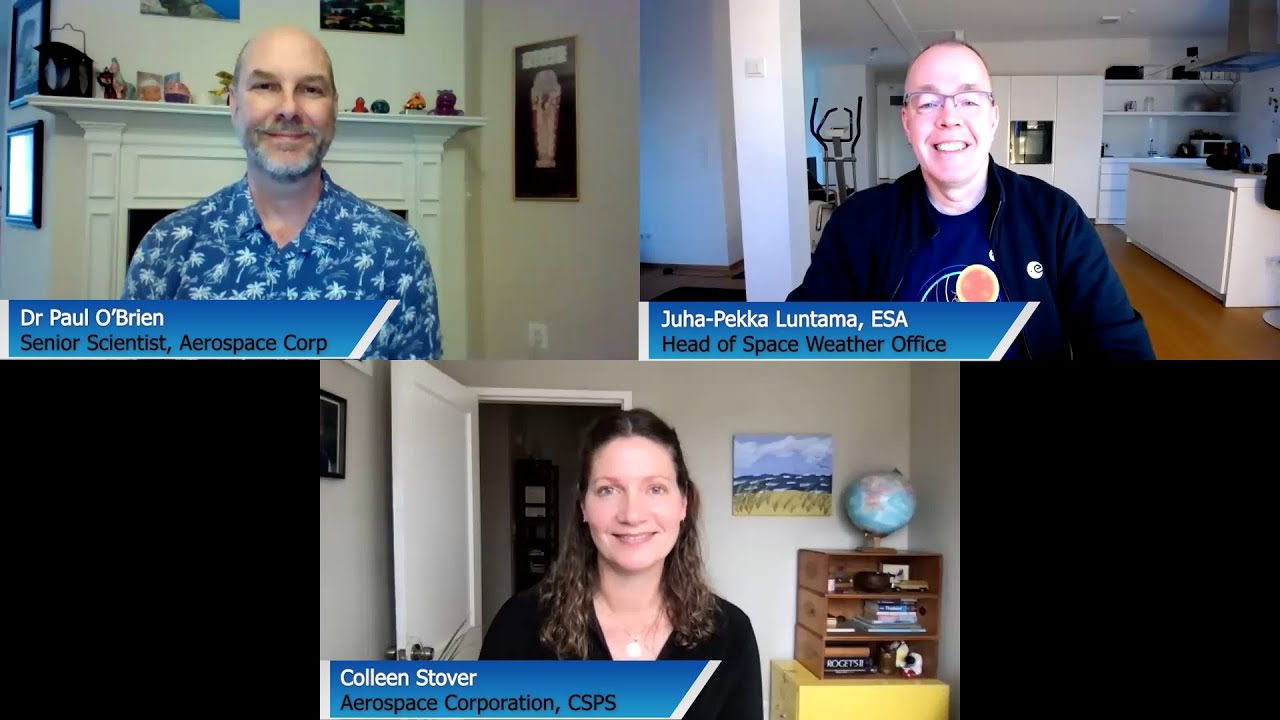
How Stuff Works: Space Weather, Satellites & Humans | The Space Policy Show Ep. 133
541
Space weather is an ongoing phenomenon starting at Earth's atmosphere and extending to the Sun's surface, involving plasmas and radiation where electrons are stripped from nuclei. The solar wind takes days to reach Earth, while coronal mass ejections (CMEs) arrive within hours. Solar flares reach Earth in 8 minutes. These events cause geomagnetic storms and ionospheric disturbances visible as Aurora. The 1859 Carrington Event was the largest recorded, causing telegraph fires. Solar particles cause satellite surface charging (tens of thousands of volts) creating internal lightning strikes, and relativistic particles reaching Earth in 20-30 minutes can disable satellites. Solar flares heat and expand Earth's upper atmosphere, affecting satellite orbits. Ionization blocks navigation signals (GPS). Space weather disrupts aviation through navigation satellite disruption and increased radiation at high altitudes. For power grids, geomagnetically induced currents (GIC) can damage transformers, causing blackouts taking weeks, months, or years to repair. Satellite design includes ground testing, metal shielding, and built-in redundancy, but reducing impacts to zero requires much more money. Mega constellations change the strategy: instead of extensive on-board redundancy, the approach is to have many satellites compensating for individual failures. Space weather prediction centers exist worldwide, with the US having one of the largest capabilities. Prediction involves human forecasters observing the Sun and empirical forecasts using data analysis and machine learning. Missions like the Parker Solar Probe and Solar Orbiter are improving longer-term forecasting. Satellite operator training is highly customized. The same particles impacting satellites also impact humans in space. The International Space Station is protected by Earth's magnetic field, but going outside exposes humans fully to solar particles. Early warning systems are essential so astronauts can return inside before radiation hits. The solar cycle is approximately 11 years (typically 9-12 years), related to the Sun's magnetic field behavior. Engineers design satellites considering whether they'll operate through solar maximum or solar minimum, adjusting shielding accordingly. However, major solar eruptions can occur anytime, even during solar minimum, so complete certainty is impossible.
Click to watch →

Phát hiện “vùng dị thường” cách Trái Đất 3 tỷ năm ánh sáng: Manh mối đầu tiên về vũ trụ song song?
2.9K
Multiple mitigation strategies protect against solar storm impacts: power grids use GIC sensors and automatic circuit breakers; satellites feature radiation shielding and safe mode capabilities; airlines reroute polar flights; astronauts take shelter in shielded modules. Prediction has improved through satellite networks (SOHO, SDO, Parker Solar Probe) and AI models predicting CMEs 30-60 minutes in advance. The 2022 EU report estimates only a 0.5-1.2% probability of a Carrington-level event in the next decade, with potential economic damage of $500-10,000 billion but no biological catastrophe. Solar storms remind us of humanity's technological dependence while demonstrating our capacity to adapt and protect critical infrastructure.
Click to watch →

Why is weather - on Earth and in Space - so fundamental for our lives?
539
Mitigation strategies for space weather effects include: (1) For power grids, excluding transformers from lines during storms to prevent damage from induced currents, then reconnecting after the storm passes; (2) For satellites, avoiding critical operations during high solar activity, putting satellites in safety modes with reduced exposure, reinforcing materials, and developing backup systems; (3) Understanding and measuring how phenomena are generated to improve prediction capabilities. The Vigil mission, planned for 2031, would position a probe at L5 (60° ahead of Earth) to observe solar phenomena 4-5 days before they face Earth, providing about one week of advance warning. This early warning capability is crucial for implementing protective measures and minimizing damage.
Click to watch →
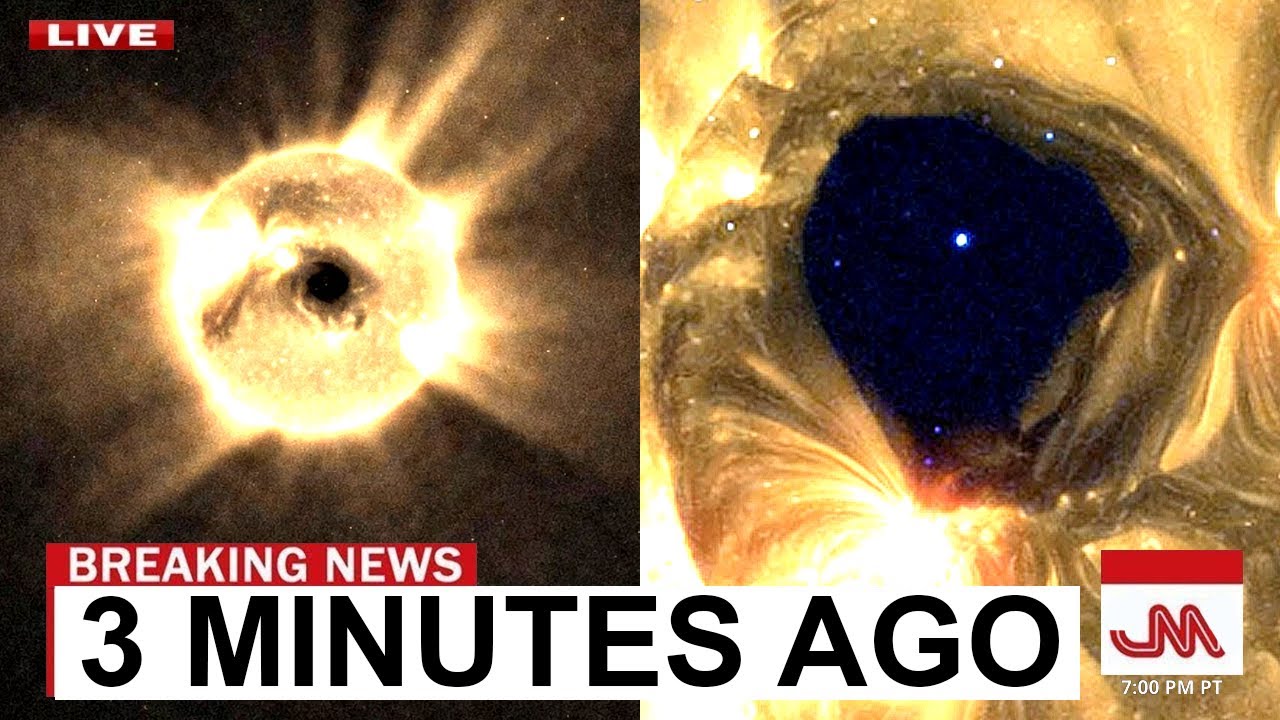
ALERT: Astronomers Are Terrified by a GIANT Sunspot That Could End Life on Earth
2.1K
In the future, it will be very important to keep damage to Earth's infrastructure to a minimum by keeping an eye on space weather and making tools to protect against solar storms. Solar storms are becoming more and more dangerous as the world relies more on satellites, power grids, and communication systems. Scientists and engineers are working hard to make new technologies that can predict, lessen, and even protect these systems from the worst effects of solar activity. Another area of innovation is making better shielding technologies for satellites and spacecraft as well as keeping an eye on solar activity. Companies and governments need to work together to make new technology that will keep astronauts, satellites, and other space assets safe from solar storms.
Click to watch →

Rencontre | Aurores boréales et AMICal Sat
307
Space weather forecasting aims to predict solar particle events and their effects on Earth's systems. The goal is to provide warnings that allow operators to take protective measures: power grid operators can reduce voltage to prevent transformer damage, aircraft can reroute away from polar routes, and satellite operators can implement protective measures. Current systems provide warnings 35-40 minutes before events, which is insufficient for complete protection. Better forecasting requires understanding solar activity, particle propagation through interplanetary space, and magnetospheric physics. The speaker notes that during the Carrington Event, radiation doses on polar flights would have been dangerous, requiring aircraft to be grounded.
Click to watch →
Deep Dive
The Solar Dynamo Theory, which mathematically models the generation and periodic reversal of the solar magnetic field.
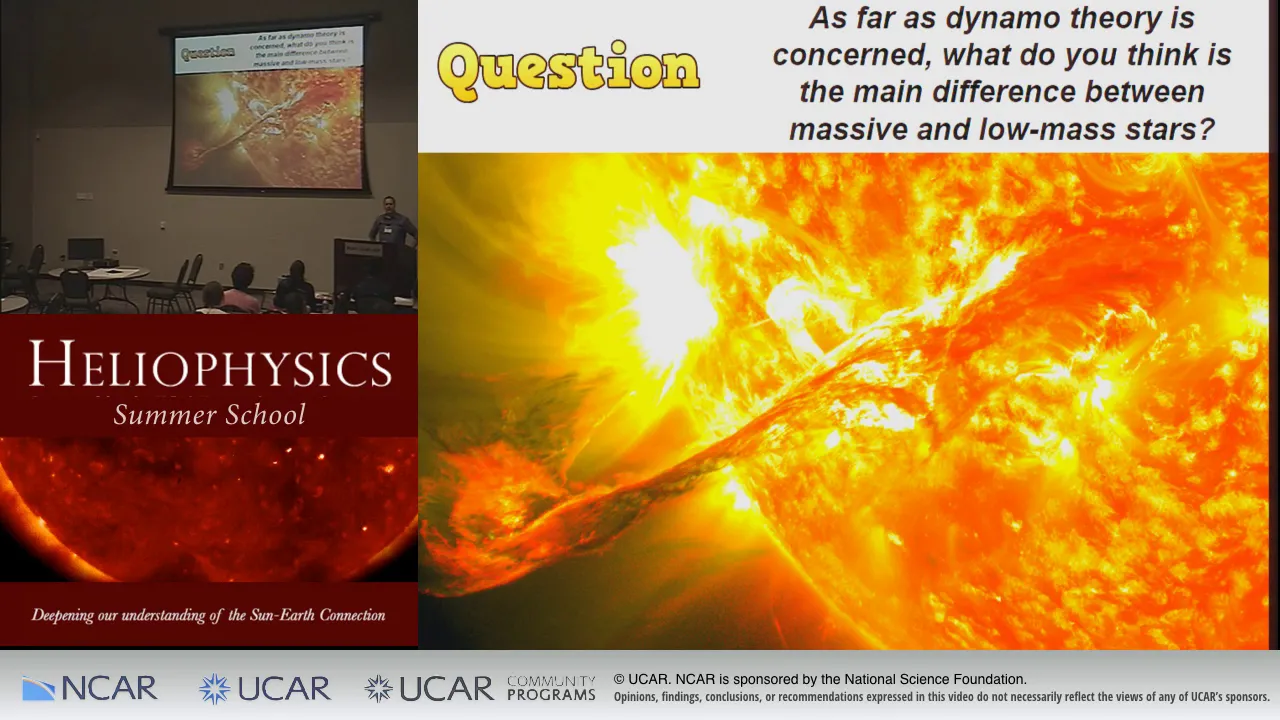
Stellar Dynamos | Nicholas Featherstone
217
The induction equation ∂B/∂t = ∇ × (V × B) - η∇²B governs magnetic field evolution, where the first term represents magnetic generation by fluid motion and the second represents ohmic dissipation. The magnetic Reynolds number (Rm = UL/η) determines whether generation dominates over dissipation, requiring Rm >> 1 for dynamo action. The mean induction equation separates into: poloidal field generation from toroidal field via differential rotation (omega effect); transport by meridional circulation; and the fluctuating EMF from small-scale motions generating axisymmetric field (alpha effect). The omega effect stretches magnetic field lines in the presence of shear, converting poloidal to toroidal field. The alpha effect arises from helical convective motions in rotating environments, converting toroidal to poloidal field through nonlinear correlations between velocity and magnetic field components.
Click to watch →

Le Soleil et nous : sources et impacts de l’activité solaire par Frédéric Clette
1.1K
Physical models of the solar dynamo must reproduce observed characteristics: 11-year periodicity, sunspots in two zones at intermediate latitudes, specific tilt angles of sunspot groups, opposite polarities in opposite hemispheres, polarity reversal each cycle, migration of residual fields toward the poles, and a global bipolar field at the poles. The dynamo operates through the interaction of differential rotation, convection, and magnetic fields in the electrically conducting plasma. This creates a self-sustaining cycle of magnetic field generation and regeneration.
Click to watch →

ד"ר עופר כהן:מחזור 24-מה אנחנו מפספסים?
124
A solar dynamo maintains magnetic fields through a cycle: differential rotation converts poloidal (vertical) fields to toroidal (azimuthal) fields, while the Coriolis force twisting rising flux tubes converts toroidal back to poloidal fields. The induction equation describes magnetic field evolution through convective motions and diffusion. The alpha effect, discovered by Parker in 1955, explains how toroidal fields generate poloidal fields. Solar dynamo models require velocity fields, the alpha parameter, and turbulent motions. Magnetic helicity describes energy stored in twisted magnetic fields, which can be released through coronal mass ejections.
Click to watch →

Scientists Confirm The Sun Has Flipped Its Magnetic Poles - And No One Noticed
3.2K
The solar dynamo—the engine generating the sun's magnetic field—is not fully understood despite decades of research. The mathematical expression involves plasma motion stretching, twisting, and amplifying magnetic fields, plus diffusion causing fields to spread out. The sun's differential rotation stretches north-south fields into tangled toroidal bundles, which turbulent convection then twists into helical components allowing fields to rise as sunspots. Global dynamo simulations capture qualitative features but fail to predict specific amplitudes or reversal timing. Small input variations produce vastly different outputs, making the system chaotic. The recent reversal provides concrete evidence of hemispheric variability challenging models assuming smooth symmetric flux transport.
Click to watch →
Конференция "Идеи С.Б. Пикельнера и С.А. Каплана и современная астрофизика" ГАИШ МГУ 12.02.2021
280
Solar dynamo models successfully reproduce the 22-year solar cycle using mean field approaches. The alpha effect is generated by helical convection in the solar tachocline, while the omega effect comes from differential rotation. The ratio of poloidal to toroidal field components is approximately 20, consistent with observations of the solar magnetic field.
Click to watch →
Deep Dive
Long-term solar variations (such as the Maunder Minimum) and the debate surrounding their influence on historical climate cycles.
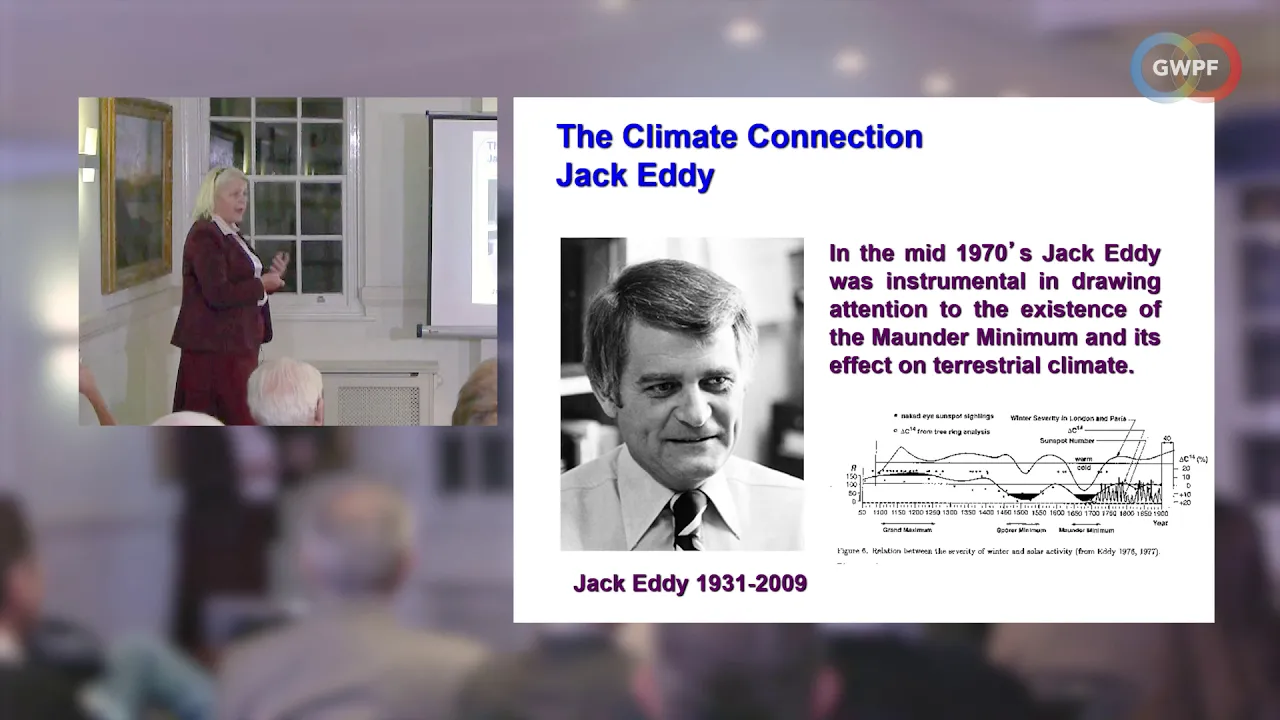
Professor Valentina Zharkova: The Solar Magnet Field and the Terrestrial Climate
161.6K
Notable grand minima include Maunder (1645-1715), Wolf (~1200 CE), Oort (1010-1050 CE), and Homer (800-900 BCE). A two-layer dynamo model with meridional circulation reproduces observed wave behavior, showing that internal solar dynamics, not external planetary influences, drive oscillations. Adding higher-order wave components reconstructs historical minima like the Dalton Minimum. The beat effect from interfering waves with slightly different frequencies creates the observed oscillation patterns. Analysis of 100,000 years of data reveals a 2100-year baseline oscillation in solar magnetic field strength, independent of the 11-year cycle. This baseline has been increasing since Roman times and will continue rising for ~500 years before decreasing.
Click to watch →
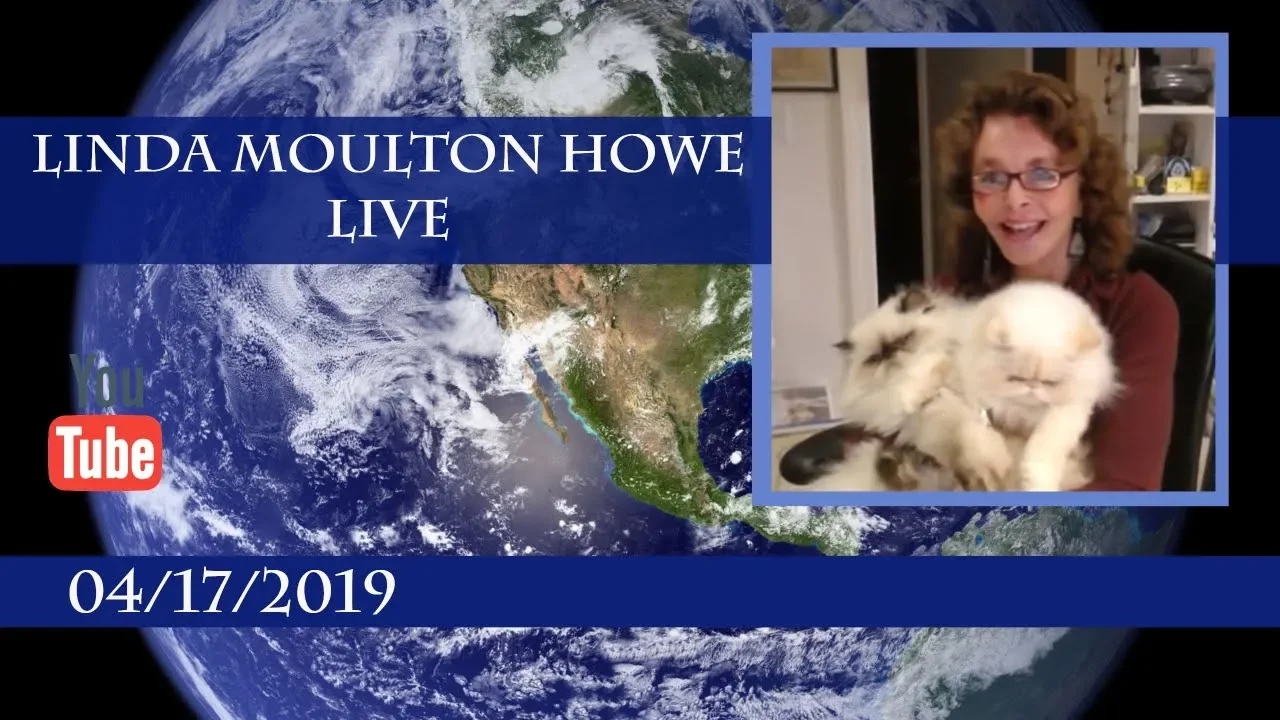
April 17, 2019: Linda Moulton Howe Live.
78.8K
Solar physicists at NASA have been monitoring the current solar minimum cycle and debating whether it may develop into a Maunder Minimum-like condition. The Maunder Minimum of the 1700s was characterized by astronomers observing very few or no sunspots on the Sun's surface. This period coincided with what became known as the Little Ice Age in Europe, during which the Thames River in London froze over. However, some scientists studying this period suggest that volcanic ash in the atmosphere may have contributed to cooling effects rather than diminished solar output alone. Calculations indicate that even during extreme solar minima, the difference in solar energy reaching Earth between minimum and maximum conditions is only about 1%, suggesting that solar variability alone may not be sufficient to cause major climate shifts.
Click to watch →

Q&A Live Mini Course on The Solar Activity Cycle
5.6K
The 11-year solar cycle, also called the Schwabe cycle, has been known since the 17th century when amateur astronomers began systematically counting sunspots. Historical data from ice cores, tree rings, and other proxies extends our understanding back to 1600 AD and beyond. The Maunder Minimum (1645-1715) was a period of extremely low solar activity when sunspots were virtually absent for about 70 years. Historical records show that during this time, the River Thames froze and people experienced unusually cold winters. An entire generation of people never saw a sunspot, leading some to believe sunspots were a myth. This minimum demonstrates how solar magnetic activity directly controls visible solar phenomena and can have significant climate effects.
Click to watch →

(MIAC #242) Alarm Bells: Forecasting Food Prices Divide & Conquer Right Now
14.6K
This segment explains how the Maunder Minimum (1550-1700) serves as the best-documented grand solar minimum, with historical records including maps showing weather anomaly locations. The video notes that the same weather patterns (extreme cold, snows, crop failures) are now occurring in the same geographic areas. Historical temperature records show a 2°C global temperature drop during this period, with monks' records of candle orders for funeral rites providing evidence of population decline. The video predicts the current Eddy Grand Solar Minimum will cause a similar 2°C drop around 2023-2024.
Click to watch →
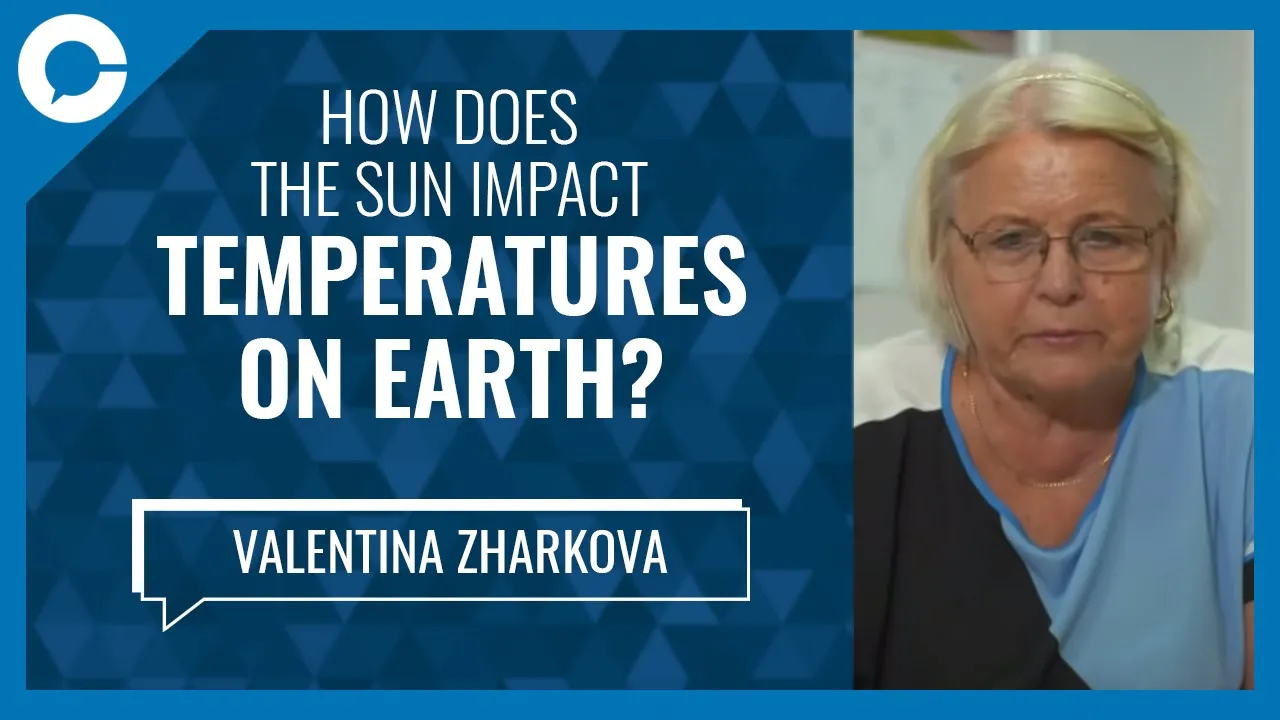
How the sun affects temperatures on Earth (w/ Valentina Zharkova, Northumbria University)
206.6K
The Sun is entering a stage known as a solar or Maunder minimum, where solar activity that ignites solar flares or sunspots has decreased. This is a normal cycle that has been linked to the mini ice age that lasted for more than 50 years starting in the mid-1600s. According to space weather data since 2015, the number of days without a recordable sunspot has been rising year-over-year. NOAA, NASA, and other agencies agree the Sun is entering a solar minimum phase. However, interpreting what this means for Earth's climate requires caution, as Professor William Hopper noted using the Danish proverb that it is difficult to make predictions, especially about the future.
Click to watch →
Deep Dive
The mechanics of Earth's magnetosphere and how it interacts with solar radiation to produce auroral displays.
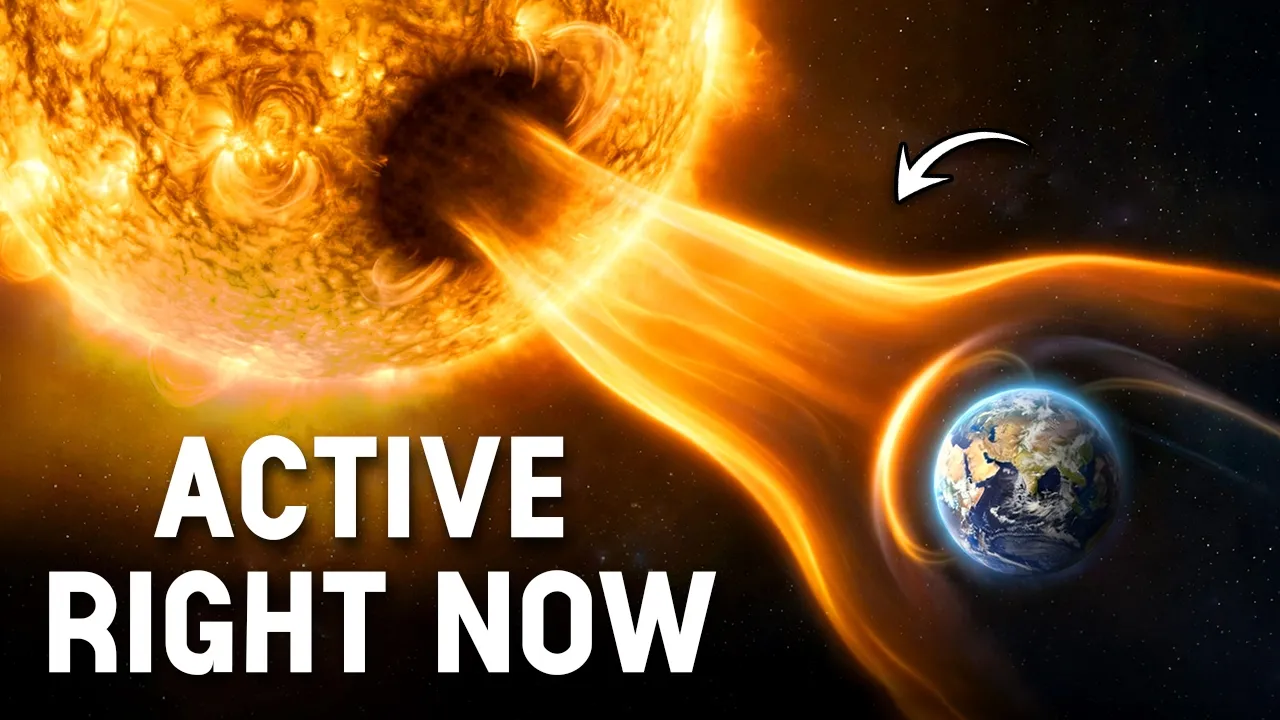
A Huge Hole Just Appeared on the Sun - And What's Coming Out Is Headed Straight for Earth
27.4K
Earth doesn't experience the solar wind as individual particles. Earth has a magnetic field, and that changes everything. Deep inside Earth's core, the outer core is liquid iron. This liquid iron flows in complex patterns driven by Earth's rotation and heat escaping from the inner core. These flowing currents of electrically conductive material generate Earth's magnetic field. That field extends far beyond the planet's surface, creating a protective bubble called the magnetosphere. On the side facing the sun, the magnetosphere extends outward for several Earth radii. On the opposite side, it stretches out into a long tail that extends farther than the moon's orbit. The solar wind doesn't pass through the magnetosphere as if it weren't there. The wind carries the sun's magnetic field with it. When two magnetic fields interact, complex things happen. On the sun's side, the solar wind compresses the magnetosphere. Think of it like air pressing against a balloon. The pressure from the wind pushes the magnetic field inward. At the same time, some solar wind material can enter the magnetosphere through processes that occur when the sun's magnetic field and Earth's field have certain alignments. This material gets trapped, adding to the population of charged particles already circulating in the magnetosphere. When a high-speed stream from a coronal hole arrives, the pressure increases. The magnetosphere compresses further. More energy flows into the system. That energy has to go somewhere. Part of it goes into accelerating particles already trapped in the magnetosphere. These particles gain speed, gain energy, and some of them spiral along magnetic field lines toward Earth's poles. Why the poles? Because that's where Earth's magnetic field lines converge. If you could see Earth's magnetic field, it would look somewhat like the field around a bar magnet with lines emerging from one pole and curving around to enter the other pole. Charged particles tend to follow these field lines. As energized particles descend into Earth's upper atmosphere, they encounter air. At altitudes between about 60 and 200 miles, the atmosphere is thin but not absent. Molecules of nitrogen and oxygen are present. When a high energy charged particle collides with an air molecule, the impact transfers energy to the molecule. Specifically, the energy kicks electrons in the molecule to higher energy states. The molecule becomes excited. But atoms and molecules don't stay excited indefinitely. The electrons fall back to their lower energy states, their ground states. And when they do, they release the energy they absorbed. They release it as light. The specific color of auroral light depends on which molecule is involved and which energy transition occurs. Oxygen produces both green and red auroral light depending on altitude and energy. Nitrogen can produce blue and purple. The result is the range of colors visible in auroras. What you're seeing when you watch an aurora is literally the glow of air molecules releasing energy they absorbed from solar wind particles. It's similar in principle to a neon sign where electrical current excites gas atoms that then emit colored light. The mechanism is the same, just on a vastly larger scale and with different gases.
Click to watch →

Magnetic Levitation & Superconductivity: Physics Lecture 19
1.1M
The aurora forms when solar wind plasma interacts with Earth's magnetic field. Charged particles follow field lines toward polar regions, ionizing atmospheric gases. Oxygen produces green/red light; nitrogen produces blue/purple hues. Color depends on particle energy and excitation height. Auroras appear only at night due to low brightness. They occur in rings approximately 500 km from magnetic poles and can change rapidly on timescales of seconds to minutes, creating dynamic light displays visible primarily near Earth's magnetic poles.
Click to watch →

Webinar "Geomagnetismo y clima espacial: Estudios del entorno Sol-Tierra"
101
The magnetosphere forms when the solar wind (400-600 km/s plasma) interacts with Earth's magnetic field, creating a protective shield. The solar wind compresses the magnetosphere on the sunward side and stretches it into a comet-like tail on the nightside. Auroras form when charged particles from CMEs enter the atmosphere through the magnetosphere. When the interplanetary magnetic field is southward, particles follow field lines toward polar regions, exciting atmospheric atoms that release light when returning to ground state.
Click to watch →

The Inner Planets - Mercury, Venus, Earth and Mars!
1.2M
Earth's magnetosphere is a protective region surrounding our planet, created by electrical currents generated by molten iron in the outer core. This magnetic field extends far beyond Earth's atmosphere into space. The magnetosphere protects Earth from solar radiation by deflecting charged particles from the Sun. When these particles are trapped and directed toward the poles, they collide with oxygen and nitrogen in the atmosphere, producing the aurora borealis (northern lights). Oxygen produces green light while nitrogen produces blue light.
Click to watch →
MEDO! ERA G4 E VIROU G5 - TEMPESTADE SOLAR EXTREMA ATINGIU A TERRA EM 12 de AGOSTO!
26.9K
Earth's magnetosphere acts as a protective shield against solar storms. When solar material approaches, it compresses and distorts the magnetosphere, with solar particles being injected into Earth's space environment through magnetic reconnection. This process occurs when the interplanetary magnetic field connects with Earth's magnetic field lines, breaking original field lines and allowing solar material to enter. The visualization shows blue areas representing solar material injected into the magnetosphere, particularly on the night side. This interaction demonstrates how Earth's magnetic field deflects and channels solar particles, protecting the planet while still allowing some energy transfer.
Click to watch →
Cycle Basics
Future Impact
Cycle Basics
0:01- 1
Sun appears calm but has 11-year sunspot activity cycle.
- 2
Sunspot numbers and locations shift between solar min and max.
- 3
Sunspots mark magnetic fields driving flares and CMEs.
The Planetary Hypothesis of Solar Cycles
While the mainstream scientific consensus attributes the 11-year solar cycle to internal magnetohydrodynamic dynamo processes within the Sun, an alternative theory suggests that planetary tidal forces influence or even drive this cycle. Proponents of the "planetary hypothesis" argue that the gravitational pull and orbital alignments of major planets—particularly Jupiter, Venus, and Earth—exert weak but synchronized tidal forces on the Sun's tachocline. They suggest these external forces modulate the solar dynamo, aligning solar activity with planetary orbital periods. However, most mainstream astrophysicists reject this hypothesis, arguing that planetary tidal forces are far too weak to affect solar interior dynamics and that internal plasma instabilities are sufficient to explain the cycle.
Basic anatomy of the Sun, including the photosphere, convective zone, and corona.
Fundamental principles of electromagnetism, particularly how magnetic field lines behave in a fluid or plasma medium.
The concept of sunspots as localized, temporary regions of intense magnetic activity and lower temperatures on the Sun's surface.
An understanding of the solar wind and how charged particles propagate through interplanetary space.
The physics of solar flares and Coronal Mass Ejections (CMEs), and how they trigger geomagnetic storms on Earth.
Space weather forecasting techniques and strategies used to protect global power grids, satellite communications, and astronauts.
The Solar Dynamo Theory, which mathematically models the generation and periodic reversal of the solar magnetic field.
Long-term solar variations (such as the Maunder Minimum) and the debate surrounding their influence on historical climate cycles.
The mechanics of Earth's magnetosphere and how it interacts with solar radiation to produce auroral displays.
101.5K views763likes3:25@NASAgovVideoOriginal Release: 2013-05-15
[Music] when we look up at the Sun from Earth it seems calm and unchanging the truth is quite [Music] different in addition to these abrupt changes in Activity The Sun Also has a long-term more regular pattern of change this pattern is called the sunspot cycle and a single cycle lasts for about 11 years although it can be as short as eight or as long as 14 and it can vary dramatically in intensity during one cycle the number of sunspots a good indicator of solar activity goes from low to high and back down to low solar minimum represents a period of time when Sunspot numbers are relatively low and solar maximum represents a period when Sunspot numbers are relatively High during this cycle the location of the sunspots also changes they are at middle latitudes during solar maximum and move closer to the Equator as the sun approaches solar minimum at solar minimum there are sometimes no sunspots to observe at solar maximum there can be many at the same time the number of sunspots is important because sunspots are the visual markers of where powerful magnetic fields have emerged from the sun's interior these magnetic fields power solar flares and coronal mass injections which can affect Earth and other objects in the solar system as the Suns spots increase so does the frequency and severity of flares and CMEs the sun's 11-year cycle is a symptom of a longer 22-year cycle called the solar cycle or hail cycle which affects the sun's magnetic fields every 11 years the sun's poles flip North becomes South and South becomes North so every 22 years the poles return to the position where they started the cycle the flip is due to the complex movement of magnetic fields inside the Sun that are constantly stretching twisting and Crossing as solar material bubbles up from the sun's core but the exact pattern of movements is not yet mapped out because the Sunspot Cycle follows a similar pattern regardless of the orientation of the poles it only takes half as long as the solar cycle the two cycles are different but the 11-year sunspot cycle is often referred to as the solar cycle which can be a little confusing right now the sun is approaching solar maximum so flares and CMEs are more common than they were a few years ago this cycle May peak in 2013 or early 2014 and should reach its minimum around 2020 although predictions about the sun are still uncertain the slower than expected progress of this sunspot cycle has led some to speculate that the next Sunspot Cycle might be very minimal with few sunspots even at solar maximum it is still far too early to know but even if this is the case it is happen happened before and isn't something to worry about it just means that the sun would briefly be a little closer to the unchanging orb it looks like from the ground [Music]
Up Next
50:06
Earth's Formation: The Violent Origins of Life-Sustaining Worlds
@NakedScience
3.8M views•2015-12-02
61:17
First Billion Years of the Universe with the Square Kilometre Array
@iaaudc
121 views•2022-05-26

6:25
Kepler's Laws of Planetary Motion Explained (Educational Astronomy Video)
@Peekaboo_Kidz
404.9K views•2023-02-17
6:10
Gamma-Ray Bursts: Cosmic Snipers Explained | Astronomy
@kurzgesagt
15M views•2016-07-31
Related Study Plans & Knowledge Roadmaps
Structured learning paths in Astronomy
astronomy
Reionization: Pop III Stars, IGM & 21cm Line
01Foundations of Cosmology & the Early Universe
02Population III Stars & Cosmic Dawn
03Physical Mechanisms of Reionization
+ 2 more learning modules
17h5 modules
Explore Roadmap
astronomy
Planetary Rings: Dynamics, Roche & Resonances
01Foundations of Gravity and Orbital Mechanics
02Tidal Forces and the Roche Limit
03Structure, Composition, and Collisions
+ 2 more learning modules
10h5 modules
Explore Roadmap
astronomy
Asteroseismology: Stellar Waves, Ages & Cores
01Foundations of Stellar Astrophysics & Wave Mechanics
02Stellar Oscillation Modes: P-modes and G-modes
03Mathematical Framework of Asteroseismology
+ 2 more learning modules
35h5 modules
Explore Roadmap
astronomy
Adaptive Optics: Physics, Engineering & Control
01Foundations of Wave Optics and Wavefronts
02Atmospheric Turbulence & Optical Distortion
03Wavefront Sensing Technologies
+ 3 more learning modules
35h6 modules
Explore Roadmap