












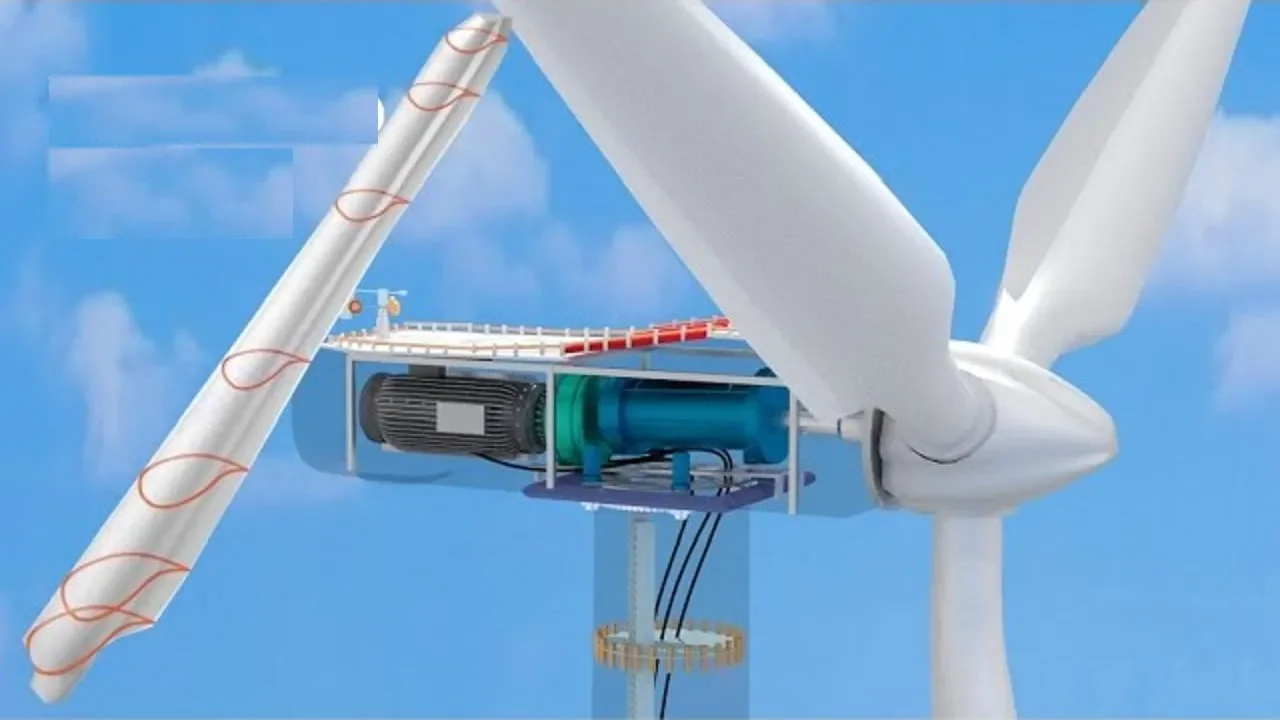










A commercial horizontal-axis wind turbine consists of four main components: the rotor (which generates aerodynamic torque from wind through rotating blades), the nacelle (containing the drivetrain with main bearing, gearbox, brake, and generator), the tower (holding the nacelle and rotor above ground), and the foundation (anchoring the entire structure); the turbine operates through three primary degrees of freedom: azimuth rotation (rotor spinning to generate power), yaw rotation (nacelle turning to align with wind direction), and pitch rotation (blades rotating about their lengthwise axis to control aerodynamic torque).
Wind Turbine Components & Degrees of Freedom | DTU
Added:Basic principles of rotational mechanics, including torque, angular velocity, and the concept of 'degrees of freedom' in three-dimensional coordinate systems.
Fundamentals of fluid dynamics, specifically how fluid flow (wind) generates lift and drag forces on an airfoil.
The basic concept of mechanical-to-electrical energy conversion and the general purpose of a generator.
Introductory statics and structural load distribution, to understand how forces are transferred from the rotor down to the foundation.
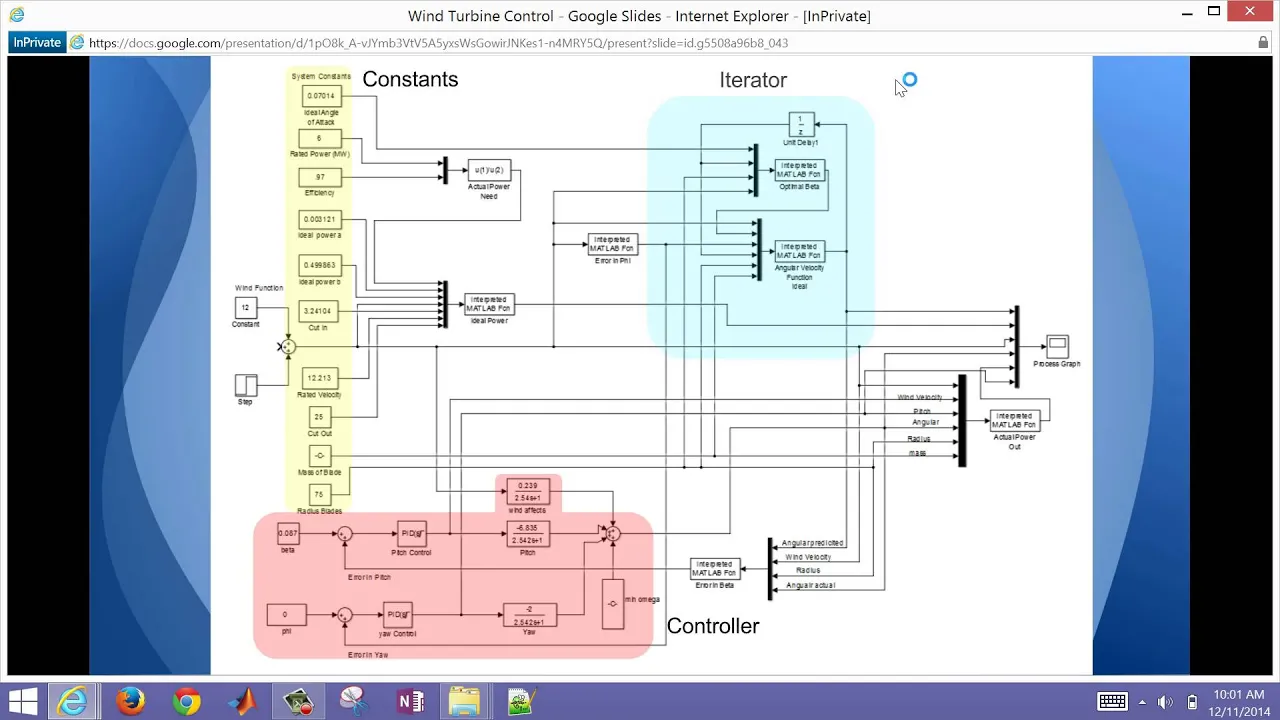
Wind turbine control systems, specifically how pitch and yaw control loops are designed to optimize aerodynamic efficiency and limit mechanical loads.
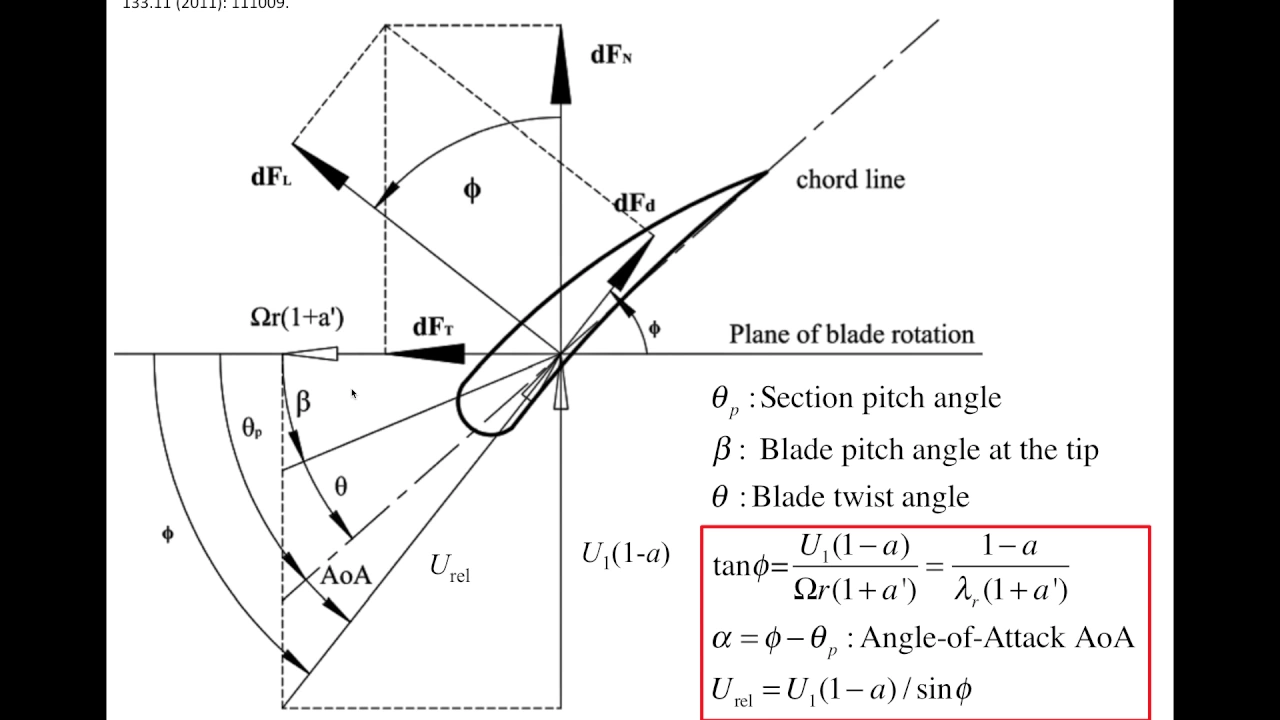
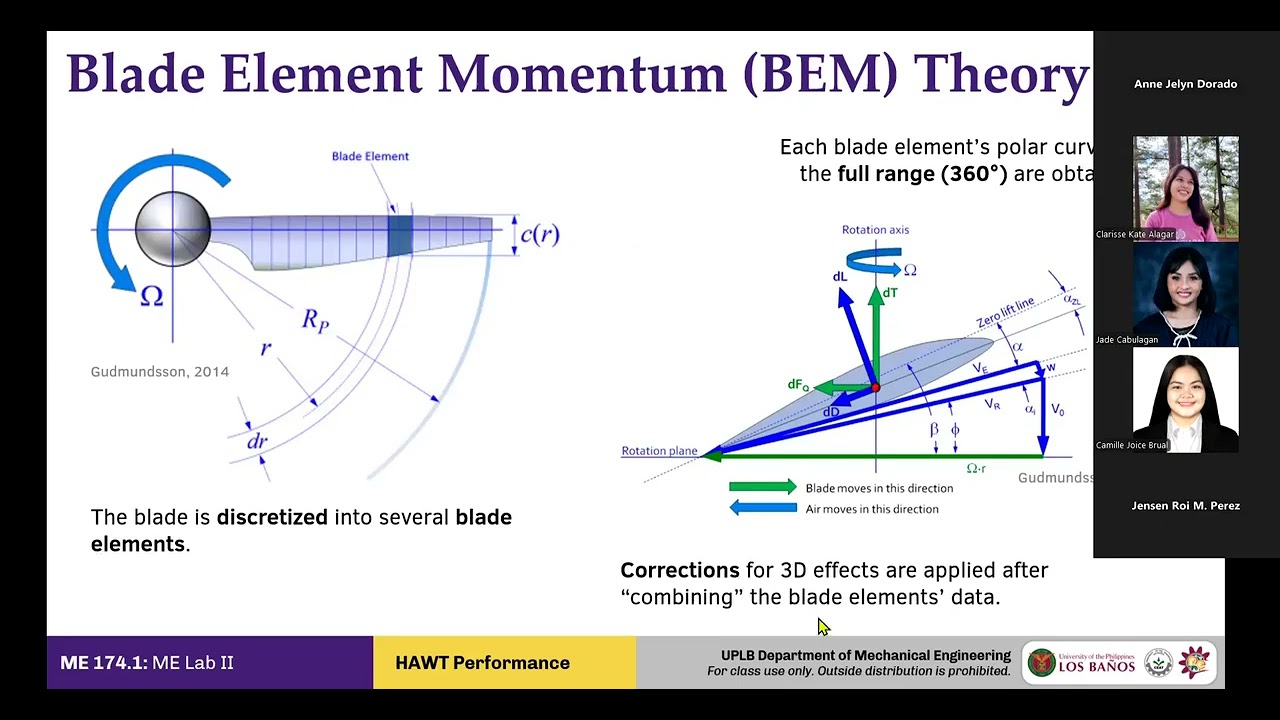
Blade Element Momentum (BEM) theory, which is used to analyze the aerodynamic performance of wind turbine blades.
Aeroelasticity and structural dynamics, focusing on how the flexible components (blades and tower) vibrate and respond to turbulent wind forces.
Power transmission and grid integration, detailing how the low-speed shaft, gearbox, and generator deliver synchronized electrical power to the utility grid.
Offshore wind engineering, exploring deep-water foundation alternatives like monopiles, jacket structures, and floating platforms.
216.3K views2.4Klikes6:30Original Release: 2016-02-26
in this lecture we're going to hear about wind turbine technology terminologies and components that you're going to use in this course it's an introduction where you afterwards should be able to list the main components of a commercial horizontal axis wind turbine and you should be able to list the main degrees of freedom that such a turbine has the main components of the turbine is the the rotor that generates the aerodynamic Torque from the wind it's the Nell that converts the torque into electrical power up here it's the tower that holds the Nel and the rotor blades up in the wind and also provides access to the Nel for maintenance and it's the foundation that holds the whole turbine uh in place and into the wind the main degrees of freedom of a wind turbine is the asimut the rotation of the rotor we call the asimut and normally it's calculated uh as from from vertical uh distance the asimut angle we have the Y which is uh the degree of Freedom that is used to turn an a cell into the wind and the whole rotor and then we have the pitch angle which is rotations of the blades uh about it its lengthwise axis uh typical due to a a controller action if we look at the rotor it consists of the blades The Hop the spinner and the pit bearing and also the pit system which is inside the Hub here we see a picture of a hub and a spinner you can you can see the uh The Hop behind the spinner in here the metal Po and outside typical a glass fiber uh plastic Hub and then we have the blades here on the ground in this case for this blades the pitch bearing the bearing which turns the blades about their lengthwise axis is part of the blade and not of the Hop typically it would be part of the Hop and here we see how the whole rotor is lifted up to the turbine we have here at reu the DTU campus at Ru if we look at the Nel it consists of the drivetrain that converts the aerodynamic torque that goes in through the Hop through the main shaft or also called the lowp speed uh shaft it is hold by the main bearing and a gearbox where there is also a a bearing and it translate the speed of the low speed shaft into a high-speed shaft that goes into the generator on the low high-s speeed shaft we have also the mechanic iCal breake for breaking the the the turbine at at standstill and all this is mounted on the bed plate which forms the entire nil and this bed plate can then also turn in the y direction on the tower top uh using a y drives the generator is connected to the converter typically we have a variable speed turbine which can uh a converter can convert the uh the speed of the generator into the the grid frequency and this is then through some transformation into the uh to the grid the tower the typical Tower you see is a tur Tower made of steel but it could also be a lattice Tower or even a combination like a tripod Tower where you have launcher structures than you have in the lce tower then we have the uh the foundation typically onshore it's a gravitational Foundation where the gravity is holding the whole thing and it's made out of concrete here you see where we are pouring the the foundation for the research turbine at Ru campus DTU and here we see how the tower is then mounted on this Foundation when we go offshore uh there are different kinds of Foundations and and this is a a large research area we can can have a monopile where we have a similar to the tower turbular steel structure that we uh that is hammered into the ground we have had a tripod which can also be hammered into the ground the the the tri pods uh the the Feats of the tripod or it could also have a bucket Foundation where there is a big uh steel structure that is sucked into the through the ground we can have the jacket or we can also have floating devices like simmer submersible structure with uh with moing lines or a spar buoy where it's more like a buoy uh also mounted with moring lines to the ground so we come to the summary the main components of a horizontal Aid wind turbine is the rotor Blade the Nel and the tower and its foundation and inside the Nel we have the dyve Trin with the main bearing the gearbox the brake and the generator and some Power Electronics that converts the the uh power produced in the generator to the grid side through some Transformers the main degrees of freedom is the asimut rotation of the rotor which is the one generating the power the Y rotation of the Nel which Mak sure that we can turn the turbine into the wind and then we have the pitch rotation of the blades about the links wi axis which we use for controlling the aerodynamic torque on the rotor but
Up Next

12:45
Getting Started with Raspberry Pi: Setup and LED Blinking
@sparkfun
181.3K views•2014-05-22
30:32
Ultrasonic Transducers: Resonant Frequency Measurement and Horn Design
@imajeenyus42
229.9K views•2017-02-22
54:16
Polymer Environmental Degradation: Mechanisms & Stabilization
@iit
1.8K views•2012-07-10
33:39
How a Student's Question Saved a NYC Skyscraper from Collapse
@veritasium
22.8M views•2025-04-26
Related Study Plans & Knowledge Roadmaps
Structured learning paths in Engineering
engineering
Building Acoustic Levitators: Physics & Arduino
01The Physics of Sound and Standing Waves
02Piezoelectric Transducers and H-Bridge Drivers
03Arduino Programming: Generating 40 kHz Signals
+ 2 more learning modules
14h5 modules
Explore Roadmap
engineering
Building Peltier Cloud Chambers: Particle Tracks
01Cosmic Rays & Cloud Chamber Physics
02Thermoelectric Cooling (TEC) Fundamentals
03Custom Liquid-Cooling Loop Design
+ 2 more learning modules
18h5 modules
Explore Roadmap
engineering
Yagi-Uda Antennas: Modeling, Build & VNA Test
01Introduction to RF and Antenna Fundamentals
02Yagi-Uda Antenna Design Principles
03Antenna Modeling and Simulation in 4NEC2
+ 2 more learning modules
18h5 modules
Explore Roadmap
engineering
ECG Monitor Design: Op-Amps, Filters & Noise
01Electronics & Breadboard Basics
02Op-Amps and Instrumentation Amplifiers
03Bioelectricity and ECG Fundamentals
+ 2 more learning modules
18h5 modules
Explore Roadmap