















This documentary explores how two visionary English authors, Aldous Huxley and George Orwell, each predicted different paths to dystopia through their novels 'Brave New World' (1932) and '1984' (1949). Huxley, a privileged intellectual, envisioned a future where technology and pleasure are used to condition humans into voluntary servitude, while Orwell, a humanist activist, depicted a totalitarian regime using fear, surveillance, and truth manipulation to maintain control. The film examines how modern society increasingly resembles a hybrid of both visions, particularly through China's social credit system and mass surveillance, suggesting that contemporary threats combine elements of both authors' dark imaginations.
Brave New World vs 1984: Modern Surveillance and Control
Added:Familiarity with the core plots, characters, and themes of George Orwell's '1984' (state coercion, censorship, and Big Brother) and Aldous Huxley's 'Brave New World' (pleasure-induced compliance, consumerism, and genetic engineering).
Understanding of the literary definition of a 'dystopia' and how speculative fiction is historically used to critique contemporary political and social trends.
Basic awareness of modern digital surveillance mechanisms, such as cookies, data tracking, and algorithmic content curation.
Analysis of Neil Postman's framework in 'Amusing Ourselves to Death', comparing whether modern society is more threatened by Orwellian restriction or Huxleyan overstimulation.
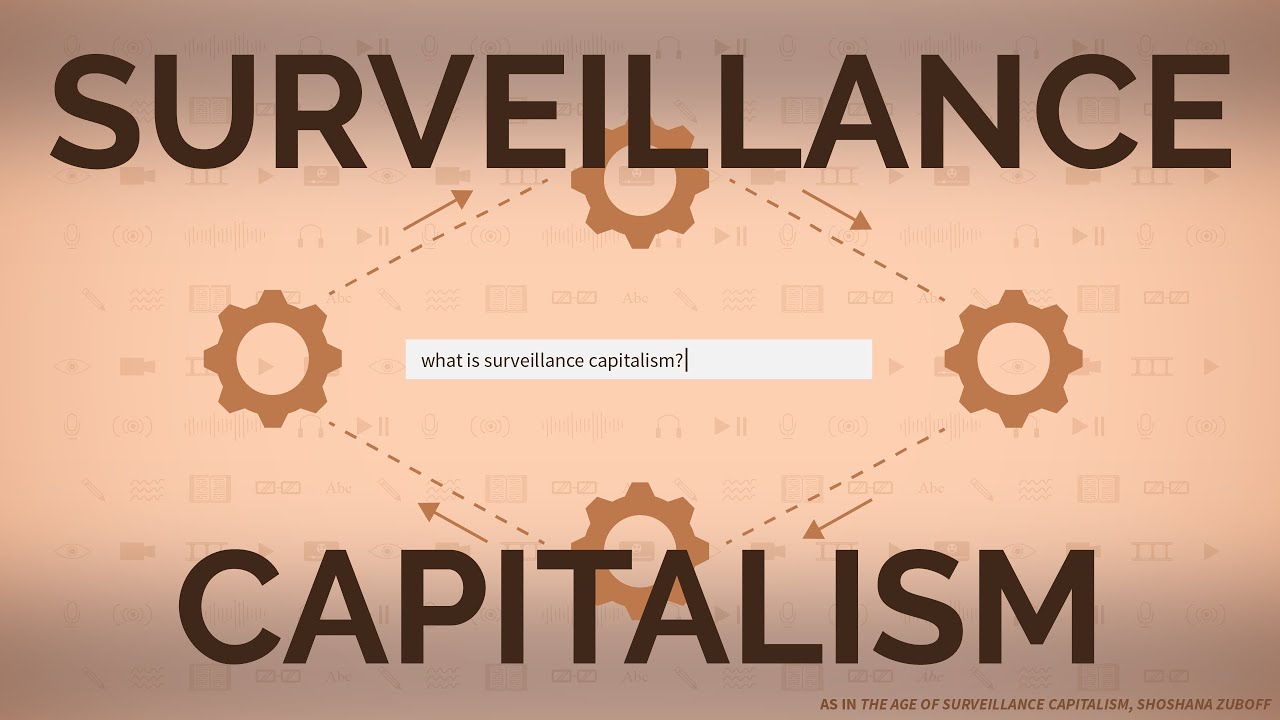
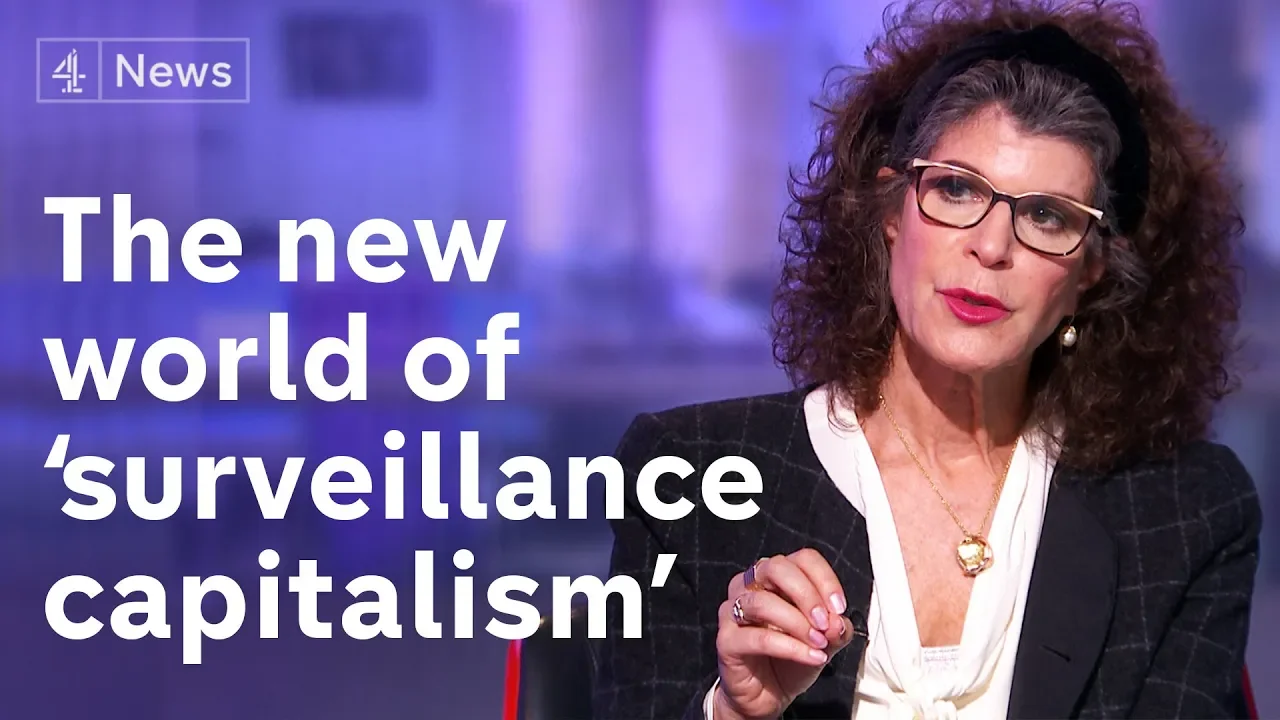
Exploration of Shoshana Zuboff's theory of 'Surveillance Capitalism' to understand how behavioral prediction products drive the modern tech economy.
Investigation of real-world case studies of state and corporate surveillance, such as China's Social Credit System and Western biometric data collection.
Examination of the psychological and ethical impacts of persuasive technology, micro-targeting, and algorithmic feedback loops on democratic processes and individual autonomy.
140.6K views2.4Klikes52:22Original Release: 2021-11-14
[Music] imagine a globalized world a planet under strict surveillance where humans are programmed formatted and conditioned to accept their servitude a world of misinformation widespread falsification where two plus two make five where freedom is no more than an illusion today's reality is gradually becoming yesterday's fiction over 70 years ago two authors were the first to raise the alarm two english visionaries aldous huxley and george orwell authors of the two prescient works brave new world and 1984.
[Music] in brave new world orders huxley describes a futuristic london as a civilization of leisure futility and hedonism governed by technology on the other side of the thames in 1984 george orwell envisioned working citizens deprived of their freedom under the watchful eye of big brother meanwhile as our biotechnology mass media and social networks reach an all-time high whose side of the river might we end up on orwells or huxley [Music] on the one hand was aldous huxley a privileged and intellectual man at andy on the other hand was george orwell a humanist brawler and revolutionary with a fondness for nature and solitude two englishmen with contrasting temperaments who rubbed shoulders and both became friends and quarrelled huxley was orwell's teacher before the two men went their separate ways it was ultimately their novels that brought them back together but they never agreed on their dark vision for the future everything about them from their lifestyles to their books is an expression of their antagonisms even the places from which they wrote for two years orwell shut himself away on a scottish island battered by rain and wind whereas huxley opted for the luxury of a mediterranean seaside resort in 1930 aldous huxley moved away to san arizumera on the french riviera far away from the great depression and rising nationalism causing ripples throughout europe we are moving into a small house that looks over the mediterranean if you ever fancy seeing the old world again remember our address 30 minutes from marseille 10 from too long in this peaceful haven frequented by many british intellectuals orders huxley his wife maria niss and their young son matthew enjoyed trips to the beach listening to beethoven and closely observing the behaviors of the european intelligentsia at the age of 36 huxley was a young fashionable author a caustic social critic and a socialite who was always immaculately dressed he was a very stylish person i mean there's a very amusing anecdote of virginia woolf on a cross-channel ferry seeing huxley and his wife looking like a fashion shoot from vogue and she went and hid behind the funnel because she felt in her dowdy blue stocking clothes that she was not um up to meeting them so he he was very socially confident i think aside from writing to which he devoted each day huxley was passionate about science and technological innovations such as the radios making their way into people's homes but particularly medicine and biology his grandfather thomas henry huxley was an eminent zoologist and anatomist and a great supporter of darwin his brother julian was a biologist and eugenics theoretician as for his stepbrother andrew he won the nobel prize for medicine in 1963.
he really came from that that milieu and i think it it conditioned him interestingly he very rarely wrote about it why didn't he say more about his intellectual heritage was it because he was um saw himself as very much a modern man i think after the first world war many people of hungary's vintage were so angry at what that war had done it killed their friends they wanted to turn their back on the past and look to the future what huxley saw on the horizon scarcely reassured him in the tempestuous context of the interwar period he began to wonder what role individuals played in a world hurtling towards mass production and consumption he wanted to make it a subject of his next book an ironic and ferocious counterpoint to most of the science fiction novels of the day that defended the idea that scientific progress would make man happy in may 1931 huxley secluded himself in his office for four months and imagined a world where science under the guise of bringing comfort and stability became an instrument for control for the purposes of conditioning and enslaving humanity his book fed off the eugenics debates that were stirring up the scholarly community in the 1930s huxley was dismayed by those who saw progress in genetic technology as a way of organizing society and justifying inequalities and beyond that some american and british scientists were already sterilizing disabled people and those deemed socially inept aldous huxley lived at a time when many people were talking about selective breeding eugenics and also the possibility of conditioning human beings with behavioral feedback even sleep teaching [Laughter] huxley extrapolated these stories these technologies along with drugs and pharmaceuticals into a tale about ultimate control [Music] the world's stable now people are happy they get what they want and they never want what they can't get they're well off they're safe they're never ill they're not afraid of death [Music] they're so conditioned that they practically can't help behaving as they ought to behave huxley warned that we might move toward a society that controls us all through pleasure not pain and that is a civilization that might be very hard to escape who will rebel against pleasure in his book huxley enjoys reversing all the puritanical values of the victorian era but beneath this apparent abandonment of tradition emerged an uneven society divided into castes at the top of the pecking order were the alpha people and at the bottom were the epsilons the book's protagonist bernard marx was the only one to stand up against this mass conformity an independence of mind that could be explained by an accident that occurred during his conception so here's someone with considerable brain power but unfortunately as he was being conditioned rumor has it that a few drops of alcohol got into his blood so he's small that's catastrophic he's darker skinned he's not handsome and since he's not handsome although he's an alpha plus he's not a dominant male he doesn't have access to all the females that would excite him and that makes him deeply frustrated the mockery made him feel an outsider and feeling an outsider he behaved like one which in turn increased his sense of being alien and alone bernard marx tries to seduce the beautiful lenina he takes her to a nature reserve for a weekend away from the brave new world during their escapade the couple meets an individual who has escaped all form of conditioning john nicknamed the savage so he takes his savage home with him much like what happened in america and the colonies where people brought savages back from america to england as exhibits so he brings his savage home and consequently has great media and sexual success and i had six girls last week one on monday two on tuesday two more on friday and one on saturday and if i'd had the time or the inclination there were at least a dozen more who were only too anxious with the magazine the huxster he claimed rather loftedly to be not interested in the world of pleasure he said i find it boring but i think that's kind of cantered by all we know of his actual life it was a complicated kind of relationship he had with his wife maria who was bisexual and she often found lovers for him i mean in the terms of the 1920s in england that was um to say it was unconventional as an understatement upon its publication in 1932 brave new world was extremely well received by critics but many countries like ireland and australia saw it as an incitement to debauchery and even demanded that the books be burned aldous huxley watched this controversy unfold somewhat amused from the comfort of his home on the french riviera meanwhile on the other side of the channel another man was fighting for his life george orwell a journalist who'd fallen on hard times was exploring the slums of london spending time with drifters and writing about their living conditions but he couldn't make a living of his writing alone so he took on various odd jobs until the second world war broke out europe was now in chaos and most of the continent was under dictatorship in 1943 orwell wrote animal farm a satirical novel wherein he denounces stalinism and the aberrations of the bolshevik revolution by the age of 40 george orwell was already thinking about his next book the tale of a totalitarian nightmarish and destructive regime 1984 was originally going to be called the last man in europe which indicates destruction [Laughter] it was going to be a trilogy called the living and the dead so there was a first book that never got written animal farm was the second installment and the third was the last one the last man that was the end everything was destroyed [Music] in 1946 london was in ruins [Music] george orwell fled the capital and boarded a ferry he headed to the isle of jura in scotland [Music] a raw and austere land surrounded by rocks and inhabited by deer which went on to become his writing refuge an untouchable place he wrote where he began writing his masterpiece [Applause] a far cry from aldous huxley's world of comforts he moved into this isolated cottage in barnhill with four walls a typewriter and tobacco orwell had nothing to lose his young wife eileen had just died of cancer leaving him a widower with a young adopted three-year-old son named richard [Music] richard blair now lives in long islington in the middle of england when you were in the house of course you could hear the tap tap tapping of my father on his typewriter upstairs in his bedroom and every now and again my his younger sister avril would go up to his room uh maybe with a cup of tea or or whatever and of course there he would be in his bedroom with a an oil heater which gave off a lot of fumes no windows open he would be smoking heavily he was a very very heavy smoker at the age of 44 orwell contracted tuberculosis he knew his days were numbered so he typed on his keyboard throughout the day and smoked like a chimney until he coughed up his lungs well he was already working from his bed because his doctor told him he wasn't to leave bed that he had to stop messing around he'd cough and catch pneumonia over and over he'd cough up blood he was very ill he couldn't find a typist on jura island obviously he was far from everything and he couldn't find anyone who could type up his writing so he did it himself you can imagine these enormous typewriters which must have weighed about 15 kilos and he had one in his bed which he'd type away on it can't have been good for his health and i think he was working in such a state i think he was working around the clock he was anxious to finish this piece he had all these ideas in his head and it was a race against the clock 1984 depicts a world divided into three super states that are constantly at war with each other the population is kept in poverty under the menacing eye of big brother the incarnation of a repressive bureaucratic and omniscient power in this post-apocalyptic setting there's a character called winston who's 39 years old and has varicose ulcer on his leg and he's a bit frail a bit insecure and a bit depressed or chronically depressed and has for many years had an inner monologue tormenting him and asking questions it shouldn't he's not a dissident he's not a revolutionary so how it was true that he had no memories of anything greatly different in any time that he could accurately remember there had never been quite enough to eat furniture had always been battered and rickety rooms under-heated tube trains crowded houses falling to pieces bread dark-colored nothing cheap and plentiful except synthetic gin always in your stomach and in your skin there was a sort of protest a feeling that you had been cheated of something that you had a right too [Music] no one had ever understood how totalitarian systems functioned before not only their functioning but the philosophical principles behind them as well as george orwell [Laughter] from the outset within the very first pages he takes us into a terrifying universe people are living in miserable conditions the telescreens are constantly watching them and at the ministry people are disappearing suddenly followed by silence no one even notices that they've disappeared george orwell makes us aware of our own fears to make us react to get us up to push us towards revolt when you read the book it's written very meticulously the first part of the book i would say is the presentation part which introduces us to this society and the role winston plays within it is very cold and chilling the second part is where we meet julia and see his discovery of sex and friendship and perhaps even love that section has rather lyrical parts in the old days he thought a man looked at a girl's body and saw that it was desirable and that was the end of the story but you could not have pure love or pure lust nowadays no emotion was pure because everything was mixed up with fear and hatred their embrace had been a battle the climax a victory it was a blow struck against the party it was a political act and that it offered an alternative to the absurd and it was perhaps a very interesting means of revolt and revolution and that's how it is george orwell's entire book is built around that one day he discovers julia and love and there begins a new phantasmagoria love is forbidden to the class he belongs to and yet i'm not satisfied with the book but i'm certainly not unhappy with it i think the idea behind it is good but i would have made it better had i not been unwell 1984 was published on the 8th of june 1949.
despite his doubts the novel was immediately considered a masterpiece winston churchill claimed to have read it twice and for its millions of readers big brother became the ultimate totalitarian figure [Music] a totalitarian state that grinds down individualism set against a society of control that can provide happiness and excessive pleasures everything seemed to oppose the worlds imagined by aldous huxley and george orwell and yet one place 30 miles from london brought the two men together shortly before 1920 a timeless enclave formed of the british empire's elite the prestigious eaton college they met in the same classroom in 1917 huxley on a platform or well behind a desk the teacher and pupil orders huxley knew the school's walls and graffiti on the desks by heart he'd been taught there himself like all members of british high society and he'd often return as a french supply teacher [Music] the young eric blair george orwell's real name did not belong to this class of people at the age of 14 he obtained a scholarship to join the society of heirs which was totally foreign to him as the son of a man who worked in the opium department of the indian civil service discovering this new world came as a shock to him a lot of the boys at eaton of course came from very wealthy families families whose parents had rolls royces and bentleys were dukes and earls and so on and so forth people who had stupendous amounts of money the people who ruled the country my father always said that he he felt that the family was upper lower middle class and to explain that upper class because they aspired to be upper class middle class because that was really their their their upbringing lower class because they didn't have any money [Music] instead of blending in with the college's traditions orwell took an interest in noir fiction he took to voodoo magic in order to take revenge on a pupil who'd been bullying him the wise child was turning into a rebellious teenager but the only person who caught his attention was his teacher aldous huxley who had always dreamed of being a novelist but now resented the teaching position he'd had to accepted eaton after his father cut him off from the family estate he was a disastrous teacher one who had no authority and was incapable of keeping order but huxley really inspired his love of language and words into his people's ears and i think that was his lasting contribution through his teacher mr huxley young orwell discovered the works of zola mopasson anatol france he wrote poetry and contributed to the school newsletter literature and writing helped this stubborn teenager find his place in the world although he did no work at eaton he was quite capable of pursuing an intellectual conversation with anybody who cared to talk to him because he was very very widely read the one thing he did was to read he read everything that was available to him that tiny little crystal of desire to write was probably born at eaton neither of them enjoyed their time at eaton orwell kept receiving bad grades and decided to stop studying after two years of teaching huxley resigned from his position he wanted to dedicate all his time to writing finishing with what he referred to as poetic constipation the closed-off and oppressive environment at eaton served as a source of inspiration for the two authors it helped mold their visions of the future those of a closed-off unchanging world sorted into societies of different castes in which one's status was inescapable [Music] in his novel huxley also depicts a baby factory one part of the factory is devoted to creating alphas the physically intellectually and politically elite and the other is for cloning epsilons on an assembly line to create a huge labor force we also predestine and condition we decount our babies as socialized human beings as alphas or epsilons as future sewage workers or future world controllers all conditioning aimed at that making people like their inescapable social destiny the principle of mass production at last applied to biology that's what huxley is about huxley is saying instead of hating this social determinism that's inherent to our societies which is not complete fiction we'll biologize the ethos in other words basically instead of someone wanted to be a fashion director or a baker but it'll be sorted out from the very beginning and that way you'll avoid people having different desires because they'll have a clear path to stick to absolutely [Laughter] so it can actually be regarded as a crazy dystopia or a utopia because people won't even have an awareness of their own voluntary servitude this question of a predetermined society according to genetic criteria was the subject of much debate within the huxley family his brother biologist julian huxley was an advocate of a new eugenics process that aimed to improve the human race an idea the novelist found both repugnant and fascinating [Music] here is an example of an absolutely explosive relationship between brothers one comes up with an entire rational biologized eugenic version and the other through the absurd and utopian almost dystopian fiction opposes this very idea so you have two brothers who even within their own nuclear family are disputing the future of humanity [Music] nowadays the united states is leaning more towards julian huxley's ideology some doctors have even gone beyond eugenics and are offering couples custom-made babies in california at the fertility institute in los angeles brave new world has become a reality dr steinberg makes alpha babies to order [Music] we've got a total of about 7 000 embryos stored here right now so we know who they came from we know when they were produced and we know who they're going to [Music] it's here in these tanks that dr steinberg is cultivating the humans of tomorrow here for twenty thousand dollars parents can buy themselves their dream child [Music] so what we're doing now is surgery on a human embryo we're extracting a few cells from the embryo that we can use to analyze genetically to know everything about this embryo jeffrey steinberg has identified over a thousand genetic factors which not only determine the child's health but also its physical traits using this data he can select an embryo that meets his client's desires four hundred future parents use his services each year the number one thing that people ask for is boy or girl the second thing that we get a request for is eye color the third thing is height people want tall children if they're too tall they want shorter children people always want what they don't have we get some pretty wild requests for things um we get requests for uh again height and characteristics uh a good soccer player a good ballerina a good singer a good athlete tremendous requests for different things of course we don't have that yet we've completely reinvented our technology there's simply more to play with there is now a huge market for designer human babies in 2020 the industry will be worth up to 20 billion dollars it certainly grounds for concern when it comes to a new society of castes in the future there will be many types of human beings and some of them will be superior in some ways and if the rich can do genetic engineering first then their children will be gods over the rest of us now this is what the lords in all of the past societies said they said that their children were better but this time it will be true after their spells at eaton the two authors took different paths in 1927 while orders huxley was spending happy times in italy george orwell was returning from burma where he'd spent five years working for the british imperial police he came back and he's told his parents that he wants to be a writer which of course upsets them deeply why did you give up a very good job as a policeman in burma paid well good pension to become a penniless writer in other words you're dragging the family down uh so that is one of the reasons why he changed his name to from eric blair to george orwell to protect the family he wrote several novels and initially had trouble getting published so he got off to a tricky start but at the same time he adapted to his situation because it was his choice to live closer to those who were ultimately victims of the system he quickly developed this idea that the proletariat would be the solution and the revolution and that it would be better to be on their side the 1930s proved to be a turning point in both authors lives while huxley was concerned about the rising power of extremists he kept himself distanced from any kind of ideology george orwell on the other hand was a seasoned socialist activist who saw the spanish social revolution as hope for change in 1936 he moved to barcelona to fight against franco's nationalist forces the author joined the ranks of the poom workers party of marxist unification which he described as a sort of microcosm of the classless society and that delighted him because he didn't think it was possible he thought society was irreparably divided into unbreakable social classes but here everyone was mixed together so he thought it must be possible after all and his time there gave him this mad hope he then went to the arrogant front they were happy to have him because he had received military training and knew how to handle a gun he actually became an instructor because there were so many young men who'd never handled a gun before in their lives and there was fighting at the arrogant front they weren't exactly gluing posters to walls they were shooting guns so he became an instructor and all will like to fight he had the right temperament for it but he got injured he was shot in the throat which is absolutely incredible a bullet went through his throat no vital organs were hit he just hurt his larynx which meant he had no voice for quite a while and i think that left him with a slight huskiness to his voice for the rest of his life [Music] betrayed by stalin in the communist party who didn't want a revolution in spain orwell and his brothers in arms were now threatened in june 1937 the english author had to leave catalonia hastily in order to avoid prison [Music] when he returned to london in early july his dream of a fraternal and libertarian revolution collapsed when he found out about the misleading information being disseminated by the communist press [Music] the very concept of objective truth is fading out of the world lies will pass into history take for example the phrases you find in 1984 such as war is peace freedom is slavery ignorance is strength love is hate through these contrasting meanings all is making us aware of the perversion of totalitarian regimes that use language by reading words of their substance and replacing them with the exact opposite [Music] [Applause] [Music] [Applause] [Music] [Applause] [Music] this manipulation of language is common to both books as is the falsification of history orwell's wife worked at the british ministry of information which inspired the idea behind 1984's ministry of truth which is in charge of censoring information the protagonist winston smith works there and his job is to rewrite historical facts to keep them in accordance with the ever-changing party line something that penetrated inside your skull battering against your brain frightening you out of your beliefs the party told you to reject the evidence of your eyes and ears reject the evidence of your eyes an idea upheld almost word for word and perfectly embodied by donald trump in kansas city in a speech to american veterans and just remember what you're seeing and what you're reading is not what's happening he made this incredible speech where he said you can't trust anything out there you can only trust me i am big brother i'm your only friend this is straight out of 1984.
felim mcmahon is the director of the human rights center at berkeley the cream of californian universities each year he teaches over 100 students to flush out the truth in the never-ending flux of contradictory and fake news being spread around the planet orwell feared that those who would deprive us of information huxley feared those who would give us so much information that we would be reduced to passivity and egoism in one world you have people who are trying to eliminate facts and in the other world we have a power system that's trying to tell us that facts don't matter and i think what we see in a lot of the discourse from powerful people today is both things they're trying to tell us that facts don't matter at the same time as they're trying to tell us that there are no facts once the lecture is over philim mcmahon moves on to practical work with his first year students monica harry and nikki he shows them how the crudest propaganda mechanisms are now a current reality so i'm gonna throw i'm gonna i'm gonna show you another video uh this is not a fake video these are all uh trusted sources we are extremely proud of the quality balance journalism that cbs4 news produces but the sharing of biased and false news across dozens of local television channels run by sinclair broadcast an american media giant for several weeks journalists repeated a monologue dictated by their boss who is tightly linked to the donald trump administration a propaganda stunt viewed by 38 percent of american households this is extremely dangerous to our democracy this is extremely dangerous to our democracy all right guys can i ask you what do you think of that nikki ahri monika tell me yeah it's interesting to me because i don't know why they went to local news and like have them like all of them just repeat that is it because it's like local news is more accessible to every single household because everyone watches local news politically speaking the manipulation of information is more important than ever to maintaining power the tactic is to disorient to confuse people to make them refuse the evidence of their own eyes the link between politics and language today is and forgive me for being too grotesque i apologize in advance but it's quite disastrous what makes a democracy what makes the rule of law the key behind it is the quality of speech because the main tool of regulation in democracy is speech not violence so in order for speech to regulate it must be considered reliable and [Applause] because if not you are debasing the power of words the result of which being that you will make words mean absolutely nothing they saw that mean absolutely nothing as a result you resort to other means of regulation violence extreme security extreme order so maintaining the quality of the power of speech in a democracy is a political challenge propaganda to confuse divide soften up their intended victims as surprising as it may be george orwell himself acted as a cog in the wheel of censoring history in 1941 he was a correspondent for the bbc in charge of distributing propaganda to india to convince people to participate in the war effort against the nazis without batting an eyelid he carried out his job for two years before resigning i feel that by going back to my normal work of writing and journalism i could be more useful than i am at present during the war the paths of the two authors crossed again george orwell discovered his former teacher's book and hastily wrote a scathing review of it [Music] mr orders huxley's brave new world was a good caricature of the hedonistic utopia the kind of thing that seemed possible and even imminent before hitler appeared but it had no relation to the actual future [Music] what we are moving towards at this moment is something more like the spanish inquisition and probably far worse thanks to the secret police there is very little chance of escaping it unless we can reinstate the belief in human brotherhood i understand that orwell did during the second world war and by 1940 expressed some impatience with huxley's view that he felt that was just a little bit too clever a little bit too complacent um with the rise of hitler orwell would probably have thought of him as being too much of a um intellectual ivory tower character compared to himself huxley didn't bother responding but this didn't stop orwell from sending him a copy of his book 1984. did he hope to convince him of the legitimacy of his vision orders huxley received the book from his former pupil in california where he'd been living since 1937. this time he sent a letter back to orwell within the next generation i believe that the world's rulers will discover that infant conditioning and narco hypnosis are more efficient as instruments of government than clubs and prisons [Music] [Applause] and that the lust for power can be just as completely satisfied by suggesting people into loving their servitude as by flogging them and kicking them into obedience [Music] in other words i feel that the nightmare of 1984 is destined to modulate into the nightmare of a world having more resemblance to that which i imagined in brave new world [Music] the two authors never managed to find a common ground george orwell lived just long enough to read huxley's response before dying at the age of 46 one month after 1984's release in january of 1949 he left jura for the last time and i remember i was with him in the car and his name was transferred to university college hospital in london where he remained in october 1949 where he remained until january 1950 when he died richard blair was about to celebrate his sixth birthday when george orwell passed away on the 21st of january 1950.
that same year from the heights of a balcony at his hollywood villa aldous huxley wrote an ironic commentary about the excesses of the american way of life there was a famous description he he gave in a letter when he lived in california he looked out of the window in the house and saw a young man opposite polishing for about two hours his red automobile and he couldn't fathom that why would anyone waste time publishing a car you know he was absolutely not a man of consumer society the former french teacher tried to distance himself from the consumerism that surrounded him in his own experience you've carried out a rather troubling experiment you took a dose of masculine to test out the effects of the drug on the mind on i've taken masculine once or twice as well as lysergic acid two or three times with several doctors and physiologists a setting shows uh and it's really something quite extraordinary because you're exploring uncharted territory within the mind you realize that you're carrying around a completely foreign continent within your own mind [Music] you can travel into a sort of dark continent quite unlike anything in the ordinary world [Music] in his book the doors of perception huxley describes his first experience of masculine and with this he the english aristocrat became an icon of the beat generation and the hippie movement jim morrison even named his rock group the doors in honour of huxley's book on the 22nd of november 1963 13 years after george orwell died aldous huxley the british author visionary thinker and guru of counterculture chose to die under the influence of lsd he knew he wouldn't win his battle with throat cancer which had been gnawing away at him for three years this is a sad time for all people we have suffered a loss that cannot be weighed but the sobs and tears that shook america that day were not for him he had the intelligence the sages to die on the one day when no one would notice no one would notice that aldous huxley died he chose the day november 22nd 1963 the day that john f kennedy was shot so if you wanted to sneak out of town without being noticed that's how to do it 70 years later which of these two english authors best predicted the world of today orwell or huxley are we living in the world of 1984 or brave new world or are we living in a hybrid of the two one country currently resembles a perfect blend of the two novels with its mass surveillance and high-tech society a totalitarian regime and a consumer's paradise china embodies an orwellian brave new world with a billion guinea pig citizens at its disposal china is fast becoming a huge testing laboratory for new controlling technologies [Music] in china there is social credit where you have one score one number and that number will go up if the government approves of you it goes down if you communicate with people who have low scores this is likely to be a very powerful tool for obedience for enforcing conformity positive points on your citizen grade card for buying chinese products performing well at work or posting an article about the benefits of the national economy on social media negative points for dissident political opinions suspicious online searches or jaywalking and obviously a bad grade card leads to punishments you may be banned from buying a train or airplane ticket for a year or you may not be able to take out a loan or access certain social services or even sign up to a dating site it's a mix of huxley and orwell obviously there will be an incentivized carrot side to society a society of joy consumerism good grades good students because social credits can drop they can also add up and when that happens you get access to small little privileges having traded in your immense freedom tiny little narcissistic or materialistic privileges and then on the other hand is the stick side which can effectively be orwellian even if that does sound you'll immediately be cast to the naughty step of society to ensure that the regime misses nothing 400 million facial recognition cameras are being installed across the country it is now impossible to evade this all-powerful eye for more than seven minutes whether you're in the street on public transport or in your home big brother is watching you the telescreen received and transmitted simultaneously any sound that winston made above the level of a very low whisper would be picked up by it he could be seen as well as heard there was of course no way of knowing whether you were being watched at any given moment how often or on what system the thought police plugged in on any individual wire was guesswork big brother it's obsolete big brother is obsolete in its standalone version on the other hand in its broken up fragmented widespread little brother virgin it's everywhere all seeing like a re-interpretation of the all-seeing eye it's not just in one place it's everywhere there are eyes and senses everywhere it's another way of naturalizing surveillance making it invisible making it falsely egalitarian in other words everyone can harm me but actually i can ultimately harm everyone too and of course social media networks are a fantastic tool for social order and not just order from above but also horizontal order in other words people are careful about their behavior and they broadcast it [Music] there was a phrase that huxley repeatedly used about modern societies about how they make us as he put it love our slavery giving us a sense an illusory sense that we were in control when in fact we were doing what we were told and he felt that we allow ourselves too readily to be manipulated um and and basically we're tricked into thinking that we are free when we are not [Music] what would it be like if i were free not enslaved by my conditioning don't you wish you were free lenina i don't know what you mean i am free free to have the most wonderful time everybody's happy nowadays [Music] you
Up Next
67:04
Musk's Cyberpunk Misunderstanding: Sci-Fi vs Reality
@agramuglia
645.6K views•2025-02-14

164:01
John of Damascus on Holy Images: A Theological Defense
@BannedBooks
139 views•2026-04-25

68:32
Should We Destroy the Machines? Big Tech Surveillance Critique
@TheStoriesWeTell303
167.9K views•2025-11-30
4:57
The Myth of Sisyphus: A Greek Legend of Eternal Punishment
@TEDEd
8.6M views•2018-11-13
Related Study Plans & Knowledge Roadmaps
Structured learning paths in Philosophy
philosophy
Frankfurt School: Critical Theory & Culture
01Foundations of the Frankfurt School and Critical Theory
02Horkheimer & Adorno: The Critique of Instrumental Reason
03The Culture Industry and Mass Deception
+ 2 more learning modules
12h5 modules
Explore Roadmap
philosophy
Philosophy of Language: From Frege to Austin
01The Linguistic Turn: An Introduction to Language in Philosophy
02Gottlob Frege: Sense and Reference
03Early Wittgenstein: The Picture Theory of Meaning
+ 3 more learning modules
15h6 modules
Explore Roadmap
philosophy
Feminist Epistemology: Standpoint & Injustice
01Introduction to Epistemology and Feminist Critiques
02Sandra Harding and Standpoint Theory
03Donna Haraway and Situated Knowledges
+ 2 more learning modules
12h5 modules
Explore Roadmap
philosophy
Environmental Philosophy: Ethics & Deep Ecology
01Foundations of Environmental Ethics & Anthropocentrism
02Biocentric Individualism and Animal Liberation
03Ecocentric Holism and Deep Ecology
+ 1 more learning modules
10h4 modules
Explore Roadmap