











![[강연] 암흑에너지는 존재하는가? 박창범 vs 이영욱ㅣGREAT DEBATE(우주론 대토론)](https://i.ytimg.com/vi/C4e-6dgyzMo/maxresdefault.jpg)



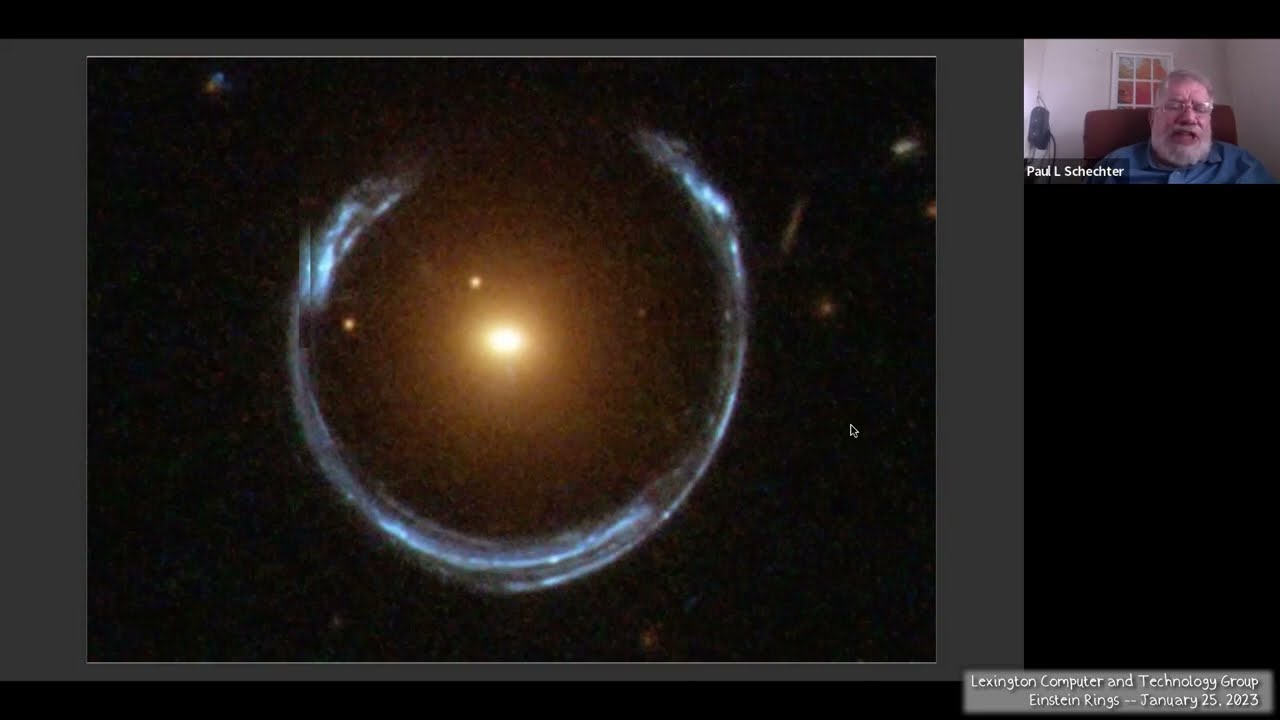
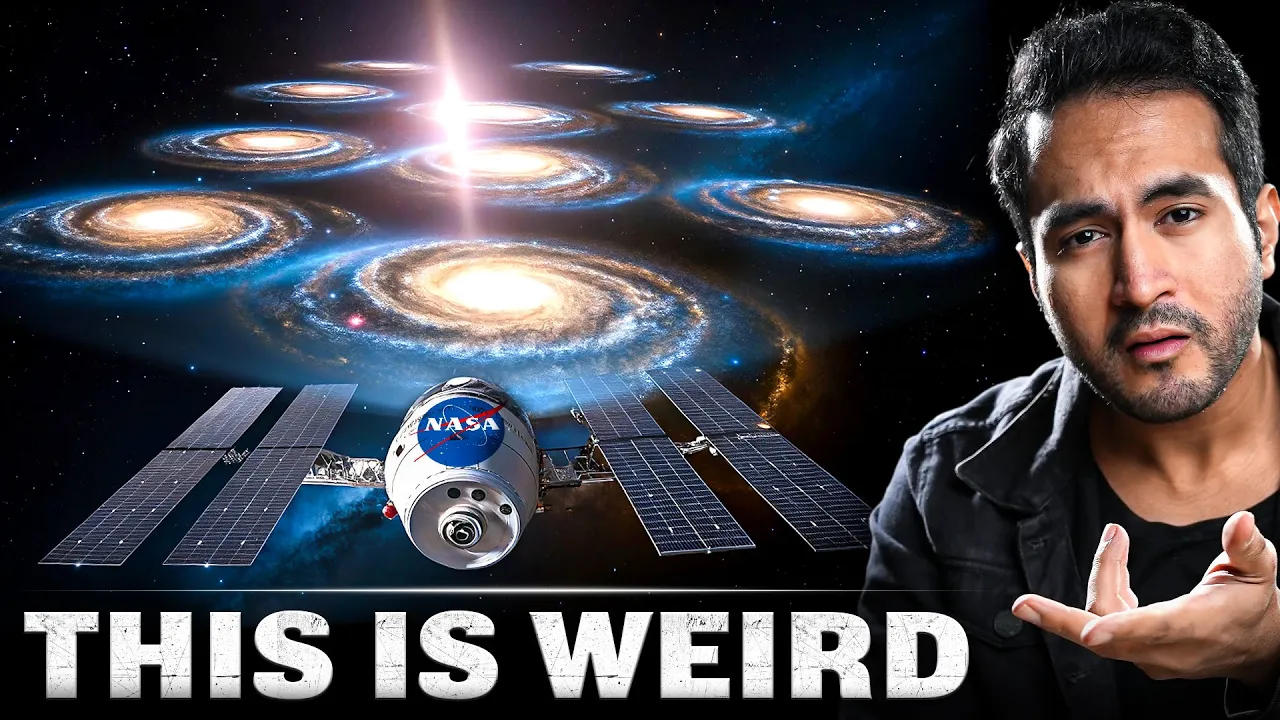
Gravitational lensing occurs when massive celestial objects like galaxies or galaxy clusters bend light passing through them, acting as natural telescopes that magnify and distort images of more distant objects; this phenomenon allows astronomers to observe galaxies and even individual stars that would otherwise be too faint to detect, and has been used to measure the Hubble constant by analyzing time delays between multiple lensed images of quasars and supernovae.
Gravitational Lensing Explained: Galaxies, Quasars, and the Hubble Constant
Added:Einstein's General Theory of Relativity, specifically how massive objects curve the fabric of spacetime and bend the path of light.
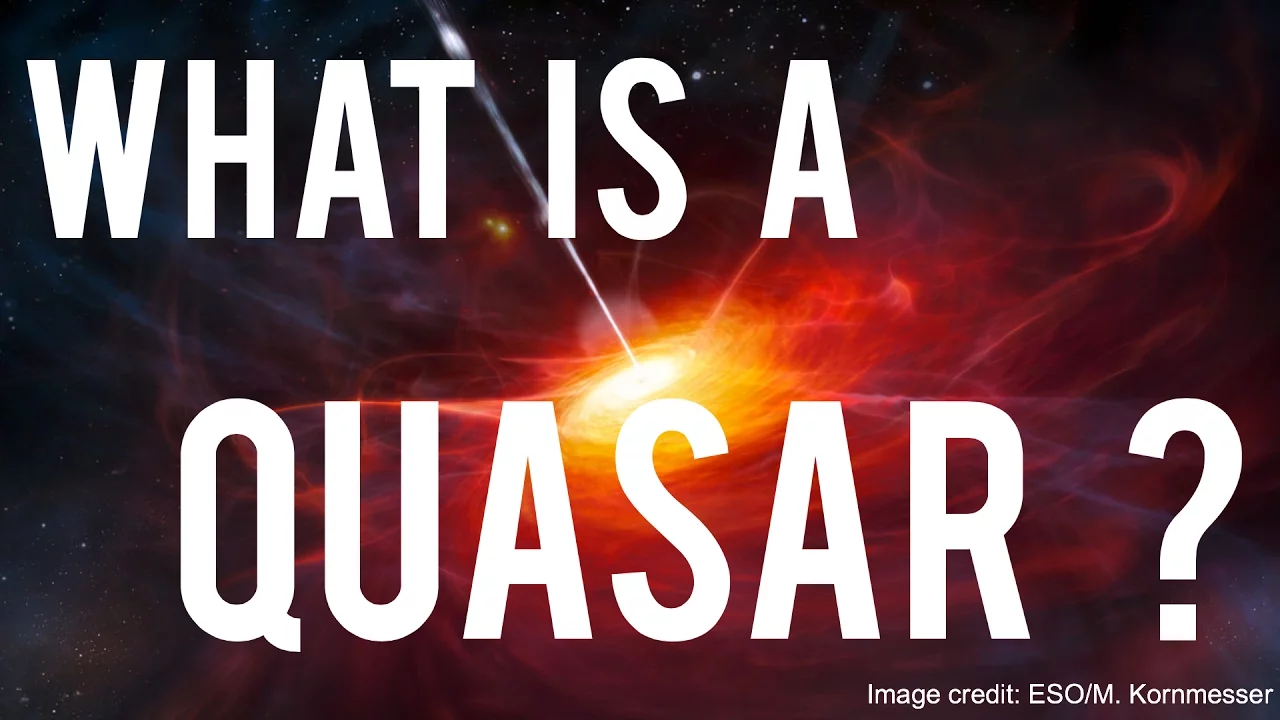
Fundamental astronomical concepts, including the definition, structure, and scale of galaxies, quasars, and stars.
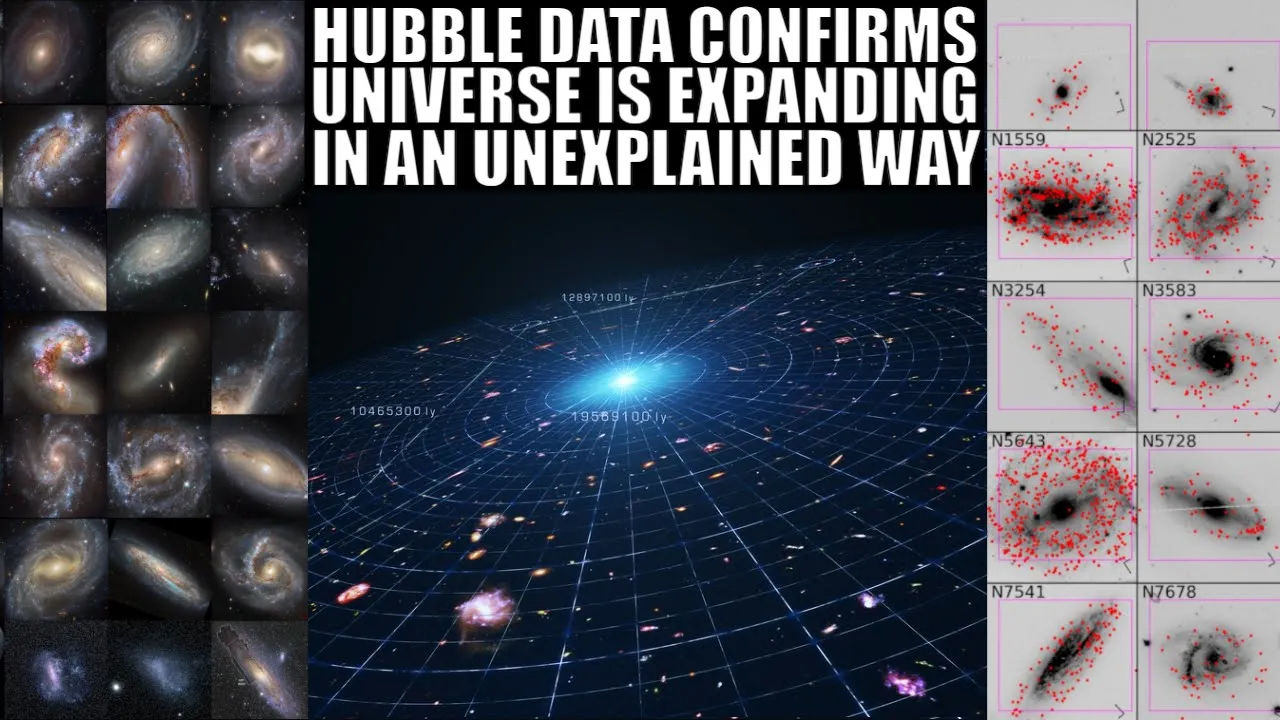
The concept of cosmic expansion and a foundational understanding of what the Hubble Constant represents in cosmology.
Basic optical principles, specifically how physical lenses refract light to magnify and distort images.
The distinct classifications of gravitational lensing: strong lensing, weak lensing, and microlensing, and their specific scientific applications.
The 'Hubble Tension,' which is the ongoing cosmological debate regarding the discrepancy in Hubble Constant measurements obtained through different methods.
How weak gravitational lensing is used by astrophysicists to map the distribution and concentration of invisible dark matter in the universe.
The study of Einstein Rings and Einstein Crosses, including the mathematical modeling used to reconstruct the original shapes of distorted background galaxies.
98K views2Klikes30:06Original Release: 2023-06-07
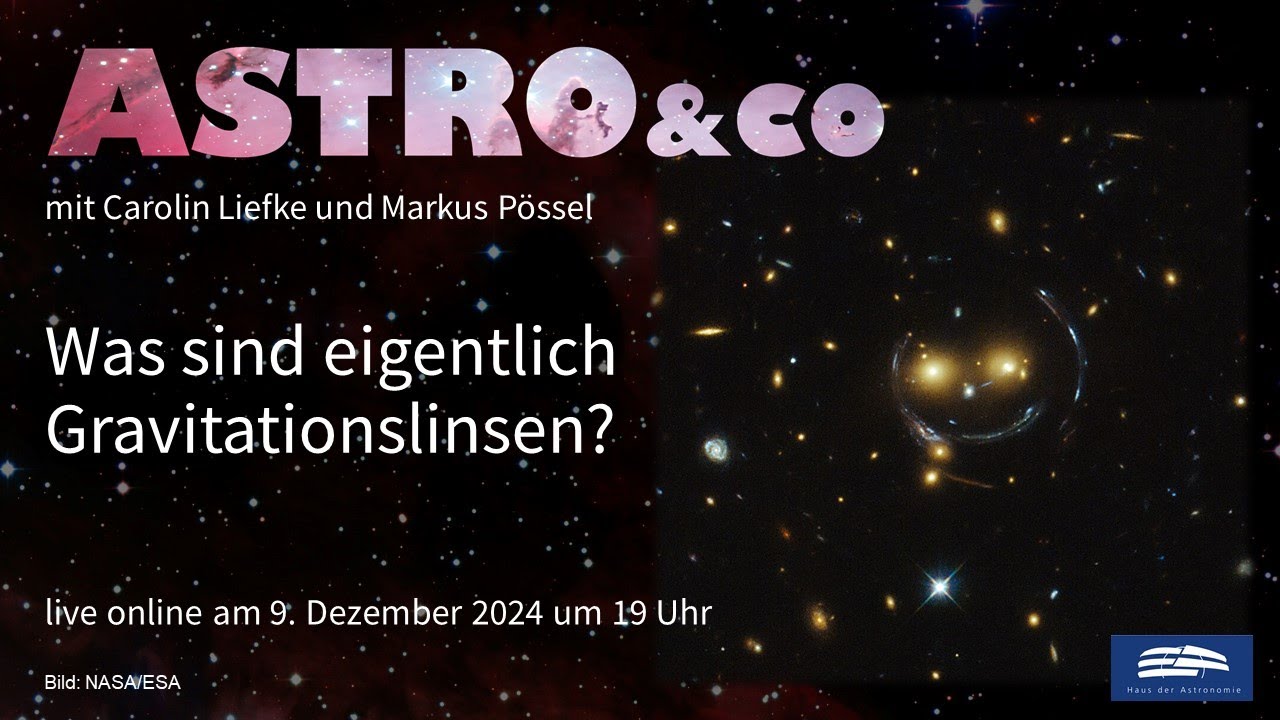
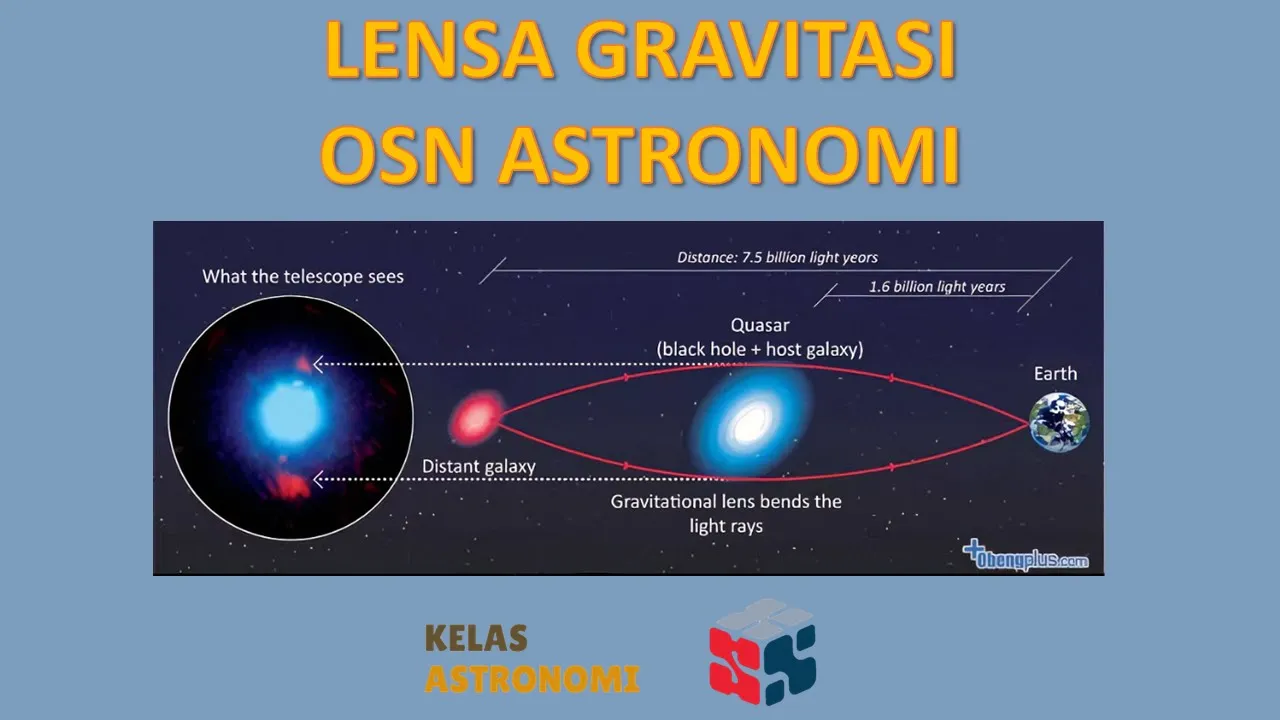
we have seen how a mass like our sun can bend light it's not hard to extend this simple concept to what a galaxy of hundreds of billions of stars could do Galaxies have a mass distribution with the maximum at the center trailing off to a minimum at the edges this distribution acts like a lens for light passing through it here's the bottom of a wine glass with a configuration similar to a Galaxy you can see what it does to the graph lines as it passes over them when we repeat the movement over a star we see how it distorts the light into a circular pattern we call a bending of light through gravitational fields gravitational lensing here's how this lensing works on a galactic scale a distant Galaxy would be seen here on Earth directly if there were no intervening massive cluster to bend this light but with such a cluster the light from the distant Galaxy gets bent light bent in our direction will continue on to Earth working back from the Earth's point of view we see the distorted and magnified image the amount of bending depends entirely on the structure of the lensing cluster magnifications can range from a factor of 2 to 40 times the size of the distant object we'll see that under the right circumstances an object can be magnified by over a thousand times in the course of analyzing this Hubble image astronomers discovered that ESO 325 is actually a gravitational lens this means that the focusing power of the enormous Mass making up the Galaxy cause the light from some distant object probably a distant dwarf Galaxy to be deflected and magnified [Music] as a result the more distant Galaxy appears brighter and distorted into the shape of an arc or ring known as an Einstein ring because the phenomenon was first predicted by Albert Einstein here's an image created by adding data collected by the multi-unit spectrographic Explorer instrument on the European space Observatory very large telescope this was the first test of Einstein's light bending Theory done outside of our own Galaxy it passed the test demonstrating that the theory held Across the Universe and not just in the Milky Way here's another one the foreground luminous red Galaxy 4.6 billion light years away has about 10 times the mass of the Milky Way the blue arc around it is the gravitationally lensed image of a more distant Galaxy 10.9 billion light years away the object's name is the cosmic horseshoe astronomers first discovered it in 2007 using data from the Sloan digital Sky survey but this Hubble image offers a much more detailed View although the universe is filled with galaxies Einstein rings are a rare occurrence because it requires an almost perfect alignment of a distant Galaxy with an intervening one that has enough Mass to gravitationally focus the light but a number had been found here are eight of them from the Sloan digital Sky survey and Hubble [Music] we've seen how massive galaxies can act as gravitational lenses to create Einstein rings you can imagine how massive clusters with thousands of galaxies would produce much larger and more powerful gravitational lenses but before a gravitational lens can provide accurate detailed information about the object being lensed we need to know its light bending characteristics clusters of galaxies don't provide smooth lenses they are quite complex and no two are alike The Source object's light is bent by the cluster's clumpy matter distribution and to make it harder most of the cluster is dark matter that we can't see directly [Music] all this makes cluster lens analysis very difficult and time consuming but with these magnifying glasses in space being our only window into the early universe astronomers and astrophysicists have been analyzing Galaxy cluster lensing for a half a century now we'll start with the coma cluster to illustrate how they do it the first step is to measure the radial velocities of every galaxy in the cluster from their Doppler ships this is then generalized into their three-dimensional velocity dispersion statistical equivalence this galaxy motion gives us the kinetic energy of the cluster this allows us to solve for the mass of the cluster [Music] in addition each lensed object found in the cluster is analyzed to calculate the magnitude of the mass needed to create the observed distortion the end result is a model for what the cluster will do with the light passing through it to illustrate the basic geometry of gravitational lensing we'll use the giant Galaxy cluster w h l0137-08 lensing of the sunrise Arc here's the basic geometry of gravitational lensing this is the sunrise Arc Light on a direct path to us as if the Galaxy cluster was not there we could not detect this light it is too dim for even our most powerful space telescopes here's its light heading in another Direction as it encounters the cluster it is bent towards us by the cluster's mass we can estimate the deflection angle once we know the mass and center of mass of the cluster on Earth we observe the image to be on a straight line at an angle from its actual Direction the lens equation gives us these angles this geometry enables us to map points seen on the lens plane back to its position on the source plane [Music] note that the magnitude of the light bending changes for objects closer to the lens the lens magnification will decrease as the ratio of the distance from the lens to the object over the distance of the lens to The Observer decreases here's an example in this image a remote galaxy has been distorted and magnified by a factor of 20 by the gravitational lensing lensing effects also created multiple operations around the curved Arc of the single background magnified Galaxy the object was nicknamed the molten ring because of its appearance the typical magnification created by this lensing ranges from 20 to 40 times the source size but there is one more additional Optical process involved that can magnify an object thousands of times over here's how it works picture a set of uniformly distributed particles on a line each with slightly different velocities they start out with a uniform particle density but because of the small velocity differences particle density will vary as time goes by areas of high and low density will develop the density at a later time T is described by an equation the equation has hot spots when the denominator approaches zero expanding this to two Dimensions we get density Peaks along curved lines that themselves intersect at points with maximum intensity I see this phenomena in my own backyard swimming pool sunlight is evenly distributed as it reaches the water's surface small waves on the surface are creating small changes in the sunlight's direction it's the caustic process that generates the lines at the bottom of the pool these lines are not ripples in space-time they are simply lines of intense light magnification light passing through a Galaxy cluster is impacted in exactly the same way lines of extreme magnification referred to as lensing critical curves are created by the caustic process as a distant object approaches a critical curve its image will be duplicated side by side and under some circumstances will develop yet a third image astrophysicists and astronomers model these lines and use the lens equations to map them back to their source they can then reconstruct the shape and dimensions of an object determine its deformation calculate its observed magnification and deduce its intrinsic luminosity here's an example this galaxy is visible twice because its light has approached a critical curve or sometimes referred to as a ripple of dark matter in able 68.
the Galaxy cluster Max 1206 4.6 billion light years away has produced 47 multiple images of 12 newly identified more distant galaxies as seen in this Hubble picture this dashed line identifies a calculated critical curve for a Galaxy 3.2 billion light years behind the cluster the solid line identifies a calculated critical curve for a Galaxy 8.3 billion light years behind the cluster you can see how the gravitational lens characteristics change with the distance to the far away sources foreign the Hubble constant in depth in how far away is it video book it was developed by Edwin Hubble in the late 1920s with his studies of nearby galaxies he used the cosmic distance ladder cvied variables and type 1A Supernova standard candles inside distant galaxies to determine receding velocities his constant gives us the rate at which the universe is expanding today's current value from distance ladder measurements is 22.7 kilometers per second for every million light years further away a celestial object is in 2016 a group of astronomers use the Hubble Space Telescope and others to study five galaxies gravitationally lensing five quasars in order to arrive at an independent measurement of the Hubble constant the strong gravitational lensing creates multiple images of the background quasars quasars are incredibly luminous Galaxy cores it is thought that they are massive black holes actively accreting huge amounts of matter some of these quasars flicker while the relative time between two flickers is correctly represented in this animation in reality the delays are on the range of two days to two weeks because the lens Quasar is not perfectly aligned with the lensing Galaxy and the lensing Galaxy is not perfectly spherical the light from the different images of the background Quasar follow paths which have different lengths the delays between them depends on the lengths of the paths the light has taken it is possible to determine the Hubble constant from the flicker or delay time here's a lens equation we covered earlier if we Mark the length from The Observer to the first flicker and mark the length from The Observer to the second flicker we create an angle the distance between these two points will be equal to the light travel time delay multiplied by the speed of light adjusted for the redshift of the lensing Galaxy analysis of the lens itself also gives us a measure of the distance based on the lens Mass distribution geometry it's based on an Optics principle first discovered by the French mathematician Pierre Vermont in 1662 in fact for Matt's principle of holes in the general theory of relativity where gravitational lenses replace glass these two distance quantities are responsible for the measured time delay so they are equal you can now solve for the Hubble constant with accurate measurements of the time delays between the multiple images as well as computer models for the lensing Galaxy the team determined the Hubble constant it is in agreement with the type 1A Supernova method one of the most interesting uses of strong Galaxy cluster gravitational lensing involves distant supernova multiple light paths through the cluster produce multiple arrival times here on Earth here are a few examples in 2014 a team of astronomers found a supernova in this galaxy cluster over 5 billion light years away the Supernova actually happened in a Galaxy 4 billion light years beyond that making it 9 billion light years away the huge mass of the foreground Galaxy and Galaxy cluster bent the light from the distant supernova creating four separate images of the same explosion the images are arranged around an elliptical galaxy in a formation known as an Einstein cross following this discovery the astronomers modeled several possible gas and dark matter distributions in the Galaxy cluster each model predicted that another image of this Supernova will appear in the cluster but they had different time estimates ranging from 2015 through 2025 in December 2015 it appeared for the first time in history time and location of a supernova was accurately predicted we actually saw the Supernova happen instead of detecting a flash in the sky and turning telescopes to its location we had the telescopes already focused on the correct area and recorded the event from beginning to end this also constitutes a measure of the speed of light without the use of mirrors [Music] here's another one [Music] previews of the same Supernova appear in this 2016 image on the left taken by the Hubble Space Telescope but they're gone in the 2019 image [Music] the distance Supernova named Requiem is embedded in a giant Galaxy cluster 4 billion light years away the clustered gravitationally lends the light from the Supernova located in the galaxy far behind it 10 billion light years away it also split the supernova's light into multiple mirror images highlighted by the white circles in the 2016 image based on the foreground Galaxy's Dark Matter distribution researchers predict that a reappearance of the same Supernova will happen in 2037.
the predicted location of that fourth image is highlighted by the yellow circle at the top left and like we did with flickering quasars time delayed supernova images can also be used to calculate the Hubble constant in 2017 a swedish-led team of astronomers used the Hubble Space Telescope to analyze multiple images of a gravitationally lensed type 1A supernova this had never been done before here we see the lens galaxy in the middle frame it's over 2 billion light years away the four images of the Supernova can be seen in the rightmost frame it originated over 4 billion light years away these four images of the exploding star and the time difference in their light profiles can be used to measure the Hubble constant in a completely different way since the late travel times for the various images are unequal intrinsic variations in the source would be observed at different times in the images the time delay between images is proportional to the difference in the light path lengths through the lensing Galaxy's space-time which in turn is proportional to one over a Hubble constant so by measuring redshifts and time delays and by producing an accurate model for the lensing Galaxy the Hubble constant can be calculated distant giant Galaxy clusters around 4 billion light years away have been able to lens galaxies twice that far away without gravitational lensing we would never have detected these more distant galaxies at these distances we need to take into account the expansion of the universe in order to determine how far away they are for that we use the Friedman metric with this and a stated set of coefficients for the flat Lambda coal Dark Matter model we get the Galaxy's distance from us when the light we see started its Journey the distance the light traveled to get here and the distance from us the object is now here are a few examples astronomer Timothy Hamilton using the Hubble Space Telescope discovered these unusual objects now named after him the objects are the stretched images of a gravitationally lensed distant galaxy located more than 7 billion light years away one appears to be a mirror image in this case a precise alignment between the background Galaxy and a foreground Galaxy cluster 7 billion light years away produced twin magnified copies of the same image of the remote Galaxy this rare phenomenon occurs because the background Galaxy straddles a ripple of dark matter in the foreground Galaxy as the far away Galaxy Light passes through the cluster along this Ripple two mirror images are produced along with a third image they can be seen off to the side this Hubble image shows a massive Galaxy cluster about 4.6 billion light years away [Music] along its border four bright arcs are visible these are copies of the same distant Galaxy nicknamed the Sunburst Arc it's almost 11 billion light years away its light is being lensed into multiple images by strong gravitational lensing the Sunburst Arc is among the brightest lensed galaxies known and its image is visible at least 12 times within the four arcs here's a closer look at three of them the lens makes various images from 10 to 30 times brighter this allows Hubble to view structures as small as 520 light years across a rare detailed observation for an object that far away this is a close-up look at the brightest distant magnified galaxy in the universe known today it is one of the most striking examples of gravitational lensing in this image the light from a distant Galaxy nearly 10 billion light years away has been warped into a nearly 90 degree Arc of light in the Galaxy cluster the Galaxy cluster that is bending the light buys 5 billion light years away here's another one the light from this galaxy travel 4.48 billion light years to get here these foreground Galaxy clusters are magnifying the light from the faint galaxies that lie far behind it the faint light from these lens galaxies traveled up to 12.8 billion light years it's the gravitational lensing that allows us to see that far back in time without the magnification these galaxies would be invisible for us this is Abel 1689.
it's one of the most massive Galaxy clusters known the gravity of its trillion Stars plus Dark Matter acts like a 2 million light year wide lens in space here's gravitationally lensed Galaxy a1689-zd1 it is one of the most distant spectroscopically confirmed sources with a redshift of 7.5 we are seeing what zv1 looked like when the universe was only 700 million years old it is the earliest known Galaxy where dust was detected in its interstellar medium and surprisingly it has the same ratio of dust to total mass as very mature galaxies such as our own Milky Way gravitational lensing of objects on or near critical caustic curves can actually identify individual stars in a lensed galaxy this is referred to as micro lens to illustrate the stability we'll cover two examples Icarus and Arendelle here's Max j1149 a foreground Galaxy cluster 5 billion light years away we used this lens when we covered the rip stall supernova here we lens the single star nicknamed Icarus in a Galaxy 9 billion light years away [Music] in 2018 this star was destroyed a critical curve it was magnified around 2000 times its actual size at that time it was the furthest individual star ever seen the colors of the light coming from this object showed that it was a blue supergiant star this type of star is much larger more massive hotter and possibly hundreds of thousands of times intrinsically brighter than our sun by 2022 the star had moved off the critical curve and is no longer visible here we have a massive Galaxy cluster it has been studied for over five years since Hubble first captured the image in 2016.
the Galaxy was 4.5 billion light years away from us when the light we see started its Journey the light traveled 5.6 billion light years to get here and it's currently 7 billion light years away in this cluster Hubble discovered a gravitationally lensed Galaxy nicknamed the sunrise Arc its redshift is 6.2 with an angular size on the sky exceeding 15 Arc seconds at that distance this makes it 410 000 light years long the Galaxy was only 3.9 billion light years away from the Milky Way when the light we see started its Journey the light travel 12.9 billion light years to get here and it is currently 28 billion light years away receding faster than the speed of light and Beyond the visible Horizon no light leaving that Galaxy now will ever reach the Milky Way in this galaxy Hubble discovered a single star the star lsz6 is nicknamed Arendelle the light we see from this star began its Journey 900 million years into the universe's expansion this makes it the oldest most distant individual star ever seen in addition it is at least 50 times the mass of our sun and hundreds of thousands of times brighter this makes it one of the most massive stars known stars that massive only lasts for a few million years so Arendelle is long gone having spewed a heavier elements it created into zd1 to become part of the Next Generation Stars [Music] foreign 2022 a few months after Hubble's discovery a team of astronomers called Cosmic spring worked with Webb to train his near-infrared Imaging camera on the sunrise Arc for over four hours as part of a survey of the Galaxy cluster it also managed to capture the Red Dot corresponding to Arendelle web's analysis of the image has already confirmed that this is indeed a single star system and not a group of several Stars the red dots on either side of Arendelle are a single mirrored star cluster here's a higher resolution image of the area around Arendelle produced by the James Webb team objects close to a critical curve get mirrored into multiple images like these two images of a star cluster inside the Sunrise Art Galaxy the critical curve responsible for this will pass through the midpoint of the two images an object found at this midpoint like Arendelle would be so close to the critical curve that its multiple images cannot be resolved it will appear as a single object four different models were used to locate the lensing critical curves here's one of them the others are quite different but they all pass through Arendelle the magnification drops off rapidly as the distance from the line increases arendelle's distance from the line is within 0.1 Arc seconds that's a very small angle but at these distances it represents 2730 light years this distance along with its shape puts its magnification between one and forty thousand with nine thousand being the most likely with this and the size of the image we get a source object that has a radius less than 617 billion kilometers that's 383 billion miles this is a hundred times smaller than known small star clusters leading to the conclusion that it is a single gigantic star or binary star system now that we can examine Stars this far away with gravitational lensing in the James Webb Space Telescope I'm hoping that we will even get to the point where light fluctuations from a star like Arendelle will someday tell us something about the earliest planets
Up Next
10:28
Hubble's Record-Breaking Star Discovery at Cosmic Dawn
@whatdamath
182.7K views•2022-03-31
61:17
First Billion Years of the Universe with the Square Kilometre Array
@iaaudc
121 views•2022-05-26

40:37
Cosmology & Distance Measurement: Galaxy Clusters to Dark Energy (4K)
@howfarawayisit
2.3M views•2020-11-08
6:10
Gamma-Ray Bursts: Cosmic Snipers Explained | Astronomy
@kurzgesagt
15M views•2016-07-31
Related Study Plans & Knowledge Roadmaps
Structured learning paths in Astronomy
astronomy
Reionization: Pop III Stars, IGM & 21cm Line
01Foundations of Cosmology & the Early Universe
02Population III Stars & Cosmic Dawn
03Physical Mechanisms of Reionization
+ 2 more learning modules
17h5 modules
Explore Roadmap
astronomy
Planetary Rings: Dynamics, Roche & Resonances
01Foundations of Gravity and Orbital Mechanics
02Tidal Forces and the Roche Limit
03Structure, Composition, and Collisions
+ 2 more learning modules
10h5 modules
Explore Roadmap
astronomy
Asteroseismology: Stellar Waves, Ages & Cores
01Foundations of Stellar Astrophysics & Wave Mechanics
02Stellar Oscillation Modes: P-modes and G-modes
03Mathematical Framework of Asteroseismology
+ 2 more learning modules
35h5 modules
Explore Roadmap
astronomy
Adaptive Optics: Physics, Engineering & Control
01Foundations of Wave Optics and Wavefronts
02Atmospheric Turbulence & Optical Distortion
03Wavefront Sensing Technologies
+ 3 more learning modules
35h6 modules
Explore Roadmap