The e-commerce supply chain operates through a sequential process where consumer orders placed on platforms like Amazon or eBay are processed by order management teams, then shared with central warehouses which coordinate with local warehouses and suppliers to fulfill orders through multi-stage shipping from supplier to central warehouse, then to local warehouse, and finally delivered to the customer.
Ecommerce Business Model and Supply Chain Operations Explained
Added:Deep Dive
Basic understanding of Supply Chain Management (SCM) fundamentals, including the flow of goods from manufacturer to consumer.
#9 Supply Chain Management | Set-B SPOM | CA Final Strategic Cost & Performance Mgt. | Rohit Tiwari.
195
Supply Chain Management (SCM) is the complete process of getting goods from raw material purchase to final delivery to consumers. The process involves raw material suppliers providing materials to manufacturers, who convert raw materials into finished goods. These goods then flow through wholesalers/distributors who store them in warehouses, to retailers who sell to consumers, and finally to end users. SCM encompasses all activities associated with the flow and transportation of goods from raw materials to end users. It can be defined as an entire network of organizations working together to design, produce, deliver, and service products.
Click to watch →
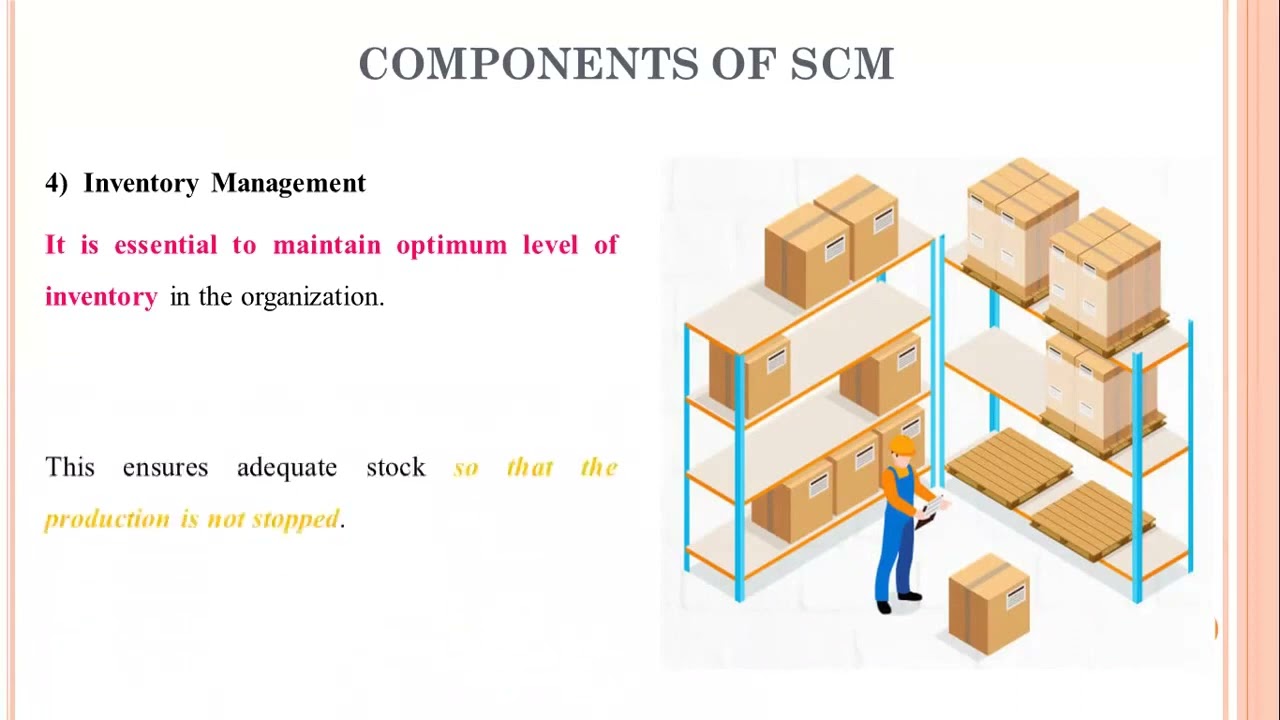
29 - Supply Chain Management (SCM) - Concept and Components
8.9K
Supply Chain Management (SCM) is the management of goods and services flow from producers to consumers. It encompasses procurement, production, inventory management, warehousing, transportation, and distribution. SCM ensures products reach customers in the right quantity at the right time. Logistics is a subset of SCM focusing specifically on transportation and movement of goods. Effective SCM requires proper planning including demand forecasting, inventory planning, and capacity planning to prevent delays and shortages.
Click to watch →
E-Commerce Pertemuan 7: Supply Chain
433
Supply chain is the flow of goods, information, money, and services from manufacturers through intermediaries to end customers, functioning as a network of collaborating companies including suppliers, manufacturers, distributors, retailers, and logistics providers. Supply Chain Management (SCM) is the methodology and tools used to integrate these companies so goods are produced and distributed in the right quantities, at the right time, and in the right place. SCM transforms the physical network of companies into an efficient system for sourcing raw materials, manufacturing products, and delivering them to end users.
Click to watch →

LEVEL 1 - I. #SCM Konsep #SupplyChainManagement
29.5K
Supply Chain (SC) is a network of organizations connected by flows of products, services, financials, or information from source to customer. Supply Chain Management (SCM) is the management discipline covering planning and controlling activities in resource identification, procurement, production, and logistics. SCM represents the systematic approach to managing goods and services flow from raw material suppliers to end customers, enabling competitive advantage through cost reduction, customer satisfaction, and operational efficiency.
Click to watch →

Supply Chain & Logistics Management Supply Chain Concepts – Objectives | AKTU Digital Education
17.5K
Supply Chain Management (SCM) encompasses the entire flow of goods and services from raw material suppliers to end customers. It includes sourcing raw materials, manufacturing, assembly, warehousing, inventory tracking, order management, distribution, and final delivery. Information flows bidirectionally throughout the chain, while money flows in the opposite direction of goods. SCM exists across industries including automobiles (with over 3,000 components), milk supply chains, and e-commerce platforms like Amazon and Flipkart that have eliminated traditional intermediaries. Transportation services like Ola and Uber also operate as supply chains connecting service providers with customers.
Click to watch →
Deep Dive
Familiarity with core business models, particularly the operational differences between traditional retail and digital e-commerce.

Difference between Traditional Business & E-Business Ch.5 class 11th Business Studies CBSE
9.3K
Traditional business requires physical presence, physical facilities, and physical infrastructure including storage, production, marketing, and distribution facilities. E-business eliminates these requirements by operating entirely through computer networks. Traditional business needs physical locations, product display, and physical customer interaction, while e-business operates through digital platforms without physical constraints. This fundamental shift in operational model represents a paradigm change in how business activities are conducted.
Click to watch →

اسماعيل مان 54: المشاريع الالكترونية والفرق بينها وبين المشاريع التقليدية وكمية الربح فيها.
2.3K
Traditional retail stores have limited customer reach, typically only serving local residents. E-commerce platforms can reach 58 million people globally. A single e-commerce platform can sell 1,000 products daily through online orders. Traditional businesses often appear profitable but may have no actual profit after accounting for expenses like staff salaries and utilities. E-commerce allows business owners to operate remotely while the website handles transactions automatically.
Click to watch →

BCOS-184 E-Commerce 🎯 | Most Important Concepts | Oneshot | IGNOU / SOL | Complete Book
354
E-Commerce differs from Traditional Commerce in market reach (global vs local), availability (24/7 vs fixed hours), cost (lower operational costs vs higher), convenience (home shopping vs physical visits), product variety (wider vs limited), and interaction (online vs face-to-face). Business models include B2B (business-to-business), B2C (business-to-consumer), C2C (consumer-to-consumer), C2B (consumer-to-business), and D2C (direct-to-consumer). Revenue models encompass sales, subscription, advertising, commission, premium, and affiliate models. Understanding these distinctions is essential for business strategy.
Click to watch →

Kenneth Chenault, President & COO, American Express, 12/6/99
905
Traditional brand companies and e-commerce companies operate on fundamentally different business models. Traditional companies are rooted in time-tested approaches with deep brand heritage, while e-commerce companies are newer and built around digital operations. The critical question is whether the newer model is better or good enough to eclipse the older model. For traditional companies to succeed, they must match e-commerce companies in speed and decision-making, which is the foremost essential attribute. The answer is yes, but it's a close call.
Click to watch →

Difference between e business and traditional business,PLUS ONE BUSINESS STUDIES,CHAPTER-5....BINOY
295
E-business and traditional business represent fundamentally different approaches to commerce. E-business conducts all operations through the internet, eliminating physical infrastructure requirements. Traditional business relies on physical stores where goods are displayed for customer inspection. Key differences include: (1) E-business requires no building construction or rent, while traditional business demands significant real estate investment; (2) E-business eliminates physical inventory maintenance costs, whereas traditional business must maintain stock displays; (3) E-business operates globally with worldwide market reach, while traditional business is limited to local customer bases; (4) E-business lacks personal seller-buyer interaction, while traditional business enables direct human contact and product examination. These structural differences create distinct advantages and challenges for each business model.
Click to watch →
Deep Dive
Fundamental concepts of inventory management, including safety stock, lead time, and warehousing functions.

Conceitos fundamentais sobre estoques
88.4K
Inventory management involves understanding key concepts including: (1) Stock definition as material held for future use, (2) Dependent demand (driven by production needs) vs independent demand (driven by external factors), (3) Service level as the percentage of demand delivered on time, (4) Lead time as the interval between order and delivery, (5) Batch size as the quantity produced in sequence, (6) Setup cost as the expense to initiate production, and (7) Economies of scale as the cost reduction achieved by increasing batch size to dilute fixed costs.
Click to watch →
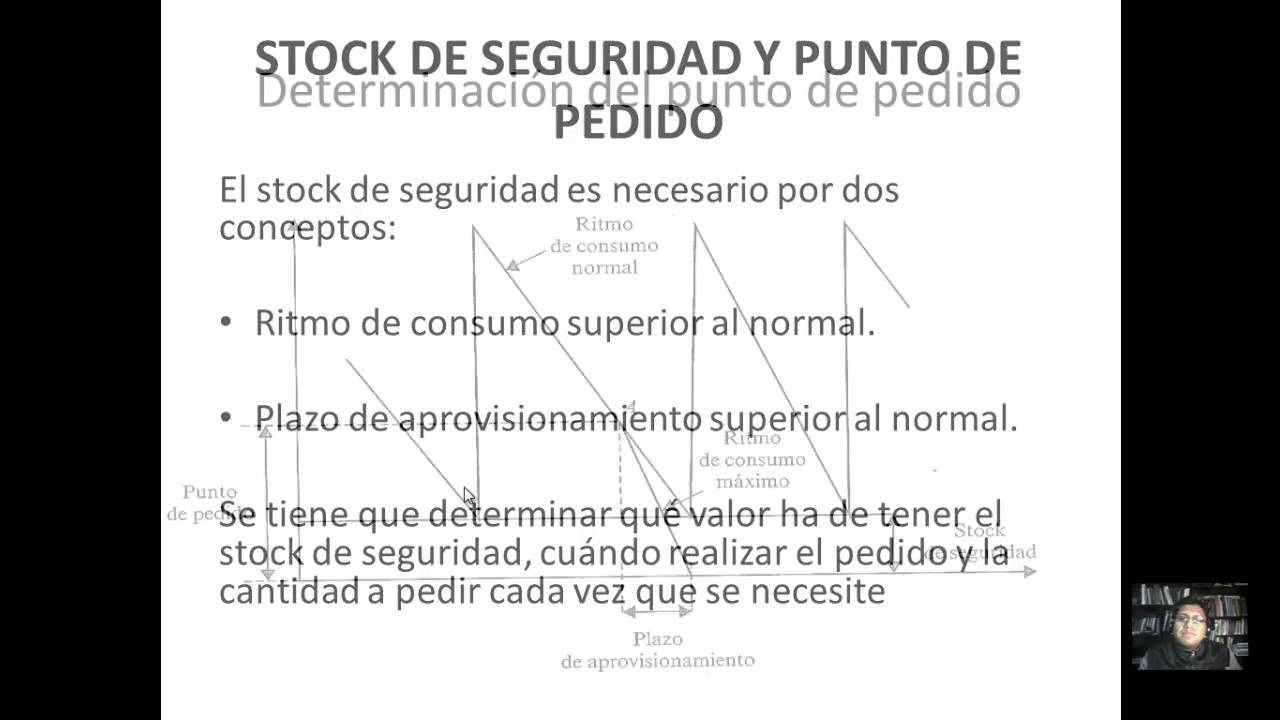
Stock de seguridad y punto de pedido
60.1K
Inventory management depends on processing quantity, start dates, and lead times. Three inventory costs exist: purchase cost (supplier price), holding cost (interest, storage, insurance, personnel, deterioration), and acquisition cost (procurement, logistics, quality control). Safety stock serves as a buffer against two risks: consumption exceeding normal rates due to market demand increases, and procurement lead times extending beyond expected durations. The reorder point is positioned at the intersection of safety stock and normal consumption rate, ensuring new orders arrive before safety stock depletes. Safety stock formulas use standard deviations of demand variability multiplied by lead time.
Click to watch →

Estoque Mínimo, Ponto de Ressuprimento, Estoque de Segurança no Excel
12.3K
Inventory management involves calculating minimum stock levels, reorder points, and safety stock to ensure product availability while avoiding excessive capital tied up in inventory. The inventory cycle shows stock decreasing as demand is met, triggering purchase orders when reaching reorder points. Key concepts include: lead time (period between ordering and receiving), service level (probability of not running out), and the relationship between safety stock and demand variability. Higher service levels require larger safety stocks but reduce stockout risk. The goal is maintaining optimal stock levels that prevent stockouts without overstocking.
Click to watch →
Part5-inventory control-2nd sem mcom-management science
357
This comprehensive section covers core inventory management concepts. Lead time is the duration between order placement and inventory arrival, crucial for timing orders to prevent production stoppages. Reorder level is the point between maximum and minimum stock when purchase requisition should be initiated, calculated as Average Usage × Lead Time. Buffer stock or safety stock is additional inventory kept to handle delivery delays or higher-than-expected demand during lead time. Safety stock is calculated using: Maximum Lead Time - Normal Lead Time × Consumption Rate. Maximum inventory equals buffer stock plus EOQ, minimum equals buffer stock, and average equals buffer stock plus half of EOQ. The purpose is maintaining balance between minimum and maximum levels to prevent stockouts and excessive carrying costs.
Click to watch →
Inventory Management | Corporate Finance | Part 2 | Section B | Episode 22 | CMA USA
947
Inventory refers to goods and materials held for resale or production, including raw materials, work in progress, and finished goods. Trading companies hold only finished goods, while manufacturing companies maintain three types. Five key costs affect inventory decisions: purchase cost, carrying/holding cost, stockout cost, ordering cost, and setup cost. Essential terms include lead time (order-to-receipt delay), reorder point (when to place new orders), and safety stock (buffer against demand variability). The reorder point formula with safety stock is: Reorder Point = Safety Stock + (Lead Time × Average Daily Sales). These fundamentals enable companies to balance inventory levels, avoid overstocking or understocking, and optimize working capital.
Click to watch →
Deep Dive
An introduction to enterprise information systems, specifically how data flows from an online checkout page to backend management software.
1.1-Introduction to EIS | EIS | CA Chirag Akhani | CA Inter May & November 2023 |
6.6K
Enterprise Information Systems (EIS) are integrated systems that process data into actionable information to support business decision-making, encompassing internal data (capital, sales, production) and external data (competitors, government policies, market trends); EIS can be non-integrated (with separate departmental databases causing data redundancy and communication gaps) or integrated (using common databases with security controls like ERP systems), and business processes are categorized into operational processes (O2C - Order to Cash, P2P - Procure to Pay), supporting processes (HRM, accounting), and management processes (budgeting, strategic planning), with each process following a specific cycle from initiation to completion.
Click to watch →
Information System Concepts
7.7K
Major types of information systems are related and data flows among them. Data from online purchases are captured and processed by transaction processing systems and stored in transaction databases. For reporting purposes, data is extracted from the database and processed by management information systems to create periodic, ad hoc, or other types of reports. The third step involves data being output to decision support systems where it is analyzed using formulas, financial ratios, or models.
Click to watch →

01 02 SISTEMA INFORMATIVO AZIENDALE
2.2K
An enterprise information system is a coordinated set of employees, software, and hardware that collects, stores, and communicates information to internal and external stakeholders. Its core purposes include documenting business activities, providing ownership with data to predict future trends, and reporting on performance by analyzing positive or negative results. ERP systems integrate data from all departments including human resources, sales, inventory, accounting, purchasing, quality control, and production. The information flow process involves collecting data from various sources, processing it within programs, archiving the information, transmitting it to relevant personnel, and enabling decision-making. Data collection occurs through employee data entry, quality control tracking, and departmental reporting.
Click to watch →

Building an E-commerce Beauty Store with MERN Stack - DAY 02
677
Data flows bidirectionally between application components: (1) Frontend fetches data from the backend to display products and user information, (2) Frontend sends data to the backend for actions like adding items to cart or placing orders, (3) Backend interacts with the database to store and retrieve data, (4) Background services also interact directly with the database to perform automated tasks. The backend acts as the intermediary that manages data flow between the frontend and database, while background services have direct database access for their specific automated functions.
Click to watch →
![[강의 미리보기] PM/PO를 위한 백엔드 & 백오피스 - 청구와 결제가 지니는 의미](https://i.ytimg.com/vi/8dgJiz9HM7s/maxresdefault.jpg)
[강의 미리보기] PM/PO를 위한 백엔드 & 백오피스 - 청구와 결제가 지니는 의미
304
This section explains how cash flow information flows through e-commerce systems: Product management systems store prices and information; Platform systems handle seller fees; Order management systems pull product data to calculate totals; Cart systems aggregate items and display estimates. When customers click 'order', the order management system generates orders containing summed prices, then initiates billing. The billing document formalizes the payment request. Each system plays a specific role, with information flowing between systems to enable transactions. Understanding this flow is essential for designing systems that correctly implement cash flow patterns.
Click to watch →
Prerequisite Knowledge
- Concept 01Basic understanding of Supply Chain Management (SCM) fundamentals, including the flow of goods from manufacturer to consumer.
- Concept 02Familiarity with core business models, particularly the operational differences between traditional retail and digital e-commerce.
- Concept 03Fundamental concepts of inventory management, including safety stock, lead time, and warehousing functions.
- Concept 04An introduction to enterprise information systems, specifically how data flows from an online checkout page to backend management software.
Subsequent Learning
- Step 01Advanced warehouse automation and smart logistics, such as the implementation of robotics, IoT sensors, and Automated Storage and Retrieval Systems (AS/RS).
- Step 02Omnichannel distribution strategies, examining how companies integrate brick-and-mortar storefronts with online fulfillment methods (e.g., BOPIS).
- Step 03Reverse logistics and returns management, analyzing the financial and operational impact of product returns in e-commerce.
- Step 04Data-driven last-mile optimization, including route planning algorithms, green logistics, and the use of autonomous delivery vehicles.
E-commerce flow
E-commerce flow
0:00Playing Section
- 1
Explains the online shopping order process from consumer to portal.
- 2
Details how order data triggers warehouse and supplier replenishment.
- 3
Shows shipment path from supplier to central, then local, to final delivery.
Sustainable Logistics and Circular Supply Chains
While traditional e-commerce models optimize for speed, low cost, and frictionless last-mile delivery, critics argue this linear 'take-make-dispose' model generates massive negative externalities. The environmental toll of rapid shipping (high carbon emissions from frequent, half-empty delivery runs), excessive packaging waste, and high rates of consumer returns—many of which are discarded because reverse logistics are unprofitable—has sparked a significant counter-movement. The Sustainable Logistics framework challenges the dominant e-commerce narrative by prioritizing closed-loop supply chains. This perspective advocates for a paradigm shift: designing supply chains around reverse logistics (for recycling and refurbishment), hyper-local fulfillment to reduce transit distances, consolidated shipping models instead of instant individual delivery, and accounting for the full ecological and social lifecycle costs of a transaction. It argues that the convenience of standard e-commerce is built on unsustainable externalities that must be redesigned.
Deep Dive
Advanced warehouse automation and smart logistics, such as the implementation of robotics, IoT sensors, and Automated Storage and Retrieval Systems (AS/RS).

SMART WAREHOUSING - Robotics, Automation, Sensor, RFID
239
Modern warehousing is undergoing rapid transformation driven by labor shortages, rising labor costs, and customer demands for faster delivery and order accuracy. Leading companies are adopting robotics and automation technologies including robotic unit picking, cobots (collaborative robots), automated bin warehouses, de-palletizers, case shuttles, and robotic palletizers to improve efficiency, speed, and accuracy. These systems integrate with warehouse control systems that orchestrate multiple automation types. Additionally, RFID technology offers significant advantages over barcodes including non-line-of-sight reading capability, ability to read through cartons and pallets, enhanced security against counterfeiting, and greater information capacity. Companies should evaluate RFID implementation based on five key factors: product price and margin, regulatory requirements, tag reusability, inventory management practices, and specific application benefits. When implementing smart warehousing technologies, organizations should first identify specific problems to solve, research available solutions, consult with companies who have implemented similar technologies, and develop comprehensive business cases considering both financial metrics and qualitative benefits like customer loyalty and operational accuracy.
Click to watch →
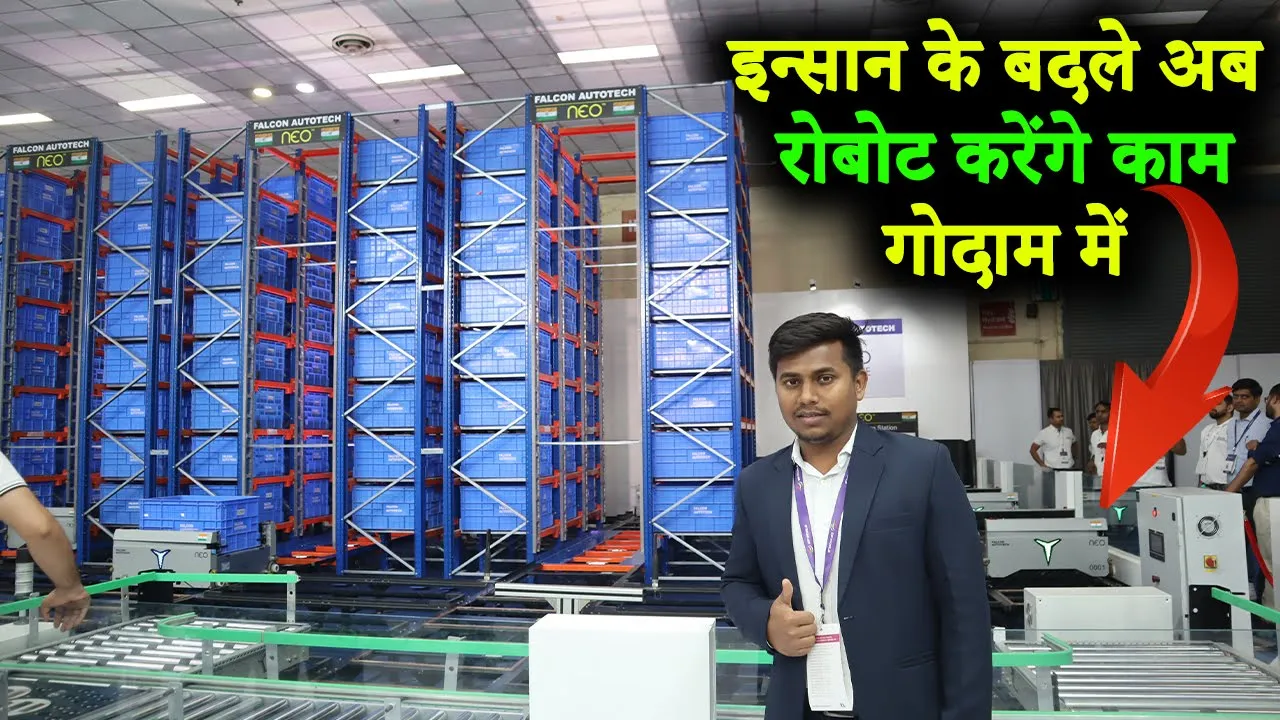
देश की इस कंपनी ने बना दी Hi-Tech वेयरहाउस | Falcon Autotech ASRS Warehouse automation technology |
14K
AS/RS (Automated Storage and Retrieval System) warehouse automation technology enables high-density storage, real-time inventory tracking, and efficient order fulfillment through automated cranes, conveyors, and intelligent boards that can navigate racking systems to pick and place bins, with the key advantage of scalability allowing businesses to expand from 1000 to 2000+ bin systems as needed while maintaining affordability and requiring minimal skilled manpower.
Click to watch →

Digital Focus Smart Logistic 4.0
108
Smart warehouse automation systems integrate robotics, AI, and IoT technologies to enhance operational efficiency, safety, and productivity in logistics operations. These systems address modern challenges such as labor shortages and operational demands through automated material handling, real-time fleet tracking, facial recognition access control, and intelligent cleaning robots. Key components include AMR robots for automated transportation, GPS-enabled fleet management with driver monitoring systems, forklift camera systems for enhanced safety, and AI-powered cleaning robots for facility maintenance.
Click to watch →
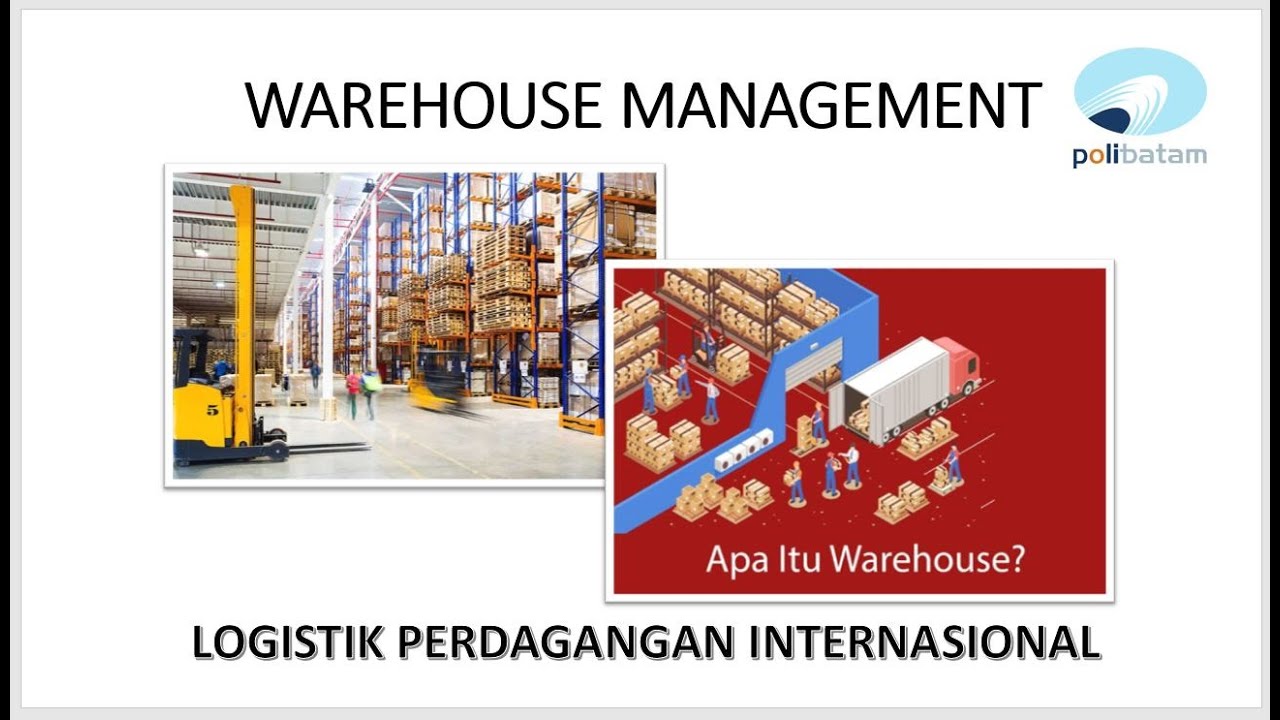
Warehouse Management Effective and Efficient Warehouse Layout and Operations - Prodi LPI Polibatam
227
Warehouse automation and robotics include: (1) Automated Guided Vehicles (AGVs) for material movement, (2) Robotic picking systems for order fulfillment, (3) Automated storage and retrieval systems (AS/RS), (4) Conveyor systems for product movement. Automation reduces manual labor, improves accuracy, and increases throughput in high-volume operations.
Click to watch →

All New Generation Transportation Technologies That Will BLOW Your Mind | Best of Fall 2024
9.8K
This segment covers the integration of robotics and artificial intelligence in modern logistics operations. Invia Robotics' solutions demonstrate autonomous mobile robots that independently navigate warehouses, locate products, and transport them to packing stations, increasing productivity by 3-5 times. The ENA Optimizer system uses algorithms to plan efficient routes, minimizing movement time. Bionic Hive's Squid robot extends this capability with vertical mobility, able to move along shelves up to 18 meters high and lift 16 kg loads. These systems incorporate real-time management, AI adaptation to changing environments, and collision avoidance, representing the convergence of robotics, machine learning, and logistics optimization to transform warehouse operations and supply chain efficiency.
Click to watch →
Deep Dive
Omnichannel distribution strategies, examining how companies integrate brick-and-mortar storefronts with online fulfillment methods (e.g., BOPIS).
The Business Strategies Behind Chick-fil-A, Costco, Starbucks and More | WSJ The Economics Of
12.3M
Home Depot's distribution network works in tandem with its online strategy, giving professional customers flexible options aligned with busy schedules. When customers pick up online orders from lockers or service desks, they often shop for additional products in-store, creating an economic flywheel where online and offline channels reinforce each other. E-commerce sales grew approximately 100% over two years, demonstrating successful integration of digital and physical retail experiences.
Click to watch →
ADI's Digital Transformation
154
Omnichannel integration connects offline branch operations with digital channels to create seamless customer experiences. Key strategies include: (1) Online-to-branch pickup with locker systems providing 24/7 access, (2) Endless aisle kiosks in branches allowing contractors to browse products digitally while in-store, (3) Real-time inventory visibility across all channels. These integrations enable customers to order online and pick up locally, access account management tools in-store, and receive consistent service regardless of interaction channel. The goal is frictionless customer experience across all touchpoints.
Click to watch →
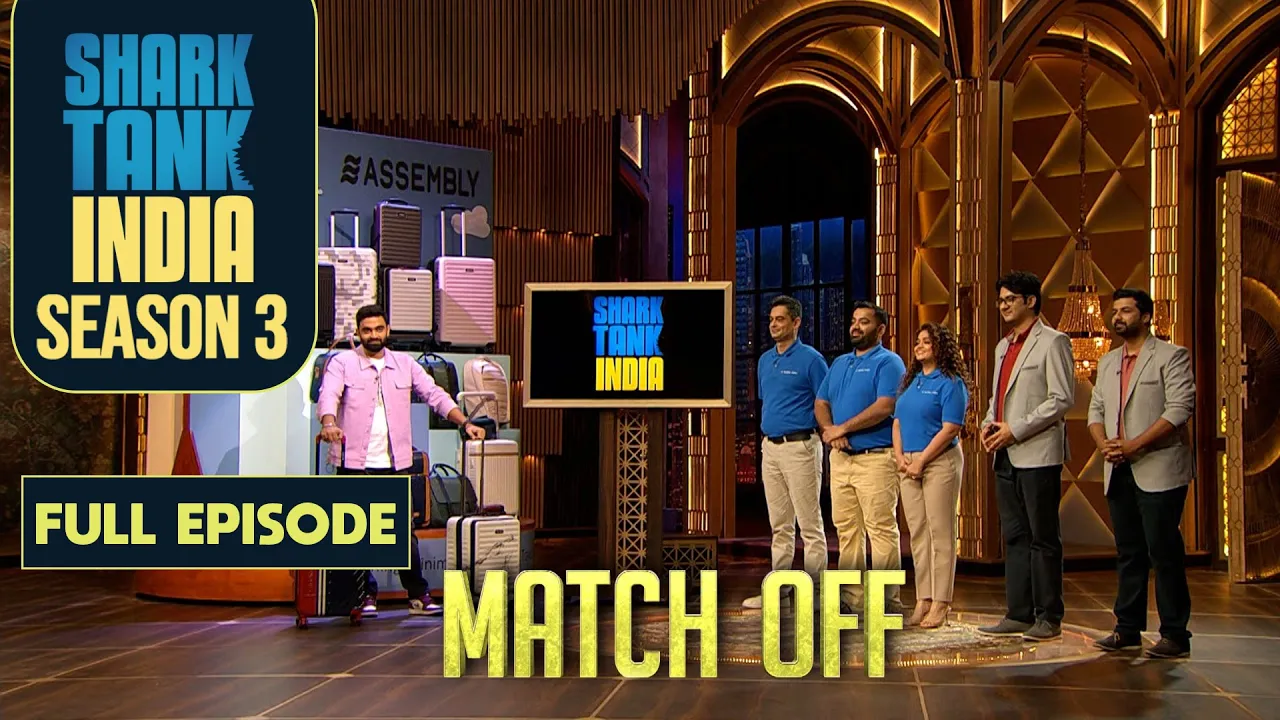
Shark Tank India S3 | A Match-Off Between 2 Brands For the First Time | Full Episode
549.6K
Effective pricing strategy positions products appropriately within the market hierarchy. Brands must understand where they fit relative to competitors (e.g., mid-premium segment) and price accordingly. The key is balancing perceived value with actual costs to achieve target margins while remaining competitive. Successful brands develop omnichannel distribution strategies that balance online and offline presence. The key is understanding the optimal mix of channels (e.g., 68% online, 32% offline) and ensuring consistent brand experience across all touchpoints.
Click to watch →
Championing BOPIS Implementation with Worth Darling
322
BOPIS (Buy Online, Pick Up In Store) implementation requires retailers to balance technology investment with human-centric store experiences, recognizing that omnichannel success depends on integrating digital convenience with authentic physical interactions rather than treating stores merely as fulfillment centers; this approach allows retailers to leverage existing store infrastructure while meeting evolving consumer expectations for seamless shopping experiences.
Click to watch →

Buy online pick up in store: Follett’s promise to their consumers
192
Buy Online, Pick Up In-Store (BOPIS) represents a transformative multi-channel retail strategy where online and physical store experiences converge. For enterprise retailers like Follett Higher Education Group managing 973 campus locations, BOPIS drives 72% of rush-period online orders and 56% annually, achieving 7-8% conversion rates with 23% higher items per order and 39% higher average order value. Success requires four foundational elements: inventory integrity ensuring online availability matches physical stock, image management maintaining consistent product representations across channels, planner programming designing planograms accommodating both fulfillment and customer shopping, and front-of-house transformation converting stores into showrooms with merchandise prominently displayed. Operational excellence demands thoughtful labor planning for evening order fulfillment, pick-friendly systems using visual product descriptions instead of alphanumeric codes, and efficient pick list routing that minimizes travel time. This integrated approach transforms traditional retail models, creating seamless customer experiences that drive loyalty and operational efficiency.
Click to watch →
Deep Dive
Reverse logistics and returns management, analyzing the financial and operational impact of product returns in e-commerce.

The eCommerce Frontier: How to Take the Lead in eCommerce
1.7K
Returns rates in e-commerce have grown from 25% to over 30%, with apparel categories much higher. For retailers with 14% margins and 10% return rates, profit margins can drop to 2-4% when accounting for return costs. Reverse logistics is more complex than forward logistics due to additional steps: last mile transportation back into the value chain, product inspection and testing, disposition decisions requiring skilled personnel, and final logistics for resale or disposal. Successful retailers treat returns as a core business offering, segmenting products based on triage requirements and centralizing disposition decisions with appropriate talent.
Click to watch →

Demystifying E-commerce - The E-commerce Hangover: Returns and Reverse Logistics
115
E-commerce returns average 25-35% of sales, significantly higher than brick-and-mortar stores (3-4 times higher), creating a 'hangover' challenge for retailers. Returns represent approximately 8% of total retail sales in North America, amounting to $450-500 billion annually, with processing costs ranging from 7-11% of cost of goods sold. Successful reverse logistics management requires end-to-end analysis of all touch points (up to 30 in reverse logistics versus 7 in forward logistics), strategic ownership assignment within organizations, and implementation of best practices such as serial number tracking, pre-delivery verification, and secondary market partnerships. Companies can reduce returns by 3-15% through systematic analysis and process optimization, making returns management a critical competitive advantage in e-commerce.
Click to watch →

2977674 2977675 GA5 210303025 AA1 Analizar los sistemas de información logístico según los req
123
Reverse logistics involves the processes for returning products and managing returns from customers. Companies analyze the costs associated with product returns and replacements to determine their impact on operations. Effective reverse logistics management helps organizations avoid unnecessary return processes and generates competitive value by ensuring efficient handling of product returns.
Click to watch →

C.H. Robinson CEO on supply chain delays facing the trucking industry
3.7K
E-commerce returns have increased dramatically, with returns up over 250% year-to-date. Last year, the returns business grew close to 200%. Studies indicate that over the coming years, more than four million items will need to be handled through reverse logistics. The cost of returns is often two to three times the cost of shipping items to customers, making efficient returns management critical for profitability.
Click to watch →

How to Handle Reverse Logistics and Returns Logistics
230
A new report estimates that $743 billion worth of returns occurred in 2023, excluding restocking expenses and inventory losses. This significant financial figure demonstrates that returns represent a major economic factor in modern supply chain operations.
Click to watch →
Deep Dive
Data-driven last-mile optimization, including route planning algorithms, green logistics, and the use of autonomous delivery vehicles.

Alexandre Florio - Machine Learning for Data-Driven Last-Mile Delivery Optimization
176
This video presents a machine learning approach for optimizing last-mile delivery routes by learning from historical driver data. The method uses a pull-and-select framework where random insertion heuristics generate diverse candidate sequences, and a trained regression model (Lasso regression) evaluates and selects the best sequence based on features including route duration, zone transitions, time window compliance, and routing consistency. The approach addresses the challenge of incorporating driver-developed regional knowledge into automated routing systems, achieving competitive results in the Amazon Last-Mile Routing Challenge.
Click to watch →

オプティマインドは、“宅配ロボット×ルート最適化AI”で、次世代のラストワンマイル配送インフラを構築する(ICC KYOTO 2018 Honda Xcelerator)【動画版】
2.4K
The evolution of delivery optimization systems demonstrates how empirical data transforms theoretical algorithms into practical logistics solutions. Real-world GPS data from actual deliveries reveals critical insights that theoretical models miss: optimal stopping locations, vehicle-specific travel times, and driver behavior patterns. Systems that learn from this data achieve significantly better results—reducing delivery times from 196 seconds to 115 seconds in experiments. The future of delivery optimization involves integrating multiple technologies: delivery robots for final-mile delivery, connected vehicles for robot transport, and routing algorithms that coordinate both. This integrated approach, combined with world-leading optimization algorithms, enables the creation of comprehensive last-mile delivery infrastructure that adapts to real-world conditions while maintaining computational efficiency.
Click to watch →
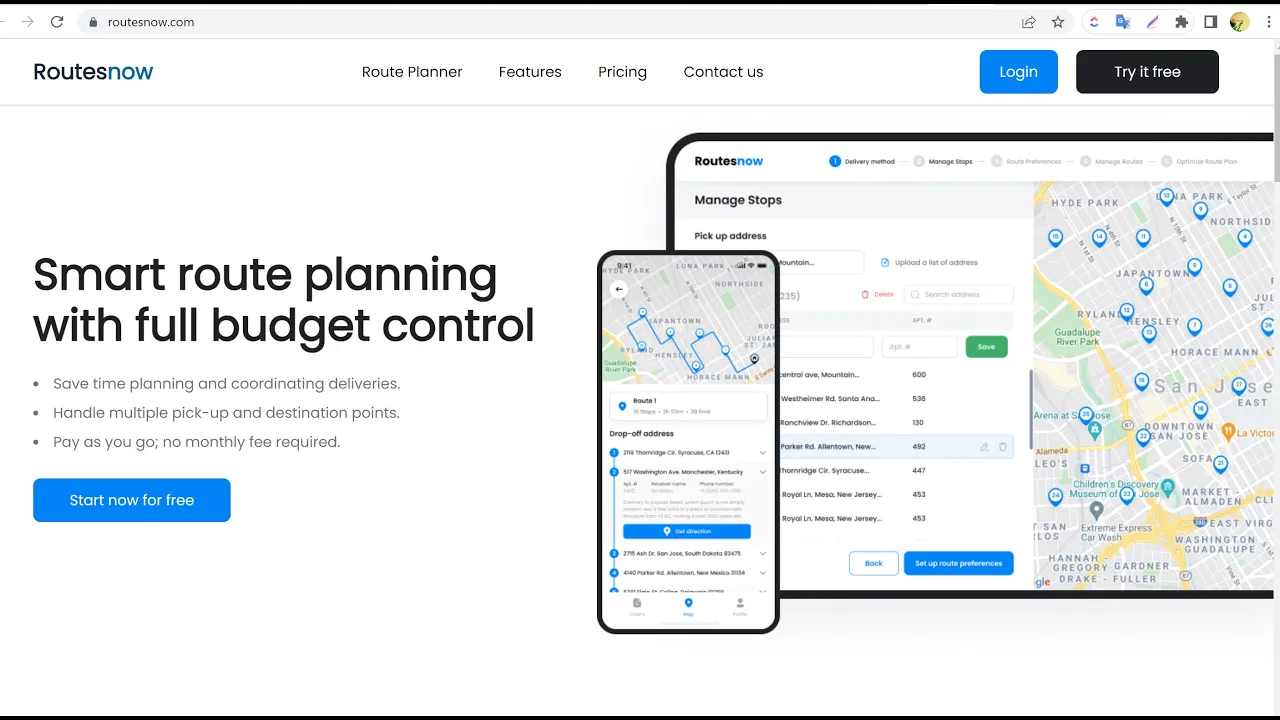
Our Partner RoutesNow Video Tutorial & integration with Senpex API to simply Last Mile Deliveries
420
Route optimization algorithms in last-mile delivery systems use mathematical methods to determine the most efficient sequence of stops for drivers, minimizing total travel distance and time. The nearest neighbor algorithm starts from the warehouse and always visits the closest unvisited point next, while round trip algorithms create circular routes that return to the warehouse by visiting points in a sequence that minimizes backtracking. These algorithms can be manually adjusted through drag-and-drop interfaces, allowing users to customize routes based on specific requirements like preferred start/end points or delivery priorities.
Click to watch →

Big Data en logística: cómo optimizar costes de la 'última milla'
82.2K
Big data analytics, including geospatial data, GPS tracking, and machine learning, enables logistics companies to optimize urban last-mile delivery by analyzing delivery patterns, identifying optimal routes, and improving efficiency despite challenges from urbanization, e-commerce growth, and fragmented delivery demands.
Click to watch →
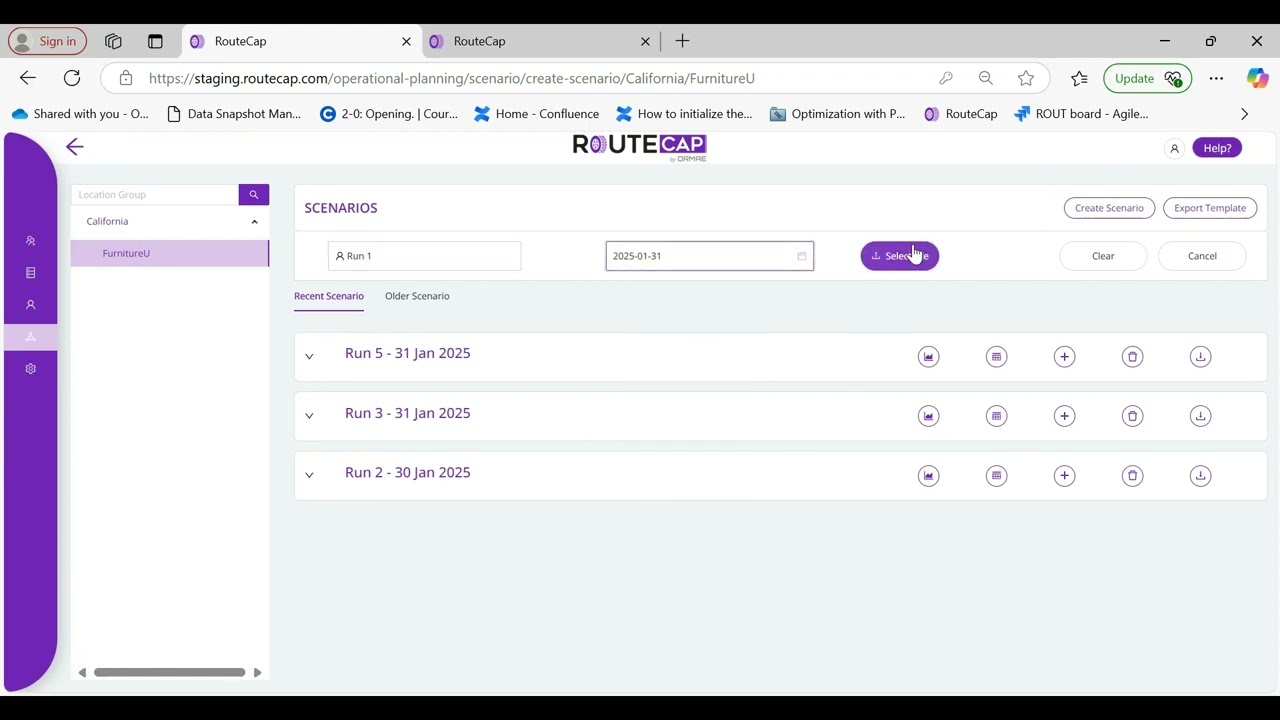
Unlock the power of optimization with RouteCap
118
Route optimization tools like RouteCap help businesses maximize fleet utilization and minimize total vehicle distance by algorithmically assigning orders to vehicles based on constraints such as time, location, manpower, and vehicle capacity, while also providing analytics for tracking key operational metrics.
Click to watch →
E-commerce flow
E-commerce flow
0:00- 1
Explains the online shopping order process from consumer to portal.
- 2
Details how order data triggers warehouse and supplier replenishment.
- 3
Shows shipment path from supplier to central, then local, to final delivery.
Sustainable Logistics and Circular Supply Chains
While traditional e-commerce models optimize for speed, low cost, and frictionless last-mile delivery, critics argue this linear 'take-make-dispose' model generates massive negative externalities. The environmental toll of rapid shipping (high carbon emissions from frequent, half-empty delivery runs), excessive packaging waste, and high rates of consumer returns—many of which are discarded because reverse logistics are unprofitable—has sparked a significant counter-movement. The Sustainable Logistics framework challenges the dominant e-commerce narrative by prioritizing closed-loop supply chains. This perspective advocates for a paradigm shift: designing supply chains around reverse logistics (for recycling and refurbishment), hyper-local fulfillment to reduce transit distances, consolidated shipping models instead of instant individual delivery, and accounting for the full ecological and social lifecycle costs of a transaction. It argues that the convenience of standard e-commerce is built on unsustainable externalities that must be redesigned.
Basic understanding of Supply Chain Management (SCM) fundamentals, including the flow of goods from manufacturer to consumer.
Familiarity with core business models, particularly the operational differences between traditional retail and digital e-commerce.
Fundamental concepts of inventory management, including safety stock, lead time, and warehousing functions.
An introduction to enterprise information systems, specifically how data flows from an online checkout page to backend management software.
Advanced warehouse automation and smart logistics, such as the implementation of robotics, IoT sensors, and Automated Storage and Retrieval Systems (AS/RS).
Omnichannel distribution strategies, examining how companies integrate brick-and-mortar storefronts with online fulfillment methods (e.g., BOPIS).
Reverse logistics and returns management, analyzing the financial and operational impact of product returns in e-commerce.
Data-driven last-mile optimization, including route planning algorithms, green logistics, and the use of autonomous delivery vehicles.
7.7K views71likes1:42@manishjain6317Original Release: 2017-10-03
otherwise videos about e-commerce model nowadays everyone of us shop online we buy everything online we either pay directly to the e-commerce merchant or we pay cash on delivery like Amazon eBay etc so let's look how actually e-commerce model works so let's start with the consumer so say for example you order something on eBay Amazon etc so you keep the information on your computer laptop or your smartphone that information you clean on the e-commerce portal like Amazon or Ebay once you log in the order that order information goes to the order management team it's called a which process the orders of the consumer and share the information to the central warehouse this videos then share the information with supplier and their local mayor houses which is located in different cities based on the available on hand stock in their warehouses the decision is taken how much needs to be buy from the supplier the same information is then passed to the supplier once this information is shared the shipment happens from supplier to the central warehouse from central made house to local warehouse and then local made out sugar do you the last mile delivery
Up Next

9:07
Excel Sales Forecasting: Revenue Projection Tutorial
@MelCompton
8.6K views•2021-03-13

12:54
Triumph of Orthodoxy Icon: Byzantine Art & History Explained
@BenCallan
2.1K views•2024-08-06

9:49
FastAPI vs Flask vs Django: Choosing the Right Python Web Framework
@TechWithTim
302.5K views•2024-05-26

1:42
Game of Thrones Opening Credits: A Cinematic Analysis
@gameofthrones
46.3M views•2011-04-18
Related Study Plans & Knowledge Roadmaps
Structured learning paths in General & Interdisciplinary Studies
general-studies
Elevator Engineering: History, Physics & Cities
01From Hoists to Safety Brakes: The Dawn of Vertical Lift
02Hydraulic vs. Traction: The Engineering Physics of Elevators
03Modern Speed, Safety, and Algorithms
+ 2 more learning modules
12h5 modules
Explore Roadmap
general-studies
Rubber: Material Science, History & Geopolitics
01Origins of Natural Rubber & Mesoamerican History
02The Chemistry of Natural Rubber & Vulcanization
03The Geopolitics of the Rubber Boom & Colonization
+ 2 more learning modules
12h5 modules
Explore Roadmap
general-studies
Containerization: Evolution, Logistics & Trade
01Ancient Trade & Bulk Cargo: Amphorae to Barrels
02The Industrial Revolution & Cardboard Packaging
03The Containerization Revolution: Malcom McLean
+ 2 more learning modules
12h5 modules
Explore Roadmap
general-studies
Textile Tech: Evolution, Labor & Global Impact
01Pre-Industrial Textiles: Handloom & Cottage Industry
02Mechanization: The Spinning Jenny to the Power Loom
03The Factory System & Global Labor Transformation
+ 2 more learning modules
10h5 modules
Explore Roadmap