















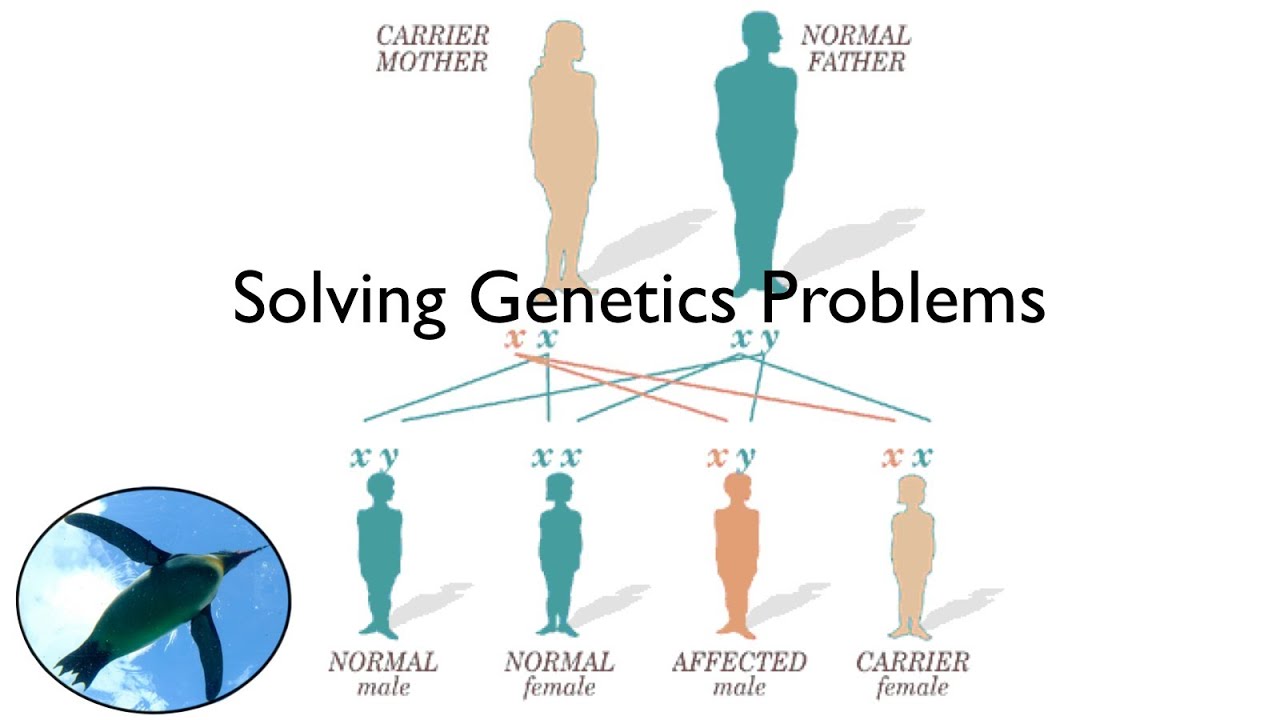



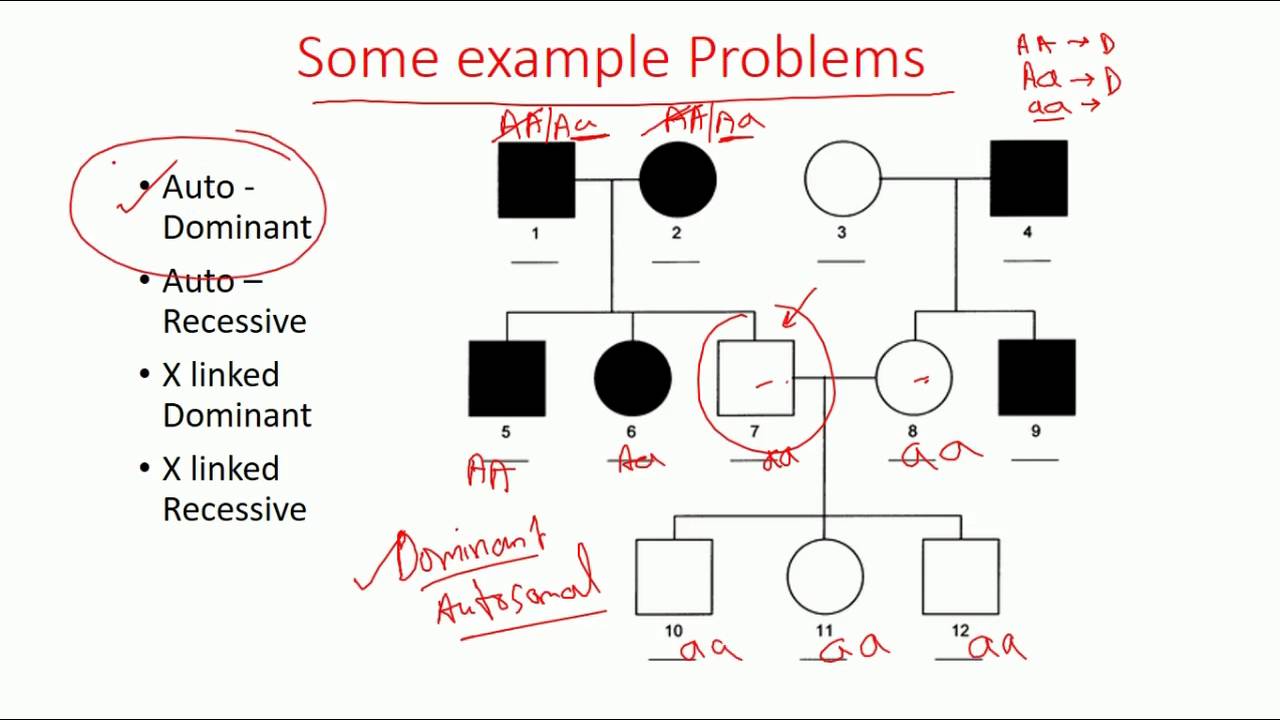







In genetics, the product rule calculates the probability of two or more independent events occurring together by multiplying their individual probabilities, while the sum rule calculates the probability of two or more mutually exclusive events occurring by adding their individual probabilities; independent events do not influence each other's outcomes (like coin flips or child genders), whereas mutually exclusive events cannot occur simultaneously (like getting heads or tails on a single coin flip).
Sum and Product Rules in Genetics: Probability Explained
Added:Understanding of basic Mendelian inheritance, including the definitions of alleles, genotypes, phenotypes, dominant, and recessive traits.
Familiarity with setting up and interpreting a single-character Punnett square (monohybrid cross).
The biological basis of genetic segregation and independent assortment during meiosis.
Basic mathematical literacy in probability, including representing chances as fractions, decimals, or percentages.
Solving multi-hybrid crosses (dihybrid and trihybrid) efficiently using probability calculations instead of large Punnett squares.
Performing pedigree analysis to calculate the likelihood of an individual inheriting or carrying a genetic disorder.
Utilizing binomial expansion to determine the probability of specific combinations of offspring (e.g., the chance of having three affected and two unaffected children).
Applying the Chi-Square goodness-of-fit test to analyze whether observed genetic cross data aligns with expected probabilistic ratios.
58.3K views544likes16:06Original Release: 2014-12-27
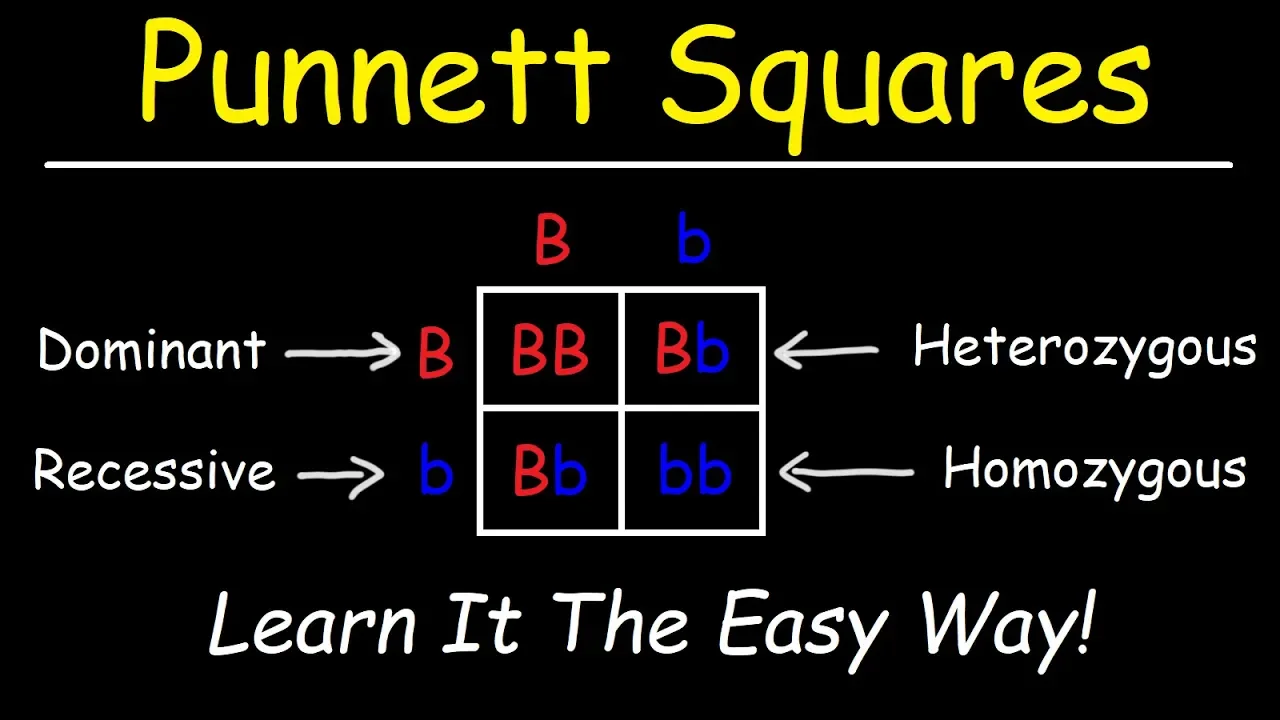
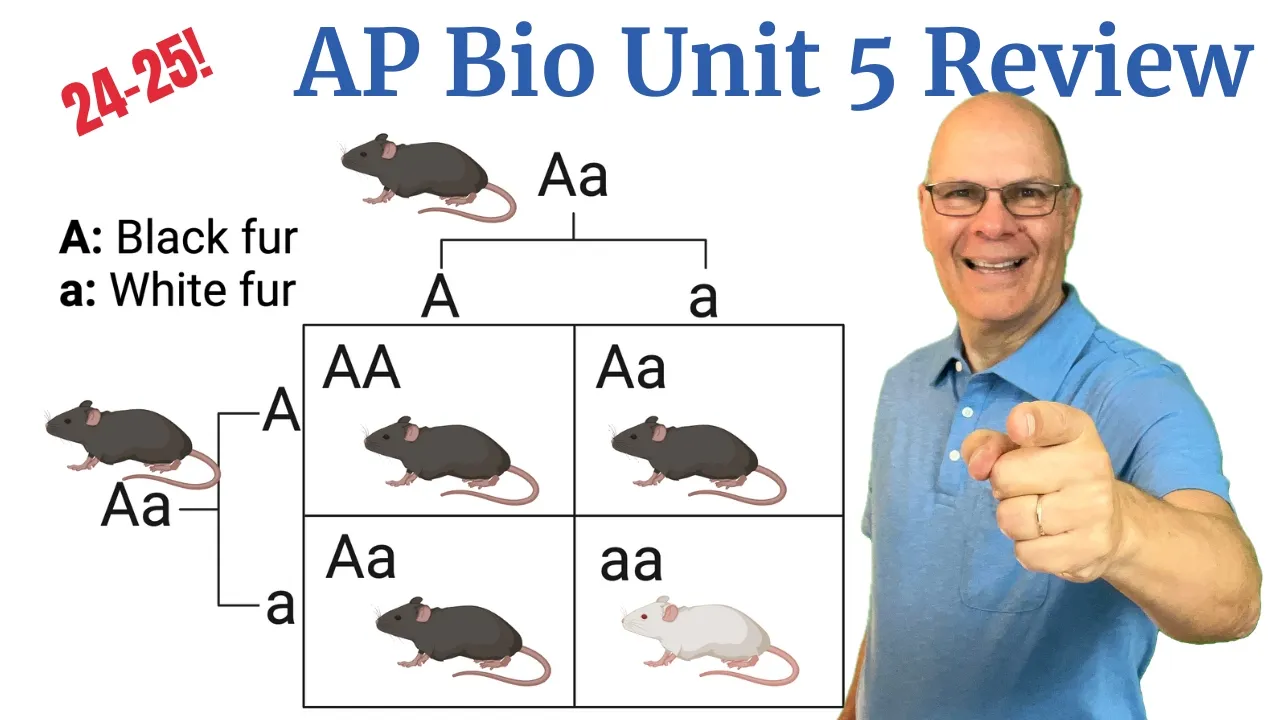
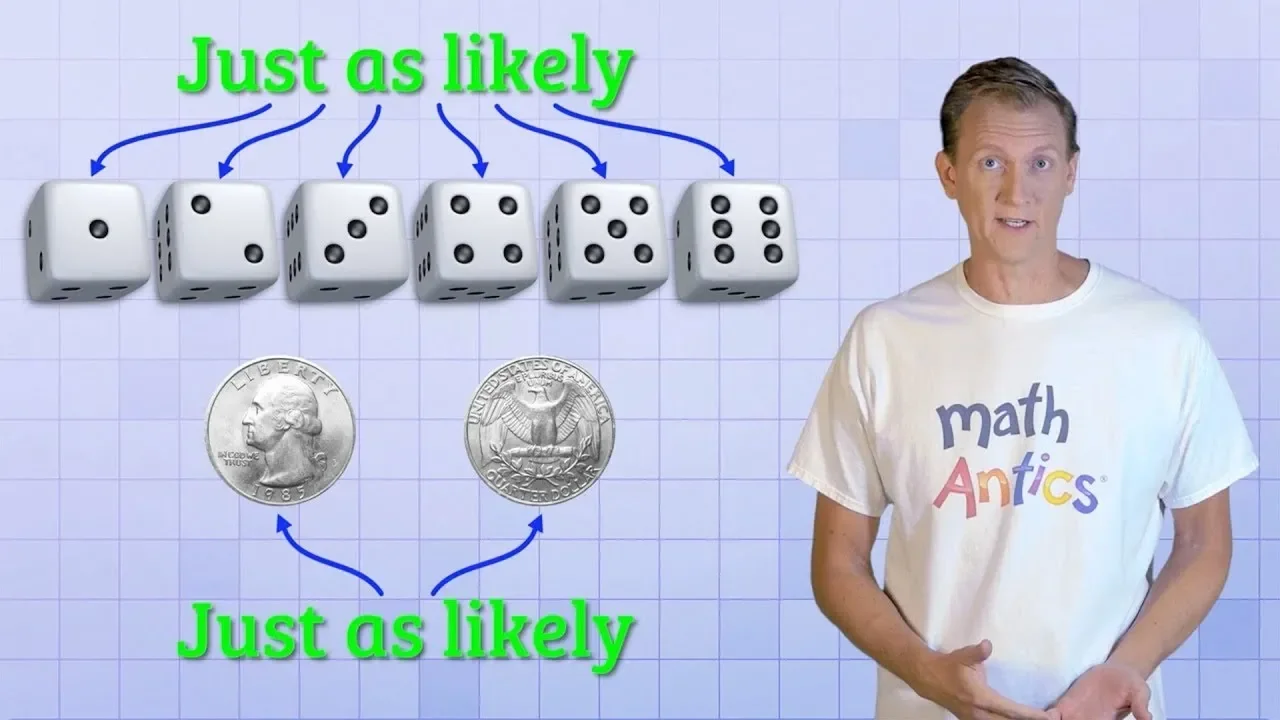
in genetics in order to be able to correctly determine and calculate the probability values of different events and different outcomes taking place we have to be familiar with two important rules and these rules Come From mathematics and probability now rule number one we call the product Rule and Rule Number Two we call the sum rule so let's begin by defining what the product rule is so the product rule states that the probability of two or more independent events taking place or occurring is equal to the product of their individual probabilities and that's exactly why we call the product rule the product rule because it involves the word product so to calculate or to use the product rule we actually have to multiply the individual probabilities as we'll see in just a moment now in order to actually fully understand what the product rule tells us we have to Define what it means for two or more events to be independent of one another so to demonstrate the independence of events let's actually use the following coin so we're going to flip a coin twice so our two events is coin flip number one and coin flip number two now before I actually make the flip what exactly is the outcome of event number one well there are two Poss possible outcomes we either have heads or we have tails now we don't actually know what the outcome will be before we actually carry that event out so let's carry the event out so we flip oh that was horrible let's try it again a little bit better okay so event number one was the coin flip number one and our outcome of event number one was Tails um sorry heads now before we carry out event number two we don't know what the outcome is so it can be Tails or it could be heads moreover the outcome of event number one has absolutely no influence it does not actually affect the outcome of event number two and that exact and that's exactly what we mean by two events being independent of one another so two events are said to be independent of one another if the occurrence of one of the events does not actually influence or affect the occurrence of the second event so if I make my second Flip Flip number two right it could be heads or it could be tails and the event number one has no bearing no effect on event number two so in event number one we obtain heads in event number two we also obtain heads but we could have obtain heads and tails or tails and heads or tails and Tails and so forth now another example is having children and this is more uh I guess important uh when we're talking about genetics so what exactly do we mean by having two children so having child number one is event number one having child number two is event number two now the outcome of event number one could be either a girl or a boy and the outcome event number two could also be a girl or a boy because event number one is independent of event number two what that means is the gender of the first child has no effect no bearing no influence on the on the gender of that second child so we can get a boy and a girl we can get a boy and a boy or a girl a girl and a girl or a boy so we can have four different possibilities as we'll see in just a moment and these different events two events are independent of one another in the same way that these two coin flips were in dependent of one another so to demonstrate this a bit more let's actually take a look at example number one and example number two so in example number one we want to use the product rule this rule here to basically determine the probability of obtaining two consecutive heads on two coin flips so basically what that means is we have to apply the product rule so let's use the color black so essentially so we use the probability uh the pro uh the product rule to basically determine what the probability is in flipping two consecutive heads now if we flip the first time what's the probability of that this actually Landing Tails or Landing heads in this case well it's either this side or this side so it's 50/50 and that means it's there's a one half chance that this will land up and a one half chance that this will land up so we see that the probability of it Landing heads the first time around is basically 1/2 so the probability of EV event number one taking place is 1/2 and likewise the probability of independent event number two taking place the second coin flip coin flip is also 1/2 and because their independent to find the actual probability of these two events taking place we have to apply the product rule we multiply them by one another and we basically get 1/4 which is equivalent to 0.25 and if we multiply by 100 we get 100% uh 25% so remember this is 0.25 out of one or equivalently 25% now we can also use a ponent square to basically calculate what the result is so in trial number one in the first event we can either get heads or we can get Tails so let's use I guess red foreheads we're actually let's use uh red for event number one and let's use blue for event number two okay so this is event number one first trial event number number two second trial now what's the probability of it being heads well it's basically 1/2 so let's write 1/2 what's the probability of being Tails it's also 1/2 likewise it's 1/2 here and it's 1/2 here okay now this is event number one and this is event number two now when we combine these two h's we basically get an H and an H that comes from here and when we combine these H's we have to multiply these two fractions why well because these two events are independent so we're basically using the product rule so 12 multipli by2 SO2 um let's use 12 multip by 12 gives us 1/4 okay so 1/4 here and the same thing goes for each and every one of these so this event is basically both times we have heads this event is the first time around we get heads the second time around we get Tails so we have an h and we have a a t this is a t and an h and finally we have a T and A T okay now what about the probabilities well 12 * 1/2 so we have 1 12 * 12 gives us 1/4 and we have 1 12 so once again we have 1/4 and we have 1/4 and this makes sense because if we sum up these four values it has to add up to one or 100% so Point uh point 25 +25 +25 +25 gives us a total of one so notice that these probabilities are the probabilities of these events taking place so either we get heads and heads or we get heads and tails or tails and heads and tails and Tails so these are the four different prob uh probabilities now example number one tells us use the product rule which we basically just did by multiplying it to calculate the probability that is obtained when two of those coin flips result in two heads so this is basically this first Square so heads and heads gives us a probability of 1/4 which is exactly what we obtain by simply multiplying these two values so we can either do this way or we can actually use the ponent square now let's move on to example number two which involves slightly more the genetic because we're using not coin flips but we're producing children so find the probability of two parents a female and a male producing two children who are both female now essentially example number two is exactly like example number one except instead of using tals and coin flips we're using children so event number one is having the first child and the uh the two outcomes are either a boy or a girl so let's suppose the color red is the first event so we have boy or we have a girl event number two is blue so we have also the same type of outcome boy or girl now the probability of this taking place is one half the probability of this taking place is also 1/2 okay and here we have 1/2 the same exact probability and one2 Okay so so let's actually carry out these events so we have a blue here and a red here so what this event tells us is so if they have two children and the two children are a boy and a boy then the probability is the product of these two so 1 12 multiplied by2 which is 1/4 okay now what about this one well we have a boy and we have a girl so we have a boy we have a girl and the probability of that of that is once again 1/2 * 1/2 or 1/4 and we continue this and in each one of these squares we have a value of 1/4 so we have a girl and a boy here and we have a girl and we have a girl okay so this is basically our opponent Square for example number two so we want to find the probability of two parents producing two children who are both female and if we look at the ponent square the only time we have both females both girls is in this final square and this gives us by the product rule so this multiplied by this a value of 1/4 so essentially we take 1/ 12 multiplied by 1 12 because the probability of getting a girl the first time around is 1/2 and the probability of getting a girl the second time around is also 1/2 and so we get a value of 0.25 or 1/4 or equivalently 25% whichever way you want to actually look at it okay so now that we have the product rule let's actually move on to the sum rule so let's take a look at what the sum rule tells us so the probability of two or more mutually exclusive events occurring is equal to the sum of their individual probabilities so unlike here here we're not going to multiply we're going to add those probabilities up and unlike in this event that deals with independent events unlike in this rule that deals with independent events in this rule we deal with something called mutually exclusive rules or mutually uh EX exclusive events so what exactly do we mean by mutually exclusive events well two events are set to be mutually exclusive if one event taking place will prevent the second event from actually taking place so two events are set to be mutually exclusive if the occurrence of one of those events prevents the other event from actually taking place so what do we mean by that so once again let's take a look at the five following um coin so now before I actually flip the coin what can happen well two events can actually take place within this one event so two outcomes we either get a Tails or we get a heads and in a way we can see those two outcomes as two mutually exclusive events because once this actually takes place and I get Tails then heads cannot actually take place because Tails already took place and that's what we mean by two mutually exclusive events so flipping a coin once we obtain heads and obtaining heads is mutually exclusive to obtaining Tails because either one takes place or the other takes place both of those events in that single coin flip cannot actually take place and in the same analogous way having one child also creates two mutually exclusive events so we can either get a boy and a girl but not both because that is a single process so we either we either get one or we get the other so every time we have a child usually we only produce one child either a boy or a girl so that's what we mean by mutually exclusive events so let's look at example number three to demonstrate the sum rule so if a couple has children what is the probability that one of them is a girl and the other one is a boy so in example number two both of them should have been female now we want one girl and one boy the question is what exactly is the probability so let's take a look at the following diagram the following pun and square to basically calculate what the probabilities are first we actually have to apply the product rule so let's say this is event number one and and let's suppose that we have um so this is our boy and girl and then we have a boy and a girl so once again we have a probability of 1/2 here a probability of one2 here sorry if it's sloppy so we have one half here one half here now if we combine this we get a boy and a boy
Up Next

72:46
Bayesian Inference | Statistical Rethinking 2022 Lecture 02
@rmcelreath
92.8K views•2022-01-04

4:43
Elliptic Curve Cryptography Explained: ECC, ECDSA, ECDH
@PracticalNetworking
28.5K views•2024-10-21
10:44
Fourier Series Introduction: The Big Idea Explained
@DrTrefor
387K views•2021-05-03
6:00
The Mathematical Impossibility of Accurate World Maps
@Vox
23.3M views•2016-12-02
Related Study Plans & Knowledge Roadmaps
Structured learning paths in Mathematics
mathematics
Tensor Calculus: Vectors to Riemann Curvature
01Mathematical Foundations: Linear Algebra & Calculus
02Covectors, Dual Spaces, and Tensor Basics
03The Metric Tensor and Index Gymnastics
+ 2 more learning modules
40h5 modules
Explore Roadmap
mathematics
Gödel's Incompleteness: Logic, Proofs & Limits
01Introduction to Formal Systems & Hilbert's Dream
02Set Theory, Cardinality, and Cantor's Diagonal Argument
03Arithmetization and Gödel Numbering
+ 2 more learning modules
14h5 modules
Explore Roadmap
mathematics
Galois Theory: Fields, Groups & Solvability
01Foundations of Abstract Algebra: Groups & Fields
02Polynomials & Field Extensions
03Splitting Fields & Symmetries
+ 2 more learning modules
24h5 modules
Explore Roadmap
mathematics
Non-Euclidean Geometry: Models & Geodesics
01Euclid's Fifth Postulate and the Birth of New Geometries
02Hyperbolic Space and the Poincaré Disk Model
03Geodesics: Defining Straight Lines in Curved Spaces
+ 2 more learning modules
15h5 modules
Explore Roadmap