












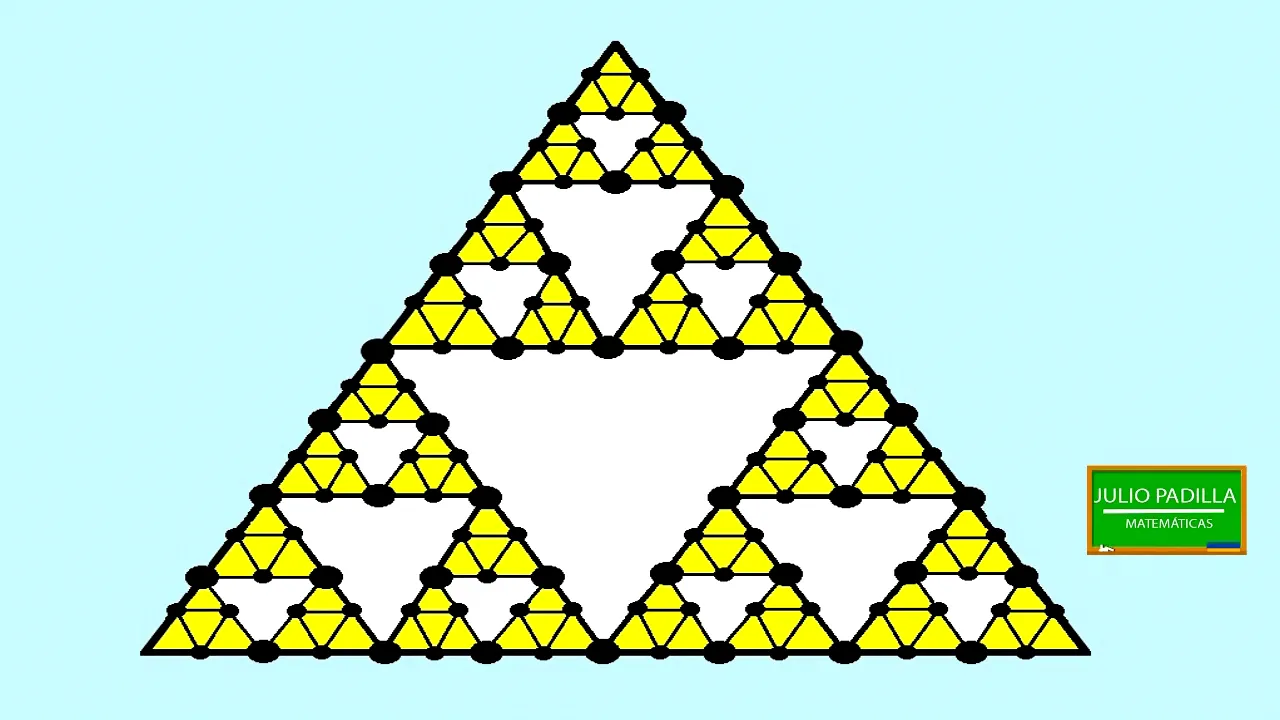
















Fractal dimension quantifies how completely a fractal fills space, calculated using the formula D = log(N)/log(M), where N is the number of self-similar pieces and M is the magnification factor needed to recreate the original shape; for example, the Sierpinski triangle has a fractal dimension of approximately 1.58 (log₃/log₂), placing it between a one-dimensional line and a two-dimensional plane.
How to Calculate Fractal Dimension: A Simple Guide for Self-Similar Fractals
Added:Basic understanding of Euclidean dimensions (e.g., point as 0D, line as 1D, plane as 2D, volume as 3D) and their scaling properties.
Familiarity with algebraic logarithms, specifically the rules of logs and solving equations where the unknown variable is in the exponent.
The concept of geometric self-similarity, where a shape is composed of smaller, scaled-down copies of itself.
Basic familiarity with classic fractal structures, particularly the construction steps of the Sierpinski Triangle.
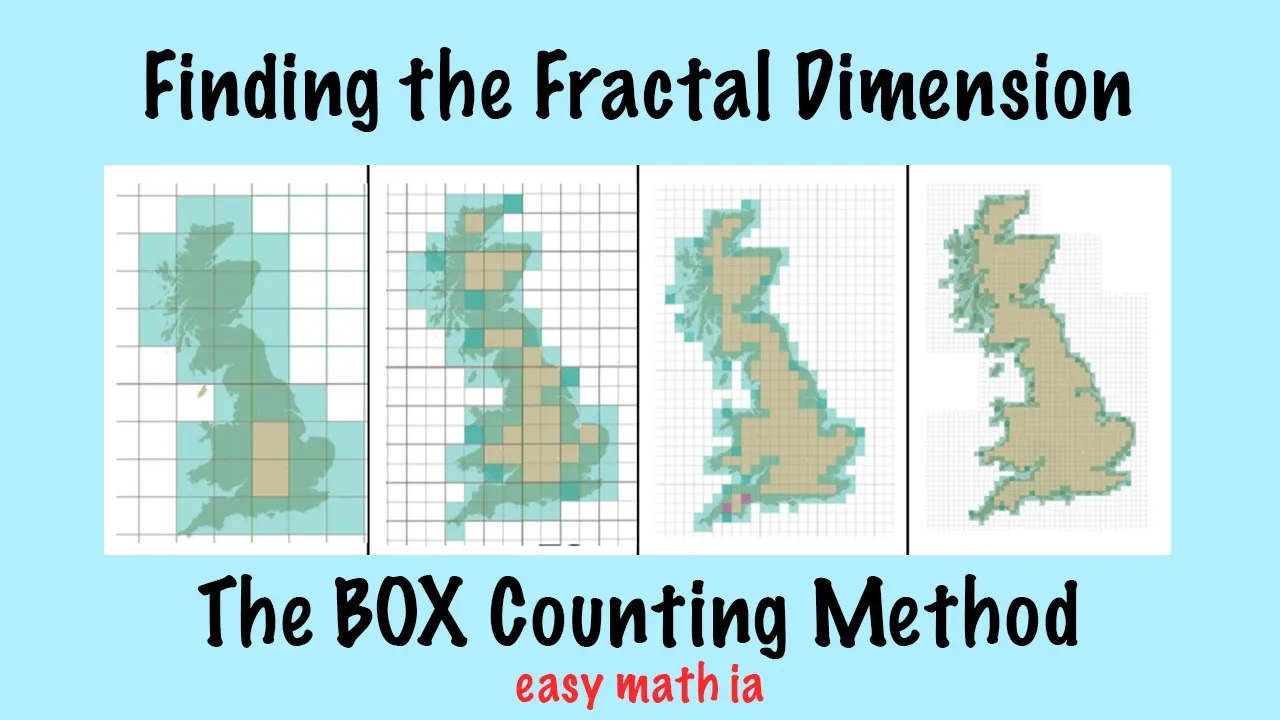
The Box-Counting Method (Minkowski–Bouligand dimension) for calculating the fractal dimension of natural, non-strictly self-similar objects like coastlines.
The rigorous mathematical formulation of the Hausdorff Dimension and its foundation in measure theory.
Practical applications of fractal analysis in medicine and biology, such as classifying the complexity of blood vessel networks, tumors, or brain activity patterns.
Multifractal analysis, which characterizes systems that exhibit multiple scaling behaviors and require a spectrum of fractal dimensions.
The study of chaotic dynamical systems and Strange Attractors, which often possess non-integer fractal dimensions.
42K views788likes10:12Original Release: 2015-10-29
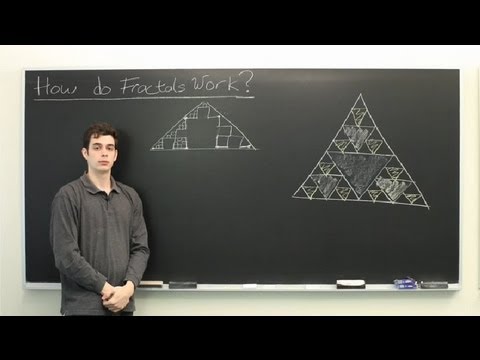
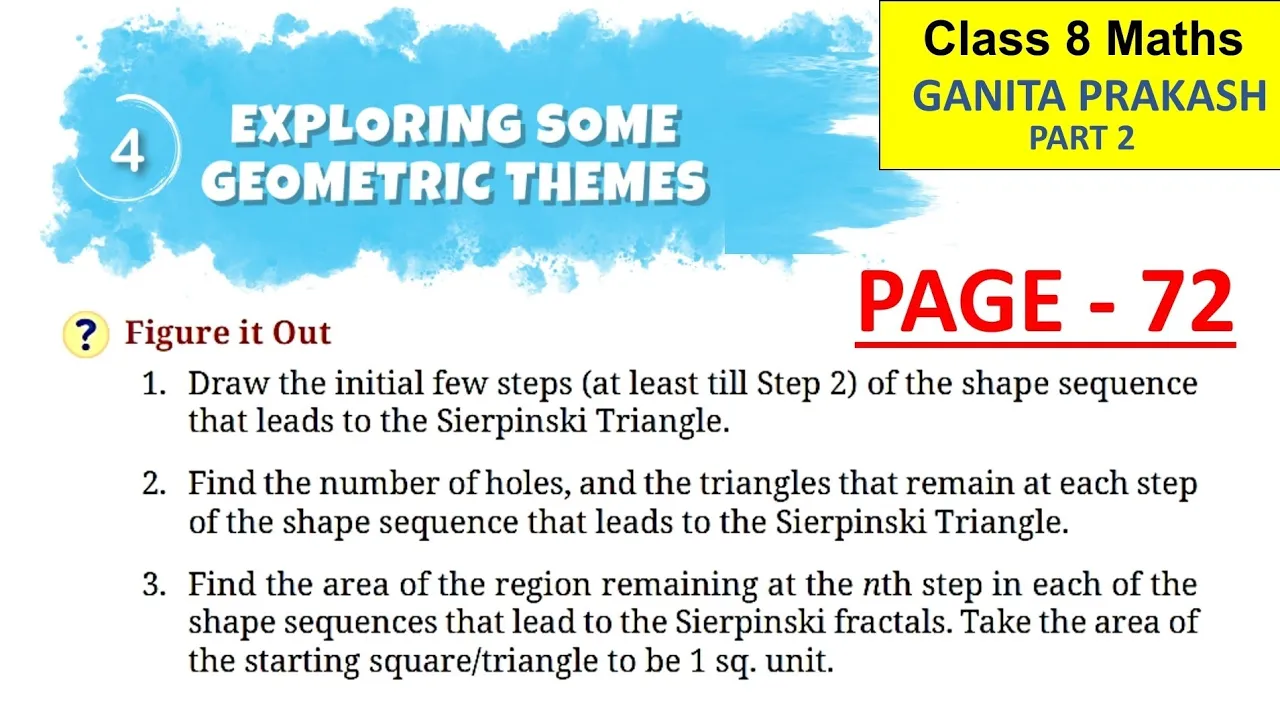
so this is just a followup to the video on Space filling fractals I just want to say a little bit about the fractal Dimension so how we can measure the fractal dimension of a self-similar fractal just like to talk about something called the fractal Dimension I want to give you some idea at least intuitively of what it is when we looked at a the sapinsky triangle and one way we actually draw the subin triangle like this so we start with a triangle and then we draw another triangle an upside down triangle in it and then that gives us three new triangles and we rep repeat this process so this is our kind of iterative function so we can get a sapinsky triangle in different ways in this case we're kind of explicitly drawing it whereas with our chaos game we were filling it in using Randomness so this is a sininsky triangle to depth how many times have I iterated it one two three I think so this would be depth three and we can continue this process forever and of course this triangle here is the same as this triangle here and that's what's known as fractal self similarity now what I want to ask is what is the dimensionality of this abstract mathematical object so if we said that a line has Dimension one and a plane has Dimension two what dimension does this have now we might say Well it has Dimension two it's on a plane but that's not that's not really very useful so what Mandel BR kind of came up with with was this idea of um fractal Dimension and if we look at this as we saw in the sapinsky tri Le that we generated with the um space filling fractal it kind of fills the space it fills a two-dimensional plane but it doesn't fill it entirely so what we can kind of think of is say well it's not really a plane and it's not it's somewhere in between a line and a plane and we can kind of characterize its fra fra fractl by how much it fills the plane in this case so call that it's fractal Dimension and it has a fractal dimension of 1.58 approximately it's um log3 over log 2 so it's not exactly 1.58 so 1.58 is somewhere between 2 and 1 and we kind of intuitively get that because the way it fills the space remember we repeat this over and over is not completely filling it if you see what I mean is filling it 1.58 rather than two if it was completely filled now let I just want to go over how we calculate the fractal Dimension and formally then the fractal Dimension is calculated as a ratio of two things the first is the so we take the log of What's called the the essentially the number of pieces that we're breaking the thing into so we'll call that num P we divide that by What's called the magnification factor and I really need to explain this and show some examples otherwise it kind of doesn't make a lot of sense and this is where the kind of self-similarity of a fractal comes in so if we take a line we can break that into as many pieces as we want um so let's just break it into two pieces and this point so when we break it into two points we get two self-similar pieces they're identical in similarity to the whole line so that's the number of pieces we break it into and then the magnification factor is how if we were to kind of increase this inflate this in size how much would we have to do so to get the original line back and it's two so then that gives us if we want to compute the fror dimension of this we'll say that for two pieces then it would be log 2 over log 2 so two self similar pieces have a magnification factor of two now for a line it's always the case that no matter how many self-similar pieces we break it into so we break it into four pieces that original piece kind of got to multiply it by four or magnify it by four to get the original line so if we break it into n Pieces then we have to magnify by n to get the original line back so we say that the fractal dimension of course these are the same terms is one and a line has a dimension one which is very convenient so let's look at a square or a plane if we start with a plane and we say all right we'll break it into selfsimilar pieces and of course there's only certain ways we can do that we can't split it in half those pieces are not self similar the first way we can do that is we break it into four pieces so in four pieces then how we get four we get four bits and how much do we have to magnify those pieces to get the original Square well each point each kind of um side needs to be magnified by two right we need to double each of these sides so for four pieces we need to magnify it by two so we'd get log 4 over log 2 now we're not trying to compute the um fractal dimension in order to in order to compute the fractal Dimension we need to do it generally to say well for any number of um pieces self similar pieces we divide it into what is the magnification factor and work out that ratio so let's just but let's just have another look for explicitly for the case where we break it into we break each of these into two again now relative to the original image what we've done is we've broken the square into 16 pieces and then for each of these pieces how much do we have to magnify to get the original Square back well each side has got to be magnified four times so you see where we're going with this so what would we say in general with regards to a square well if you look at the relationship between these two things this is actually the square root of this which makes sense because however many our multiplication factor is always is going to be effectively the number of squares on one side therefore the total number of squares is going to be the square of that so we can then compute the fractal Dimension by saying uh that this is let's say this is N2 and this is n and with logari logarithmic manipulation we can say that that is 2 log n over log n and of course these cancel out because this is the same as saying 2 * log n over log n and that goes away that's one so we get the value two so the dimensionality the fractal dimensionality of a plane is two so that's how we compute the fractal dimensionality of a plane so what about the sapinsky triangle how do we actually work that one out well let's draw the sininsky triangle again we don't have to go too far draw it quite crudely so what when we break it when we create the self similarity how many pieces do we break it into well in that first step we take the triangle and we've broken it into three more triangles three separate self similar pieces so there's three s similar pieces and what is the magnification factor for each piece well if you look at this triangle each of its sides has been reduced by two it's been halfed so we'd multiply this triangle Side by two and we'd get get the original triangle back so the magnification factor is two so that gives us 1.58 which is the fractal dimension of the cinsky triangle okay well I just wanted to mention that because most people have heard of fractals and they've seen manual Bret and things like that but they probably not heard of they might not have heard of fractal dimension of course if you have then you know I'm teaching grammar egg right but that's also where this term fractal comes from fract cuz we're talking about fractional dimensions of things well there you go I hope that was uh interesting to watch or useful and uh thanks for watching
Up Next

13:58
Julia Sets and Their Relationship to the Mandelbrot Set
@TheMathemagiciansGuild
191K views•2020-04-01

4:43
Elliptic Curve Cryptography Explained: ECC, ECDSA, ECDH
@PracticalNetworking
28.5K views•2024-10-21
10:44
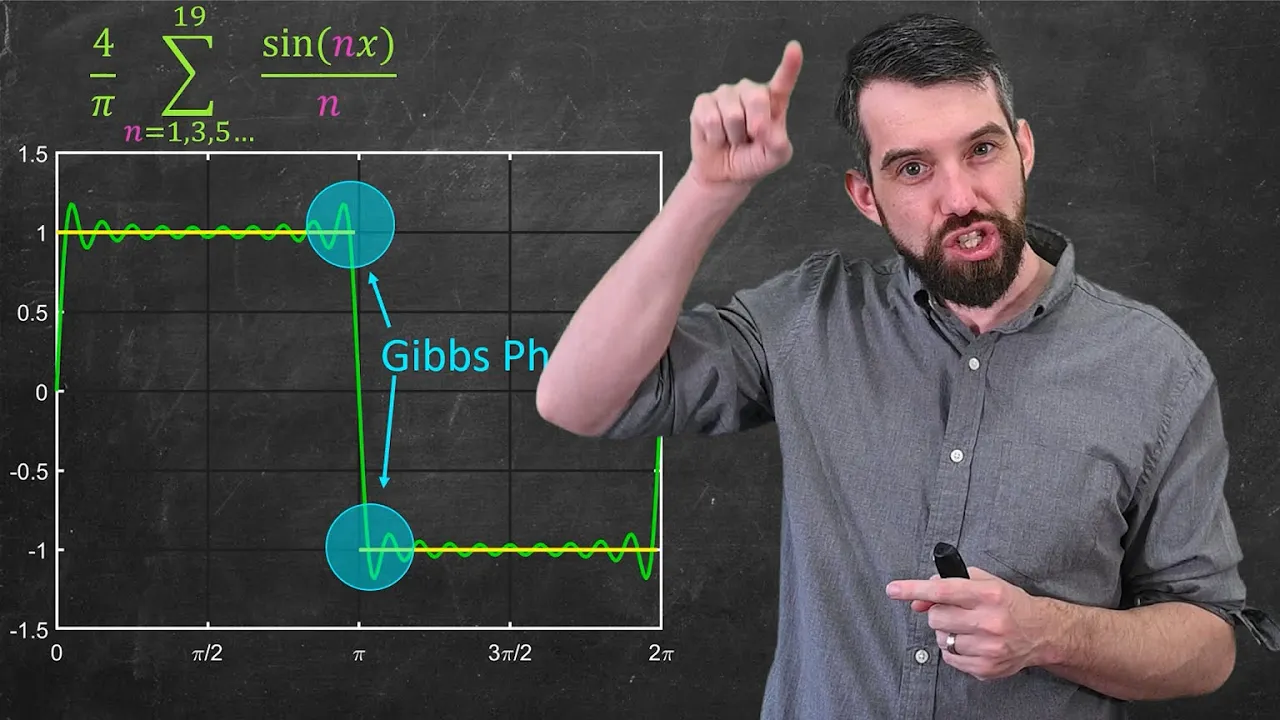
Fourier Series Introduction: The Big Idea Explained
@DrTrefor
387K views•2021-05-03

6:00
The Mathematical Impossibility of Accurate World Maps
@Vox
23.3M views•2016-12-02
Related Study Plans & Knowledge Roadmaps
Structured learning paths in Mathematics
mathematics
Tensor Calculus: Vectors to Riemann Curvature
01Mathematical Foundations: Linear Algebra & Calculus
02Covectors, Dual Spaces, and Tensor Basics
03The Metric Tensor and Index Gymnastics
+ 2 more learning modules
40h5 modules
Explore Roadmap
mathematics
Gödel's Incompleteness: Logic, Proofs & Limits
01Introduction to Formal Systems & Hilbert's Dream
02Set Theory, Cardinality, and Cantor's Diagonal Argument
03Arithmetization and Gödel Numbering
+ 2 more learning modules
14h5 modules
Explore Roadmap
mathematics
Galois Theory: Fields, Groups & Solvability
01Foundations of Abstract Algebra: Groups & Fields
02Polynomials & Field Extensions
03Splitting Fields & Symmetries
+ 2 more learning modules
24h5 modules
Explore Roadmap
mathematics
Non-Euclidean Geometry: Models & Geodesics
01Euclid's Fifth Postulate and the Birth of New Geometries
02Hyperbolic Space and the Poincaré Disk Model
03Geodesics: Defining Straight Lines in Curved Spaces
+ 2 more learning modules
15h5 modules
Explore Roadmap