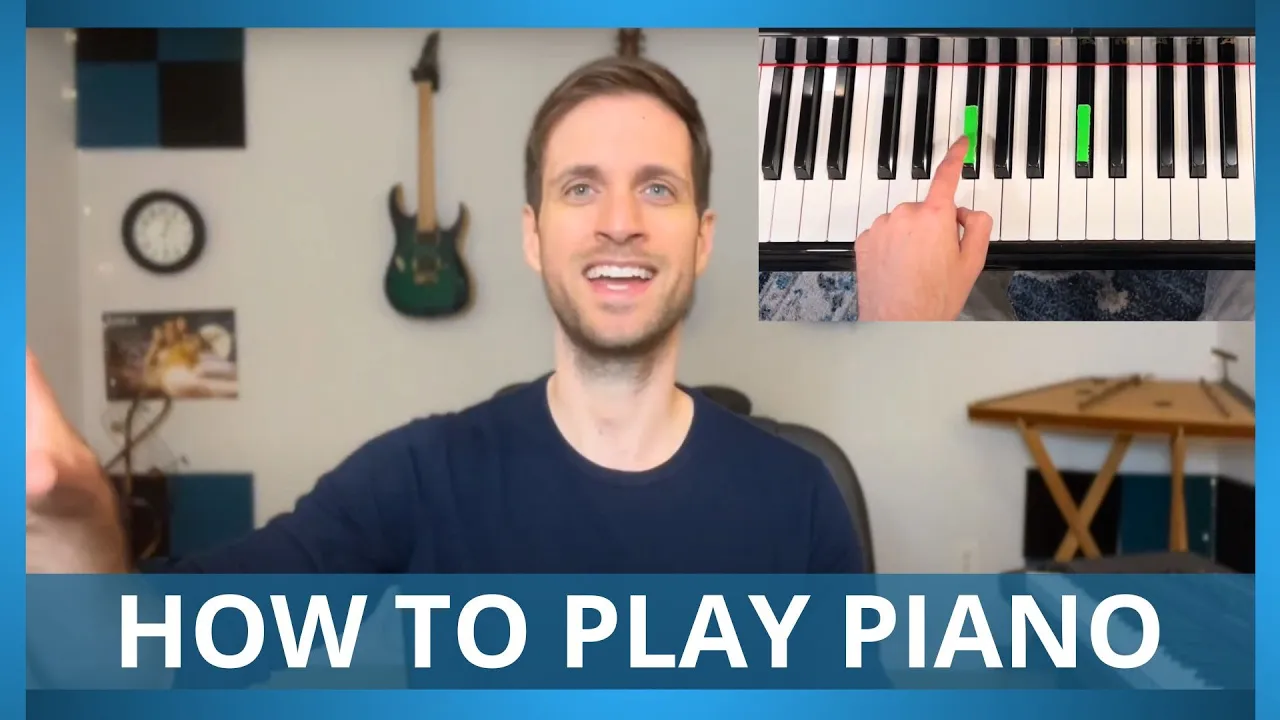











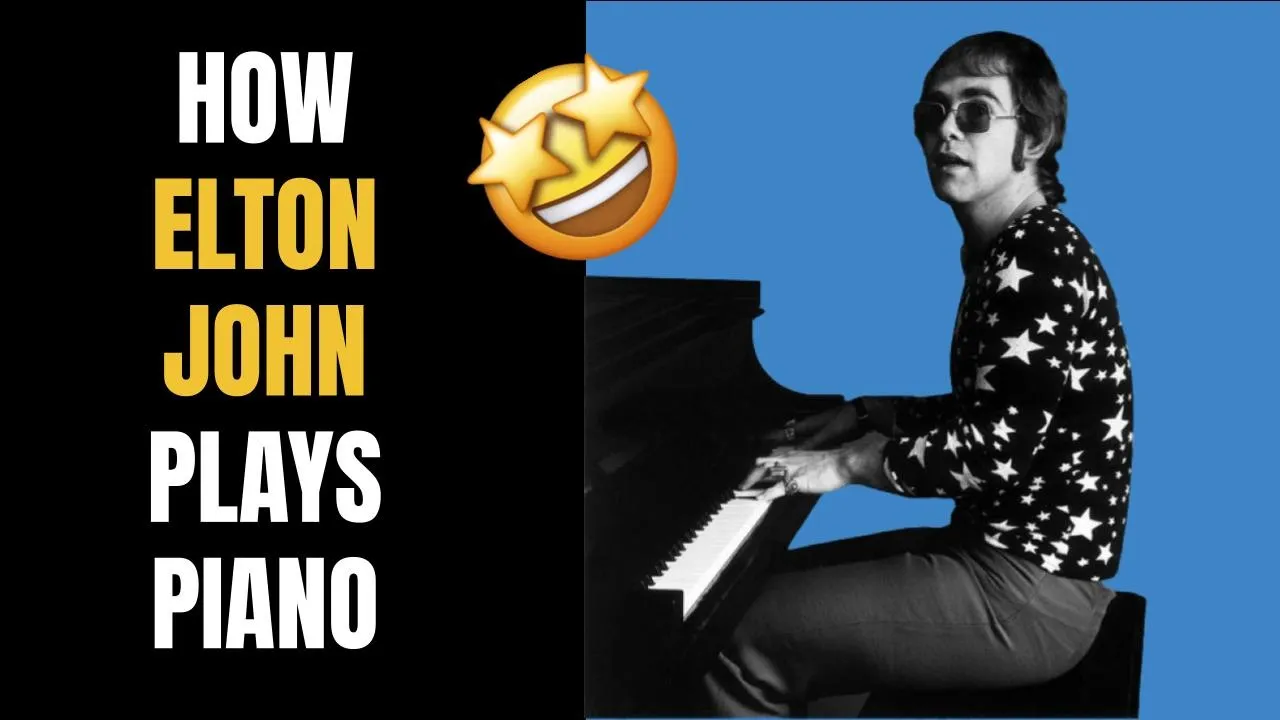








This tutorial teaches how to play Elton John's 'Rocket Man' using a pop piano style characterized by flexible chord voicings and rhythmic variations. The instructor demonstrates playing the song's chord progression (G minor 7, C major 7, B flat major, C minor 7, F major, C7) using consistent patterns where the left hand plays root notes or octaves while the right hand plays chord extensions, with variations encouraged to add musical interest. The key principle is that pop piano playing is not about strict adherence to specific notes but about understanding chord relationships and creating a cohesive sound through pattern-based voicings.
Rocket Man Piano Tutorial: Chord Patterns & Voicings | Elton John
Added:Basic piano keyboard geography and the ability to locate and name all white and black keys.
Understanding of major and minor triad construction (root, third, and fifth).
Conceptual familiarity with chord inversions (root position, first inversion, and second inversion).
Basic rhythmic notation and time signatures, specifically common time (4/4) and subdivision of beats into eighth notes.
Developing hand independence to maintain a steady left-hand bassline while playing syncopated chord patterns in the right hand.
Applying Elton John's signature rhythmic 'driving' eighth-note pulse to other pop and rock ballads.
Introduction to keyboard improvisation using pentatonic and blues scales to create melodic fills between vocal phrases.
Harmonic analysis of 'Rocket Man' to understand modal mixture, specifically the use of the Dorian mode and bVII chords in pop music.
540.9K views7.8Klikes12:51Original Release: 2015-10-29
hi everybody and welcome to this tutorial for Elton John's Rocket Man a classic tune by a classic pop pianist you know this guy is really one of the guys that laid the foundation for this style of playing pop Corp edge piano pattern variations over it and you're going to sound a little something like this and then we're back at the start of that same round which is the verse obviously so the courts that we are playing the first one is a G minor seven so this will be your regular G minor G B flat D then you're going to play the seven which is an F so this is a G minor seven we're going to play that have over here leave out the G and that leaves you with this voicing over here optionally you could owe left hand plays root notes most of the song most of the time in the song octaves sometimes you could do one in five sometimes just the root if octaves is too hard for you just stick to the route and else just see what I'm doing I'm also of putting in variations not always taking too strictly to these rules because that is something that I wanted to share with you also in this lesson that playing in this style especially like Elton John does he isn't too strict on which notes exactly to hit every you know then you have to hit that one then you have to hit that one he also does different things in different performances so for instance if we're going to go to the first chord to go for which I'm going to show you the pattern now okay so you're on that G minor 7 and I'm now just saying the route over here and you're doing is yeah so together right left oh cord left that would be if we'd take this pattern apart exactly you know but you could also play okay so now I didn't do that walking apart and also I put in a little extra which isn't a it which isn't even in the song but the the reason I'm saying this is that you know you don't have to be too strict it's a matter of approach and not a matter of kelpy and exactly and it really suggests for this to get a good grasp of what I'm doing then you'd have to really be comfortable with the subdivision of rhythm but whatever that's for another lesson maybe you see me doing a tiny variation there as well so you know sort of that's what I'm gonna say I don't I'm not going to go too strict on these okay so this second chord here is a C which is a regular C's like this and now when I'm playing octaves I'm playing C G and then ear over here the seven so that's C seven and even a nine that's the D so actually if you see that this hold very holds very close relation to that G that's why he chose that voicing in it sounds good so there you see that now I have four notes under my fingers I could do a walking up all the way again but then I'd have to start in another moment in time obviously or I wouldn't I wouldn't make it so to speak because then and then I have to so that's an option as well okay not for the rest of the tutorial I just wanted to say this because this is the basic approach for every chord so that now that you know that we've touched this so to speak we can go over all the chords and you'll be able to play the entire song flawlessly go back to this one okay again so that's I'd like to approach the chords always from the base you know the base defines the harmony so we're playing G C and then again but then the third time and when you get on that C is so you're walking out that base to an E flat over here and that's a B flat over D okay we're going to hit a flat so B flat over D is a regular B flat in second inversion F B flat D over D the third in a base and this is then this part where you sing smoking so that's he flat Reger degree flip first inversion basic root notes and Abbey's okay so the basic pattern over here would be and you could repeat that over all cores as you see you just walk down yeah second chord we've seen this one but now so now we're walking down instead of out but we just stayed right C minor seven is actually a sort of an e-flat over C so your regular C minor C E flat and G ed the B flat then actually it's discord over C and then you're gonna put it down over there to the first three just stick to that cord it's not a flat over b-flat F this is a regular F first inversion with an A in the base or the third in the base so then the top notes walk up that so over the two to another three or oh yeah and then you're going to go back to now you might notice that actually I played a couple of variations sort of to spice it up over here I'm going to show you that in the next round okay first let's go that is because this is actually super simple now the second time that the verse comes around you play not this inversion but you play that note over here so the chords are the same right G minor seven up with four notes over here and then just stick to that corner place yeah so now you have we have sort of a seesaw I'm gonna go into too much the radical detail but now okay let me show you those extras over there at the second court you could do this okay so that's tiny what he does so that's actually your B flat chord although we played this inversion but a regular B flat plate from the two two two three but then in this inversion like this obviously pay attention over okay so that's a supposed to actually because it's an e-flat so this is going to come back later in the song so pay attention to this one what I'm doing over at the other stuff is just keeping rhythm you know it's a pattern not too strict but if you want to copy then that's not the point it's about that sauce over you and again I am actually not sure if we're going to go to the work for to the chorus already whether or not that's the case I'm going to explain to you the chorus it's actually super simple just go from b-flat prick as we just did you see that so it's from being that to e-flat but now that four is the exact same trick that we just did only now we have the egg the actually flat in the bass I'm a rocket man okay so this is the same walking down that we already saw a flat B flat over D to a c7 now so that's its major so that's why it's so sonic so euphoric G B flat city I don't know the words but at the end of the song these things think it's going to be a long long time actually that is just going back and forth between those two chords so that's the end for here I don't know the words but then you just go back to so that year that is pretty distinct actually super simple just the exact court and hit it over there an octave up okay and maybe even over here and then go so that's the verse again the chords are exactly the same then you get to the chorus again the chords are exactly the same I have showed you how to play the entire song now so guys that was it for this tutorial I hope that you liked it if you did then please hit the thumbs up like it share it leave a comment get over to my website if you want to dive into this kind of playing this style of playing because you know I got a course over there also free intro course so maybe if you want to get into that then take a look over at my website and get on my newsletter for something free every week and then I hope to see you next time again thanks for watching and bye bye
Up Next

23:46
Let It Be Piano Tutorial: Chord Accompaniment in 3 Levels
@PianowithNate
295.6K views•2022-04-17

26:22
Walking in the City: Urban Rituals and the Flâneur in Contemporary India
@PSBTIndia
1.9K views•2016-08-02

9:49
FastAPI vs Flask vs Django: Choosing the Right Python Web Framework
@TechWithTim
302.5K views•2024-05-26

1:42
Game of Thrones Opening Credits: A Cinematic Analysis
@gameofthrones
46.3M views•2011-04-18
Related Study Plans & Knowledge Roadmaps
Structured learning paths in General & Interdisciplinary Studies
general-studies
Artificial Light: History, Tech & Human Impact
01The Pre-Electric Era: Fire, Oil, and Gas Lighting
02The Incandescent Revolution and Grid Electrification
03Gas Discharge and Fluorescent Illumination
+ 3 more learning modules
14h6 modules
Explore Roadmap
general-studies
Elevator Engineering: History, Physics & Cities
01From Hoists to Safety Brakes: The Dawn of Vertical Lift
02Hydraulic vs. Traction: The Engineering Physics of Elevators
03Modern Speed, Safety, and Algorithms
+ 2 more learning modules
12h5 modules
Explore Roadmap
general-studies
Rubber: Material Science, History & Geopolitics
01Origins of Natural Rubber & Mesoamerican History
02The Chemistry of Natural Rubber & Vulcanization
03The Geopolitics of the Rubber Boom & Colonization
+ 2 more learning modules
12h5 modules
Explore Roadmap
general-studies
Containerization: Evolution, Logistics & Trade
01Ancient Trade & Bulk Cargo: Amphorae to Barrels
02The Industrial Revolution & Cardboard Packaging
03The Containerization Revolution: Malcom McLean
+ 2 more learning modules
12h5 modules
Explore Roadmap