

























This episode demonstrates how systematic genealogical research using historical documents—such as marriage certificates, census records, trade directories, and personal correspondence—can reveal unexpected family connections and ancestral stories. The host traces her family tree from her grandfather working as a Thomas Cook travel agent in Milan to her great-great-great grandmother Anne Judith Zorhost, a successful businesswoman in early 19th-century London, ultimately discovering that her family originated from Rotterdam and Ireland before settling in England.
Sheila Hancock's Family History Journey, WDYTYA S2E2 (Genealogical Documentary)
Added:Fundamentals of genealogical research, including how primary sources such as census records, civil registration (birth, marriage, death), and parish registers are used to construct family trees.
The historical significance of Thomas Cook & Son, specifically its role as a pioneer of global mass tourism in the 19th and early 20th centuries.
Basic context of late 19th-century European migration and trade, explaining why British citizens and professionals might relocate to major continental cities like Milan.
The role of material culture and family heirlooms, such as ancestral portraits, as vital clues and entry points in historical and genealogical investigations.
Methods for conducting transnational genealogical research, including navigating non-English archives, foreign civil registries, and international records.
How to utilize corporate and business archives (e.g., historical employment records of major legacy companies) to reconstruct ancestors' professional lives.
The social history of early European tourism and its economic impact on destination cities like Milan during the Belle Époque.
Advanced techniques in portrait and photographic analysis, including evaluating clothing styles, artistic mediums, and provenance to date and identify unknown subjects.
188K views3.4Klikes59:35Original Release: 2025-08-27
Sheila Hancock, actor and wife of the late John Thor, lives close to the river tempames in Hammersmith, West London.
[Music] >> Sheila spends a lot of time with her daughters and grandchildren.
>> But knows little about the past generations of her family.
>> Now I'm getting older. I'm in my granny's position. I'm granny and I'm me and I've got all sorts of things happening in my mind and my life and I've been through all sorts of things and and so had my granny's and there are questions that if they were here now I would like to have asked them.
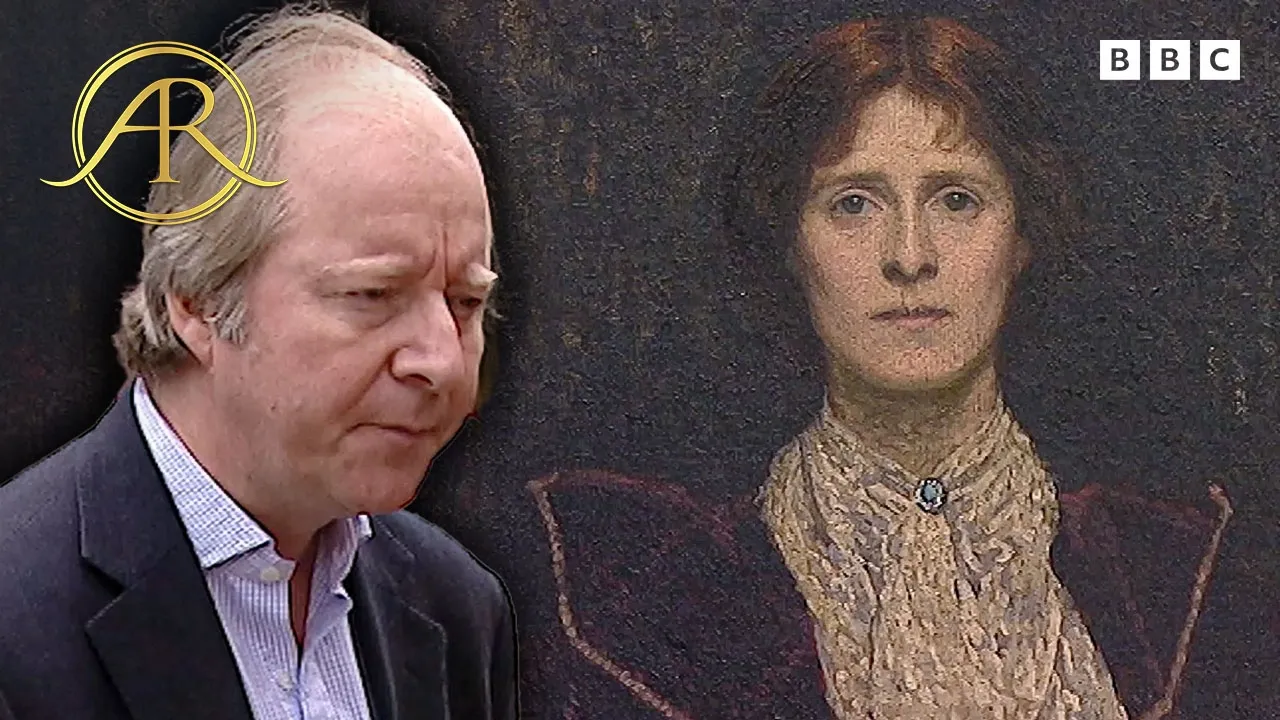
>> Now here's a picture >> further back she'd like to identify a mysterious woman in a portrait handed down through the family.
>> Who is that?
>> Don't know. I know nothing apart from the fact that she was called Madame Zurus and she's a relative.
>> It looks like you from the nose down, but the eye >> I can see that funny chin.
>> Can you? Yeah. Sticky outy chin and funny nose. I'd love to find out about that, but whether I mean just a picture and a name is not much of a clue, is it?
>> Really?
>> I don't know my history now that I've begun to think about it. I don't like having this dead part of my life that I know nothing about. I'd like to fill in that background for good or bad. I'd like to have a bit of body to my life.
[Music] I have a passion for London.
I love London with all my heart and that's where I feel my roots are.
I always thought my roots were workingass, very ordinary, not flashy in any way.
>> Sheila spent her early childhood in King's Cross, London. The first home she remembers is the pub where her father was landlord. Sheila, her sister, parents, and grandmother all lived in the flat above the pub.
I used to sit there because children weren't allowed in the bars in those days. And I used to sit there with a fizzy lemonade and a bag of crisps with a little blue thing inside that had the salt in. And I'd sit there and and there used to be a Winkle and Shrimp man who came along and we used to buy Winkles and Shrimps on there.
Oh my goodness.
Well, it's still got the same feel, but round here. I'm sure it was around here or in there or maybe in there where that ornate stuff is now a little kitchen.
There was this thing called a ladies bar. These old ladies used to be in there, you know, having their drink and I used to sneak in around the back of the bar and I'd seen Snow White and the Seven Dwarfves and I used to do the whole of it to these poor women who couldn't complain, of course, because my dad was the landlord so they had to put up with it.
My father's name is Enerico and uh here he was called Rick. Have one yourself Rick. His parents were English but he was born in Italy. He had a very Italian temperament. Laughed a lot. Cried at the drop of a hat.
When Sheila was five, the family moved away from the pub to a house in Beexley Heath on the outskirts of London.
I was desperately sad when I first got here. It seemed so dull after living in pubs and in London and everything like this. It was very quiet then. I mean, there were no there were no cars and I don't know, it seemed bleak to me as a child.
[Music] After the move, Enrio's mother, Grandma Hancock, then widowed, also came to live with them.
Sheila was just a child when Enrico's father died. She has no memory of him at all and doesn't even know his Christian name, but she does have vivid memories of her grandma Hancock, Emma.
>> That's number 58.
Grandma Hancock shared the front room of the house with Sheila's other grandmother, Grandma Woodward.
>> Hello. Hello.
Oh my goodness. This was the room for my two granny's. They lived and slept, I think, in here. Um, which is quite small for them. They used to row like mad.
They didn't get on at all. Well, um, and they used to play Wist. We would be in the other room and everybody would wait and sure enough at the end of the evening was, "You're a cheat. You're a dreadful cheat. You really are. And don't speak to me like that woman." And he's awful. I can hear it now. He's screaming around. Oh, they were totally different. I mean, Grandma Woodward was very kind of down to earth and cockney and get on with it. Grandma Hanok was rather grand and a bit mad. I mean, she had begun to lose her marbles by then.
And she used to dance outside. There was a lampost out there that was her partner. And she would do very stately dances rather. And she wore a thing called a tippet. I don't think people wear those anymore, but sort of it wasn't a fur quite, but it was a little furry animal around her neck. I think Grandma Woodward thought that Grandma Hanok had ideas above her station. I seem to remember there was a wonderful phrase called fur coat no drawers was how she described her. It's not awful.
It's just come back to me. Fur coat no drawers. That's a [Music] Sheila doesn't know anything about her grandma Hancock's background, whether her heirs and graces were real or assumed.
to try and find out. She's going to get Grandma Hancock's marriage certificate.
This will give Emma's father's occupation.
It will also reveal her grandfather Hancock's Christian name.
>> Right, here we go.
George Thomas.
How weird. I didn't know his name.
They're very good names. Here she is.
Emma Easter Croft. Her father was Benjamin Croft who was a superintendent and the residence at the time of marriage was the western pumping pumping station.
Now there was a building in Pimnico that I've always thought was associated with the family that dad had pointed out or something by the railway bridge. That could be that.
So, Grandma Hancock's father was Benjamin Croft, superintendent of a pumping station.
[Music] >> Right. Just under this railway bridge, there's some gates on the right. I don't know whether you can get over there. Can you?
>> Sheila's going to see if the building she remembers is still there.
>> Yeah, that that's the waterboard place.
She's being met at the pumping station by a distant relative, Claire Warner, another descendant of Benjamin Croft.
>> Well, here we are. This is the house I've seen from the road. It's rather splendid, isn't it?
>> Hello.
>> Hello, Sheila.
>> Are you Yes. Hi.
>> Oh, we're related, I think.
>> We are. We are. My mother is is your second cousin.
>> Really? And so we're um all related to Benjamin prompt.
>> Well, that's fantastic. This is where he lived.
>> I've got some photographs here that have been kept in the family which show the interior of the house.
>> Having a bar.
>> So here's the the dining room at the pumping station.
>> Looks like a stage set.
>> Yeah. And there's the the house. A magnificent drive leading up to it.
This is Benjamin Croft and his wife Emma.
>> Well, I never did. They look like a wonderful old couple, don't they?
>> They do. Was quite an important person.
This document shows the number of people that were working for him while he was superintendent here.
>> So, this was all his staff, >> 19 men.
>> And this is a photograph of Emma Easter.
>> Good lord.
>> So, that's my grandmother.
>> Yes, that's your grandmother. I wonder was would she have been living here when that was taken? I wonder. Is she a young woman? Yeah, I do recognize that face.
Oh, look at her.
>> Hello.
>> Hello. My name's Mick Hatton. I'm the shift engineer here.
>> Very pleased to meet Hank.
>> I know.
>> This is Cla.
>> Hello. How you doing? Welcome.
>> Oh, look at this. Look at this.
>> Shift engineer Mick Hatton is going to show Sheila and Cla around.
>> I do. It looks like a palace.
You know, I'm going to be very ignorant here. What is a pumping house?
>> What is a pumping house?
>> I don't know what it does. What does it do?
>> Come this way.
>> I have no idea. It' be great big tanks.
Central heating.
>> If you'd have been standing here roughly 1875, this would have been a thing called a cathedral. This is where all the iron work would meet.
>> But what did it do? Where was it pumping them? What was heating things up?
>> This is sewage.
>> Sewer.
>> Yeah, sewer. This is a sewage pumping station.
>> So, he worked in a sewage factory.
>> No, he worked in a sewage pumping station.
[Music] >> The pumping station was built in 1873 as part of London's modern sewer system.
The catalyst for the new system was the great stink when the stench from the river tempames became so bad that members of parliament demanded action.
In a remarkable feat of engineering, Joseph Basiljet built 83 m of sewers to prevent raw sewage from running into the temps.
Each pumping station along the river lifts the sewage so gravity can then pull it through the pipes to the next station.
Built to look like palaces, the pumping stations show the Victorian sense of civic pride.
A superintendent of the western pumping station, Benjamin Croft was a senior engineer and a respectable member of the Victorian middle class.
>> It's genius, isn't it? We should be so grateful to the Victorians for having dreamt this up. It really doesn't smell at all in here. But would it have done in my in my great-grandfather's day?
>> In your great-grandfather's day, where I'm going to take you now would have been raw sewage.
>> Be careful as you go down.
>> Right.
>> Oh, now it is. I can smell.
>> You can smell now.
>> Over 100 years ago, this would have been a wet well. The men would have had to come down here, clean the pumps where they've got ragged up.
>> Good lord.
>> Cleaned off dead bodies.
>> Oh, why dead bodies? Well, it's amazing what you get put in sewers.
>> 11s. But my great granddad probably didn't have anything to do with that, did he? Because he was a superintendent.
>> Your your great granddad would have told the people what to do.
>> Quite right. So would I.
>> You know, I have to say I'm quite surprised and intrigued about Grandma Hank's background. I mean, Benjamin Croft, her father, was obviously a considerable man. I mean to be this the superintendent of this extraordinary place. Um I mean it may have been in sewage but let's face it that was such an innovation and an incredible feat of engineering and he was in charge.
Here she was living in this rather nice house and then you know she met this guy somehow George Hanok. I'd love to know what happened to them after that to find out more about what sort of people they were when they were together.
>> Thanks a lot.
>> Emma married George Hancock in 1885. She was 20 years old. George was 25.
Well, I don't know anything about my grandma Hancock's young marry life except that Grandpa Hancock I know worked for Thomas C the travel agency in Italy in Milan. I don't know what in what capacity. I'd love to find out.
>> Sheila's going to visit Thomas Cook archavist Paul Smith to see if he can tell her anything about her grandfather's job.
Now, we don't have actual staff files in the archives, but what we do have are a series of um agreement books with people who work for cooks. Just like to pop the gloves on. We can have a look, >> right? So, look for the index.
Oh, look at all this beautiful writing.
>> Hanok agent Milan. That sounds promising. It does, doesn't it? 249.
Okay.
>> Can I do it?
>> Yes, please do. Okay, here we go.
>> Ah, straight. That was weird.
And there he is. George Thomas Hancock, agent in Milan. So, an agent would have been what?
>> Well, an agent in this context would essentially be the equivalent of um a branch manager.
>> Well, would this have been a coveted job?
>> Yes. I mean, if you wanted to work in travel, Thomas Cook was was the company to work for.
>> Really?
When Thomas Cook founded his firm in 1841, his aim was to bring the opportunity of travel to a wider public.
His son, John Mason Cook, developed the company further, opening up more adventurous, sophisticated tours abroad.
By the time Sheila's grandfather was promoted to the role of agent, managing both the Milan office and exclusive tours, Thomas Cook had an ultra respectable profile.
I mean, if he was in Milan in the mid 1890s as our man in Milan, that was the period where tourism to the Italian lakes really sort of was expanded and took off. Um, so I mean, Milan was the base for all of these tours. George would have been right at the heart of all of this development.
>> I mean, have you any idea what type of man they would have employed in this? I mean, obviously somebody who was a good salesman.
>> Yeah. Um, honesty, integrity. I mean, somebody must have seen potential in him um to to send him to Milan.
[Music] >> Sheila's on her way to Milan. It's her first visit to the city. She hopes to find out more about George and Emma's life there.
>> Just to find out what was going on in Milan at the time he was there might be quite interesting. The land will have changed obviously, but I'll get a feeling of what the city was that this young couple went to.
[Music] I I travel under two names. You You'll see it's in Thor, but the ticket is probably booked in Hanok. It's quite cool.
[Music] My god, is it stylish.
The people are so incredibly fashionably dressed.
The shops are stunning.
I love it.
Sheila's first stop is the British consulate to collect a copy of the registration of her father's birth. It should give the family's address.
>> Sheila, your fax has just come through from Rome.
>> Oh, lovely. These present are to certify that the child described as Beno Cameron Hanok at a at number 39. Corso Victoria Emanuel.
>> Corso Victoria Emanuel. Emmanuela, do you know where that is?
>> It's around the corner. Very close to us.
>> Really?
>> Yes.
[Music] >> Thank you. There we are. Lovely. Thank you.
We are Koso Victoriao [Music] Emanuel or however you pronounce it. And this is the road where my dad was born.
A lot of it's obviously been destroyed during the war and rebuilt. But there's the DMO at the end of the road. What a fabulous view.
And with all the original buildings, it must have been even more beautiful.
Lovely.
>> Next stop is the Grand Hotel Dum Milan >> where Sheila is meeting an expert on the history of Thomas Cook to find out more about her grandfather George's job as a Thomas Cook agent.
>> Sheila, >> hello.
>> I'm Pierce Brendan.
>> Oh, I'm pleased to meet you.
>> Very, very nice to meet you. And particularly here where your grandfather would have come to meet very important people to take them around Milan.
>> Really? When when you say very important people, who do you mean?
>> Anyone from royalty downwards >> and what what did you do? Take them on a sort of >> Yeah, take note. Yes, I here I have it.
Cook's tourists handbook of Northern Italy. And here are the principal attractions.
>> That's lovely.
>> Rosen Library. Um the cathedral of course and Lascala.
>> Oh, I'm a guide book fanatic. This is beautiful. And that dates from the time of >> Absolutely dates from that time. By the 1890s, the sha of Persia, the visor of India, and many other distinguished people were traveling with cooks. The tourist trail has changed little since then.
>> Listen to the guy singing.
>> Yes.
[Music] >> There's the great Bichelli. Of course, your grandfather would have had to have known about painting, about ceramics, about furniture. His audience would have been well informed. Really?
>> So, yes. So, he he he really would have had to have known.
>> Gosh, >> this is what it was like when your grandfather was shown around, isn't it?
Yes. So rich.
>> Oh, this is Oh my goodness. Cook's agents were almost kind of honorary consils. They they were part of an unofficial British um civil service.
>> Um would the wives have had a significant role to play in that?
>> Just as diplomatic wives do today? Yes.
>> This is Lascala.
>> Would the people that my grandm would they have gone to the opera?
>> Oh, very much so. If they were important enough, he would have gone with them all dressed up in his um you know his his smart dads with his white tie and tails.
>> Do you think my grandma would have gone with him?
>> It was a sort of dual enterprise. So she too would have would have appeared in her glad rags.
>> Well, I like the idea of that. My grandmother in a tiara or something and why going to the opera?
[Music] >> So it would have been a walkable city and this is just about center of it. And I've got something very interesting to show you here. If you'd like to pause, Sheila, and that is the photograph of where your grandfather worked, just across the road there in uh his Thomas Cook office. It's a posh office, as you can see. Incredibly sensually placed.
The hotel down there, 100 yards down there. Lascala 100 yards up there.
>> You know, there's an extraordinary thing here. We went for a meal to a cafe last night down that road and we walked past that shop as it is now and in the window was a little furry thing and I said that's a tippet like my grandma used to wear because she used to wear this kind of moaten furry tippet when she lived with he in that very shop.
>> How very strange.
I am surprised at the life that they had. It was glamorous. It was in the midst of a beautiful place, a very cultured place. My grandmother must have mixed with all sorts of people from royalty downwards. So the heirs and graces weren't so assumed as we all, bless her, thought they were.
The mystery for me now is why did my grandmother end up in one room with my granny in Beexley Heath?
[Music] Make some tea.
This is from Thomas Cook.
Dear Sheila, please invite please find in close an extract from Thomas Cook's staff magazine of April 1927 featuring the retirement announcement of Mr. GT Hancock.
And that presumably is a picture of him in his wing collar and my chin.
This is nice.
I also discovered George's name among the minutes of a company meeting of 1926, at which time it was decided to introduce a pension scheme for Thomas Cook employees. Sadly then, George will not have benefited from this move.
So he had no pension which could account for the fact that Grandma Hancock had no money at the end.
It saddens me actually all the things I've discovered. I remember Grandma Hancock is a rather weird old lady in a moth eating tippet. Didn't have a very good time stuck in one room with Granny Woodward whom she didn't like. And the fact that she, you know, sitting in that beautiful galleria in in Milan and thinking that she lived that kind of life. The fact that she kept her end up and danced in the street and always look nice if a bit frayed was very brave. I think [Music] >> Sheila's gathered the family for an update on what she's found out so far.
>> And here we have a photo.
He has got an enormous chin. Not so.
>> Grandma Hancock's father was superintendent of a sewage pumping station.
Lovely.
So, and to begin with, I thought, "Oh, dear sewage." Thinking, "No, seriously."
Next though, I've got this wretched picture which obsesses. I mean, look at that face. You know, we looked at it before.
>> So, no news of her yet.
>> Haven't discovered her yet. And that's going to be really difficult because all we've got is a name in a photo.
>> Sheila knows that the mysterious portrait is associated with the other side of her family, her mother's family, the Woodwards.
The Woodwards came from the Greenwich area of Southeast London.
>> The more I look at this picture, the more extraordinary it is. There's sort of humor there and it's wonderful. I'm getting to like it. I found it amongst my mother's belongings after she died. I was the one that had it framed and it was a distant relation who told me she thought it was somebody called Madame Zurus. Um, and that's about it, I'm afraid.
[Music] Sheila will start her hunt for Madame Zorhost by looking into the background of Grandma Woodward Louisa to see if she can find any mention of the Zhor name.
First stop, Greenwich Town Hall to get Grandma Woodward's marriage certificate.
I remember Grandma Woodward as a granny, that's all. You know, who lived in the same room as my other grandma, Grandma Hancock. She was very down to earth, had a Cockney accent, very solid little woman, worked all the time. I just remember her working, washing, ironing, but I don't know anything about her early life before she came to live with us.
>> Hello.
>> Is that it?
>> There it is.
>> Thank you very much indeed.
>> So, here we have on the 26th of December 1887, the marriage of Alfred Walter Woodward and Louisa Elizabeth Allen. He was cutler. She has no profession. It seems highly unlikely. I'm sure that my grandma Woodward, whom this is, would have worked in some way. Right. Well, having got this, I imagine that one can look up the census. So, let's see if we can find him. Here we are. Alfred W.
Woodward, head of the family, Cutler.
That's right. So, this is his wife, Louisa Elizabeth, dress maker. I knew she'd be working. Violet H.
daughter.
Is that their daughter?
>> Yes.
>> Well, who's she?
I don't know anything about her.
And there's no mention of my mother who was called Ivy.
And there's somebody called Violet.
Can Can we look on?
So, this is 10 years later. Alfred is still the head of the house.
Ivy, here she is. That's my mother. But what's happened to Violet?
Violet's gone.
>> Possibly have died in that time.
>> Really?
Oh, dear. So they had a daughter who died before my mother was born.
[Music] >> The family address was in nearby Lewisham. So if Violet did die, Lewisham registry office should have her death certificate.
>> Okay. Thank you very much. Hello.
[Music] Violet Hetti Woodward female 17 months.
Oh my god. Hooping cough.
Pneumonia. Convulsions.
This is another baby.
Oh, I can't bear it. Daisy Octavia Woodward died at one month.
Twin of Violet.
Both of them died.
It was This was before my mother was born.
Why was I never told about that?
You know, I mean, I just thought of a an old grandma, you know. who told me off a lot and was busy busy busy and but she was hiding huge grief. She had three children and only one survived, you know, because you don't get over something like that, do you? Losing two children, you don't. I mean, I have to say it moves me because it's the one thing that has most horrified me. I've had all sorts of things happen to me in my life, but the one thing I couldn't bear and haven't been able to bear because my grandchild was ill once is is the illness or death of a child.
Isn't that sad?
Back in Greenwich, Sheila's search for the mysterious Madame Zurhost continues.
[Music] Grandma Woodward's marriage certificate gave her father's name as James Alam.
Now Sheila wants to get his marriage certificate to find out his wife's name.
>> Okay. Grandma Woodwards. Father was called James Joseph Alam and the wife was called Oh, good heavens.
Louisa Octavia Zhost.
There she is.
The funny lady in the picture.
[Music] >> So, Grandma Woodward's mother was called Louis Azorhost.
Now, hold on a minute. I'm having a moment of doubt here.
It's just occurred to me that Louisa Octavia Zurost, who married my greatgrandfather, wouldn't have been called Madam at that stage. She would have become Madame Alam or Mrs. Alam. But her father, her father's wife would have been Madame Zuhost.
And her father was Oh, good heavens. There's four names here. Hamnet. Pinky.
Pinky. Is it Pinky? Yes. Pinky.
Octavius. Zuhost. So, this splendidly named Hamnit Zhost would have had a wife called Madame Zorhost.
>> To find out Hamlet's wife's name, Sheila's checking the census.
Gosh, there's a lot of Zorus.
So, here we have his hamnet. Can't forget his name. His wife was called Louisa.
I think this is Louisa in the picture.
[Music] >> Sheila now believes that her great great grandmother, Hamnet's wife, Louisa, is the Madame Zuhor in the picture. Can the census tell Sheila anything about her life as Hamlet's wife?
>> Hamnlet? He's an iron trimmer in iron works. That sounds like manual labor.
1891 now.
Retired.
Hold on. There's a lot of dittos here.
They are living with a lot of other people by the looks of things. Pens, arms houses, some sort of charity.
[Music] Sheila's tracked down the Penn's arms houses in Greenwich, which were built as charity homes for impoverished people.
She's arranged to meet Richard Hartry, who should be able to tell her more about the Zorhost's circumstances.
>> This is it. It's still here. Hello, I'm Sheila Hancock.
>> Richard Hartry.
>> Hello. Pleased to meet you. Now, they told me that you can tell me something about these armsouses.
>> Yes, I can. I think I am related to the Pen family. His father was my triple great-grandfather.
So, they had quite an important business uh in in Greenwich.
>> These are lovely.
>> Okay. Well, they were set up by his widow, four people who worked for the firm. Now, my great greatgrandfather lived here at the end of his life. And I can we sit down here?
>> Sure.
>> I've I've got some census forms here. We have him as an iron trimmer.
>> He would have worked at John Penn's factory, which is just a few hundred yards down the road.
>> But what what exactly did the factory do?
>> Well, they were a a major manufacturer of steam engines for boats. So in order to in order to stay here, you'd have had to work in this bloke's factory >> and not be able to live without coming here.
>> Really have to be absolutely without anything.
>> Pretty you have to pretty hard.
>> Now let me show you this portrait.
>> Oh wow.
>> Now I've been trying to >> be this guy's wife.
>> I think it's this guy's wife.
>> Very striking eyebrows, isn't she?
>> Isn't it?
>> Have a look.
>> No, it's not. I mean, it's not remotely likely. It looks like a sort of fairly grand portrait of is it doesn't seem to fit with a man who ends up destitute in an arms house.
>> No, it doesn't. No, no, it doesn't fit.
Doesn't fit.
>> I'm dubious about this picture. Now, >> I think the only way that one is going to get to the bottom of it is to find out the date of the portrait. If we could do that, then we could attach it to somebody who lived at that date.
Sheila's taking the portrait to Surbis where costume expert Carrie Taylor should be able to date it.
[Music] >> I love that.
[Music] >> Extraordinary. She's quite a confection, isn't she?
Um, she's got very distinctive clothing.
Um, she has very large sleeves and this very frilly flouncy hat and these extraordinary little winglets here. Um, and I would say that this is a portrait uh painted between 1830 and 1835 because before that and after that you have a much more severe look. She looks as though she's holding something. Might be a book. She's showing that she's a clever woman. Really?
>> Make a guess. How old do you think she was when that picture was taken?
>> She's got quite sunken eyes.
>> Yes.
>> She looks as though she's got sort of bags under her eyes, even wrinkles.
>> Yes. Well, I know that.
>> Can you see? I mean, she's got very dark hair, which suggests that she's maybe uh >> dyed it.
>> Dyed it.
>> She could be sort of 40 or 50.
>> Okay.
>> She looks to me as though she's a rich merchants's wife, something. She looks like a lady who's saying, you know, here I am in my finery. This is someone of wealth.
[Music] Kerry dated the picture between 1830 and 1835.
Hamnet was born in 1817, so he would only have been in his teens when the portrait was painted.
Therefore, the portrait is unlikely to be of his wife, Louisa.
It must be of his mother. Hamlet's marriage certificate gives his father as Frederick Zhost, but his mother isn't recorded.
[Music] To find her name, Sheila can look for a record of Hamnet's birth. But because Hamnet was born before the introduction of birth certificates, she'll have to look on the International Genealogical Index, a website which brings together records of baptisms from many local churches.
Back in Hammersmith, Sheila's asked her daughter Joanna to help search for Hamlet's mother's name.
>> You do it.
>> No, you do it.
>> Come on. You're important with him.
>> No, you're better at it than me. Go on, too.
>> Zor, shall I get a dictator? H A N E T.
>> No matches. No.
>> No, we haven't got it. Why don't we just put in zorost and see what comes up?
God, there's loads of >> right. So, we've got Alfred Robert, Alonso Gustavas, >> and Louisa >> and Louisa.
That's a use. And Louisa is the family name that Let's Let's have a look at her.
>> Right. Here we are. Father >> Frederick William.
>> So, Louisa is the sister of Hamnet.
>> Yes.
>> And Judith is the mother's name. Then that's what we're looking for. That's who we're looking for. That's the woman in the portrait.
[Music] >> So Sheila's finally identified the mysterious woman in the portrait. She's her great great great grandmother and Judith Zorhost.
Can the website tell them anymore?
>> This bloke, Alonso Gustavius, as they seem to go into pretty odd names. Should we have a look at him? There you are.
He's a brother.
>> Darling, if you have another baby, we've got a lovely selection of names for them.
>> Alonso, don't you like that?
>> Alonso Harvey Darvis.
>> Augustus Derby. He might be worth a look.
>> Frederick William. There we go.
>> Augustus. Can't get over these names.
Edmund Hooper.
>> Uhhuh.
>> And Judith. Mother.
>> There's a good one. Surely. Octave Augusta >> Frederick that date is so close together.
>> 1 2 3 4 5 6 7 8 >> 11 18 >> 12. So you have one a year then.
>> We know there are gaps on this website and for instance Hamlet's not there.
1817 he's not there. So there may be even more children than that. Good lord.
She was a tough woman. She was [Music] altogether she's even more intrigued than I thought she was before. I know that her name is Anne Judith which is quite a discovery. Uh I know that she had lots of children. All have rather strange names. We know from Kerry at Sbees that she was a sort of neuvoish lady. this flamboyance of the outfit of the curls and everything. We know that here she is holding a book as though to display the fact that she reads books.
She's well read. Um, so we know little things about her character. And Kerry's guess was that she might be a rich merchants's wife. Is it possible that there are some sort of records or whatever that her husband Frederick might appear in? I mean, you know, we and by finding out about her husband, we might find out a bit more about her.
>> If Frederick was a merchant, his name would appear in trade directories found at the London Metropolitan Archive.
Archavist Matthew Payne has been doing some research.
>> Exciting.
WX Y Z.
And there he is. Zor Hof. Or is is that F and S? That is an S.
>> F looking letter is an S. Yes.
>> Ship agent.
>> Good lord. The lady that looked the costume of the lady that I'm in search of reckoned that she was probably a merchant's wife. And sounds as if she wasn't far off.
>> She wasn't far off the map.
>> That's brilliant. Is it is off?
>> 1805.
>> Yeah. Here we are. Lost and then Mark.
So, he's gone into partnership with somebody.
>> Yeah, looks like it.
>> Any more?
>> Uh, the next is from 1814.
>> Okay, let's see if he's still at it.
>> Zorost. Oh, he's changed his partner with somebody called Langvelt.
>> Langvelt.
>> My god.
Insurer and shipping agent.
>> So, he's broadening. So, then we have the uh papers of him applying to become a broker.
>> A broker >> specifically. Is that is that a step up from what he was doing before?
>> Yes, a step up.
>> Between 1803 and 1819, the documents show Frederick Zooh's career progression in the shipping of goods to and from the Port of London, from a ship agent to insurance agent, then broker, and finally a customs house agent, paying import taxes on behalf of merchants.
One of the documents also reveals details of his family background.
Frederick William Zorhost is the son of Herman Zorhost, a native of Rotterdam who came to Is that Ireland?
>> It is. Yeah.
>> Waterford.
>> His his father's name was Herman. He came from Rotterdam.
They went to Ireland to Waterford.
>> That's his father, is it?
>> Yes. Herman Zohost that that is really extraordinary because that is my great great great grandfather signature.
>> He actually dipped a pen in an inkwell and wrote that name. Quite extraordinary. Quite extraordinary. I mean it really brings you back into a sort of tactile connection.
>> And then we see him in the final trade director. Oh, really? Here we are. Oh, what on earth is this?
There's two Zorus now.
One is AJ.
Where's he popped out from? And he's readymade linen warehouse equipment for the East and West Indies.
AJ No, this with all the sexism I've come across in these archives before, it can't possibly be. But his wife's name was an Judith. She She couldn't have been operating as in a business, could she?
>> She could be.
>> Really?
>> Good. That's amazing. What date was this?
>> So, she paid for her frock herself.
I must just show the picture of this woman because it's it you'll see why I'm excited by it.
>> Oh, wow.
>> See?
>> Yes.
>> I mean, she's quite a woman and you can I mean, that one has been trying to fathom her out. She doesn't look like a dosile stay-at-home wife, does she?
>> No, she doesn't.
>> I mean, she looks as though she could organize and and run a business. So, she said, "Oi, you've got a spare room in your office. I'm going to set up a readym made linen merch merchant warehouse.
>> That is I I that has really taken my breath away and I really like that idea and I hope it's true.
[Music] So Frederick and Anne Judith Zurhost lived and worked in the city of London in the early 1800s.
At that time, London had the world's largest port. Life revolved around the river. The tempames was packed with goods coming in and going out to the expanding British Empire.
In the city, commerce was king.
While other European centers like Paris and Amsterdam had suffered war and revolution, London had been relatively peaceful.
And that peace allowed business to thrive.
Foreign merchants and bankers had fled to London, bringing their money and knowhow with them.
The society Frederick Zuhorse was part of was buzzing with creative entrepreneurs.
Sheila's come to the city to meet historian Helen Clifford, who can tell her more about Frederick and Anne Judith's world.
>> This is the Ryback panorama. It shows London um as it was in 1809.
>> But how wonderful to see the river so busy compared with what it is nowadays.
>> I mean this is the customs house here which is obviously an epicenter of activity.
>> Well he he was he was a a customhouse agent at one point. So would he have worked there?
>> He would he would have worked here. So his jobs he goes from being a ship agent to being a ship and insurance agent and then he's a broker. He would have been responsible for dealing directly with merchants as a middleman. He would have overseen all the goods being loaded onto a ship, finding a good ship, finding a good captain, a reliable one that was going to the right place at the right time. When ships arrived, he would have had to have gone to the customs house here.
>> Yeah.
>> To pay the duties which were due on the goods that had come in. There'd be mahogany, there'd be rum, sugar, molasses. you know people were paid know backhand to get me to the top of the queue which duties do I have to pay all that sort of thing so uh >> it's quite a it's a very very responsible job and if you're in this business you're really right as I say at the right place at the right time it's really exciting >> Sheila has an address for the zor hosts in the heart of the city at number one I lane >> this bit here with the church there and the 18th century house there is exactly as it >> as it would have been in Zhorse time originally where uh Zohos would have lived at number one it would have been just the same at the basement they would have had the kitchens at this level here um you'd have had the business area where Zohos would have entertained his business associates the merchants the captains of the ships and business the next level up would have been like sort of parlor area perhaps where uh Mrs. Mrs. Zhost would have entertained and would have had the family.
>> She would have entertained.
>> Absolutely. It was all about showing sort of the status of the family.
>> So, it was a good address.
>> Oh, yes. I mean, especially for what he was doing. He's right in the center of it.
>> Yeah. It's a It's a super location.
>> It's a good life.
Now we found in one of the later trade books things there was an AJ Zorus who was working who was running a company in the same building as her husband. Now here she is. I'll show you her. This formidable lady.
>> Wow.
>> Is it possible that a woman would have had a business?
>> You sometimes find their names on receipts and invoices on controlling the credit things like that but it's very rare. It's difficult to get at the evidence, but I think it's a fair speculation and she certainly looks a capable woman.
>> Yeah.
>> And uh quite likely, I think.
>> I had no idea there were city connections. I mean, what is wonderful is that it's reinforcing why I feel so essentially a Londoner. I love this city and I love this river.
The feeling of the power of this river runs through the story and my relatives have lived on or near the river and I've ended up living on the river and I just find the whole story lively and exciting and the splendid woman in the picture. I now begin to see the sense of this rather kind of strong and different looking woman. There was something about her. She had her own business which is amazing at that period and hugely praiseworthy and I'm very proud of her.
In 1820, Frederick and Anne Judith Zurhost disappear from the trade directories.
What happened to them after that?
>> Well, I didn't sleep a wink last night.
I mean there was so much information to assimilate and and I'm afraid it still begs questions. Now what I've done of my own initiative was put sourced in my search engine and I came up with uh a sort of chat thing where people find out about their ancestors. And what I'm going to do now, if I may, is to put in a message and see if anybody out there comes up with something.
What's out there in the ether?
>> The next day, Sheila receives a response to her message.
>> You have email.
Well, this is the most amazing letter from uh a Charles Zhus who lives in um America whose family history overlaps with mine. Um and he's discovered a huge amount about the family. In 1800, Frederick William, who's our guy, moved to London where on October 12th, 1801, he married an Judith Williams. So, we now know her maiden name. It was Williams. And on July the 8th, 1822, they had a son whom they called Charles Frederick Zurus. We've not met him before. Goodness knows, she must have been constantly pregnant judging by this. Then interestingly, they moved to Gernzie. So, heaven knows what they were doing in Gernzi.
[Music] The email didn't give any details of Anne Judith and her family's life in Gernzi.
So, Sheila's come here to St. Peterport to check the local records and see if she can find out more.
Librarian Amanda Bennett has been doing some research for her.
>> We did actually find the Zerhosts on the 1841 census and here they are here and there's one, two, three, four, five of them living in St. Peterport.
>> At the top we have an Sirhost.
Interestingly, she's listed first in in the household um which is normally the place reserved for the head of household.
>> Why would that be then?
>> I have no idea. It's quite interesting because um I've not seen it done on a census like this before.
>> I guess she was just pushy when the sensor came around.
>> She's 59 years old. And this is IND which stands for independent. So she had an independent income. Underneath is Agneshast who presumably is a daughter.
>> We keep turning up children. I have no idea how many she had in the end.
>> Um Eliza underneath is 18. And underneath here is Charles who was 60.
>> She would have been 43 when she had Charles.
>> That's incredible.
>> Seemed to have been having children for a very long time.
>> I knew I was 42 when I had my last one.
>> And underneath here it looks like a shortened version of Frederick. So he's listed last in the household.
>> Oh my goodness. Is there any indication as to why they would have come here?
>> Well, believe it or or not, it was um it's known as a tax haven today, although that's not strictly true. Um >> in in 1841, it was a tax haven.
>> You're joking. Really?
>> Yes. Um in this 1841 census, you find a lot of English names, people who were born in London from from the Merkantile areas. So they would have all talked amongst themselves in London and said that's a good place to go when you when you pack it in.
>> I'm sure they had a little community in Gernzi as well. If we jump 10 years forward in time to the 1851 census, we found them again. This is after the death of an Judith Williams. And >> so can we locate when she she died between 1841 and 1851, but we don't know exactly when she died.
The census shows that the zoo hosts were living at number four Mount Row.
>> That's very nice, isn't it? Very nice.
And sadly, this is where and Judith died.
>> It is where she died. And um I have actually found her burial record >> really.
>> And um I've got it with me here.
Um she died in 1850.
>> So an Judith Williams de Frederick William Zurus. So it's in French. Wife of Frederick William Zurus of Mount De Mount Row.
>> That's right.
>> The 29th of October 1850 aged 68 years.
>> Yes.
>> I wonder where she was on. Well, these are the records of the parish church of St. Andrews, which is the parish just beyond the end of this road.
[Music] sacred in the memory of an Judith source aged 68 years.
also Frederick Williams in the 80th year of his age.
So he lived a long time after she died.
There she is.
I'm sniveling.
Gosh, it's been a long journey, but it's a lovely, lovely, quiet place to be.
Do I actually feel as though I know her now?
I have the feeling she was extraordinary. She was as extraordinary as the portrait led us to believe. I feel she enjoyed life. I feel she lived life to the full. sort of lively eyes as though she was greedy for life.
[Music] Show me [Music] I've been surprised all the way along.
As you know, at the beginning, I honestly knew lamentably little. I didn't even know my grandfather's Christian names. I now feel I know everything.
My mind is people with ancestors. But I filled in a picture of these people that is so vivid.
when I was sort of trying to get little bits of evidence to start start the research, I did feel a terrible empty space behind I I I realized that I was on not very firm ground. Um it was the here and now is fine, but where did I come from? And I I think I do I mean it's early days to say that, but I do feel a bit more not confident, but I I've got firmer foundations now >> that I know that all these things have fed in to me and my children and my grandchildren. I it's there's a wonderful sense of history there and it's a good feeling. I think so much about modern life is kind of unstable and shifting that it's quite nice to know that there was something building up to this moment when you're here.
[Music]
Up Next

30:26
Edward Said on Palestine, Identity, and Intellectualism | Interview 1994
@telesurenglish
187.9K views•2017-08-22

12:54
Triumph of Orthodoxy Icon: Byzantine Art & History Explained
@BenCallan
2.1K views•2024-08-06

9:49
FastAPI vs Flask vs Django: Choosing the Right Python Web Framework
@TechWithTim
302.5K views•2024-05-26

1:42
Game of Thrones Opening Credits: A Cinematic Analysis
@gameofthrones
46.3M views•2011-04-18
Related Study Plans & Knowledge Roadmaps
Structured learning paths in General & Interdisciplinary Studies
general-studies
Elevator Engineering: History, Physics & Cities
01From Hoists to Safety Brakes: The Dawn of Vertical Lift
02Hydraulic vs. Traction: The Engineering Physics of Elevators
03Modern Speed, Safety, and Algorithms
+ 2 more learning modules
12h5 modules
Explore Roadmap
general-studies
Rubber: Material Science, History & Geopolitics
01Origins of Natural Rubber & Mesoamerican History
02The Chemistry of Natural Rubber & Vulcanization
03The Geopolitics of the Rubber Boom & Colonization
+ 2 more learning modules
12h5 modules
Explore Roadmap
general-studies
Containerization: Evolution, Logistics & Trade
01Ancient Trade & Bulk Cargo: Amphorae to Barrels
02The Industrial Revolution & Cardboard Packaging
03The Containerization Revolution: Malcom McLean
+ 2 more learning modules
12h5 modules
Explore Roadmap
general-studies
Textile Tech: Evolution, Labor & Global Impact
01Pre-Industrial Textiles: Handloom & Cottage Industry
02Mechanization: The Spinning Jenny to the Power Loom
03The Factory System & Global Labor Transformation
+ 2 more learning modules
10h5 modules
Explore Roadmap