



















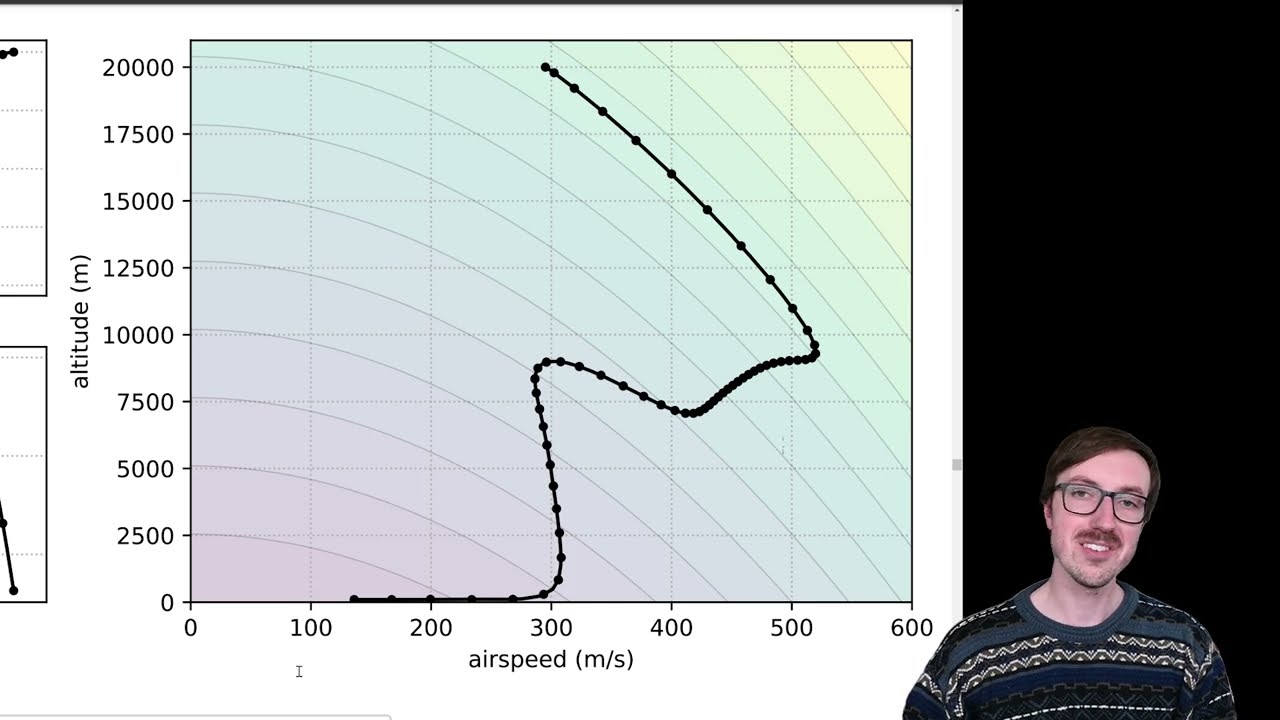

Tailsitter VTOL aircraft face four interconnected challenges during hover-to-forward flight transitions: (1) Control axis remapping where roll and yaw control mechanisms flip between flight modes, requiring code-level reassignment of motor and servo outputs; (2) Frame of reference switching where the definition of 'level' changes from nose-up (hover) to nose-forward (forward flight), necessitating explicit reference attitude configuration in the flight controller; (3) Gain staging where PID gains must be tuned separately for hover and forward flight modes due to different dynamic requirements; and (4) Smoothing transitions by interpolating between flight modes using a fade variable that blends control mixing, gains, and reference attitudes simultaneously, rather than switching abruptly between discrete modes.
Tail-Sitter VTOL Transition: Flight Controller Tuning Explained
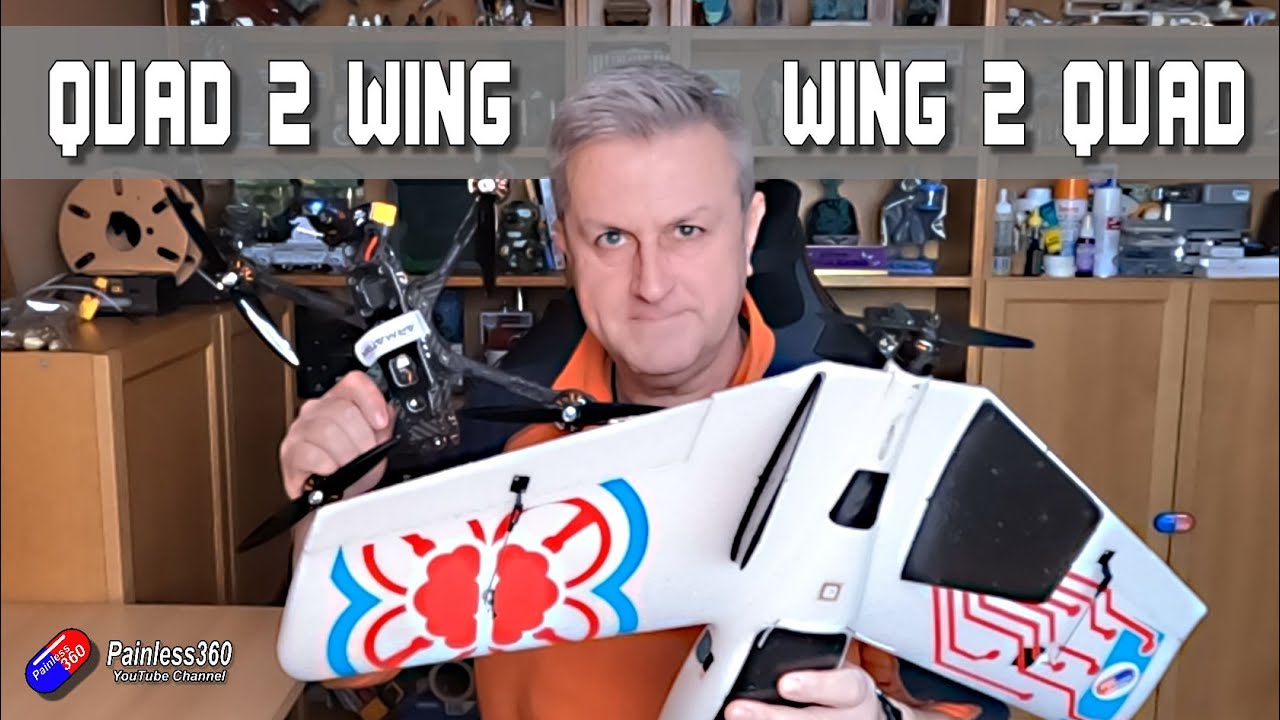
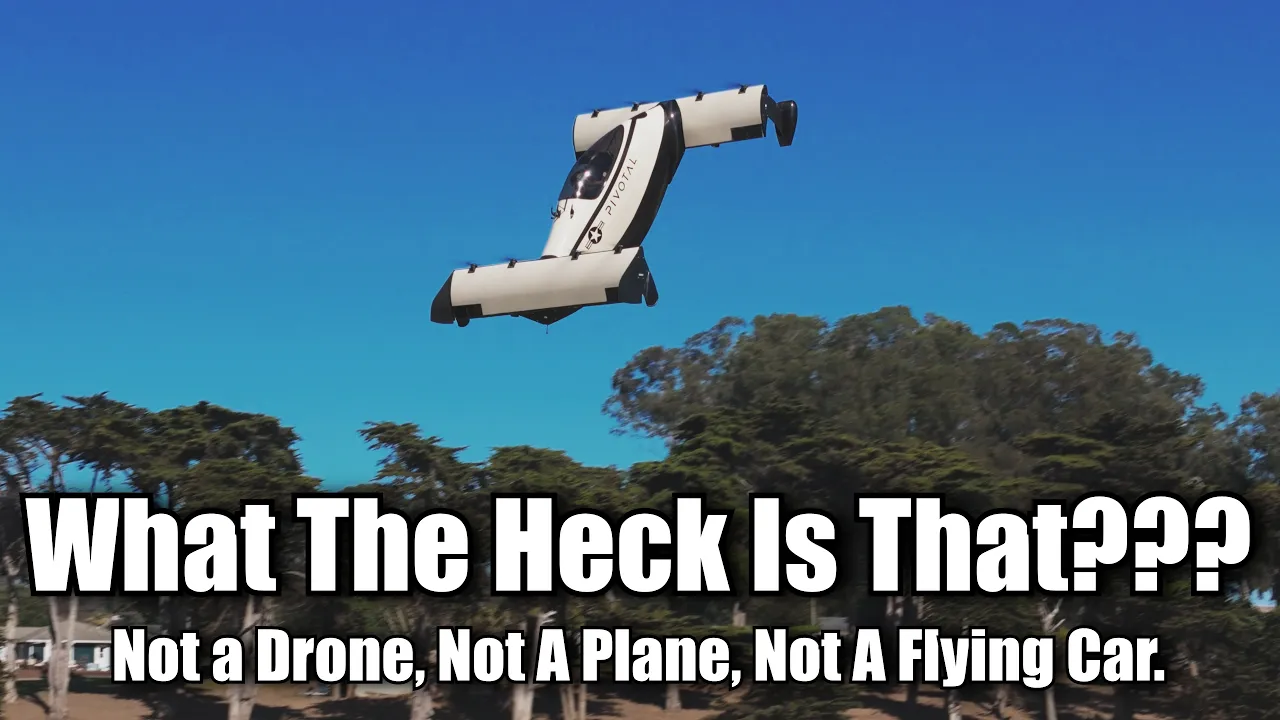
Added:tail Setter designs are a really simple and elegant solution to the challenges of vertical takeoff and Landing or vital aircraft rather than dedicated lifting Motors or mechanically complex rotor tilting mechanisms they rely on the fact that you can just reorient the whole vehicle 90 degrees to transition from hover to forward flight and back no additional moving Parts aside from the motors and control services that an airplane would require anyways tail Setter details are so easy in fact that I built this bicopter Wing in only an hour or so all it is is a piece of foam that I cut out by eye and glued some Electronics to how do you control one of these specifically how do you control one through transition from hover like a helicopter to Ford flight like an airplane that sounds like a simple question with a simple answer just pitch it over 90 degrees and let it gain some air speed until the wing starts providing lift I made this video to explain why transitioning a tail sitter vital is actually kind of difficult let's not forget that a veto like this requires active stabilization from a flight controller in order to hover at all let me turn the stabilization off entirely mid-flight and see what happens foreign so clearly we're not just directly in control of a vital and it's not quite as simple as just making it pitch over 90 degrees we need a way to tell the flight controller how to do that the flight controller is parsing our inputs and doing some magic in order to keep the thing steady in the air more specifically our radio inputs correspond to desired role and Pitch angles and the flight controller computes the necessary motor speeds and control service angles to achieve those set points this is known as attitude command level of control which is what I'll be focusing on in this video there's a different type of control known as rate command where instead of angles we command angular rates this is what all the racing drones use to do all those crazy Maneuvers at the expense of it being a bit more difficult to fly with Attitude control if our hands are off the control sticks and the flight controller senses a disturbance it'll try to correct by adjusting the control services because remember hands off the sticks corresponds to zero commanded angle the flight controller computes its output as a function of the error between the command and the measurement to drive the error towards zero in Hover differential motor RPM provides roll control tilting both control services in the same direction provides pitch control by deflecting the motor's thrust and tilting the control surfaces and opposing directions provides yaw control these output combinations are specified in the control mixer of the flight controller where arbitrary stabilized variables about each rotational axis are assigned and added to each actuator output to produce the responses I just described now assume we want to have attitude command control in forward flight 2. we know that for pitch control both Services need to tilt in the same direction same as in Hover but for roll the services need to tilt in opposite directions and yaw can be controlled by differential motor RPM if you are listening carefully you've probably realized that the means of controlling roll and yaw have flipped between hover and forward flight this is problem number one in creating a smooth transition between hover and forward flight for an attitude command tail sitter roll becomes yaw and yaw becomes roll so I realized that was probably really confusing so I just want to show you exactly what I'm talking about I've got this configured for hover right now so if I give a yaw input the control services will correctly move to try and make it y'all around now if I just pitch this over into Ford flight and give that same input this is actually causing a roll in forward flight to fix this we can simply peek into the control mixer code and reassign the outputs to the motors and servos to give the correct motions based on if we want to be in hover or forward flight so I toggle between those two flight modes with this switch here so in hover if I give it a yaw it correctly yaws now I'll pitch it over and hit that switch giving a yaw doesn't cause a roll anymore giving a roll causes a roll this seems to have fixed their problem so let's go try a transition outside [Music] what the heck happened well we correctly remapped the controls for our two different flight modes but one thing we forgot is that we also want to be pitching over 90 degrees from level when I hit my switch to transition to forward flight the flight controller kept measuring zero degrees and roll and Pitch only now it wasn't moving the motors and surfaces in the correct ways to maintain zero degrees level anymore for example it measured a roll disturbance but moved the servos to create a yawing moment making it fall out of the sky even faster so what we really want to do is switch our frame of reference between hover and forward flight 2. this is problem number two in creating a smooth transition between hover and forward flight for an attitude command tail sitter the concept of zero degrees level changes between the two flight modes the IMU on the flight controller is what senses the orientation of the vehicle that the attitude command controller ultimately tries to stabilize on it measures the orientation with a combination of Gyros and accelerometers Gyros tell at which direction and how fast it's rotating and the accelerometers help it understand what direction down is neither of which can reliably tell you what your true orientation in space is these measurements must be combined with a fancy algorithm to calculate absolute angles with respect to level one trick we can do with this fancy algorithm is to specify a reference attitude from which to compute these angles so for hover we can say that we want the output to tell us the roll and pitch in degrees from an orientation with the nose facing up forward flight we say that we want the reported role in Pitch angles from an orientation with the nose facing forward we need to do this because the flight controller is rigidly attached to the body as it tilts and doesn't necessarily understand how to use its IMU measurements to give these angles as itself rotates unless we explicitly tell it what's going on trust me I'm an engineer I coded this up and linked it to that switch I set up for the control mixing changes so in Hover we correctly measure the pitch angle from Level if I pitch over 90 degrees without hitting the switch the reported pitch angle is 90 degrees from the hover orientation but when I hit the switch the reported angle is now zeroed and with respect to the forward flight orientation and roll angles are measured correctly too so let's go fly it now but first I want to thank the sponsor of this video PCB way pcbway is an awesome manufacturing service that I've personally used for many of my projects in the past on their website you can select from many manufacturing options like 3D printing CNC Machining and of course PCB manufacturing this is a great option for makers that don't have access to certain tools I don't have a CNC machine so PCB way helped me make these small aluminum pieces for an upcoming project they also made these cool little pcbs for another upcoming project be sure to check out the link to their website down in the description supporting pcbua supports my channel as well and now back to flight testing let's see if that orientation adjustment fixed our transition problems [Music] now when I hit the switch to change from hover mode to airplane mode the thing immediately snaps over 90 degrees and starts flying forward like an airplane with me providing roll and pitch angle commands to fly it around but in Ford flight we get these nasty oscillations less commonly known as the assilies this is problem number three in creating a smooth transition between hover and Ford flight for an attitude command tail sitter the controller gains for hover will generally be much higher than the gains for forward flight meaning the control services don't need to move as much in airplane mode as compared to hover mode to fix this I just tuned two sets of controller gains for each flight mode and switch between them in the code accordingly with my switch this gives much smoother forward flight the reason it snaps over so violently even though I didn't even give it a pitch command is that when I hit the switch to change the reference orientation while we're still in Hover orientation the pitch controller immediately sees that our pitch angle is 90 degrees from the new level so it aggressively tries to deflect the control services to drive the pitch error to zero the same thing happens in Reverse going from forward flight to hover it's really quite fun to toggle between these two flight modes and the satisfaction of getting this stuff working is why I'm so obsessed with v tools so now we've got transition and forward flight figured out for a tail sitter maybe it wasn't quite as easy as we initially thought but I still wouldn't consider these abrupt and rather violent transitions to be optimized so that brings us to problem number four in creating a smooth transition between hover and forward flight for an attitude command tail sitter actually making the transition smooth to do this all we're going to do is a little code magic to take our binary transition switch input and have it fade between the values of zero for hover and one for forward flight we can dial in the speed of this fading to taste later we'll then use this variable to fade between the hover and forward flight mixing we configured earlier when this variable has a value of 0 we're in Hover mode and only this side of the code results in non-zero output this is the hover mixing when this variable has a value of 1 we're in forward flight mode and only this side of the code results in non-zero output this is the forward flight mixing as the variable phase between 0 and 1 the mixed output for the motors and servos becomes a linear combination of the two distinct sets of mixing we're just interpolating our control mixing through the transition I did the same thing for hover and forward flight control gains and also made the reference attitude slowly fade at the same rate now let's go see that transition as expected we now get a smooth transition from hover to forward flight when I hit the switch on my transmitter note that that's really the only thing I do to make this nice transition happen I don't need to jam the pitch stick forward to manually pitch it over I just get it into a nice steady hover hit the switch and wait a few seconds for it to turn into an airplane once that's done I can use throttle to speed up or command a pitch angle to climb turning is super easy because all I need to do is move my stick to make it Bank when I'm done with the turn I let go of the Roll stick and it'll return to level automatically since a centered roll stick commands a zero degree roll angle in the flight controller this almost makes flying it feel like cheating I'm working on a slightly larger tail sitter project and this project was a stepping stone toward getting that one working so if you enjoyed following along with my problem solving process on this rather unimpressive piece of foam you might want to subscribe to see these same principles applied to a much cooler platform in a future video thanks again to pcba for sponsoring this video and thanks to all my awesome patrons over on patreon for their support on projects just like these cheers all right whoops [Music] [Music] Hey look it's RC test flight
Up Next

VTOL Flight Envelopes & Stall Characteristics | Rotorcraft Symposium 2020
@easa9421
1.2K views•2021-01-07

Ultrasonic Transducers: Resonant Frequency Measurement and Horn Design
@imajeenyus42
229.9K views•2017-02-22

Polymer Environmental Degradation: Mechanisms & Stabilization
@iit
1.8K views•2012-07-10
How a Student's Question Saved a NYC Skyscraper from Collapse
@veritasium
22.8M views•2025-04-26
Related Study Plans & Knowledge Roadmaps
Structured learning paths in Engineering