














![Crystal Field Theory (CFT) II Conditions for High Spin and Low Spin Octahedral Complexes [LECTURE 1]](https://i.ytimg.com/vi_webp/03wS8_vPiog/maxresdefault.webp)



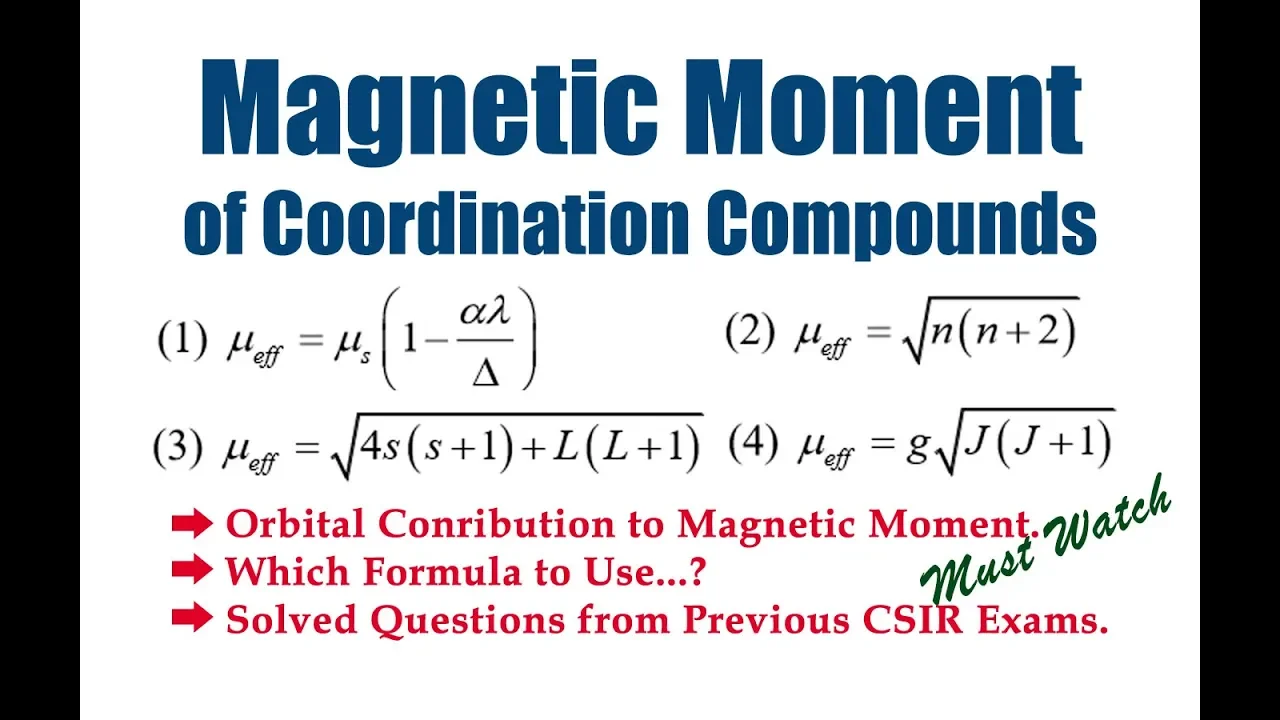

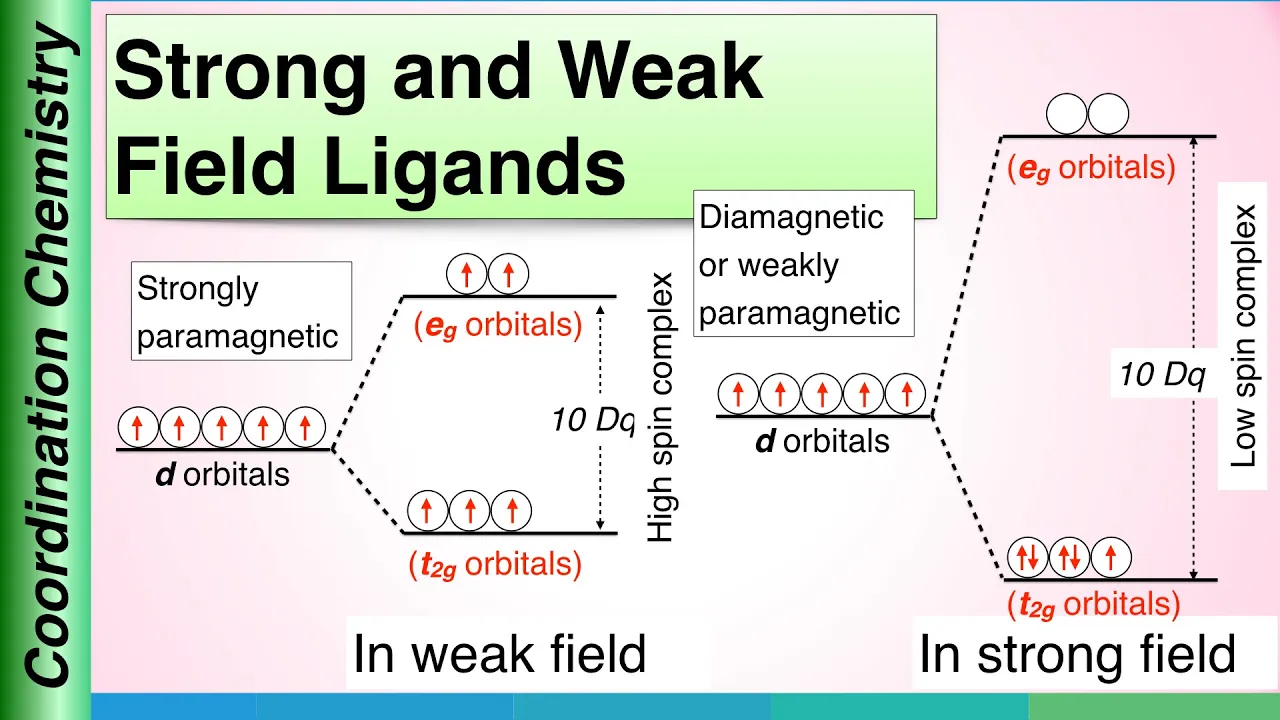









Crystal field theory explains that the magnetic properties of transition metal complexes depend on their geometry and ligand field strength: tetrahedral complexes are always high-spin with many unpaired electrons due to small crystal field splitting, while square planar complexes are typically low-spin with fewer unpaired electrons due to large splitting; paramagnetic substances contain at least one unpaired electron and are attracted to magnetic fields, whereas diamagnetic substances have only paired electrons and show negligible magnetic response.
Magnetic Properties of Transition Metal Complexes | OpenStax Chemistry 2e 19.3
Added:Understanding transition metal electron configurations, specifically the filling and emptying of d-orbitals.
Fundamental definitions of paramagnetism (presence of unpaired electrons) and diamagnetism (all electrons paired).
Basic concepts of coordination chemistry, including ligands, metal oxidation states, coordination numbers, and molecular geometries.
An introductory understanding of Crystal Field Theory (CFT) and how d-orbitals split in an electrostatic field (such as octahedral fields).
Distinguishing between high-spin and low-spin states in octahedral complexes by comparing crystal field splitting energy (Δ) and pairing energy (P).
Calculating the theoretical spin-only magnetic moment (in Bohr Magnetons) using the formula based on the number of unpaired d-electrons.
Using the spectrochemical series to predict whether a ligand will act as a weak-field (high-spin) or strong-field (low-spin) donor.
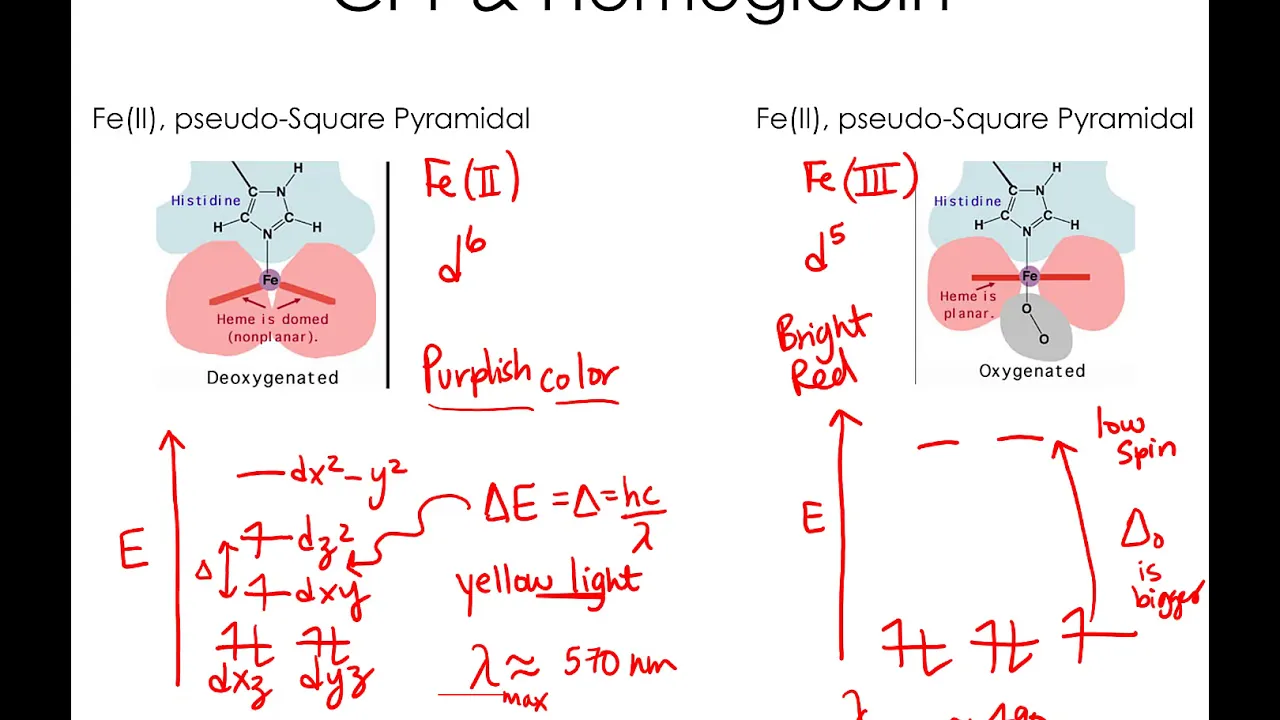
Correlating d-orbital splitting and electronic transitions with the UV-Vis absorption spectra and visible colors of transition metal complexes.
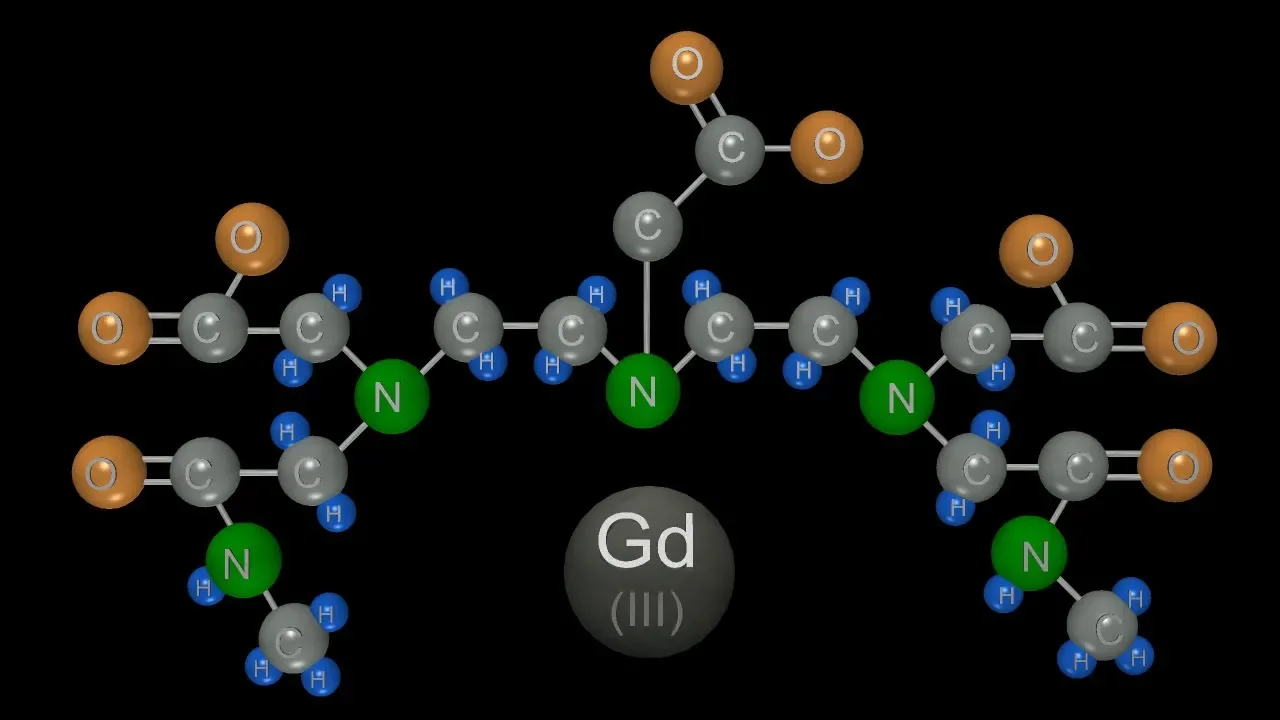
Exploring practical applications of magnetic coordination complexes, such as in contrast agents for Magnetic Resonance Imaging (MRI).
1.7K views11likes7:13Original Release: 2023-03-23
in this video we're going to learn how to apply Crystal field Theory to predict the magnetic properties of coordination complexes and the compounds in which they find themselves before we get there though I wanted to touch on the tetrahedral and square planar geometries our discussion of Crystal field Theory to this point has focused on the octahedral geometry but tetrahedral and square planar geometries are quite common and give rise to different splitting patterns of the D orbitals and differences in the nature of high Spin and low spin complexes as we'll see so let's start with the tetrahedral geometry the Arrangement or the way that D orbitals are split by a tetrahedral field is different from that of an octahedral field because the geometry of the ligands the geometries of those negative point charges are different with respect to the D orbitals and in a tetrahedral field the D orbitals are split into three higher energy orbitals called T2 and two lower energy orbitals called e now generally for a tetrahedral field this splitting is quite small one way to rationalize this is to recognize that the bond angles of the tetrahedral geometry are 109.5 degrees and that's kind of weird from the perspective of the D orbitals which are primarily you know primarily have lobes at 90 or 180 degrees and so the D orbitals can kind of avoid the negative point charges and the splitting tends to be relatively small and so Delta touch the crystal field splitting for a tetrahedral geometry is generally smaller than Delta OCT for a comparable metal and ligands because of this reliably small splitting tetrahedral complexes are always high spin the energy associated with pairing electrons is always greater than Delta tet the crystal field splitting in the tetrahedral geometry in other words this energy splitting is always relatively small so we're always going to avoid pairing for example in a D4 case we'd end up with a complex like this rather than pairing like so so we always end up with high spin complexes with a relatively large number of unpaired electrons in the tetrahedral case Square planar is yet another four coordinate geometry and in a square planar situation we actually get four different energy levels it's not just two different distinct energy levels so there's a sort of broadening out of the 5D orbitals into four levels two lowest energy that are relatively unperturbed more or less perpendicular to the square plane the DZ orbital isn't too bad it's just got sort of the donut in the Square plane and that's it and then the DX squared minus y squared well its lobes are pointed directly at the ligands so it's destabilized the most and dxy shows up in the middle so we get this pattern of one one one and two energy levels in the Square planar Crystal field splitting and in this case the crystal field splitting is relatively large so the pairing energy is pretty reliably less than the crystal field splitting for the octahedral for the square planar geometry which I've called here Delta SP so Square planar complexes are usually low spin for example in the D4 case we're going to end up putting all four electrons in these lowest two energy orbitals before moving up to the higher energy orbitals since this Gap here is relatively large in the Square planar geometry as a rule what is all this Crystal field Theory stuff have to do with magnetism well electrons have a magnetic moment they act like little tiny magnets and in particular unpaired electrons electrons whose little magnetic fields are not canceled out by another paired electron of the opposite spin have a big impact on the magnetic properties of any material because unpaired electrons are quite common in coordination complexes of the transition metals this is an area where magnetism is very very commonly seen and with respect to magnetic properties we're going to divide materials into two classes paramagnetic substances contain at least one unpaired electron and exhibit relatively strong magnetic properties they're strongly attracted to magnetic fields diamagnetic substances contain only paired electrons I like to remember this by the prefix dye corresponding to two indicating a pairing of all of the electrons diamagnetic substances contain only paired electrons and they have essentially negligible magnetic properties weak repulsion from a magnetic field almost undetectably weak repulsion for magnetic fields essentially not much magnetism at all now how strongly magnetic a particular complex or compound is depends on the number of elect unpaired electrons within it since the more unpaired electrons we have the larger the net Magnetic Moment right and so high spin complexes tend to have greater magnetic moments overall greater magnet measured Magnetic Moment for the substance as a whole then low spin complexes and this is a great empirical way to measure the difference between a high Spin and a low spin complex using something like a magnetic susceptibility balance to get a quantitative measure of the number of unpaired electrons let's see now how we can use crystal field Theory and the number of unpaired electrons to answer what appears to be a very simple question is this coordination compound paramagnetic or diamagnetic keeping in mind that paramagnetic means we have at least one unpaired electron that unpaired electron is going to show up in the split D orbitals this is a coordination compound so let's split it up into its component ions first essentially throw away the Sodium counter ions and focus on this MN cn63 minus coordination complex if we kind of unpack this a little bit we've got a manganese three manganese in the plus three oxidation state that corresponds to four D electrons we're going to use that shortly and we've got six Cyanide ligands and keep in mind here that cyanide is reliably a strong field ligands so the crystal field splitting is going to be quite large and we are going to pair electrons before putting them in the higher energy orbitals of the octahedral splitting we know the splitting is octahedral here we know we're dealing with Delta OCT because we have a six coordinate complex here with the six cyano ligands around the manganese Center so the split D orbitals are going to look something like this and now we're going to fill in with 4 d electrons the fact that the cyanide ligand is strong means that once we filled in the first three we are not going to move up to the higher energy level instead we are going to pair that fourth electron with one of the electrons in the lower energy levels and end up with an occupancy like this and we end up with two unpaired electrons two is not zero therefore yes this compound is paramagnetic each molecule of the complex contains two unpaired electrons Each of which has a Magnetic Moment The Compound as a whole is paramagnetic
Up Next

7:26
How to Calculate Spin-Only Magnetic Moment | Chemistry
@EasyChemistrybyPraveen
3.6K views•2020-10-02

83:56
Biocatalysis and Catalysis in Islatravir Synthesis | Merck Webinar
@SCIwheresciencemeetsbusiness
675 views•2020-10-08
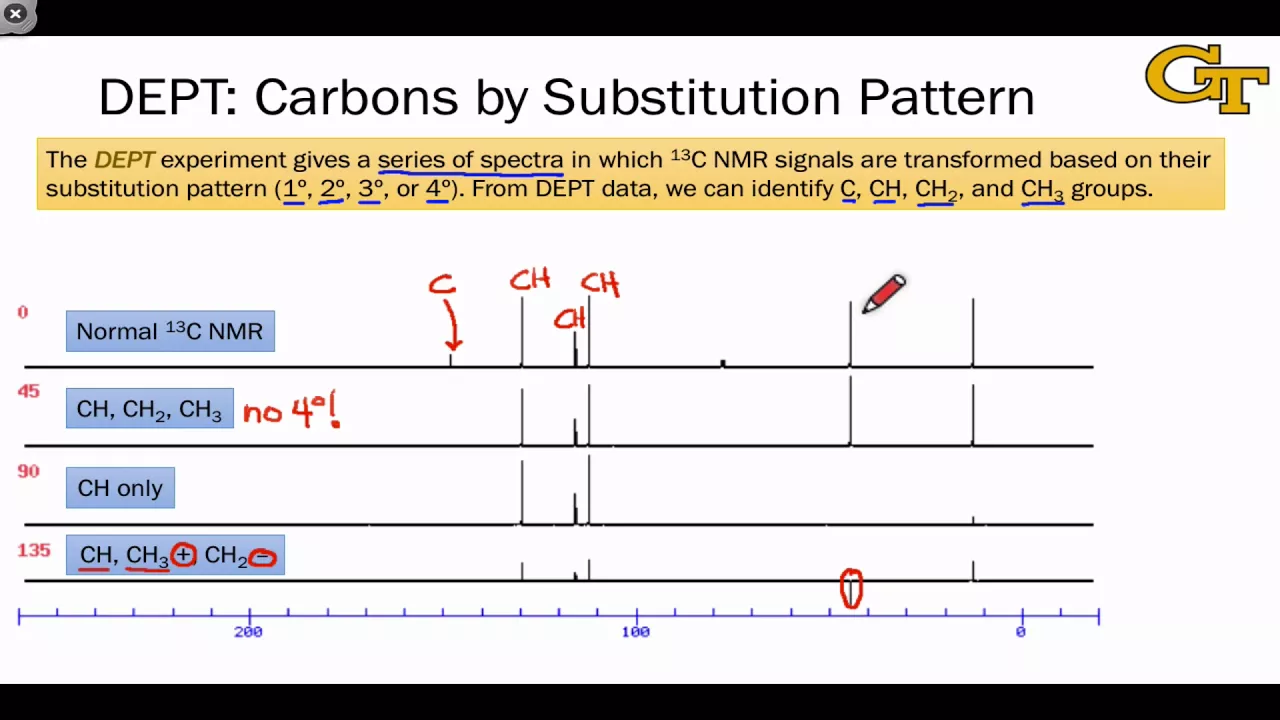
4:43
Carbon-13 DEPT NMR: Determining Substitution Patterns
@mevansthechemist
52.8K views•2017-12-15

17:31
Edible Water Bottles: A DIY Guide to Sodium Alginate Spherification
@ryan
10.5M views•2019-06-21
Related Study Plans & Knowledge Roadmaps
Structured learning paths in Chemistry
chemistry
Nuclear Chemistry: Decay, Meds & Fuel Cycle
01Introduction to Nuclear Structure and Radioactivity
02Decay Dynamics and Kinetics
03Radiation Interaction and Detection
+ 2 more learning modules
24h5 modules
Explore Roadmap
chemistry
Supramolecular Chemistry: Forces & Machines
01Foundations of Chemical Bonding and Intermolecular Forces
02Introduction to Host-Guest Chemistry
03Thermodynamics and Dynamics of Self-Assembly
+ 2 more learning modules
16h5 modules
Explore Roadmap
chemistry
Photochemistry: Excited States & Reactions
01Foundations of Light-Matter Interactions
02Molecular Orbitals and Electronic States
03Photophysical Processes and Jablonski Diagrams
+ 2 more learning modules
18h5 modules
Explore Roadmap
chemistry
Coordination Chemistry: Bonding & Properties
01Introduction to Transition Metals and Ligands
02Crystal Field Theory (CFT) and Geometry
03Magnetic Behavior and Spin States
+ 2 more learning modules
14h5 modules
Explore Roadmap