


















DEPT (Distortionless Enhancement by Polarization Transfer) NMR spectroscopy uses multiple spectra with different excitation angles (0°, 45°, 90°, and 135°) to determine the substitution pattern of carbon atoms in organic molecules; by analyzing which peaks appear or disappear across these spectra, chemists can identify whether a carbon is quaternary (no hydrogens), tertiary (CH), secondary (CH2), or primary (CH3), thereby resolving symmetry-equivalent carbons and assigning peaks to specific structural positions.
Carbon-13 DEPT NMR: Determining Substitution Patterns
Added:Fundamental concepts of organic molecular structures, specifically classifying carbon atoms as methyl (CH3), methylene (CH2), methine (CH), or quaternary (C).
Basic principles of 1D Proton (1H) NMR spectroscopy, including chemical shifts, shielding, and spin-spin coupling.
Standard Carbon-13 (13C) NMR spectroscopy, particularly the concept of proton-decoupled spectra and carbon chemical shift ranges.
The physical concept of nuclear spin and how different isotopes (like 1H and 13C) interact in a magnetic field.
Differentiating and interpreting DEPT-45, DEPT-90, and DEPT-135 sub-spectra to assign specific carbon types to peaks.
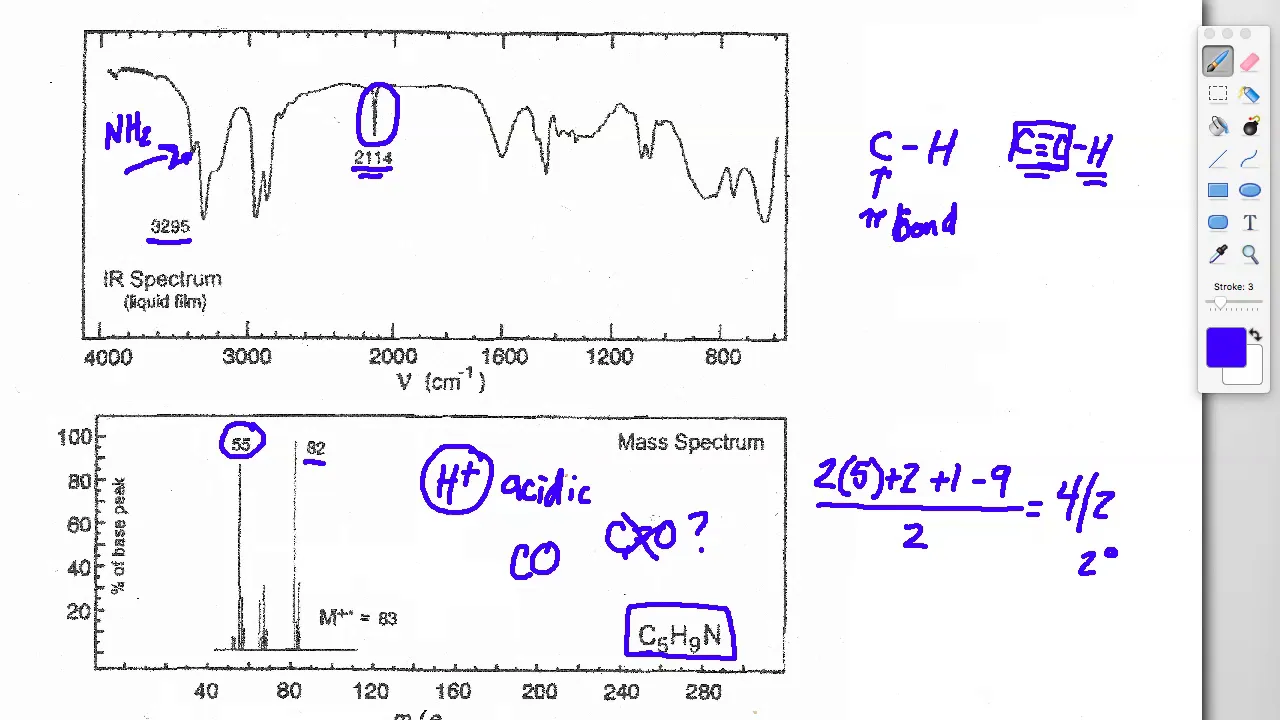
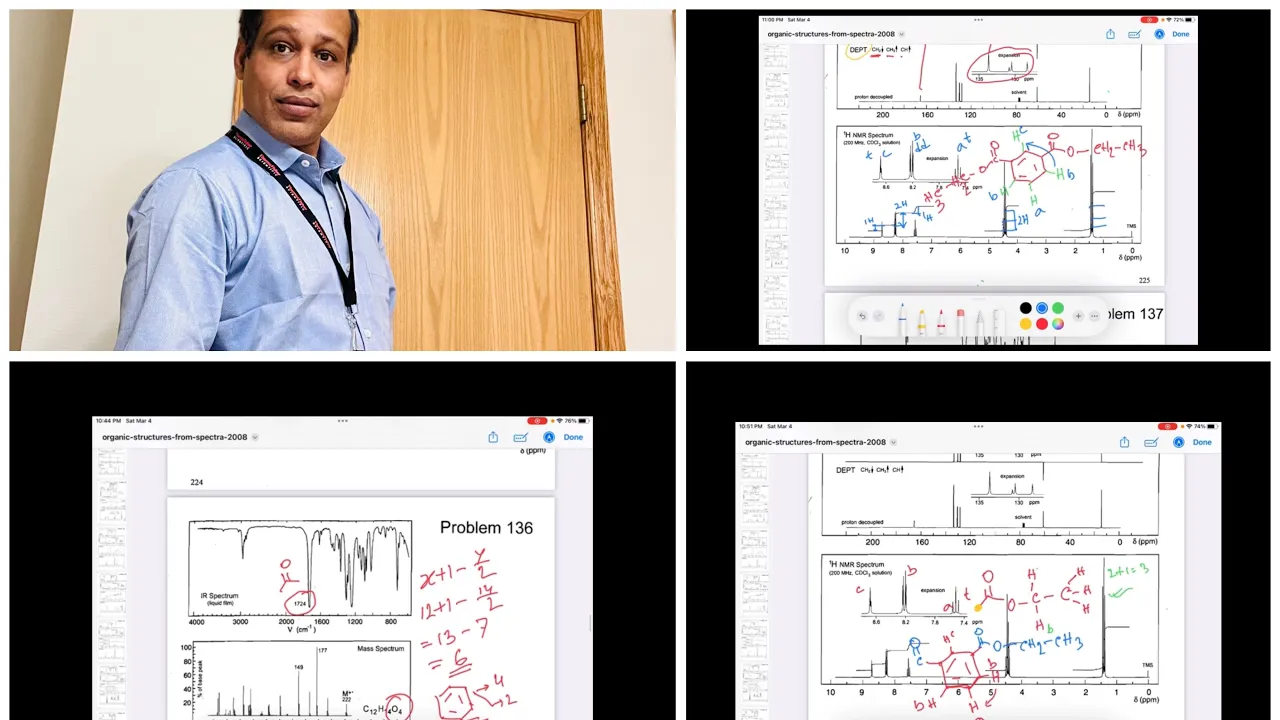
Utilizing DEPT NMR data in combination with 1H NMR, IR, and Mass Spectrometry to solve complex molecular structure elucidation problems.
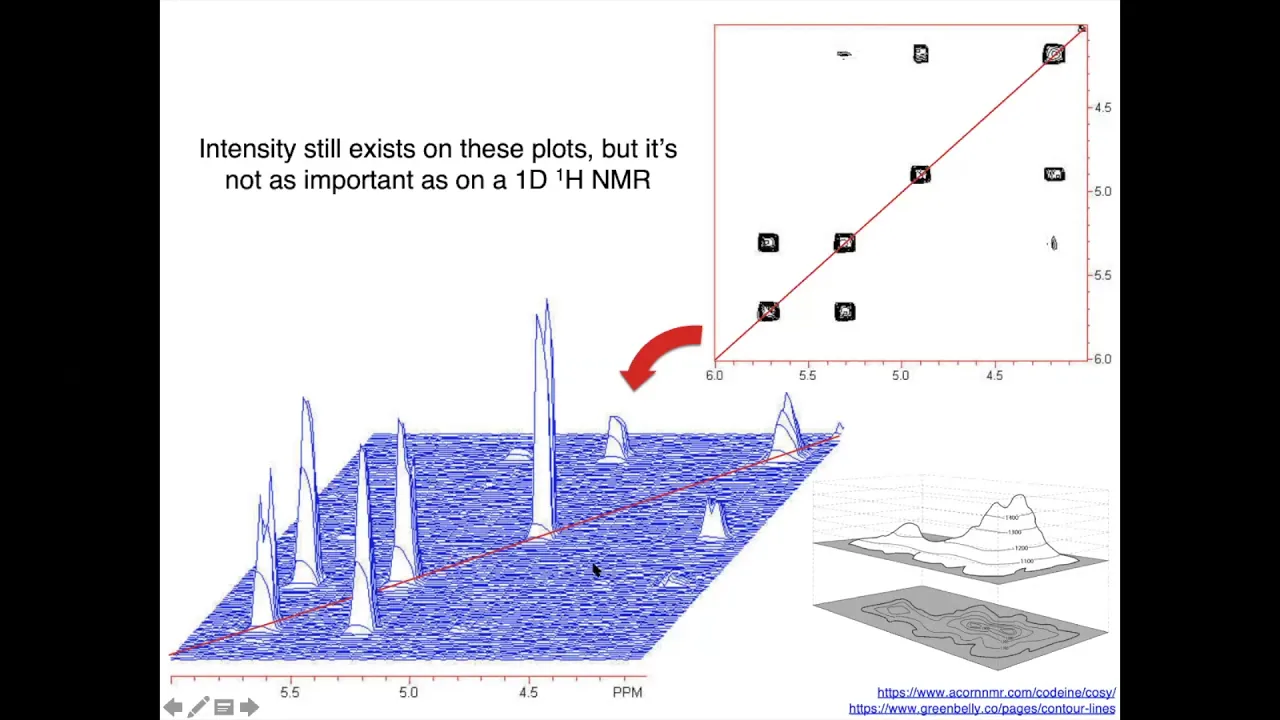
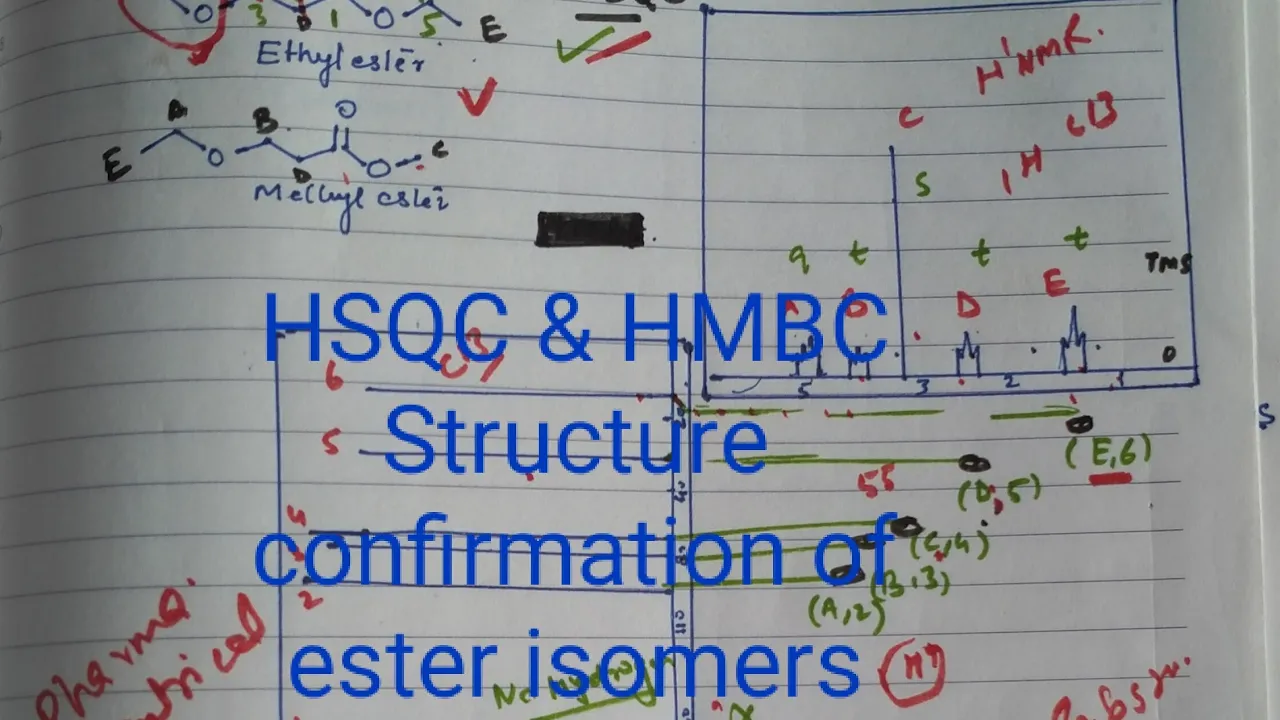
Introduction to Two-Dimensional (2D) NMR techniques such as HSQC (Heteronuclear Single Quantum Coherence) and HMBC (Heteronuclear Multiple Bond Correlation).
Exploring alternative carbon-editing pulse sequences, such as the APT (Attached Proton Test) spectrum.
52.8K views589likes4:43Original Release: 2017-12-15
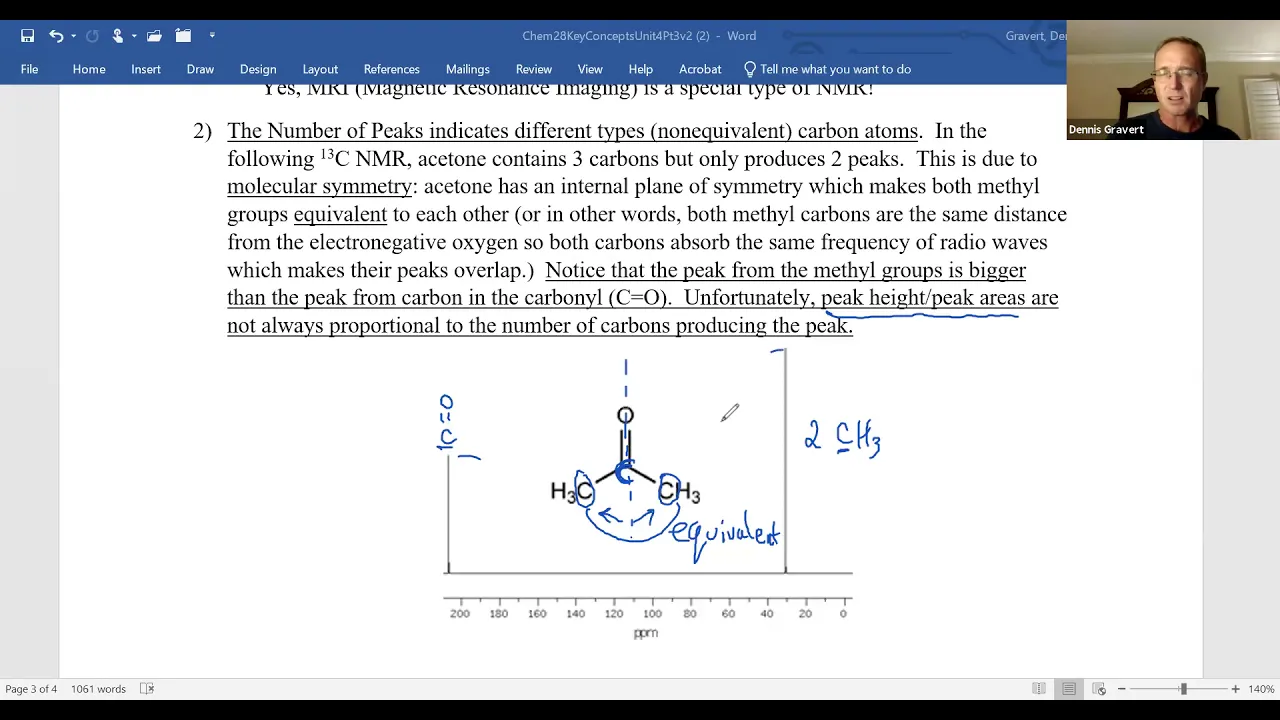
the limitations of carbon-13 NMR that we've discussed make it clear that you can get very little connectivity information out of a pure carbon-13 NMR spectrum because of this a few different techniques have come up to give us more information from carbon 13 NMR and the most important and useful of these is called distortion 'lest enhancement by polarization transfer or depth we're not going to talk about the underlying physics of depth at all because it's rather complicated instead we're going to focus on how depth gives us useful information about the number of hydrogen's connected to a particular carbon atom from a series of depth spectra we can determine whether a carbon has one two three or even no hydrogen's connected to it in a language of classifying by substitution pattern primary carbon there's three hydrogen's in other words it's a ch3 group a secondary carbon or methylene is a ch2 a tertiary carbon or methane is a CH and a quaternary carbon is just C without any hydrogen's what the depth experiment does is give us a series of spectra so there are multiple carbon 13 NMR spectra in a depth experiment in which the different carbon 13 signals are transformed in accordance with the number of hydrogen's that they have attached the numbers here we can understand as an excitation angle for the hydrogen's and so this is 0 degrees 45 degrees 90 degrees and 135 degrees and different things happen depending on the excitation angle the zero Degree quote-on-quote hydrogen pulse just corresponds to a regular carbon 13 NMR spectrum since we're not really doing anything special in the 45 degree case we display Peaks only for the primary secondary and tertiary carbons no signals for quaternary carbons are shown from this information we can look at the original carbon 13 NMR spectrum and see what appears to identify quaternary carbons right off the bat and so immediately since this peak disappeared in the 45 degree spectrum we can identify this as a quaternary carbon which I'll just label see the 90 degree spectrum shows us CH resonances only so from this spectrum we can immediately identify CH resonances so we now have three methane Peaks that we've identified the 135-degree case is interesting in that ch and ch3 Peaks are shown with the normal polarity in other words pointing upwards or positive where ch2 peaks have inverted polarity which means their Peaks are pointing negative that's actually a bit interesting to think about in terms of the frequency spectrum and Fourier transform what does a negative frequency component mean but we're going to leave that aside for the time being and just use this to our advantage to identify for example that this negative peak in the 135-degree spectrum must correspond to a ch2 and using process of elimination since we already identified the methane Peaks from the 90-degree case we can conclude that anything that's left on the sign must be a ch3 and just to summarize in the language of substitution pattern we would say that this carbon is quaternary these carbons are each tertiary or methylenes this carbon is a methylene or secondary and this carbon is primary or a methyl group here's the molecular structure of the compound that corresponds to the step spectrum and the depth information actually helps us make assignments in this case greatly for example we can notice that there's only one quaternary carbon one carbon bearing no hydrogen's in this structure and it's this one highlighted in blue I really love this example because it highlights the issue from the first video of this series of symmetry and stereo topic relationships for example these two methylenes highlighted in black should be equivalent by symmetry since they're related by a rotational axis of symmetry in the molecule misses the ch2 the secondary carbon peak corresponds to both of these carbons highlighted in black both of the methyls highlighted here in purple correspond to the single primary or methyl peak in the carbon 13 NMR spectrum and two pairs of the aromatic carbons are also related by symmetry by rotational axis and so the two highlighted in red which are both CHS or methane protons correspond to one of the three methane Peaks these highlighted in green correspond to one of the other methane Peaks and this one highlighted in yellow corresponds to the last month in peak and so the depth approach as we see here really helps us assign carbons two different resonances within the carbon 13 NMR spectrum by giving us information about how many hydrogen's each carbon has attached to it
Up Next

10:26
IR & NMR Spectroscopy: Solving a Chemical Structure
@TonyStJohn
669.4K views•2015-08-12
83:56
Biocatalysis and Catalysis in Islatravir Synthesis | Merck Webinar
@SCIwheresciencemeetsbusiness
675 views•2020-10-08

7:13
Magnetic Properties of Transition Metal Complexes | OpenStax Chemistry 2e 19.3
@mevansthechemist
1.7K views•2023-03-23

17:31
Edible Water Bottles: A DIY Guide to Sodium Alginate Spherification
@ryan
10.5M views•2019-06-21
Related Study Plans & Knowledge Roadmaps
Structured learning paths in Chemistry
chemistry
Nuclear Chemistry: Decay, Meds & Fuel Cycle
01Introduction to Nuclear Structure and Radioactivity
02Decay Dynamics and Kinetics
03Radiation Interaction and Detection
+ 2 more learning modules
24h5 modules
Explore Roadmap
chemistry
Supramolecular Chemistry: Forces & Machines
01Foundations of Chemical Bonding and Intermolecular Forces
02Introduction to Host-Guest Chemistry
03Thermodynamics and Dynamics of Self-Assembly
+ 2 more learning modules
16h5 modules
Explore Roadmap
chemistry
Photochemistry: Excited States & Reactions
01Foundations of Light-Matter Interactions
02Molecular Orbitals and Electronic States
03Photophysical Processes and Jablonski Diagrams
+ 2 more learning modules
18h5 modules
Explore Roadmap
chemistry
Coordination Chemistry: Bonding & Properties
01Introduction to Transition Metals and Ligands
02Crystal Field Theory (CFT) and Geometry
03Magnetic Behavior and Spin States
+ 2 more learning modules
14h5 modules
Explore Roadmap