









![[마더텅] [지구과학Ⅰ] CH.29 해수의 용존기체 (해설 : 김은희 선생님)](https://i.ytimg.com/vi/xo1qhsSxoCs/maxresdefault.jpg)


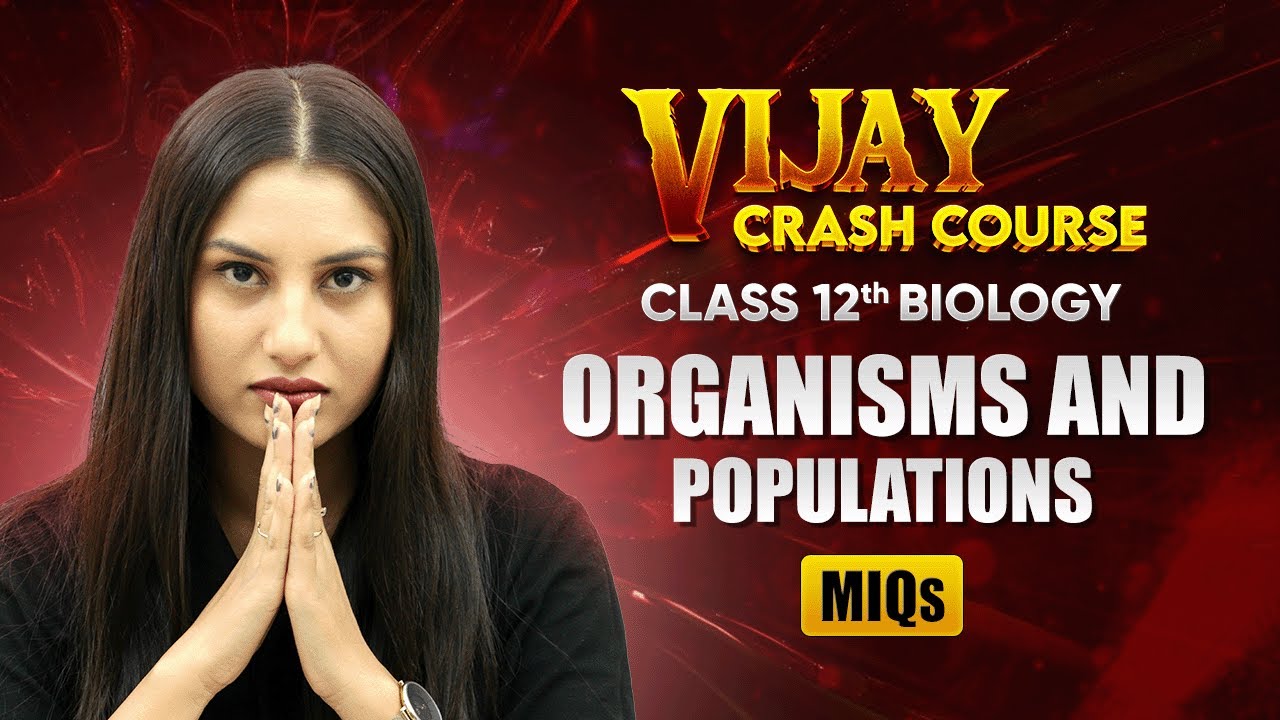







A closed aquatic ecosystem can be created by collecting natural materials (sand, rubble, water, algae, and invertebrates) from a marine environment and placing them in a sealed container, allowing the organisms to establish symbiotic relationships where primary producers like single-celled algae provide oxygen and food while decomposers break down organic matter; however, the success of such ecosystems depends heavily on proper material collection and handling, as environmental stressors during transport can significantly impact survival rates.
Closed Saltwater Ecosphere: Caribbean Ecosystem in a Jar
Added:The marine nitrogen cycle, specifically how beneficial bacteria convert toxic ammonia from waste into nitrites and nitrates.
The biochemical balance of photosynthesis and cellular respiration, which governs oxygen and carbon dioxide exchange in a sealed vessel.
Basic marine trophic dynamics, including the distinct roles of primary producers (algae), consumers (micro-fauna), and decomposers (bacteria and detritivores).
Fundamental properties of saltwater chemistry, such as salinity, pH buffering, and how temperature fluctuations affect dissolved oxygen levels.
The study of Closed Ecological Life Support Systems (CELSS) and their real-world applications in space exploration and astrobiology.
Population ecology concepts such as carrying capacity, competitive exclusion, and resource limitation in a closed micro-ecosystem.
Advanced marine husbandry, including the management of reef aquariums, refugiums, and complex chemical filtration systems.
The use of mesocosms in ecological research to simulate and study the impacts of environmental stressors like ocean acidification and warming.
55.1K views3.1Klikes11:04Original Release: 2025-03-29
Hello there. Today we're looking at this jar. To make it a bit more exciting we'll actually fill it. But what happened in between, and why? Well, for my master's degree I was following a course on the southern Caribbean island of Curacao - shout out to all my Caribbean viewers. I knew I had to make an ecosphere from the ecosystem I saw underwater and so I did, minus the corals and fish and all large organisms of course. I was there for quite a while but I wanted to collect my materials at the latest possible moment, right before flying back, not letting it all sit in the heat for days.
This meant I had to collect it while snorkeling and unfortunately I do not have any footage of that. I have these clips of me and some friends collecting some sand and putting it in bottles.
It'll have to do I guess. This is what I took with me in the plane. Of course you cannot take this with you without the proper permits, so I did get the proper permits. Customs was not amused though, and they took all the bottles and the jar and went into their little room for 20 minutes or so, probably shaking it up a bit and sticking who knows what in there to test for dissolved - um... forbidden substances - or something, I don't know... Eventually I got it back though. Right, assembly time. In this jar. I attempted to film this, and I guess succeeded, except that you can't see it very well. I decided to shake the bottles to get the sand out as well. Normally I wouldn't shake them this violently but I figured I couldn't really do more harm to the contents than had already been done by their unexpected journey.
I sorted all the water and rubble, a.k.a. rocks with stuff on them, in two buckets. One that smelled okay, to be used for the ecosystem, and one that smelled really bad, to be thrown away.
Look, here we have a piece of rubble with a large single-selled algae on it. A Caulerpa serrulata.
Pretty neat. In the end I didn't throw the smelly stuff away but chucked it all in a smaller jar, to see what would happen if you make a closed ecosystem with mostly dead and rotten materials.
So that's both of our Caribbean jars filled. They're more cloudy than saltwater jars usually are, and I'm afraid that might be a sign that there's already quite some dead material in there, but we'll just have to wait and see. I can't really bring it all back... The Caulerpa is getting buried in sediment so I'll have to gently shake everything clean when the dust settles. A day later the jars cleared up pretty nicely, but were still a bit hazy. This algae is called Dictyota. It's easily recognizable by the Y-shaped tips. Unfortunately it doesn't look like it's in great shape. We do have some animal life in here. Here we have some kind of crustacean, it kind of looks like a tiny lobster. On the right side of the screen you can see a copepod swimming up. Here's a better angle. I wonder if it'll stay this small or if we can see it grow. A week later the water is still a bit hazy, which is slightly concerning, but let's see what we have in this jar after a week. You can see some of the algae growing on the rock in the center of the jar as well as on the foreground. More interestingly, and weirdly, though is this this yellowish brownish slimy organism. I've tried figuring out what it is, I really have, but I don't have a clue at all. I'm not even sure if it's an animal, or a fungus, or a protist, or something else entirely.
It reminded me somewhat of terrestrial slime molds so I thought it just might be a marine slime mold. But I found no marine slime molds that look similar. That doesn't rule out this possibility of course. Maybe it's some sort of strange colonial animal, or a fungus. I really have no clue. I've never seen it move but I think it moves very slowly. I've seen it a few times on different locations on the glass and in different shapes. Maybe there's more than one, or maybe it can split up into several beings. It's interesting that such creatures appear when you take some water and let it sit for a while. I of course looked at the water and sediment closely while I was there - even in jars - and a bunch of tiny critters became visible that you wouldn't see otherwise, but this organism I never saw there and I've studied the underwater world carefully, and for quite a length of time. Fascinating. This is a bit of a sad sight: a big old dead worm. This one most likely died during the trip already. I tried to wash out all the dead material while putting this jar together but due to the geometry of the rocks I probably missed some. I hope this much decaying organic matter won't cause too many problems for the ecosystem. Here, next to another dead worm, we have the Caulerpa. Did I already mention that the entire thing is only one cell? How cool is that?! It's still looking okay and I really hope it survives, because it's the only algae and primary producer for this ecosystem that still looks somewhat healthy, and something has to provide oxygen. Luckily not all is doom and gloom for the worm population, and luckily I didn't wash too hard, because there, in between the rocks, you can indeed see a worm moving about. And it is not alone. Under this piece of Dictyota you can see another worm, quite a large one. At least I'm pretty sure it's one individual and not two smaller ones. This, just like the other one and the dead ones, is a Polychaete, commonly known as a bristle worm.
There are many many Polychaetes, and getting to the species level would for me be, at this point, just pointless guessing. But I do think they're probably in the subclass of Aciculata. The more you know... This is the other jar, the one I filled with the smelly and dead stuff, and what do you know, it looks way worse. There seems to be this sort of dark tint to the water.
There's a black residue, both on the substrate and all the pieces of rubble. The black color in the upper part of the sediment is probably the result of sulfate reducing bacteria, which, as the name suggests, reduce sulfate to hydrogen sulfide. This hydrogen sulfide reacts with metal ions forming metal sulfides, which are insoluble - insol - insoluble - creating the dark color.
There, a bit of biochemistry to brighten up your day! There's more going on though. Near the top of the water surface we have these slimy gelatinous blobs, which have the same dark tint as the water.
I don't actually know what it is, but I'm assuming it has something to do with the large amount of dead material in the jar. Maybe it's some sort of protein buildup, or a bofilm in an unusual shape.
It could also be some sort of fungal growth. It's actually kind of pretty in a way. I've never seen anything like it though. This smaller jar is also home to this alien looking life form, which I think is actually the same organism we saw in the bigger jar, just a bit more compact, and looking less like pulled apart molten cheese. This one looks like one elongated blob with some threads coming out of the top. I feel like if you know what this is, it's very obvious, but I don't, so... Now this is interesting. Sorry for the shaky footage by the way. Here we have a boomerang looking shape with something looking like a lightning bolt coming out of it. I'm not totally sure but I think the boomerang is a small ribbon worm, and sticking out of it is its proboscis.
The proboscis is an organ it uses for hunting, which can be fully inside or outside the body, and sometimes even contain a toxic barb. Pretty cool. Two weeks later, apart from some algae growing on the glass, I noticed something. That one creature has split up, or multiplied, or more of them were showing themselves. Anyway, now there's a few of them. I have all this footage of these weird alien looking life forms, but since I don't know what they are, and there's only so many ways I can convey that fact, I've run out of intelligent things to say about these.
But they're really strange huh? Please someone help me out here. Unfortunately at this point the Caulerpa isn't looking so great. If it dies, the burden of producing food and oxygen will fall on the single-selled algae that are present in this jar. So that is the Caribbean ecosphere, or ecospheres really. This project didn't exactly go as I had planned, with some cool algae and a bunch of tiny interesting crustaceans comprising the stars of the ecosystem. Unfortunately a lot of the material didn't survive the journey. I guess being shaken around, going from 30° C to just a few degrees above freezing, high in the air, and arriving in the Dutch winter climate, while being inspected by customs, is not ideal. Nonetheless, every jar is interesting in its own right, and there is no shortage of fascinating stuff going on in these jars. Together we will follow the events happening in this jar. That's it for now, thanks and bye-bye!
Up Next

58:34
Biological Waste Treatment for Circular Economy | Prof. Piet Lens
@utmengineering1844
191 views•2020-08-03

15:54
Life in Biosphere 2: Sustainable Ecosystems & Human Survival
@TED
334.9K views•2009-06-16
14:30
Microplastics Everywhere: How Plastic Impacts Our Lives
@TEDx
100.9K views•2018-05-08
10:28
Ice Stupa Artificial Glaciers: Solving Ladakh's Water Crisis
@SonamWangchuk66
3.2M views•2015-05-03
Related Study Plans & Knowledge Roadmaps
Structured learning paths in Environmental Science
environmental-science
Ocean Noise: Cetacean Impacts & Mitigation
01Fundamentals of Underwater Acoustics
02Marine Mammal Bioacoustics
03Anthropogenic Noise: Shipping & Seismic Surveying
+ 2 more learning modules
16h5 modules
Explore Roadmap
environmental-science
Road Ecology: Corridors, Overpasses & Fencing
01Foundations of Habitat Fragmentation and Carnivore Ecology
02The Road Barrier: Ecological Impacts of Transport Infrastructure
03Principles of Ecological Corridors and Connectivity Mapping
+ 3 more learning modules
14h6 modules
Explore Roadmap
environmental-science
Ocean Acidification: Kelp Buffering & Shellfish
01Fundamentals of Ocean Chemistry & pH
02Chemical Pathways of Coastal Acidification
03Bivalve Physiology & Calcification Under Stress
+ 2 more learning modules
18h5 modules
Explore Roadmap
environmental-science
Ice Stupas: Glacial Retreat & Water Security
01Foundations of Glaciology & Mountain Hydrology
02Climate Change and Glacial Retreat Dynamics
03The Science of Ice Stupas & Artificial Glaciers
+ 2 more learning modules
14h5 modules
Explore Roadmap