



















A minor 11 chord voicing can be constructed by playing the first five notes of the minor scale in the left hand (removing the root) and building a major triad from the note a whole step below the root in the right hand; this creates a rich, modern jazz and neo-soul sound that can substitute any standard minor chord in progressions.
Minor 11 Chord Voicing Tutorial: Neo-Soul Piano Techniques
Added:Understanding basic major and minor triad construction on the piano keyboard.
Familiarity with diatonic intervals, particularly minor thirds, perfect fifths, and minor sevenths.
Knowledge of standard Minor 7th (m7) chord structures and how they are built.
Basic keyboard geography and the ability to locate root notes quickly in all 12 keys.
Applying minor 11 voicings within standard R&B and jazz chord progressions, such as the ii-V-I progression.
Studying voice-leading principles to smoothly transition between minor 11 chords and other extended chords.
Exploring other neo-soul chord extensions, such as Major 9th, Dominant 13th, and altered dominant chords.
Improvising melodic lines over minor 11 chords using the Dorian mode and minor pentatonic scales.
Mastering rootless voicings and left-hand bassline integration to support the minor 11 harmony.
512.4K views25.9Klikes4:32Original Release: 2021-01-22
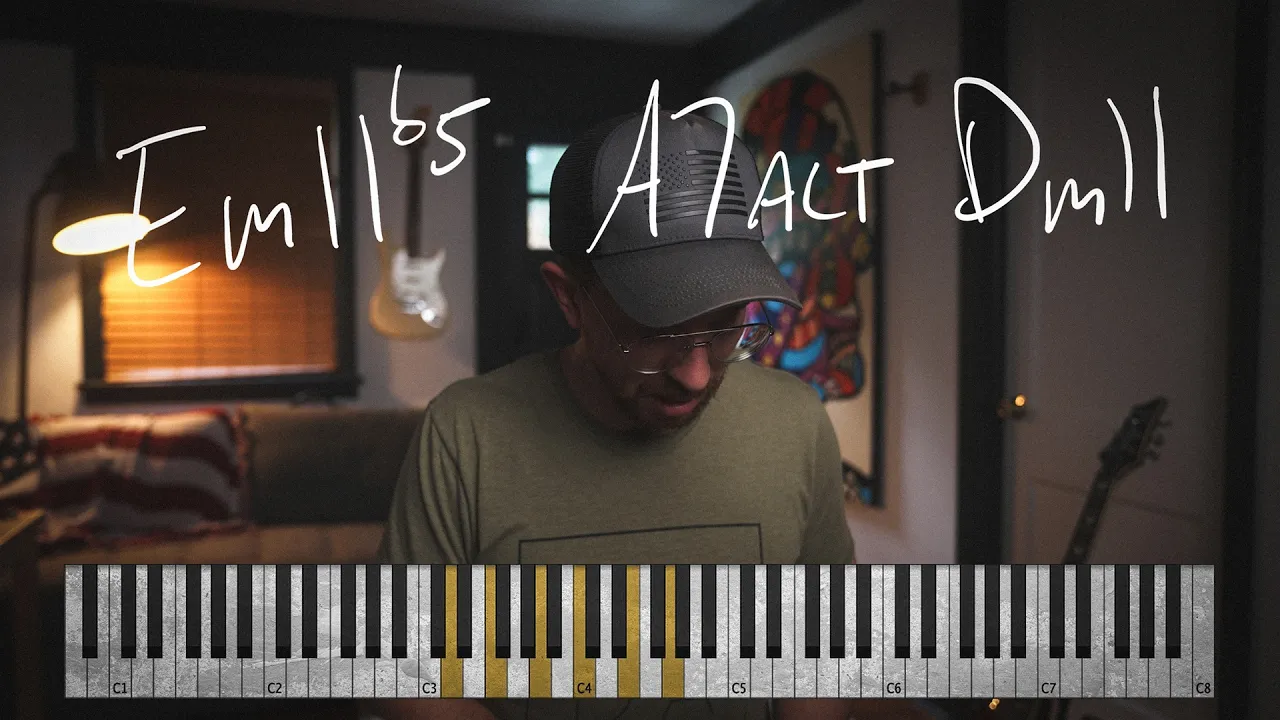
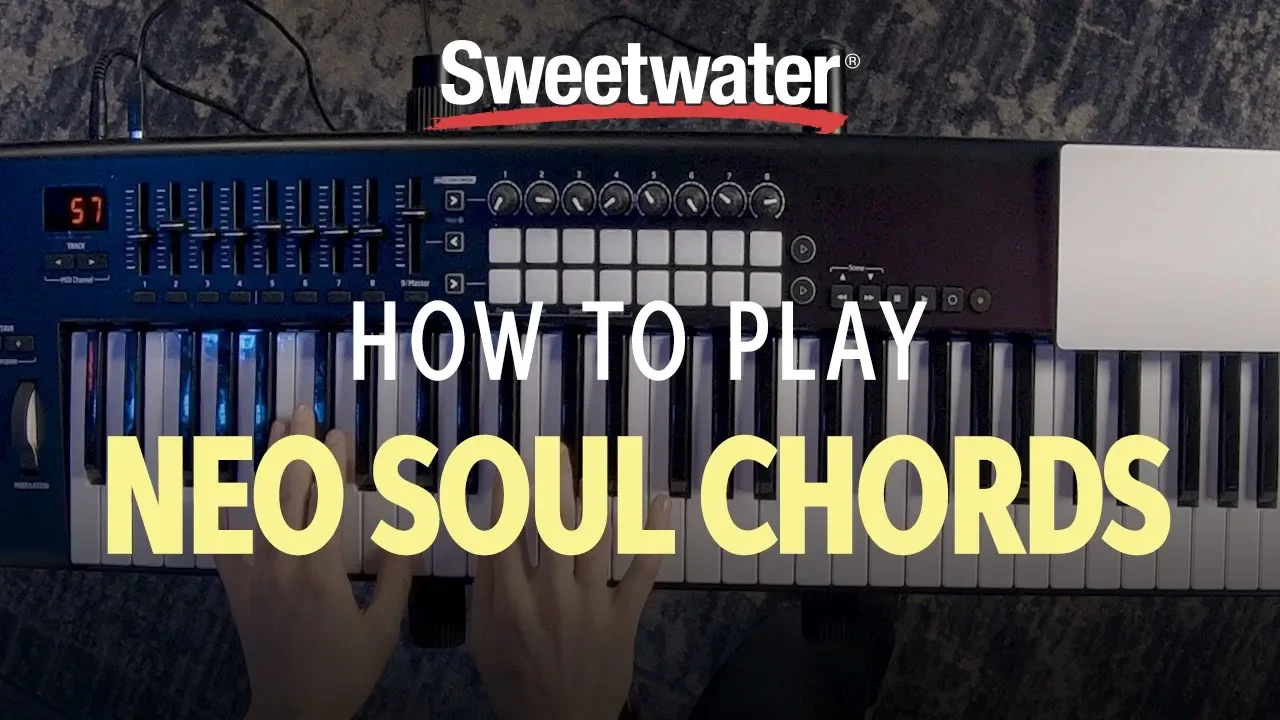
what is up guys simon from pianopig.com and it is about time for another episode of chord of the month if you're new here welcome to the channel my goal is to help you become the best piano player you can possibly be in the most efficient way possible and today i'm going to be breaking down the sexiest richest and luscious sounding minor 11 voicing that i know of i use it all the time and it is absolutely perfect for that modern jazz neo-soul kind of sound if you'd like a resource sheet which contains the notation of this voicing in all 12 keys you can download that for free via the link in the description below so no messing around let's head over to the piano and get on with it so in the key of f minor this is how the voicing looks it provides such a rich thick sound and the structure of the voicing makes it very easy to add those lovely little neo-soul inflections [Music] so what have we actually got here well in the left hand we've got the 9 flat 3 11 and 5. but rather than try to remember those random group of scale degrees i prefer to just play the first five notes of the f minor scale and then take out the bottom root notes and in the right hand we've got the flat 7 9 and 11.
but again rather than trying to remember those random scale degrees i like to just think of it as an e flat major triad so my shortcut process of constructing this voicing would be to play the first five notes of the minor scale with our left hand take out the bottom note and then with our right hand build a major triad from the note a whole step below the root so we have our f as the root note go down a whole step to get to e flat and just play an e flat major triad with our right hand and you can also roll on to that 9 from the root [Music] let's construct this voicing again in some different keys just to make sure you've got the hang of it let's construct it in g minor so with our left hand we play the first five notes of the g minor scale and then take out the bottom note then with our right hand we go to the note a whole step below the root and build a major triad from here and there we have it let's do it one more time in the key of e flat minor play the first five notes of the e flat minor scale and take out the root and then play a d flat major triad with our right hand [Music] and we could even put all those voicings together to make something cool it's a really fun voicing to play around with and there you have it a seriously sexy voicing which you can use for minor 11 chords and you can actually substitute any bog standard minor chord with this voicing to take your chord progressions up a level as i mentioned earlier if you'd like the notation of this voicing in all 12 keys click the link in the description and you can download that for free thanks for watching i hope you enjoyed the video and found it useful if you did make sure to smash that like button subscribe to the channel hit that notification bell so you don't miss out on any new sexy voicings and i will see you next time
Up Next

10:17
Master Neo Soul Piano Chords and Progressions
@prettysimplemusic
34.6K views•2024-12-02

51:08
Simon Rattle on Early 20th-Century Music: Tonality's Decline
@theclandestinum
18.3K views•2012-06-16
10:46
Mastering Musical Modes: A Comprehensive Guide to 7 Scales
@Piano_Pig
706.2K views•2017-04-28
10:49
Understanding John Coltrane's Giant Steps: A Music Theory Analysis
@Vox
10.4M views•2018-11-12
Related Study Plans & Knowledge Roadmaps
Structured learning paths in Music Theory
music-theory
Tintinnabuli: Pärt's Counterpoint & Composition
01Music Theory Foundations: Intervals and Triads
02Fundamentals of Counterpoint and Voice Leading
03Arvo Pärt and the Spirit of Holy Minimalism
+ 2 more learning modules
16h5 modules
Explore Roadmap
music-theory
Composing Galant Music: Partimento & Schemata
01Foundations of Figured Bass and Keyboard Harmony
02The Rule of the Octave (Regola dell'Ottava)
03Galant Schemata: The Building Blocks of Form
+ 2 more learning modules
30h5 modules
Explore Roadmap
music-theory
Decoding Overtone Series: Tuning & Drone Music
01Acoustic Foundations: The Physics of the Overtone Series
02Tuning Systems: Equal Temperament vs. Just Intonation
03Microtonality and Spectralism: Beyond Standard Pitches
+ 2 more learning modules
24h5 modules
Explore Roadmap
music-theory
Impressionist Harmony: Scales, Planing & RPGs
01Foundational Music Theory: Keys, Intervals, and Seventh Chords
02Impressionist Color: Chord Planing and Parallel Harmony
03Whimsical Textures: Pentatonic Cascades and Whole-Tone Scales
+ 1 more learning modules
14h4 modules
Explore Roadmap