

![[화성학 무료강의_일산오빠의 실용음악 기초이론 1] 14. 7화음(1)](https://i.ytimg.com/vi/gA9KuK3B1bI/hqdefault.jpg)





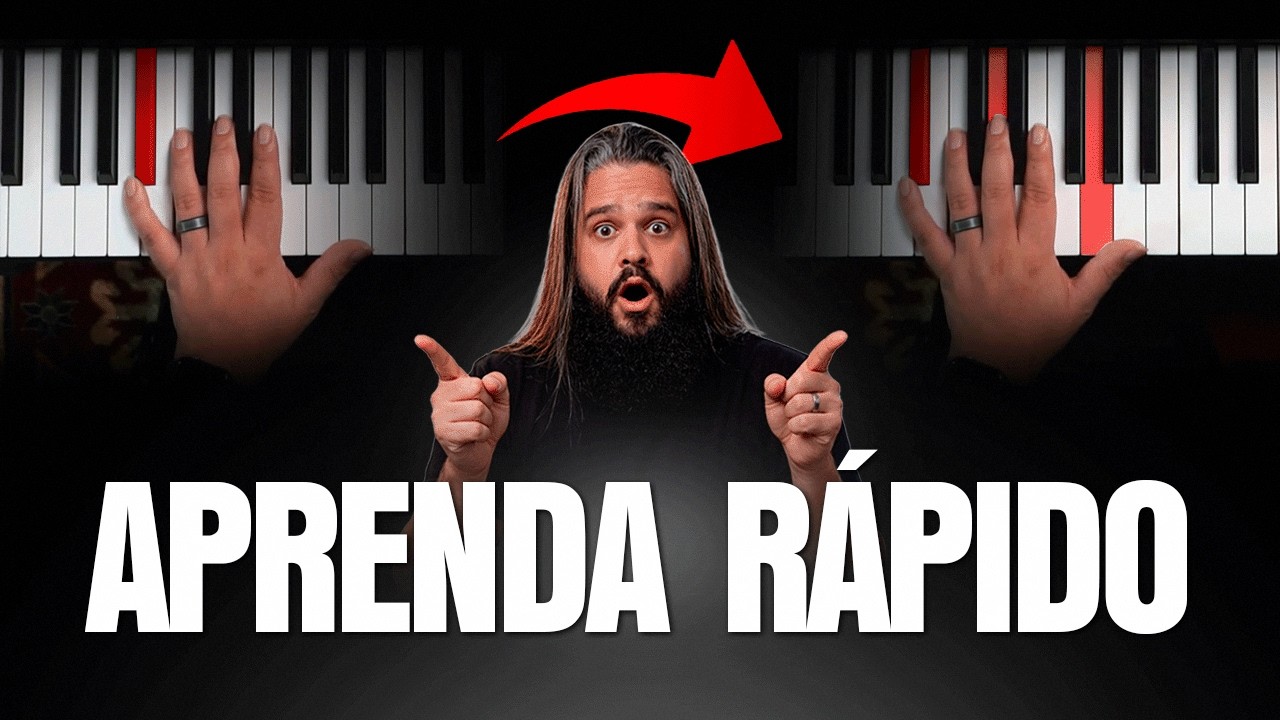





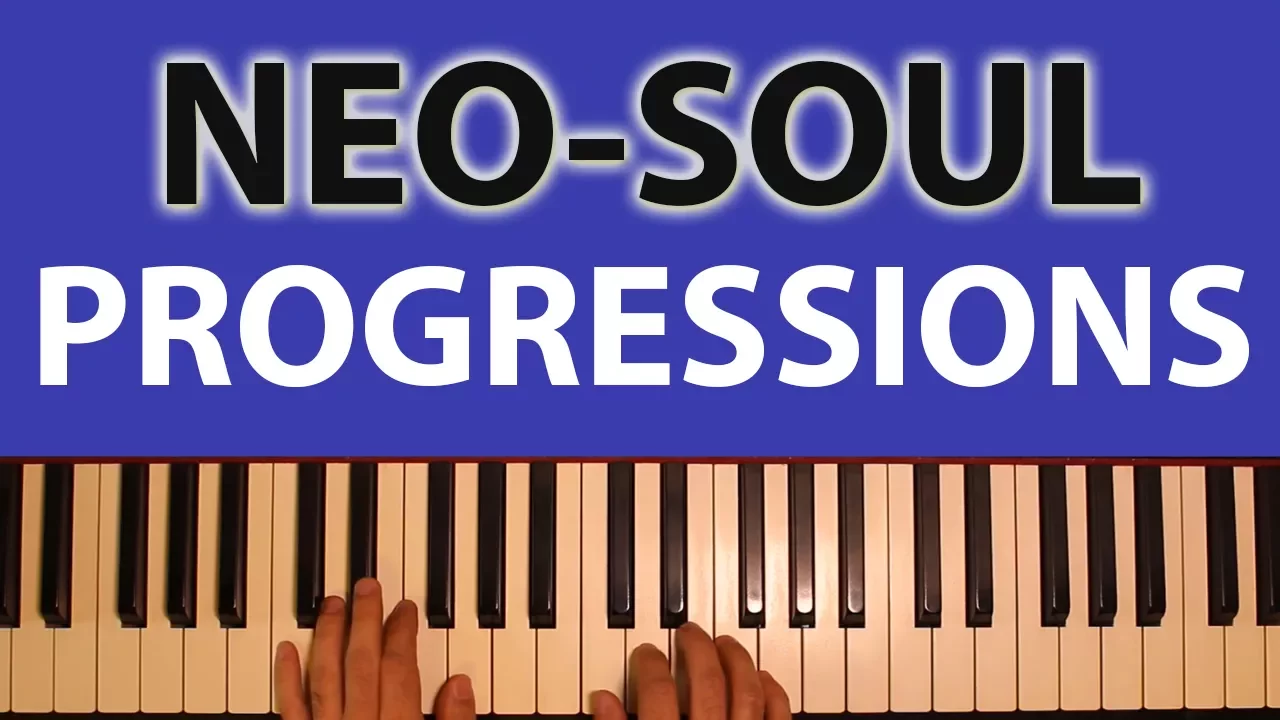
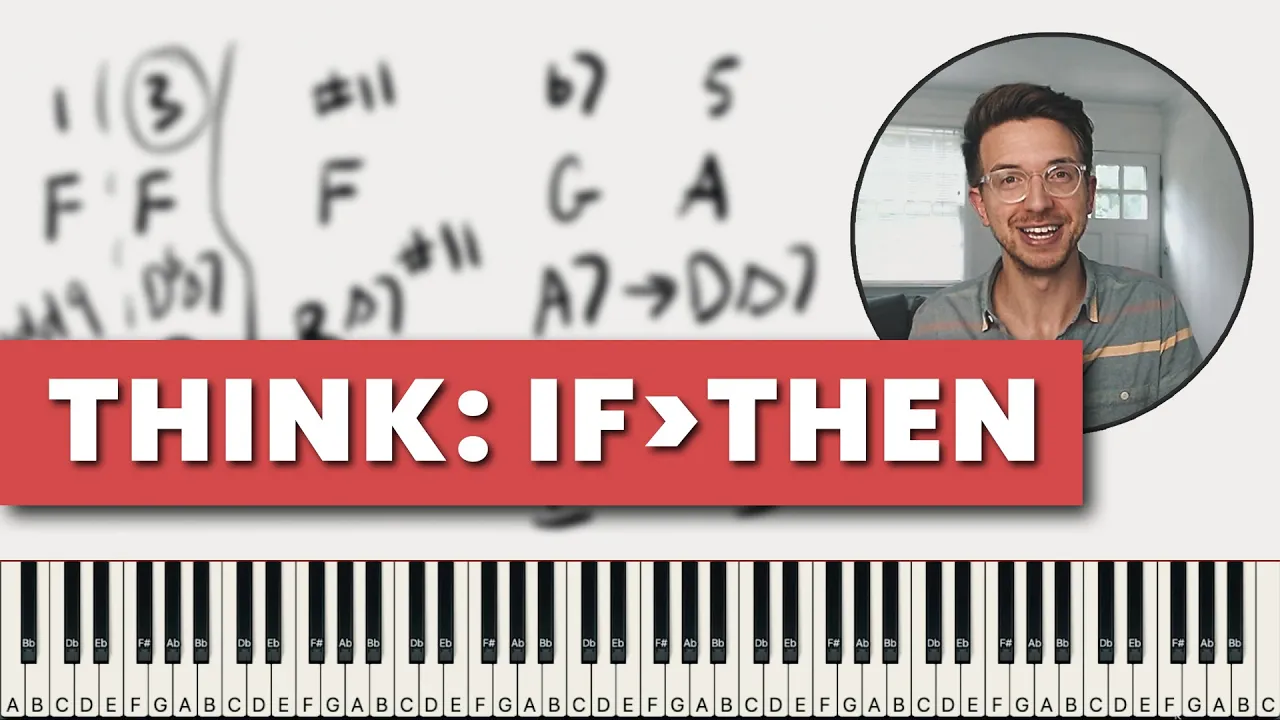






This video teaches how to create smooth, flowing chord progressions in Neo Soul and R&B piano by mastering chord inversions (moving notes within a chord to create different voicings) and 'bouncing' chords (adding passing chords between main chords to create movement). The instructor demonstrates how to invert F major and C minor chords, add left hand 7th chords (D7, G7, C7), and use passing chords like diminished 7ths to create sophisticated chord progressions that add depth and expressiveness to piano playing.
Master Neo Soul Piano Chords and Progressions
Added:Familiarity with major and minor scales, as well as basic keyboard geography and note identification.
Understanding of fundamental triad construction and seventh chords (Major 7th, Minor 7th, and Dominant 7th).
Basic knowledge of diatonic harmony and standard chord progressions (such as the ii-V-I progression).
Fundamental keyboard technique, including basic finger independence and the ability to play smooth transitions between chords.
Exploring advanced chord extensions and alterations, such as 9ths, 11ths, 13ths, and altered dominants.
Applying reharmonization techniques to transform standard pop, jazz, or gospel chord progressions into Neo Soul arrangements.
Developing improvisation skills using pentatonic scales, blues scales, and modal mixtures over R&B chord loops.
Studying the production side of Neo Soul keyboard playing, including tone selection (e.g., Fender Rhodes, Wurlitzer) and the use of effects like chorus, tremolo, and phasers.
34.6K views1.6Klikes10:17Original Release: 2024-12-02
so this is a F major chord and we're going to invert it this is going to get crazy but I'm going to break everything down C minor inverted down all right now you want to bounce these cords these are all Triads go to your C minor and then we can add the left hand watch this a little bit more interesting passing [Music] cords and then we're can to do passing course oo now I'm going to take my time to break all of this down step by step note by note and you all know my number one goal is to simplify your musical Journey let's jump in so we're not going to waste any time this is a F major chord and we started off by playing inversions so we're going to move the bottom note up to the top so this is known as F root first inversion we'll move this same chord move the a up to the top this is known as F second inversion and then finally move the C up to the top and you notice we're back to an F major in the root position we also went to this really cool chord this is a C minor chord now we're in the key of B flat and I'll show you guys how this all ties together but this C minor chord I did inversions going down so move the top note down to the bottom so this is C minor move the G down this is also C minor this is um the second inversion because we moved it down and we're going to move this E flat down okay and this is first inversion and then lastly move the C down we have our C minor root position again so you can go up in a verion or you can go down so these are called inversions 3 seconds that's all it takes to give this video a thumbs up 3 seconds okay I love the thumbs up and I appreciate the positive comments I'd love to talk to you guys in the comment section so with that being said and done let's keep this moving so like for example we did the [Music] F C [Music] minor all right so that's the cool thing about bouncing around it adds a nice little passing cord effect so what we're going to do is we're going to hit the F major and then we going to bounce up to a G minor go back to your F major again remember first inversion bounce up to G minor first inversion and I'm playing this slowly for you guys F major G minor and then guess what we're back to my F major so what we're going to do is we're going to bounce from this C minor up to a B flat major so if you look at the B flat major I'm going to start off on the first inversion so we have our C minor up to B flat major C minor again and I'm playing this slow for you guys B flat major C minor B flat major and then back to our C minor you can do this any type of way you want so like for example we did the [Music] F C [Music] minor all right so that's the cool thing about bouncing around it adds a nice little passing cord effect effect now I would like to let you all know that this is included in your toolbx the toolbx is a lifetime free club that we have and we include so many different PDFs and midi files even this playone track I'm going to include absolutely free in your toolbox you all know I update that almost every week every other week there's something new so with that being said and done let's go to the next level so the next level you all notice I Incorporated our left hand so we're going to add the left hand to this element so we did a a D7 and then we went to um G7 and then we went to a C7 and we kind of just lingered there because we're in the key of B flat so we did a three 6 2 right and that's how you get that chord progression so this is like a 362 or a 251 minor for all my jazz musicians this is a 251 C minor but for my gospel musicians you know this is a 362 in the key of B flat all right so let's plug these cords with the right hand with our left hand so what we're going to do is we can do a and I'll take my time with this the three or the D7 we're going to play that F yall remember the bounce F major G minor and we just going to invert that so like for example [Music] now what did I do there I went to the G minor which is uh G7 which is my six and I just kept that same um I guess you would say same type of pattern with my Triads all right so then what we can do is the next one when we get to this C you'll notice I'm going to go to the C minor all right so let's put this into practice [Music] all right so as you can see see C minor uh on the C minor I'm going to play that C minor B flat C minor B flat and this is just something really really nice instead of just sitting on this C [Music] minor right just add that movement of it's really like a passing cord of Swords all right so let's take things up to the next level we've added our left hand now we're going to play some a little bit more difficult core progressions uh I go into this in much more detail in our playl like you series three all right that playl like you Series 3 breaks everything down step by step no by no that talks about these type of passing cords and Y know the three we're talking about is not the 3 seconds that it takes to give this video a thumbs up I've already talked about that but if you haven't 3 seconds give this video a thumbs up so now let's go into this um this next level of passing cord so what we're going to do is we have that we've already talked about this now watch this to get from this D7 to the G7 what can we do we can do a passing chord like [Music] this so what did I do I did this here is known as a g diminish seventh this is G diminish 7eventh and we can just continue this pattern on up and then all I do was all I did was drop it down drop everything down if you want you can keep the top note up there drop everything else and then resolve it and then we went to this woo and this is all over that G all right and this is a G minor none so in a real life application will go something like [Music] this all right and that's how we incorporate that all right and then we can oo now that's taking us to our C minor so what did I do there this is a very rich C minor cord this is definitely for my Advanced musicians okay so I do take my time to break these down and play like you Series 3 so this is my C minor this is very wide but how did we get to the C minor we can do [Music] this now you're probably saying to yourself Casey what is this this is that c diminish seventh and you can continue that pattern up but what I decided to do was that's the c diminus 7 I'm going to drop this but I'm going to hold a d all right just give you the theory behind this so this is like a c dimin 7 with a nine and then I'm just going to drop everything down you got it but I like mine to stay very open all right now we're on that two chord of the C minor so if we were to play this in real time it would be like this [Music] back to our C minor bounce now real quick some of you guys are like man am I going crazy no you're not going crazy I actually taught this video about 2 years ago I wasn't feeling my best you can hear it in my voice even in the way that I presented the information so now I was able to think this through and find a much easier way or a simple way to bra present how to play these type of chords and chord progressions so with that being said and done you all know I never like to close any video without letting you know that today is a new day a new life and a new opportunity for you to become a better you I love you guys so much and I'll see you right here in this play like you series three
Up Next
14:58
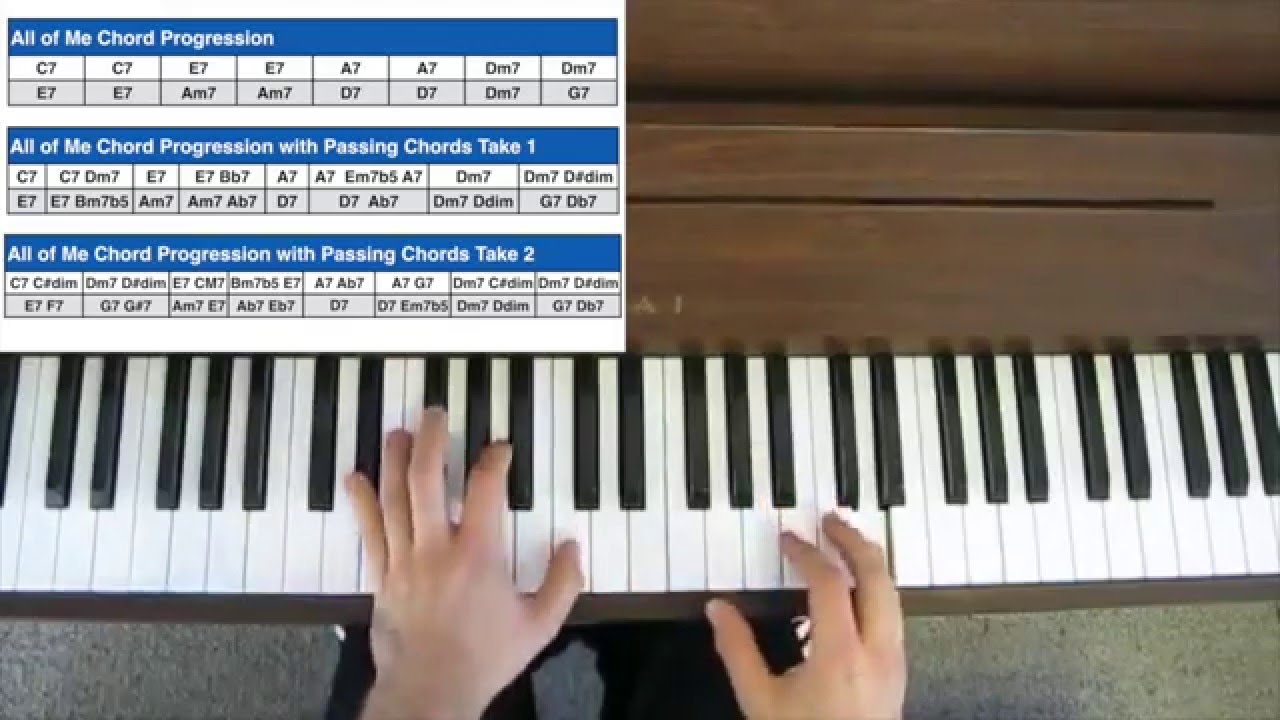
Jazz Piano Tutorial: Passing Chords and Approach Chords Explained
@WalkThatBass
91.9K views•2015-12-06

10:20
Mozart's Musical Dice Game Explained: History, Rules, & Fun
@webpianoacademy
5K views•2023-03-13

47:36
Understanding Diatonic 7th Chords in Major Keys | Music Theory Tutorial
@GracieTerzian
54.7K views•2022-03-02
10:49
Understanding John Coltrane's Giant Steps: A Music Theory Analysis
@Vox
10.4M views•2018-11-12
Related Study Plans & Knowledge Roadmaps
Structured learning paths in Music Theory
music-theory
Composing Galant Music: Partimento & Schemata
01Foundations of Figured Bass and Keyboard Harmony
02The Rule of the Octave (Regola dell'Ottava)
03Galant Schemata: The Building Blocks of Form
+ 2 more learning modules
30h5 modules
Explore Roadmap
music-theory
Decoding Overtone Series: Tuning & Drone Music
01Acoustic Foundations: The Physics of the Overtone Series
02Tuning Systems: Equal Temperament vs. Just Intonation
03Microtonality and Spectralism: Beyond Standard Pitches
+ 2 more learning modules
24h5 modules
Explore Roadmap
music-theory
Impressionist Harmony: Scales, Planing & RPGs
01Foundational Music Theory: Keys, Intervals, and Seventh Chords
02Impressionist Color: Chord Planing and Parallel Harmony
03Whimsical Textures: Pentatonic Cascades and Whole-Tone Scales
+ 1 more learning modules
14h4 modules
Explore Roadmap
music-theory
Negative Harmony: Axis Reflection in Indie Pop
01Music Theory Foundations: Scales, Intervals, and Triads
02Functional Harmony and the Circle of Fifths
03Demystifying the Negative Harmony Axis Reflection
+ 2 more learning modules
16h5 modules
Explore Roadmap