













This video teaches three neo soul piano progressions featuring modern voicings and resolutions, including the use of dim(maj7) chords (diminished triad with major 7) built as block chords, minor third voicing movements, and blue scale improvisation techniques that create tension and resolution patterns essential for neo jazz and neo soul piano playing.
Neo Soul Piano Progressions: Advanced Voicings and Resolution Techniques
Added:Intermediate keyboard proficiency and a solid understanding of basic major, minor, and dominant 7th chord shapes.
Familiarity with extended chords, specifically how to construct 9th, 11th, and 13th chords on the piano.
A foundational grasp of functional harmony, particularly the ii-V-I chord progression in both major and minor keys.
Basic knowledge of scale theory, including the major, natural minor, and Dorian modes, as a baseline for improvisation.
Exploration of quartal harmony and upper-structure triads to create even more complex, open-sounding chord voicings.
Advanced study of chromatic modulation, tritone substitutions, and non-diatonic passing chords typical of contemporary R&B and neo-soul.
Application of these harmonic formulas to reharmonize standard jazz tunes, pop melodies, and original compositions.
Developing rhythmic independence and syncopated comping patterns, focusing on the 'laid-back' or 'behind-the-beat' feel essential to neo-soul groove.
536.4K views7.8Klikes15:03Original Release: 2021-12-30
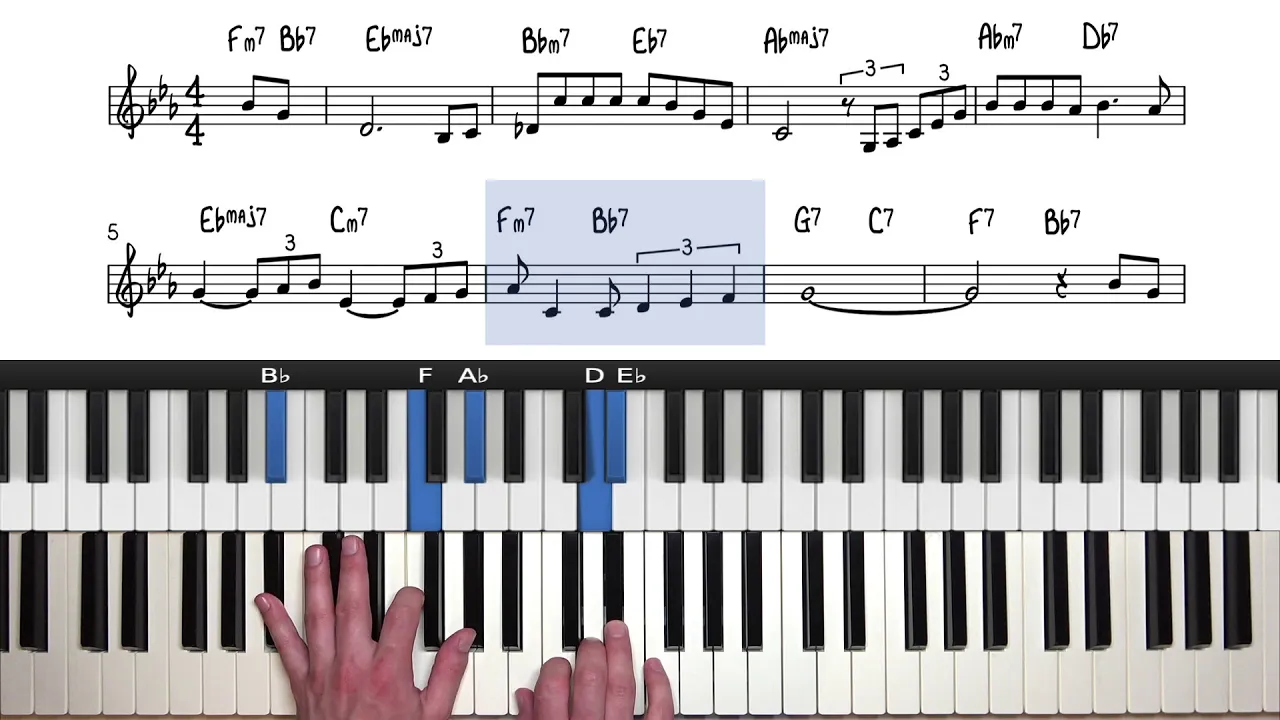
[Music] hey everybody and welcome to my channel my name is noah kellman and i'm here to teach you everything that i know about modern jazz and neo jazz piano so today we're going to be looking at some neo jazz progressions that i've put together for you all some of these are actually from compositions of mine but i really collected these because i think they're awesome exercises that include some fantastic voicings but also some nice challenging harmony for you so let's talk about how they work why they work why they sound good and how to actually improvise over them and let's take a look at some of these voicings as well of course really quick if you're new to the channel please be sure to click the subscribe button and hit the little bell to turn on notifications so you don't miss any more videos just like this one and also if you like the sound of that progression you heard in the intro well the good news is that that one and every progression we're examining today are actually all written out in sheet music form in a brand new awesome pdf that is now available at jazzpianoconcepts.com of course i like to say that my videos are actually sponsored by my own products because every single sale goes directly towards me making more videos just like this one so i really really appreciate you checking that out in the store and if it seems interesting to you yeah feel free to pick up a copy all right let's dive in here all right so let's take a look at this first progression here so actually let's examine this this voicing here because i really kind of dig this one this is one of my favorites um really nice layout of a minor 11 chord we have 1 5 flat 3 11 and then we have flat 7 and 9 on top so this is really oh man yeah it just sounds so nice as we go up the piano [Music] so you can kind of arpeggiate it like that and get some really nice sounds but yeah so this is a really pretty uh somewhat modern voicing in my opinion i like how it's laid out so the melody here you'll see it's so we're doing one to four minor now we really kind of need to voice this nicely so what we actually do here is we do this kind of cluster and then open up to the bigger voicing right that's kind of what we can do as we add this note now i don't have that written here in the music so i'm giving you an extra tip in this video so now here we actually jump down a minor third so that's a really kind of typical movement you'll find in neo jazz harmony being able to move your voicings in minor thirds like this it's a really really nice sound so and we jump down there and this is nice so sorry i know i'm saying nice about my own composition but hey you know what i like it that's why i wrote it [Music] um so then we get this other minor 11 voicing again that i've definitely showed you on my channel before one five nine flat three eleven flat seven so that's a really nice layout so we have this layout but also this layout which gives us the cluster in here so you can can kind of see how using a melody depending on where we want the top note we can kind of invert the right hand of a voicing and get really nice ways of essentially changing the melody so that's a really really cool lesson right there all right so we've got a lot of minor 11 chords here so go up to here a minor 11 and then now we get a b flat major 9.
um really nice sound of course so interesting progression [Music] so why does this work well honestly for me probably the biggest thing that ties this progression together is actually the melody [Music] okay so we're kind of hinting away from the e flat with the d but we go back and then this is where things get a little more interesting we move up to a flat major 7 sharp 11.
and so for me this kind of works because um this time you know the first time through the melody it feels like we're going down we kind of um get to b flat but it's almost like we never escape e flat right that's kind of what it feels like in a sense we're trying to escape but we never do um the second time already this feels like a development right um instead of going to the a flat minor here we go to a flat major sharp 11.
feels like already like a little bit of an escape we keep moving up to b flat even more up and then we drop to this right there's so much ascending motion in the second half ascending to f sharp and ascending to c minor 11.
we actually end up on e which is of course a half step above e flat so you know again you don't have to like this i wrote this because i like it i like how it sounds and again you can actually find this written out in all keys in the pdf at justpianoconcepts.com but yeah so you know i really like analyzing these progressions because when i'm writing them sometimes i'm not always thinking as much theoretically at this point a lot of the theory for me personally is built into my ears because i've worked on this stuff so much so i've you know how did i get there well i did a ton of work on intervallic voicing motion and switching maybe between a minor and a major right so i'm doing minor i'm actually doing a pattern here right so f minor to a flat major then b minor to d major so we can actually do these little interval voicing motion patterns and practice the skulls [Music] so how would i actually practice improvising over a progression like this well what i would probably do is start working on playing off the melody right so so of course there's a standard way which is just to you know take notes from the scale that corresponds to each chord but i think you know especially with with little um progressions like this it's really really nice to kind of work on the melody so practice essentially playing the melody a thousand different ways and seeing how that goes all right let's look at one more here [Music] so this is another one actually from one of my compositions i am working on an album i promise this is actually going to be on there so stay tuned um if you're not signed up for the discord i will definitely be making announcements maybe even sharing pre-release info early versions demos of the tracks in there that's totally free you can sign up in the description so this one's pretty fun here so the one motion that i really like here that i think is worthy of kind of study is moving down in force minor 11 chords down in force right it's a really interesting sound um so what we're doing here is b minor this is a nice motion kind of how you switch from one to the next so we really do this voicing one five flat seven nine eleven five and then we switch to this one five nine flat three eleven flat seven [Music] so that's a really really nice motion that we should examine so this one's also kind of cool so we've got this e diminished sound right um and i love this chord because it's not a total e diminished right if we had a normal e diminish we'd have this double flat seven but we actually have a six on top so it's it's kind of a sound you typically hear go down a half step right but you can also go up right that's kind of the context we hear that in this case we go e diminish to f minor back to the a flat and then we actually kind of deceivingly move from the a flat down to a g major at the end all right let's take a look at the third one here so what i mainly want to look at here is actually a little improvisation concept a lot of time when you have a progression like this it can actually be really cool to just add one single blue scale now i know that sounds like really really basic but check out how it sounds [Music] [Applause] right it's kind of got a really interesting sound so this is something that i think is used a lot in neo soul and neo jazz in general [Music] and it's really cool how it kind of works right so really what we're doing here is using a b blue scale [Music] but it's also almost like d major pentatonic and that creates a really nice tension over the a minor almost like an a almost like an a half diminished feel or something and then it works really nice over the asus it becomes kind of consonant again [Music] and then and then it becomes nice and dissonant here over this you know f sharp major nine over a sharp [Music] but it creates really nice kind of consonant consonant in a new way dissonant in a new way consonant consonant dissonant so that's a really really interesting pattern there all right so that is all i've got for you today i hope you found that super useful and again if you actually want to dive way deeper into the stuff work on all three of the progressions from today in all keys which would be an incredible challenge if you could pull that off you would definitely make a ton of progress and also 22 other progressions just like this in this style check out jazzpianoconcepts.com store 25 slick neo jazz progressions is now available there if you enjoyed the video and you're not subscribed please click the subscribe button and click the little bell to turn on notifications so you don't miss any more lessons just like this one also if you got a lot out of the video please be sure to click the like button alright thank you so much and i will see you next week with some more lessons to work on
Up Next

4:58
Why Every World Map Is Wrong: Map Projections Explained
@TEDEd
933.5K views•2021-03-29

12:54
Triumph of Orthodoxy Icon: Byzantine Art & History Explained
@BenCallan
2.1K views•2024-08-06

13:06
10 Neo Soul Chords: Advanced Piano Voicings for RnB
@NoahKellman
215.8K views•2020-02-27

1:42
Game of Thrones Opening Credits: A Cinematic Analysis
@gameofthrones
46.3M views•2011-04-18
Related Study Plans & Knowledge Roadmaps
Structured learning paths in General & Interdisciplinary Studies
general-studies
Elevator Engineering: History, Physics & Cities
01From Hoists to Safety Brakes: The Dawn of Vertical Lift
02Hydraulic vs. Traction: The Engineering Physics of Elevators
03Modern Speed, Safety, and Algorithms
+ 2 more learning modules
12h5 modules
Explore Roadmap
general-studies
Rubber: Material Science, History & Geopolitics
01Origins of Natural Rubber & Mesoamerican History
02The Chemistry of Natural Rubber & Vulcanization
03The Geopolitics of the Rubber Boom & Colonization
+ 2 more learning modules
12h5 modules
Explore Roadmap
general-studies
Containerization: Evolution, Logistics & Trade
01Ancient Trade & Bulk Cargo: Amphorae to Barrels
02The Industrial Revolution & Cardboard Packaging
03The Containerization Revolution: Malcom McLean
+ 2 more learning modules
12h5 modules
Explore Roadmap
general-studies
Textile Tech: Evolution, Labor & Global Impact
01Pre-Industrial Textiles: Handloom & Cottage Industry
02Mechanization: The Spinning Jenny to the Power Loom
03The Factory System & Global Labor Transformation
+ 2 more learning modules
10h5 modules
Explore Roadmap