













![[예수르] Solo piano style - 초급편](https://i.ytimg.com/vi/540exLQ60U8/sddefault.jpg)

This video teaches five practical methods to form jazz extensions (9th, 11th, and 13th chords) on piano without memorizing complex note patterns: (1) Fifth Chord Exploration - play a simple fifth chord in the right hand while experimenting with different bass notes in the left hand to instantly access various extended chord qualities; (2) 3-7 Voicing - use just the third and seventh notes of a chord, then add the ninth, eleventh, or thirteenth intervals to create colorful extended sounds; (3) Slash Chords - use any triad (major or minor) over a different bass note to form extended chords, such as playing E minor over C to create C major 7 or G minor over C to create C9; (4) Polychords - play two triads simultaneously (one in each hand) to create extended chord sounds, like G minor with F major together forming G minor 11; (5) Quartal and Quintal Voicings - build chords using stacked fourths (quartal) or fifths (quintal) instead of traditional thirds, creating unique, open-ended jazz sounds.
Master Jazz Piano Chords: 9th, 11th, and 13th Voicings Explained
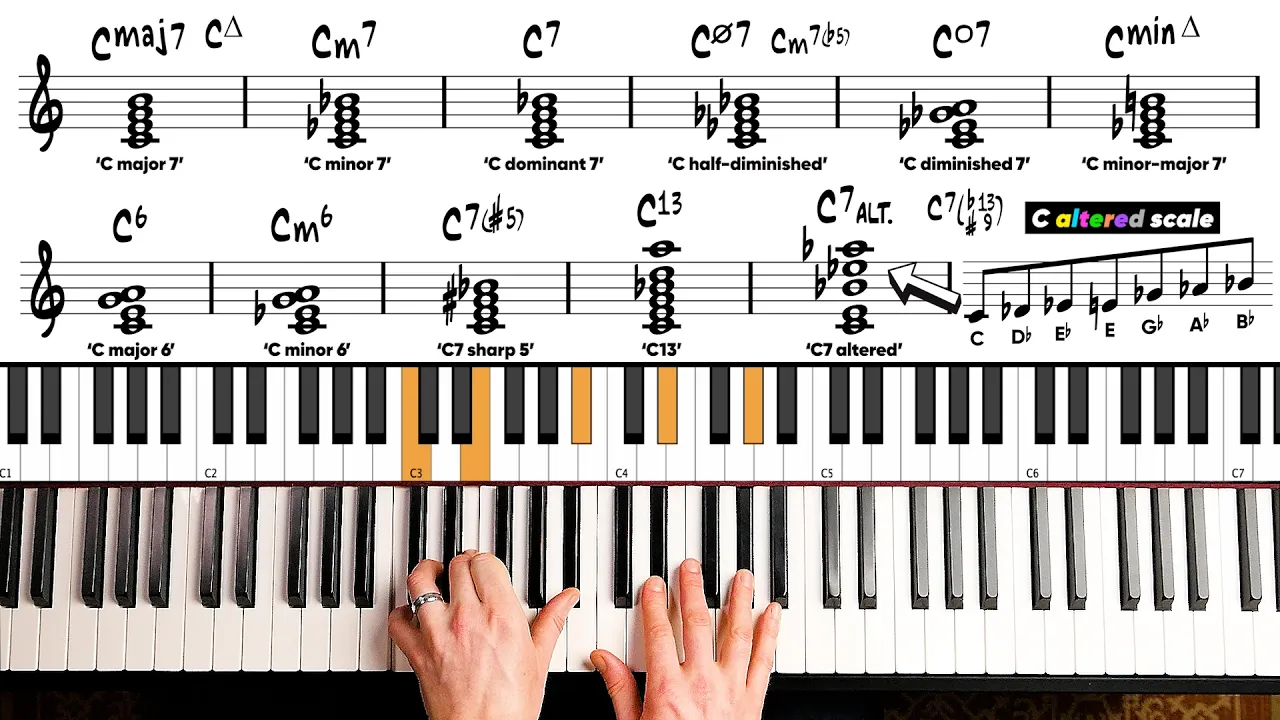
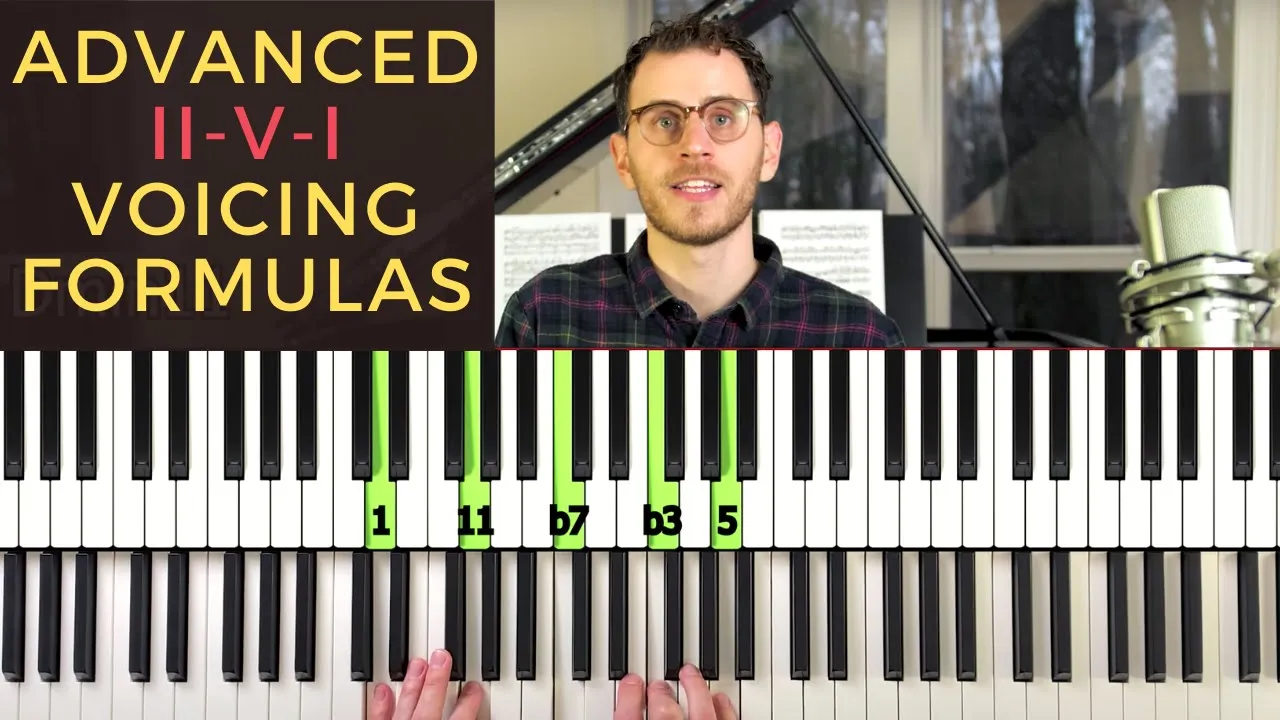
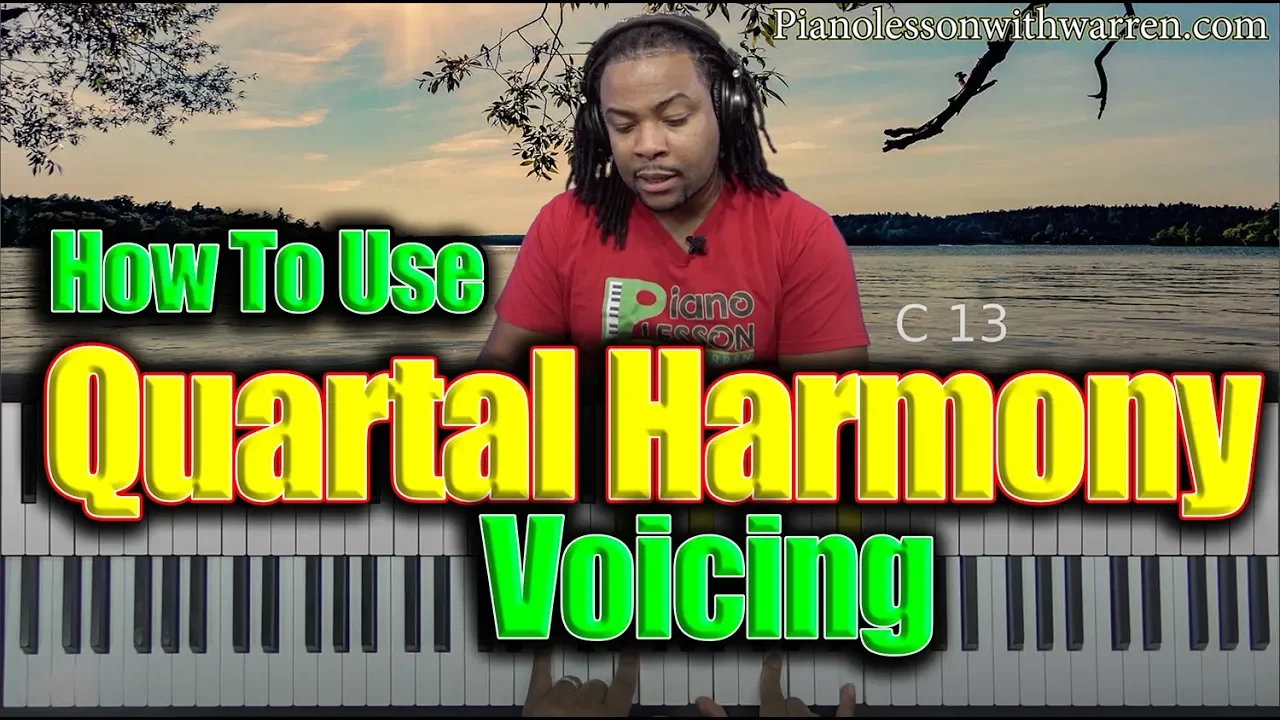
Added:[Music] hi guys this is Jason Zach from Nathaniel School of Music in this lesson we're going to focus on five very easy ways to form and play Not only seventh cords but far beyond seventh cords the ninth extensions the 11th extensions and the 13th extensions what we tend to call as Jazz Harmony or Jazz tensions or just chord extensions so to start off the assumption is you know what a major chord is a minor a chord is maybe also diminished chord not really an augmented chord but that would also help maybe a suspended chord or two there we go and maybe a few things on intervals like the fifth interval the minor third major third flat two and so on so maybe you'd like to also watch a few videos which we leave in the description if you're not sure to form the basics like Triads intervals and so on but if if you're okay with major and minor cords just a few basic intervals maybe the major scale I think this lesson will be very much for you and maybe you're like me in the sense that when I started being presented with these symbols like play me a G9 sharp 11 it was absolute Madness it was really confusing and I I knew G major I maybe I maybe I knew g7th um after after a little bit of struggle G minor 7th but remembering something like that you know minor 11th what is this 9 11 and 13 in the first place why do you have such numbers a scale just has seven notes 1 2 3 4 5 6 7 why do we even need the nine 11 and 13 to begin with so we'll first of all dive into some Theory what those intervals are what these extensions are and what flavor they end up bringing and then instead of forming it in the thirds way 1 3 5 7 9 11 13 we're not going to do that at all instead we are going to look at a few sort of cheat codes if you will to form these codes and not not just cheat codes to form it inevitably cheat codes to make them sound very unique in the first place so we borrow some ideas from the guitar uh the banjo and a few other stringed instruments which also use these Concepts so before we get to the approaches to form these cards let's just just look at the essential theory of forming extensions or Jazz tensions so if we take a c root if ever we want to call something a 91 or a 13 there will definitely need to be a 7th degree in there so we have two kinds of sevenths in music you have a major 7th and a minor 7th also known as the dominant 7th so if you take a major 7th now and alongside that you can have a major third you can even have a minor third so you could have a major third with a major 7 that would be called as a major 7th especially if you had that g in there so the gns are becoming a bit redundant because the flavor is already created the major 7th Vibe is already there this is your minor major 7th Vibe which is a root minor thir and a continuing major 7th and this is a very beautiful augmented fifth very interesting interval you could also bring in your fifth your normal perfect fifth that's your minor major 7th and then if you take your um flat 7 what are the the chords which can be formed C dominant 7th and C minor 7th okay so this major 7th minor major 7th dominant 7th minor 7th and then if you start messing with the five you'll get a minor 7th flat five also known as a half diminished chord and if you mess with the uh five to become a four you can then do a C7 sus 4 or C major 7 sus 4 okay you can even then double flat the 7even to get a diminish seventh sound okay so we have done s and Triads in a very detailed set of videos we'll leave you a few videos in the description I'll Journey forward now to the 9 11 and 13 so if you want to call something a 911 or a 13 you should have a seventh in the chord so let's say we have the dominant 7th so D would end up being the ninth now if you do not have the dominant 7th it will just be called a C major add n or C major add two also see it's just an add chord we use the word add generally when there's no seven if there is a seven this now performs the function of a nine just to distinguish it from a two so if we call it two there won't there won't be a seven add nine or we use the word add you can say add nine or add two now with the seven you can call this a c9th not C7 add n that becomes redundant we just say c9th so nine is same as two alongside the seven some people say nine is the same as two played up the octave but I think a better way the way I look at it is from a sound perspective the entire chord hitting you feels like a 9th when there's already a seven Vibe so you can even do a C major 9th there we go that's a major 7th with a 9th so we call that c major 9th that's a c normal 9th or just C 9th so that's your nine you can also flatten or sharpen the nine so you can have a C7 flat nine you can have a C7 sharp n sharp n will be an augmented second or a raised nine used a lot by by guitar players it's a good voicing for a guitar the shape is easy to form um then the flat nine is a very diminished seventh kind [Music] of use a lot in the harmonic minor while the normal nine so uh nine very Grand flat nine very diminished sounding that's your sharp nine very Jazzy and you can use it also in a rock context to add that chaos so that's your nine and somehow the flat nine and the sharp nine don't work at at all with the major 7th sounds a bit weird to me that's nice so yeah but it's more common to use the flat nine and the sharp nine with a flat s the normal nine though can be used with a major 7th okay and then coming to the 11th interval 11th is nothing but a perfect fourth played up uh an octave or alongside the seventh interval so so that's your normal 11 that's your sharp [Music] 11 the context is with the flat 7 sharp 11 sound great even with a major 7 that's a sharp 11 with a major 7th base and then finally your 13 will be a six plate up the octave or alongside the flat 7 you can also flat the 13 you we also call this a very augmented 7th kind of sound or you can call this as a c7th sharp five or else a c13th so you need that 13 that a in there or else a sharp or a flat 13 rather flat 13 or a sharp five you can also have a C7 flat 5 by the way but that could also be referred to as a c7th sharp 11 okay so the names kind of are interchangeable so to speak sharp 11 sharp 4 augmented fourth diminished fifth is the same as five flat you know flat 13 is the same as augmented fifth or sh five so you get the idea so you have the nine flat N9 sharp n then you have your 11 11 sharp and you have your 13 and 13 flat you may be arguing why not 13 sharp because 13 sharp will be the repetition of the flat 7 so we don't need that and then you may be arguing why not the 11 flat well because the 11 flat ends up becoming a major third which is not really usable in a minor context sounds pretty annoying there okay so that's the base of this lesson we're going to try and form these intervals 9 1113 but not in the traditional way of you know mugging up the notes writing it in thirds and then somehow knocking off a few and struggling to play it on our instrument because especially on instruments like the guitar you don't have that many strings and more importantly you don't have that many fingers because one finger is already holding the guitar the thumb it's clutching so you just have four fingers to end up playing well six note cards so we have to figure out ways to knock off a few less important notes and voice the cards in a way to bring out the flavor and not have a very clashing or dissonant sound so before we get started with the five methods it'll be awesome if you can consider subscribing to our Channel and turning on the Bell icon for regular notifications also my notes are available on our patreon channel for just five bucks a month let's get cracking so the first approach would be just form a fifth chord in the right hand or in the upper register so I'm just taking C fth actually C5 is boring let's take D5 that's d a d root position or a d first inversion now while you do this experiment in the left hand first off with just notes with just random notes not random any of the 12 notes and see how this D fifth chord Vibes with the bottom with the base so if I just play D plain and simple if I play a plain and simple but it's now forming a sus for sound because the a is in the base while D it's now forming a very calm perfect fifth kind of sound while a is now forming a very U2 suspended sound okay but if I take B flat completely changes the context and if I look at the intervals this is sort of like a way to play B flat major 7th isn't it because I have the major 7 there and I have the major third what about a flat pretty disant maybe unusable FP is a very nice D major over FSH sound that's a very F major sixth kind of sound that's a very E7 sus4 kind of sound it's a with E flat in the base that's a very E major 7even sound but with a flat five or a lydian sound if you think about it then C sh is a bit unusable yeah a lot of them are usable and they some are very plain and simple like d maybe a but e forms a very E minor 7th kind of sound B flat major 7 so you see where I'm going I'm already getting a lot of these extensions seventh intervals but now what if I want to form n9th and 11s and 13s what you do is in alongside this base note you can start adding one more to the party so let's say I play a seventh flat for everything already a very D7 kind of sound if I do c there we go so C with a flat 7 that's B flat is now presenting these intervals in a completely different uh Avatar you have D which is now going to be your N9 a which will be your 13 okay what about uh B so that's a very minor 7th kind of sound in fact that is B minor 7 pretty much uh that's a B flat 7th with that major 7th up there so it's a bit dissonant that's an A7 sus4 bit dissonant right you get your ninth there but with the F SH now and that flat 7 you have a d which is sounding very 13th like or like a sixth with the minor 7th this is already very interesting right you have an F with a flat 7 and a 13th up with the D uh e with 11th and the flat 7even in there you get the idea now you don't have to just stack up the flat seven you can also do six and see where that takes you and it doesn't have to only form 9th 11th and 13th traditionally formed chords it can also form very interestingly voiced major or minor cords so it's just a nice exploration of Harmony where you just take a fifth card in the right hand and just see where it goes with respect to the base register the base register is going to be creative and drive the the harmonic movement while the right hand is just going to hold its ground okay so that is one easy way to get colorful intervals or colorful cords with just a fifth cord on the on the top and then exploration of the base in the left hand alongside maybe a flat 7even to instantly give you those 9th 11th and 13th extensions so another easy way easy sounding and easy to play also would be take a a seventh chord for example uh dominant 7th I'm going to take c7th playing C in my base in the right hand okay in the left hand I just want to play C that's pretty much enough in the right hand I will have two voicing strategies either with a three and a seven that's E and A B flat or else I'll go s flat and three B flat E so 3 7 flat 7 flat three okay now once you are here you've played it with let's say these two fingers or these two fingers it begs to it asks the question what next because these other three fingers in this case can do can do more isn't it so maybe I can stack up the ninth in this particular voice where's my ninth with respect to C ninth is same as two that'll be D so I get one nice block of a c9th sound it's very easy to change that now I can now make it a flat nine just by flattening the nine it's very visually there and that's a sharp nine so in the 37 voicing I can access on the top register nine flat n and the sharp n and I can do this even with a major extension major 9th I can do it even with a minor minor 7th with a 9 minor major minor major 9th I guess you could call it that there we go and then that's your minor 9th and then you can go a step ahead you can play the voicing of with a nine now you have a seven flat in there already maybe you can play the seven flat Down Below in the left hand cuz the left hand is just doing one note and then change the seven flat probably to a 13 you get an even more Jazzy sound you can make maybe make the 13 into a flat 13 okay so that's a nine with an augmented augmented fifth or a sharp 13 okay so that's with the 37 voicing what options arise when we have the 73 voicing so back to C this is my seven flat this is my three again there are fingers free at least two of them so what can I start 13 flat [Music] 13 so based on the three and seven flat Arrangement whether it's 37 or 73 you can add other extensions one of the other extensions and it gives you a very clean sound as well very usable right uh or maybe here you have two flavors if you're doing with a blu's [Music] context you can kind of toggle it this is a 37 with the nine and starting off with a seven flat and then extending with the [Music] 13 and maybe what happens with the five [Music] card or you can do anything with the five [Music] that's a flat nine for the [Music] F works well for blues you practice this for blues I think I'm drifting I should probably do another video exploring this voicing and playing some blues we have a lot of Blues lessons so do check them we leave out we leave a playlist in the descript description where you can learn some blues and rock and roll as well okay so that's the 37 voicing method another very easy method which actually was the first way I found uh a survival Instinct to to get these you know fancy sounds out there the 9 11 and 13 it's to just take what we already know Triads major and minor but with a different base what do we call those slash cods so if you even take a seventh chord like let's say A B flat major 7th I want to form that chord you can think of B flat major 7th as a D Minor with a B flat [Music] base see E flat major 7th would be G minor / E flat so essentially you play a major third of that root up and play A minor chord so that sounds a bit confusing but it's very easy to visualize so I want to form C major 7th right now so I hit my C go up a major third you need to know your interval so major third from C is CDE e and play E minor so play E minor upstairs and you can play this in any inversion that's why I like the voicing options and the freedom of playing the notes and then just hold a c and it's C major 7 similarly E flat major 7th up upper major third play G minor so you can extend this with the 9 11 and 13 sound so let's say I want to form a c9th sound okay so I'll whack my C I have my nine there but remember ninth comes with the seven flat so maybe I should play a B flat and close it out what Triad has both B flat and D G minor there we go so what's the golden strategy of playing a ninth chord uh in this minor kind of voicing you take any route out there go to its Fifth and you definitely get a flat seven and you get a ninth okay and if you want a more dominant sound or a dominant flavor then you need a major third in there right so then you can probably look at taking again go back to C and play a a flat 7even or a ton Downs major so that's a 9 and 11 in there used a lot in your musicals your bids and a lot of gospel songs used a lot to modulate from scale to [Music] scale so it gives you a very very good template a very good platform to kind of do a a good vocal run or a quick lick and then go to the next chord so it's a good dominance sound okay um you can also say Okay I want a nine but with a sharp 11 so I can do c and what card what Triad has a nine and a sharp 11 so that would be D major up top with a c base so d/ C don't get confused with Slash calls d/ C basically means D is the Triad up there with C being its base so if you're in a band and if you have two members let's say a ukulele player and a base player the ukele player can play D major while the base player has to then do c to get you that lydian sound or else you can play B flat upstairs and then a c downstairs that's B flat / C okay you can even do the G minor now with this method each Triad over the different Basse note will give you a different sound so you don't just have one ninth sound you have quite a few there you go you have that one so basically any Triad which has that D in there see you can even do D Minor over C and so on and so forth right so the options are pretty endless you wherein you take a chord and figure out okay I want that now let's say you want a flat nine there we go so I my attention is Shifting towards that d uh d flat right or I want to raise nine so what do we do there um so I want that somehow okay so you can have slash chords which can give you this flavor let's just try you know sharp 11 will be a D major / C that works pretty well um 11th seven flat voicing major chord up there and then a 13th you can play A D Minor alongside a c but try to add the flat 7even here if you can so these are some ways to do it you can also form very interesting uh extensions or very interesting Jazzy sounds with poly cord so just to take this a bit further a slash cord is a Triad with another uh note as base a poly chord something like uh maybe if I take a G minor in my right hand and then go down a tone that's to F major so I'm playing F major and a G minor together okay you get a very minor 7 add 9 and 11 so we just call it G minor 11th so what's the formula to build any Neo solish 11th chord voicing you take a minor chord maybe C minor go down a tone in this case C down a tone is two steps that's down to B flat and you get a nice wash of a minor 11th very ambient dreamy kind of sound so that's a polycord you have one on the top you have one Triad up there you have one more Triad down there or if you're arranging for uh for two instruments one instrument could play this Triad while the other instrument could play the other Triad so the approach is also very important it's not only easy to play it's also interesting to compose with because you have different perspectives so two more ways to formulate and compose music using the Jazz intervals 9 11 and 13 you can do what's called a squattle voicing which is pretty simple instead of playing Triads which is thirds like c e g which is e is the third of c g is the third of e you can instead form chords using fourths instead of thirds so instead of playing thirds C thir C's third is e e's third is G I can can do C's fourth perfect fourth is f what is F's perfect fourth that's B flat right already you'll observe this is a lot more ambiguous or unclear or not obvious not as obvious as the major sound the major sounds very stable so does a minor but when you play the qule which is a stack of Two Perfect fourths well you have other Quarles as well you have have a perfect fourth and an augmented fourth a perfect four and a raised four could also have a sharp 4 and then a perfect four so we call this a C sharp 4 q well this is just CQ C quarl okay okay this is+ 7 okay there we go so there are three Quarles one is two perfect fourths perfect augmented augmented perfect so this as you as you're clearly seeing you can build a lot of your extensions this way but the way I like to use it is if you take a scale like maybe the C Dorian which has a minor thir and a flat 7even E flat and B flat if you just form scalar quarle cord or dionic qule chords if that's a term you can go see already if this was a C minor 7th you're getting the Minor 7 there and you're getting the 11th you already got a decent voicing now if you go there we go you have a ninth very ninth sound in there and then you have a 13th in there and a ninth then you can have your 11th with the next [Music] one which is your 11th flat 7 and a minor third okay and then see my base is the dominant root and the dominant 7th What's Happening Here perfect fifth root 11th again very spicy see that's because you have your sixth or your 13th in this context and your ninth and your fifth and then finally your seven there you go you can't play an E that's out of scale very spicy because of the 13 so you can kind of run with this so if your band let's say is has written C minor chord in the chord charts you can kind of you can make a line with quarle [Music] voicings so you can have not only one uh interesting spicy extension sound you can have a a variety of them for the price of just one card because at that time it's just c c c minor and similarly if you take maybe the major scale you can start forming Quarles from the [Music] major it's also very unique sound you don't find it in a lot of conven music out there pop rock or whichever genre it is a very unique sound even I learned it very recently so another thing which I'd like to point out before we conclude is now we've looked at quarle earlier we looked at slash cods which are Triads thirds quartal is fourths what's the next quintal which is fives or fifths so if you stack up maybe two perfect fifths and have some fun with that two perfect fifths rememb not to be confused with the fifth card which we saw in the beginning which is that this is root perfect fifth and perfect fourth upstairs up up there there we go okay at the word go this is already a ninth sound you know because you're adding that ninth interval and you can play around and just move and see where it goes you know you can even you can even voice it in your left hand songs like that so even if I just do nines quintal voicing allows you to play a lot more deeper on your [Music] instrument and the 10 is very close to the nine so you can make that into a major okay so if you have a a seven flat already set up for you here you can start experimenting check that out you get a very open Sound s not like those closed slash card options which I showed you so what's happening here this is an E flat 7th or an E flat dominant 7th I'm adding the ninth I'm adding the 13th and then the major third let's have some more fun and a good strategy to a good strategy to check this out is to move around the circle of fifths you know so you're on F then experiment with the next one in the circle which is B flat that also seems to sound pretty interesting then experiment with the next one E flat and you're moving in which direction now F B flat E flat a flat you're moving in the reverse direction of the circle okay so if you take we we did B flat already okay again that has that 13th in there it has a lot in here actually a ninth and a 13 uh you can do uh maybe a flat now maybe D flat I guess you get the idea so you can kind of Stack up things to this will give you a very Ambient sound which is why I like using it a lot in the left or in the base Reg and very open-ended sound that's closed because the 10th a bit [Music] unclear you can also kind of now that you've got a ninth you can focus on the other elements [Music] like the seven flat minor uh third it's a good kind of Base to improvise on because it's very colorful it's not like a fifth chord or a clear major chord it's a bit open-ended okay that's quintal voicing okay guys so we've covered five ways to form play and hopefully compose and improvise with the 9th 11th and the 13th extensions alongside their um flats and Sharps like flat n sharp n uh sharp 11 flat 13 which is also known as sharp 5 the approaches are rather unique and give you different music as you keep exploring each we've looked at fifth cords we've looked at 37 voicing with an additional note we've looked at slash cards to first of all simplify it but then take it to town with its own unique flavor and then we looked at quartal voicing and quintal voicing which are things which even I'm exploring and you know I'd love to do a few more videos so let us know in the comments uh what you'd like to learn as well in the field of Harmony Theory uh also let us know what you thought about the lesson and if you'd like to learn in a more structured way you can always consider doing a semester at our school head over to Nathaniel school.com you will have a form somewhere there to fill and someone from our team can reach you and understand what your level is and figure out a a course which can suit you best based on your availability and flexible and hours of day where you are available to learn right guys thanks Aton for watching the video don't forget to subscribe and turn on the Bell icon for regular notifications and to help supplement the learning my notes is available on the patreon page thanks again teers
Up Next
Learn All 12 Major Chords: Beginner Piano Tutorial
@PianoVideoLessons
307.7K views•2017-02-27

Mozart's Musical Dice Game Explained: History, Rules, & Fun
@webpianoacademy
5K views•2023-03-13
How to Build Every 7th Chord in Music: A Complete Guide
@nathanielmusicschool
3.5K views•2025-03-22
Understanding John Coltrane's Giant Steps: A Music Theory Analysis
@Vox
10.4M views•2018-11-12
Related Study Plans & Knowledge Roadmaps
Structured learning paths in Music Theory