

















Culture profoundly influences the expression, diagnosis, and treatment of mental illness, as evidenced by cultural syndromes like Koro (penile retraction anxiety), dhat (semen-loss anxiety), ataque de nervios (nerve attacks), and shenjing shuairuo (nerve weakness), which may represent culturally-specific expressions of underlying universal disorders like depression or anxiety; the DSM-5 replaced the DSM-IV's concept of culture-bound syndromes with three frameworks—cultural syndromes, cultural idioms of distress, and cultural explanations of distress—to better capture how different cultures conceptualize and express psychological suffering, while pharmaceutical marketing campaigns can influence cultural perceptions of mental illness and potentially increase help-seeking behavior.
Culture and Mental Illness: Cultural Syndromes Explained
Added:Hi I'm Michael Corayer and this is Psych Exam Review. In this video we're going to look at the relationship between culture and mental illness. So we might wonder what role culture plays in mental illness, how it might influence the prevalence of different disorders, or it might influence how people express the symptoms of a mental illness. And lastly it might influence how people in general think about or understand mental illness and how they think about approaches to treating mental illness. So one way that we can think about the role of culture on mental illness is something I talked about in the previous video and this is the idea that we have a conception of what behaviors or thoughts are considered to be abnormal. And so culture might play a role in influencing what we consider to be abnormal behavior. Now one way we can see this is if we think about a behavior like a woman refusing to leave the house alone now in a culture like the United States we might think of that as being a sign of something abnormal. A woman refusing to leave the house alone, we might say this could indicate something like agoraphobia or something like that. It could be a symptom of a mental illness now. In another culture, however, we might not think of this as being abnormal behavior. We might be in a culture where there are strict rules about whether or not women can leave the house without a chaperone or guardian. And in that case we might not think of this as a sign of mental illness or abnormal behavior. In that case we'd think about the pressures and expectations on the woman as being the main cause of the behavior whereas in a place where those pressures or expectations are not in place then we might think the behavior is being caused by an internal dysfunction, that it's something about the woman that's causing this behavior and therefore we might think of it as being related to a symptom of a mental illness. Now in the DSM-IV there were what were called culture-bound syndromes.
And these were syndromes that were believed to be culturally or geographically localized, meaning they only seem to affect people in particular cultures or in particular locations. Now one example of a culture-bound syndrome is Koro and this is something that occurred in Southeast Asia.
There were outbreaks of this disorder, it's also been reported in West Africa and in Koro it's a belief that the penis is retracting into the body and that it will eventually retract into the body and cause the person to die. Of course there's no physical assessment of this actually occurring, there's no indication that this is actually happening and yet people have this anxiety, they have this fear that they've been infected by this Koro disease and that they're eventually going to die from. And it's also possible for women to suffer from Koro with the belief that either their nipples are going to retract into their body and kill them, or their labia.
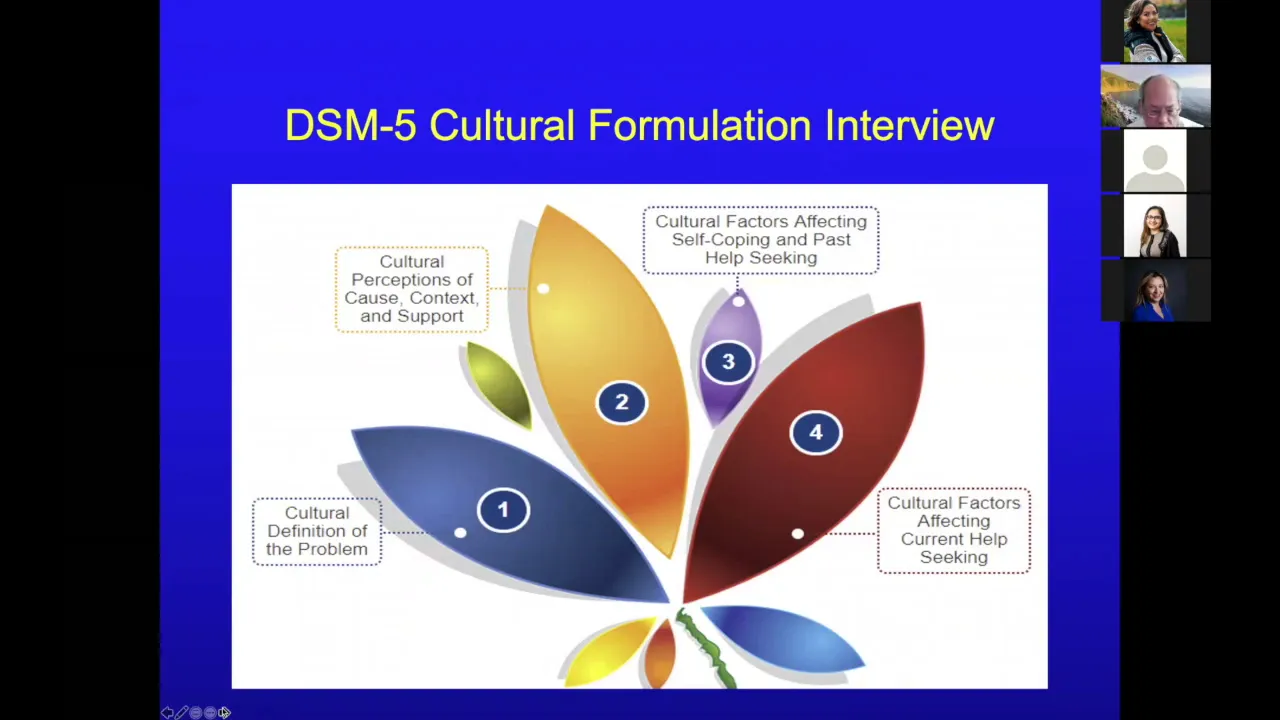
And so this is a situation where we can see an influence of culture on how people are thinking about a particular disorder, So we might wonder if this is something to do with anxiety in general, maybe these are people who have something like generalized anxiety disorder, and yet the culture is sort of giving them a way to think about that and it's giving it a specific fear that becomes associated with that anxiety. Now in the DSM-5 they abandoned the term culture-bound syndrome and they switched to thinking about culture in three different ways so there's reference to cultural syndromes, cultural idioms of distress, and cultural explanations of distress or perceived causes. Okay, so what are each of these three things? Cultural syndromes are quite similar to the idea of culture-bound syndromes and this are these are syndromes that occur among individuals in particular groups. So those are now referred to as cultural syndromes and I'll talk about a few more in a moment. And then we have a distinction between those and cultural idioms of distress and this is how people talk about certain symptoms or how they express the syndromes. And so in this case we might think that maybe there's some sort of anxiety and it's being expressed in the form of Koro, in this fear of this retraction occurring only in particular cultures, but that another culture may be that expressed that same underlying disorder in a different way.
And then lastly we have cultural explanations of distress or perceived causes and this is how people in a particular culture think about what's causing mental illness. How do they think about it occurring, or how do they explain why people have certain symptoms? And those explanations again might vary in different cultures. So we have culturally recognized meanings or culturally recognized ideologies for symptoms or for syndromes. Okay so let's look at a few other cultural syndromes and then think about what might be underneath all of these or how they might be connected. So we could think about in India there's a cultural syndrome called dhat and this is often translated as being "semen loss anxiety" and this is a feeling of lethargy and fatigue that is associated with excessive masturbation. And the idea is that a man is losing his vital fluid and that's causing him to feel this fatigue and lethargy and it's because of the energy that he's losing by losing his semen. Then we have in Latin America, we have ataque de nervios, and this is "nerve attack" as it's often translated and this is something perhaps similar to a panic attack or maybe something related to some other types of anxiety or perhaps even symptoms of depression that seems to occur mostly in Latin America. And then in China we have shengjing shuairou, and this literally means "nerve weakness" and this is an adaption of an old term that's no longer used in English. In the 1800s there was talk of "neurasthenia" right?, or nerve weakness, that was influencing people and so this is now mostly thought of as something like depression and yeah it's more of a physical focus on the body, right? A physical explanation for why somebody might be feeling fatigue or depression is that their nerves are weak their nerves are not functioning properly. Okay so this brings up the question, are these really all different disorders? Maybe they have some things in common, maybe some of the symptoms are similar, they have some similar underlying cause and yet they're expressed differently in different cultures. So are these really different disorders? is there a difference between shenjing shuairou and depression? Or are these just different cultural expressions of the same underlying disorder? Maybe it's the case that someone who's experiencing dhat in India is really depressed and they're giving this different cultural explanation for it; they're giving this different cultural ideology for the cause of their feelings of fatigue or lethargy. And yet we might, in another culture, give a very different explanation and yet it could be the same disorder. And so another way to think about this is whether these different ways of thinking about the causes of disorder also give people different ways of conceptualizing illness and different ways of avoiding the stigma that's attached with certain illnesses. So in the case of the Chinese shenjing shuairou it's been suggested that this is a way of sort of somaticizing disorder, meaning placing it within the body; focusing on physical symptoms of depression and that the reason for this might be that it's culturally unacceptable, or there's a lot of stigma associated with having a mental illness, and so if you have shenjing shuairou you don't have a mental illness as much as you have a physical problem with your body.
And that means you can be more open with talking about it. It's a problem of your nerves not really a problem of your mind, and so that could be a way of sort of sidestepping the stigma associated with a mental illness, by focusing instead on the symptoms in the body. So lastly we might consider this possibility but if we do think in terms of universal illnesses then perhaps we can think in terms of universal treatments. So in the case of all these cultural syndromes that I just mentioned we might wonder maybe some of these symptoms could all be treated with the same medication. So maybe we can use antidepressant medication to treat all of these, right? If they're considered to be universal then maybe we have a universal treatment rather than a culturally specific treatment.And then we could be a bit cynical about that and suggest that, well, maybe that's something that large pharmaceutical companies would want to push for; the idea that you can treat all of these different cultural syndromes with the same medication and they could increase their global reach by eliminating some of these distinctions between cultural views of illness. Now one way we can see this is the company GlaxoKlineSmith which launched a large marketing campaign in Japan and essentially introduced the idea of a mild depression to Japanese consumers. And from 1998 to 2003 we can see the success of this marketing campaign because GlaxoKlineSmith quintupled their sales of antidepressant medications. And so we could be very cynical about this and say that they're really convincing people that they have a disorder and then conveniently providing them with the solution to that particular disorder. But I don't think we should be too cynical about this because that we could think about this as being an increase in awareness that maybe people in Japan all along actually did have, you know, five times the rate of depression that then they were being diagnosed with or being given medication for. And by raising awareness, by getting people to recognize that, oh these are symptoms of something called depression, and it's treatable, and I can go talk to my doctor about this particular medication, and now maybe people who really did need help are getting it. And we can also think about it reducing the stigma. Maybe it's the case that there were people who are suffering and by seeing advertisements, by hearing people talk about depression, they realized this was something you could talk about. This is something that you can get help for and that you're not the only person who's having this experience and who's suffering in this way. And actually maybe many people are suffering in this way and now that you're seeing advertisements and you're hearing people talk about it maybe you'll be more likely to seek help. And we might think of that as being a very good thing. So we don't want to be too cynical here but these are very difficult questions to try to answer we might wonder what role is culture playing and how are things like marketing campaigns for antidepressant medications are influencing people's behavior. Is it changing how they think about their own mental health? Is it changing how readily they'll seek out help if they actually need it? And it's very difficult to answer these and, of course, I don't have all of the answers for this, but hopefully this gave you some ways to think about the role of culture and mental illness and I hope you found it helpful, if so, please like the video and subscribe to the channel for more. Thanks for watching!
Up Next

Hikikomori: The Psychology of Extreme Social Withdrawal and the Self | BBC Reel
@BBC_Global
17.9K views•2022-12-28

Cognitive Skills for Differentiated Instruction | Teacher PD
@BrainWareLearning
631 views•2017-12-17

Thinking, Fast and Slow: Daniel Kahneman Animated Book Summary
@FightMediocrity
2.3M views•2015-06-05

The Nocebo Effect: How Beliefs Can Cause Real Harm
@CGPGrey
10.4M views•2013-12-23
Related Study Plans & Knowledge Roadmaps
Structured learning paths in Psychology