



















Enthalpy (ΔH) is a state function representing the heat transferred during a chemical reaction at constant pressure, calculated using Hess's Law which states that the total enthalpy change equals the sum of standard enthalpies of formation of products minus reactants; this allows chemists to predict heat production without direct measurement, as demonstrated by calculating the -1652 kJ released when 4 moles of iron react with oxygen to form iron(III) oxide in hand warmers.
Enthalpy Explained: Chemistry Basics
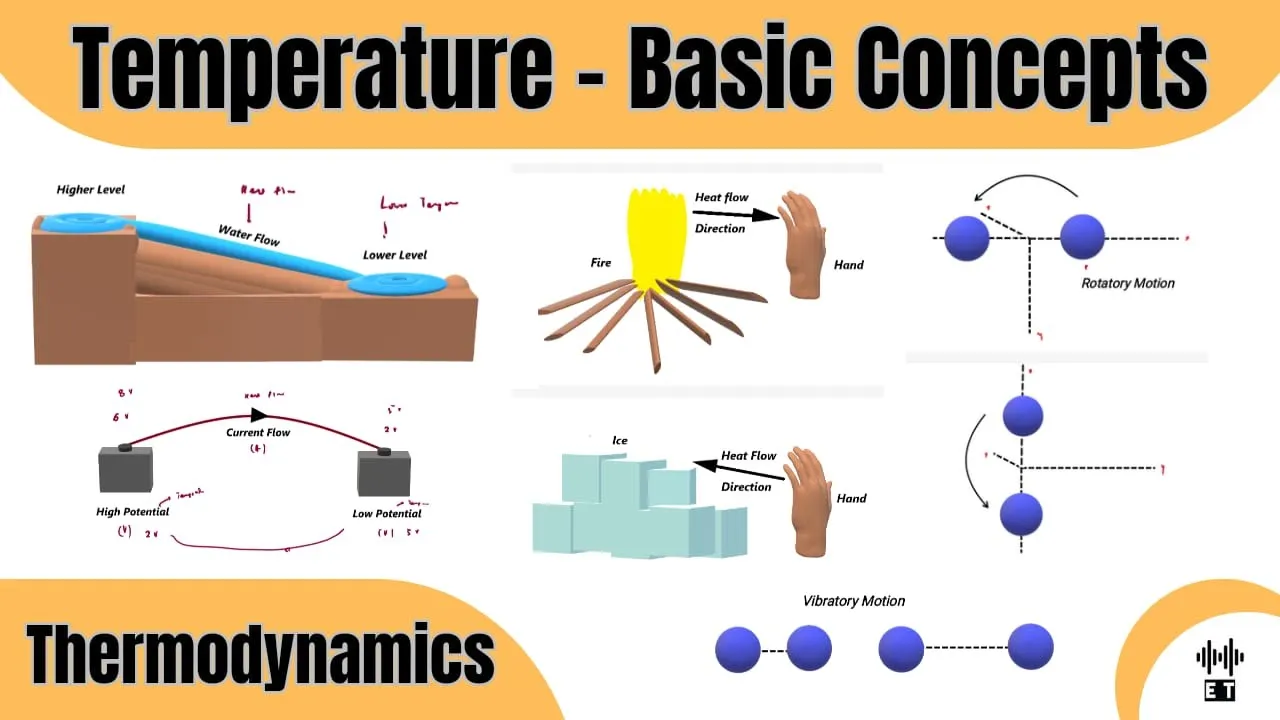
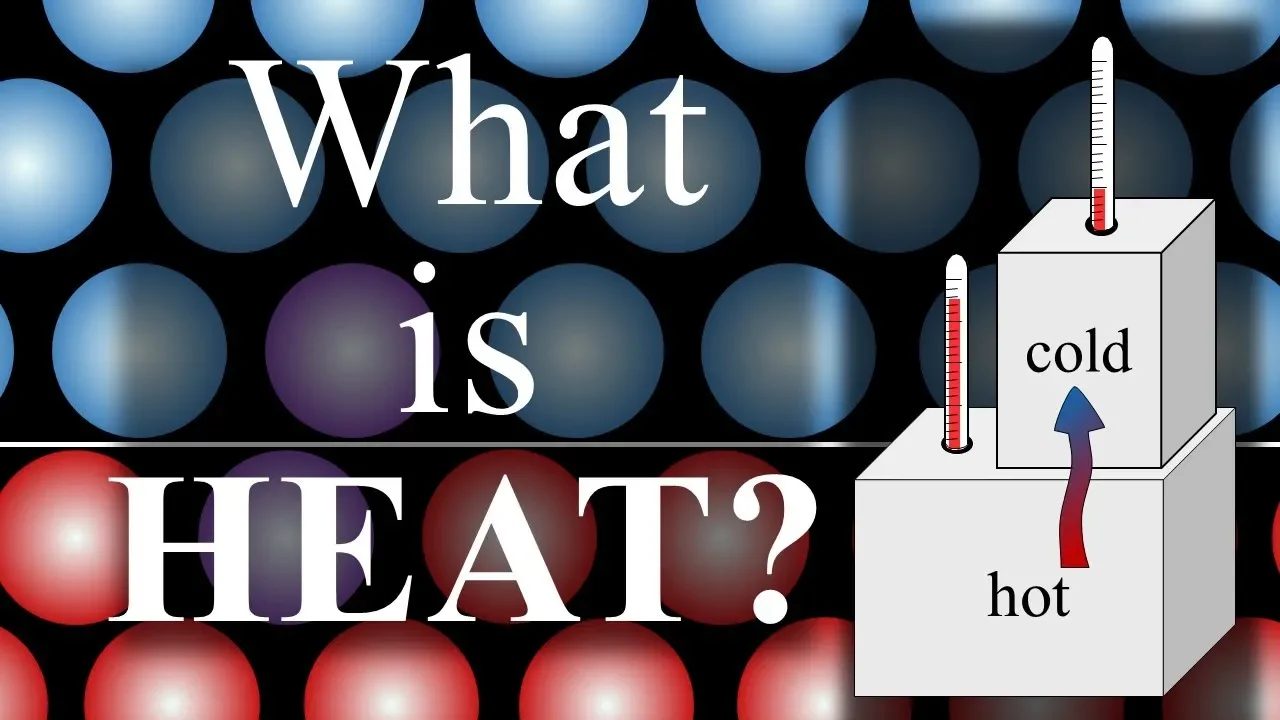
Added:Understanding the fundamental difference between temperature (average kinetic energy) and heat (thermal energy transfer).
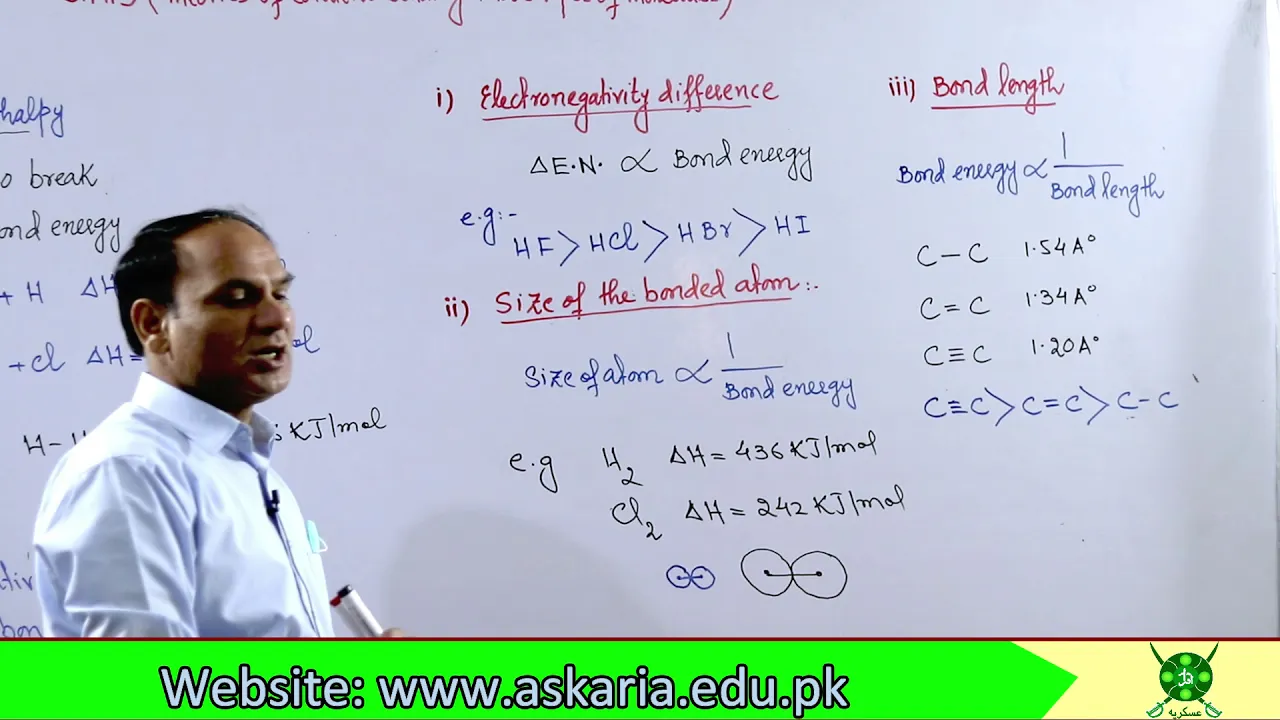
Basic knowledge of chemical bonding, specifically that breaking bonds is endothermic (requires energy) and forming bonds is exothermic (releases energy).
Familiarity with balancing chemical equations and basic stoichiometry, which are essential for applying Hess's Law.
The concept of the First Law of Thermodynamics (Conservation of Energy) and the distinction between a system and its surroundings.
Exploring Entropy (S) and Gibbs Free Energy (G) to understand chemical spontaneity and how they relate to Enthalpy (H).
Studying Calorimetry, the experimental technique used to measure heat transfer and determine enthalpy changes in a laboratory setting.
Applying Hess's Law to more complex chemical cycles, such as the Born-Haber cycle used to calculate lattice energies of ionic compounds.
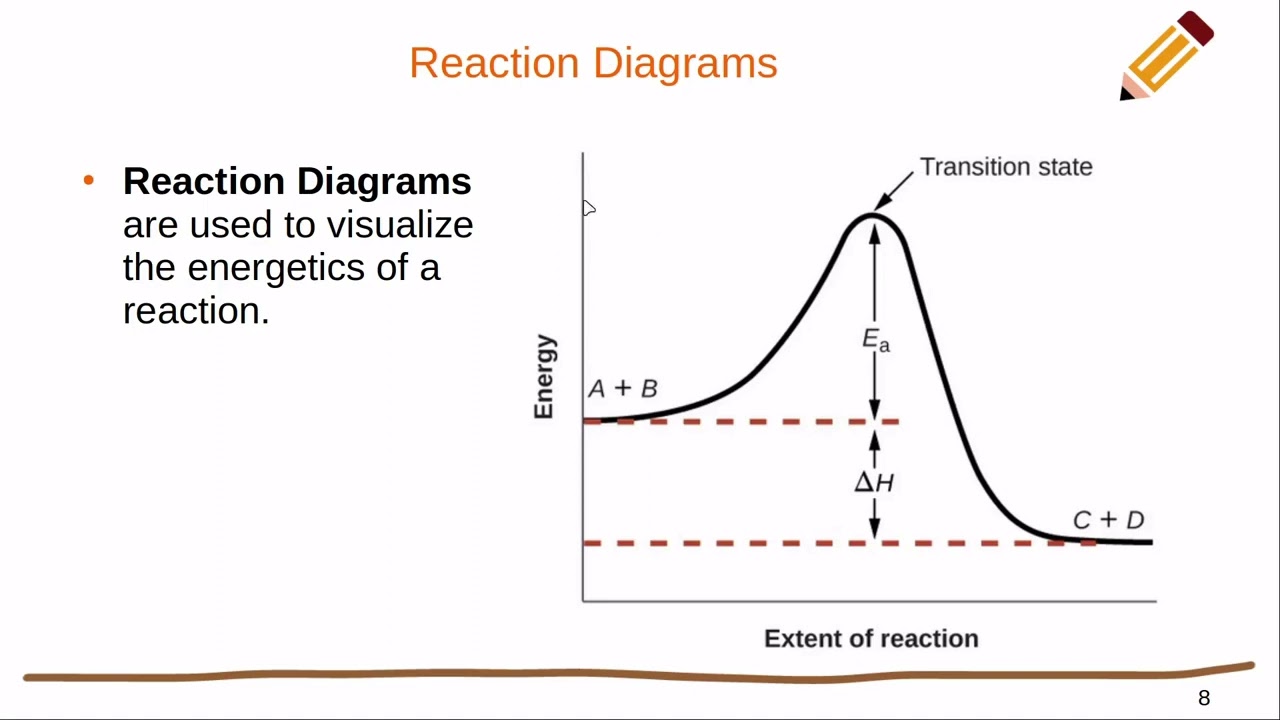
Connecting thermodynamic enthalpy changes to reaction kinetics and activation energy using reaction coordinate diagrams.
2.9M views34.3Klikes11:23Original Release: 2013-06-18
Energy. The foundation of the universe, we'd literally be nothing without it.
It does all our work, provides all our heat, can be stored to use later, and never, ever goes away.
Sounds like the best-est best friend ever.
And yet, most of the time we take it for granted, but here at Crash Course, we feel bad for our old friend Energy; we want to understand it so that we can be a better friend to it, and also so that we can understand what it's trying to tell us.
Like that any bond between two atoms contains energy.
How much energy? Well, that is not the simplest question to answer.
And yet, today we shall answer it...kinda, using a nifty little thing called enthalpy.
[Theme Music] Last time, we learned about internal energy, and the two ways that it can be transferred: by heat, or by work.
And heat and work are useful concepts, but they have limitations.
Particularly, that it is extremely difficult to figure out how much of which one is being done.
Work is energy transferred to the motion of objects, while heat is energy transferred to the motion of atoms and molecules.
But for any given change in energy, the split between work and heat could be pretty much anything, as long as there's some going to each.
Say that my car is at the top of a hill, and there's a frozen banana stand at the bottom.
If I roll down with my brakes on, lots of heat will be transferred into my brake pads and my brake discs, and I'll kind of like very slightly knock into the frozen banana stand, doing a tiny amount of work on it.
But if I am reckless and insane, very little heat will be generated, and my car'll do a huge amount of work on the frozen banana stand.
Both paths transfer the same amount of energy, but one produces very little heat, and the other produces a ton.
So, we say that heat and work are "pathway dependent."
The amount of heat or work done depends on the pathway you take.
The change in energy, on the other hand, is the same in either case.
Change in energy is independent of the pathway.
In chemistry and physics and math, we call that a "state function," because the only thing that matters is the starting state and the ending state, not the stuff in between, not how you got there.
State functions are pretty great, because they make the math very simple; it's just one amount minus another amount.
It would be pretty fascinating to know exactly how much energy is tied up in a molecule.
Unfortunately, it's next to impossible to know that number.
It's too big, and there are too many boxes where all that energy could be hiding.
It's like trying to measure the total volume of the ocean, like, good luck.
However, since energy, like volume, is a state function, we can very easily talk about the change in energy.
Just like if you dump a two liter Mountain Dew into the ocean, you can't tell me how many liters are in the ocean, but you can say that that number has changed.
It has just increased by two.
In the same way, we're interested in energy being transferred in or out of the system because of chemical reactions.
And in many cases, all we're interested in is the heat part.
For example, if I burn a pile of wood, I care about the heat being generated, not the work being done by the volume increase, or by the rising smoke.
So dealing with the whole internal energy equation thing would kind of be overkill.
What we really need is a state function based on the loss or gain of heat in chemical reactions.
Which yes, is what Enthalpy is for.
In addition to being a silly-sounding word, enthalpy, which is represented by an equally silly capital H, is technically the internal energy of a system, plus the energy that's required to sort of shove the surroundings out of the way, and make room for the system's pressure and volume.
With enthalpy, we can make some assumptions and do some fancy math and make the simplest equation we've ever seen in Crash Course Chemistry.
Let's get there real fast.
So first, we're not really interested in the total enthalpy of the system, which is good, because it's impossible to measure.
We're really just interested in how much it's going to change, as a state function.
So, the formula for enthalpy is usually written as change in enthalpy.
Delta E or "change in energy" equals q plus w, so we can replace that part, and then we can make two big, huge assumptions.
First, that pressure is constant.
Fortunately, despite talk of high and low pressure weather systems, atmospheric pressure, it really, changes very little compared to the other terms in the equation.
Constant pressure is a pretty good assumption here on the Earth's surface.
So that last Δ only applies to the volume.
The second assumption is that the only work done in the system is the work that the pressure does to change the volume, known as pressure volume work.
So W equals negative PΔV.
Now the signs are a little bit weird here: an increase -- or positive change -- in volume, results in an output of work by the system -- a loss in internal energy -- which is defined as a negative amount.
So the signs for work and for PΔV will always be opposite, and so, voila!
The PΔV parts cancel, ΔH equals the heat of reaction.
Change in enthalpy is equal to the heat gained or lost by the system.
So I guess in the capital H for enthalpy does kinda make sense.
Thanks to this little trick for a lot of reactions that happen at constant pressure, like here on the surface of the earth, working just with enthalpies instead of internal energy makes a lot more sense.
I mean, it's hugely useful.
We can determine how much useful energy is contained in pretty much any chemical compound.
This is done by simply measuring temperature changes during chemical reactions.
So we know what it is, we know that state functions are great, but really why?
Why have we done this, and can I just go look at pictures of cats now?
Well no, because you don't even know why enthalpy is so cool.
When a reaction takes place and enthalpy changes, that heat is transferring into or out of actual chemical bonds, these little guys.
Atoms and molecules reacting so that they contain more or less energy, and that energy is either released to or taken from the environment as heat.
Those bonds are nothing but energy, and using enthalpy, we can measure how much energy they have.
And we measure enthalpy with a weird little science called calorimetry.
In calorimetry, we have a reaction take place inside an insulated vessel, like a thermos, basically, and measure how much the temperature changes, which we can then link directly to heat and thus enthalpy change.
Hopefully that sounds like fun because more about the ins and outs of this are coming in an episode on how to measure enthalpy.
Scientists have actually done on the calorimetry footwork for us, so we can actually predict how much heat a chemical reaction will produce.
You might not understand what's so great about that, but just imagine because I live here in Montana, where winters are pretty wintry, I can invent a hand warmer just by doing some calculations on paper, without driving to Texas to buy the stuff and do all kinds of expensive experiments.
For that, we have to thank good old Germain Hess.
No, not Hermann Hesse, the gaunt, balding Swiss author and poet.
Germain Hess, the gaunt, balding Swiss... uh...author and chemist.
Yeah, even the history parts of chemistry are confusing.
Hess was a chemist, geologist, professor, author, and doctor, and he also got a law named after him, which is pretty much the higher honor you can get as a chemist: Hess's Law, which also kind of led directly to the first law of thermodynamics.
Kind of a big deal. Not bad.
Hess's law says that the total enthalpy change for a reaction doesn't depend on the pathway it takes, but only on its initial and final states.
Sounds pretty familiar, right?
As long as you start with the same reactants and end with the same products, the enthalpy change is the same.
In order to study this stuff carefully, he looked at the standard enthalpies of formation of the reactants and the products of a reaction.
To define standard enthalpy of formation, I'm first going to define what a standard state is: Basically it's just a set of criteria so that chemists can all be studying stuff under the same conditions.
Chemicals in their standard state are at 25 degrees Celsius and one atmosphere.
Standard enthalpy of formation is the amount of heat lost or gained when one mole of a compound is formed from its constituent elements.
And of course all of those elements have to be at their standard states.
Since absolute enthalpy is unknowable though, we have to be measuring from a baseline, and that baseline is that individual elements' most stable form at standard state.
That most stable form is defined as zero.
Values for compounds are measured from that zero baseline, and then standard state values can be used to calculate the enthalpy change for any reaction, even hypothetical ones.
Hess' Law is often stated in terms of standard enthalpies of formation.
The enthalpy change for a reaction is equal to the sum of the standard enthalpies of formation of the products, minus the sum of the standard enthalpies of formation of the reactants.
Thanks to many hardworking chemists, the standard enthalpy of formation has been measured for hundreds of compounds.
We can just look them up in charts and plug them into Hess' Law.
Speaking of which, here is Hess' Law as a mathematical formula.
Pretty fancy looking, but it says exactly the same thing.
The enthalpy change for a reaction equals the sum of the stand enthalpies of formation of the products minus the sum of the standard enthalpies of formation of the reactants.
That pointy looking funny 'E' looking thing is the capital Greek letter Sigma(Σ) and it means, "the sum of."
np and nr are the moles of each product and reactant respectively.
We have to factor that in because remember the standard enthalpy of formation is measured for just one mole of the substance.
If the chemical equation uses more than that, we have to multiply the standard enthalpy of formation by the number of moles in the equation.
Again, I have just the thing for the calculating.
Exhibit A. A hand warmer.
It gets warm because of an exothermic chemical reaction.
And I'm very happy the inventors knew how to calculate the enthalpy change of chemical reactions.
They chose one that releases just enough heat, quite slowly, to heat up my hand nice and warm without burning them off.
The reaction combines an iron powder, which is in here, and oxygen, which diffuses through the membrane of the little packaging.
It forms Iron(III) Oxide, the main ingredient in rust.
To calculate the enthalpy change of the reaction, or heat of reaction, we simply find the ΔHf of all of the reactants and products.
Either in the back of most textbooks or on Google and plug them into Hess' Law.
ΔHf of formation of iron and oxygen are zero by convention.
When in doubt, find them in the same table.
And ΔHf of formation of Iron(III) Oxide is listed as -826 kilojoules per mole.
First we have to make sure we balance the chemical equation, so do that number one.
Second, let's look at Hess' Law and figure out what our products are and what our reactants are and stick them in.
Then, plug in the number of moles for each of our products and reactants.
Bang on your calculator and realize the ΔH of the reaction is -1652 kilojoules.
So, the reaction of four moles of iron powder which is about 223 grams of iron releases 1652 kilojoules of heat.
All that energy locked away in chemical bonds and then released as heat to make my aching frozen fingers.
Better living through chemistry.
Thank you for watching this episode of Crash Course Chemistry. If you were paying attention, today you learned what the state function is and how it varies from a path dependent function.
Why enthalpy change is different from heat, even though they turn out to be pretty much the same anyway.
That bonds are energy and to form and break them they release and absorb heat to and from their environment.
We gave you the most cursory introduction to calorimetry ever, which we will remedy next time and discussed the power of Hess' Law and how to use his concept of the standard enthalpy of formation to calculate exactly how much heat is produced by any reaction ever.
This episode of Crash Course Chemistry was written by Edi Gonzalez and myself.
The script was edited by Blake de Pastino. And our chemistry consultant was Dr. Heiko Langner.
It was filmed, edited, and directed by Nicholas Jenkins.
Our script supervisor and sound designer is Michael Aranda. And our graphics team is Thought Cafe.
Up Next
29:59
First Law of Thermodynamics & Enthalpy | General Chemistry
@ChadsPrep
71.6K views•2021-10-04
24:04
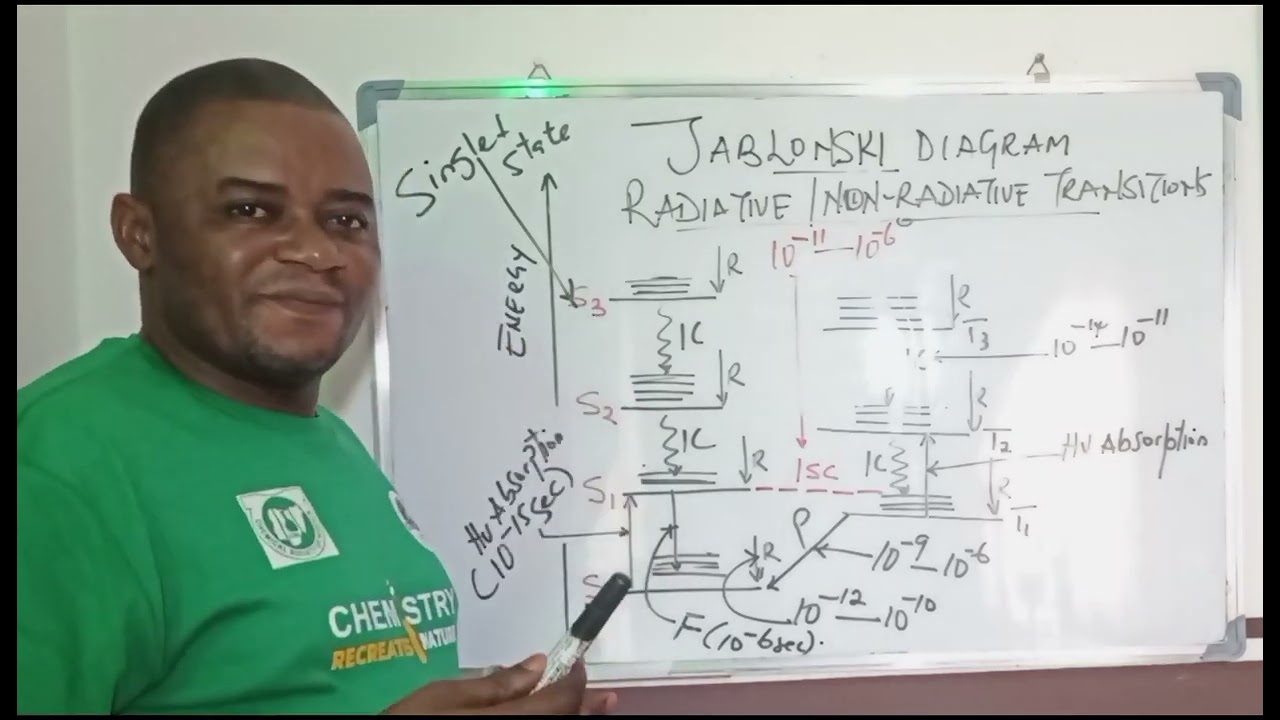
The Jablonski Diagram: Radiative and Non-Radiative Transitions | Photochemistry
@benedictugi8420
262 views•2025-07-15
12:34
Aldol and Claisen Reactions: Organic Chemistry Explained
@crashcourse
75K views•2022-01-26

17:31
Edible Water Bottles: A DIY Guide to Sodium Alginate Spherification
@ryan
10.5M views•2019-06-21
Related Study Plans & Knowledge Roadmaps
Structured learning paths in Chemistry
chemistry
Photochemistry: Excited States & Reactions
01Foundations of Light-Matter Interactions
02Molecular Orbitals and Electronic States
03Photophysical Processes and Jablonski Diagrams
+ 2 more learning modules
18h5 modules
Explore Roadmap
chemistry
Coordination Chemistry: Bonding & Properties
01Introduction to Transition Metals and Ligands
02Crystal Field Theory (CFT) and Geometry
03Magnetic Behavior and Spin States
+ 2 more learning modules
14h5 modules
Explore Roadmap
chemistry
Polymer Chemistry: Synthesis & Properties
01Introduction to Macromolecules & Monomers
02Polymerization Synthesis Mechanisms
03Polymer Characterization Techniques
+ 2 more learning modules
12h5 modules
Explore Roadmap
chemistry
Separation Science: GC, HPLC & Mass Spec
01Foundations of Separation Science
02Gas Chromatography (GC) Principles & Systems
03High-Performance Liquid Chromatography (HPLC)
+ 2 more learning modules
24h5 modules
Explore Roadmap