























The First Law of Thermodynamics states that energy cannot be created or destroyed, expressed mathematically as ΔE = q + w, where ΔE is the change in internal energy, q is heat, and w is work; enthalpy (ΔH) equals heat (q) at constant pressure and is a state function, while heat (q) and work (w) are path functions; endothermic reactions absorb heat (ΔH > 0) causing surroundings to cool, while exothermic reactions release heat (ΔH < 0) causing surroundings to warm; phase changes include six processes: melting/fusion (solid→liquid, endothermic), vaporization (liquid→gas, endothermic), sublimation (solid→gas, endothermic), condensation (gas→liquid, exothermic), freezing/crystallization (liquid→solid, exothermic), and deposition (gas→solid, exothermic).
First Law of Thermodynamics & Enthalpy | General Chemistry
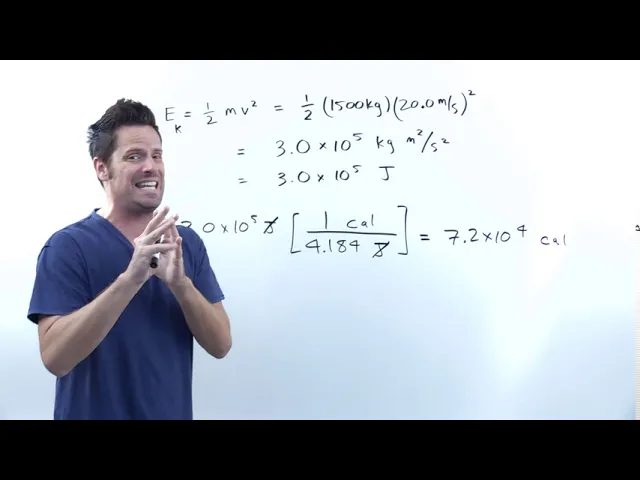
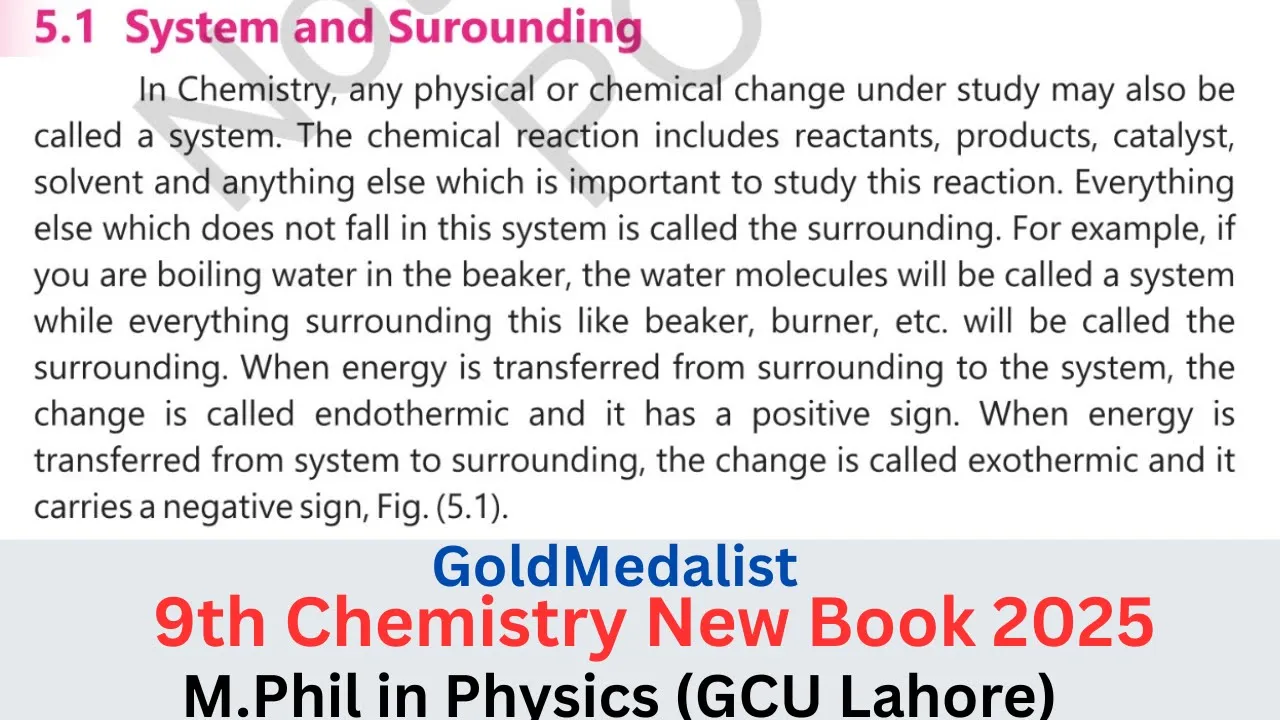
Added:the first law of thermodynamics and enthalpy that's going to be the topics in this first lesson and a whole chapter on thermochemistry and uh we're gonna have an entire chapter on what's called thermodynamics towards the end of the second semester topics the end of this entire playlist uh but for now this is gonna be much more foundational dealing with thermochemistry and we're gonna start off talking about just energy really quickly and the units we measured in but we'll move quickly into talking about the first law of thermodynamics which says that energy can't be created or destroyed we'll talk about heat we'll talk about work and then we'll introduce the idea of enthalpy which is very similar to heat it turns out and finally we'll finish this lesson off talking about the phase changes and we're going to talk about the heat or really enthalpy associated with those various phase changes my name is chad and welcome to chad's prep where my goal is to take the stress out of learning science now in addition to high school and college science prep we also do mcat dat and oat prep as well you can find those courses at chadsprep.com now this lesson is part of my new general chemistry playlist i'm releasing several lessons a week throughout the school year so if you want to be notified every time i post one subscribe to the channel and click the bell notification let's get into this so first we just gotta talk about energy for just a second and it turns out if you want to define energy it is going to be more challenging than you think in fact you could ask quite a few chemists and they might struggle to define it as well so suffice it to say it's a little bit abstract what energy actually is but so if i say we're simply just going to say it is the ability to do work so and it turns out the si unit for energy is the joule it turns out a joule is a kilogram meter squared per second squared or a newton meter if you will so it can be broken down and but it turns out you're often going to see it measured in calories as well but probably more often in joules now it turns out the calorie was the quantity of heat needed to raise one gram of water one degree celsius that's where that calorie comes from but it is not an si unit and it turns out there are 4.184 joules in a calorie now one other unit you should know is calorie with a capital c here this is the nutritional calorie this is the calorie on the back of the labels on your food and things of this sort so and it turns out that that calorie that nutritional calorie with a capital c is actually a kilo calorie with the lowercase c or a thousand calories with the lowercase c so if you know you're eating a snickers bar and it says 180 calories with a capital c that actually means you're eating a snickers bar with a nutritional caloric intake of 180 000 calories with a lower kc um so if that does anything for you great all right so that's what energy is and we just need to introduce that because everything in thermochemistry uh we talk about units and stuff like this is going to be measured in energy in terms of usually joules sometimes calories uh but the nutritional calorie might show up a time or two so now let's move on to talking about the first law of thermodynamics which simply says that energy cannot be created or destroyed so let's say i've got a thousand joules of energy in this room and i come back in an hour and now there's 2 000 joules of energy in the room i wouldn't come to the conclusion that an additional thousand joules of energy was created in the universe i would just come to the conclusion that somehow a thousand joules of energy was transferred into this room from the surrounding areas so and we can express this first law of thermodynamics mathematically as well in an equation so delta e here equals q plus w delta e here's the change in internal energy it's a measure of the energy in a sample of something q here is heat w stands for work and they're the two chief ways we transfer energy so if we look here so we're going to define what we call the system and in chemistry or in science or engineering the system is just whatever you're looking at in this case it could have been this room as my system and then outside of that system everywhere outside of that system in the entire universe is what we call the surroundings everywhere for the entire universe that's the surroundings and so those are the only two things that exist in a universe the system the which is what you're examining and then there's everything else which is the surroundings and so there's really two ways that energy can be exchanged between the system and the surroundings and that's through heat and work and so it turns out heat can flow into the system and when that's the case we say that q is positive and it turns out that work can be done on the system and when work is done on the system work is positive and in both cases whether heat is transferred into the system from the surroundings or work is done on the system by the surroundings in both cases the system gains energy and so q and w are defined as being positive and will contribute to a positive change in internal energy for that sample now on the other hand heat can be transferred out of the system and into the surroundings in which case q would be negative and instead of doing having the surroundings doing work on the system the system could be doing work on the surroundings in which case the work would be defined as negative and so whether q and w are positive or q and w are negative are all about did the system gain energy or did the system lose energy it's all about being relative to the system cool and again the terminology here is important if we transfer heat from the surroundings to the system well the system's gaining that energy and q is positive but if we transfer heat from the system out to the surroundings then the system is losing that heat and q is negative the work one is the trickier one so in this case when work is done by the surroundings on the system now think about uh think about me let's say i'm the system and i'm gonna go do a bunch of work now if i go to do a bunch of work and i'm gonna go you know swing an axe and cut some wood or something like this do i end up with more energy or less energy after i do all this work well i'm gonna end up with a whole lot less energy i'm going to be tired and things of this sort and so when something does work it loses energy and so same thing here whatever's doing the work is losing the energy so when the surroundings are doing work on the system the surroundings are losing the energy but the only place they can lose that energy to is the system and so the system is gaining that energy and that's when work is positive however if it's the system that is doing work on the surroundings then the system is now doing the work and losing that energy and w is negative the surroundings would be gaining that energy cool and again q and w their signs are always defined as to what they're going to be relative to the system not the surroundings that's important all right you might have some basic calculations like this and i might say hey you know if 30 joules of heat was transferred from the system to the surroundings well again if 30 joules of heat is being transferred from the system to the surroundings that's when q is negative and so if i asked you to quantify that you'd say that's negative 30 joules if you're going to plug it into this equation and then if i said and 10 joules of work was done by the system on the surroundings well if 10 joules of work is being done by the i don't remember how i said that by the surroundings on the system is what i meant to say so 10 joules of work is being done by the surroundings on the system well in that case the system is going to be gaining that 10 joules and so that would be a positive 10 joules and in this case then if i ask you to calculate delta e here we would just add those together negative 30 plus 10 would be negative 20 joules total and so you might get some simple calculations and they really are dependent upon you understanding the terminology of when q is positive versus negative and when w is positive versus negative okay so we've got to talk about one of our most common types of systems and that type of system is a gas a sample of a gas and when we've got a sample of a gas there's a couple things you need to understand is that the temperature of that gas is all dependent on its internal energy and so if its internal energy doesn't change i.e delta e is zero then its temperature doesn't change if its internal energy goes up its temperature is going to go up if its internal energy goes down then its temperature is going to go down that is true for a gas and so this is going to be a little bit strange because it's not whether heat comes into out of the system it's if delta e is positive versus negative versus zero and again if delta e is positive the temperature of that gas is going to go up if delta e is negative the temperature of that gas is going to go down and if delta e is zero that temperature is not going to change we'd call it an isothermal process for that gas all right so if we take a look one other aspect of this there's a special type of work we talk about for gases and that is known as pv work and pv work is equal to negative p delta v so and we might even define this as p external ext times the change in volume so it turns out then if the volume of the gas goes up delta v is positive pressure is always positive and you got that negative sign in front so delta v is positive p is positive negative that means work comes out negative and so when a gas expands w is going to be a negative term and the idea is that when a gas expands a gas is doing the work on the surroundings it is pushing the surroundings back to expand and so again if the system here the gas is doing the work then the system's losing energy and w comes out negative now on the other hand if the surroundings are pushing in on the gas causing it to get smaller causing it to get compressed and notice now we say like we compress a gas whereas a gas expands so when we say like a gas expands a gas is the subject of that sentence doing the work but if we say that we're compressing a gas the gas isn't compressing itself it's not spontaneous it doesn't do it on its own we're compressing the gas now we're part of the surroundings doing work on the gas and putting in a smaller space in that case delta v would be negative when it gets smaller occupies a smaller volume so that's a negative volume change times that other negative sign there makes work positive and so for an expanding gas work is negative and for a gas that's being compressed work is positive you should understand those signs because we could incorporate that into some sort of basic conceptual understanding here and you know i might say hey if heat was transferred from the system to the surroundings you should know what kind of heat that is and again from system to the surroundings that means q is negative and energy is leaving the system and if i also say and that gas was expanding well if that gas is expanding again that means delta v is positive and a positive times a positive times a negative means work comes out negative as well and so in this case if heat's transferred from system to surroundings and the gas expands what could you tell me about delta e well again if heat's going from system to surroundings q is negative and if the gas is expanding w is negative and if these are both negative delta e has to be negative which would mean that the temperature of this gas is going down now had one of these been positive or negative you really couldn't told me anything about delta e because we didn't know which one was bigger but as long as q and w have the same sign either both positive or both negative well then you're going to know that delta e is either positive or negative respectively cool let's move right along here and talk about now enthalpy a little bit all right enthalpy here uh turns out that enthalpy is related to heat and it turns out it's actually equal to heat under one very important condition when a reaction is carried out at constant pressure and that's what this little subscript p stands for delta h the change in enthalpy is equal to heat when a reaction reaction's carried out at constant pressure and this is pretty common right so like the pressure in this room right now we're a little above sea level here in tempe arizona uh and so the but the not not too far above sea level so the pressure in this room is roughly one atmosphere and if i do some chemical reaction on you know the desktop over here then what's the pressure going to be when i'm done probably still one atmosphere and that's constant pressure then before and after the reaction is done the pressure is the same it hasn't changed and in such a case the heat change associated with that reaction would equal the enthalpy change associated with that reaction now if i carried out some sort of reaction that was either producing more moles of gas or consuming moles of gas and i was doing it in an enclosed container like let's say i took a a two liter bottle and i put some some acid in there and a certain metal in there and it starts producing hydrogen gas and i capped it and as the gas is being produced this thing starts to you know get a little bit crazy in there the pressure is going up and it might go up if i put enough metal in there and have high enough concentration of acid it might actually explode and so the idea though is that is an example of a reaction that's not being carried out at constant pressure the production of gas in that reaction is causing the pressure inside to go up now on the other hand if i had a reaction that was actually consuming the air in that lovely two-liter bottle well then it might shrivel up over the course of the reaction the pressure would be going down in this case the actual the volume would go down with it um so but if you're doing a reaction in an enclosed container so especially if it's a rigid container of a two-liter bottle might not be the best example in that case maybe a glass bottle would have been a better option but if you're doing a reaction in an enclosed rigid container anything any reaction that's producing or consuming moles of gas is going to experience a pressure change and in that case delta h and q would not be exactly equal they would still be related but they wouldn't be equal but this is kind of the working definition we give for enthalpy it is related to the heat change or it is equal to the heat change of a reaction carried out at constant pressure it turns out that enthalpy is also an example of what we call a state function a state function they call it that because it only depends on the initial state and the final state of the system so and a good example of this that you might think of is let's say we talk about altitude change so let's say that you know you're hanging out right here with me in my home office and we decide to meet at the top of a mountain so and you leave you get in your car and you drive over the mountain and you hike to the top whereas i leave i get in my car and i drive over to the airport and i hop on an airplane put on a parachute and i parachute down to the top of that mountain now we both started out right here in my office we both end up at exactly the same spot on the top of that mountain and the question is who had a different altitude change well no we had the same altitude change because this altitude change is independent of path or path independent we'd say and as such the only thing you need to know is where'd you start and where'd you finish what's the initial state of the system what's the final state of the system and if that's all you need to know to calculate something then that thing is a state function so again it depends on the initial and final state of the system period or you can say that it's path independent or independent of path that's what a state function is and it turns out that enthalpy is a state function you're supposed to know that and it turns out a lot of things we deal with in chemistry and in thermochemistry are going to be state functions temperature is another state function we'll talk about things called entropy in second semester that are state functions so lots of things are state functions however there are two major things that are not state functions and we just learned about them they are q and w heat and work it turns out even delta e the change in internal energy we just saw that is a state function but q and w are not so for example let's say i told you that you know i had a system that started off with 100 joules of energy and it gained it ended up at a place where it had 140 joules of energy and i said what is delta e well in this case delta e would just equal 40 joules knowing the initial state and final state of the system was enough to calculate delta e but if you notice it is not enough to calculate q or w so in this case i know that delta e total is 40 joules now does that mean that q was 40 and w was zero or that q is zero and w was 40 or that they were both 20 or 30 and 10 or 10 and 30 there's a million different possibilities and which possibility was actually true would depend on what path we took i could take a path where it's all through heat i could take a path where it's all through work or i could take a path where it's some combination of the two but just knowing the initial state and the final state of the system is not enough to calculate q and w because they are not state functions cool you might get a question on the test that just says which of the following is not a state function they're not so likely to ask you which of the following is a state function because just about everything is but these two things q and w but again delta e is delta h is but if you're asked to find something that is not a state function it's either q or it's w all right let's get back to enthalpy here so and it turns out that enthalpy again is going to be very similar to heat because again a lot of reactions are carried out at constant pressure when they're kind of carried out open to the atmosphere and stuff so uh turns out we define a couple of things and delta h can be positive i e greater than zero or delta h can be negative and we have a special name for both of these when delta h is positive we call this endothermic and you kind of think that again if this reaction is being carried out at constant pressure then delta h being positive means that q is positive and this system which could be a chemical reaction as your system this system is taking in heat from the surroundings and notice endo means inside so and therm goes back to heat and so in this case endothermic means to bring heat inside and that's why they call it endothermic so when that system gains heat where is it getting that heat from it is getting it from the surroundings and so the hallmark of an endothermic reaction is that everything around it gets colder because it's sucking up all the heat from everything around it all right we talk about delta h being negative now this is the opposite now this is going to be exothermic and notice exo means outside and an exothermic reaction again if it's carried out at constant pressure delta h being negative means that q is negative and this system is losing heat to the surroundings so heat outside exothermic that's why it gets its name now the hallmark of an exothermic reaction is that because it's giving off heat that means everything around it gets hotter and so typically when you're doing let's say a chemical reaction in a beaker full of water let's say there's a chemical reaction happening inside the water that is around the reaction would be the surroundings but the reaction itself would be the system if that water is getting hotter the question is where'd the water get the heat well it got it from the system the chemical reaction and that system must have been giving off tons of heat and giving it to the water now when you put your thermometer in that beaker you're actually measuring the temperature of the surroundings and so if a reaction is happening that's causing the surroundings to get hot it's because you've got an exothermic reaction that's giving the heat off to those surroundings now contrary to that if you've got a reaction that's sucking the heat away from all the surroundings then those surroundings are going to get colder and again putting your thermometer in that beaker its temperature is going to go down and that's the hallmark of an endothermic reaction all right we want to look at this real quickly in the context of a chemical reaction all right so here we're going to look at this in the context of this lovely reaction right here we've got two moles of hydrogen gas combining with one mole of oxygen gas to form two moles of liquid water and it turns out that delta h for this reaction is a negative number means it's exothermic it gives off heat and in this case specifically it's negative 572 kilojoules now it turns out you might have to relate this to the stoichiometry a little bit because that is the delta h when exactly two moles of h2 reacts with exactly one mole of o2 to produce exactly two moles of liquid water so what if you had some other amount what if you had you know only let's say actually what if you had four moles of h2 reacting with two moles of o2 to produce four moles of h2o well that would double the entire reaction and if you double the entire reaction then you double this value right here and it would be two times negative 572 or like negative 44 kilojoules all right so keep that in mind because the first question actually says we're going to answer here is what is the enthalpy change when three moles of o2 are consumed in the reaction above so three moles of o2 are consumed well again the reaction shows one mole of o2 being consumed so if three moles are consumed we're tripling the whole reaction that's just going to triple the delta h but we actually have a process for figuring that we could just multiply that number by three and that would be the delta h but in this case you could look at this now and we want to relate the delta h in kilojoules to the moles of o2 and the delta h the kilojoules part is just what's given here so that's the negative 572 and the number of moles of o2 is the number in the balanced reaction which in this case is just one and notice we're just multiplying 3 times negative 572. i'll pull out my handy-dandy calculator 3 times negative 572 is going to get us negative 17 16 kilojoules all right so the next question is what is the enthalpy change when nine grams of water so in this case nine grams of liquid water are produced in the reaction above so nine grams well in this case this reaction as it is is for exactly two moles of water being produced delta h is going to be negative 572 kilojoules for exactly two moles of water being produced well here it's given us nine grams so first off that's not the most convenient unit i want to convert that to moles unfortunately that's not so bad because h2o two h's is 2.
they're one each and then oxygen's molar mass is 16. so the molar mass of h2o is 18 grams per mole so in having exactly half that number of grams we have half a mole so if what we got here is for two moles well then what would it be for half a mole well half a mole would be 1 4 of 2 moles and so it's going to come out to 1 4 of negative 572 but if we want to work out the stoichiometry and the dimensional analysis we'll take and first convert this to moles we'll take one mole of water equal to 18 grams and our grams will cancel and notice nine over eighteen is where the half a mole comes from and then we want to relate the moles of water to the delta h in kilojoules and in this case that delta h is negative 572 kilojoules per 2 moles of water and we just multiply this across now so in this case again we've got 9 divided by 18 times negative 572 divided by 2 equals negative 143.
and notice that is exactly one-fourth of negative 572 just like we'd said at the beginning of that question cool so you might do some basic stoichiometry with enthalpy now just an fyi last thing we need to look at now are phase changes so now we'll look at these phase changes there are six different phase changes and we'll look at them going in one direction we'll look at them going in the opposite direction now some of these names you're going to know but you're going to need to know the names for all of these and any possible name they might be recognized by in a chemistry context and then you're going to need to know which of these are endo versus exothermic so we'll start with the ones above here so converting a solid to a liquid you might know this as melting something if i take a piece of chocolate and stick it under my armpit it will melt and the idea is that i'm providing it heat and so it turns out that melting is an endothermic process in fact all of these are going to be endothermic processes and that means that delta h is going to be positive greater than zero now in addition to the term melting which you're probably not going to struggle with you're supposed to know that in chemistry we refer to this as fusion so melting and fusion are the same thing and so when we talk about the delta h of fusion for a substance we're talking about the delta h associated with melting for that substance and you might be like chad that's not what the word fusion sounds like and i'm going to agree with you this is just evidence that many a chemist was using their own drugs especially the guy who named fusion is melting all right now liquid to gas and liquid to gas is boiling something and we might use that word boiling but in chemistry terminology technical terminology we often refer to this as vaporization and so the enthalpy of vaporization or delta h of vaporization is the delta h associated with boiling a substance and once again that's endothermic if you want to boil water well then you're probably going to put it in a pot on the stove and it's going to take a ton of heat to get it to boil so you're gonna have to add heat it's an endothermic process and then finally turning a solid into a gas this isn't normal most substances don't do this under normal atmospheric conditions so but this is called sublimation so going straight from solid to liquid and you might recall that dry ice which is solid carbon dioxide does this at one atmosphere most substances don't and the reason they call it dry ice is because it goes straight from solid to gas because it never actually goes through the liquid phase it never feels wet hence the name dry ice that's carbon dioxide all right so going down here now uh going the exact reverse processes well it turns out if all of these are going to absorb heat from the surroundings and be endothermic well then if you do the exact opposite process they're all going to release heat from release heat to the surroundings and be exothermic and so delta h is going to be negative and this is going to seem a little bit funny just for a minute so students often don't struggle with realizing that these all require a heat like melting chocolate my armpit or boiling water so however students often struggle to see that these processes all give off heat all right so let's take a look at this for a second so let's start with gas going to a liquid gas going to a liquid is condensation so if you look at you know having a nice cold glass of water on a humid day and you start seeing drops on the outside of the glass drops of water what you have is you have moisture in the air condensing on that cold glass the lower temperature is causing it to go from the gas phase to the liquid phase so notice it's not water from the inside the glass making it to the outside glass it's water vapor in the air going from gas phase to liquid phase on that much colder glass all right so that's condensation now liquid to solid so actually we probably call this the same thing you would most of the time and that's freezing so you'll probably hear liquid to solid referred to as freezing much more commonly than anything else but you might also hear the word crystallization so i'll put that up here but just keep in mind you're still probably going to hear freezing a lot more commonly and then finally this one you probably have no frame of reference for and so uh it's probably gonna be the hardest one for you to memorize but going straight from a gas to a solid the exact opposite of sublimation it turns out is called deposition so deposit that in your head and some people might actually refer to it as vapor deposition so and you might see this used in like you know uh fabric uh silicon wafer chips and stuff like this let's say you want to put a thin layer of gold on top of that micro chip so what you do is you probably put that microchip in a closed and enclosed chamber full of gold vapor they will heat it up to such a temperature and put conditions that will get the gold vapor and that gold vapor will then deposit a layer in the solid phase on the top of that microchip under the right conditions now once again these are all exothermic and this is where things are going to seem a little bit crazy you're going to be like wait a minute chad something freezing releases heat but it's cold in my freezer you're right but it's cold in your freezer not because of this it's because of your freezer your freezer is part of the surroundings your freezer's job is to pump heat from inside of it to outside of it because the things that are freezing just keep giving off more heat as they freeze and again this seems backwards but again if you're melting something it's going to need to absorb heat so that way if then you're freezing something it will indeed give off heat you need to get that down it's super important same thing here when you're doing condensation it always also is going to give off a lot of heat now turns out if you had a choice of getting a face full of say hot water or a face full of steam you're probably going to want to choose that hot water because if you get a face full of steam what's that steam going to do when it hits your much colder face what's going to do the same thing like when steam hits a cold window it's going to condense right on that cold window and when it condenses it releases a ton of heat and so steam burns are often worse than hot water burns for that reason cool and those are all your phase changes again you should know all six of these phase changes and you should know which three are endothermic and which three are exothermic if you found this lesson helpful a like and a share go a long way to making sure youtube show it to other students as well and if you're looking for practice problems if you're looking for quizzes chapter tests practice final exams final exam rapid reviews then check out my general chemistry master course i'll leave a link in the description below a free trial is available happy studying
Up Next

Understanding Entropy & the Second Law of Thermodynamics
@crashcourse
2M views•2013-07-02
Biocatalysis and Catalysis in Islatravir Synthesis | Merck Webinar
@SCIwheresciencemeetsbusiness
675 views•2020-10-08
Kinetics of Nuclear Decay: Half-Life & Radiocarbon Dating
@ChadsPrep
16.5K views•2022-04-13

Edible Water Bottles: A DIY Guide to Sodium Alginate Spherification
@ryan
10.5M views•2019-06-21
Related Study Plans & Knowledge Roadmaps
Structured learning paths in Chemistry