











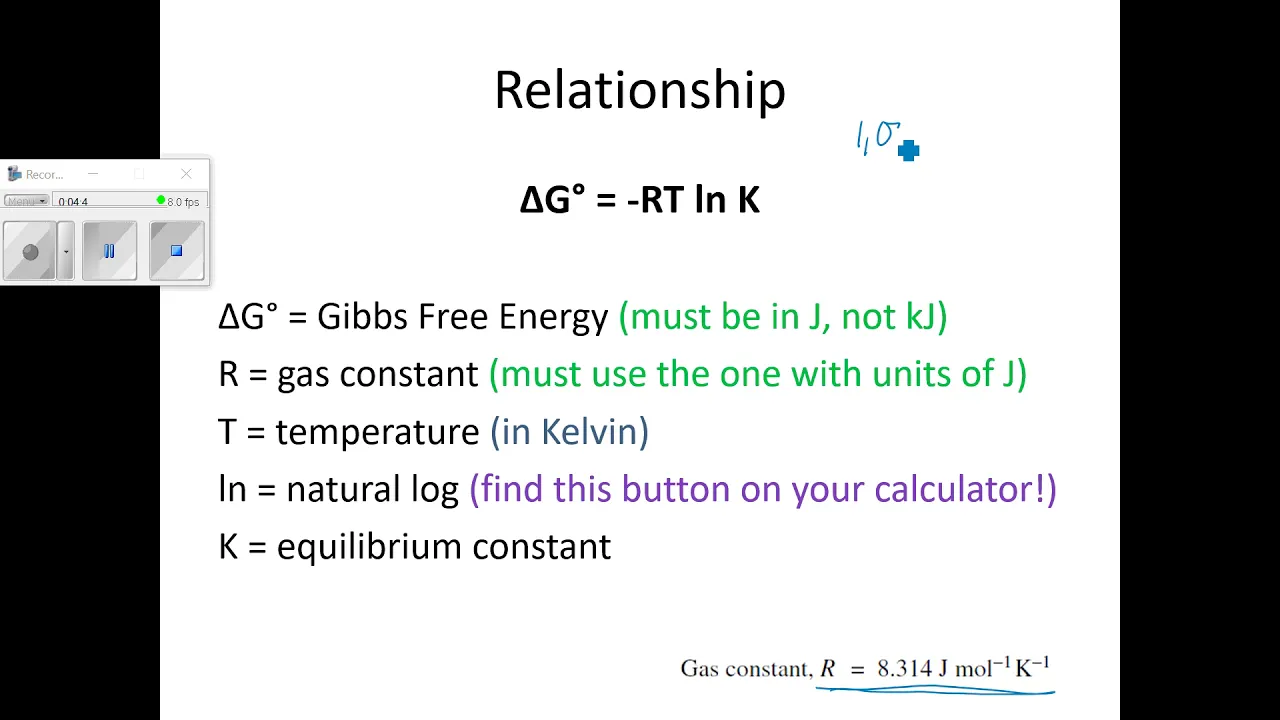





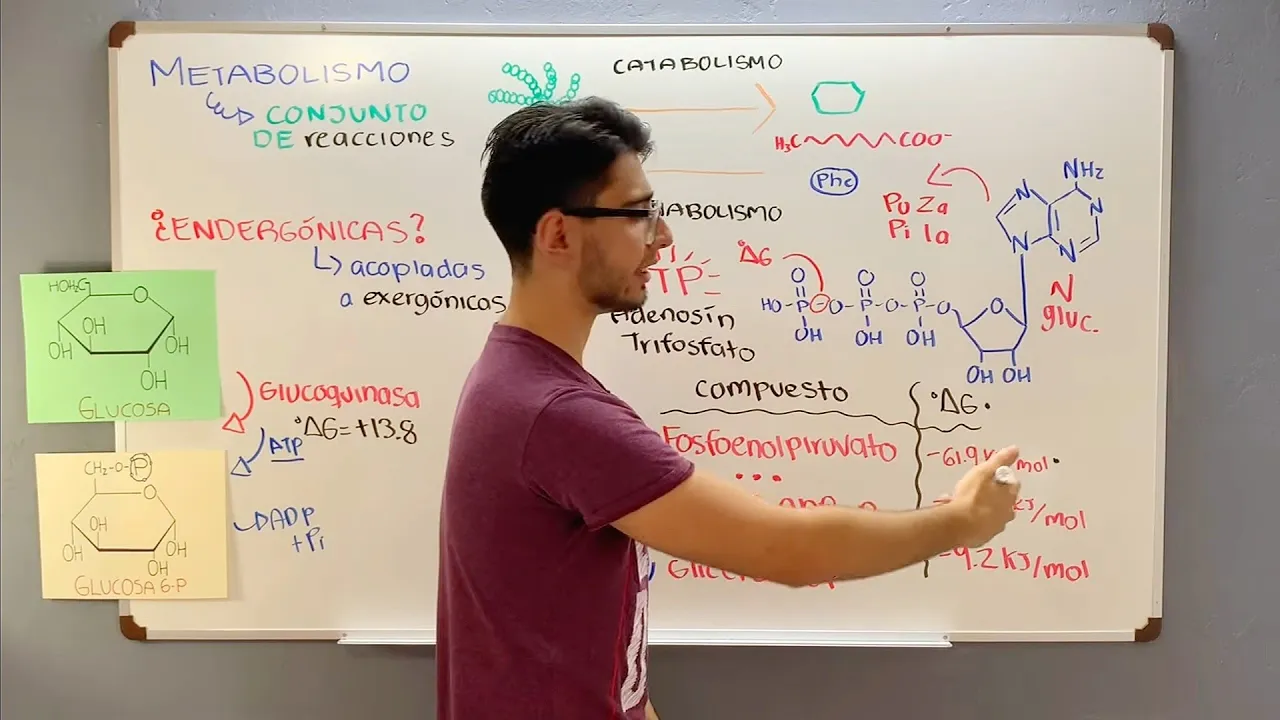

Entropy (S) measures molecular randomness or disorder in a system, and the Second Law of Thermodynamics states that any spontaneous process increases the total entropy of the universe. Gibbs Free Energy (G) combines enthalpy change (ΔH) and entropy change (ΔS) through the equation ΔG = ΔH - TΔS, where T is temperature in Kelvin, to predict whether a reaction will occur spontaneously: if ΔG is negative, the reaction is spontaneous; if positive, the reverse reaction is spontaneous; and if zero, the system is at equilibrium. A reaction is enthalpy-driven when |ΔH| > |TΔS|, meaning heat transfer provides most of the free energy, while an entropy-driven reaction occurs when |TΔS| > |ΔH|, meaning increasing disorder provides most of the reaction's free energy.
Understanding Entropy & the Second Law of Thermodynamics
Added:Life is chaos. The whole universe is chaos.
Whether it's the terrible state of my office or the slow degradation of my body into dust, the universe tends toward disorder.
But why, why is the universe structured in this terrible and callous way?
Well, it turns out that it's not really the universe's fault.
If you think about it there's only one way, or at best, maybe a few ways for things to be arranged in an organized way.
But there are nearly infinite other ways for those same things to be arranged.
The simple rules of probability dictate that it's much more likely for stuff, whether it's the stuff on my desk or the particles and energy that make up my concept of self, to be in one of the many disorganized states than in one of the few organized states.
It's simple math and it's unavoidable.
So unavoidable that it is in fact our Second Law of Thermodynamics, which says that: "Any spontaneous process increases the disorder or randomness of the universe."
Processes that don't increase the disorder of the universe require work to be done in opposition to the disorder, and are in fact often impossible to achieve.
The very act of putting one system in order requires that other systems become disordered.
Think of it this way: Your lunch was composed of an extremely ordered set of molecules.
And it gave you the energy to clean up your house, maybe.
And it had to be broken down into less ordered nutrient molecule for you to do that.
Carbohydrates, proteins, and lipids, and those molecules were broken down even further as they were converted to energy in your cells, and your body used some of that energy to power your muscles as you cleaned your house.
But a bunch of that energy was used to do things like keep your heart beating, and breathe, and make sweat, and some of that was lost to the surroundings in the form of random movement, and most importantly, heat.
By the time you've finished your house may be orderly but the remains of your lunch molecules are all over the place.
And that's only one of the many systems that became less orderly while you worked.
So yes, cleaning your house in fact increased the overall disorder of the universe.
Next time someone gives you a hard time about the state of your house you can tell them that.
Obviously disorder is a pretty big deal in the universe, and that makes it a pretty big deal in chemistry.
So scientists have a special name for it: entropy.
Entropy is a measure of molecular randomness, or disorder.
And even though people complain about the disorder in their lives, it's not all bad news.
Entropy helps make chemical reactions possible, and it helps us predict how much useful work can be extracted from a reaction.
We all have to live with disorder so you might as well understand it.
For the next ten minutes I want you to embrace the chaos.
[Theme Muusic] So what does the Second Law of Thermodynamics mean when it says: "Any spontaneous process increases the disorder of the universe."
"Spontaneous" simply means a process that doesn't need outside energy to keep it going.
And it goes the other way too, anything that increases the disorder of the universe happens spontaneously.
That doesn't mean disorderly things will always happen though, other factors may interfere.
The reaction to change a diamond into graphite, for example, would be thermodynamically spontaneous.
It wouldn't have to be forced along by outside energy, but the bonds in the diamond are so stable that essentially it never gets started.
Lots of other chemical reactions are like this too.
So even though we think of "spontaneous" meaning sudden and impulsive, like the majority of mall lip piercings, in chemistry "spontaneous" doesn't tell you how quickly something happens, it only means a reaction is thermodynamically capable of happening without outside energy to move it along.
Though come to think of it, I imagine that spontaneous lip piercings cause a fair amount of disorder as well, especially upon arriving home.
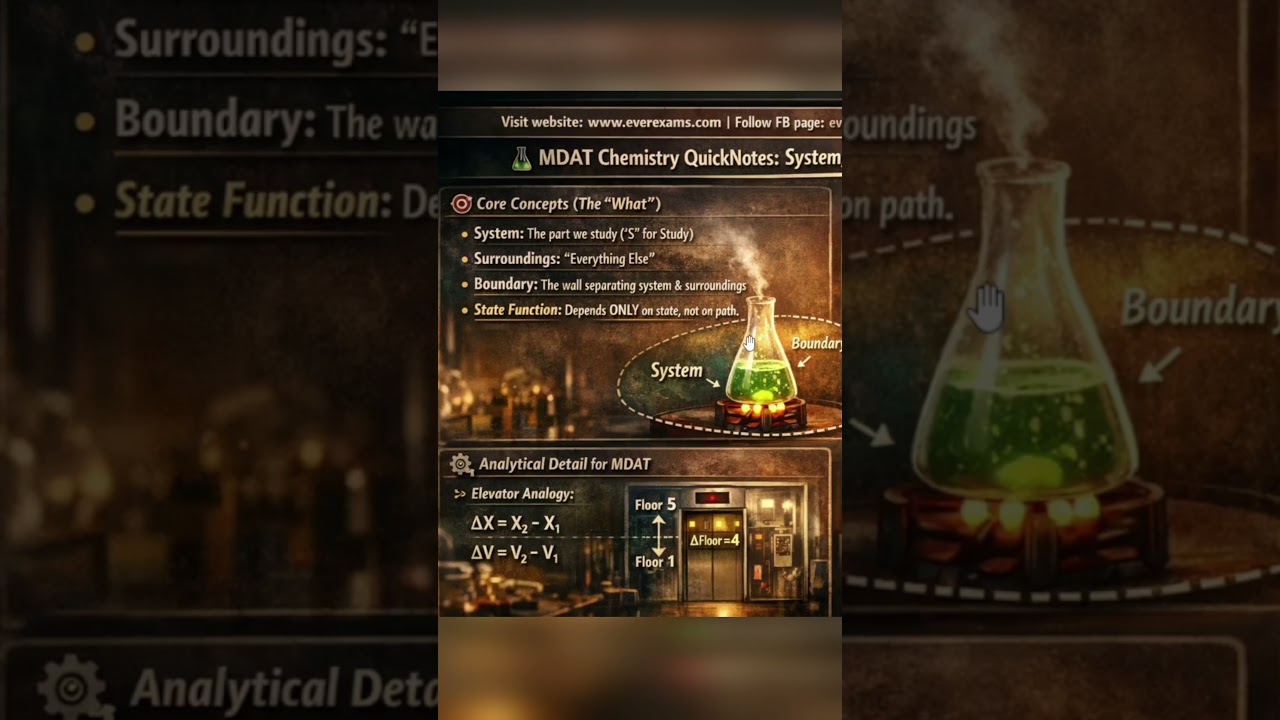
Entropy is another state function.
It doesn't depend on the pathway the system took to reach its current state.
So even though we can't measure the entropy of reactants or products directly, we can calculate them.
We can also calculate the change in entropy during a reaction exactly like we can for the change in enthalpy, by subtracting the sum of the reactant values from the sum of the product values.
In other words, the formulas look exactly the same, just substituting "S" (which for some reason is used to denote entropy) for "Delta H F".
Notice we dropped the "Delta"s on the right side of the formula because we know absolute values for entropy of individual reactants and products.
We keep the "Delta" on the left because we're calculating the change in entropy that occurs when the reactants rearrange into products.
What the heck is this good for?
Well, we can explain a mysterious thing, which is how reactions occur spontaneously in nature even though there's no energy given off, or even they suck energy out of the environment, and seem to go up the energy ladder instead of down.
Let's try it out with a real reaction here on my desk -- this is one of my favorites.
This is barium hydroxide octahydrate and this is ammonium chloride.
Usually we do chemical reactions in aqueous solution because most solids don't interact easily, but this pair is exception to that rule; they react readily in solid form.
This reaction absorbs a lot of heat from the surroundings, making everything around it feel cold.
Now to show you how cold it gets, I'm going to do something here.
And you're just going to have to assume you understand what I'm doing.
"What am I doing? What is happening? Why am I doing this? That's weird Hank.
Why are you doing that?" And then I put that on there.
So now I've dumped barium hydroxide in this beaker, I'm gonna dump the ammonium chloride in.
And now one of the by-products of this reaction is ammonia so I'm gonna have to smell that, but you don't.
Oooh ye-eah, look at that slush.
I think we've reacted pretty much completely here and so we should, if all things have gone properly -- yep, that's pretty cool --- sucked enough heat out of the block of wood to actually freeze it to the beaker.
Normally in chemistry a reaction that proceeds spontaneously and yet absorbs heat is really weird.
Basically I have a hard time believing what I just did.
So what does entropy have to do with this little freak show?
You might think it has something to do with taking the heat from the surroundings to make the system colder, but while that's counter-intuitive and cool, that's not all of it.
You might also think that it has to do with two solids combining to form a whole bunch more liquids and gases, and that IS a big part, but still not all.
To understand what we just saw a little better, we need to put it all together.
Let's start by finding out exactly how much heat it did absorb and what happened to the entropy as well.
First, we'll find the enthalpy change using Hess's Law and standard enthalpies of formation.
We can use the coefficients from the balanced chemical equation to fill in the number of moles for each substance.
Then we have to look up a whole bunch of numbers (remember, you can find tables like this online and probably in the back of your chemistry textbook too).
When we plug the standard enthalpies of formation into the formula and do the math, we find that the change in standard enthalpy is plus 166 kilojoules.
It's positive, which makes sense because the reaction absorbed the thermal energy, enough to create about a half a kilogram of ice if it had been surrounded by water instead of air and fingers.
Next, we'll find the entropy change: remember, the basic equation is the same.
We put in the number of moles from the balanced chemical equation and the standard entropies from the table and a quick calculation tells us that the change in standard entropy is 590 joules per Kelvin.
A positive result means the entropy of the reaction increased, meaning the products were more disordered than the reactants.
Note that the standard enthalpy is in kilojoules while the standard entropy is in joules per Kelvin.
The energy units should match, so let's call the standard entropy 0.594 kilojoules per Kelvin.
It doesn't look like much right now, but wait, there's more.
Those numbers don't explain why the reaction proceeds spontaneously, even though it scavenges all that heat from the environment.
But Josiah Willard Gibbs, he found a way to explain it, and he didn't even mean to.
Gibbs was interested in the amount of energy in a system that was available or free to do useful work.
Today, we call this Gibbs free energy or sometimes the standard free energy or simply free energy of the system.
Like enthalpy or entropy, Gibbs free energy is a state function, so it can be calculated the same way.
We simply substitute "Delta G," which stands for Gibbs free energy, for "Delta H" or "S."
The standard free energy of formation, written like this, is the change of free energy that occurs when a substance is formed from its elements at a standard state.
It's analogous to the standard enthalpy of formation that we use to calculate change in enthalpy.
Like enthalpy and entropy, we can't directly the free energy change of the whole reaction.
So scientists created a baseline by setting the standard free energy change of formation for an element in its most stable form at standard state to zero.
The standard free energy change of formation for a compound, then, is just the difference between its standard free energy and that baseline.
But what if you don't know the standard free energies of formation for the products and reactants?
Well, they're often listed in tables, but sometimes the ones you need aren't available.
Never fear, Willard Gibbs has an app for that. It's actually a formula, but he figured it out.
In 1873, Gibbs calculated that at constant pressure and temperature, the change in standard Gibbs free energy for a reaction equal the change in standard enthalpy minus the product of the temperature and the change in standard entropy.
In other words, the amount of free energy a reaction makes available to do work depends on two and only two things: the enthalpy change, the amount of heat the reaction transfers, and the entropy change, the amount of disorder it creates at a given temperature.
So which is more important, the heat transfer or the disorder? Well, it depends.
A large change in enthalpy can determine the direction of a free energy change, even if the entropy changes in the opposite direction, and vice versa.
If the absolute value of the change in enthalpy is greater than the absolute value of the product of the temperature and the change in entropy (or "T Delta S"), then we say that the reaction is enthalpy-driven.
this means that the flow of thermal energy provides most of the free energy in the reaction.
On the other hand, if the absolute value of "T Delta S" is greater than the absolute value of the enthalpy change, we call the reaction entropy-driven, meaning increasing disorder provides most of the reaction's free energy.
Which type was the barium hydroxide reaction?
Well, I'm gonna say that the temperature in here is about 25 degrees Celsius, or 298.15 Kelvin, because I'm awesome like that -- I can just tell.
When we multiply that by the change in entropy that we calculated, 0.594 kilojoules per kelvin, we get a value of 177 kilojoules.
If we compare that to the change in enthalpy we calculated, 166 kilojoules, it is clear that the "T Delta S" is higher than the "Delta H", so the reaction is entropy-driven -- no surprise there.
Even though the reaction absorbed a lot of thermal energy, this phenomenon was dwarfed by the increase in entropy.
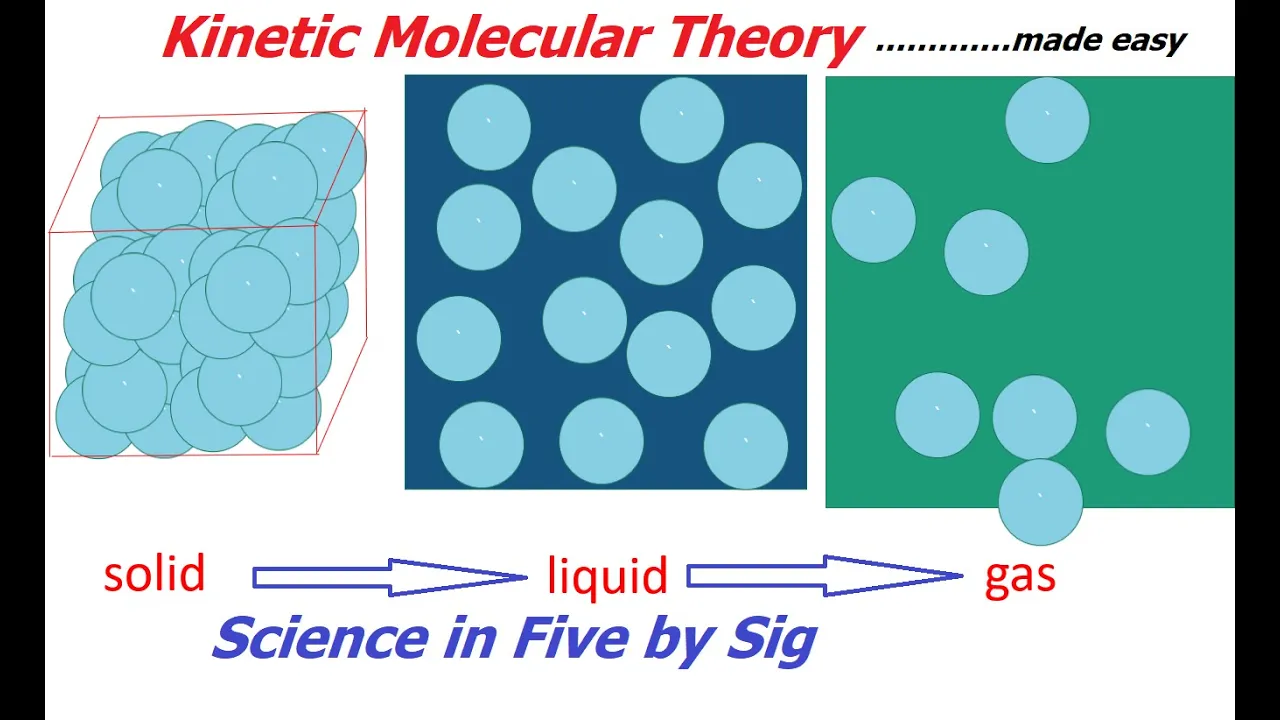
And this makes sense, because the balanced equation goes from three total moles of solids, with their molecules locked in place, to one mole of solid, ten moles of liquid, and two moles of gas.
This is a massive increase in disorder, because in addition to the fact that there are now 13 moles of particles to move around instead of just 3, the liquid and gas are particularly good at moving around, so most of those particles are in random motion, no longer stuck in one spot, causing a large increase in disorder, or entropy.
But here's the coolest part, Gibbs formula also tells us whether the reaction is spontaneous or not.
We know all systems tend toward the lowest possible energy state, whether its a ball rolling down a hill, elastic springing back into shape, or positive and negative ions forming a bond.
"Delta G" is a type of energy, obviously, so it spontaneously approaches the minimum possible level.
So if the value for "Delta G" is negative, that is if the free energy decreases, the reaction is spontaneous.
Reactions that are able to release free energy don't need external energy to make them proceed, and that's the very definition of a spontaneous reaction.
So if "Delta G" is positive, the reaction is non-spontaneous, but the reverse reaction is spontaneous.
If "Delta G" is zero, the reaction is in an equilibrium state and no discernible occurs in either direction.
So what about the reaction I just did?
Is it spontaneous at room temperature? Can it occur without energy driving it along?
Well, yes because we just watched it happen, but let's do the math!
Using Gibbs Formula and plugging in the numbers we've calculated so far, we see that the Gibbs free energy for this reaction is negative 11 kilojoules.
It is indeed spontaneous, because it releases energy instead of requiring it in order to get started.
The energy that was produced was used to rearrange the bonds in the reactants, to make smaller product molecules, to break attractions between molecules, and to push some of the particles apart from solid form into liquid and gas form, which increased the entropy of the system.
So even though the reaction absorbed a lot of thermal energy, it didn't NEED that energy to make it proceed, because the large change in entropy alone was enough to keep things moving along.
So Gibbs formula confirms our earlier results with just one little subtraction -- pretty smart guy.
And now, some of his smartness has been transferred into you, now that you've watched this episode of Crash Course Chemistry.
If you paid any attention, you learned: that it's hard to stay organized because there are so many ways to be disorganized, that the second law of thermodynamics says disorder, or entropy, happens everywhere, and that the change in entropy ultimately depends on how much room molecules have to move around in, how much heat heat energy they have to give off in reactions, and the temperature around them.
You learned about Josiah Willard Gibbs and his formula to calculate the Gibbs free energy for a reaction, that both entropy and Gibbs free energy are state functions, and that the sign of the Gibbs free energy tell us whether or not a reaction is spontaneous.
This episode of Crash Course Chemistry was written by Edi Gonzalez.
The script was edited by Blake de Pastino, and our chemistry consultant was Dr. Heiko Langner.
It was filmed, edited and directed by Nicholas Jenkins. Our script supervisor was Caitlin Hofmeister.
Our sound designer is Michael Aranda, and our graphics team is Thought Cafe.
Up Next
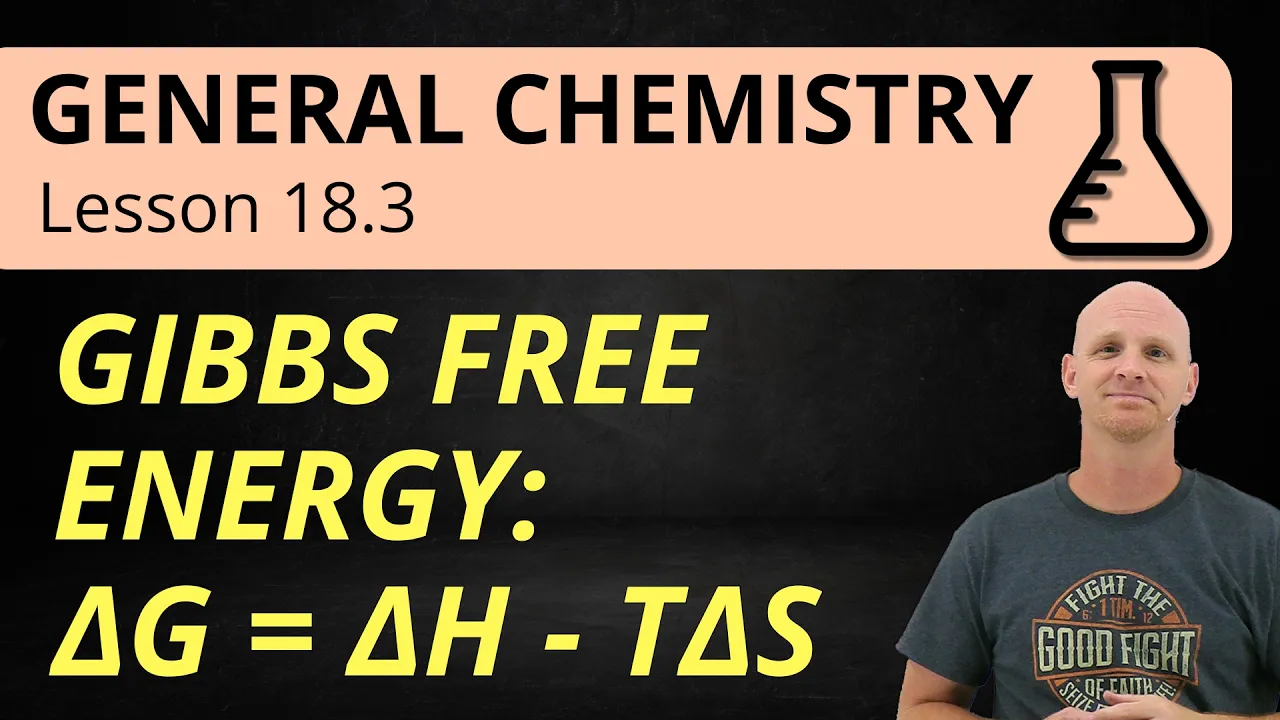
Gibbs Free Energy: The Relationship Between Delta G, Delta H & Delta S
@ChadsPrep
73.3K views•2022-03-08
Biocatalysis and Catalysis in Islatravir Synthesis | Merck Webinar
@SCIwheresciencemeetsbusiness
675 views•2020-10-08
Nuclear Chemistry: Radioactive Decay & Half-Life Explained
@crashcourse
2.1M views•2013-11-11

Edible Water Bottles: A DIY Guide to Sodium Alginate Spherification
@ryan
10.5M views•2019-06-21
Related Study Plans & Knowledge Roadmaps
Structured learning paths in Chemistry