










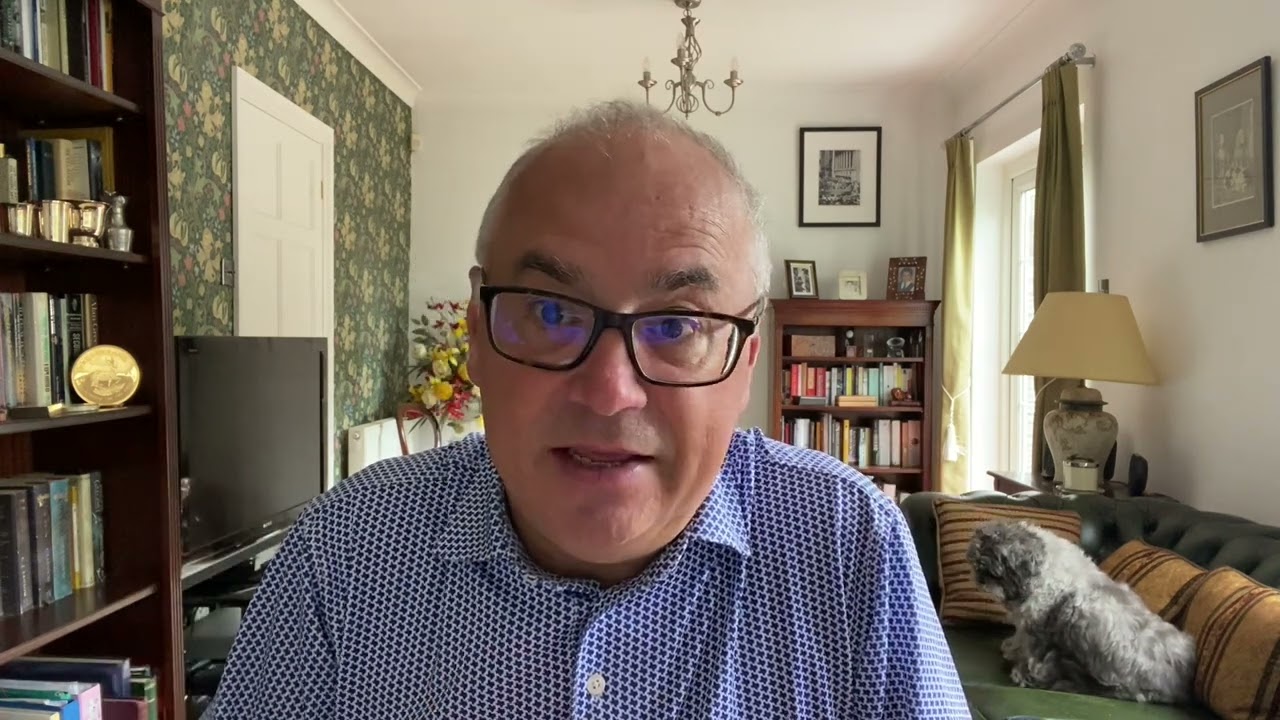





This lecture by Norman Lamont, former Chancellor of the Exchequer (1990-1993), explores key economic and political challenges including the 1992 ERM crisis where Britain was forced out of the Exchange Rate Mechanism after implementing strict inflation control policies that reduced inflation from nearly 11% to under 2%, and his subsequent role in negotiating Britain's opt-out from the Maastricht Treaty's single currency provisions. Lamont discusses how these experiences shaped his eventual support for Brexit, driven primarily by concerns about political union and national identity rather than purely economic factors. He also addresses contemporary issues including fiscal conservatism's future in an era of expanded state functions, the implications of quantitative easing on inequality and asset prices, and the importance of central bank independence versus political control over monetary policy.
UK Chancellor Norman Lamont on Economics and Brexit | Cambridge Union
Added:[Music] [Music] hello good morning everyone thank you so much for joining us please joining please join me in welcoming norman lamont and lord lamont served as chancellor from 1990 until 1993 and was the mp for kingston upon thames for a considerable number of years um the way this is going to work is that i'm going to ask a few questions some of them are my own questions some of them have been submitted by the online form and then we'll open it up to the audience for questions from the audience so i just want to go back to i think it was 1964 when you were president of this society can you talk us through the political arena in cambridge at that time and any memorable moments from your time as president would you want me to take the whole afternoon um first of all mr president thank you very very much for asking me great pleasure to be here um this place has been very important in my life actually so i am really delighted to be here when you say talk you through uh the political atmosphere perhaps i think you were thinking of when i was a student at cambridge i would say it was very very tense politically um it was the time of the cuban crisis the time of the crisis over the berlin wall and in the union there was you know quite an even match between left and right we had a communist president at the time he he got elected i think my second year and when he was a real communist he went off and worked for fidel castro went off and worked for salvador allende in chile so it was an atmosphere where there was intense political debate i happened to be i came up to cambridge myself not actually belonging to the conservative party and i joined the labour club the liberal club and the conservative club as well but very quickly decided that i belonged in the conservative party as you probably know there were quite a few of us at that time michael howard kenneth clark john gamma all of whom subsequently became conservative politicians i suppose i got into politics simply because it was something that seemed possible i was intensely interested in politics it was a very highly political time it made sense everybody wanted to be involved in politics at that time and you worked in the private sector before entering parliament when did you decide to run for parliament in and what was the 72 general election like well i when i left cambridge i first of all worked in the conservative parties research department for a couple of years but then i decided that i ought to get some experience in the business world so i worked in the city for an investment bank for uh well in the end uh including time when i was an mp i worked there for about 13 years but i always made it clear when i joined them that my heart was in politics i was in certain politics i wanted to be in politics and you know would they please allow me to stand for parliament which which i did in the 1970 general election which i was defeated in but in 1972 there wasn't a general election i got in in a by-election actually which was very lucky because it was one of the last by-elections that the conservative party at that time won and you went on to serve in the governments of margaret thatcher and john major for 14 years what were the different styles of government uh like with those two prime ministers um they could hardly be more different i i think you know john major had a very difficult task becoming prime minister after mrs thatcher had been such an iconic figure that people you know both wanted a consolidation i think there was a strain in public opinion that was tired of permanent revolution that wanted more of a consolidating approach but at the same time he was sometimes i think a bit unfairly criticized uh for not being mrs thatcher um when mrs thatcher became prime minister of course the country was in a very difficult position you know there were debates about was the country really governable britain was known as i'm sure everybody here knows is the sick man of europe our economic record was dreadful there was more of an appetite in public opinion there for a radical determined attempt to sort the problems out and that is what she brought to it but of course you know she introduced a lot of controversy with her very determined very radical measures um when john major became prime minister to some extent people were tiring of this but there was a different atmosphere in the two administrations and your time as chancellor i think was perhaps defined by the attempt to get inflation under control and the erm what was that challenge like and did you continue the policy that john major who preceded you as chancellor had employed well i i suppose my name will be forever linked with the exchange rate mechanism crisis when we devalued the the pound and that was a major major uh political event the irony is that although my name personally is linked with that i did not actually make the decision to join the exchange rate mechanism which as i'm sure people here know was a system whereby the level of the pound was linked to those of european currencies which meant we had very little flexibility over interest rates when i became a chancellor inflation was nearly 11 shortly after i left being chancellor it had fallen to under it fell to under two percent so it was a very savage deflation which obviously created some casualties but i would argue was absolutely necessary the irony of my position as chancellor was that i was not myself a great believer in the erm but i inherited this mechanism some people might say well why did you agree to be chancellor if you had to implement a policy you were not a thousand percent but i actually thought the policy could do a lot of good in reducing inflation but what happened i hope i'm not going on too long about this but what happened was that when we got inflation down the german economy who were really the economy that determined our interest rates because of their weight in the exchange rate mechanism the german economy was experiencing increased inflation as a result of reunification and they needed higher interest rates we needed lower interest rates because we were in a recession and so there was a conflict between the two and that is ultimately why britain left the exchange rate mechanism the markets forces out but one of one of the points that people never recognize about this crisis was that britain was one of i think about eight or nine countries that devalued at the same time i mean people talk about britain being forced out of the exchange rate mechanism the exchange rate mechanism virtually ceased to exist because all these countries um were forced to devalue um i personally i got into a lot of trouble because i personally thought in a way this was quite a good thing it liberated us the policy had become irrelevant the policy had served its purpose we got inflation down and so i was not that bothered that we had left it but to the public i think they thought my attitude was rather cynical they thought you know here he is he's been imposing this terrible discipline on the country now it's all blown up and it's done us no good but they were wrong in that it had done as good and personally you know i think although it was an accident that we came out of the erm it was against the government's policy i think it worked for the good in the long run and then as perhaps now discussions over europe um were shaping conservative politics and tensions within the conservative party what was the process through which the master treaty was negotiated like what was the process through which the master was negotiated they're not right well first of all let me just say i think one of the consequences of the erm crisis which made me a very unpopular made the government very unpopular was that it made people very skeptical about european unification because the exchange rate mechanism in a way you could see as a dry run for a single currency in europe i never believed in a single currency for europe and i never saw the erm as a dress rehearsal but insofar as it was the linking together of different currencies many people thought well if you can't run the erm if that's not a practical policy how can a single currency be a practical policy and so i think our exit from the erm was one of the first things that turned a lot of british public opinion against monetary union and therefore given that monetary union was one of the aims of the eu it turned a lot of people into being sympathetic to euroscepticism you asked about the maastricht treaty what was the process the maastricht treaty as you would know created the single currency but it also had a number of other provisions relating to cooperation on defence european citizenship it was really a step towards the creation of as i saw it a political union a country called europe a step towards a state called europe and it was my job in the government to negotiate our non-participation in the single currency our so-called opt-out from the single currency how did that happen well there were a lot of discussions at official levels we had i was the negotiator on the monetary part we had monthly meetings with other ministers it was um it was pretty tough because the other finance ministers the other heads of government really i think could not believe that we were serious about not joining the single currency i think there was a slight difference between my own attitude and that of john major my attitude was we will never join a single currency john major's attitude i hope i'm not being unfair to him but i i think his attitude really was we're not going to join in the meantime but you know maybe one day circumstances would allow us to join anyway uh it was quite tough because i i remember the greek finance minister who was an enormous enormous man three times my height and three times as broad as me once put his arm around me in front of everyone said no man you say you'll never join the single currency but when the time comes you will show solidarity with greece and joy and actually greece didn't join the single currency for quite a while uh either um i i remember in the last day of the negotiations i handed the dutch presidency a printout of the opt-out that we wanted and it covered every single core clause of the draft treaty saying this should not apply to britain this should not apply to britain this should not apply to britain and he said well we'll discuss it and i said well it's not negotiable you have to accept it in its entirety or we will not uh we will not be joining the treaty we will only join the treaty provided the provisions for the single currency do not apply to britain provided it's voluntary and up to britain and he said we must discuss it so at that point i walked out of the room and i remember it was a very deliberately staged act but i i remember i tried very hard to slam the door and the door was so thick all i did was make a rather rude creaking noise and i went off and had a cup of coffee for an hour and came back and they said we've agreed you're opt out at what stage did you begin to feel that you were perhaps increasingly out of step with the major cabinets and major particularly in relation to europe that perhaps led to um your decision to part ways after the newbury by-election in may 1993.
well i didn't think uh there was any significant different people in the cabinet had different views about europe some people wanted to join the single currency eventually some people like myself said no never but the policy was agreed by everybody you can say it's a sticking plaster policy it was we have an opt-out we are not required to join one day we might some people would say like me we'll never join but there wasn't really a disagreement on the opt-out policy i think recognizing the divisions in the government everybody agreed this was a sensible uh po policy um so you know that that that wasn't uh really uh a source of contention in cabinet no what um i mean i departed from the government after the newbury uh by-election but i think that was more i mean john major asked me if i would take another position in the cabinet i felt i'd had quite enough it was extremely rough i can tell you for those three years because one was administering very harsh policies the 1993 budget which i had introduced shortly before the newbury by-election was one that placed severe restrictions on public spending uh put up taxes and furthermore put up taxes for several years ahead i legislated for tax increases for three years so that whoever came after me had to implement these tax increases because as a result of the recession we had a very big budget deficit i say a very big budget deficit nothing like what we've got now but it seemed very big then and i thought it was very important to plug that but that was very unpopular and i think that was why john major asked me if i would uh take another post in the cabinet but i decided i'd had enough frankly and uh left the government i'm gonna squeeze one more question before we head to audience questions and that fast forward slightly to the present day do you think that that physical that fiscal conservatism has a future in the conservative party of today given how big the state has become and just the sheer amount of money that's needed to fund all of the schemes that have sustained the country through the pandemic um that's a very good question i thought your question was going to be does fiscal conservatism has a future but then you also altered it has fiscal conservatism got a future in the conservative party which is also a very good question i i mean i am a fiscal conservative if you're asking me which i think you are am i worried about trends in the government the answer is is yes but the jury is still out i think we're in a position where because of the covid crisis there have been absolutely essentially and necessarily huge increases in public expenditure in order to cope with the uh consequences of the government-imposed lockdown of the economy i mean be clear about it when we talk about the recession that we have had economically during covert this is a government imposed because it's caused it's not the economic cycle it's a result of regulation the government have imposed which has caused severe financial difficulties i mean i'm not in any way criticizing the government for that but that is why we've had to sp why it is morally right that the government should bail out and assist those that it has made life very difficult for but where i'm worried is that you know this process obviously has to come to an end and i think at a time where public expenditure has been increasing pretty generally there there is a real danger that this is just going to seep over and become permanent in in increases now a lot of the measures that have been taken are one-offs they add to debt but they add to debt for one year but there are other things that are now being debated which are expenditure measures that will last for many years and people are arguing about catch up in health catch up in education uh extension of furlough care in the community social care these are of course all very very important subjects but i think we cannot ignore the problem of how this is financiable and you know i think this is something i mean people constantly say the prime minister loves a big project and i think the evidence is there the prime minister does like building big projects but we've got to have fiscal discipline as well and if we're not careful there will be very sharp increases in taxation let's take some questions from the audience and if you have a question just raise your hand and please um wait for the microphone to come to you uh the person the green shirt over there is that working i think so you're allowed to take your mask off i'll do that um hello lord lamont thank you very much for coming down today and i wanted to ask whether in the wake of david cameron's dealings with green sill you perceive any tension between the role that you've had in parliament and the various advisory roles you've held in the financial sector over the years thank you whether i perceive that he had a tension or i have attention your attention um well i think it's um perfectly proper for people to in parliament to have outside roles i don't think when i was in the house of commons i can other than at the beginning actually when i first became an mp uh in my late 20s i was still working in the city and but what i did i was quite a junior person but i just worked in the mornings there and went to the house of commons in the afternoon that wouldn't be practical today simply because of the but you know it wasn't i wasn't doing anything on behalf of anybody i worked for while i was in the house of commons um i personally i have had interests outside in the house of lords um i don't think they've had any great bearing on stances that i've ever taken up uh in any case they're all registered uh if i ever speak in a debate where i have a interest i would always refer to the register and declare it so i mean i think the position in the lords is different from the commons because people in the lords are you know by and large uh part-time uh i i think you know if you're going to have a part-time assembly this inevitably will will happen can i just sort of comment and a lot of people will disagree with this but i personally think the criticism of david cameron has been rather overdone um you know i think people forget that it was not uh david cameron who invited mr green sill into downing street but it was the previous cabinet secretary alas a brilliant man who's the last no longer alive but you know he had no financial motive he did it because he thought this was a worthwhile thing to to bring in and in that respect i think uh a lot of the oblique that's been heaped on cameron has been over the top um there was a question from a row behind thank you very much for speaking today or uh on your resignation from the cabinet um it's reported in john major's words that uh after being in after being in the environment secretary you said no thank you prime minister i wish to resign from the cabinet and then apparently you have never spoken to john may just according to it i can't i can't hear you oh hello yeah i just wondered if he could talk upon his uh relationship his personal relationships uh throughout his political career it's been reported since afraid that is not quite right um i mean no i have spoken to john major on many occasions i mean it is true that there were some years we didn't speak but as i always say grass grows over the battlefield and yeah you know you can't quarrel with someone and have a disagreement with them for the rest of your life and i'm on perfectly amicable terms with joe major and yes the person in the green quarter zip hi um thank you for coming question it's more related to your stance on the european union you were a big supporter of the withdrawal of the european union but yes you have yourself also experienced uh quite like britain's special power once you were still in you got the opt out from the maastricht treaty for the currency and why do you feel that britain outside of the european union union where they don't get their kind of extra cherry picking which you used to enjoy before and benefits significantly over still being a part inside the european union and can cherry pick in short i think it's um the question of the opt-outs that we had i i think that was a good point when i decided eventually to support the leave side in the eu one one of the issues that i debated in my mind very much was all right you as me fear the creation of integration in europe political integration the creation of european state however have you taken into account the fact that we have an op type from the single currency and opt out from the social chapter an opt-out from schengen isn't it possible i debated with myself to have the best of all possible worlds and have opt-outs but remain member members of the eu that was a key issue in my mind before i came to the conclusion that we should leave why why did i come to that that decision uh well firstly you know i felt there would be other measures you know were going to come down the road secondly the opt-outs were not necessarily permanent a future government could easily uh reverse them and i i felt very strongly i mean very much you know the two reasons that i joined the leave campaign were one having spent most of my ministerial career dealing with the european union i was very very unimpressed with the [Music] efficiency the way it worked i felt that it was very difficult for anybody who had actually dealt with the european union to believe it was an effective organization but the second and more important reason it was just a personal one is that i was very much against a political union and i didn't feel that the opt-outs we already had were necessarily going to be permanent or would be necessarily completely watertight people would find ways around them we found this all the time that our opt-outs were being uh challenged or measures were being you know the european union is extremely good the officials in brussels at finding ways within the treaties of doing things that you thought they probably couldn't be able to do but they always find them and so that was why i concluded that the opt-outs were not a sufficient uh protection i understand you then said well do i feel at a disadvantage now we don't have those octagons well no i mean we're not part of the eu now so you know the opt-out from the single currency is irrelevant we're not part of the single currency and we can't be driven into it as i've made clear the main reason that i supported leave was to do with political union with identity it's a very personal thing i mean there will be people here who probably don't mind if we join a state called europe or a country called europe i profoundly did matter and the only way in which this sort of issue can be resolved in my opinion is through a referendum which is exactly what happened i mean i'm not a great believer in referenda but i believe that referendum on a question of national identity is the right way in which to resolve the issue and just on that point i'm curious do you think that identity was the driving factor behind most people's decisions to vote leave or were there questions about sovereignty or the economy was it was it in your mind primarily identity related i think it was in a lot of people's minds and particularly people of my generation i think it was about identity and sovereignty i mean you said sovereignties it was separate i mean well of course they might be different things but i think the two were very closely linked and i think that was where the remain campaign made a big mistake because they didn't understand that there were a lot of people out there who thought like like that i mean i respect people who don't share my feelings but i can't change my feelings those were the feelings i had i think it probably has something to do with the fact i i was born in the most northerly part of this country in the shetland isles off the north coast of scotland to me the concept of britain always mattered we always looked to london rather than to edinburgh but the concept of britain was something that mattered to me and you know the abolition of britain was not something i wanted to see yes thank you very thank much very much for your time today sir um my question is that there has been a growing consensus within the academia that periods of persistent low interest rates have exacerbated inequalities as they have a negative effect on many people's savings and expose them to volatilities of the equity markets do you think that monetary policy committees such as the bank of england and the feds and other committees around the world have a have have to consider wider implications of their actions so on indicators such as inequality and savings thank you well i think it's a very important uh question uh i am of the view that both the fed and the central banks of europe including the bank of england were right after the financial crisis in 2008 to indulge in a policy of quantitative easing but this policy you know which has had to be renewed with the covid pandemic has had lots of unintended uh consequences and one of them is very much the distortion of asset prices um who am i to say whether the stock market level is a bubble or not or whether the fixed fixed interest rate market is in a bubble or not i wouldn't want to make that judgment but i think these markets are distorted by a policy of quantitative easing leading to interest rates being lower than the otherwise would have been as i say i think these policies were necessary initially to keep the economy moving um but we're in a situation where you know effectively the bank of england is you know funding one third of the gilt-edged market and is you know will be on target actually to own perhaps half of the government-funded market and i think at some point interest rates have to be nearer to a more realistic level otherwise i fear we will have a huge correction sometime and as you say this has had possibly effects on inequality asset prices going up benefit very much the the better off but my point is not just about inequality it is about a distortion of prices how can markets reflect any correct valuation when they are so distorted by the level of government interference and so you know i hope that this will be a policy that perhaps the fed will soon decide has to be gradually reversed i think the fed will be the first to do it possibly followed by the bank of england but the ecb lasts probably yes at the back okay thank you very much for coming oh of course okay thank you um for coming today so my question is kind of following on from joel's political conservatism fiscal conservative question earlier and it's basically around how in the academic community particularly following olivier blanchard's paper in sort of february 2019 or january 2019 he sort of highlighted that what really matters isn't your deficit or your debt but the rate of interest on your debt compared to the rate of growth in your economy and as long as like r minus g is sort of uh negative so you're growing faster than you sort of accumulate uh interest on your debt then it's okay to borrow and historically that has been the case for us and with this sort of growing consensus in the academic community would you recommend political and fiscal conservatism to any future government and how does that make you reflect on your own sort of decisions some of which have been sort of quite severe economically thank you it's not given to us just to determine the rate of growth like that i mean if the rate of growth could just be conjured up out of the air like that that would perhaps be a terrible theory but life isn't isn't uh like that and you know even if you use that theory and judge interest rates against public sector projects for example the argument that investment investment as opposed to current spending doesn't matter because it yields returns a lot of public sector projects don't yield returns they don't yield returns because they're inefficiently carried out and also they don't have economic benefits but you know i don't see how you can just conjure up a general rate of growth of a kind that enables you to to finance whatever whatever you you want you know there are a lot of pressures that i think will lead to rates going up in in the longer term i mean who knows it's very difficult to say what the effect of demography comes into it um long term uh i just don't believe that government intervention in this way is the the right way to do it yes over here hello thank you for joining us i was curious they're proposing a minimum of a 15 percent global tax rate and i didn't know if you had any thoughts or comments on that global tax repeat i'm sorry i can't could you say again slowly you're asking about the 15 i think he's asking about for your thoughts on the proposed 15 global tax rate well i think uh there is a big issue obviously about companies ability to shift their tax liabilities from one jurisdiction to another and so i support anything that will help to solve that particular problem i think the fundamental problem is that the taxation of profits you know has become a very difficult tax actually to collect and possibly what we ought to think about is not so much attempting to tax profits as attempting to tax sales where those sales uh occur that would be one way of doing it but you know i not not opposed in principle to the 15 percent having said that you know i do worry a little about tax competition because i think there ought to be competition between jurors different jurisdictions and if you just have a minimum rate of tax that is too high that's very convenient for governments and i think the incentive has to be there for governments to level a a rate and a level of tax that is fair and appropriate and not just you know this is something that i came up against when i was chancellor dealing with the eu because they all the time wanted to have minimum rates of tax throughout the eu whereas my line was that i didn't want that within the eu because we knew that the appropriate rate of taxes we sought was lower than that of the eu but having said that i do think that in this particular instance given that we have these gigantic tech companies moving profits from one jurisdiction to another i hope that this will work whether it will work is a very different question i wanted to um ask a quick question about something that i read earlier which was that janice varathakis um who is obviously not one of your political comrades as it were said that when he was negotiating with the european union and he sought your advice and was was very grateful for your council was there some kind of um janis verafakis was there some kind of um unity among left-wing and right-wing euroskeptics um around economic issues in the run-up to the referendum well i wouldn't call uh janus verofakis a euro skeptic or he might be now but he wasn't then people are always puzzled why i became quite friendly with janice vera farkas who calls himself a marxist and who became finance minister in the greek government the the only well first of all i met him and knew him long before he became finance minister of greece we met in a debate in melbourne australia where he was arguing in favor of the euro and i was arguing against the euro and arguing it should be abolished and in the middle of the debate janus verofakis said well actually i agree with almost everything lord lamont has said i'm switching my position and we became very very good friends from then on i mean i don't mean that he literally changed his mind but he expressed a lot of sympathy for the views that i had about the euro and when he uh i i slightly lost touch with him and then one day i received an email from him saying you may find this very uh unlikely and improbable he said i can't really believe it myself but he said i'm becoming a politician and if opinion polls are to be believed tomorrow i'll be a member of parliament for athens and very very probably become finance minister what on earth should i do and we remained in touch and i had a lot of sympathy with him because i felt that the austerity that the troika in the eu were imposing on greece was simply unrealistic i didn't believe that that degree of public retrenchment could could take place and i couldn't see how it was going to solve the problem of greece's indebtedness because all it would do would uh actually drive the greek economy into such a deep recession the indebted the ratio of debt to gdp would go up and so you know i kept in touch with janna's vara focus i'm not sure i gave him any advice that it was any great value but we kept in touch and discussed these matters and of course exactly as one had said if you look at the ratio of debt to gdp in greece today it is far far higher as a result of the policies that carried out than the level of debt that caused everybody to have such a panic in the first let's take place question and we'll come back to you yes uh just uh just building on what you last spoke about i wondered what you think the role of politicians is in guiding the economy i think that with the fed and someone like mark carney in control um there's been a lot of discussion around the role of politicians in deciding future uh economic growth oh if you could speak about that well when i was chancellor of course the bank of england was not independent and i twice tried to persuade john major that he should make the bank of england independent and he very strongly uh disagreed with me he thought interest rates were a political matter or a matter which should be determined by politicians and i having both in my own time as chancellor and having uh served under nigel dawson when nigel was chancellor and seen the pressure that mrs thatcher i mean mrs hatcher was you know someone with a reputation for being orthodox and conservative but i think she put quite a lot of pressure from time to prime on nigel lawson to reduce interest rates and the political pressure is always there to reduce uh interest rates despite the earlier question about interest rates being too low the political pressure should not be there and the bundesbank in germany had operated very well as an independent bank the bank of new zealand had operated very well as an independent bank and so that was something i uh very strongly supported after i left office i went actually went to see tony blair and gordon brown and i said to them it's no business of mine to make life easier for the labour party but if i were you in order to assuage people's fears about the labour party being irresponsible you should make the bank of england independent and that will actually win you a lot of brownie points uh well i'm sure my advice didn't really have any impact on them but on the day before gordon brown made the bank of england independent he did ring me up and said down the telephone well we've decided to take your advice i'm sure that was a joke but that was what he said um do i think that other aspects of economic policy should be controlled by technicians in this way no because i think decisions about taxation and expenditure are profoundly political matters you know the labor party may want higher spending the conservative party lower spending these are political issues and i don't think you can just subcontract those to a lot of technocrats of course one one thing has happened to to make an institution independent was that george osborne has introduced the office of budget responsibility the obr so that the budget forecasts are done on an independent basis i did myself have some reservations about that at the time he did it but i think i was wrong and he was right that you know the chancellor having to frame his policies against a projection of the future that someone without any self-interest has drawn up gives a real discipline on the chancellor otherwise the temptation for the person making the decisions is to assume that everything will be rosy inflation will be fine um tax revenues will come in uh and just just leave it at that and so i i think the ovr decision was right i think the bank of england decision was right but i'm not in favor of subcontracting away from politicians uh these decisions about spending and taxation um which of your successes approaches is closest to your own i'm just interested in the um decision gordon brown made which obviously um perhaps for different motivations was the same decision that you would have made do you see any parallels between you and any of your successes well i think there's a lot of common ground between all the people who've been chancellor since i was uh chancellor i don't think there's been um you know a huge in in terms of monetary policy i think there's been a lot of continuity obviously the labour party tends to favor higher spending than the conservative party but i think as regards the importance of having containable and financiable borrowing there's a lot of common ground between all i mean i often have taken place in taking part in seminars with aleister darling or gordon brown you know we don't really have great quarrels over these sorts of issues do we have any um more audience questions yes back to what you said about identity and about identity and and we talked about the european referendum but there's also discussion about having a second scottish referendum and you're also from scotland or maybe northern ireland how do you feel about doing referendus there would you support that because you said like it's a lot about identity and identity could be best dealt with it even i assume you're a unionist in terms of your scottish identity yeah well i i'm a unionist i'm also scottish but i do believe very strongly in the union of britain scotland wales and northern ireland uh i i believe that these issues can only be resolved through uh referenda but i don't think you can have referendum uh you know every five minutes or just because you get a bad result in one referendum suddenly decides that you want to hold another referendum we've had a referendum on scottish independence i'm not saying there'll never be another referendum but i think you have to allow a decent interval of time and to have some evidence that you know there is a profound shift of of of of opinion but ultimately for scotland as for britain in the eu ultimately it can only be determined probably by a referendum yes in the program hi first of all thank you for your talk um my question was surrounding the end of the european exchange rates mechanism and whether when you took it on did you think it was unsustainable and could anything have been done to prevent the end of the system uh well obviously i didn't think it was unsustainable um you know why should i have concluded concluded that um britain had been a member of other fixed exchange regimes i mean we were a member of the bretton woods regime for many years until that was abandoned it never occurred to me you know the erm had been in existence for i think just under a decade it never occurred to me that in the next few years it would come under such uh strain i think as i said earlier what caused the strain in the erm fundamentally was the conflict between the needs of germany as the anchor of the system and the needs of other economies and it was the fact of german reunification which created a boom and created the need for higher interest rates while the rest of europe by and large including britain and france needed lower interest rates that that was the fundamental uh cause of it did i foresee that this would happen no i think perhaps everybody you know is guilty of not having foreseen the consequences of german reunification when you say could anything have been done to prevent it i don't think so i mean i haven't uh i've never come across any persuasive scenario that anyone has put forward you know at the time i've debated this endlessly in my mind you know one one possibility that people often talk about was if we had devalued within the system would that not have prevented the system exploding but the problem with that was that if we had devalued against all the other currencies it would have meant we would have had to put up interest rates and the erm problem was that in order to sustain the erm we needed hugely high interest rates i said when i became chancellor inflation was nearly 11 interest rates were 14 and although people who remember the erm think of the erm and high interest rates during the entire time we were in the erm the only thing we ever did was actually to cut interest rates not enough for the needs of people as they saw it but they were always going in a downwards and we wanted to get them down but we couldn't get them down because of the situation so if we had devalued we would have reversed that process so you know i mean people talked about but if we'd had a coordinated devaluation let us say with the french and the italians well i talked to the french finance minister at the time and he made it perfectly clear that if britain devalued they would not devalue which would have meant the interest rate penalty we would have paid would have been greater the only way in which it would have worked would have been if everybody devalued and the deutsche mark went up by its own but there was no agreement on that thank you i think our hour is almost up so i want to extend an incredibly warm thank you to um lord lamont for coming back and for answering all of our questions uh thank you to you in the audience and our next event and the final event of term will be um tomorrow evening where we'll be having a debate on the motion this house believes religion is compatible with with modernity uh and speaking in that debate will be uh rob rinder reef armored deborah francis white peter tatchell and others so until then thank you very much for coming take care and have a great afternoon [Music] you
Up Next

How the Neolithic Revolution Changed Humanity Forever
@SANDIP-yt-channel01
953 views•2026-05-19

The Great Schism of 1054: Causes and Consequences
@SacredCathedrals
113.5K views•2026-02-19
The Geopolitics of the Ukraine War and the Rise of Global Autocracy
@JordanHarbingerShow
468K views•2025-04-19
Understanding the Cold War: Superpower Conflicts and the Road to Détente
@OverSimplified
46.1M views•2019-01-24
Related Study Plans & Knowledge Roadmaps
Structured learning paths in History