









![캔버스 위의 혁명, 인상파가 세상을 본 방법ㅣ전원경 세종사이버대학교 교수 [아트앤더시티]](https://i.ytimg.com/vi_webp/8DRss7IduRg/maxresdefault.webp)




















Artists throughout history have consistently idealized, embellished, and sometimes entirely reinvented the features of their female models, creating representations that often differ significantly from reality. This video demonstrates this phenomenon through three famous cases: Auguste Renoir's portraits of Jeanne Samary, who had a broad face and heavy chin but was painted as a beauty with delicate features; Dante Gabriel Rossetti's paintings of Jane Morris, whose unconventional features (heavy chin, prominent nose, deep-set eyes) were transformed into the idealized femme fatale; and Valentin Serov's 'Girl with Peaches' of Vera Mamontova, capturing her natural charm. These examples reveal that artistic interpretation prioritizes aesthetic vision and emotional resonance over physical accuracy, with artists often transforming their subjects' appearances to match their artistic vision or the subject's own aspirations.
The Real Women Behind Iconic Paintings: Renoir to Serov
Added:How did women look in famous paintings — and how much did their images match reality?
Artists idealized, embellished, and sometimes entirely reinvented the features of their models.
Today we will compare art and real life to understand what women truly looked like.
In 1877, Auguste Renoir painted a portrait of a young actress from the Comédie-Française named Jeanne Samary. This portrait became world-famous and remains one of Renoir’s most recognizable works, but it is only one of the five portraits he created of this charming woman. The French actress Jeanne Samary was a true muse for the artist. Jeanne was born on March 4, 1867, in Paris. Her grandmother and aunts were actresses, while her father was a cellist at the Paris Opera.
It is no surprise that Jeanne had a creative nature from childhood, and her professional path seemed almost predetermined — she became a theater actress.
Jeanne Samary was a beautiful woman with delicate facial features and a graceful figure. Although she did not fit the classic French beauty standard of the 19th century, she possessed a special charm that captivated Renoir. Her soft, radiant eyes and kind, welcoming smile were particularly striking.
Renoir did not like his first portrait of the young actress. When he met her for the first time and decided to paint her, it was evening, and the artist was standing in Madame Charpentier’s salon. Renoir had his back to the door when he suddenly felt as though the room had filled with light. He turned around and saw Jeanne enter. The artist was enchanted — he felt as if her skin glowed from within. They talked, and Renoir later recalled being fascinated by her voice as well.
By then Jeanne Samary was already a fairly well-known actress, and she agreed to pose willingly, knowing that a portrait painted by Renoir could bring her even more fame.
Her parents commissioned the portrait. There is no direct evidence of a romance between the artist and his model, but contemporaries noted that Jeanne was clearly in love.
The famous portrait in the emerald dress was the second one Renoir painted. Even though the girl in the painting looks like a beauty, Jeanne herself was not considered exceptionally attractive: she had a rather broad face, a heavy chin, and a large bust. She lacked the refined appearance of an aristocrat, wore a simple hairstyle, and in general was a woman of modest origins.
But her charm decided everything — she had the rare gift of making people fall in love at first glance with just her smile. When Jeanne walked onto the stage, the entire audience was delighted. She smiled naturally and openly, something high-society women rarely did, which is why most aristocratic portraits of the time appear so restrained.
To be honest, Renoir greatly idealized Jeanne’s appearance in his portraits, but the actress trusted him, understanding that no photograph could convey her natural charm. Beauty is, after all, in the eye of the beholder. When Jeanne Samary’s portrait was shown at the third Impressionist exhibition in 1877, Renoir received heavy criticism. People mocked the painting; some even said that the woman’s hands looked “as if they were covered with scales.” Yet others were captivated by it. The third portrait — more precisely, a study — was painted by Renoir in 1878 and is now housed in the National Gallery of Art in Washington. It is perhaps the strangest of all. That same year, Renoir created a full-length portrait of Jeanne, which you may have seen in the Hermitage. She is depicted against a backdrop of theater curtains, wearing an elegant evening gown with a train and a deep décolleté.
Her appearance in the portrait is, of course, embellished, yet this is exactly how Jeanne wished to see herself — secretly aspiring to resemble the women of high society.
Jeanne had placed great hopes on this formal portrait. However, the public barely noticed it, and she was so disappointed that she refused to buy it back.
There is also a fifth portrait of the actress. In this final image she looks very gentle, youthful, and sweet, but the unique magic of her charm — the one captured in Renoir’s most famous portrait — could not be recreated. Jeanne died at the age of thirty-two from typhoid fever, but before that she managed to leave her acting career behind and marry the son of a wealthy broker, despite his parents’ disapproval. None of the groom’s relatives attended the wedding. Jeanne became the mother of two daughters, both of whom later became actresses. She also tried her hand at writing and lived as a happy wife and mother.
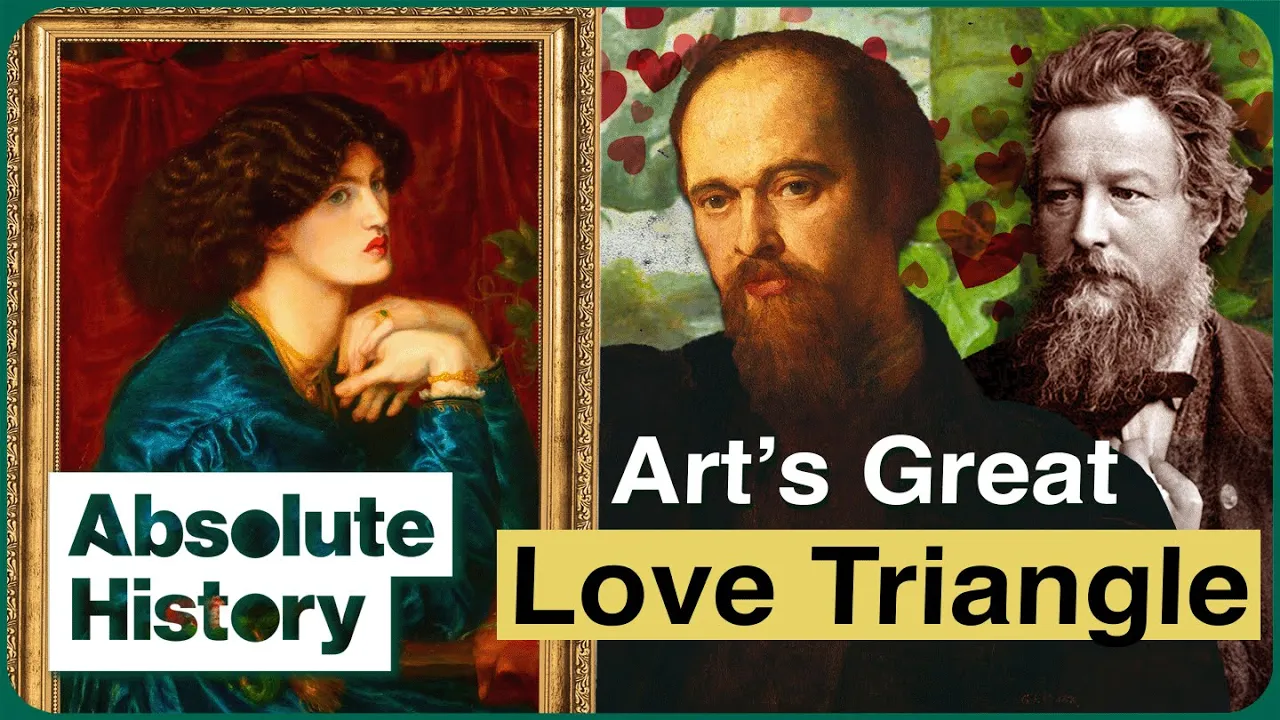
The fatal beauty Jane Morris is known to everyone from the paintings of Dante Gabriel Rossetti and from the famous love triangle of William Morris – Jane Morris – Rossetti.
Jane was born in Oxford. Her father was a stableman, and her mother worked as a laundress. The same unenviable fate awaited Jane herself, had it not been for a stroke of luck. In the autumn of 1857, seeking a bit of entertainment, the eighteen-year-old Jane and her sister went to a performance at the Drury Lane Theatre, where the beautiful girl caught the eye of the Pre-Raphaelite painters Dante Gabriel Rossetti and Edward Burne-Jones.
Jane’s beauty did not at all conform to the beauty standards of the time: thin and tall, with porcelain skin, a heavy chin, a rather prominent nose, large deep-set grey eyes, and full sensual lips. Completing the image was a mass of luxurious wavy dark hair — the complete opposite of the fair, rosy-cheeked doll-like beauties with snub noses. Yet she enchanted the Pre-Raphaelites — in Jane they saw the ideal embodiment of the femme fatale. Completely bewitched by the appearance of the modest, quiet young woman, the painters persuaded her to pose. Rossetti was the first, painting his Guinevere from the young dark-eyed model. During one of these sittings, Jane Burden met another member of the Pre-Raphaelite Brotherhood — William Morris. Morris, unlike Jane, came from a well-to-do family; he fell in love with her, proposed, and she accepted.
In 1859 Jane and Morris became engaged. Morris paid for Jane’s education so that she could match her future social status and not feel embarrassed in the circles she would now enter. Jane proved to be an incredibly gifted student and in just a year transformed from an illiterate girl into a “fine lady.” She learned foreign languages — French and Italian — became an excellent pianist, developed an interest in art and cultivated a refined taste. The marriage produced two daughters, Jenny and May. By that time, Jane had secured her place in high English society and continued to pose for her old acquaintance Dante Gabriel Rossetti. It was no secret that Jane and Rossetti — the very man who had first noticed her in the theatre — were lovers. Their affair was also no secret to William Morris. A committed socialist and idealist, he did not regard his wife as his property and did not wish to see her unhappy, although he loved her deeply, and therefore granted Jane complete freedom. Morris ended her relationship with Rossetti in 1876 due to the sharp deterioration of his mental health. Rossetti experienced schizophrenic psychotic episodes, and in 1872 he fell into a coma after taking a large dose of opium tincture.
In Rossetti’s paintings Jane, just like in real life, appears feminine, melancholic, and enigmatic. A woman of mystery — that is how she remained for everyone. “This face was created to ignite the fire of his imagination and invigorate his energies; this face, full of mysterious and inexpressible meaning,” wrote the artist’s brother William Michael Rossetti about his beloved and muse. Rossetti’s painting Proserpine, inspired by the ancient Roman myth, is apparently the culmination of his intertwined artistic and romantic passions. In the four-foot-high portrait Morris holds a split pomegranate. The red of its pulp echoes the colour of her lips. According to the myth, Proserpine tasted the forbidden fruit and was doomed to spend part of each year in the underworld.
Yet the usual unsmiling expression on Morris’s face, familiar both from Rossetti’s paintings and photographs, conveys neither sorrow nor distress. On the contrary, Rossetti captures the essence that made this reserved and intelligent woman so compelling as a model: a hint of a complex, carefully guarded inner life behind the sombre cast of her features. Rossetti’s drawings and paintings depicting Jane are precise portraits. Symbolically, Jane Morris, like Proserpine, was torn between her husband — the embodiment of active endeavour, diligence, common sense, discipline, and devotion to ideals — and Rossetti, who was sinking ever deeper into his weaknesses and vices. Dante Gabriel Rossetti died on 9 April 1882. In his final years he suffered hallucinations and bouts of paralysis.
It was after Rossetti’s death that Jane became involved with another man: Wilfrid Scawen Blunt.
He was an adventurer and former diplomat whom she met in 1883. A great admirer of Rossetti’s work, he initially viewed the seduction of the muse of his idol as a challenge. Yet the affair grew serious and lasted about seven years. Blunt made Jane happier than she had ever been.
William Morris fell ill more frequently; in the early 1890s, in addition to gout, he suffered from epileptic seizures. He died of tuberculosis on the morning of 4 October 1896, by then completely incapacitated. After William Morris’s death, Jane confessed that she had never loved him, though she never admitted her feelings for Rossetti either. Jane Morris lived to see the dawn of the twentieth century and enjoy the fame of the celebrated muse of the Pre-Raphaelites.
She passed away on 24 January 1914 in Bath, Somerset, at the age of 74.
“Girl with Peaches” is one of the most famous paintings by Valentin Serov, created in 1887. It was painted in oil on canvas, measuring 91 × 85 cm. The work portrays eleven-year-old Vera Mamontova, daughter of a well-known entrepreneur. The artist succeeded in conveying the naturalness of life, the immediacy of the moment, and the purity of youth.
Painter Valentin Serov often visited the home of the patron Savva Mamontov. Mamontov raised five children, who grew up in an atmosphere of warmth and family affection. In the summer of 1887, eleven-year-old Vera Mamontova ran into the room where guests had gathered, holding a peach in her hand. It is hardly surprising that she, out of all five children, drew the artist’s attention. Vera was lively, energetic, and universally loved. Serov suggested painting her portrait and began his work.
The process lasted almost three months. For Vera, still a child, posing seemed unbearably dull. Serov himself recalled that for the girl it was pure torment: sitting at the table every day in the heat without moving. When the portrait was finished, the artist gifted it to Vera’s mother.
Meanwhile, Vera grew older. In Moscow she met her future husband, Alexander Samarin, a nobleman. But his father objected to his son marrying a merchant’s daughter. Only after Samarin’s father passed away were the couple able to wed. Their marriage took place in 1903, when Vera was 28, and they later had three children. At the age of 32, Vera fell ill with pneumonia and passed away. In the 1920s her husband was sent to a labor camp, and their daughter Liza went with him. In 1932 he died in the Gulag.
As for the famous painting Girl with Peaches, it marked the beginning of Serov’s rise to fame — the artist was only 22 at the time he painted the portrait. Today the canvas adorns the Tretyakov Gallery, and thanks to Serov’s talent, the name of Vera Mamontova will remain in history.
Which portrait did you like the most — Serov’s Girl with Peaches or perhaps Renoir’s portrait of Jeanne Samary? Write your thoughts in the comments, I’m really curious to know your opinion!
If you enjoy exploring the stories behind great paintings and uncovering the secrets of artists, give this video a like, subscribe to the channel, and don’t forget to hit the bell so you won’t miss new videos. There are many more amazing stories from the world of art coming up!
Up Next
Dante Gabriel Rossetti: Pre-Raphaelite Art and Scandal
@AbsoluteHistory
41.6K views•2024-02-21

Christian Iconography: History, Theology, and Meaning | Fr. Panayiotis Papageorgiou
@Trisagionfilms
58.8K views•2020-02-21

Ukiyo-e Art: History, Woodblock Printing & Influence
@japanathand
6.3K views•2023-06-08

Earliest Depictions of Jesus in Art: 10 Ancient Images Explained
@UsefulCharts
5.9M views•2022-06-03
Related Study Plans & Knowledge Roadmaps
Structured learning paths in Art History