




![De Broglie Hipotezi-1 [Temel Kavramlar]](https://i.ytimg.com/vi_webp/hrBD7qwiltI/maxresdefault.webp)


![Waves & Superposition ;AS PHYSICS 9702 [MULTIPLE CHOICE QUESTIONS] #Part 1](https://i.ytimg.com/vi/fQUS9PzUfiM/maxresdefault.jpg)










![[해외감동사연] "삼성, 세계최초 신기술 성공!" TSMC·인텔 좌절, 엔비디아 충격에 빠졌다!](https://i.ytimg.com/vi_webp/hykZk8CmdDw/maxresdefault.webp)
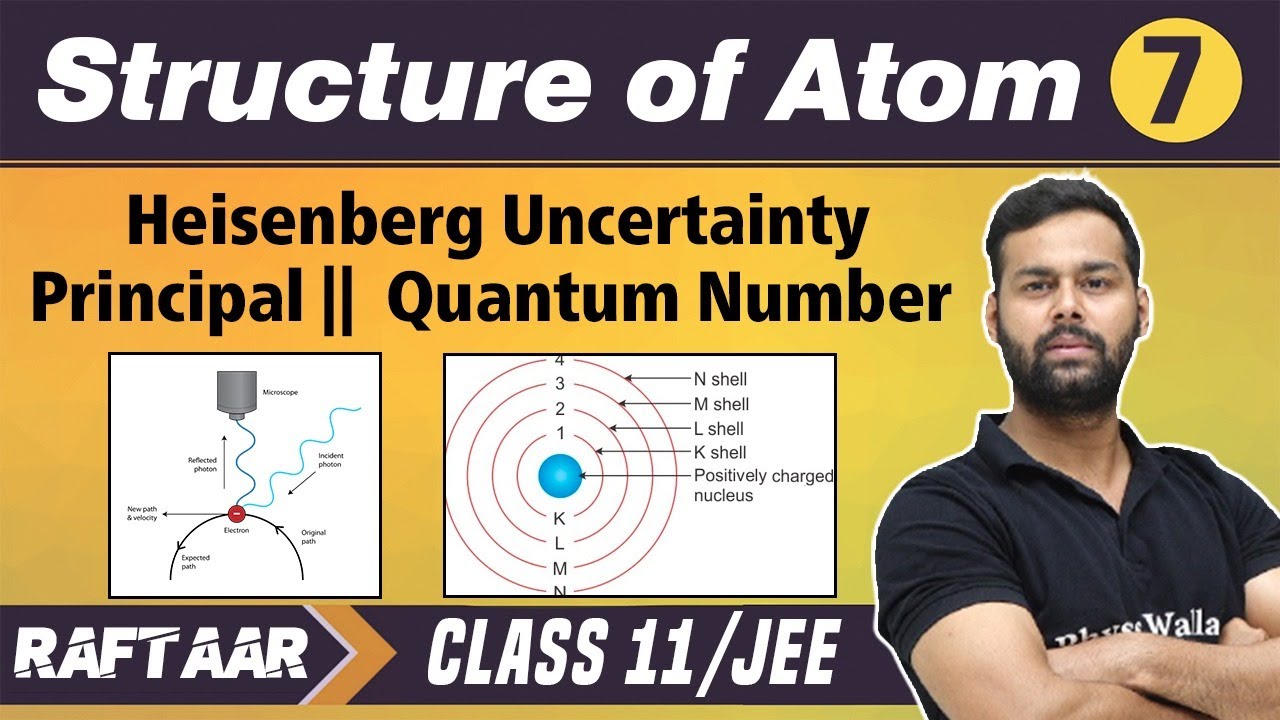
The Heisenberg Uncertainty Principle states that you can never simultaneously know the exact position and exact speed (momentum) of an object because everything in the universe behaves like both a particle and a wave at the same time; particles have definite positions but undefined wavelengths/momentum, while waves have definite wavelengths/momentum but undefined positions, and combining these two behaviors to create a quantum object with both properties requires accepting inherent uncertainties in both measurements.
Heisenberg Uncertainty Principle Explained by Chad Orzel
Added:Basic concepts of classical mechanics, specifically the definitions and physical meanings of position, velocity, and momentum.
The concept of wave-particle duality, particularly the de Broglie hypothesis which states that matter exhibits wave-like properties.
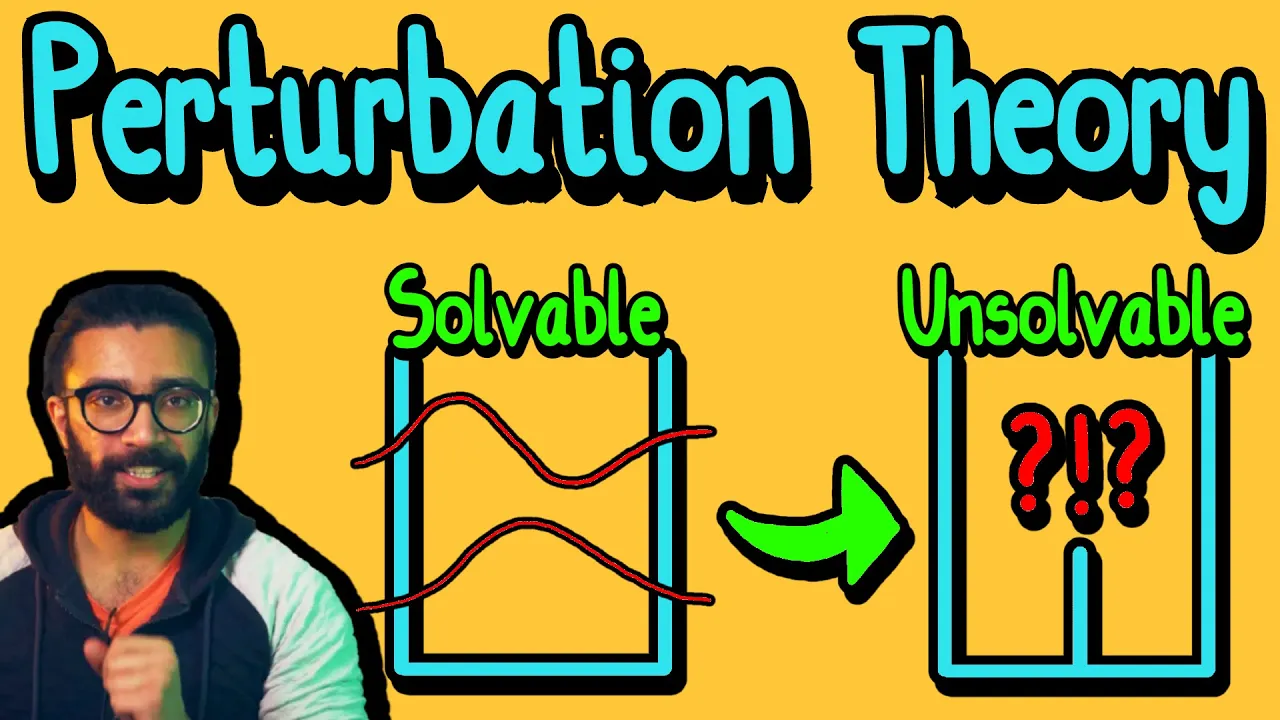
Fundamental wave physics, including how wavelength, frequency, and wave packets (superposition of waves) function.
The formal mathematical representation of the Heisenberg Uncertainty Principle using standard deviations and Planck's constant.
The Schrodinger Wave Equation and the concept of wavefunctions, which mathematically describe the probability state of quantum systems.
Quantum Tunneling, a physical phenomenon directly tied to the wave nature and position uncertainty of particles.
Real-world technological implications, such as the limits of semiconductor miniaturization and the operation of Scanning Tunneling Microscopes.
5.2M views100.3Klikes4:44Original Release: 2014-09-16
The Heisenberg Uncertainty Principle is one of a handful of ideas from quantum physics to expand into general pop culture.
It says that you can never simultaneously know the exact position and the exact speed of an object and shows up as a metaphor in everything from literary criticism to sports commentary.
Uncertainty is often explained as a result of measurement, that the act of measuring an object's position changes its speed, or vice versa.
The real origin is much deeper and more amazing.
The Uncertainty Principle exists because everything in the universe behaves like both a particle and a wave at the same time.
In quantum mechanics, the exact position and exact speed of an object have no meaning.
To understand this, we need to think about what it means to behave like a particle or a wave.
Particles, by definition, exist in a single place at any instant in time.
We can represent this by a graph showing the probability of finding the object at a particular place, which looks like a spike, 100% at one specific position, and zero everywhere else.
Waves, on the other hand, are disturbances spread out in space, like ripples covering the surface of a pond.
We can clearly identify features of the wave pattern as a whole, most importantly, its wavelength, which is the distance between two neighboring peaks, or two neighboring valleys.
But we can't assign it a single position.
It has a good probability of being in lots of different places.
Wavelength is essential for quantum physics because an object's wavelength is related to its momentum, mass times velocity.
A fast-moving object has lots of momentum, which corresponds to a very short wavelength.
A heavy object has lots of momentum even if it's not moving very fast, which again means a very short wavelength.
This is why we don't notice the wave nature of everyday objects.
If you toss a baseball up in the air, its wavelength is a billionth of a trillionth of a trillionth of a meter, far too tiny to ever detect.
Small things, like atoms or electrons though, can have wavelengths big enough to measure in physics experiments.
So, if we have a pure wave, we can measure its wavelength, and thus its momentum, but it has no position.
We can know a particles position very well, but it doesn't have a wavelength, so we don't know its momentum.
To get a particle with both position and momentum, we need to mix the two pictures to make a graph that has waves, but only in a small area.
How can we do this?
By combining waves with different wavelengths, which means giving our quantum object some possibility of having different momenta.
When we add two waves, we find that there are places where the peaks line up, making a bigger wave, and other places where the peaks of one fill in the valleys of the other.
The result has regions where we see waves separated by regions of nothing at all.
If we add a third wave, the regions where the waves cancel out get bigger, a fourth and they get bigger still, with the wavier regions becoming narrower.
If we keep adding waves, we can make a wave packet with a clear wavelength in one small region.
That's a quantum object with both wave and particle nature, but to accomplish this, we had to lose certainty about both position and momentum.
The positions isn't restricted to a single point.
There's a good probability of finding it within some range of the center of the wave packet, and we made the wave packet by adding lots of waves, which means there's some probability of finding it with the momentum corresponding to any one of those.
Both position and momentum are now uncertain, and the uncertainties are connected.
If you want to reduce the position uncertainty by making a smaller wave packet, you need to add more waves, which means a bigger momentum uncertainty.
If you want to know the momentum better, you need a bigger wave packet, which means a bigger position uncertainty.
That's the Heisenberg Uncertainty Principle, first stated by German physicist Werner Heisenberg back in 1927.
This uncertainty isn't a matter of measuring well or badly, but an inevitable result of combining particle and wave nature.
The Uncertainty Principle isn't just a practical limit on measurment.
It's a limit on what properties an object can have, built into the fundamental structure of the universe itself.
Up Next
0:43
The Quantum Measurement Problem: An Academic Overview
@WorldScienceU
7.9K views•2018-04-05

12:53
21cm Hyperfine Transition in Neutral Hydrogen: Radio Astronomy Basics
@AaronRobertParsons
12.4K views•2011-10-13

4:17
Physics of Swimming: Sperm vs. Sperm Whale — Reynolds Number Explained
@TEDEd
4.4M views•2013-09-23

27:14
Entropy and the Second Law of Thermodynamics Explained
@veritasium
27.5M views•2023-07-01
Related Study Plans & Knowledge Roadmaps
Structured learning paths in Physics
physics
Nuclear Physics (Decay, Fission & Reactors)
01Atomic Structure and the Binding Force
02Radioactive Decay and Half-Life
03Nuclear Fission Mechanics and Chain Reactions
+ 2 more learning modules
12h5 modules
Explore Roadmap
physics
Soft Matter (Polymers, Colloids & Rheology)
01Foundations of Soft Matter & Thermal Forces
02Polymer Physics and Macromolecules
03Colloids, Surfactants, and Self-Assembly
+ 2 more learning modules
38h5 modules
Explore Roadmap
physics
Analytical Mechanics: Lagrangian & Hamiltonian
01Mathematical Foundations: Calculus of Variations
02From Newtonian Mechanics to Constraint Dynamics
03The Principle of Least Action & Lagrangian Mechanics
+ 3 more learning modules
28h6 modules
Explore Roadmap
physics
General Relativity (Spacetime & Cosmology)
01Foundations of Relativity: Special Relativity
02The Geometry of Spacetime: Equivalence Principle & Curvature
03Einstein's Field Equations: The Mathematics of Gravity
+ 2 more learning modules
55h5 modules
Explore Roadmap