

























Neonatal resuscitation follows a systematic protocol: first, place the baby in the neutral position with the nose toward the ceiling to ensure open airways; second, deliver five inflation breaths over 2-3 seconds at 20-30 cm pressure to clear lung fluid; third, if the baby isn't breathing independently and heart rate drops to 60 bpm or below, initiate chest compressions at a 3:1 ratio with ventilation; fourth, reassess every 30 seconds; fifth, if the baby remains unresponsive, transition to standard ventilation breaths at 35-40 per minute; and finally, if advanced support is needed, a pediatrician may administer drugs like adrenaline, sodium bicarbonate, or dextrose.
Neonatal Resuscitation Skills: Clinical Simulation for Midwifery Students
Added:Physiological transition of the newborn at birth, including the respiratory and circulatory changes from fetal to extrauterine life.
Basic neonatal anatomy and physiology, focusing on the key differences in infant airways compared to pediatric or adult airways.
The APGAR scoring system and the clinical signs indicating neonatal distress (e.g., hypotonia, apnea, bradycardia).
Standard clinical infection control protocols and the preparation of basic delivery room resuscitation equipment.
Advanced neonatal resuscitation interventions, including endotracheal intubation, laryngeal mask airway (LMA) insertion, and umbilical venous catheterization.
Pharmacological management in neonatal emergencies, such as the indications, dosages, and administration routes of epinephrine and volume expanders.
Post-resuscitation care, stabilization, and safe transfer protocols to a Neonatal Intensive Care Unit (NICU), including therapeutic hypothermia.
Interprofessional communication, crisis resource management (CRM), and team dynamics during high-acuity obstetric and neonatal emergencies.
384.5K views563likes8:34Original Release: 2011-03-15
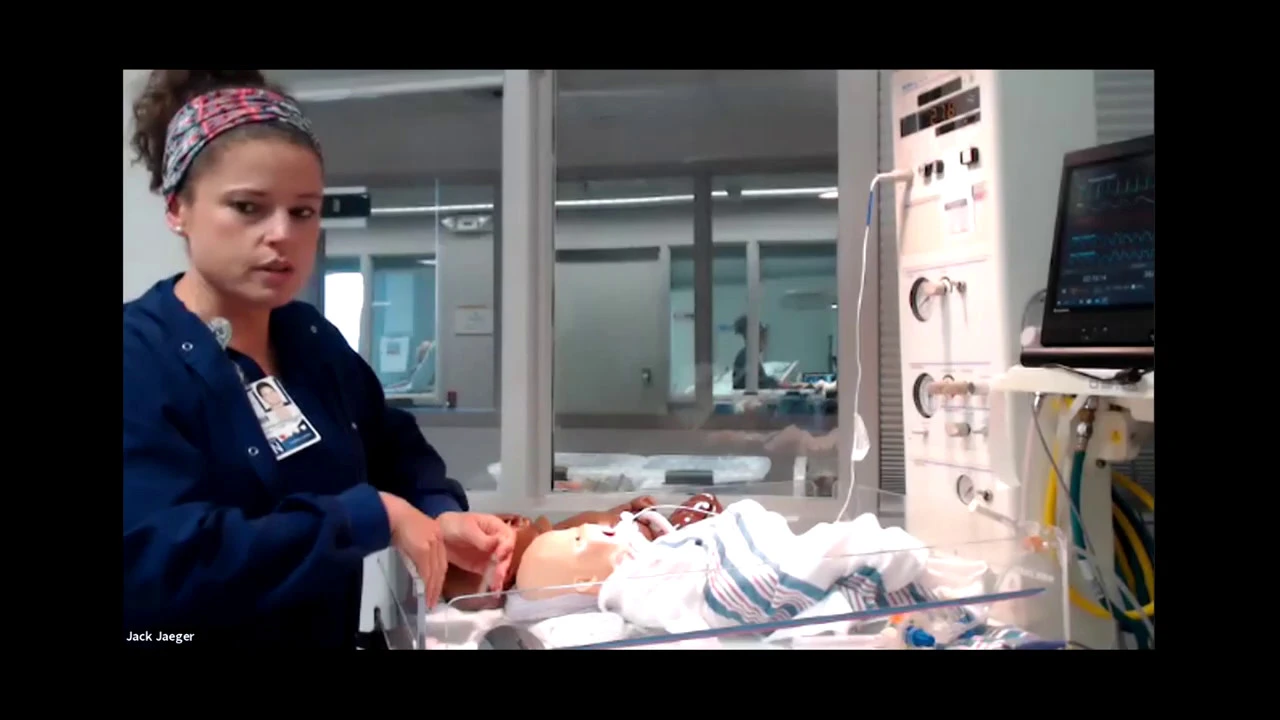
okay so we're going we're going to go through Nal resuscitation we've done Nal resuscitation in the classroom and now we're going to go through the Practical aspects so the baby was was born there was no signs of breathing what would we normally do under those circumstances we'd try and stimulate the baby give it a rub with the towel change the towel so that he doesn't get cold he's dry um and then we would bring over to the recessive tear okay put him in the neutral position we would yes so we've brought the baby over to the recessive tear he's got a a nice warm Towell he's under direct Vision there's a heater to keep him warm we've started the The Machine the clock is taken we've placed the baby in the neutral position what can you tell me about the neutral position um it basically makes sure the baby's Airways are open um and the head is in a position that allows the Airways to be fully open okay so how do we know when we've got the baby in the neutral position um the KN will reach to the ceiling and we can give in effective inflation breaths Okay so we've got the nose to the ceiling we've got a a towel possibly under the neck to support the head to stop it from moving out to position and in this position we would then and assess the baby so what would we want to assess the baby for we would need to see whether he was breathing on his own okay so there's no signs of breathing at the moment the baby's been placed in the neutral position what are we going to do next we need to check the heart rate for the baby okay so the heart rate is about 110 at the moment there's still no signs of breathing inflation breaths we need to give five inflation breaths okay so we we'll get ready to do five inflation breaths so we've got a bag and mask here we could use a bag and mask and what would be important about how we position the bag and The Mask need to make sure that the nose and mouth are fully covered and that no air can escape around the edge okay and what is special about five inflation breaths how do they differ from other breaths other ventilations they're longer they're given over a few seconds rather than being short breaths okay and what do they do what do inflation breaths do to squeeze the um fluid out of the lungs uhhuh basically and fill the lungs with a uhuh okay so I'm going to demonstrate the five inflation breaths now so yes they're given over two to three seconds and they given out 20 to 30 cm of pressure and you squeeze the bag and you count one two three what do You observe for when you're doing this chest wall Rising okay so you observe the chest wall Rising so we would give the five inflation breaths we would observe for the chest wall Rising we didn't see the chest Wall rise we considered adjusting the baby's position um in order to try and get those effective five inflation breaths in and we would repeat the five inflation breaths Okay so we've delivered the second round of five inflation breaths uh we did see the chest Wall rise this time but the baby's still not breathing independently so what what other information do we need in order to be able to proceed with the resuscitation of this baby what do we need to know we need to know what the heart rate is and whether it's rising or falling okay so we need to know what the heart rate is uh what at what rate would we be alarmed if the heart rate was at a particular rate and how how would we know whether to continue with ventilations or whether we would need Advanced resuscitation it was 60 and falling we'd be alarmed okay if it was Rising we'd observe and check that it carried on Rising so we've got a baby that isn't breathing independently and the B we've got a baby with a heart rate of 60 what would we what would we do under those circumstances we need to get ventilation breaths okay and what about the heart rate are we concerned about a heart rate of 60 yes okay so what are we going to do when we've got a heart to 60 CPR okay we're going to do some CPR okay given five inflation breaths we didn't see the chest Wall rise on medication we've repeated the five inflation breaths we've seen the chest Wall rise we've reassessed the baby the heart rate has been found to be 60 beats a minute and the baby still isn't breathing independently so what is our next step um we then go into chest compressions okay so show me how you would do chest compressions okay knock my fingers around the back of the baby um and I'd place my thumbs just below here just about there and I need to press about the third of the depth of the chest okay and we're going to do three chest compressions to one breath okay so it would be something and we're trying to mimic how it would normally happen so we do one breath and repeat and how long do we do this for and we check reassess the baby after 30 seconds okay so we we would check the baby after 30 seconds and on checking the baby the heart rate is risen the heart rate is now 100 uh the baby's still not breathing independently though so what will we do under those circumstances now we give the ventilation breath you would give the ventilation breaths okay and and what's different about ventilation breaths cuz we talked about inflation breast these are much shorter and they're mimicking the baby's normal pattern of breathing so how many of those would we do 35 to 40 in a minute okay when would we reassess seconds okay so we did 30 seconds of ventilations we've reassessed we can see that the baby's breathing independently the heart rate is 110 and the baby color is is improving what what would we do we'd observe and provided that he carries on breathing and his heart rate Rises we'd wrap him and give him back to M okay so yes that's what we would do if if for instance we had a situation where on reassessment the heart rate had fallen further and the baby is still not breathing independently hopefully by that time other supported arrived in the form of a pediatrician what might the pediatrician wish to do they might administer drugs to get the baby going so they might give um adrenaline or sodium bicarbonate or dextrose that's right
Up Next

6:45
How the Human Brain Works: Anatomy & Neuron Function
@UniversityOfBristol
2.1M views•2010-03-03

48:47
Graphic Medicine: Comics for Collaborative Healthcare Communication
@nationalpatientadvocate
189 views•2023-12-04

10:28
Neuroanatomy: Central and Peripheral Nervous System Divisions Explained
@AKLECTURES
136.2K views•2014-09-20
3:05
Stages of Labor and Vaginal Birth | Childbirth Animation
@nucleusmedicalmedia
52.1M views•2017-08-18
Related Study Plans & Knowledge Roadmaps
Structured learning paths in Medicine
medicine
Abnormal LFTs: Diagnostic Workup & Pathology
01Liver Anatomy and Basic Physiology
02Introduction to Liver Function Tests (LFTs)
03Hepatocellular vs. Cholestatic Patterns
+ 3 more learning modules
12h6 modules
Explore Roadmap
medicine
Analyzing Blood Smears: RBC, WBC & Platelets
01Introduction to Blood Components & Smear Preparation
02Normal Morphology of Blood Cells
03Erythrocyte Pathologies & Morphological Variants
+ 2 more learning modules
12h5 modules
Explore Roadmap
medicine
Mechanical Ventilation: Waveforms & Alarms
01Anatomy and Physiology of Breathing
02Introduction to Mechanical Ventilation & Core Modes
03Ventilator Settings and Waveform Interpretation
+ 2 more learning modules
12h5 modules
Explore Roadmap
medicine
Neuro Exam: Localization & Stroke Syndromes
01Foundations of Neuroanatomy and Vascular Supply
02The Neurological Examination: Step-by-Step
03Principles of Neurological Localization
+ 3 more learning modules
18h6 modules
Explore Roadmap