











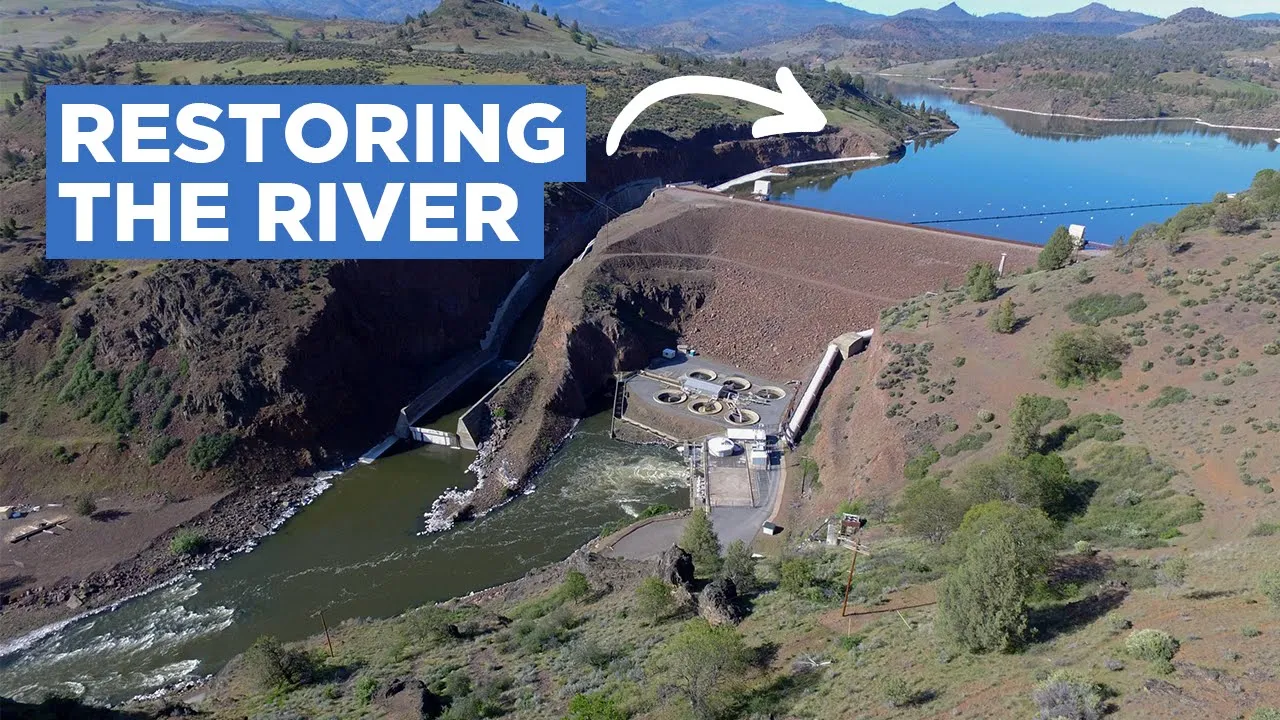

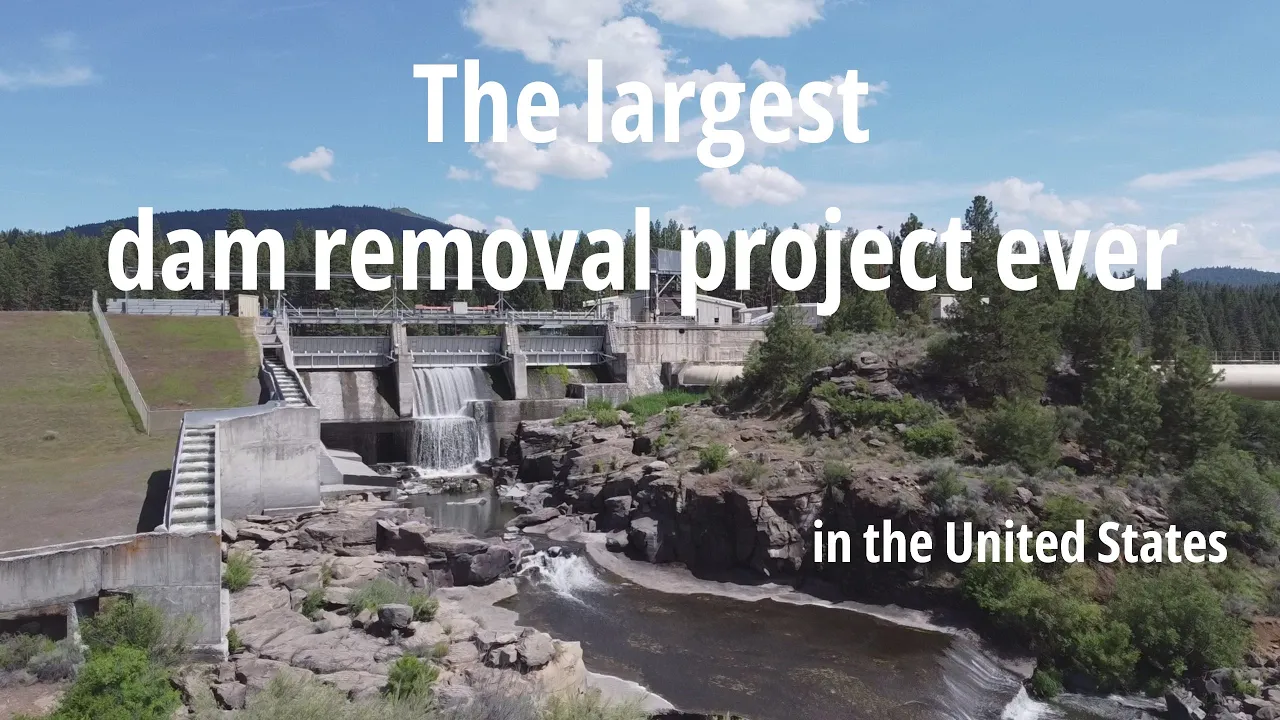


The removal of the Elwha River dams on Washington's Olympic Peninsula demonstrates how removing human-made barriers can restore entire ecosystems; after over a century of dam blockage, the river has begun to recover salmon populations, bring back marine-derived nutrients that support wildlife like bears and eagles, and allow terrestrial species such as elk, cougars, and foxes to reclaim 800 acres of newly restored land, ultimately returning the river to its natural state and reconnecting the Lower Elwha Klallam tribe with their ancestral fishing grounds.
Elwha River Rewilding: 12 Years Post-Dam Removal
Added:Basic river ecology and the biological importance of riparian zones in supporting diverse ecosystems.
The life cycle of anadromous fish, such as salmon, and their ecological role as keystone species in Pacific Northwest food webs.
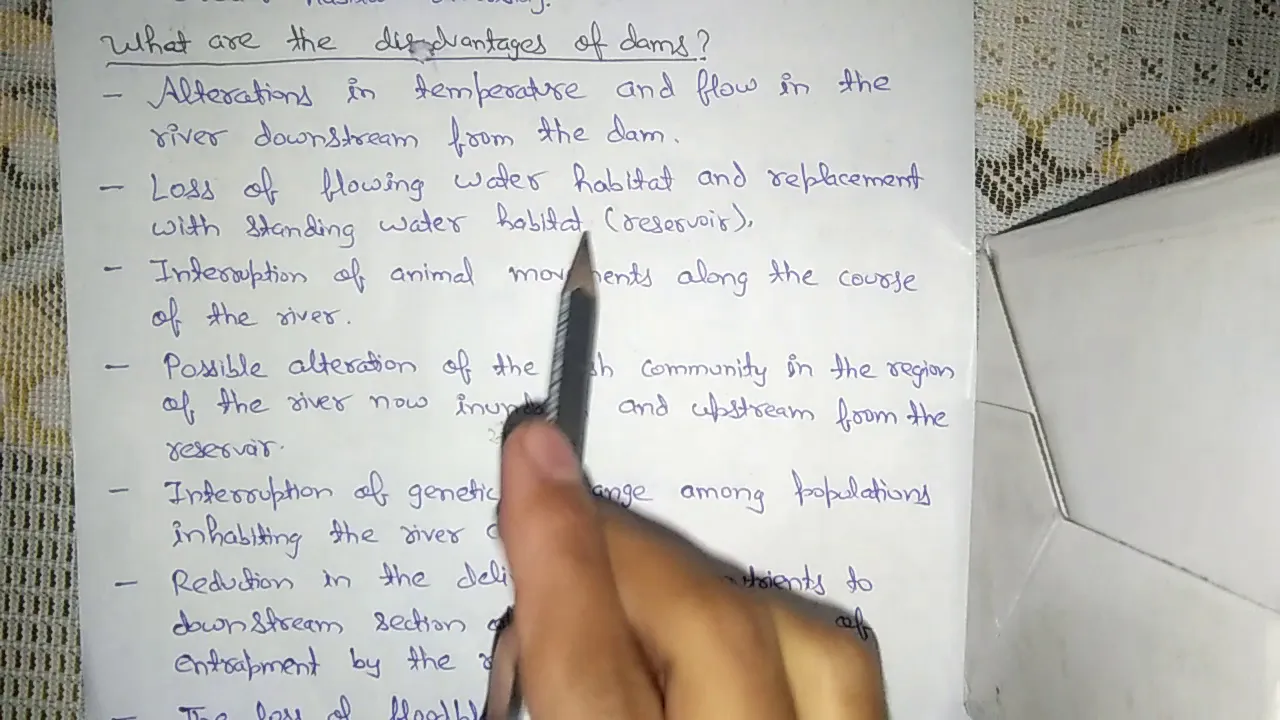
The physical and environmental impacts of dams, specifically how they fragment habitats, alter water temperature, and disrupt natural sediment flow.
The concept of environmental justice and the historical, cultural connection of Indigenous tribes to river basins.
The principles of ecological restoration and 'rewilding', comparing active human intervention with passive, natural recovery processes.
Fluvial geomorphology and sediment dynamics, focusing on how coastal estuaries and river deltas rebuild once sediment flow is restored.
The policy, legal, and economic frameworks involved in large-scale infrastructure decommissioning and environmental decision-making.
Comparative analysis of subsequent major dam removal projects, such as the Klamath River restoration, to evaluate long-term ecological outcomes.
223K views5.6Klikes9:58Original Release: 2024-11-28
(water roaring) - [Member] The song we're going to sing is the "Salmon Song."
(performer singing in Klallam language) (performers singing in Klallam language) - [Narrator] It's a rainy morning in October, and over 10 years have passed since dams were removed from Washington's Elwha River.
(group chattering) The Lower Elwha Klallam tribe is gathering to celebrate their first day of fishing on a free flowing Elwha in over 100 years.
(performers singing in Klallam language) (performers continue singing in Klallam language) - But who would've thought, who would've thought that this day would come?
- I remember when I was a young kid, my mother told me, "You have to take those dams out, son, "you have to take those dams out."
She said, "You have to do it with the tribe."
First dam was huge to me.
I was just a little six-year-old and they're just a big monster in the middle of the river.
And how am I going to take that out?
(performers singing in foreign language) - It took us 100 years, 100 years to see what has transpired today.
And that is something that I'll never forget and, the kids, they will be able to say that they were down here on a historical day, witnessing what has taken place in the river over the opening.
- [Member] Hold it?
- [Narrator] After the dams were out, the tribe waited for the salmon to re-establish themselves before opening the river to fishing.
- [Russ] You know, we waited so long, over 100 years, just to get the dams out.
And then we waited another 12 years for the fish to recover enough in numbers and population that we could fish again.
And it's very important, I think, to our community that we're back in the water.
- [Frances] Our tribal membership was the ones that stepped forward and said that we're willing to take the sacrifice, knowing that it was their livelihood and their income.
- [Russ] Today, we have a truly wild and free Elwha river.
And hopefully all of the species come back.
We're trying to recover the whole ecosystem.
(water roaring) - So we are standing on the remnants of the Glines Canyon Dam.
These concrete blocks are the abutments of the old dam.
- [Narrator] The Elwha was the largest dam removal project in U.S. history at the time, with the first dam coming out in 2012 and then the larger Glines Canyon Dam in 2014.
- They had this barge out on the reservoir with a giant rock drill on it.
The idea was to let the sediment come out in pulses instead of all at once.
- [Narrator] One of the first things the Elwha river did, after being released from the dams, was to reclaim some of its former territory.
- [Heidi] The river resumed finding its natural channel and the road happened to be in that natural channel.
So it's just (laughs) the rewilding of the Elwha.
- [Narrator] The river runs through Olympic National Park.
Heidi and Josh are fish biologists helping document changes in the river ecosystem before and after the dams.
They hike to one of the reaches just above the old dam site where Heidi uses an antenna to listen for signals from radio tagged fish.
They have tagged salmon, steelhead and bull trout.
The signals give some idea of where the fish are in the river during different times of year.
But Heidi and Josh also get in the river to collect data and verify with their own eyes.
- One of our methods for measuring this fish response as they reestablished in the Elwha was snorkel surveys.
We get in the river with our dry suits and neoprene because the river is glacial, it's pretty cold.
We're looking at fish, counting everything.
You feel kind of like you're flying through the river.
I wish I was part fish.
It's incredible what these salmon and steelhead and trout can move through.
These rivers are the lifeblood of these areas.
And with the dams in place, without any fish passage, it broke the river and it was broken for over 100 years.
We're seeing a lot more response from wildlife coming back down to the river.
We have more marine derived nutrients coming up the river and salmon and steelhead return.
- [Narrator] When these fish swim upriver to spawn, they bring nutrients from the ocean to the Elwha in their bodies.
It's a bounty that feeds bears and eagles, and even makes its way into the roots of trees.
- [Heidi] It's just a really good intermingling of all those different organisms that just got kind of cut off from each other.
(water rumbling) (wind blowing) - [Narrator] After dam removal, the man-made lakes and reservoirs drained and nearly 800 acres of land was restored alongside the river.
- Wildlife sign here. We've seen some elk.
Yeah, so all of this old little maple has been browsed, which is pretty awesome.
- [Narrator] Kim Sager Fradkin is a biologist with the Lower Elwha Klallam tribe.
- All of this was underwater.
So everything we're seeing here, all new growth since dam removal.
- [Narrator] She takes us to one of the camera traps they have set up to document the animals utilizing the restored land.
- Let me have a look, see what critters have been on it.
Once upon a time, it was a crazy idea to take these dams out.
The wildlife group knew that there would be a big change in the terrestrial environment once this 800 acres was dewatered.
Got some little something popping in there.
With the cameras out here, we're really interested in what species of wildlife are using these new restoring habitats.
Some elk on this camera.
So you can see the herd just hung out here.
They all just came through. There's that nice bull.
Got some deer. Cougars.
When those dams first came out, this was a moonscape.
I mean, it was literally just mud and sediment and no plant life.
And so watching this suite of animals move in has been pretty incredible.
It's kind of a little bit of a build it and they will come.
This is a neat one because this is Moses.
Nice, big, beautiful cat eating the elk that he killed in the former reservoir.
Lots of snowshoe hares, snowshoe hare acrobatics. (laughs) And this one actually is extraordinarily exciting.
Do you know what this animal is?
It's a fisher and it's got a snowshoe hare in its mouth.
(Kim laughs) So this just demonstrates that these former reservoirs are now teeming with plants and animals.
- [Crew Member] Oh, he didn't like the camera, huh?
(Kim groans) (water trickling) - [Narrator] The tribe's first day of fishing is going well.
(eagle calling) - When I was younger, this river closed before I could even fish it.
So this is my first year fishing it and got lucky first day.
(Jericho laughs) The river had to restore and revitalize and fish had to come back and they're able to go out to their traditional spawning grounds and... Yeah, just trying to teach them.
Just trying to teach the next generation and learn myself.
(raven cawing) - That's a hummingbird. - And then having to use a rod and reel.
It's odd for all of us. (chuckles) - [Narrator] Traditionally, the Elwha tribe fishes with nets.
The tribal council decided this first opening will be rod and reel.
- But there's about six right here, yeah.
See, they're all right by each other.
Just sitting there like this.
- [Narrator] The tribe chose Indigenous People's Day for the opening.
- My son caught one, so now I got to catch one or I'm going to hear it the rest of the day.
No. (laughs) - [Father] There you go!
- You got it? - What is it?
(child babbles) - Is that- - Ooh, it's a little jack!
(water splashing) - All right.
- I got a jack right here and probably weighs about, like, 4 pounds.
- Here you go, Justice. - Aww, that's nasty.
- [Child] Daddy!
- This is really fun to fish on my homeland.
It feels really good.
Like, to finally fish here, and I could just, like, I live up the hill a little bit, so I could just, like, ride my bike down here and just go fishing if I wanted.
Oh my gosh! (water splashing) I feel like our culture is coming back to life.
- [Narrator] 10 years and counting since the dams came out and the river is already rebounding in remarkable ways.
This is just the beginning of what it means to once again be wild and free for the Elwha.
(water rumbling) (no audio) - Getting inspiration for your next adventure, it's kind of like why you're here, right?
Well, you can support more of what we do on "Oregon Field Guide" and everything you see on OPB by going to opb.org/video and becoming a sustaining member.
Up Next

17:53
Condit Dam Removal: White Salmon River Restoration, Decommissioning and Salmon Passage
@PacificPower1
2.8M views•2013-08-21

15:54
Life in Biosphere 2: Sustainable Ecosystems & Human Survival
@TED
334.9K views•2009-06-16
14:30
Microplastics Everywhere: How Plastic Impacts Our Lives
@TEDx
100.9K views•2018-05-08
10:28
Ice Stupa Artificial Glaciers: Solving Ladakh's Water Crisis
@SonamWangchuk66
3.2M views•2015-05-03
Related Study Plans & Knowledge Roadmaps
Structured learning paths in Environmental Science
environmental-science
Ocean Noise: Cetacean Impacts & Mitigation
01Fundamentals of Underwater Acoustics
02Marine Mammal Bioacoustics
03Anthropogenic Noise: Shipping & Seismic Surveying
+ 2 more learning modules
16h5 modules
Explore Roadmap
environmental-science
Road Ecology: Corridors, Overpasses & Fencing
01Foundations of Habitat Fragmentation and Carnivore Ecology
02The Road Barrier: Ecological Impacts of Transport Infrastructure
03Principles of Ecological Corridors and Connectivity Mapping
+ 3 more learning modules
14h6 modules
Explore Roadmap
environmental-science
Ocean Acidification: Kelp Buffering & Shellfish
01Fundamentals of Ocean Chemistry & pH
02Chemical Pathways of Coastal Acidification
03Bivalve Physiology & Calcification Under Stress
+ 2 more learning modules
18h5 modules
Explore Roadmap
environmental-science
Ice Stupas: Glacial Retreat & Water Security
01Foundations of Glaciology & Mountain Hydrology
02Climate Change and Glacial Retreat Dynamics
03The Science of Ice Stupas & Artificial Glaciers
+ 2 more learning modules
14h5 modules
Explore Roadmap