







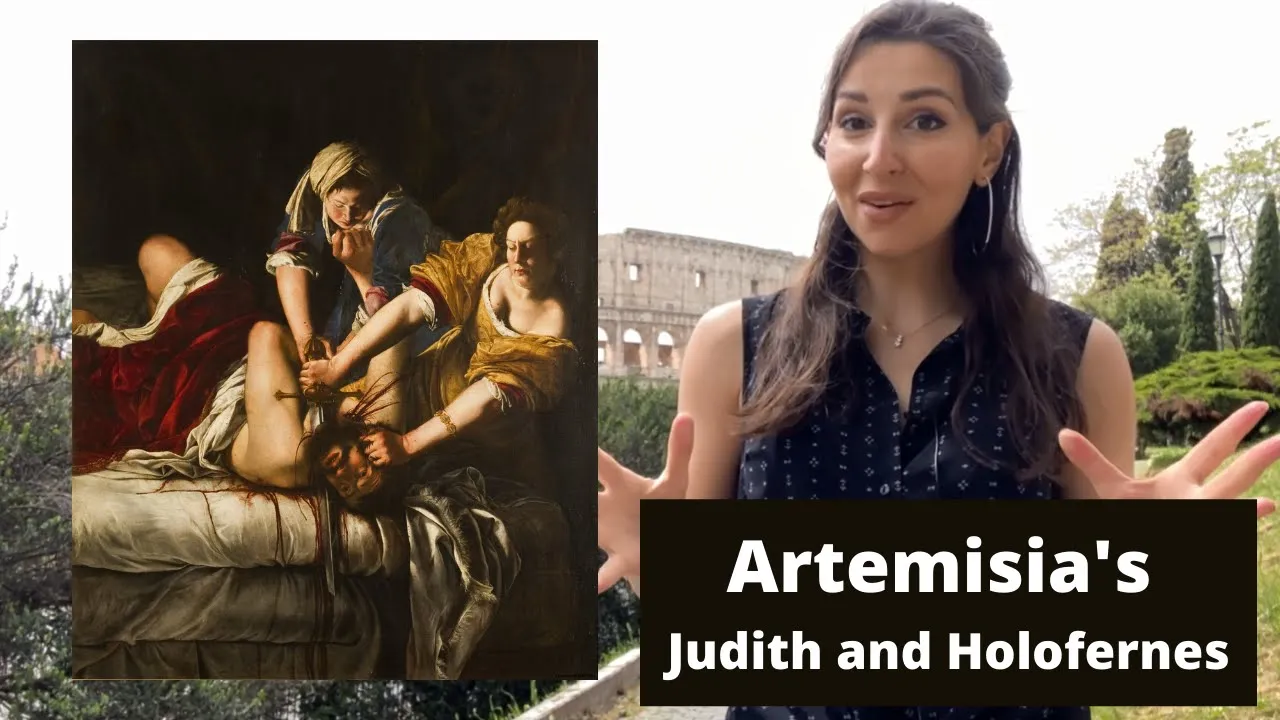




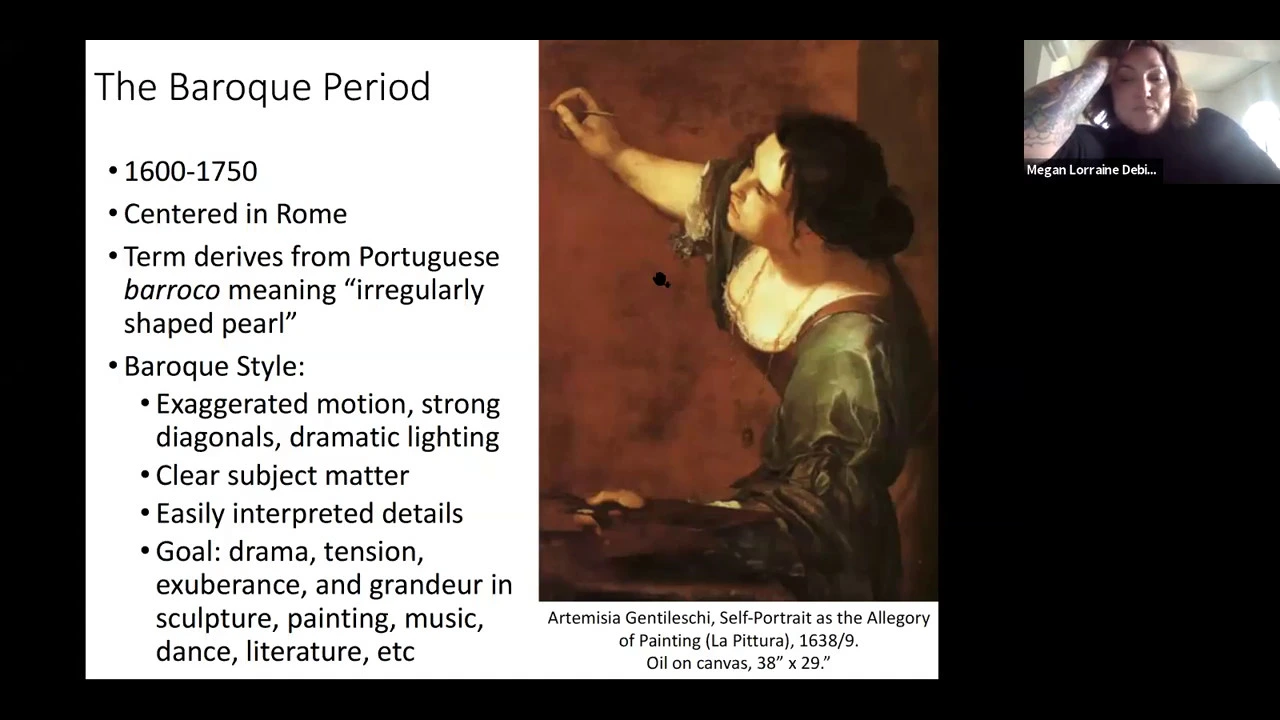




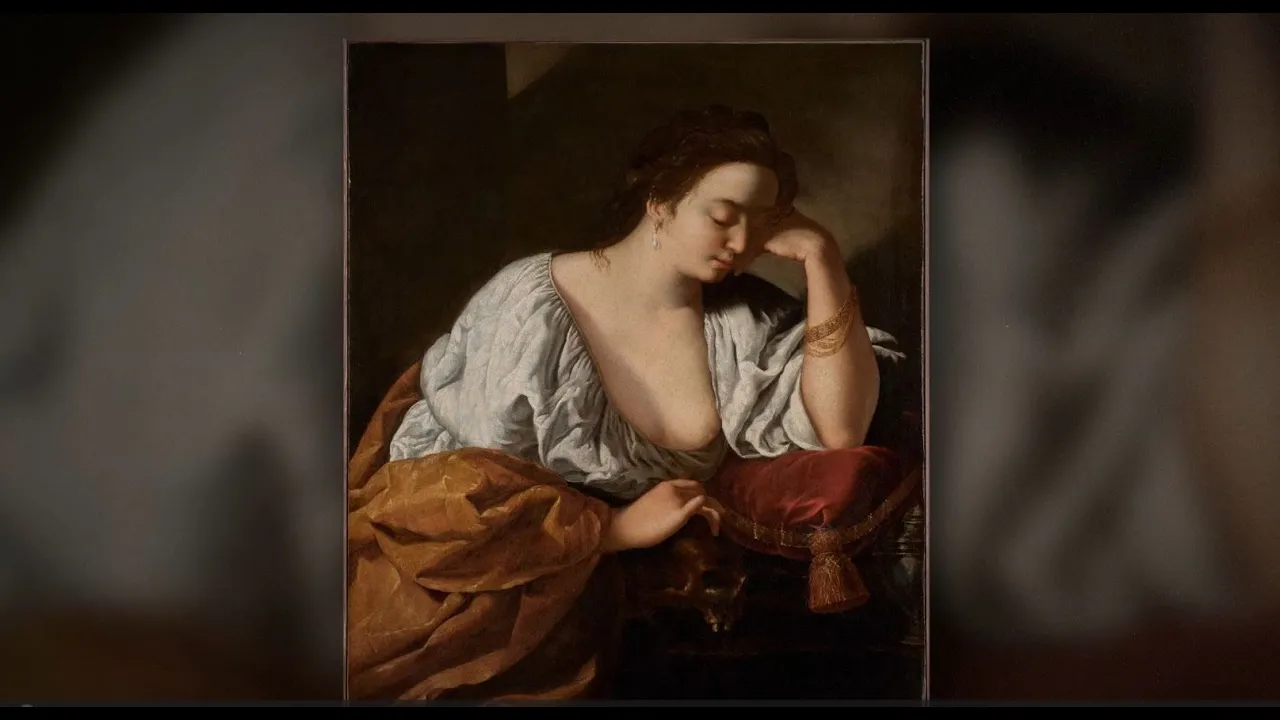




Artemisia Gentileschi's Judith and Her Maidservant with the Head of Holofernes (c. 1623-25) exemplifies Baroque painting through its dramatic use of chiaroscuro (tenebroso), where extreme contrasts between light and shadow create theatrical drama; the composition employs foreshortening to bring figures into the viewer's space, while cascading diagonal arches from upper left to lower right create a sense of energy and movement, capturing a moment of violent action yet emphasizing stillness as Judith and her maid look for danger.
Artemisia Gentileschi, Judith and Her Maidservant: A Baroque Masterpiece
Added:Fundamental characteristics of the Baroque art movement, including its focus on drama, emotion, and dynamic movement.
The artistic technique of chiaroscuro (and tenebrism), particularly its development by Caravaggio and its impact on 17th-century European art.
The biblical story of Judith and Holofernes from the Book of Judith, providing the narrative context for the artwork.
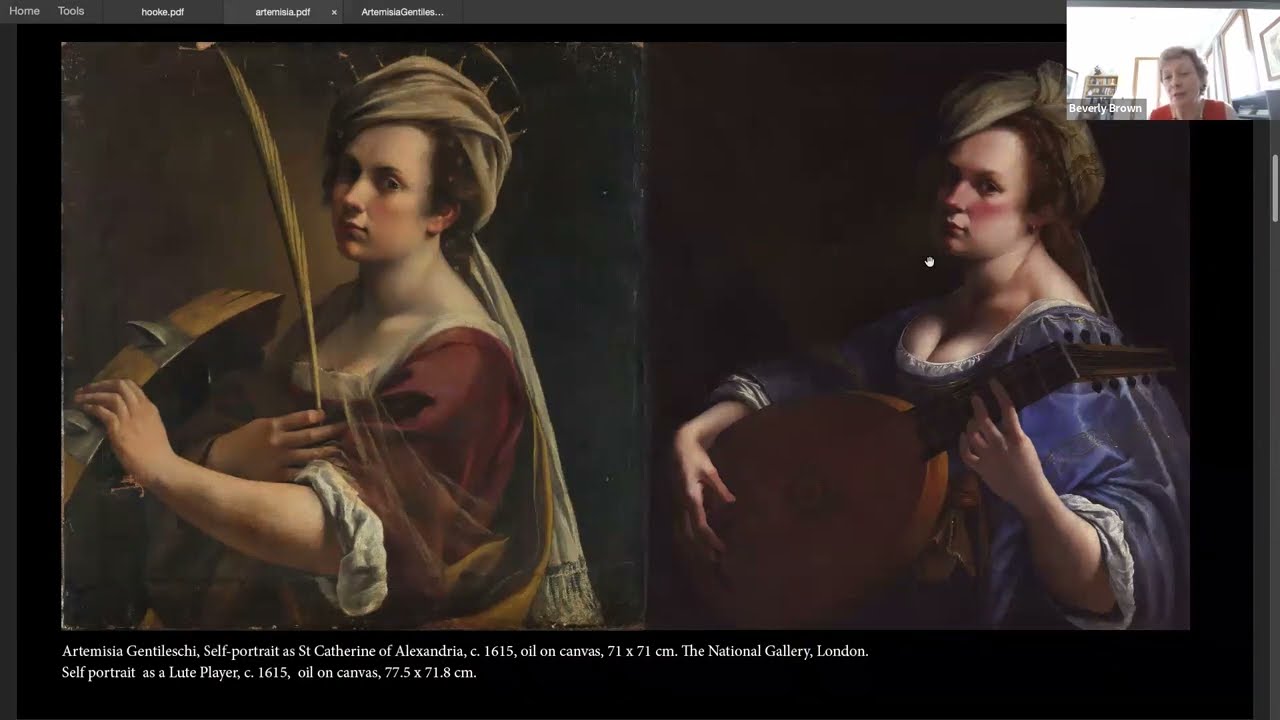
The socio-historical status of women artists in early modern Europe, specifically within the male-dominated Italian guild system.
A comparative study analyzing Gentileschi’s depiction of Judith against versions by her contemporaries, such as Caravaggio and Cristofano Allori.
The application of feminist art history frameworks to interpret Gentileschi's artistic choices and biographical influences.
In-depth exploration of other major works by Artemisia Gentileschi, tracing her stylistic evolution across Florence, Rome, and Naples.
The role of Counter-Reformation theology in shaping the patronage, themes, and emotional intensity of Baroque religious paintings.
24.4K views716likes5:06Original Release: 2021-02-09
(soft music) - [Man] We're in the Detroit Institute of Art, looking at Judith and her Maidservant with the Head of Holofernes by Artemisia Gentileschi.
- [Woman] This story comes from the book of Judith, which is included in the Catholic version of the Old Testament, but not considered part of the canonical books of the Jewish Bible.
But it's a great story.
- [Man] The town of Bethulia has been under siege by the Assyrian army for weeks.
Bethulia is strategically important because it lies on the path to Jerusalem.
Lack of water and provisions have caused the town to ready itself to capitulate.
But before it does, Judith steps forward.
And she uses her beauty and her eloquence to open the gates of the town, allowing her to move out with her maidservant.
She's almost immediately captured by the Assyrians.
And she's able to make her way to the camp of the Assyrian general, Holofernes.
- [Woman] Judith is a widow.
And so she's hast off her widow's clothing for a beautiful dress and jewelry.
So she can make herself very attractive to the leader of the Assyrian army, to Holofernes.
Judith convinces Holofernes that she can help him to capture the town of Bethulia.
They drink, they feast, they celebrate.
Holofernes gets drunk.
Judith takes his sword and cuts off his head, brings it back to Bethulia to show the town that she has saved her people.
- [Man] This is the moment immediately after the beheading.
Judith holds the sword still dripping with blood.
The maidservant is stuffing the head into a bag.
And Judith shields her eyes from the candle light so that she can look out.
- [Woman] She's heard a sound.
This could potentially be a moment of danger.
And so they both look up concerned about what's about to happen.
And whether there'll be caught.
- [Man] This is a Baroque painting.
And it displays so many characteristics that we associate with that style.
We have a single source of light, the candle.
Deep shadows surrounding the figures, creating this theatrical drama.
- [Woman] And the figures are so close to us.
There's no real architecture in the background.
We just have this red curtain that's been drawn up.
That's typical of Baroque art.
So, all of this drama unfolding in our space, thanks to Gentileschi's use of foreshortening.
The maid's elbow presses out into our space.
Both of Judith's arms are somewhat foreshortened as they cross in front of her body.
Even the corner of that table that holds the armor, the scabbard and the candle protrudes into our space.
Breaking down the separation that typically exists between a work of art and the world of the viewer.
- [Man] Their attention is outside of the canvas at a place that we can't see as if they're looking beyond the door of the tent.
But look at the arches that cascade down from the upper left to the lower right of the canvas.
First, the arch of the shadow that seems to almost mask Judith's face echoed by the arch of her arm, the arch of the sword and then the arch of the maidservant's arm.
- [Woman] That series of arching shapes creates a diagonal that moves from the upper left to the lower right.
And that use of diagonals is something that's very typical in Baroque art.
Diagonals create a sense of energy and movement.
So, we have a sense of a caught moment in time.
- [Man] But here the diagonal is slowed down.
We don't see a diagonal with the velocity that we might see for example, in a Rubens.
Instead, those arches slower our eye down as we move through the canvas and accentuate the idea that both of these figures even in this moment of action have stopped.
This is moment of stillness as they look to see if the coast is clear, if they're in danger.
- [Woman] It's a compelling sense of stillness combined with the effects of violence.
Because we have that sword right in the middle of the composition, which is dripping with blood.
Our eye moves down to the head of Holofernes and we see a lot on the cloth.
We see blood on the hands of the maidservant.
This caught moment of this incredibly violent act.
But a violent act, which saves the Israelites and which is performed with the help of God.
- [Man] One of the words that's used to describe paintings like this is tenebroso, which in English translation means in the dark manner.
And really what we're talking about is a kind of extreme rendering of chiaroscuro.
- [Woman] Where the lights are very light and the shadows are very dark.
And so, there's a sense almost of a theatrical spotlighting on these figures who are embedded in the darkness.
- [Man] The three primary colors are evident.
We have the red of the curtain above and subtly of the blood dripping from the sword, the blues and purples of the maidservant.
And then the brilliant gold, the brilliant yellow of Judith who's shown here as this heroine that saves her people.
- [Woman] And that red of the curtain is picked up on a little tie around the bottom of the white headdress worn by the maidservant.
So, this glowing colors here in this beautiful painting by Gentileschi.
(soft music)
Up Next

52:34
Artemisia Gentileschi: Baroque Master, National Gallery Webinar
@sothebys
23.7K views•2020-10-07
60:59
The Mathematics of Perspective in Renaissance Art and Modern Applications with Sarah Hart
@GreshamCollege
29.8K views•2021-10-25

3:55
Egon Schiele's The Hermits, 1912: Expressionism & Inner Vision
@smarthistory-art-history
25.6K views•2012-04-02

16:34
Earliest Depictions of Jesus in Art: 10 Ancient Images Explained
@UsefulCharts
5.9M views•2022-06-03
Related Study Plans & Knowledge Roadmaps
Structured learning paths in Art History
art-history
Vienna Secession: Rebellion, Klimt & Schiele
01Fin-de-Siècle Vienna & Academic Historicism
02The Secession Movement & Klimt's Decorative Symbolism
03Gesamtkunstwerk & the Wiener Werkstätte
+ 2 more learning modules
9h5 modules
Explore Roadmap
art-history
Gothic Cathedrals: Engineering, Light & Society
01The Birth of the Gothic: Romanesque to Suger's Vision
02The Structural Triad: Pointed Arches, Ribbed Vaults, and Flying Buttresses
03Theology of Light: Lux Nova and Sacred Geometry
+ 2 more learning modules
14h5 modules
Explore Roadmap
art-history
Pre-Raphaelites: Realism, Symbolism & Critique
01The Victorian Art Establishment and Academic Formula
02The Founding of the PRB and Radical Realism
03Medieval Revivalism and Literary Symbolism
+ 1 more learning modules
8h4 modules
Explore Roadmap
art-history
Street Art: From Subways to Art Market
01Subcultural Origins in Philadelphia and New York (1970s)
02The Subway Era and Style Wars (Late 1970s - 1980s)
03The East Village Scene and Early Gallery Crossover
+ 2 more learning modules
10h5 modules
Explore Roadmap