
![Thorax 8 - Trachée, bronches, poumons, plèvre [Descriptive anatomy of the respiratory tract]](https://i.ytimg.com/vi/fOG_CXzk_Xc/maxresdefault.jpg)











![[#5] EQUILÍBRIO ÁCIDO-BASE: Acidose e Alcalose | Diagrama de Davenport | MK Fisiologia](https://i.ytimg.com/vi_webp/Ln4a4e6yWnE/maxresdefault.webp)
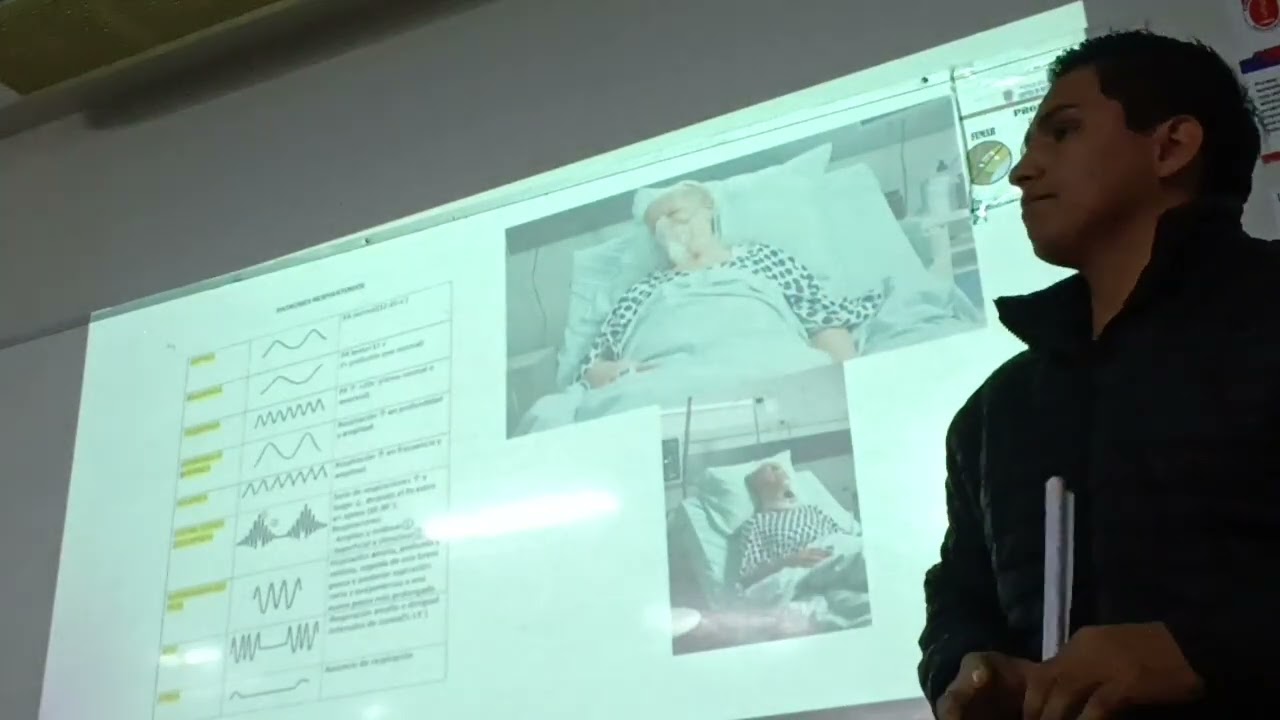





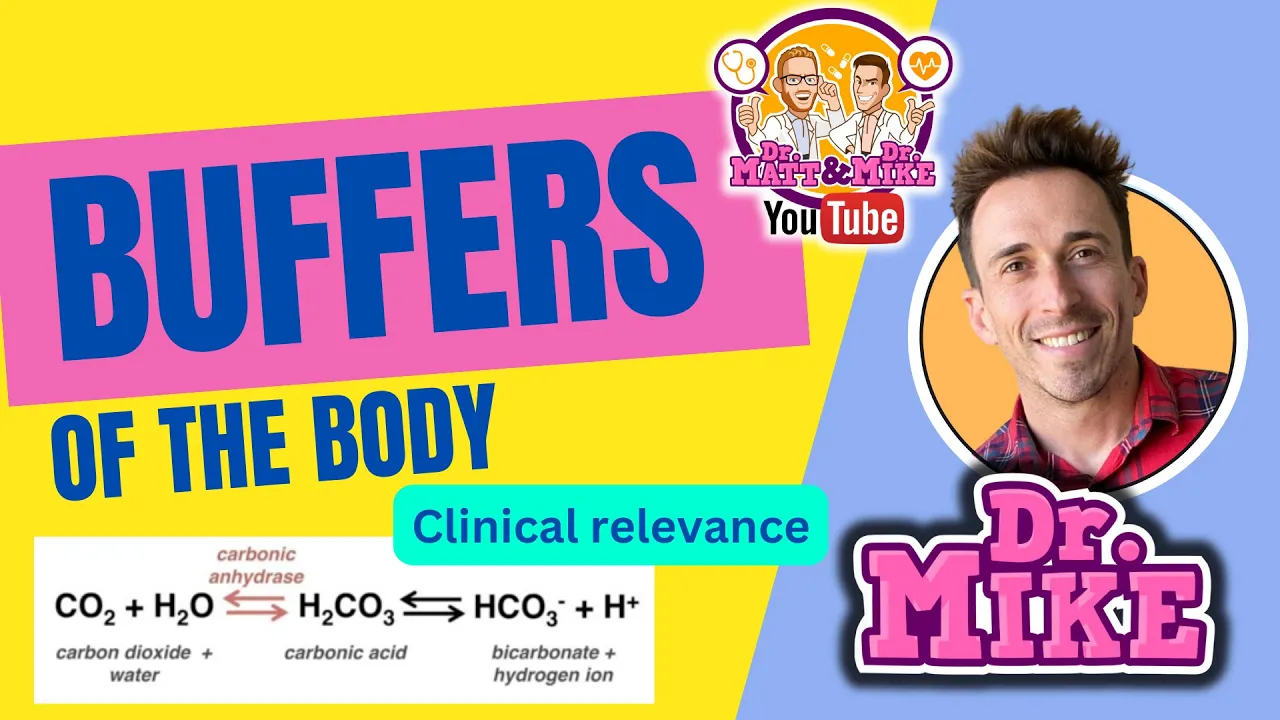
This lecture explains the four key lung volumes (tidal volume ~500ml, inspiratory reserve volume ~2.5L, expiratory reserve volume ~1.5L, and residual volume ~1.5L) and their combinations into lung capacities (vital capacity, inspiratory capacity, functional residual capacity, and total lung capacity). It distinguishes between restrictive diseases (like pulmonary fibrosis) which reduce all lung volumes and capacities due to loss of lung elasticity, and obstructive diseases (like emphysema and asthma) which increase residual volume and total lung capacity while decreasing expiratory reserve volume due to airway obstruction. The lecture also covers ventilation/perfusion coupling, where oxygen and carbon dioxide are transported through the blood via dissolution, binding to hemoglobin, and bicarbonate formation, with the bicarbonate buffer system maintaining blood pH through the reversible reaction CO2 + H2O ⇌ H2CO3 ⇌ HCO3- + H+.
Lung Volumes, Capacities & Gas Exchange | Respiratory Physiology
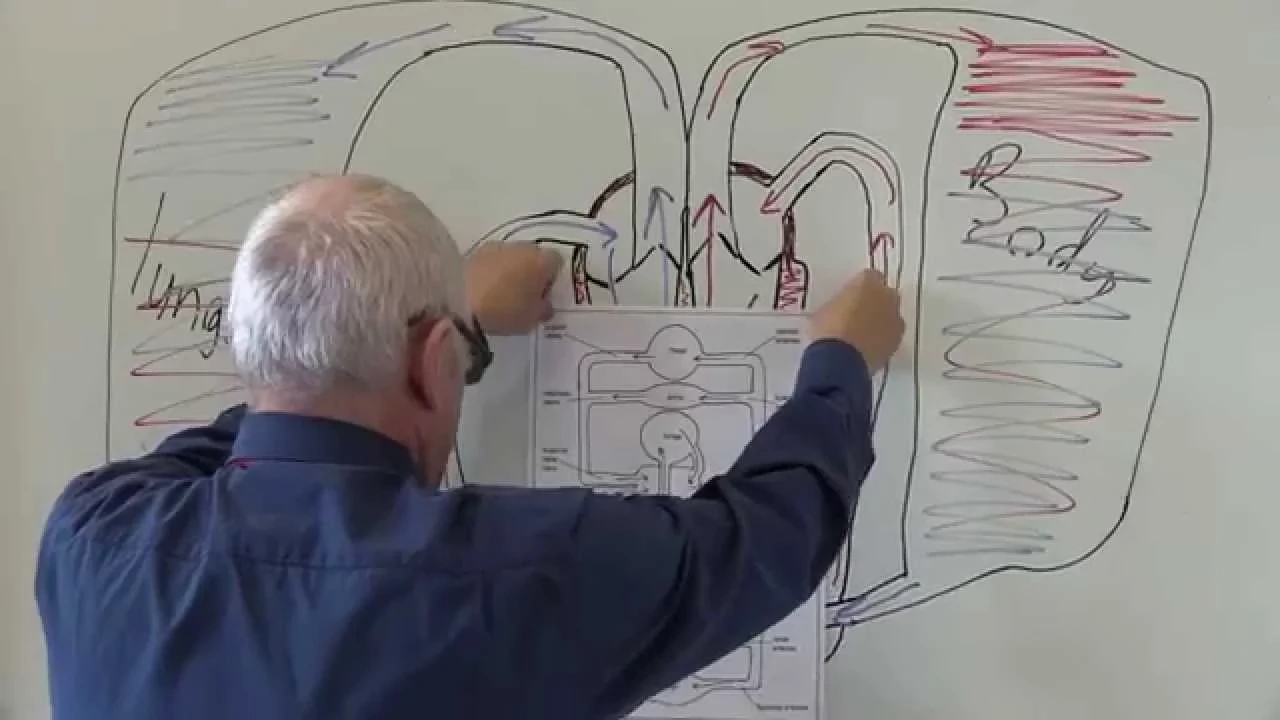
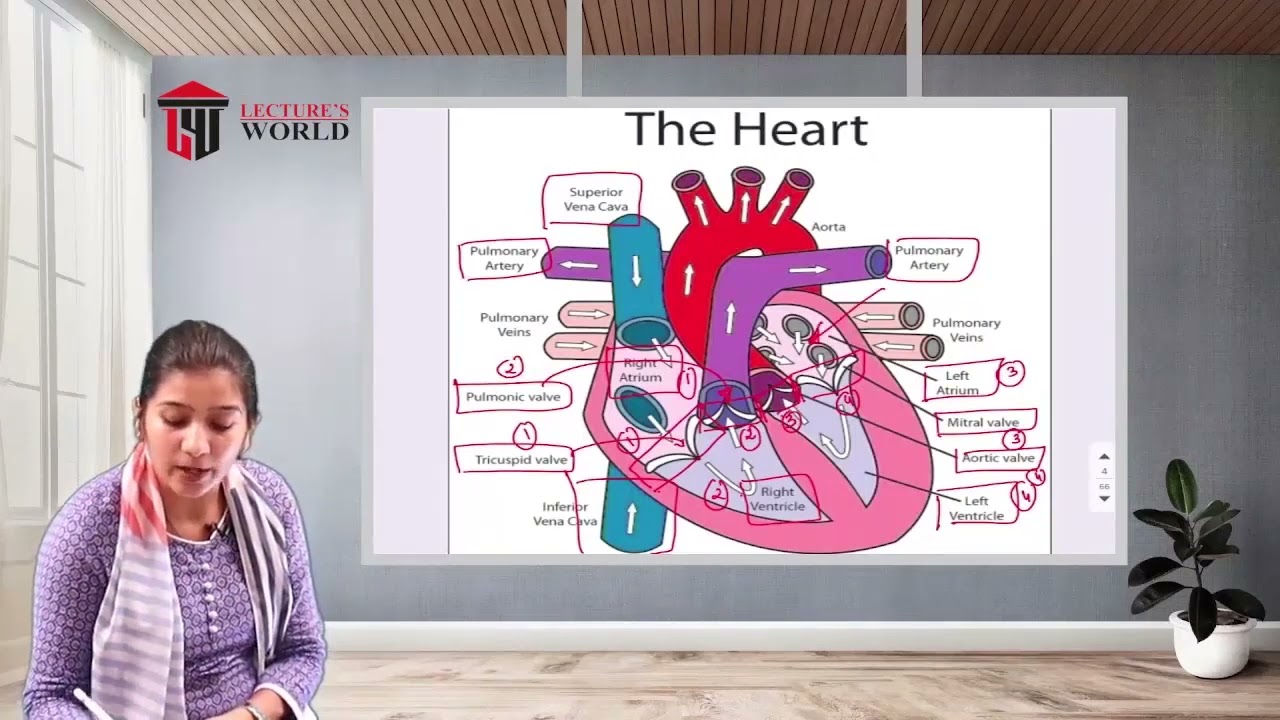
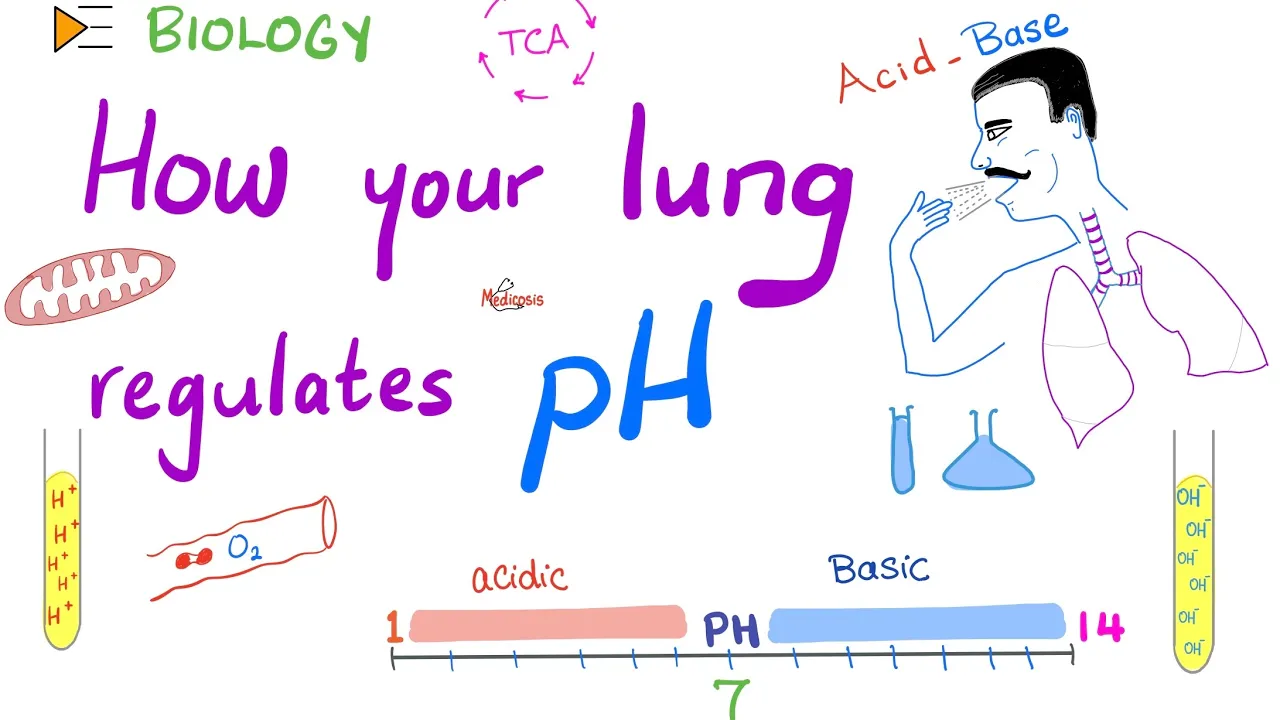
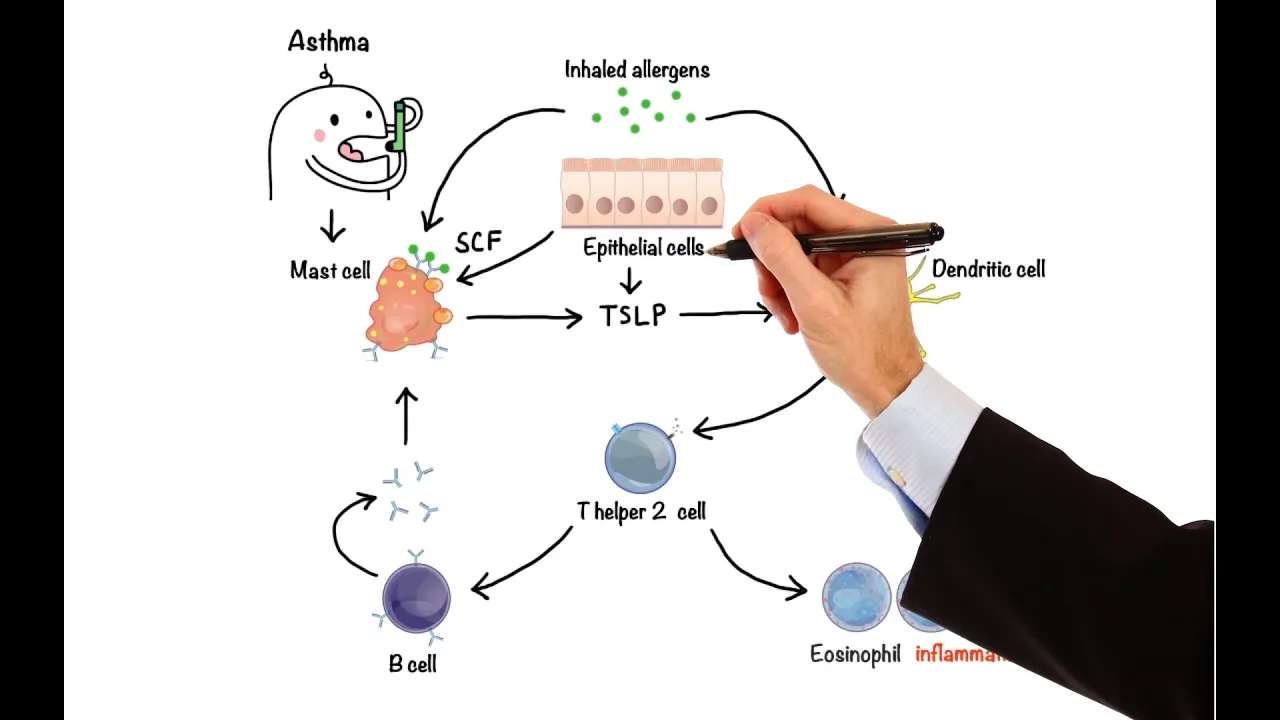
Added:the volume of gas in our lungs at any given moment depends on the mechanics of our lung tissue our chest wall and our spiritual muscles and if there's a problem with any of these particular things it's going to affect the volume of gas in our lungs therefore if somebody has a respiratory disease we can measure these lung volumes and it can be an indication to tell us what type of respiratory disease or disorder an individual may have so in order for us to discuss this we need to talk about the different types of lung volumes when you add these volumes together the types of lung capacities you get and then the two major types of lung diseases which are restrictive and obstructive the first thing we need to talk about are the four different types of lung volumes that you need to know so the first one is that of tidal volume so tidal volume TV is basically at all in the name right the tide the tide is that slow air being ebbs and flows of the water coming in and out it's very slow going in and out and that's our quiet breath small breath in small breath out the type of breathing that we do most often throughout the day that small breath in and out is around about 500 milliliters so half a liter and that's our tidal volume now we can bring air in on top of that tidal volume and that's our inspiratory reserve volume so forcefully inhaling air is our inspiratory reserve volume now I V now that forceful inhalation or inspiration of air on top of that tidal volume is around about 2.5 liters now these values I'm giving you a for a healthy male 70 kilos such as myself now we can forcefully exhale air on top of that tidal volume right so we have that small quiet breath out of half liter but then we can forcefully exhale more air until it feels as though there's nothing left that is our expiratory reserve volume also known as our a/v and that is around about 1.5 liters now you would think that that's everything but in actual fact once we do that expiratory reserve volume and we feel as though there's nothing left in our lungs there is actually around about one and a half liters left in our lungs and that's what we call our residual volume this is air or gas that we cannot forcefully exhale also known as our RV so air that we can't forcefully exhale on top of our expiratory reserve volume now this is around about 1.5 litres as well so these are the four volumes you need to know now you can add certain combinations of these volumes and that gives you lung capacities and I'll show you how we can do this a great way to demonstrate this visually is by doing it up like this here is our tidal volume which I said was around about half a liter and I said on top of our tidal volume we can forcefully inhale air of around about two and a half liters and that's our inspiratory reserve volume I also said on top of our tidal volume that we breathe out we've got our expiratory reserve on which is around about one and a half liters and I also said that there's going to be air that we can't forcefully exhale called our respiratory called our reserve volume which is also around about one and a half liters so here are our four volumes alright we can add some of these volumes and get capacities so let's take a look we can add the inspiratory reserve volume tidal volume an expiratory reserve volume and if you think about it these are all volumes that we can play around with I can consciously have a breath in and breath out and I can forcefully breathe in and forcefully breathe out this is what we call our this is what we call our vital capacity lvc now vital capacity because it's what's required for life now we can also add the inspiratory reserve volume and tidal volume together and this is what we call our inspiratory capacity so at IC and we've also got the amount of air that we can forcefully Excel and our reserve volume which we call our functional residual volume so now F V so these are our capacities now the last capacity is everything together right and that's our total lung capacity that's everything our lungs can hold our TLC all right now when we look at certain respiratory diseases like obstructive diseases or restrictive diseases are the two major types they can play around with each of these volumes or capacities and I want to show you how so what we're going to do is wipe off the capacities what we've drawn up here is for lack of a better term a normal lung volume and capacity readout now if we've got something like a restrictive disease now a restrictive respiratory disease is something like pulmonary fibrosis so fibrosis is like scar tissue that's been laid down in the lungs now scar tissue isn't elastic we know our lungs are elastic we breathe in it stretches we relax it recoils but restrictive diseases they limit the lungs compliancy their ability to stretch so that means the amount of air that you can breathe in is limited it's reduced which also means the amount of air that you breathe out is limited to the same degree so what you're going to find with the restrictive disorders is that every one of these volumes is reduced and so we can just draw it up with a small tidal volume we can draw it up with a small expiratory reserve volume we can draw it up with a small reserve volume we can draw it up with a small inspiratory reserve volume and so what that means is while all the volumes are reduced it also means the total lung capacity the TLC is reduced as well so that's a respiratory disorder now when we look at an obstructive disorder and there's many different types of obstructive disorders so if you think of chronic obstructive pulmonary diseases like emphysema and chronic bronchitis they fit within this particular category in an obstructive disorder it's not that the lung tissue is no longer stretchy so reduction in compliancy in actual fact there's some sort of obstruction in the Airways itself now this could be mucus for example it could be a narrowing of the Airways but what's important here is this animus in an obstructive disease when you breathe in everything opens up which means if you have a hollow tube which has a mucous plug in it for example when you go to inhale that hollow tube gets larger which means that mucus plug obstructs less of it so inspiration in obstructive disorders aren't necessarily limited so they're around about normal but the problem is when you go to expire and expire and breathe out that tube narrows again and then that mucus plug for example will obstruct and the gases cannot leave which means gases remain inside the lung tissue all right so what does that there therefore mean how do we hands like this on something like this graph well your tidal volume is going to basically be normal small breath in small breath out these obstructions don't necessarily alter that now our inspiratory reserve lamb I said when you breathe in the Airways open up and it's not limited so inspiratory reserve volume tends to be relatively normal in an obstructive disorder but when you expire as the Airways narrow you can't breathe out that expiratory reserve volume so the expert or reserve volume is reduced but what that means is think about it you breathe in you breathe out breathe in breathe out all right if you're breathing in all this air or gas and you can't breathe it out it now sits as a residual volume so you've got this really big residual volume now what that means overall is that you have an increase in total lung capacity and an increase in residual volume and a decrease in expiratory reserve volume now this is important this is really important because when you look at individuals with emphysema they get barrel chest and they get barrel chest because they keep accumulating this residual volume because they breathe in but they can't breathe it out so this is why it's important to understand the lung capacities and lung volumes when it comes to a restrictive and obstructive disorders obstructive versus restrictive respiratory diseases and two of the most common categories of respiratory diseases you'll come across excluding infectious respiratory diseases so we're going to focus on what are restrictive and what are obstructive respiratory diseases and then compare the differences between the two so what we need to begin with is what most thing that happens in a healthy lung so what I'm going to draw up first of all here's a healthy lung oversimplified so a healthy lung we have some nice open patent airways and we know that our lungs contain a huge amount of what we call elastic tissue because we know that our lungs it's about stretch out and also recall back together as though it's filled with a huge amount of elastic bands so we have all this elastic tissue within our lungs now importantly this elastic tissue is attached to our Airways and this is important because when this elastic tissue stretches out it needs to stretch open those Airways with it so that means when you take a nice big deep breath in and that elastic tissue stretches it's going to pull open those Airways and then when it relaxes they're going to come back together now we know that when our lungs need to expand we need to do this by contracting predominantly what we call the diaphragm which is the muscle that sits underneath the lungs and also the external intercostal muscles which are the muscles that sit between our ribs now before we talk about that you need to know that the lung itself has some membranes associated with it there's a membrane that's most adherent to the lining tissue itself and this membrane is called the visceral pleura and there's also another membrane that just sits a little bit away from this further away from the lung tissue but closer to the rib cage or the thoracic cavity I should say and this is called it called the parietal pleura so there's two membranes visceral pleura and parietal pleura and in between there's a fluid that's released and this fluid what happens is this fluid allows for some lubrication to occur but also there's a negative pressure inside of this little cavity here called the pleural cavity now this parietal pleura is going to be adherent to the thoracic wall so what were going to draw up now is some ribs now again I'm over simplifying this these ribs are going to be a little bit closer than what I'm drawing and also between those ribs you're going to have some muscle which is going to be the external and internal intercostal muscles now I said there's going to be a diaphragm so let's draw the diaphragm in which is that nice skeletal muscle that sits underneath the lungs itself so you know that when we need to take a breath in what happens is because we have a negative pressure in this pleural cavity it's like a vacuum what happens they stick together and because they stick together whatever this parietal pleura is attached to the visceral pleura will move with it as well so because this parietal pleura is going to be adherent to the diaphragm and also to the thoracic wall if the diaphragm moves down which it does when it contracts it's gonna pull the lung tissue with it and when the external intercostal muscles contract and the rib cage comes up and out like this it's going to pull the lungs with it so that's what happens when we take a breath in diaphragm goes down external intercostals pull outwards and the entire thoracic volume increases and when that entire for us at the volume increases becomes a little bit negative in here and air rushes in now what tells these experiments of costal muscles and the diaphragm to contract well it has to be some sort of nervous innovation where does this nervous innovation come from has to come from the central nervous system so let's draw up very quickly the brain I'll draw it the other way kind of the brain the cerebellum you're going to have the midbrain pons and medulla of the brainstem then we're going to have the spinal cord so yes it's an oversimplified version now when it comes to respiration the most important area of the central nervous system is the brain stem specifically it's going to be D so remember you have the midbrain the pons and the medulla which make up the brainstem the respiratory center is made up of the medulla and the pons okay so the medulla and the pons are the most important aspects of the brainstem for respiration we're not going to go into the specifics of it but just know that there's new ones there to help you breathe and that these neurons are going to talk to neurons are the survival plexus and the thoracic nerves so as we move down we're going to go to the survival region of the spinal cord I'm going to talk to three aspects so c3 c4 c5 c3 c4 c5 now these neurons what they do is they innovate the diaphragm so neurons from c3 c4 c5 come and innovate the diaphragm which means they tell the diaphragm to contract which means it pulls down and that comes in so inspiration this nerve as you know is called the phrenic nerve c3 c4 c5 I'm also got some coming out of the thoracic aspect of the spinal cord now I'm not going to draw the adequate number but I'm just going to draw some just to highlight to you and these are going to innovate the external intercostals which then tells them to contract and therefore bring the ribcage up and out and again allowing air to come in so this is part of the normal anatomy for the respira tree system what am I telling you this was what does this have to do with restrictive and obstructive diseases well if so remember lungs need to expand that's what needs to happen normally now they need to be stretchy so it's called stretch ability but we don't call it clinically we don't refer to as a stretch ability stretch ability we call compliancy so let's just write that down compliancy is the stretch ability of the lungs how structure the lungs are now if it's very compliant the lungs can stretch out quite easily and remember we need that to have a nice elastic recoil as well now if something happens doesn't know if it starts at the central nervous system doesn't matter if it comes from the peripheral nervous system doesn't matter whether it comes from the musculoskeletal system doesn't matter if it comes from within the tissue of the lungs itself if something happens to restrict the expandability of the lungs that is called a restrictive disease so restrictive disease limits lung expansion okay so restrictive diseases limit lung expansion and as you can see that can come from the central nervous system peripheral nervous system musculoskeletal system all within the tissue itself also known as within the parenchyma of the lung so if we were to look at all the causes of restrictive diseases outside of the lung itself that's known as extrinsic restrictive diseases they know that they're known as extrinsic restrictive diseases also known as extra pulmonary diseases okay extra pulmonary restrictive diseases so if it comes from the central nervous system an example of this could be amyotrophic lateral sclerosis ALS in the states is known as Lou Gehrig's disease and this is going to be neuronal degeneration on the central nervous system which can affect obviously the neurons that innervate the external intercostal muscles and the diaphragm we can have issues in which we have damage to these nerves either in the spinal cord itself or the peripheral nervous system and this can happen through spinal cord injury for example you might get depression of activity of these neurons within the central nervous system and this comes from morphine for example we know depresses there a spiritual function and can depressed patients respiration as well what else can we have or we can have issues with the muscles of the respiratory system and this is what was common in polio hence why individuals who had polio needed to breathe the inside of what was called an iron lung to sort of recapitulate what happens normally when like lungs expand that's what that machine would do expand the chest cavity for you or we can have issues with the bones or skeleton of the respiratory system what's the most common aspects there well we're going to the ribs and with the spine while the spine because the ribs are attached to the spine so if you have a broken rib you know it's very difficult to breathe or at least it's quite painful to breathe or if you have a problem with your spine meaning you have some sort of kyphosis or scoliosis or lordosis which are abnormalities of the curvature of the spine well if the spine is going to be curved whether it's going to be an - whether it's going to be lateral curvature abnormalities or anterior posterior curvature abnormalities it's going to alter the way that the ribs are positioned and also alter the way that you can breathe so this could be classified as extrinsic restrictive pulmonary diseases okay I'll focus on intrinsic restrictive pulmonary diseases so what's happening inside the lung tissue itself so in order to do that let's get rid of some of the stuff we've put up at the moment we're going to focus just on the lung tissue itself now as you can see we've drawn up a nice healthy lung here we have nice Peter which means open airwaves we have a lot of elastic tissue which you can see here this elastic tissue allows for the lungs to be compliant which means stretch out but also very importantly allows for the lungs to recoil okay so that's a very important last four months to recoil back in now when you breathe normally I'm sure you've already had a look at what we call pulmonary function tests so that's where you breathe into a machine and it looks at your tidal volume which is a normal breath in normal breath out your inspiratory reserve volume how much breath you can take in when you forcefully inhale and your expiratory reserve volume how much air you can forcefully exhale and you also know that you cannot ever exhale every single bit of gas inside of your lungs that's important because one donor to lungs to collapse to even when you want to exhale all that air out there needs to be some gas remaining for gas exchange with the blood okay so nice happy healthy lung let's just draw up a nice pulmonary function test just to represent what's going on like I said you're going to take a nice title breath in and out and in and out and in and then you know that after a normal breath in you could even more air in this is called the inspiratory reserve volume and you know that you can breathe that out and you can try and breathe out as much of it as you can cut the expiratory reserve volume and then you go back and you take another nice title breath in out in okay so what we've got couple things we need to highlight first thing we need to highlight is like I said this is our tidal volume TV it's often referred to as breath in breath out we've got the inspiratory reserve volume IRD how much air we can breathe in on top of a normal breath in the expiratory reserve volume how much air we can breathe out on top of the normal breath out and like I said you can't breathe all your air out you've got a residual volume now that means that at the bottom of this residual volume is going to be zero liters this is when your lungs do not contain any air at all so let's just draw a nice line because I want to compare this between restrictive and obstructive diseases so let's draw a nice line across the entire board hopefully it's nice and straight for you and like I said this is going to represent zero liters now normal mice have been healthy one when we look at intrinsic restrictive diseases something has to happen inside the lung parenchyma itself to restrict the expandability of the lungs right because that's what a restrictive disease is now what can happen is this if over time so chronic exposure to irritants some sort of particulates some irritants to the lung tissue it can damage the lung tissue and lead to scarring of the lung tissue now this is called pulmonary fibrosis pulmonary fibrosis which literally means lung scarring now because you're having irritation and you're having damage you know that when some sort of inflammatory response occurs there quite often damage to this tissue will lead to scarring so more collagenous tissue so more collagen fibers will be deposited and so what you're going to get is more tissue being deposited let me leave that as a normal happy healthy line and I'll draw up a new liner I'm intentionally drawing it smaller I'll tell you why firstly when we look at restrictive diseases the Airways are abnormal science tell you why in a second but like I said you've got a greater amount of collagen deposited and sometimes even more elastic tissue see it's very very dense inside the lung tissue itself because of this pulmonary fibrosis so more tissue is being deposited now what does that mean I'll think about it if we think of the normal happy healthy lung as being let's say 10 rubber bands let's write that down just write 10 rubber bands 10 rubber bands together and you were stretch it open it would have some sort of structure ability or compliance it to it and then if you let go it would have some level of elastic recoil to it that's a normal happy healthy lung you can think of the restrictive lung as having let's say 20 elastic bands or 20 rubber bands however you like to refer to the mouse what does that mean with your 20 it's going to be a lot harder to stretch out because you've got more of them but they'll have a very very high degree of elastic recoil so that means the compliancy is reduced but the recoil is increased let's run that down for restrictive diseases compliance ease decreased and recall has increased so that's why the ones smaller because it's hard to stretch it out but at rest it's quite tight its recalled quite a quite a large amount because of all this all these fibers that are deposited okay now what do you think that means if we look at this pulmonary function test well you've got to have a relatively normal tidal volume but do you think you'll be able to inhale forcefully inhale all that inspiratory reserve volume as well as you can with a healthy lung no it's going to be very difficult so you're gonna have a reduced inspiratory reserve volume because it's hard to expand those lungs if the inspiratory reserve volume is reduced that means less air in that also means less air can come out so your expiratory reserve volume is reduced as well now in addition to that if the lungs at rest are smaller there's going to be less air remaining in there that you can't expel which means the reserve volume is also reduced so if we're going to draw this up we would have a relatively normal tidal volume the inspiratory reserve volume is going to be low the expiratory reserve volume is going to be low and the residual volume is going to be low so you can see tidal volumes not too bad decrease expiratory reserve volume decreased sorry in sport inspiratory reserve volume decreased expiratory reserve volume and you can say decreased reserve volume so we can write that up here you have decreased inspiratory reserve volume decreased expiratory reserve volume decreased residual volume and overall if you look at total lung capacity well that's the total lung capacity there you decrease total lung capacity as well this is what you commonly find in restrictive diseases let's look at obstructive disease it's how they differ well restrictive is some sort of difficulty in expanding lung tissue obstructive with some sort of obstruction in the Airways so here are the Airways now there's a couple of common obstructive diseases you need to be aware of these common obstructive diseases include asthma that's one now we last month we're going to have a number of other videos available to that discuss asthma and the following so I'm going to be very quick in the way I describe it asthma is a reversible disease which involves narrowing of the Airways so what you find is that if you have a normal airway in asthma it's narrowed now this narrowing of the Airways is often due to hyper responsiveness which means something that in somebody who doesn't have a smile wouldn't trigger any constriction of the Airways would trigger it in an asthmatic patient so hyper responsiveness doesn't usually affect others but only affects those individuals who have asthma and it's a narrowing of those Airways and it can be due to a number of reasons you can have extrinsic and intrinsic causes of asthma now they have our Airways hence it's an obstructive disease because it's obstructing the amount of air that can go in and out another common type is chronic bronchitis and in chronic bronchitis you have some sort of irritation chronic irritation that causes mucus hypersecretion mucus hypersecretion so what does that mean it means this irritation is causing more mucus to be secreted it within the airways and so what are you gonna have you're gonna have you airline and you're gonna have mucus inside of that airway and again that mucus will plug these Airways up and obstruct the airway hence why Cronk artis is an obstructive pulmonary disease the last one is emphysema and emphysema yes you have some sort of obstruction within the Airways but what happens as well as that I need tonight percent of patients who have emphysema have a history of smoking what happens with smoking is that these particulates those chemicals that are coming into the Airways start to damage the lung tissue itself and then in addition to that we have macrophages remember big eaters inside the lung tissue which are trying their hardest to rid the lung tissue of these invading chemicals these chemicals that should be in here now they secrete proteases which are enzymes of their proteins and their last phases that break down the elastic tissue within the lungs as well so what that means is apart from obstructing the Airways in emphysema you also have the elastic tissue within this airway being eaten away as well so what does that mean you follow it up if you were to remove some of this elastic tissue think about what that what that means remember I said ten elastic bands here 20 elastic bands for restrictive with obstructive you can think of it as though there's only five elastic bands that means it's a lot easier to stretch open but the recoil isn't as great so that means you have a high compliancy but a poor elastic recall which is pretty much the opposite of the restrictive so if we were to draw up a lung of somebody with an obstructive disease the lung is going to be larger and the airways are going to be smaller because it's an obstructive disease and the elastic tissue is going to be reduced again what does that mean it means that when you pull on this on this lung tissue it's gonna be quite stretchy just like you would with about five rubber bands or elastic bands opens up very easily but doesn't snap back very well which means that patients with obstructive diseases particularly asthma chronic bronchitis emphysema which we commonly refer to together as COPD chronic obstructive pulmonary diseases it means that they usually don't have a big issue with breathing in because it stretches very easily but they have a big issue with breathing out and it's very difficult to get all the air out of their lungs so this means that breath in breath out they don't exhale as much as they should be able to exhale and that means that do you think they're a spiritual bond is going to get greater and greater the amount of a that that can't breathe out increases increases increases and this is commonly why you see some of these patients with a big barrel chest quite common in individuals with emphysema so if we're going to draw this up again what you're going to find and I'm have to run this out a little bit because I'm going to go a little bit higher is that I said the residual volume is higher the tidal volume is going to be not too bad the inspiratory reserve volume is going to be quite high the expiratory reserve volume is going to be quite poor and the residual volume is going to be quite high so increased inspiratory reserve volume increased reserve volume decreased expiratory reserve volume and what about the entire total lung capacity increase total lung capacity so comparing compliancy and recall maza write it down the compliancy for an obstructive disease is greater the recall is reduced okay and again you have increased total lung capacity increased inspiratory reserve volume increased residual volume for somebody with an obstructive disease whenever I said that this elastic tissue is attached to the Airways that means that when you expand a lung that air wise get larger and then when you bring it back together the airways get smaller think about what happens with an obstructive disease I said that they can easily stretch their lungs out which means that Airways open up but because there's a reduced elastic tissue not as much of this elastic tissue is attached to the air lies as there should be which means that when it comes back together the thing that keeps these Airways open a patent is their attachment to the elastic tissue which made people with obstructive disease is when we going to bury that the airways are likely to collapse because the thing that keeps them open and payment is that elastic tissue and there's not much there so it's quite common that they have collapsing Airways which is one of the reason why reasons why you see patients with emphysema breathing with pursed lips because if they would have exhale too quickly the Airways can collapse so they control the expiration through pursed lips that's the difference between restrictive just very basically the difference between restrictive pulmonary diseases and obstructive pulmonary diseases so in this video we're going to take a quick introductory look and ventilation/perfusion coupling you may see it written in your textbooks as ventilation/perfusion matching or the cue coupling or vq matching it's all the same thing now to put into context what are we referring to we're basically referring to the events of gas exchange that happens at your alveoli with the blood flowing past your alveoli okay that's what we're referring to so that means remember the four phases of breathing you've got ventilation air coming into and out of your lungs you have external respiration where gas is exchanged at your alveoli to the capillaries and vice versa you have gas transport where oxygen and carbon dioxide is transported through your circulatory system and you have an internal respiration where gas is exchanged at the tissues of your body okay so what we're referring to today is gas being exchanged at your alveoli with your blood that's going pass so your pulmonary blood supply firstly let's go back and it's the fine ventilation and let's define perfusion okay first thing is ventilation ventilation is the amount of gas that gets to your alveoli every minute that can participate in gas exchange okay so simply put ventilation is the amount of gas in your alveoli that's ventilation okay for example if I were to draw an overlay up it's the amount of gas coming in and out of this alveolar every minute so that is ventilation this gas you know wants to move across the respiratory membrane and the oxygen wants to jump into the blood and the carbon dioxide wants to jump out of the blood so it can be breathe down that's back to Latian perfusion is the amount of blood that moves past the alveoli every minute that can participate in gas exchange so you have blood moving past and this blood can either pick up oxygen or drop off carbon dioxide will do both and this blood that's going past is what we refer to as perfusion so perfusion is the amount of blood moving past alveoli that can also participate in gas exchange okay so that's the first problem we know define what we're referring to next thing is this why is it called coupling it's called coupling or matching because we want there to be a near perfect match meaning of the gas that comes into the elbe of the gas that comes into the alveoli we want there to be enough blood to go past that can take that gas away or to give the carbon dioxide away so let me give you a nice example let's just say we inspire some air and we have in that inspired air 100 units of oxygen okay so just say 100 units of oxygen whatever that may mean let's just say up the blood that's going past we have 100 carrier units of oxygen so basically here new globin but you know that one hemoglobin carries far more than one oxygen but for simplicity sake thanks let's let's just say that one carrier carries one oxygen now what you can see here is if we have a hundred units of oxygen coming into and a hundred units carry units coming past in the blood this is a perfect match it's one for one for every gas leak jumps into the blood where the carrier molecule that can take it away this is what we refer to as matching and our lungs want this matching to be near-perfect now an actual fact if you have a look you'll see that of the amount of gas that comes through so for your ventilation per minute you'll find that the amount of gas that comes in is around about four point two liters okay and the amount of blood that moves past which is your cardiac output so the amount of blood moving past per minute is five liters so if we do the ventilation perfusion ratio which is V over Q so remember the V's ventilation and the Q is perfusion if we have a look at this what is that the ventilation is four point seven the perfusion is five if you have a look at that which is eight point four to ten which is nearly one-to-one natural fat that's around about zero point eight instead of one okay but it's close so what you can see is there's a near match for the ventilated air compared to the blood that's perfusing past okay and your body wants to keep it like this so let's talk about what happens when things go wrong so let's just say this on anatomical or functional issue in which ventilation drops or let's just say what happens if perfusion were to job so let's have a look first thing you need to be aware of is the amount or the partial pressure of gases throwing stuff all over the place the partial pressure of gases not just in the atmosphere but in your alveoli and in your blood so let's first talk about partial pressures and what that truly refers to partial pressure well in the atmosphere that we breathe in the air that we breathe right now there is a certain amount of pressure being forced upon us okay and this is just the sum total of all the gases in this atmosphere pressing down on us what are these gases well these gases are nitrogen these gases are oxygen these gases are carbon dioxide and there's some other trace gases that are there so these are the main gases that we're breathing in right now and that are in the atmosphere now the pressure on us right now is actually 760 millimeters of mercury that's the amount of pressure your question may be how come I'm not feeling this pressure well you're born into it so of course you're not going to feel you have 760 millimeters of mercury pressure placed upon you now and it's the sum total of the individual gases so of all the gas you'll find that about 78 79 percent is nitrogen you'll find that around about 21% is oxygen and you'll find around about 0.03 percent is carbon dioxide there's not much carbon dioxide in the air that were breathing right now now that means that if I were to take 79% of 760 I have the partial pressure of nitrogen in the atmosphere okay and we would write that as P into and let's just see forward to calculate that the partial pressure would be around about 600 millimeters of mercury okay if we calculate the partial pressure of oxygen in the atmosphere 21% of 760 is around about the partial pressure of oxygen it's around about 159 millimeters of mercury if I were to calculate the partial pressure of carbon dioxide in the atmosphere 0.03 percent of 760 you'll find that the partial pressure carbon dioxide is around our zero point two millimeters of mercury okay so that means that outside in the air so you know that nitrogen we don't need to worry about so let's forget about that spoke about in the lectures why we don't care about nitrogen firstly it's an inert gas so it doesn't really react very well and there's no strong pressure gradient for it to dissolve within our blood or into our tissues unless you're deep sea diving and then the pressures change but that's for another discussion so let's just say out in the atmosphere now the atmospheric pressure is for oxygen one five nine for carbon dioxide 0.2 now we breathe that air in that 159 millimeters of mercury comes in two lungs that point two millimeters of mercury carbon dioxide comes into our lungs but the amount of gas the partial pressure of these - gases change so what you'll find is by the time this gas reaches your lungs that the partial pressure of oxygen is actually a hundred millimeters of mercury okay and because some of that oxygen is being mixed with water because we're humidifying some of this air so and some of these oxygens being lost by other means so that partial pressure of oxygen drops we also find the level of carbon dioxide so the partial pressure of co2 goes from being zero point two goes all the way up to 40 millimeters of mercury why does it jump up so high well because this blood going past continually throws carbon dioxide in here so they sell me all eyes like a little chamber for co2 co2 have been thrown again so zero point two coming in but it's mixing with the higher co2 it's coming from the blood okay now next point is that the blood going past this blood wants to pick up oxygen so oxygen wants to go in this direction okay and carbon dioxide wants to go into the alveoli so industry now gases will only move down their pressure gradient which means if oxygen is a hundred millimeters of mercury in the alveoli it must be something less in the pulmonary artery going past and it is so partial pressure of oxygen in the pulmonary artery is 40 millimeters of mercury okay which means oxygen can jump in carbon dioxide the partial pressure of co2 well is it going to be more or less in the blood has to be more because the co2 wants to jump into the alveoli go downhill so the partial pressure in the blood is 45 millimeters of mercury now look at the differences there is a difference for oxygen 100 to 40 which is a 60 millimeter mercury difference and from carbon dioxide for the alveoli to the blood is only a 5 millimeter of mercury difference but did you know that the same amount of oxygen and co2 gets exchanged now you'd think well wouldn't there be more oxygen exchange than co2 because of the precious so much greater that there's a stronger push behind oxygen compared to carbon dioxide and the answer is yes but remember carbon dioxide it's about 20 times more soluble in liquid than oxygen is so carbon dioxide does not need much of a push to go across that respiratory membrane ok yeah that's the first point this is what happens normally and you get this nice matching for the air that comes in for the ventilation it matches with the perfusion and everything's fine but let's just say something's happened and a patient a child comes in and they've inhaled a peanut and that peanut gets trapped and blocks an airway well let's think about what happens if this peanut comes in and blocks an airway that means the ventilation is going to drop right because it's blocked now I can come in and no way can go outside ventilation drops now what happens in your body is at your lungs specifically it's quite amazing because when this drops right think about it let's just say we have we had that 100 you of oxygen and the hundred units of blood going past to pick it up well now that we've blocked it this is going to drop let's just say this goes down to ten units of oxygen but we still have a hundred units of blood going past so what are we wasting we are wasting the blood that's going past now this blood could be used elsewhere this blood could be redirected to parts of the lung which are well ventilated not poorly ventilated so what the body does is again it wants to match it wants to create this coupling so I want you to think about how could we create a match your ventilation drops how could we make perfusion match that well we drop perfusion we drop the amount of blood that goes past how do we do that well we've vaso constrict so we tell this blood vessel to constrict and if that happens less blood goes past then it starts to match now the good thing about this which it is that if you constrict this blood vessel the blood gets pushed back which means it gets redirected to other alveoli that are well ventilated so perfect so how does this mechanism occur if you have a drop in ventilation due to some sort of block at your ovo line how do we get this constriction well what you find is when this alveoli is blocked that means that this gas is trapped in a way so this it can't go in and out of the atmosphere okay in and out of the alveoli in exchange with the atmosphere so the level of oxygen that's in this alveoli can only go one placement into the blood so that means the concentration or partial pressure of oxygen drops because all job into the blood what about co2 well as the co2 goes past it's coming downhill it's trapped here so co2 will jump into the alveoli so co2 here will go up what you'll find is a drop in ventilation equals a drop in the partial pressure of oxygen in the alveolar right and what this results in is the drop in oxygen is what stimulates it's the drop in oxygen that stimulates vaso constriction it's the oxygen that stimulates vasoconstriction okay hopefully that makes us so it's starting to match now I want to talk about what happens if something blocks the blood flow Yokoso so dropping the perfusion so let's have a look so remove that get rid of the peanut airways it nice and clear let's keep this up here but let's write it a bit neater so let's make the statement that let's make the statement that a drop in ventilation equals a drop in alveolar oxygen which equals laser constriction which equals a drop in perfusion okay now let's just say that this person ventilation is fine it's perfect the airways are well ventilated but they've got a blood clot they have a pulmonary embolism that has come past and is now including that vessel so think about what happens the blood flow has now stopped now all this blood flow that stopped remember this ventilation is fine so this blood flow stops which now means that the oxygen can not jump into the blood because there's no blood to exchange with the co2 or cannot jump out of the blood so all that's happening is air is going in out in out in out in if that continues to happen these values start to look more like the values in the atmosphere because nothing's being exchanged right so as you breathe in out in out in out what you'll find is that the oxygen is no longer a hundred it starts to shift its way to 159 let's just say 150 because it's not going to be exactly and the carbon dioxide shifts down to nearly zero so virtually zero point two millimeters of mercury so what has happened you've had an increase in oxygen but you've had a drastic decrease in co2 and this is because of the occlusion so what you'll find is this point now is that so that's the first point second point is that a drop in perfusion resulted in a drop in alveolar co2 as change colors so you don't get confused with this one I drop in perfusion because of the clot resulted in a drop in alveolar co2 and this results in how we're going to match it this is dropped what do you want to do we want to drop this so we want a Bronco constrict so a drop in alveolar CO 2 equals Bronco constriction which equals a drop in ventilation okay so what are the major points what's the take-home point the take home to take home points the first Pokemon point is ventilation wants the much perfusion of perfusion wants the much ventilation because then you get an adequate amount of oxygen in your blood that can be delivered to tissues and get rid of an adequate amount of co2 via expiration if you have some sort of problem that's obstructing your Airways or obstructing your blood flowed your body responds your lungs respond to try and make it match and overall you'll find that a drop in ventilation will result in a drop in perfusion the drop in ventilation will result in a drop in oxygen in the alveolar this drop in oxygen in the own results in advisor constriction next point is if there's a drop in perfusion we want to get a drop in ventilation okay and that the drop in ventilation results in a drop in carbon dioxide this results in Bronco constriction so co2 is responsible for changing the diameter of the Airways and OH - is responsible for changing the diameter of the blood vessels I'm sorry that took so long but I hope that makes sense hi everybody dr. Mikey in this video we're going to take a look at gas transport the movement of oxygen and carbon dioxide around the body picking up oxygen at the lungs which we've got here and dropping it off at the tissues but at the same time we're throwing out carbon dioxide at the lungs and picking it up at the tissues when we look at gas transport is simply the fact that the circulatory system the respiratory system and the tissues of the body are intimately related gas needs to go back and forth between all of these particular structures now the transport of these gases are occurring in the blood and specifically at the red blood cell as well so not just the blood plasma but the red blood cell too and so what we need to do is we need to draw up a red blood cell and I think the best place to start is actually at the tissues what's happening at the tissues and then we'll look at what's happening at the lungs so let's drop a nice big red blood cell and see what's happening at the tissue so remember first of all we want to throw oxygen from the blood to the tissues and we want to pick up carbon dioxide from the tissues and put it into the blood all right so first thing is I think let's start with carbon dioxide that's what we're that's what we are picking up here at the tissue so first thing with carbon dioxide is that it can simply be transported in the blood plasma itself not even with the red blood cell that carbon dioxide can go straight into the plasma and just be dissolved directly in the plasma so the carbon dioxide can be dissolved directly in the plasma second thing is that the carbon dioxide can go into the plasma but it combined with water in the plasma now if carbon dioxide binds with water in the plasma it's a simple maths equation what we get is h2 because there's the 2h C there's the C oh and how many do we have to there one there so that's three and that's called carbonic acid so carbon oxide bonds with water producing carbonic acid in the plasma but as we know carbonic acid hates itself splits itself apart and what it forms is bicarbonate and hydrogen ions now what happens is the hydrogen ions will bind to plasma proteins to buffer out the hydrogen ions because we know that all pH is is the amount of hydrogen ions if there's too many of these free-floating in the blood for example is going to be too acidic not good for our body it needs to be buffered out right and so if it's in the plasma proteins can do this so there's two ways that carbon dioxide can be transported this equation can happen inside the red blood cell as well now here's the thing what happens outside the red blood cell it's actually a very slow reaction now the reason why it's a slow reaction is because there's no enzymes out here to help speed it up but if this reaction happens inside the red blood cell for example so co2 moves into the red blood cell it bonds with water it produces carbonic acid which is h2 co3 which then splits itself apart into bicarbonate hco3 negative let's swap it around just to make it easier and I'll show you why in a sec hydrogen ions and bicarbonate so that's the same thing doesn't matter which way that you write it what we now have is the whole reaction happening in the red blood cell but it's fast now it's fast because there's an enzyme that helps this called carbonic anhydrase carbonic anhydrase and it speeds this reaction up in actual fact this is the most abundant way well this is the main way that carbon dioxide is actually transported in the red blood cell by turning into bicarbonate so you can see where is that co2 it's sitting here in the bicarbonate so you could say that carbon dioxide is transported as bicarbonate so dissolved in plasma and as bicarbonate but there's another way carbon dioxide well it gets into the red blood cell can actually just bond straight to hemoglobin which we can write as HB like that and what we have is carb amino hemoglobin that's what it's called so there's HB co2 like I said it's called carb amino maybe we'll write that down no we live yeah we'll write it down here kab amino hemoglobin now the reason why it's called that is because the carbon dioxide doesn't bind to the heme portion like oxygen does we'll see in a sec it binds to the amino acid portion the globin portion that's why it's called carb for carbon dioxide amino hemoglobin all right ok next thing is what's happening with oxygen so this is even though there's four ways here in actual fact there's only three particular ways one dissolved in plasma two transported as bicarbonate either outside the cell slow or inside the cell fast number three is bound to hemoglobin specifically the globin portion what about oxygen well we know that oxygen is going to be in the red blood cell and we need to get it out to the tissues so what we've got for example is we've got oxygen bound to hemoglobin right this oxygen is bound to hemoglobin but what we need to do is we need to disassociate that oxygen from the hemoglobin and so we need to give up that hemoglobin and we need to give up that oxygen and what we now can do is get that oxygen out and send it to the tissues so that's one way that he McLaughlin is oxygen is transported bound to hemoglobin the other way is oxygen can simply like carbon oxide be dissolved in the plasma dissolved in plasma and it just diffuses out so there's only two ways so there's three ways for carbon dioxide to be transported only two ways for oxygen to be transporting an important point here what tells the oxygen to disassociate from the hemoglobin how does it know it's at the tissues and it's time to jump off and deliver itself to the tissues well this hydrogen ion what happens is that this hydrogen ion will force the hemoglobin to disassociate from the oxygen because what the hydrogen ion wants to do is it wants to bind to the hemoglobin to form a deoxyhemoglobin and the reason why this is important because again hydrogen iron needs to be buffered you can't just have free-floating hydrogen ion or at least not too much it needs to be buffered so the hemoglobin can do this outside the cell plasma proteins can do it inside the cell hemoglobin can do it really important another important point here is that the bicarbonate isn't just floating in the red blood cell that bicarbonate needs to get out this bicarbonate can stay add in the plasma but this also needs to get out into the plasma so what happens is this bicarbonate needs to come across a transport channel in the red blood cell and it will be transported out into the plasma and it will be exchanged with chloride so you get a shift of chloride into the cell and this is called the chloride shift so what you can see is this is how carbon dioxide jumps from the tissues into the red blood cell or the plasma for transport and how the oxygen goes in the opposite direction now this whole process just happens in Reverse when we get to the lungs and so for example what we can do is draw up another red blood cell and we can have a look so let's start with carbon dioxide again the carbon dioxide that's just dissolved in the plasma needs to get out to the lungs so we can breathe it out so it just diffuses out easy-peasy what about the carbon dioxide that's stored or transported should say as bicarbonate well what happens here is that the hydrogen ions will buy into the bicarbonate that will form carbonic acid h2co3 that then will disassociate into carbon dioxide and water and then the carbon dioxide will diffuse out across the lung tissue at the alveoli what about inside the cell same thing that's happening inside cell but remember the bicarbonate is sitting outside the cells so we need to do that chloride shift in the opposite direction so we need to get the bicarbonate that's sitting outside the cell now and we need to swap it and throw it inside the cell hco3 negative swap it with that chloride now this bicarbonate combined with the hydrogen ion it can form h2 co3 carbonic acid back and then split itself apart into water in carbon dioxide and then that carbon dioxide can diffuse out and again carbonic anhydrase can help with this process and again it is fast so this is a fast way of doing it and this is the slow way of doing it in saying that because it's fast more of carbon dioxide can be transported in this way compared to the way it's transported outside of the cell okay now that's the carbon dioxide but remember we've also got carbon dioxide bound to hemoglobin as well so we've got the hemoglobin bound to carbon dioxide that needs to split itself apart so we've got deoxyhemoglobin and carbon dioxide and then we'll check that carbon dioxide out now what about the oxygen well I said to you earlier that oxygen can be transported dissolved outside or that carbon dioxide can jump in oxygen sorry oxygen can jump in and bind to hemoglobin now this is the thing there's free hemoglobin because the carbon dioxide is going out there's also free hemoglobin because the hydrogen that we got here is now reversibly remember it was bound to hemoglobin and that hydrogen jumped off now we've got free hemoglobin and this is the hemoglobin that the oxygen can use to bind to and now we've got oxygen bound to hemoglobin so take-home message carbon dioxide is transported three ways let's write this down really important carbon dioxide can be transported three ways one it can be dissolved and this is around about 10% of carbon dioxide is dissolved and transported this way number two it can be bound to hemoglobin what you'll find is this is around about 20% of carbon dioxide is transported that way and number three is that carbon dioxide can be transported as h03 negative which is bicarbonate and this is by far the most abundant way and that's 70% now let's compare this to oxygen right so I'll just get rid of this for a second let's there compare this to oxygen which I said can only be transported two ways one dissolved two bound to hemoglobin now what you're going to find is this bound to hemoglobin it's around about 98% even more so for example you could say bound to hemoglobin it's transport around about 98 99 % and dissolved around about 1 to 2 percent now you may think if only 1 to 2 percent of oxygen is dissolved but 10 percent of carbon dioxide is dissolved why shouldn't it be comparable no carbon dioxide is easier to dissolve so it's easier to pass through barriers and dissolve in fluid specifically in blood plasma so this is important this is the main process of gas transport around the body Thank You buffers resist drastic changes in pH we know that our blood has a pH of between seven point three five and seven point four five that's worth putting up peerage of 7.35 to 7.45 and if the blood pH goes below seven point three five it's becoming too acidic if it goes above is becoming too alkyl Inuk that means that the concentration of hydrogen ions which dictates the pH is either going to be too much if it goes in this direction too many hydrogen ions or not enough hydrogen ions if it goes in this direction so what happens in the bodies if we don't have enough hydrogen ions we need to make more if we do have too many hydrogen ions we need to reduce it and this is what buffers do they resist these drastic changes in pH alright so for example I want to talk about a quick buffer and a buffer that looks like this h2 co3 what this is called is carbonic acid and you should know that the definition of an acid is anything that can donate a hydrogen ion so that means that this carbonic acid can give us a hydrogen ion now if it does give us a hydrogen ion what are we left with if you take 100 out of this we're left with one hydrogen one carbon and three oxygen which is hco3 and because we stole a positive from this it's left with a negative and this is called bicarbonate ion bicarbonate ion and this is our hydrogen ion again it's the concentration of the hydrogen ion that dictates the pH so what we've got here is this a weak acid which donates a small number of hydrogen ions and leaves us with a weak base now the definition of a base is something that can mop up hydrogen ions it can bind to hydrogen ions which means if that can bind to that this is a reversible equation and so this can also go in this direction now what we have here is a very simplistic buffer system where if we don't have enough hydrogen ions the weak acid will split apart and release hydrogen ions if we've got too many it will bind to bicarbonate and go in that direction now our body utilizes this reaction but with the addition of some other parts for example carbon dioxide and water if you bind carbon dioxide and water have a look there's one carbon there's the one carbon two plus one oxygen is three oxygen to hydrogen two hydrogen if you bind carbon dioxide with water you get carbonic acid so let's write these down just for completion sake carbon dioxide and water all right and that can split itself apart to produce these two so that's reversible as well what we've now drawn up here is something called the bicarbonate buffering system and this is one of the most important biological buffers that we have now let me talk about it in regards to how it actually works all right this end of the equation deals with the lungs this end of the equation deals with predominately the kidneys now this is important because when we look at imbalances in regards to pH we can say if something's wrong here it could be metabolic or kidney caused if something's wrong here then it could be respiratory cause and this is going to be the basis of respiratory versus metabolic acidosis or alkalosis right that's for another lecture but let's think about like this let's just say we do not have enough hydrogen ions in the body if we don't have enough hydrogen ions the pH is going up right so remember it's a reverse logarithmic equation have a look at my previous video about calculating pH right we don't have enough hydrogen ions how do we create more let's have a look carbon dioxide this is a byproduct of respiration breathe in oxygen our mitochondria utilize that oxygen and it produces ATP water and carbon dioxide and we don't like carbon dioxide we want to breathe it out but in order to go from the cells to our lungs to breathe out it has to go in our bloodstream so when carbon dioxide hops in our bloodstream most of our blood streams water inevitably all our carbon dioxide is going to be buying into that water and it will be producing carbonic acid but because carbonic acid is a weak acid hates itself splits itself apart and produces hydrogen ions which means one way we can increase the concentration of hydrogen ions in our body is through the accumulation of co2 how can we accumulate co2 I'll show you hold your breath if you're holding your breath you're not breathing out and this is what happens some individuals who do not have a high enough concentration of hydrogen ions in their blood they may be holding their breath a little bit their breathing will be different let's think of it flipped what if I have too many hydrogen ions well if we have too many the bicarbonate will mop it up and produce carbonic acid which will then split up and produce water and carbon dioxide so if we are acidic and our pH is too low because we have too many hydrogen ions we're not producing more carbon dioxide which means the patient may breathe more so the respiration can be an indication of the blood pH and you can also see if we don't have enough hydrogen ions it goes in this direction if we have too many it goes in this and this is the bicarbonate buffering system you
Up Next

Short-Acting Beta Agonists Explained: Pharmacology & Clinical Use
@ThisIsWhy.Health
10.1K views•2026-01-27

Memory and Long-Term Potentiation | Physiology | MBBS Exam Prep
@doctutorialsmbbs
307 views•2025-08-27

Antibiotic Classes Mnemonic: Gram Positive & Negative Coverage Explained
@DrMattDrMike
277.9K views•2022-05-26

Stages of Labor and Vaginal Birth | Childbirth Animation
@nucleusmedicalmedia
52.1M views•2017-08-18
Related Study Plans & Knowledge Roadmaps
Structured learning paths in Medicine