
















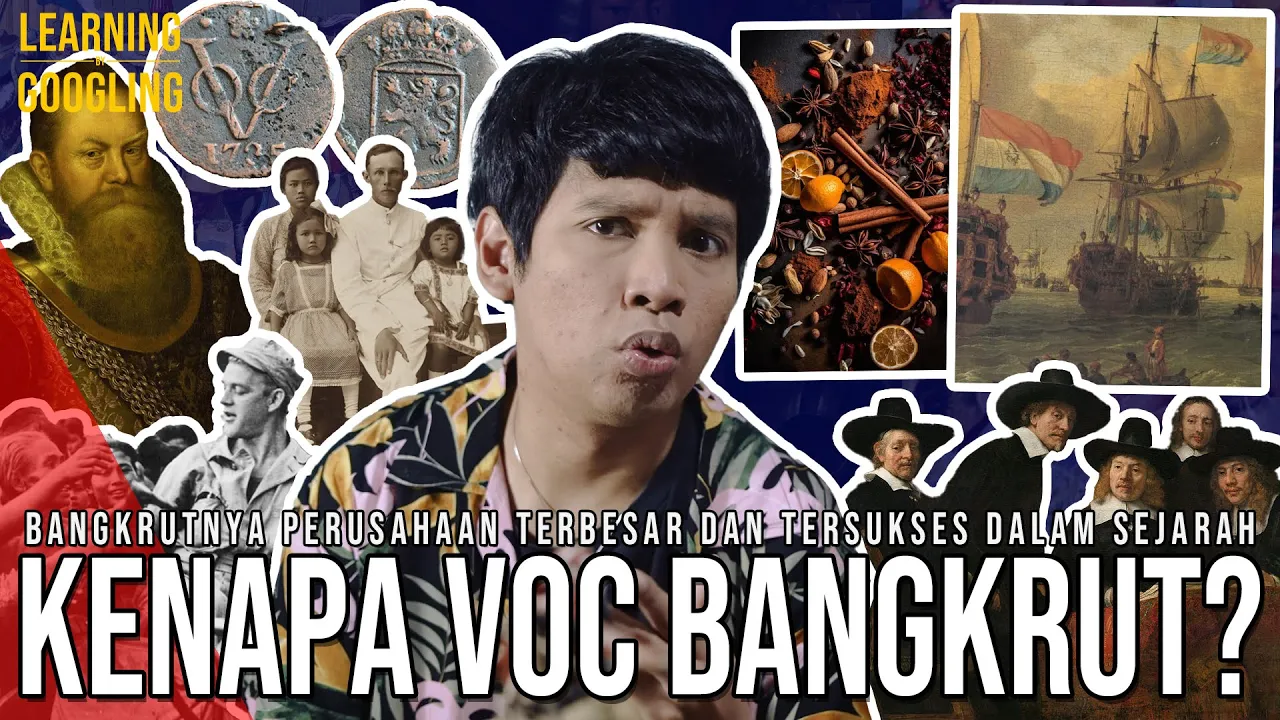
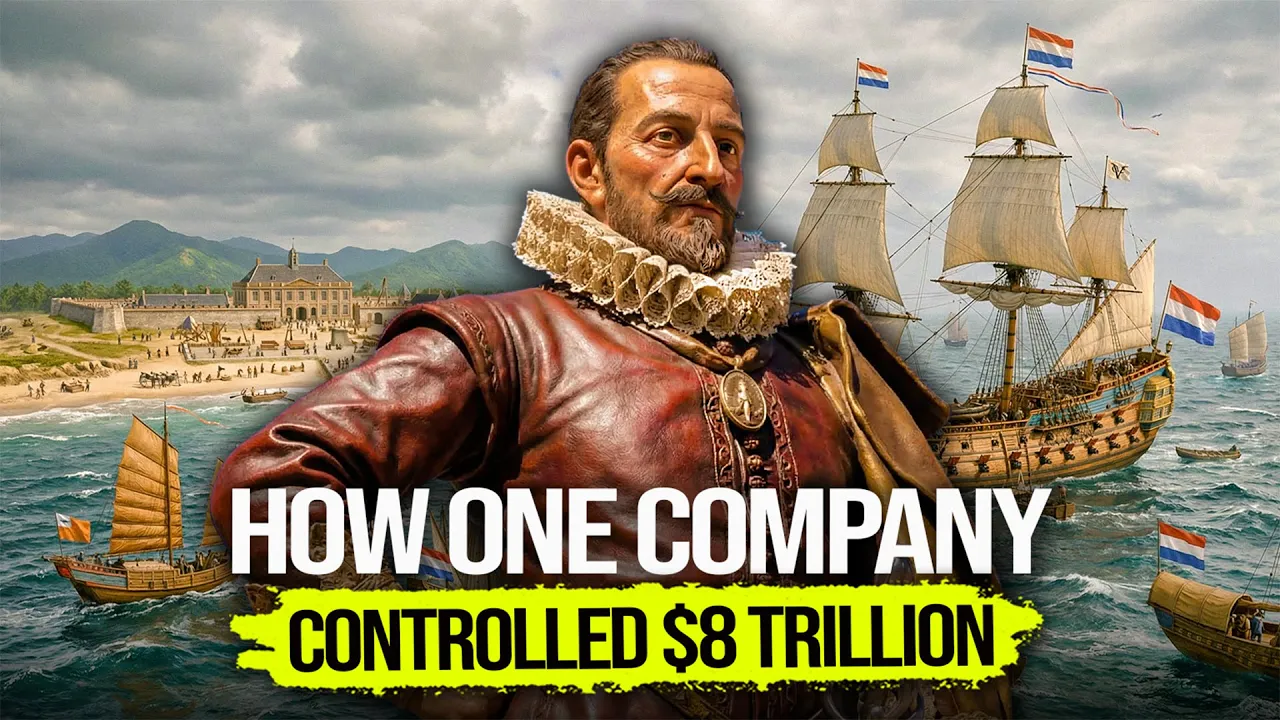
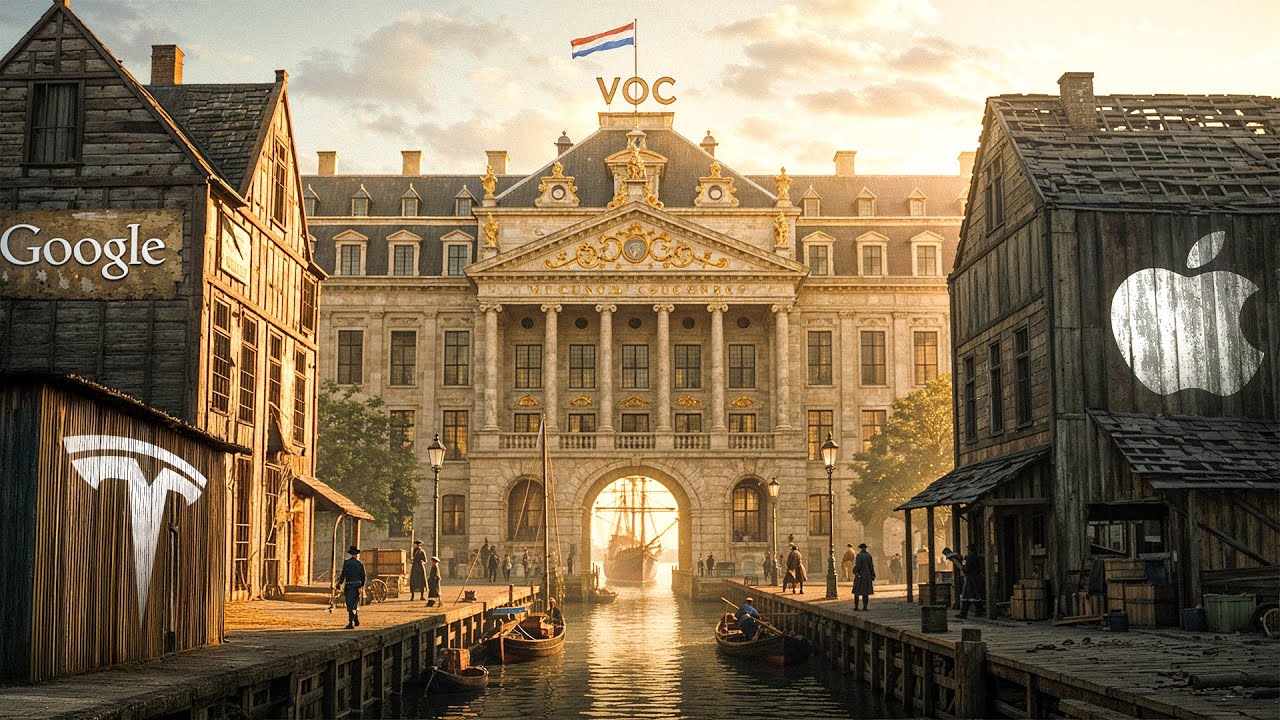

The Dutch East India Company (VOC), established in 1602, pioneered modern corporate governance by introducing shareholders, creating a two-tier investor system, democratizing investment access, and establishing the world's first stock exchange in 1611, yet ultimately failed due to mismanagement, excessive debt, and shifting market demands despite its revolutionary business innovations.
The Dutch East India Company's Rise and Fall: A Business History
Added:The economic theory of mercantilism and its dominance in 17th-century European trade policy.
The fundamental structure of a joint-stock company and how it differs from sole proprietorships or partnerships.
The geopolitical landscape of the Age of Exploration, particularly the European competition for control of the Southeast Asian spice trade.
Basic financial concepts of public shares, dividends, and the origin of early stock markets like the Amsterdam Stock Exchange.
The comparative history and differing colonial strategies of the British East India Company versus the Dutch East India Company.
The evolution of modern corporate governance, limited liability, and state-chartered monopolies into today's multinational corporations.
The long-term socio-economic and geopolitical impacts of corporate colonialism on Southeast Asia, particularly modern-day Indonesia.
An analysis of systemic corporate failure, examining how corruption, high overhead costs, and administrative inefficiencies led to the VOC's bankruptcy.
761.5K views13.8Klikes18:31Original Release: 2024-07-17
$7.9 trillion that was the historically adjusted market capitalization of the Dutch East India Trading Company it was a for-profit company larger and more powerful than most of History's Greatest Empires if it was around today the world's first multinational corporation would have been worth more than Apple Microsoft Amazon meta and still have more than enough money left over to purchase McDonald's Walmart and Samsung most companies would be lucky to last 10 years but the VOC ruled early global trade for nearly two centuries from 1602 until 1799 with an impact that still continues today thanks to its radical business Innovations and questionable Behavior but its biggest contribution to the world if we ignore all the killing invading and enslaving are shareholders besides pioneering corporate governance the creation of shareholders pav the way for modern businesses to become more accessible to the average person this helped popularize employee welfare like healthcare and pensions and introduced insurance bonds and joint stock ownership so who were the people that owned the most valuable company of all time how did the concept of a corporation even start and how did the board of investors influence the direction of world history chapter 1 Corporate Pirates the official name was if any Dutch speakers take issue with my pronunciation please don't throw your clogs at me for the sake of convenience we'll use the simple abbreviation of VO the vocc was created by the Dutch government through the states general of the Netherlands the aim compete with European powers in the spice trade from the 1500s to the 17th century the Western World expanded with the age of Discovery spice Roots were big bucks Empire was Big Business weakening the economy of your Rivals would enable you to expand your nation's franchise and monopolize the world before they did but how do you create a business machine big enough to squeeze the likes of Britain and Portugal out of the new trade routes to us the answer is obvious but in 16002 the solution was revolutionary several smaller competing trade companies were forced to get along under a new name and Mission these pre- companies included businesses which had been sending ships to Asia for at least a decade they had the experience and skills to fulfill their patriotic duties they also had special protections 21 years of Monopoly were granted to this new consolidation and a strategic move to stem the tide of infighting along with this greater efficiency and profitability came resources to streamline expansions like quasi governmental Powers this gave the VOC power to negotiate treaties wage war establish colonies trade posts and even execute prisoners all they needed was to secure a foothold in Asia then they'd solidifi trade relationships negotiate for best prices and if need be have proxy wars with other nations but how do you fund a business plan this ambitious the country need to defend for itself against its imperialistic neighbors but it'd be a risk to dump all their money into it would especially since seeing any profit would require a lot of time and nautical miles and pirate encounters someone had to be the one to come up with a first ever idea for structuring a multinational not an easy feat in those days when the fastest form of long-distance communication was a homing pigeon carrying parchment or a guy riding a donkey well it's time to learn how history works as we Charter the course of history and discover the world's first shareholders this week's lesson is sponsored by brilliant brilliant is an educational platform designed for comprehending what you learn it focuses on a bottom-up learning strategy starting with the fundamentals using interactive problemsolving activities learning and retaining knowledge like this is shown to be six times more effective than traditional video lectures the courses available and brilliant are carefully crafted by world-class Educators Scholars and professionals from leading organizations and institutions such as MIT ctech Duke Microsoft and more want to know how chat GPT Works brilliant offers a wide range of excellent courses on artificial intelligence including a course called how llms work this course is an immersive AI Workshop that lets you experience and harness the mechanics of today's most advanced tools getting hands-on experience with real language models as you explore how they work with brilliant learning is accessible from anywhere using a computer smartphone or tablet brilliant provides opportunities to acquire real knowledge in just a few minutes each day with its captivating and enjoyable lessons seamlessly integrating into your schedule whenever you have time to try everything brilliant has to offer for free for a full 30 days visit brilliant.org history works or click the link in the description you'll also get 20% off your annual premium subscription chapter 2 seven C's in two tiers funding for the VOC was divided between two tiers of shareholders of course they didn't call them shareholders back then instead they called them babers and participan I know that sounds like a fancy brand of aspirin medication but they were simply names for governors in ordinary investors how much money you put in decided how much responsibility you had it was a bold Innovation which laid the groundwork for the two-tier system which we see today like the Dual class share structures found in Google and Facebook the governors were usually established Merchants a substantial investment bought them the right to be a part of the decision-making process which would have been vital given their own experience with trading in boats their influence required access to the company's details like bookkeeping by comparison ordinary investors got an ordinary return for their ordinary input voting rights weren't given company details remained mysterious even if you could have a sane decision-making it would have been worthless without an insight into the company's inner workings but that's what these people wanted like a limited partner in a modern investment firm all you want is profit you give your money to help someone else figure out all the hard stuff on paper this setup looks like a match made in heaven yet as any modern business-minded person knows shareholders are sometimes at odds with management M the early days of the VOC were no different easily the most significant case was the Dutch entrepreneur Isaac lame mer not only did his fights with the vocc lead to eventual reformations between shareholders and business owners it even led to discoveries as a hugely wealthy Merchant he started out as the largest shareholder in the VOC in the end one of his 22 children became the voc's chief of deima in Japan and yes you heard that right 22 kids guess all Isaac also wanted an investment return on his Jee pool anyway his fight with the VOC started soon after his own Merchant trade was merged with the Dutch government's Monopoly project he expressed his concern that the company's board only had company employees on it he saw how the company's debt reduced shareholder profit he noticed how the board was deaf to feedback he observed how the big wigs were becoming richer then he accused one of the company's ship captains of malpractice and the company directors of manipulating share price in retaliation they accused him of embezzling funds and hiding receipts litigation ensued Isaac lost he was kicked out of the VOC in banned from Trading however Isaac got his own back by setting up a rival Trading Company outside the voc's jurisdiction then his son Jacob discovered alternative trade routs around Cape Horn this passage was humbly named La Mer Strait it didn't dismantle the V like they had hoped but it did remain an important Maritime route until the opening of the Panama Canal and it highlighted that the VOC wasn't as all powerful as it thought it was but Isaac's real Legacy was in setting a precedent for shareholder rights by becoming the first corporate activist Isaac's drama highlighted a need for big business structures to increase transparency and accountability this was going to be vital when the voc's expansion ushered in another radical business structure chapter 3 charting the chambers after Isaac's activism efforts discussions of autonomy and accountability spread across voc's Network different cities had its own chamber think of these like different offices of the same Law Firm by breaking up different regions into Chambers it created a degree of decentralization which allowed for greater efficiency in Resource Management six Chambers existed in total Amsterdam Rotterdam Del horn and kisen in Zealand which is now known as middleberg each chamber had its own Fleet Warehouse personnel and Governor like our modern Law Firm example these governor could exert influence over their specific Chambers while adhering to overall policies set by the vocc central board like a law firm investors bought shares in specific Chambers rather than the VOC in general so returns were based on the profits of that specific chamber the good thing about this is that incentivize shareholders to make their Chambers as efficient as possible but the downside was your chambers's level of profit could ultimately be affected by elements outside your control maybe your chosen chamber simply didn't have the best geography to facilitate trade or there was a local labor shortage maybe you had worse weather or a disease outbreak needless to say not all Chambers were built equal Amsterdam was the Real Money Maker it was responsible for half of the initial Capital raised Zealand was the second most important with the other fleets being further down the hierarchy however they could still have influence over bigger Chambers representatives from each chamber would meet regularly as part of the herin 17 here they worked to coordinate efforts by formulating enforcing policies in what was the 1600s version of a co-op the exception is they prioritize profit over member welfare and distribution of power usually in a co-op every shareholder has one vote regardless of the level of investment but the VOC Chambers were influen proportionally in theory an early investor in Amsterdam could use their bigger returns to leog an early investor in a small chamber but to prevent this going out of control a new system was brought in whereby normal citizens could get a slice of the pie chapter 4 harboring wealth attracting a diverse investment base was vital for growth wealthy mergence were instrumental as early backers but finding ways to bring in average people would transform the already innovative business into something more sustainable and Progressive investing was open for all and it didn't matter if you were a small Trader an artisan or even a domestic servant take neilen Cornelia she was the housemate of dark van o an early investor in the VOC for a whole month in 1602 she witnessed her employer doing dealings with the other company directors including our friend ISAC L mer naturally she was intrigued it turns out Dirk Veno was raising the capital for the entire Dutch East India Company by selling its Stakes to interested parties but this once in a history opportunity had a deadline the bookkeeper had to finalize the Ledger of capital raising by midnight of the final day of the month Neil Jin thought about it for days but she did didn't know the first thing about business but she didn't need to as a housemid she knew an awful lot about people so when she saw how other people were behaving she knew something big was about to happen as the clock hands neared 12 the bookkeeper heard a knock at the door the old woman had come to invest 100 gilders into the world's first IPO how much is 100 gilders you ask well exchanging that amount into modern dollars is not simple so let's just say that if her wages were. 50 cents a day then was more than likely her life savings the bookkeeper realized he could give his own servant a bonus with a stake in the VOC he put her down for 50 gilders 5 minutes before midnight so how much did the housemade earn well the voc's initial pool of capital was 3,674 n45 gilders Neil Jin had put down 100 which means that she owned less than 0.001% of the company but then that amount of a $7.2 trillion business lands you just under $196 million you could say this housemade really cleaned up but even if she didn't have the money to put down at the final moment she could have used another Innovation an option to pay in installments were offered to investors who couldn't buy stock straight away in essence a person could pledge an investment which they paid off over time these payment options helped attract a broader investor base company expansions were streamlined and the finances were more stable with the emergence of a modern Equity Market other Ventures would soon take notice which led to the groundwork we have today however this buy now pay later model wasn't a one-size fits all forget a firmer Clara where you can pay over 12 months for those shoes that you probably can't afford details had to be hashed out between the bookkeepers and investors each installment had a payment deadline but failing to keep up your end of the deal had possible fallouts the first is you lose your rights for the future shares reserved for you other investors deem more reliable could snap those up so the company could make ends meet thereby capping your lucrative investment but the more devastating punishment was losing rights to the shares you already paid for you'd no longer be entitled to the upside and dividends of the shares that you'd cleared your only choice was to beg for forgiveness work out a new repayment plan or watch debt collectors carry out your furniture more than likely you just have the money that you paid refunded but that would sting knowing a Mis payment was how you lost out on generational wealth but the social cost could be much more once word got round that you defaulted on a payment your reputation would be tarnished merchants and other businesses would be less inclined to work with someone who couldn't keep up their end of the deal it's not like you could just pack up and move to a city so easily or head on down to the unemployment office to get your resume out there that's why some of the buy now pay lader investors sold their stock when they saw financial trouble ahead the first guy to do this was yon Allard he knew he was heading for a rough patch but couldn't find a way out so on the 3rd of March 1603 he became the first shareholder to sell the rights to his shares 2,400 gilders went to Maria van Eggman and a further 600 went to Mrs Von Barum the good news was the shares had risen in value since he first bought them so though he missed out on the big bucks at the end of his investment he was able to make a nice little profit on his sale active stock trading had just been invented of course people sold their stocks when they had an immediate debt to pay like when someone on Facebook Marketplace sells a recently bought PS5 because the rent is due however yon allert proved that trading stocks for profit wasn't a bad way to go from then on shares were swapped in St Olaf's Chapel or on a bridge by the harbor right next to Market stall selling meats and grain things picked up so much that a few years later in August of 1611 Amsterdam opened the world's first stock exchange this new building might not have been a Stock Exchange in the way we would imagine one in our time but it opened the doors to a new way to make money from investing and the new way to make money always changes how business is done chapter 5 treasuries and treacheries by the mid 17th century the stock exchange had become a sophisticated fixture of every Financial landscape other countries and cities took note of this revolutionary centralized market and set up their own exchanges London and Paris followed suit which enabled their local businesses to raise funds faster and more efficiently some of the early practices are still around like buying and selling based on Market fluctuations and even the establishment of a regulatory framework now investors could diversify their portfolio you could even become a stock Trader if you had the experience or lack of experience but growth like this doesn't come without issues tension between Governors and ordinary investors never fully went away and the monopolistic nature of the vocc meant there was a limit to the influence shareholders had on its structure and Direction and as the competition continued with Britain's Trading Company plus ongoing issues with smuggling and piracy the VOC did what every company does when it gets too big it took on too much debt in the end debt was being used to finance its fast operations perhaps it would have had better luck funding the extensive military and trading network if the executives at the top hadn't been more interested in lining their pockets instead the multinational was plagued with mismanagement inefficiency and sluggishness its bureaucracy had once been its greatest strength but now it was its biggest liability the good thing about being a small company is your nimbleness allows you to react to market trends quickly but the vocc was too big of a ship to turn around when the tides turned trading spices was the Cornerstone of the voc's vast wealth but now this sector was crashing the goods were oversupplied and other trading companies were offering better deals plus consumers were losing interest they had become more interested in the Commodities that the voc's trade rots didn't carry like cotton and sugar it's ironic the money the VOC generated was used by investors to develop industries that led to its undoing textiles were becoming the next big thing the Industrial Revolution wasn't far off it also didn't help that France had invaded and set up a public government after 200 years as a multinational Pioneer the Dutch East India Company was turning Hollow the doors were officially closed in 1799 3 years after the Dutch company stepped in to stabilize the situation once it was dissolved the remaining assets were nationalized including its debt and Colonial Administration perhaps Executives blamed external factors like the Dutch angler Wars these encounters did the voc's naval power and trade routes and the new political allegiances formed through the century did encourage trade through other means but really the voc's downfall was caused by the thing that created its rise investors everyday consumers decide where to spend their cash if they don't want to give it to you they'll give it to your competitor that means that shareholders and customers were in charge all along they just didn't know it or did they do shareholders have as much power as corporations say they have or is it justlo so suits can call a shot explain your argument in the comments below and if you like this video make sure to check out our video on the history of hedge funds and don't forget to like And subscribe to keep on learning how history works
Up Next
52:57
Amsterdam and the Birth of Global Capitalism
@ShowMeTheWorld
1.7M views•2025-05-18

33:02
The Great Schism of 1054: Causes and Consequences
@SacredCathedrals
113.5K views•2026-02-19
91:57
The Geopolitics of the Ukraine War and the Rise of Global Autocracy
@JordanHarbingerShow
468K views•2025-04-19
17:05
Understanding the Cold War: Superpower Conflicts and the Road to Détente
@OverSimplified
46.1M views•2019-01-24
Related Study Plans & Knowledge Roadmaps
Structured learning paths in History
history
Byzantine Iconoclasm: Theology, Art & Politics
01Foundations of Byzantium and Early Christian Images
02The First Iconoclasm: Leo III and the Crisis of Images
03Empress Irene, Nicaea II, and the Second Iconoclasm
+ 2 more learning modules
9h5 modules
Explore Roadmap
history
Iranian Revolution (Causes, Events & Legacy)
01The Pahlavi Dynasty and the Roots of Discontent
02The Spark of Rebellion and the Rise of Khomeini
031979: The Fall of the Shah and the Climax of the Revolution
+ 2 more learning modules
8h5 modules
Explore Roadmap
history
Mali Empire: Mansa Musa, Trade & Timbuktu
01Foundations of the Mali Empire
02The Trans-Saharan Gold and Salt Trade
03The Reign and Pilgrimage of Mansa Musa
+ 1 more learning modules
6h4 modules
Explore Roadmap
history
1947 Partition: Politics, Borders & Legacies
01Foundations of British India and the Divide
02The Political Negotiations and the Mountbatten Plan
03Drawing the Boundary: The Radcliffe Line
+ 2 more learning modules
8h5 modules
Explore Roadmap